

Quick Answer: Dogs cannot be formally diagnosed with autism, but they can exhibit autism-like behaviors. Veterinary behaviorists refer to these patterns as canine dysfunctional behavior (CDB). Dogs with CDB may show social withdrawal, repetitive actions, and heightened sensitivity to sensory stimuli, which mirror symptoms seen in human autism spectrum disorder.
Key Takeaways:
- Dogs do not have a formal veterinary diagnosis for autism, but they can display autism-like behaviors.
- Canine dysfunctional behavior (CDB) is the term used to describe these patterns in dogs.
- Common signs include repetitive behaviors, social withdrawal, and sensory sensitivities.
- CDB is not common, and many behaviors resembling autism are actually linked to anxiety, OCD, or pain.
- A veterinary behaviorist is essential for accurately diagnosing and managing these behaviors.
- Treatment focuses on environmental management, positive reinforcement training, and sometimes medication.
🚨 Urgency Triage Box: When to Seek Veterinary Care
Exploring the Enigma of Canine ‘Autism’
What is autism in dogs, and is it common? While dogs cannot be diagnosed with autism spectrum disorder (ASD) as humans can, they can display repetitive and antisocial behaviors that closely resemble the condition. Veterinary professionals instead use the term canine dysfunctional behavior (CDB) to describe these patterns, which are not common but are recognized in behavioral medicine.
The concept of “canine autism” has gained attention as veterinary behaviorists observe dogs exhibiting behaviors similar to autism in humans. Instead of a formal diagnosis, CDB serves as a framework for understanding canine behaviors that deviate from the norm. Many owners search for information about autism dogs, wondering if their pet’s quirks are signs of a deeper disorder. Research suggests that while dogs exhibiting autism-like behaviors exist, the prevalence is relatively low compared to other behavioral conditions like anxiety or canine compulsive disorder (OCD) 1.
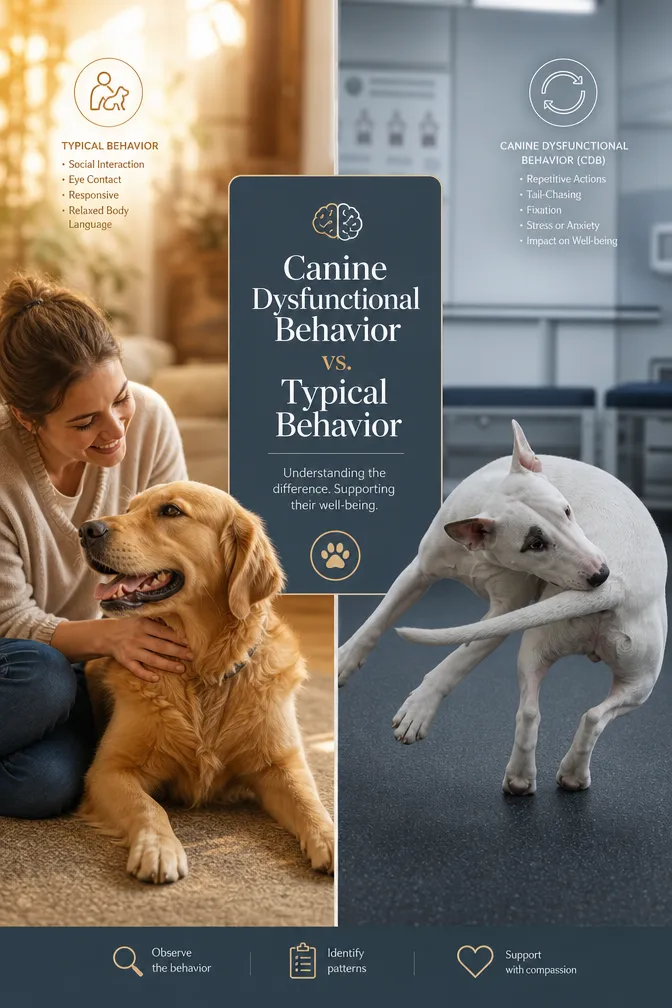
Understanding canine behaviors requires looking at the intersection of genetics, environment, and neurology. Dogs display behaviors that might seem odd, but true CDB involves persistent, inflexible patterns that interfere with a dog’s quality of life. Such behaviors often include a lack of social competence and difficulty adapting to change 3.
Signs of Autism-like Behaviors in Dogs
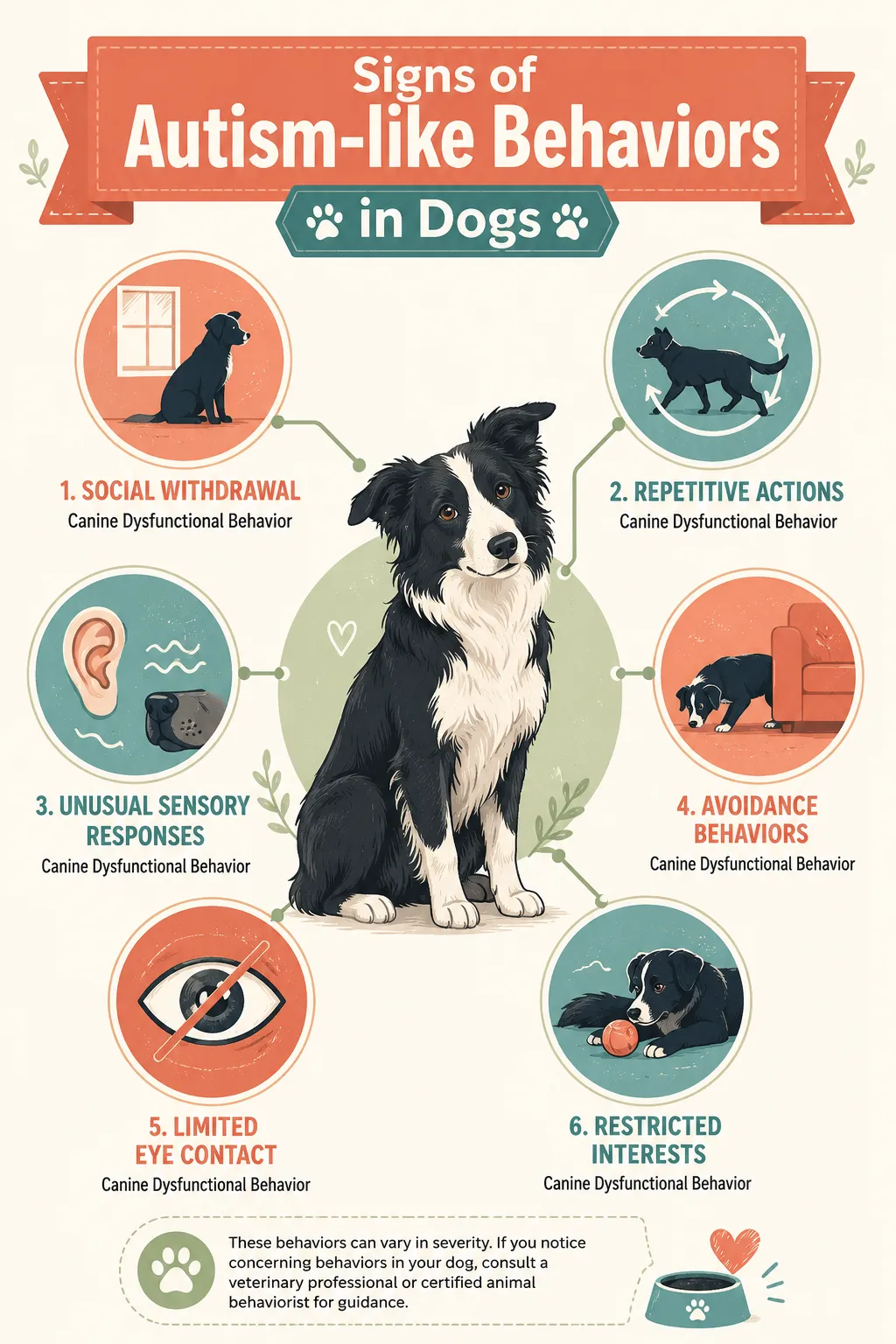
What are the signs of autism in dogs? Dogs exhibiting autism-like behaviors often show signs of social withdrawal, repetitive actions, and unusual responses to sensory stimuli. These symptoms are collectively referred to as canine dysfunctional behavior, and they can vary widely in severity from one dog to another.
Recognizing the signs of CDB early can help owners provide better support. Common signs include:
- Repetitive behaviors: Tail chasing, excessive licking, or pacing that serves no obvious purpose.
- Social interactions difficulties: Avoiding eye contact, withdrawing from play, or failing to respond to social cues from humans or other dogs.
- Sensory sensitivities: Overreacting to sounds, lights, or touch, or conversely, showing a lack of response to stimuli that would normally elicit a reaction.
- Communication challenges: Difficulty expressing normal canine behaviors, such as play-bowing or vocalizing appropriately 5.
Many owners don’t realize that these signs can overlap significantly with other conditions. For example, a dog spinning in circles might just be bored, or it could be a sign of canine compulsive disorder. A common mistake is assuming a dog is just “quirky” when they are actually experiencing anxiety or a neurological issue. If your dog displays behaviors resembling autism, it is crucial to document the frequency and triggers of these actions.
Can Dogs Be Diagnosed with Autism?
Can dogs be diagnosed with autism, and how much does dog autism testing cost? Dogs cannot be formally diagnosed with autism because the diagnostic criteria for autism spectrum disorder (ASD) are specific to humans. However, veterinary behaviorists can diagnose canine dysfunctional behavior (CDB) through detailed behavioral histories and observations, with consultations typically costing between $200 and $500 depending on the specialist and region.
Diagnosing CDB is challenging because there is no definitive blood test or brain scan for the condition. Instead, the process relies heavily on the owner’s observations and the vet’s clinical assessment. A veterinary behaviorist will look for persistent patterns of social deficits, repetitive behaviors, and sensory issues that cannot be better explained by another medical or behavioral condition 1.
The field is still developing its diagnostic framework for dysfunctional behavior CDB. Vets often use non-invasive electroencephalography (EEG) to study canine cognitive processes, which aids in understanding the neural underpinnings of behaviors similar to autism in dogs 4. If you are concerned about the cost, start with a standard veterinary visit to rule out underlying medical issues before seeking a specialized behaviorist.
How Is Canine Autism Different from Human Autism?
How is canine autism different from human autism? The primary difference is that human autism is a formally recognized neurodevelopmental disorder with established diagnostic criteria, whereas canine autism is an informal term for behaviors resembling autism, officially termed canine dysfunctional behavior (CDB). While both share traits like social challenges and repetitive behaviors, the cognitive and emotional complexities of human autism are far more intricate.
Comparisons to human autism traits help researchers understand both species. In humans, autism spectrum disorder (ASD) involves complex differences in communication, social interaction, and restricted interests. Dogs exhibiting autism-like behaviors show parallel traits, such as reduced attention to human eyes and difficulty with social interactions 3. However, we cannot know if a dog experiences the world the same way a human with autism does.
Research into autism-like behaviors dogs provides valuable insights into human autism. Studying the shared genetic factors and behavioral similarities helps scientists develop better therapies for both humans and affected dogs 2. While the label “canine autism” is used colloquially, it’s important to remember that dogs do not have the same self-reflective cognitive abilities as humans.
What Causes Autism-like Behaviors in Dogs?
What causes autism-like behaviors in dogs, and which dog breeds are prone to autism? The exact causes of canine dysfunctional behavior (CDB) are not fully understood, but research points to a combination of genetic mutations and environmental factors. Certain breeds, particularly Beagles and Bull Terriers, have been studied for genetic links to autism-like traits and repetitive behaviors.
Exploring the causes behind CDB reveals fascinating genetic insights. A significant study at Peking University introduced mutations in the SHANK3 gene in Beagle dogs, a gene strongly associated with autism in humans. The mutant dogs exhibited social deficits, reduced human interaction, and increased anxiety, suggesting a direct genetic link to autism-like behaviors in canines 2.
Beyond genetics, environmental factors like early trauma, lack of socialization, or chronic stress can contribute to behaviors similar to autism. Conditions like canine cognitive dysfunction (CCD) in older dogs can also mimic some of these symptoms. Understanding the root cause is essential for managing the disorder effectively.
Autism vs. Anxiety in Dogs
What is the difference between autism and anxiety in dogs? Autism-like behaviors (CDB) in dogs are characterized by persistent social deficits and repetitive actions, whereas anxiety is typically triggered by specific situations or stimuli, causing fear, restlessness, and avoidance. While they can look similar, anxiety is far more common and often responds directly to environmental changes.
Overlap with other conditions makes identifying CDB difficult. Many behaviors that owners think are signs of autism dogs are actually symptoms of severe anxiety or canine compulsive disorder (OCD). For example, a dog that chases its tail might have CDB, or it might be a compulsive behavior developed to cope with stress.
To differentiate, observe when the behavior occurs. If a dog only paces when a thunderstorm is approaching, it’s likely anxiety. If the dog paces constantly, regardless of the environment, and also avoids social interactions, it might point toward CDB. A veterinary behaviorist can help distinguish between these conditions, as misdiagnosing can lead to ineffective therapy.
Can Autism in Dogs Be Treated?
Can autism in dogs be treated? There is no cure for canine dysfunctional behavior (CDB), but it can be managed successfully through a combination of environmental modifications, positive reinforcement training, and sometimes medication. The goal of treatment is to reduce anxiety, minimize disruptive repetitive behaviors, and improve the dog’s quality of life.
Managing and supporting dogs with CDB requires patience and consistency. Here are practical steps owners can take:
- Creating supportive routines: Dogs with autism-like traits thrive on predictability. Feed, walk, and play at the same times every day.
- Positive reinforcement training: Reward calm behavior and gradual social interactions. Avoid punishment, which can increase anxiety.
- Behavioral and medical interventions: In some cases, vets may prescribe medications like fluoxetine (Prozac) to help manage underlying anxiety or compulsive behaviors 5.
- Owner involvement: Your active participation is crucial. Keep a log of triggers and successes to share with your vet.
Therapy for CDB often involves consulting a veterinary behaviorist who can design a customized behavior modification plan. While dogs cannot undergo ABA therapy like humans, the principles of reinforcing desired behaviors apply.
What Should I Do If I Think My Dog Has Autism?
What should I do if I think my dog has autism? If you suspect your dog has autism-like behaviors, the first step is to schedule an appointment with your regular veterinarian to rule out underlying medical conditions. Afterward, ask for a referral to a board-certified veterinary behaviorist for a comprehensive behavioral assessment.
Importance of professional guidance cannot be overstated. Many medical issues, including pain, neurological disorders, or thyroid imbalances, can cause symptoms that mimic CDB. A vet will conduct a thorough physical exam and may recommend blood work.
Once medical issues are ruled out, a behaviorist will take a detailed history. Be prepared to answer questions about your dog’s early development, social interactions, and specific triggers for their repetitive behaviors. Having video evidence of the behaviors can be incredibly helpful for the specialist.
Can Dogs Outgrow Autism Behaviors?
Can dogs outgrow autism behaviors? Dogs do not typically outgrow canine dysfunctional behavior (CDB) entirely, as it is often linked to genetic or neurodevelopmental factors. However, with consistent management, training, and support, the severity of the behaviors can decrease significantly over time, allowing the dog to lead a happy, functional life.
Puppies sometimes exhibit repetitive behaviors or social awkwardness that they eventually outgrow as they mature and learn. However, true CDB is a persistent condition. The focus should be on management rather than waiting for the dog to “grow out of it.” By creating a stable environment and using positive reinforcement, you can help your dog develop coping mechanisms.
FAQ
Can dogs be ADHD or autistic?
Dogs cannot be formally diagnosed with ADHD or autism, but they can exhibit behaviors similar to these conditions. Veterinary behaviorists use terms like canine dysfunctional behavior (CDB) for autism-like traits and hyperactivity for ADHD-like symptoms. These behaviors often stem from anxiety, lack of training, or genetic factors. A professional assessment is needed to differentiate between true behavioral disorders and normal, high-energy canine behavior.
How do dogs say “I love you”?
Dogs express affection through behaviors like leaning against you, bringing you their favorite toys, maintaining soft eye contact, and excitedly greeting you when you come home. They may also follow you from room to room or sleep near you. These social interactions are strong indicators of bonding and trust, showing that your dog feels safe and secure in your presence.
What is finger flicking in autism?
Finger flicking is a repetitive behavior often seen in humans with autism spectrum disorder, where an individual repeatedly flicks their fingers near their eyes. In dogs, a similar behavior might be repetitive paw lifting or “air snapping” at nothing. These repetitive actions are often self-soothing mechanisms for dogs experiencing sensory overload or anxiety, serving a similar function to finger flicking in humans.
Can a dog be special needs?
Yes, a dog can be considered special needs if they have physical, medical, or behavioral conditions requiring ongoing care. This includes dogs with mobility issues, deafness, blindness, or severe behavioral disorders like canine dysfunctional behavior (CDB). Special needs dogs can lead fulfilling lives with the right support, environmental modifications, and patience from their owners.
Conclusion
Understanding canine behavioral differences is key to providing the best care for your dog. While the question “Can Dogs Have Autism” doesn’t have a simple yes or no answer, recognizing canine dysfunctional behavior (CDB) helps owners address their dog’s unique needs. If your dog shows signs of autism-like behaviors, consult a veterinary professional to develop a tailored management plan. With patience, proper support, and understanding, dogs with behavioral challenges can thrive.
References
[1] Can Dogs Have Autism What Vets Actually Say – https://scienceinsights.org/can-dogs-have-autism-what-vets-actually-say/?utm_source=openai [2] S13229 024 00587 4 – https://link.springer.com/article/10.1186/s13229-024-00587-4?utm_source=openai [3] S0168159121002380 – https://www.sciencedirect.com/science/article/pii/S0168159121002380?utm_source=openai [4] S12917 025 04523 3 – https://link.springer.com/article/10.1186/s12917-025-04523-3?utm_source=openai [5] Can Dogs Have Autism – https://www.dogster.com/dog-health-care/can-dogs-have-autism/?utm_source=openai