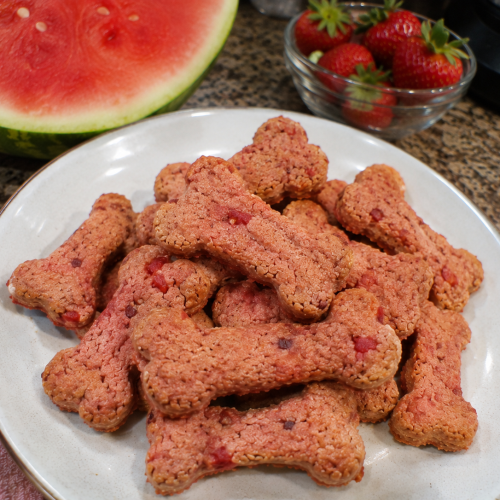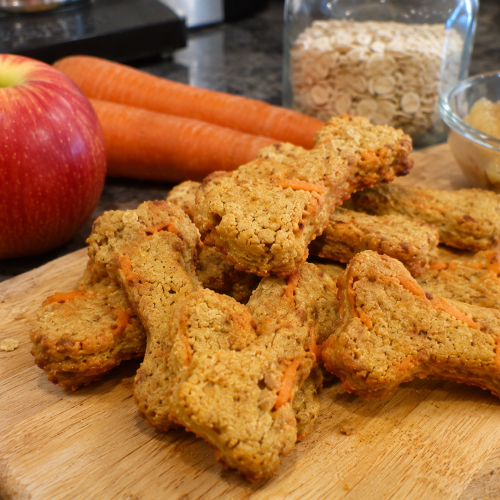

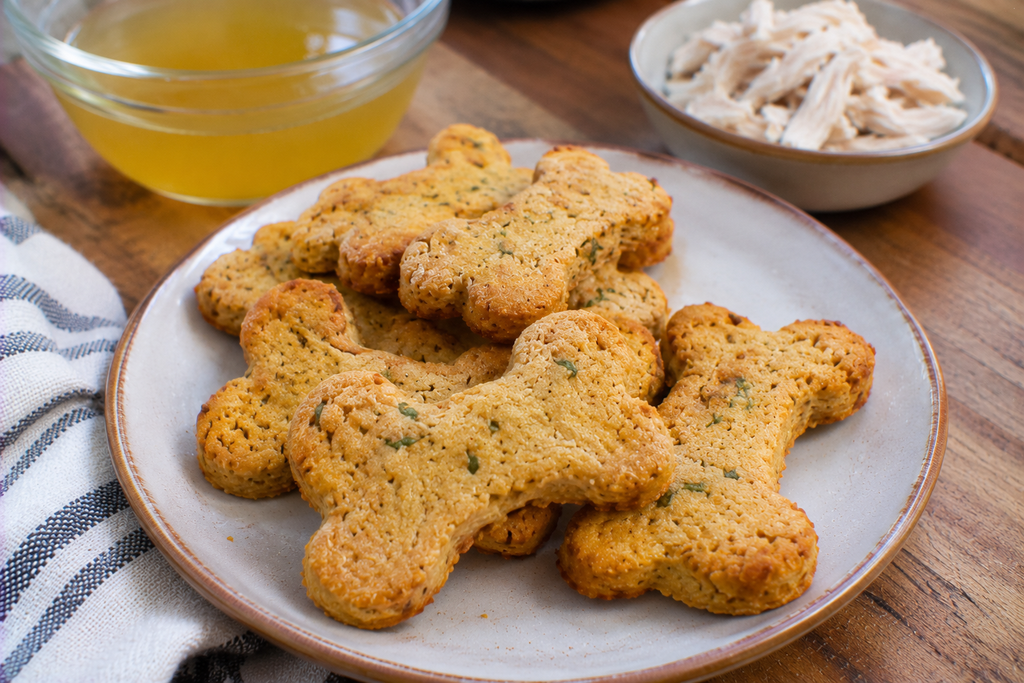
Want to make your dog something savory and homemade? These Chicken Broth Dog Biscuits are simple baked treats made with plain chicken broth, oat flour, and egg. They have a mild chicken flavor, a firm texture, and can be cut into fun bone shapes before baking.
The recipe uses just a few everyday ingredients and doesn’t require complicated preparation. The most important thing is choosing plain chicken broth without added salt, onion, garlic, or seasoning.
Quick Answer
Homemade chicken broth dog biscuits are baked treats made with oat flour, unsalted chicken broth, and egg. Mix the ingredients into a firm dough, roll it out, cut into shapes, and bake until dry and lightly golden.
Recipe Details
| Detail | Information |
|---|---|
| Prep time | 15 minutes |
| Baking time | 25–30 minutes |
| Cooling time | 20 minutes |
| Total time | About 1 hour |
| Yield | 18–22 small biscuits |
| Difficulty | Easy |
Equipment Needed
- Mixing bowl: For combining the ingredients.
- Measuring cups and spoons: To measure the flour and broth.
- Mixing spoon: For stirring the dough.
- Rolling pin: To roll the dough evenly.
- Cookie cutter: A small bone-shaped cutter works nicely.
- Baking sheet: For baking the biscuits.
- Parchment paper: To prevent sticking.
- Cooling rack: To cool the finished treats.
Ingredients
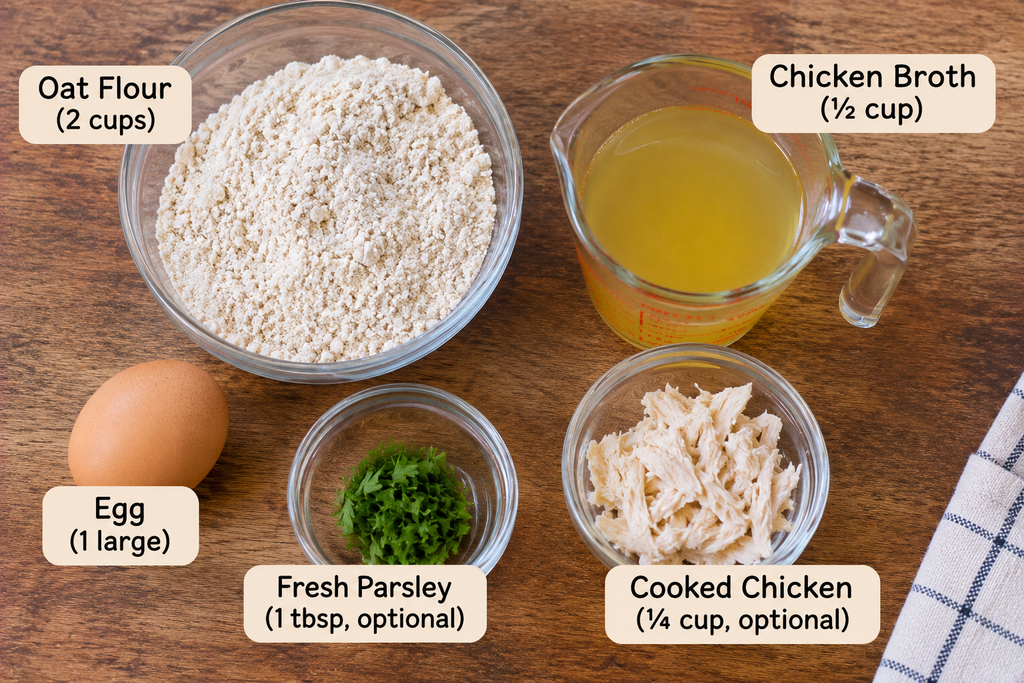
- 2 cups oat flour: Use plain, finely ground oats with no added flavorings.
- ½ cup homemade chicken broth: Use cooled, unsalted broth made without onion, garlic, or seasonings.
- 1 large egg: Helps bind the dough.
- 1–3 tablespoons extra oat flour: Keep this nearby in case the dough feels sticky.
Choosing the Chicken Broth
Homemade broth is the best option for this recipe because you can control exactly what goes into it.
Simmer plain chicken in water without salt, onion, garlic, stock cubes, or seasoning. Strain the liquid carefully, remove all bones, skim off excess fat, and let the broth cool before using it.
Avoid assuming that a store-bought low-sodium broth is automatically suitable for dogs. Some products still contain ingredients or sodium levels that may not be appropriate.
Step-by-Step Instructions
1. Prepare the oven
Preheat your oven to 325°F (165°C). Line a baking sheet with parchment paper.
2. Combine the ingredients
Add the oat flour to a large mixing bowl. Make a small well in the center, then add the egg and cooled chicken broth.
Stir until the ingredients begin to come together.
3. Form the dough
Mix until you have a firm dough that holds together when pressed.
If the mixture is too wet, add oat flour one tablespoon at a time. If it feels too dry or crumbly, add a little more broth.
4. Roll out the dough
Place the dough on a lightly floured surface. Roll it to approximately ¼ inch thick.
Try to keep the thickness even so the biscuits bake at the same rate.
5. Cut the biscuits
Use a small bone-shaped cookie cutter to cut out the treats. You can also use a knife to make small squares or rectangles.
Gather any leftover dough, roll it again, and cut additional biscuits.
6. Arrange on the baking sheet
Place the biscuits on your prepared baking sheet, leaving a little space between each one.
7. Bake
Bake for approximately 25–30 minutes, checking toward the end of the baking time.
The biscuits should look lightly golden and feel firm. Thicker biscuits may need a little longer.
For a drier, crunchier finish, turn off the oven and leave the biscuits inside for another 10 minutes with the oven door slightly open, provided they are not browning too quickly.
8. Cool completely
Transfer the biscuits to a cooling rack and allow them to cool completely before serving.
They will become firmer as they cool.
Chicken Broth Dog Biscuit Safety Tips
A few precautions help make these homemade treats more suitable for dogs:
- Avoid onion and garlic: Both can be harmful to dogs, including when cooked or powdered.
- Skip added salt: Dogs do not need extra salt in homemade treats.
- Avoid stock cubes: They often contain concentrated salt and seasonings.
- Remove every bone: Never include cooked chicken bones in the dough or allow dogs to chew them.
- Skim excess fat: Rich, fatty broth may upset digestion and isn’t suitable for every dog.
- Introduce gradually: Offer a small piece first and watch for digestive upset.
Dogs with kidney disease, heart conditions, pancreatitis, or prescribed diets may need special restrictions. Ask your veterinarian before introducing homemade broth treats if your dog has a medical condition.
The World Small Animal Veterinary Association recommends that treats account for no more than 10% of a dog’s daily calorie intake. These biscuits should therefore be occasional extras, not meal replacements.
Serving Size and Storage
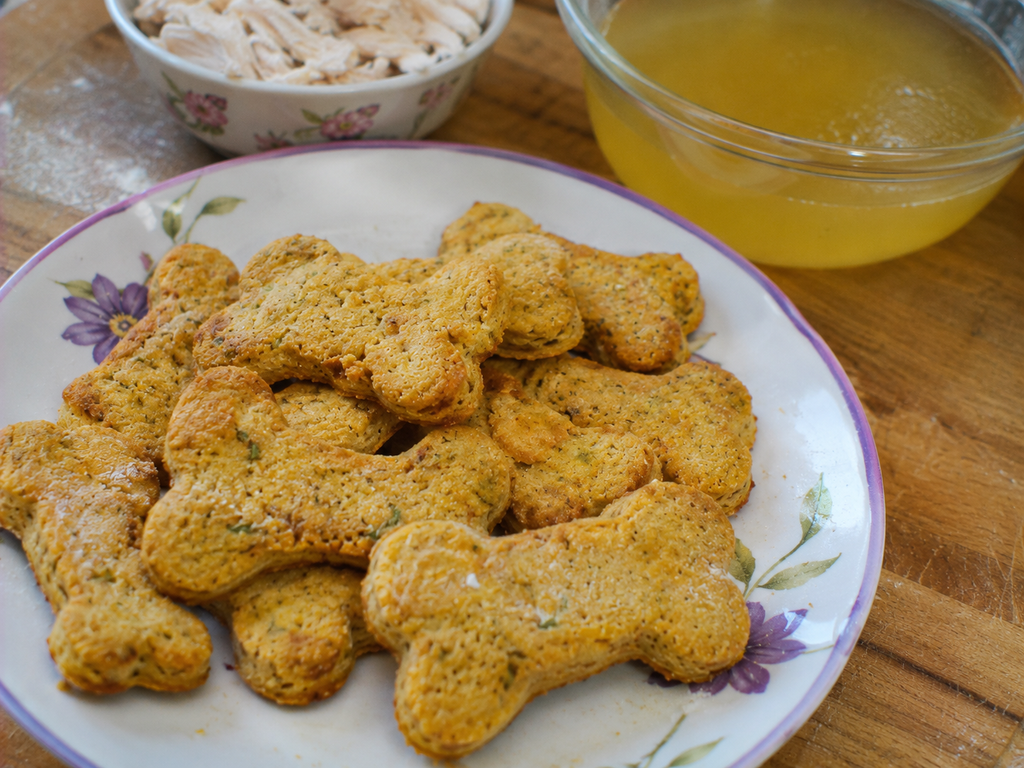
Break the biscuits into smaller pieces for small dogs. The right portion depends on your dog’s size, calorie requirements, and other treats eaten during the day.
Once completely cool, place the biscuits in an airtight container and refrigerate them. For this moist homemade recipe, use within 3–4 days as a conservative storage guideline.
You can also freeze the cooled biscuits in a freezer-safe container for up to 2 months for best quality. Thaw in the refrigerator before serving.
Discard any biscuits that develop mold, an unusual smell, or other signs of spoilage.
Frequently Asked Questions
Can I use store-bought chicken broth?
Only if the ingredient list and nutritional information make it suitable for your dog. Many commercial broths contain onion, garlic, seasonings, or more sodium than you’d want in a dog treat. Plain homemade broth is the more controllable option.
Can I use whole-wheat flour instead of oat flour?
Yes. Plain whole-wheat flour can work if your dog tolerates wheat. Add the broth gradually because different flours absorb liquid differently.
Can I add shredded chicken?
You can add a small amount of finely shredded, fully cooked, boneless, unseasoned chicken. Reduce the broth slightly if the dough becomes too wet, and remember that additional chicken changes the recipe’s texture and storage needs.
Why are my biscuits still soft?
They may need more baking time or may be thicker than intended. Allow them to cool completely before judging their texture. You can return them to a low oven briefly to dry further, watching carefully to prevent burning.
Can puppies eat chicken broth biscuits?
Puppies that are already eating solid food may be able to enjoy a small, appropriately sized piece if they tolerate the ingredients. Keep treats limited and check with your veterinarian about suitable options for very young puppies.
Conclusion
These Homemade Chicken Broth Dog Biscuits are an easy way to turn a few simple ingredients into savory treats for your dog. Plain chicken broth gives the dough its flavor, while oat flour and egg help create biscuits that are easy to shape and bake.
Keep the ingredients unseasoned, serve small portions, and store the finished biscuits safely.
Editorial Note
This recipe is intended as an occasional treat for healthy dogs, not a complete or balanced meal. Dogs with medical conditions or special dietary requirements may need different ingredients or portions. Consult your veterinarian if you’re unsure whether chicken broth treats are appropriate for your dog.