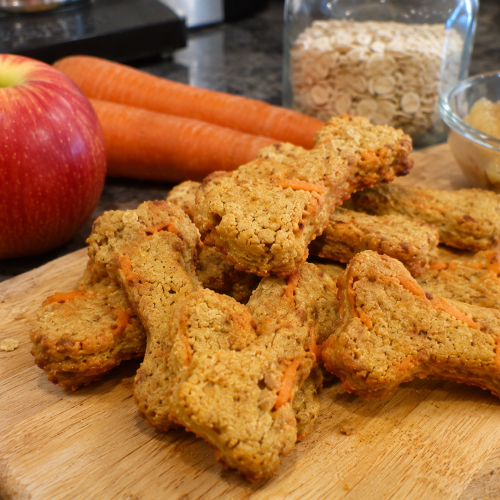

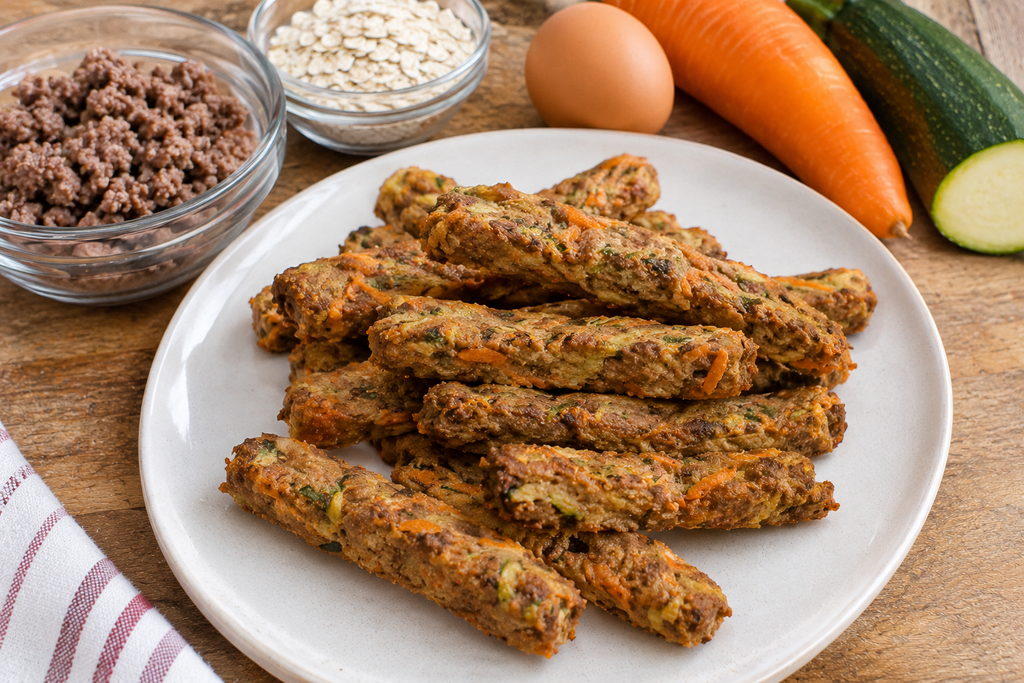
Treat your dog to something savory with these homemade beef and vegetable chew sticks. Made with lean ground beef, carrots, zucchini, and oats, these baked treats are a tasty way to add variety to your dog’s snack routine.
They are easy to prepare, contain simple ingredients, and can be shaped into small sticks that are convenient to portion and serve.
Quick Answer
Yes, you can make homemade beef and vegetable treats for dogs using plain lean beef, dog-safe vegetables, oats, and an egg. Mix the ingredients, shape them into short sticks, and bake until fully cooked. Allow them to cool completely before serving.
Recipe Details
| Detail | Information |
|---|---|
| Prep time | 15 minutes |
| Cook time | 25–30 minutes |
| Total time | 40–45 minutes |
| Yield | About 16–20 small sticks |
| Difficulty | Easy |
| Storage | Refrigerate or freeze |
Equipment Needed – Beef and Vegetable Chew Sticks
- Skillet – to cook the ground beef.
- Large mixing bowl – to combine the ingredients.
- Grater – to grate the carrot and zucchini.
- Baking tray – to bake the chew sticks.
- Parchment paper – to line the baking tray.
- Measuring cups and spoons – to measure ingredients.
- Cutting board and knife – to prepare the vegetables.
Ingredients
You will need:

- 1 cup lean ground beef: Choose plain, unseasoned beef.
- ½ cup grated carrot: Wash, peel, and finely grate.
- ½ cup grated zucchini: Squeeze out excess moisture.
- 1 egg: Helps bind the mixture.
- 1 cup oat flour: Helps create a workable dough.
- 1 tablespoon water (optional): Add only if the mixture is too dry.
Step-by-Step Instructions
1. Prepare the ingredients
Preheat your oven to 350°F (175°C). Line a baking tray with parchment paper.
Wash and grate the carrot and zucchini. Squeeze excess liquid from the zucchini to prevent the mixture from becoming too wet.
2. Cook the beef
Place the ground beef in a skillet and cook thoroughly over medium heat. Do not add salt, oil, onion, garlic, or seasoning.
Drain excess fat and allow the beef to cool slightly.
3. Mix everything together
In a large bowl, combine the cooked beef, grated carrot, zucchini, and egg.
Add the oat flour gradually, mixing until everything comes together into a thick, slightly firm mixture.
If it feels too dry, add a little water. If it is too sticky, add a small amount of oat flour.
4. Shape the chew sticks
Take small portions of the mixture and roll them into short, finger-shaped sticks.
Keep them relatively thin and similar in size so they cook evenly. Avoid making them extremely hard or thick.
5. Arrange on the baking tray
Place the sticks on the prepared baking sheet, leaving a little space between each one.
Gently flatten them if needed to help them cook evenly.
6. Bake
Bake for approximately 25–30 minutes, depending on their thickness, until cooked through and firm.
Because the recipe contains ground beef and egg, make sure the centers are fully cooked. A food thermometer should read at least 160°F (71°C) in the beef mixture.
7. Cool before serving
Remove the tray from the oven and allow the sticks to cool completely.
Check that they are firm but not excessively hard before offering one to your dog.
Beef and Vegetable Safety Tips
A few simple precautions help make these treats more suitable for dogs:
- Use lean beef: Trimmed, lean ground beef helps limit unnecessary fat.
- Avoid onion and garlic: Both can be harmful to dogs, including when cooked.
- Use plain vegetables: Carrots and zucchini are suitable choices when prepared without seasoning.
- Cook the beef thoroughly: Avoid serving raw or undercooked ground beef.
- Keep the texture appropriate: These are treats, not dental chews. They should not be so hard that they risk damaging teeth.
- Introduce gradually: New ingredients can upset some dogs’ stomachs.
Dogs with pancreatitis, food allergies, kidney disease, or special dietary requirements should have homemade treats approved by their veterinarian.
Serving Size and Storage

Allow the chew sticks to cool completely before serving. Break them into smaller pieces for small dogs, puppies, or dogs that prefer softer treats.
The appropriate amount depends on your dog’s size, activity level, daily calorie needs, and other treats they receive. Treats should generally account for no more than 10% of daily calories.
Store the sticks in an airtight container in the refrigerator and use within 3 days as a conservative storage guideline. You can also freeze them in individual portions for up to 2 months for best quality. Thaw in the refrigerator before serving.
Discard treats that develop an unusual smell, texture, or appearance.
Frequently Asked Questions
Can dogs eat beef and vegetables together?
Yes. Plain, fully cooked beef and suitable vegetables such as carrots and zucchini can be used together in occasional homemade treats.
Can I use chicken instead of beef?
Yes. Plain ground chicken can replace beef, but cook it thoroughly to an internal temperature of 165°F (74°C).
Can I make these treats without eggs?
The egg helps bind the ingredients. You can experiment with a little extra oat flour and water, although the sticks may crumble more easily.
Are these chew sticks suitable for puppies?
They may be suitable in small, soft portions for puppies that are already eating solid food, provided they tolerate the ingredients. Avoid hard or oversized pieces and ask your veterinarian if you are unsure.
How do I make the sticks softer?
Make them slightly thicker and avoid baking longer than necessary, while still ensuring the beef mixture is fully cooked. Let them cool and check the texture before serving.
Conclusion
These homemade beef and vegetable chew sticks are a simple savory treat made with lean beef, carrots, zucchini, and oats. Shape them into small sticks, bake until thoroughly cooked, and serve in appropriate portions. Keep them as occasional snacks alongside your dog’s regular balanced diet.
Editorial Note
This recipe is intended as an occasional treat for healthy dogs. It is not a complete or balanced meal. Consult your veterinarian before introducing new ingredients if your dog has a medical condition or dietary restrictions.