

Quick Answer
Yes, dogs can eat ripe mango in moderation. The soft flesh is non-toxic and provides vitamins, fiber, and antioxidants, but the pit and skin should always be removed. The pit can become a choking hazard or cause an intestinal blockage, while the skin is difficult to digest and may irritate some dogs. Introduce mango gradually, serve only small bite-sized pieces, and remember that fruit should be an occasional treat—not a replacement for a complete and balanced dog food.
Key Takeaways
- 🥭 Ripe mango flesh is safe for most dogs in moderation.
- 🚫 Always remove the pit before serving because it can cause choking or intestinal blockage.
- ⚠️ Peel the skin before feeding since it’s difficult to digest and may irritate sensitive dogs.
- 🍽️ Cut mango into bite-sized pieces appropriate for your dog’s size.
- 📏 Feed mango as an occasional treat that makes up no more than 10% of your dog’s daily calories.
- 🩺 Stop feeding mango and contact your veterinarian if your dog develops vomiting, diarrhea, or signs of an allergic reaction.
Mango is a sweet, tropical fruit that’s packed with nutrients, making it tempting to share with your dog. The good news is that ripe mango flesh is safe for most healthy dogs, but proper preparation is essential to avoid unnecessary risks.
In this guide, you’ll learn whether dogs can eat mango safely, the benefits and risks, how much to feed, the safest way to prepare it, and what to do if your dog accidentally eats the pit or skin.
Can Dogs Eat Mango Safely? What the Flesh Actually Does
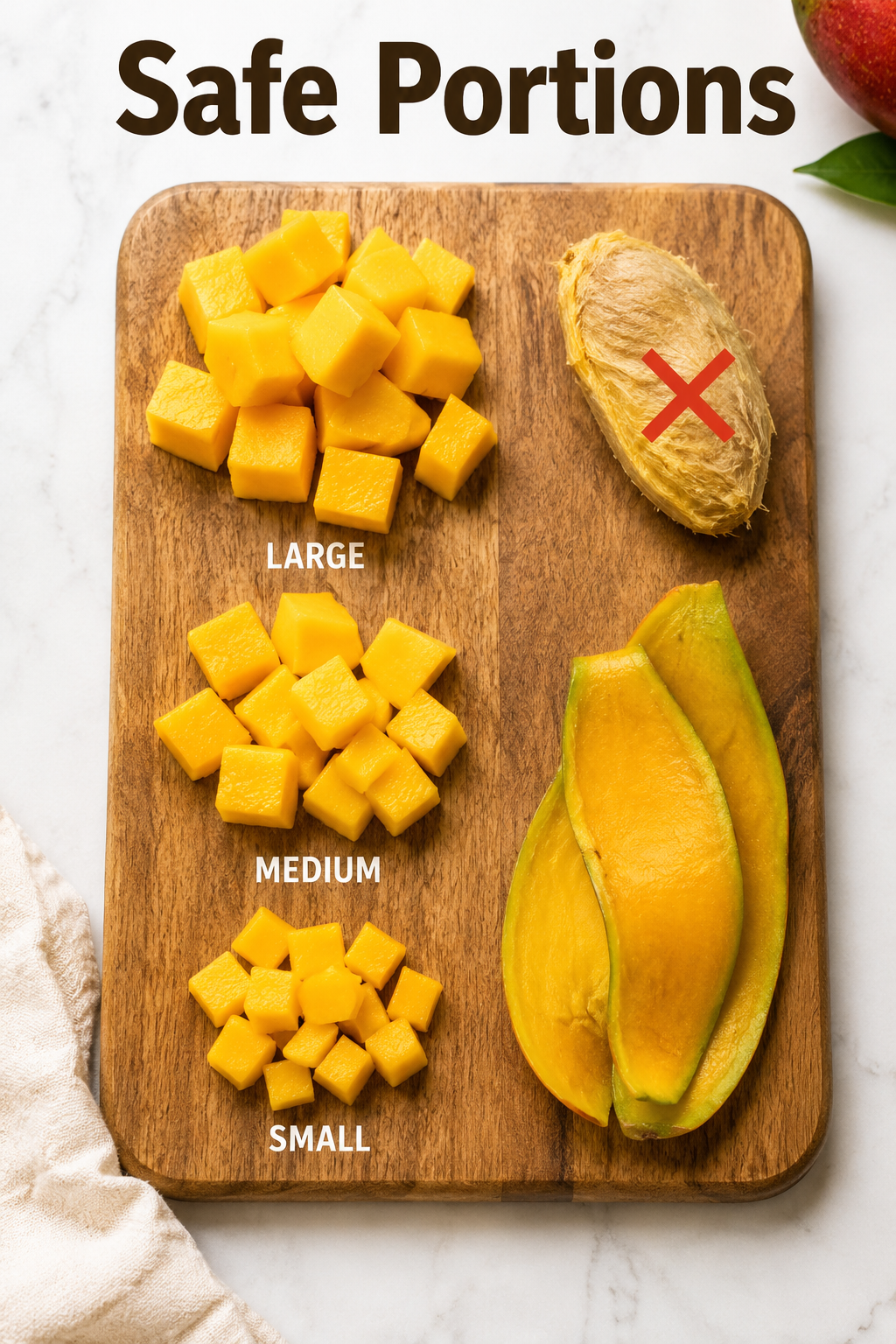
Yes, dogs can safely eat ripe mango in moderation. The soft flesh is non-toxic and provides beneficial nutrients, including vitamins A, B6, C, and E, fiber, and antioxidants that support overall health. However, mango should only be offered as an occasional treat—not a daily part of your dog’s diet. Fresh, ripe mango is the safest choice, provided it’s peeled, the pit is removed, and the flesh is cut into bite-sized pieces before serving.
While mango offers nutritional benefits, it also contains a relatively high amount of natural sugar. Too much can contribute to digestive upset, unnecessary weight gain, and blood sugar spikes, especially in dogs with diabetes or obesity. Like all treats, mango should account for no more than 10% of your dog’s daily calorie intake.
For most healthy adult dogs, a few small pieces of fresh mango make a safe and enjoyable snack when served responsibly. The key is moderation and proper preparation.
Is the Mango Pit Dangerous for Dogs?
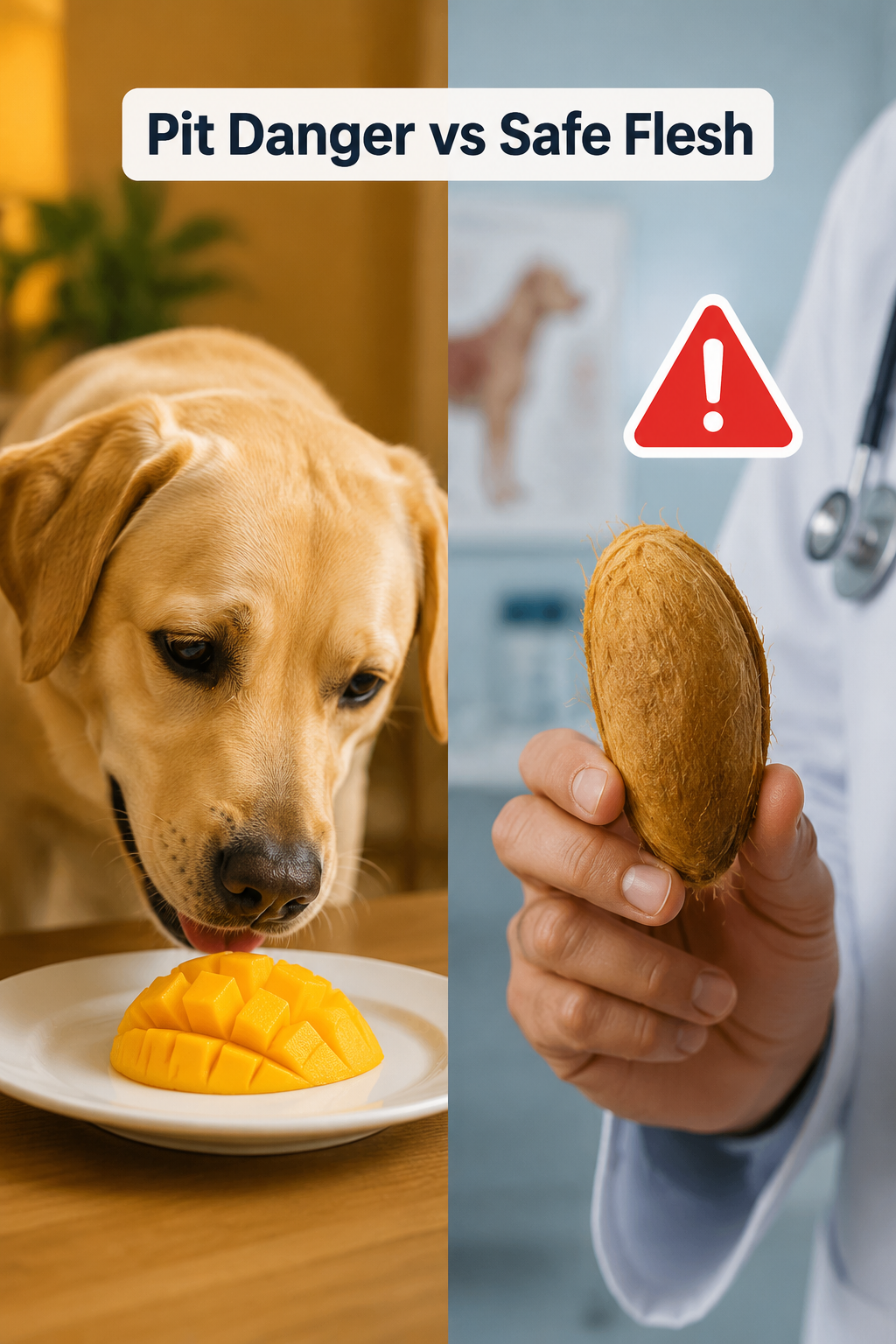
Yes. The mango pit is the most dangerous part of the fruit and should never be given to a dog. It poses three main risks: choking, intestinal blockage, and exposure to small amounts of naturally occurring cyanogenic compounds found inside the seed.
Because mango pits are large, hard, and slippery, they can easily become lodged in a dog’s throat or digestive tract, especially in small and medium-sized breeds. If swallowed whole, the pit may cause a blockage that requires emergency veterinary treatment or even surgery.
Although the pit contains only trace amounts of cyanogenic compounds, the physical risk of choking or intestinal obstruction is the much greater concern. For this reason, always remove and safely discard the pit before offering mango to your dog.
What Should You Do If Your Dog Swallows a Mango Pit?
Contact your veterinarian immediately if you think your dog has swallowed a mango pit. Even if your dog appears normal at first, signs of an intestinal blockage may not develop for several hours or even a day.
Watch for symptoms such as:
- Vomiting
- Loss of appetite
- Abdominal pain
- Lethargy
- Difficulty passing stool or straining to defecate
Prompt veterinary care gives your dog the best chance of avoiding serious complications.
Health Benefits of Mango for Dogs
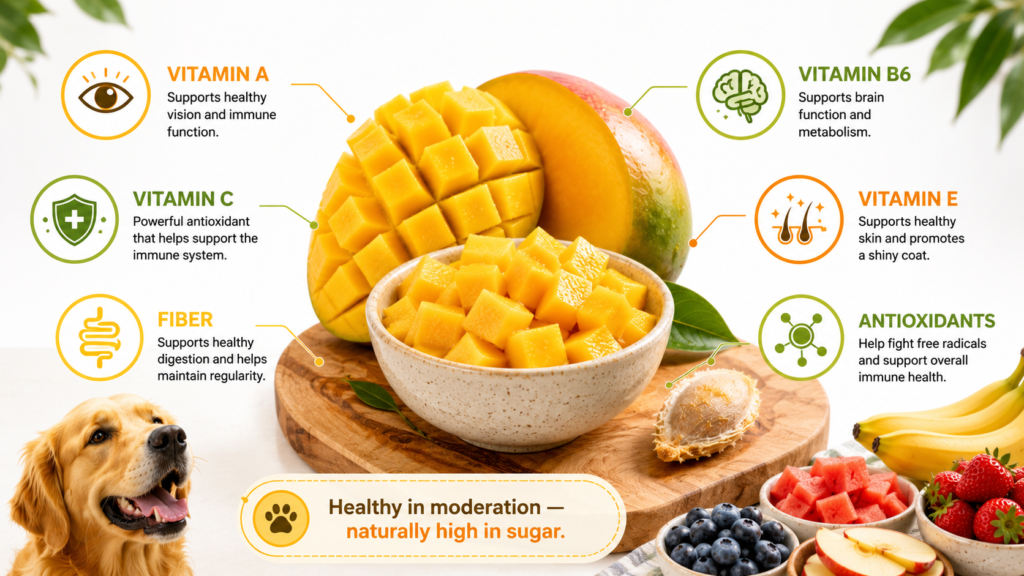
When served in moderation, mango can be a healthy occasional treat for many dogs. While it shouldn’t replace a complete and balanced diet, the fruit provides several nutrients that support your dog’s overall health.
Some of the key benefits include:
- Vitamin A helps support healthy vision, skin, and immune function.
- Vitamin C acts as an antioxidant that helps protect cells from damage. Although dogs produce their own vitamin C, a small dietary boost isn’t harmful for healthy dogs.
- Vitamin B6 supports brain function and healthy metabolism.
- Vitamin E helps maintain healthy skin and coat while supporting the immune system.
- Dietary fiber promotes healthy digestion and may help regulate bowel movements.
- Antioxidants help combat oxidative stress and support overall wellness.
Despite these nutritional benefits, mango is naturally high in sugar. For that reason, it should be offered only as an occasional treat rather than a daily snack. Most healthy dogs can enjoy a few small pieces of fresh mango as part of a varied, balanced diet.
How to Feed Mango to Your Dog Safely
The safest way to feed mango is to keep it simple. Choose a ripe mango, wash it thoroughly, remove the skin and pit, then cut the flesh into small, bite-sized pieces appropriate for your dog’s size. Fresh mango is the best option—avoid adding sugar, seasonings, or other ingredients.
Use the serving guide below as a general recommendation:
| Dog Size | Recommended Serving |
|---|---|
| Extra-small (2–20 lbs) | 1–2 small cubes |
| Small (21–30 lbs) | 2–3 small cubes |
| Medium (31–50 lbs) | A small handful of cubes |
| Large (51–90 lbs) | A moderate handful of cubes |
| Extra-large (91+ lbs) | Up to a large handful |
These amounts are occasional treats, not daily servings. Like all treats, mango should make up no more than 10% of your dog’s daily calorie intake.
When introducing mango for the first time, start with one or two small pieces and monitor your dog for the next 24 hours. Eating too much mango may cause digestive upset, including vomiting, diarrhea, gas, or loose stools because of its fiber and natural sugar content.
Some dogs should only eat mango in very small amounts—or avoid it altogether. This includes dogs with diabetes, obesity, pancreatitis, or sensitive stomachs, since the fruit’s natural sugar may worsen these conditions. Although mango allergies are uncommon, discontinue feeding it and contact your veterinarian if your dog develops itching, facial swelling, hives, vomiting, or diarrhea after eating it.
With proper preparation and sensible portions, most healthy dogs can safely enjoy fresh mango as an occasional treat.
🚨 When to Call Your Vet
Most dogs can eat a few pieces of fresh mango without any problems. However, contact your veterinarian if your dog develops concerning symptoms or eats a part of the fruit that could be dangerous.
🟡 Monitor your dog at home if they:
- Ate a small amount of mango flesh for the first time
- Have mild gas or slightly loose stools
- Ate a tiny piece of mango skin but are otherwise acting normally
These mild symptoms often resolve on their own. Offer plenty of fresh water and avoid giving more mango until your dog’s stomach has settled.
🟠 Contact your veterinarian if your dog:
- Vomits more than once
- Has diarrhea that lasts more than 12–24 hours
- Refuses food or seems unusually tired
- Develops itching, hives, or facial swelling after eating mango
🔴 Seek emergency veterinary care immediately if your dog:
- Swallowed a whole mango pit
- Is choking or having difficulty breathing
- Shows severe abdominal pain or repeated vomiting
- Cannot pass stool or is straining unsuccessfully
- Collapses or becomes extremely lethargic
When in doubt, it’s always safest to contact your veterinarian. Early treatment can help prevent serious complications, especially if a mango pit has been swallowed.
Frequently Asked Questions
Can puppies eat mango?
Yes. Puppies can eat a small amount of ripe mango flesh as an occasional treat, but it isn’t essential to their diet. Start with one or two small pieces and monitor for any digestive upset. Always remove the skin and pit before serving, and speak with your veterinarian before introducing new foods if your puppy has any underlying health concerns.
Can dogs eat frozen mango?
Yes. Plain frozen mango flesh can be a refreshing treat on hot days. Serve small, bite-sized pieces to reduce the risk of choking, especially for small dogs. Avoid frozen mango products with added sugar or flavorings.
Can dogs eat dried mango?
It’s best to avoid dried mango. It contains much more concentrated sugar than fresh mango, and many commercial varieties include added sugar, preservatives, or sulfites that aren’t suitable for dogs.
Can dogs eat mango-flavored treats?
Dog treats specifically formulated for dogs that contain mango are generally safe when fed according to the package directions. Always check the ingredient list and avoid products containing xylitol or other ingredients that are toxic to dogs.
Can dogs eat mango every day?
No. Mango is naturally high in sugar and should only be offered as an occasional treat. For most healthy dogs, a few small pieces once or twice a week is plenty.
Can dogs eat mango skin?
No. Mango skin is tough, difficult to digest, and may cause stomach upset or irritation in some dogs. Always peel the fruit and feed only the soft flesh.
What should I do if my dog ate a mango pit?
Contact your veterinarian as soon as possible. Mango pits can become lodged in the throat or intestines and may cause a dangerous blockage. Seek emergency veterinary care immediately if your dog is choking, vomiting repeatedly, has abdominal pain, or is unable to pass stool.
Can dogs eat mango ice cream or sorbet?
No. Mango ice cream and sorbet often contain added sugar, dairy, or artificial sweeteners. Some products may even contain xylitol, which is highly toxic to dogs. Fresh mango flesh is the safest option.
What other fruits can dogs eat?
Many fruits make healthy treats when served in moderation. Safe options include blueberries, strawberries, seedless watermelon, peeled apples without the core or seeds, bananas, and pears. Avoid grapes, raisins, and fruits with large pits or seeds. For more options, see our guide to safe fruits for dogs.
Conclusion
Yes, dogs can safely eat ripe mango in moderation when it’s prepared correctly. The soft flesh provides vitamins, fiber, and antioxidants, making it a nutritious occasional treat for most healthy dogs.
Before serving, always remove the pit and peel, cut the fruit into bite-sized pieces, and offer only small portions. Because mango is naturally high in sugar, it should complement—not replace—a complete and balanced diet.
If your dog accidentally swallows a mango pit or develops vomiting, diarrhea, difficulty breathing, or signs of an allergic reaction after eating mango, contact your veterinarian promptly.
When fed responsibly, fresh mango can be a safe and enjoyable way to add a little variety to your dog’s treat routine.
Editorial Note
Every article published on Trusted Pet Advice is researched using trusted veterinary resources and evidence-based references to help pet owners make informed decisions. Our editorial team reviews each article for accuracy and keeps the content updated as new guidance becomes available.
This article is intended for educational purposes only and should not replace professional veterinary advice, diagnosis, or treatment. If you have questions about your dog’s diet or believe they have eaten something harmful, contact your veterinarian or an animal poison center immediately.
References
- American Kennel Club (AKC). Can Dogs Eat Mango? https://www.akc.org/expert-advice/nutrition/can-dogs-eat-mango/
- PetMD. Can Dogs Eat Mango? https://www.petmd.com/dog/nutrition/can-dogs-eat-mango
- Dogster. Can Dogs Eat Mango? https://www.dogster.com/dog-nutrition/can-dogs-eat-mango/
- Petful. Can Dogs Eat Mango? https://www.petful.com/food/can-dogs-eat-mango/
- Froqel. Can Dogs Eat Mango? https://froqel.com/can-dogs-eat-mango/
- PetMD. What Fruits Can Dogs Eat? https://www.petmd.com/dog/nutrition/what-fruits-can-dogs-eat
- Chewy. Can Dogs Eat Mango? Everything You Need to Know. https://www.chewy.com/education/dog/food-and-nutrition/can-dogs-eat-mango-everything-you-need-to-know