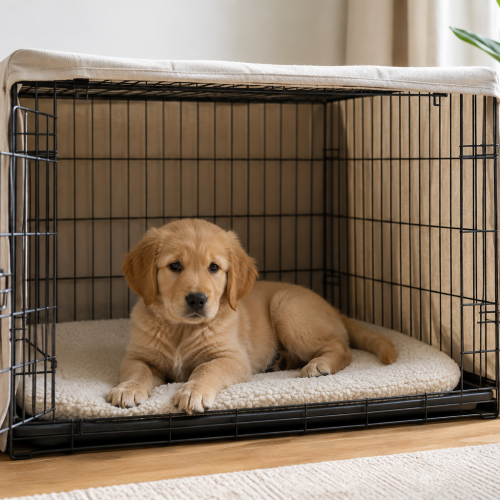

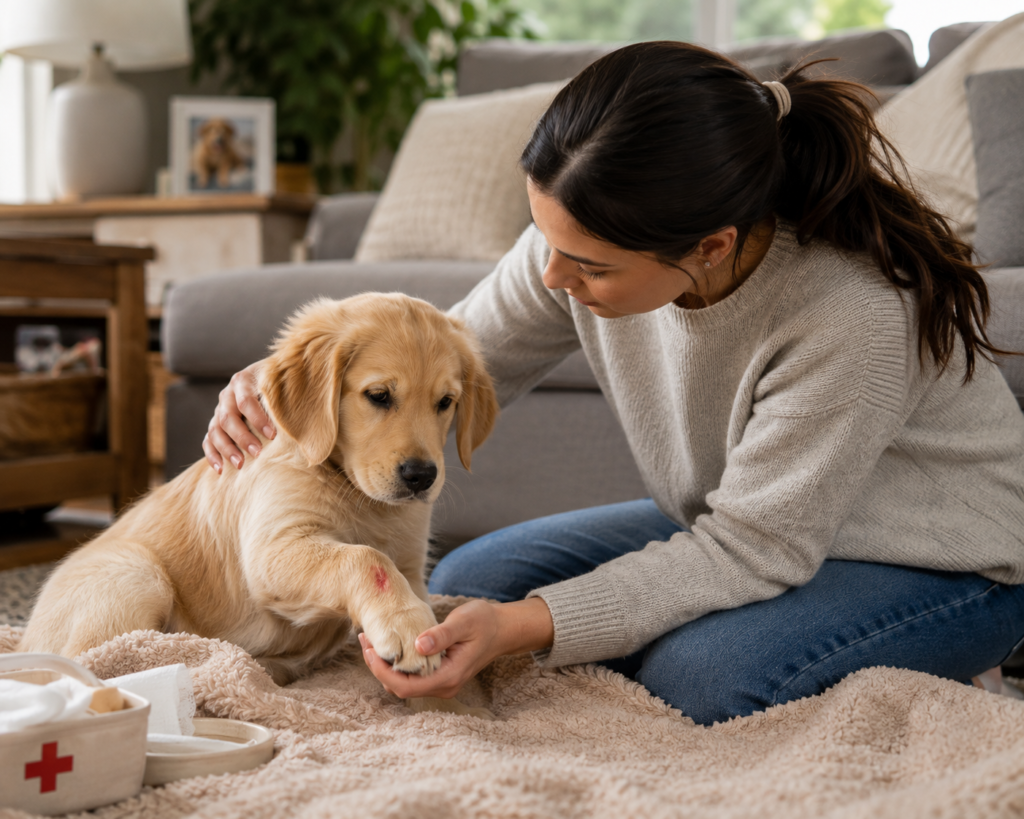
Quick Answer: Yes, puppies can get concussions. A puppy’s skull is thinner and softer than an adult dog’s, making brain injuries more likely after falls, collisions, or other blows to the head. Even what seems like a minor accident can cause a concussion in a young puppy.
If your puppy hits their head and becomes disoriented, vomits, loses balance, has unequal pupils, or loses consciousness, seek veterinary care immediately. Puppies are more vulnerable to head injuries than adult dogs because their brains and skulls are still developing.
🚨 Puppy Head Injury Triage
✅ Monitor at Home
- Minor bump with no swelling
- Puppy returns to normal within a few minutes
- Walking, eating, and playing normally
- No vomiting or unusual behavior
⚠️ Call Your Veterinarian Today
- Small swelling develops after the injury
- Puppy seems quieter or less active than usual
- Mild wobbling or unusual behavior
- Reduced appetite or seems “not quite right”
🚨 Go to an Emergency Veterinarian Immediately
- Loss of consciousness
- Seizures
- Vomiting more than once
- Unequal pupils
- Bleeding from the ears or nose
- Unable to stand or walk normally
- Rapid eye movements
- Extreme weakness or collapse
Key Takeaways
- Puppies can suffer concussions from falls, collisions, and other head injuries.
- Young puppies are at greater risk because their skulls are thinner and still developing.
- Signs of a concussion include wobbling, vomiting, confusion, unequal pupils, and loss of consciousness.
- Some symptoms appear immediately, while others may develop over several hours.
- Keep your puppy calm and limit activity after any significant head injury.
- Never give human pain medication unless instructed by your veterinarian.
- When in doubt, have your puppy examined by a veterinarian as soon as possible.
Puppies are naturally curious, energetic, and sometimes a little clumsy. They run into furniture, tumble off couches, miss steps, and play without realizing how easily they can get hurt. Most of these little bumps are harmless, but some can cause a concussion or other serious head injury.
Because a puppy’s skull and brain are still developing, even a fall that might not seriously injure an adult dog can be much more dangerous for a young puppy. Recognizing the warning signs early and knowing when to seek veterinary care can make a big difference in your puppy’s recovery.
In this guide, you’ll learn how puppies get concussions, the symptoms to watch for, what to do immediately after a head injury, how long recovery usually takes, and when a head injury becomes a veterinary emergency.
Why You’ll Find This Guide Helpful
A head injury can happen in seconds, and it’s often difficult to know whether your puppy has simply bumped their head or suffered a concussion. Understanding the warning signs can help you make quick, informed decisions when every minute matters.
In this guide, you’ll discover:
- ✔ Whether puppies can really get concussions
- ✔ How to recognize the signs of a concussion
- ✔ The difference between a minor bump and a serious head injury
- ✔ What to do immediately after your puppy hits their head
- ✔ When you should contact your veterinarian or visit an emergency clinic
- ✔ Simple ways to help prevent head injuries in the future
Whether your puppy fell off the couch, bumped into furniture, or had a more serious accident, this guide will help you understand what to watch for and when it’s time to seek professional care.
Can Puppies Get Concussions?
Yes. Puppies can get concussions at any age, including newborn puppies. A concussion is a mild traumatic brain injury that happens when a blow to the head or a sudden impact causes the brain to move inside the skull.
Puppies are more likely to suffer head injuries than adult dogs because their skulls are still developing. Young puppies have thinner skull bones, and some breeds have open fontanelles (soft spots) that provide less protection for the brain.
Common causes of puppy concussions include:
- Falling off furniture or down stairs
- Running into walls or hard objects
- Rough play with larger dogs
- Being accidentally dropped
- Objects falling onto the head
- Car accidents
Toy breeds, such as Chihuahuas and Yorkshire Terriers, are especially vulnerable because of their small size. A fall that might not seriously affect a large-breed puppy can cause a significant head injury in a much smaller puppy.
While puppies are naturally playful and clumsy, most bumps are harmless. The injuries that need immediate attention are those followed by changes in behavior, balance, or awareness.
Takeaway: Puppies of any age can suffer a concussion, especially after falls or hard impacts to the head.
How Do You Know If a Puppy Has a Concussion?
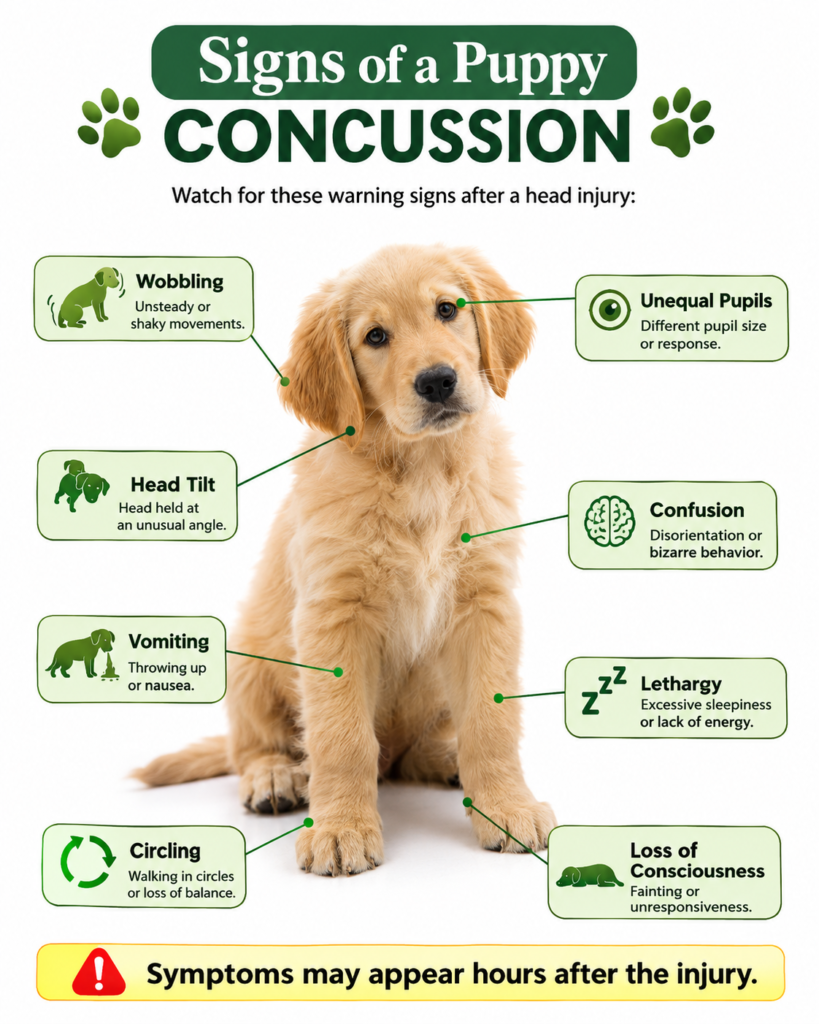
The most common signs of a concussion include:
- Confusion or disorientation
- Wobbling or trouble walking
- Head tilt
- Vomiting
- Lethargy
- Unequal or dilated pupils
- Loss of consciousness
- Repeated circling
- Excessive crying or vocalizing
One of the most important things to remember is that symptoms don’t always appear immediately. Some puppies seem completely normal after a fall but begin showing signs of a concussion several hours later. Because of this, veterinarians recommend monitoring your puppy closely for at least 24 hours after any significant head injury.
Minor Head Bump vs. Concussion
A minor bump usually causes a brief yelp or moment of surprise before your puppy quickly returns to normal.
A concussion is different. Your puppy may continue acting unusually, have trouble walking, seem confused, or develop symptoms that worsen over time.
| Minor Head Bump | Possible Concussion |
|---|---|
| Brief yelp or surprise | Confusion or disorientation |
| Returns to normal within minutes | Wobbling or loss of balance |
| Eats and plays normally | Vomiting or unusual sleepiness |
| Normal behavior | Unequal pupils or seizures |
| No new symptoms | Symptoms appear hours later |
Because brain injuries happen inside the skull, your puppy may have no visible wound at all. A puppy can have a concussion even if the outside of the head looks completely normal.
Takeaway: Watch your puppy’s behavior—not just the injury itself. Changes in balance, alertness, or coordination are much more important than whether there’s a visible bump.
What Should You Do If Your Puppy Hits Their Head?
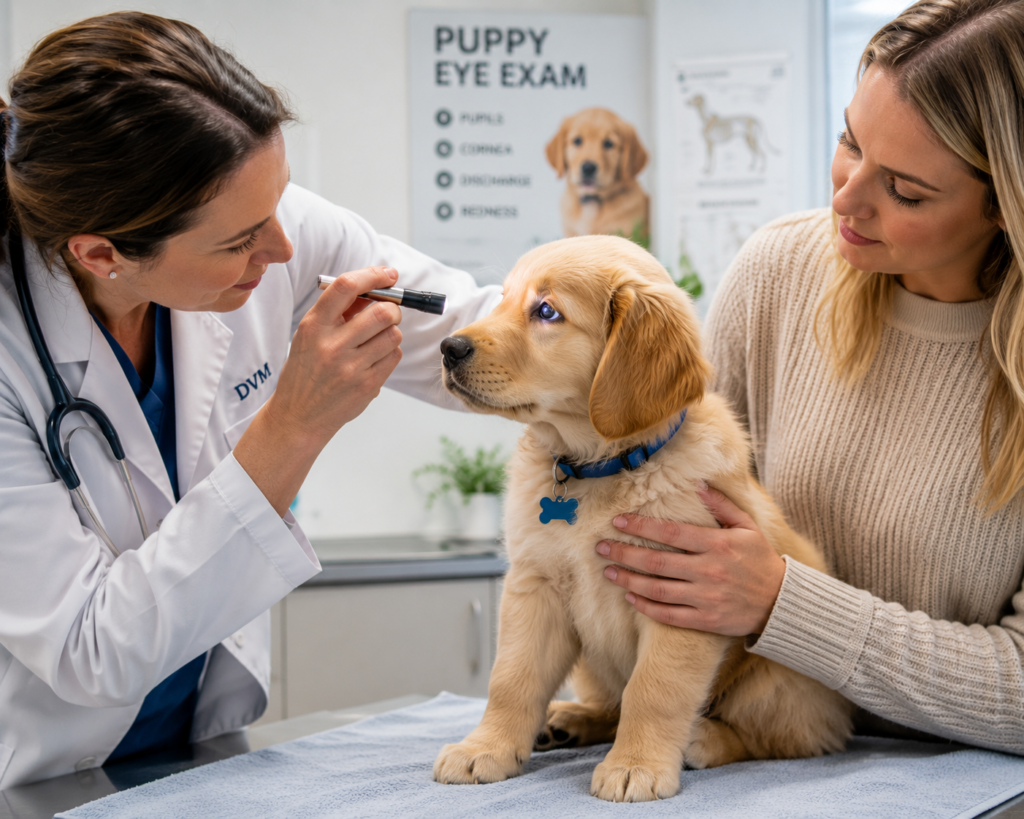
If your puppy hits their head, stay calm and assess them right away. Acting quickly helps you recognize serious problems early and gives your veterinarian valuable information if treatment is needed.
Step 1: Check Responsiveness
Call your puppy’s name and see if they respond normally. A puppy that seems dazed, confused, or doesn’t recognize you should be examined by a veterinarian.
Step 2: Look for Warning Signs
Check for:
- Unequal pupils
- Bleeding from the ears or nose
- Vomiting
- Difficulty walking
- Rapid eye movements
- Trouble standing
Step 3: Keep Your Puppy Calm
Move your puppy to a quiet, padded area and limit activity. Avoid running, jumping, or rough play while you monitor them.
Step 4: Do Not Give Human Medication
Never give ibuprofen, acetaminophen, aspirin, or other human pain relievers. These medications can be toxic to dogs and may worsen certain injuries.
Step 5: Monitor Closely
Watch your puppy carefully over the next 24 hours. Keep track of:
- Appetite
- Energy level
- Walking and balance
- Vomiting
- Changes in behavior
When Should You Go to the Veterinarian?
Seek emergency veterinary care immediately if your puppy has:
- Loss of consciousness
- Seizures
- Vomits more than once
- Unequal pupils
- Bleeding from the ears or nose
- Difficulty standing or walking
- Extreme weakness
- Rapid or irregular breathing
Contact your veterinarian the same day if your puppy seems unusually sleepy, refuses food, develops a swelling on the head, or simply isn’t acting like themselves.
When speaking with your veterinarian, note:
- When the injury happened
- How the injury occurred
- What symptoms you’ve observed
- Whether symptoms are improving or getting worse
Takeaway: After any significant head injury, keep your puppy calm, watch for changes over the next 24 hours, and seek veterinary care immediately if emergency signs develop.
Can Puppies Recover From a Concussion?
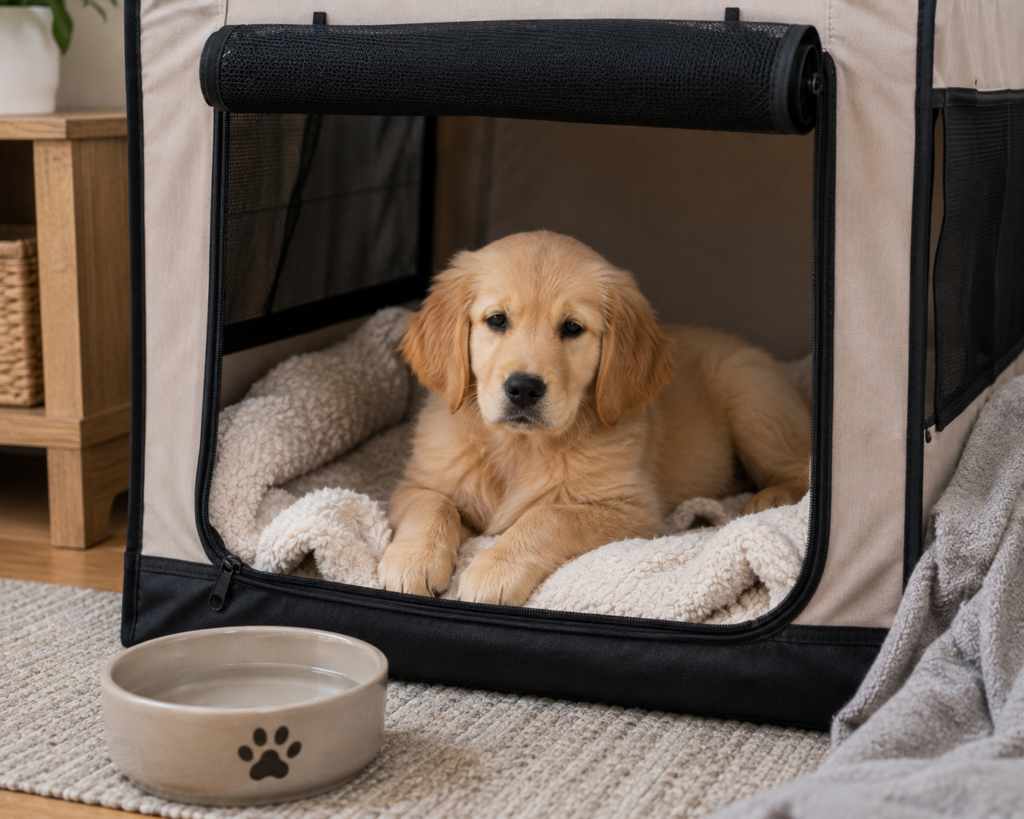
Yes. Most puppies with mild concussions recover completely when they’re examined promptly and allowed to rest.
Recovery depends on how severe the injury is.
| Injury Severity | Typical Recovery Time |
|---|---|
| Mild concussion | 24–72 hours |
| Moderate concussion | 1–2 weeks |
| Severe head injury | Several weeks or longer |
During recovery:
- Keep your puppy quiet.
- Avoid rough play and jumping.
- Use a leash for short bathroom breaks.
- Follow your veterinarian’s treatment plan carefully.
Although most mild concussions heal well, severe injuries can cause brain swelling, bleeding, skull fractures, or permanent neurological damage if treatment is delayed.
The sooner a seriously injured puppy receives veterinary care, the better the chances of a full recovery.
Takeaway: Most mild concussions heal within a few days, but severe head injuries require immediate veterinary treatment and a longer recovery period.
How to Prevent Concussions in Puppies
Most puppy head injuries can be prevented by making your home and play areas safer.
Simple ways to reduce the risk include:
- Block stairs with baby gates.
- Prevent puppies from jumping on and off high furniture.
- Use ramps for small breeds when possible.
- Supervise play with larger dogs.
- Puppy-proof your home by padding sharp furniture corners and securing heavy objects.
- Use a properly fitted harness during walks.
Toy breeds and flat-faced breeds deserve extra care because they’re more vulnerable to head injuries. Some toy breeds, including Chihuahuas and Yorkshire Terriers, may have open fontanelles that leave part of the skull less protected.
A few simple safety precautions can greatly reduce your puppy’s risk of a serious head injury.
Takeaway: Most puppy concussions can be prevented with close supervision, puppy-proofing, and limiting situations where falls or hard impacts are likely.
Can Puppies Sleep After Hitting Their Head?
Yes. A puppy can usually sleep after a minor head injury, but they should be monitored closely for the first 24 hours.
Sleep itself doesn’t make a concussion worse. The concern is making sure your puppy wakes up and responds normally. For the first night after the injury, many veterinarians recommend checking your puppy every 1–2 hours.
When you check on your puppy:
- Call their name gently.
- Make sure they wake up or respond normally.
- Check that they can stand and walk if needed.
- Watch for vomiting, confusion, or balance problems.
If your puppy is difficult to wake, seems unusually confused, or won’t respond to you, seek emergency veterinary care immediately.
Even if your puppy seems fine at first, remember that concussion symptoms can develop several hours after a head injury. Continue watching for changes in appetite, behavior, balance, and alertness throughout the next day.
Takeaway: Let your puppy rest, but monitor them closely during the first 24 hours and seek emergency care if they’re difficult to wake or develop new symptoms.
Frequently Asked Questions
How hard does a puppy have to hit their head to get a concussion?
There isn’t a specific amount of force that always causes a concussion. A fall from a couch may seriously injure a small puppy, while a larger puppy may not be affected by the same fall. Rather than judging the force of the impact, pay close attention to your puppy’s behavior afterward.
Can a puppy get a concussion from shaking their head?
Normal head shaking is very unlikely to cause a concussion. However, violent shaking caused by another dog or a traumatic accident can result in serious brain injury and requires immediate veterinary attention.
My puppy hit their head and now has a bump. Is it a concussion?
Not necessarily. A bump on the head is often caused by swelling or a small collection of blood under the skin. A concussion affects the brain and may occur even when there is no visible injury. If the bump is accompanied by vomiting, wobbling, confusion, or other neurological signs, your puppy should be examined by a veterinarian.
Do puppies heal faster than adult dogs after a concussion?
Puppies often heal quickly from mild injuries, but their developing brains are also more vulnerable to damage. Never assume your puppy will recover without veterinary care if they’re showing signs of a concussion.
What will a veterinarian do for a puppy with a concussion?
Your veterinarian will perform a neurological examination, check your puppy’s pupils, coordination, and reflexes, and assess their overall condition. In more serious cases, imaging such as X-rays or a CT scan may be recommended to look for skull fractures or bleeding. Treatment depends on the severity of the injury and may include monitoring, hospitalization, oxygen therapy, intravenous fluids, or medication.
Conclusion
Puppies can get concussions, and because their skulls and brains are still developing, even injuries that seem minor should be taken seriously. While many puppies recover completely from mild concussions, early recognition and prompt veterinary care are the best ways to prevent serious complications.
If your puppy hits their head, stay calm, keep them quiet, and watch closely for changes in balance, behavior, alertness, or coordination. When warning signs such as repeated vomiting, seizures, unequal pupils, or loss of consciousness appear, don’t wait—seek emergency veterinary care immediately.
With quick action and proper treatment, most puppies with mild head injuries go on to make a full recovery.
References:
- Merck Veterinary Manual, “Brain Injuries” (2023)
- Cornell University College of Veterinary Medicine, “Neurology and Neurosurgery” (2024)
- VCA Animal Hospitals, “Head Trauma in Dogs” (2023)
- American Veterinary Medical Association (AVMA), “Pet Emergency Preparedness” (2024)
- UC Davis School of Veterinary Medicine, “Traumatic Brain Injury in Small Animals” (2023)