
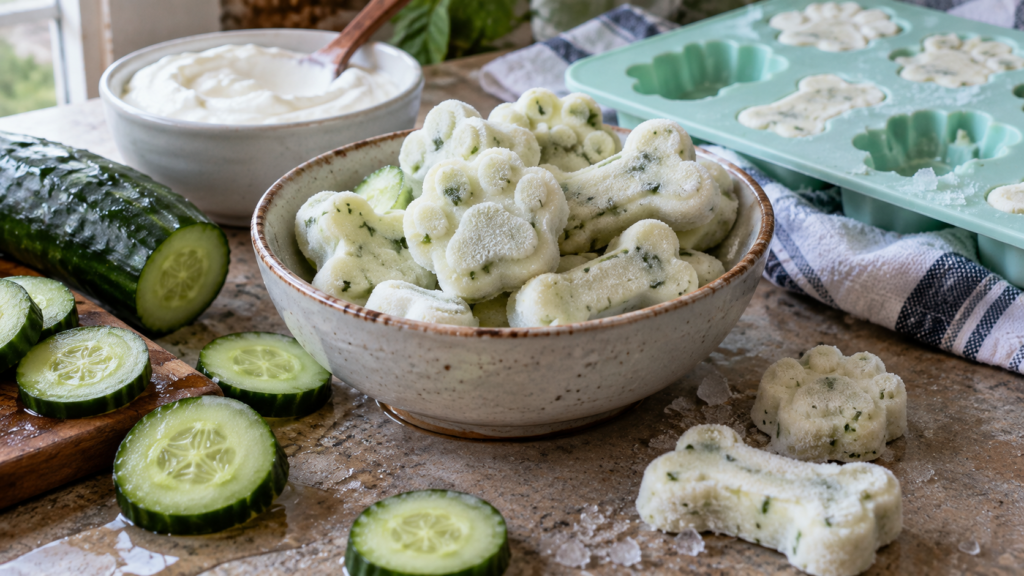
I love having a few easy frozen treats ready for my dog when the weather gets warm, and these cucumber yogurt bites have become one of my favorites. They take just a few minutes to prepare, need only two simple ingredients, and don’t require any baking.
The combination of cool cucumber and creamy plain yogurt makes these little treats light and refreshing. I like making them in small silicone molds so I can keep a batch in the freezer and grab one whenever my dog deserves a chilly snack.
They’re especially handy on warm afternoons when I want to give my dog something fun without making a complicated recipe.
Quick Answer
These frozen cucumber yogurt dog treats are made by blending fresh cucumber with plain, unsweetened yogurt, pouring the mixture into small silicone molds, and freezing until solid.
They’re simple, refreshing, and easy to portion. Just make sure the yogurt contains no xylitol or other artificial sweeteners, and introduce dairy gradually if your dog isn’t used to it.
Recipe Snapshot
| Prep Time | 10 minutes |
| Freeze Time | 4 hours |
| Total Time | About 4 hours 10 minutes |
| Yield | About 12–16 small treats |
| Difficulty | Easy |
| Texture | Creamy and frozen |
| Best For | Occasional treats on warm days |
Key Takeaways
- You only need two main ingredients.
- Use fresh cucumber and plain, unsweetened yogurt.
- Check the yogurt label carefully for xylitol and other sweeteners.
- Small molds make portion control easier.
- Freeze the treats until completely solid.
- Dogs that don’t tolerate dairy may need a lactose-free or dairy-free alternative.
- These are treats, so they should complement—not replace—your dog’s normal diet.
Why Cucumber and Yogurt Work So Well
Cucumber has a naturally high water content and a mild, refreshing flavor, while plain yogurt gives the frozen treats a creamy texture.
The combination also freezes into a softer treat than plain frozen cucumber, making it easy to portion into small bites.
For the cucumber, wash it thoroughly before preparing it. You can peel it for an especially smooth mixture, and removing the seeds can also help create a smoother texture.
For the yogurt, choose plain and unsweetened. Greek yogurt is a convenient option because it tends to contain less lactose than some other yogurts, although individual dogs can still have trouble digesting dairy.
How to Make Frozen Cucumber Yogurt Dog Treats
Ingredients
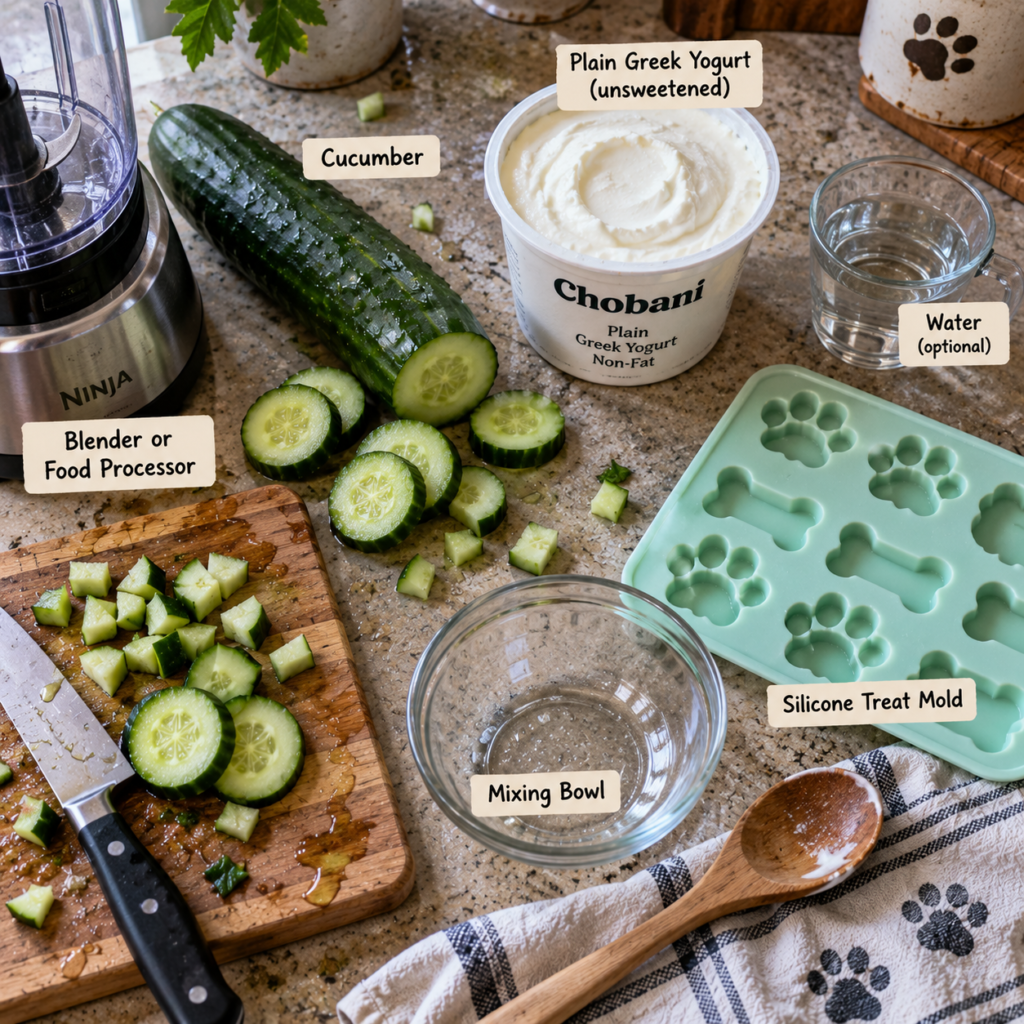
- 1 cup cucumber, chopped
- ½ cup plain, unsweetened Greek yogurt
Optional: 1–2 tablespoons water if needed for blending
Equipment
- Blender or food processor
- Silicone dog-treat mold or ice cube tray
- Freezer-safe container
1. Prepare the Cucumber
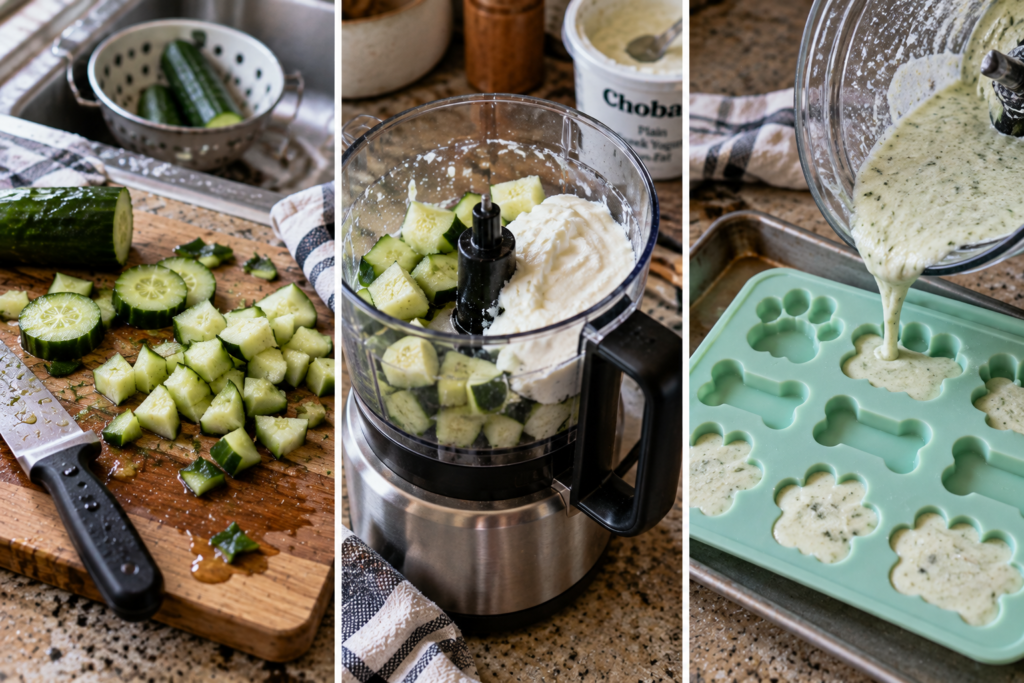
Wash the cucumber thoroughly.
Peel it if you prefer a smoother treat, then chop it into small pieces.
For an especially smooth texture, remove the seeds before blending.
2. Blend the Ingredients
Add the chopped cucumber and yogurt to a blender or food processor.
Blend until smooth and creamy.
If the mixture is too thick to pour easily, add a small amount of water and blend again.
You don’t want to add too much water—the mixture should still have enough body to freeze into solid treats.
3. Fill the Molds
Place your silicone molds or ice cube tray on a flat baking sheet.
Pour the cucumber-yogurt mixture into the cavities, leaving a little room at the top.
Using a baking sheet underneath makes the filled molds much easier to move into the freezer without spilling.
4. Freeze
Transfer the molds to the freezer.
Freeze for at least 4 hours, or until the treats are completely solid.
For the firmest texture, leaving them overnight works well.
5. Remove and Store
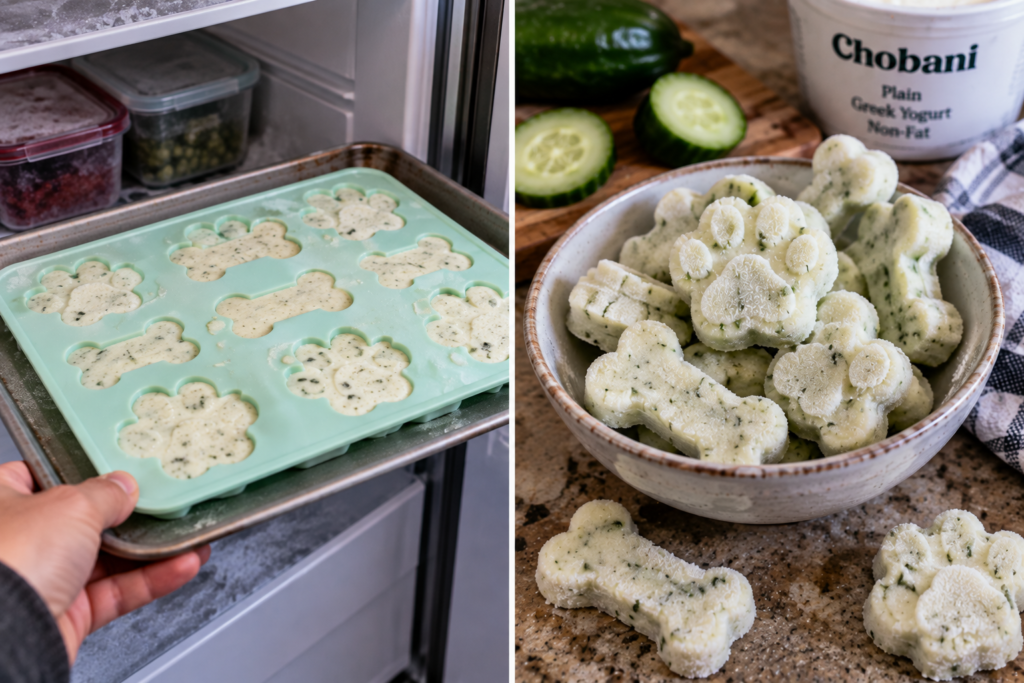
Once frozen, gently pop the treats out of the molds.
Transfer them to an airtight freezer-safe container or freezer bag.
Keep them frozen until you’re ready to serve them.
Serving, Storage & Variations
Serving Size
Start with one small treat when introducing the recipe.
The appropriate amount depends on your dog’s size, overall diet, and tolerance for dairy. Smaller dogs may only need a portion of a larger frozen treat.
Frozen treats can also be firm, so supervise your dog while eating, especially if they tend to swallow treats quickly.
Storage
Keep the treats in an airtight freezer-safe container.
For the best texture and freshness, use them within about 2 months.
Keeping them covered also helps prevent freezer odors from affecting their flavor.
Making Smaller Treats
For small dogs, use a mini silicone mold or standard ice cube tray.
Smaller portions are easier to serve and make it simpler to keep treats within your dog’s daily calorie allowance.
Using Lactose-Free Yogurt
If your dog has trouble with regular dairy, you can use a plain lactose-free yogurt instead.
Always check the ingredient list and choose an unsweetened option without xylitol or other unsafe sweeteners.
Adding Other Dog-Friendly Ingredients
You can keep the recipe exactly as written, or add a small amount of another dog-friendly ingredient such as finely blended blueberries or banana.
Keep additions simple and avoid turning a light frozen treat into a high-calorie dessert.
Common Mistakes
Using Flavored Yogurt
Vanilla, fruit, and dessert-style yogurts often contain added sugar or other ingredients you don’t need.
Plain, unsweetened yogurt is the better choice.
Not Checking for Xylitol
Always read the yogurt label before using it.
Never use yogurt containing xylitol.
Making the Treats Too Large
Large frozen treats can be difficult for smaller dogs to manage.
Small molds are ideal because they make portion sizes easier to control.
Adding Too Much Water
A little water can help a thick mixture blend, but too much will create icy, watery treats.
Start with a tablespoon and add more only if necessary.
Serving Them Too Quickly
The treats need enough time to freeze completely.
Give them at least four hours, and preferably freeze them overnight when possible.
Giving Too Many
Even simple homemade treats count toward your dog’s daily intake.
One or two small treats can be plenty depending on your dog’s size and overall diet.
FAQ
Can dogs eat cucumber?
Yes. Plain cucumber can be given to dogs as an occasional treat. Wash it thoroughly and cut it into manageable pieces.
Can dogs eat yogurt?
Many dogs can have plain yogurt in moderation, but some dogs have difficulty digesting lactose. Start with a small amount and see how your dog responds.
What type of yogurt is best for dogs?
Plain, unsweetened Greek yogurt is a convenient choice. Avoid products containing xylitol, added sweeteners, or unnecessary flavorings.
Can puppies eat frozen cucumber yogurt treats?
Healthy puppies that are already eating solid food can have a small amount as an occasional treat. Introduce new foods gradually and use very small portions.
Can I make these treats without yogurt?
Yes. You can simply freeze blended cucumber or small cucumber pieces, although the texture will be more icy and less creamy.
How long do frozen cucumber yogurt treats last?
For the best quality, use them within about two months when stored in an airtight freezer-safe container.
Can dogs eat frozen treats?
Dogs can enjoy appropriately sized frozen treats, but supervision is important. Choose a size your dog can comfortably manage and avoid very large, extremely hard pieces.
What if my dog gets an upset stomach after eating one?
Stop serving the treats and monitor your dog. If vomiting, diarrhea, weakness, or other concerning symptoms are severe or persistent, contact your veterinarian.
Conclusion
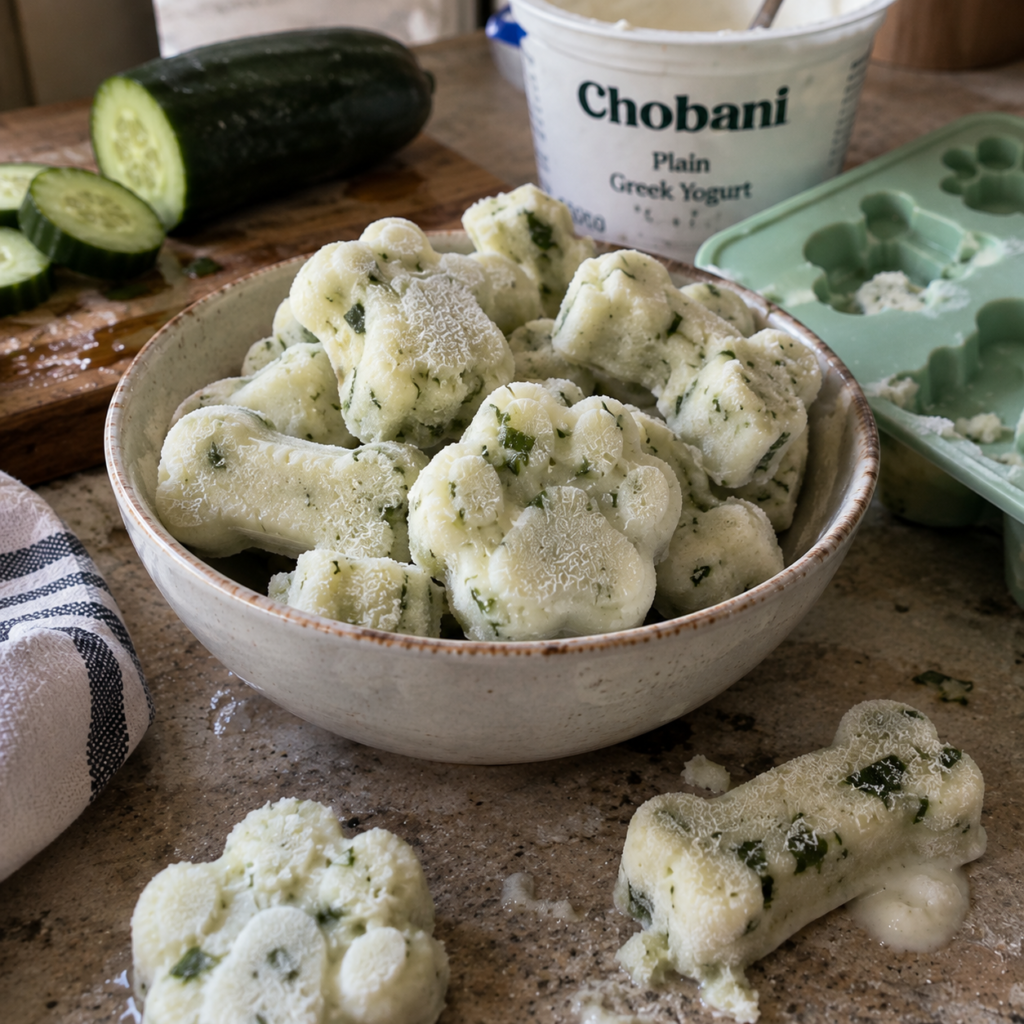
These frozen cucumber yogurt dog treats are exactly the kind of recipe I like keeping in the freezer—quick, simple, and made with ingredients I can easily recognize.
All you need is cucumber, plain yogurt, and a few minutes of preparation. Once the treats are frozen, they’re ready whenever your dog needs a cool little snack.
Keep the portions small, choose the yogurt carefully, and introduce them gradually if your dog hasn’t had much dairy before.
Medical Disclaimer
This recipe is intended as an occasional treat for healthy dogs and is not a substitute for a complete and balanced diet or veterinary care.
Dogs with food allergies, lactose intolerance, gastrointestinal conditions, prescription diets, or other medical concerns may need different ingredients or portion sizes. Speak with your veterinarian before introducing new treats if your dog has a medical condition or dietary restriction.
References
- PetMD — Can Dogs Eat Cucumbers?
- PetMD — Can Dogs Eat Yogurt?
- American Kennel Club — Can Dogs Eat Yogurt?
- American Kennel Club — DIY Frozen Dog Treats
- The Tailwag Lab — Homemade Cucumber Yogurt Frozen Dog Treats
- House That Barks — Cucumber Yogurt Frozen Puppy Dog Treats
- On My Kids Plate — Easy Cucumber Yogurt Dog Treats