
Quick Answer: Most puppies open their eyes between 10 and 14 days after birth, although anywhere from 7 to 21 days is considered normal depending on the breed and the individual puppy. When their eyes first open, their vision is blurry and limited. Puppies don’t see clearly right away—full vision develops gradually over the next 6 to 8 weeks. Never try to force a puppy’s eyes open, and contact your veterinarian if the eyes remain closed after 21 days or you notice swelling or thick discharge.
Key Takeaways
- Most puppies open their eyes between 10 and 14 days after birth.
- The normal range is 7 to 21 days, depending on breed size and individual development.
- Puppies are born with fused eyelids to protect their developing eyes.
- Newly opened eyes often appear cloudy blue-gray, which is completely normal.
- Vision develops slowly and usually reaches adult levels by 6 to 8 weeks of age.
- Never force a puppy’s eyelids open, as this can cause permanent eye damage.
- Swelling, thick yellow or green discharge, or eyes that remain closed after 21 days require immediate veterinary attention.
- Most puppies’ eye color begins changing around 3 to 4 weeks and settles by 8 to 12 weeks.
Puppy Eye Development Quick Facts
| Milestone | Typical Timeline |
|---|---|
| Eyes begin opening | 10–14 days (normal range: 7–21 days) |
| Full vision develops | 6–8 weeks |
| Eye color starts changing | 3–4 weeks |
| Final eye color | 8–12 weeks |
| Call your veterinarian if | Eyes remain closed after 21 days, or swelling and thick discharge are present |
| Never do this | Force a puppy’s eyelids open |
Watching a litter of puppies grow is exciting, and one of the biggest milestones is seeing their eyes open for the first time. It’s also one of the questions new dog owners and breeders ask most often: “When should my puppy open its eyes?”
The good news is that most puppies follow a predictable development timeline. During the first two weeks of life, their eyes stay closed while the delicate tissues inside continue to develop. Once the eyelids begin to separate, vision improves little by little over the following weeks.
In this guide, you’ll learn when puppies normally open their eyes, why they’re born with closed eyelids, what healthy eyes should look like, when vision fully develops, and which warning signs mean it’s time to contact your veterinarian.
Why You’ll Find This Guide Helpful
There are many myths about puppy eye development. Some people worry when one puppy opens its eyes before the others, while others think they should help the eyelids open sooner. This guide explains what’s normal and what isn’t.
You’ll learn:
- ✔ When puppies normally open their eyes
- ✔ Why puppies are born with closed eyelids
- ✔ How vision develops during the first two months
- ✔ What healthy puppy eyes should look like when they first open
- ✔ The warning signs that require immediate veterinary attention
- ✔ The safest way to care for puppies during this important stage of development
Whether you’re raising your first litter or caring for a single newborn puppy, this guide will help you understand each stage of healthy eye development with confidence.
When Do Puppies Open Their Eyes After Birth?
Most puppies open their eyes between 10 and 14 days after birth, although anywhere from 7 to 21 days falls within the normal range. The process happens gradually rather than all at once. You’ll usually notice a small slit appearing first, often near the inner corner of the eyelid, before the eye opens fully over the next day or two.
It’s also normal for one eye to open before the other. Even puppies in the same litter may reach this milestone on different days, so don’t worry if one puppy opens its eyes slightly earlier than its siblings.
Keeping track of each puppy’s development can be helpful, especially if you’re raising a litter. Recording the date each puppy opens its eyes makes it easier to spot delays and discuss any concerns with your veterinarian.
Takeaway: Most puppies open their eyes between 10 and 14 days, and slight differences between littermates are completely normal.
Why Are Puppies Born With Their Eyes Closed?
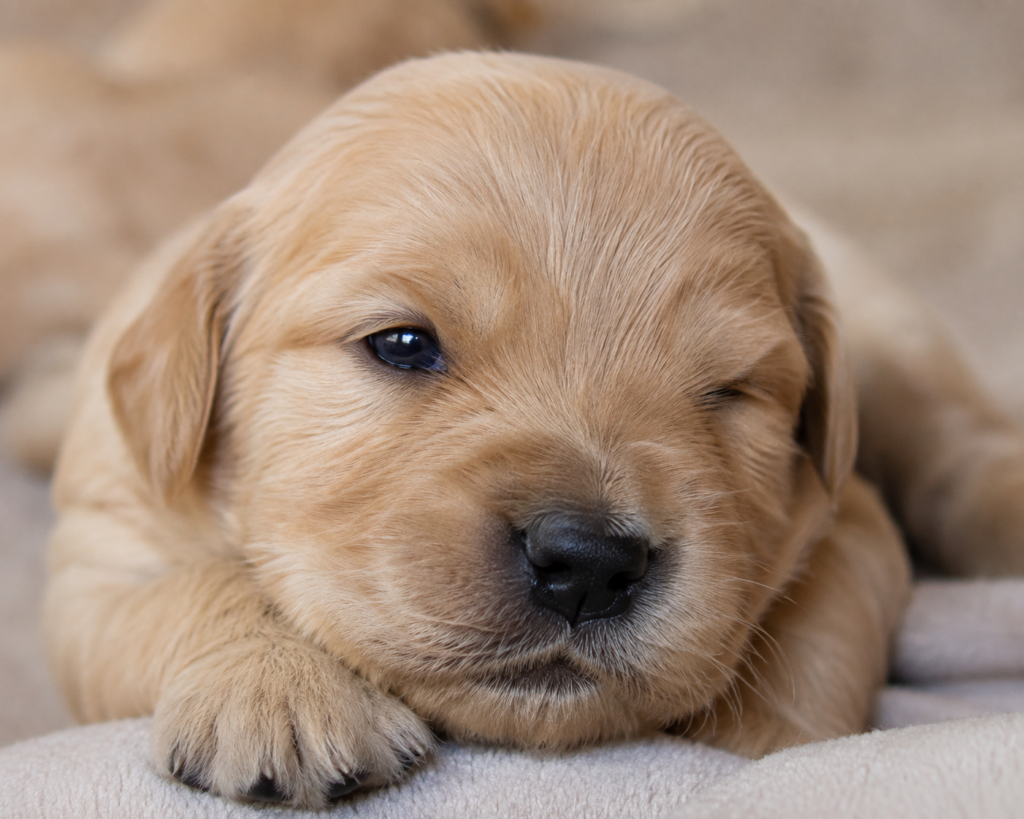
Puppies are born with their eyelids fused shut because their eyes haven’t finished developing. The closed eyelids protect the delicate retina, cornea, and optic nerve while these structures continue maturing during the first two weeks of life.
This natural seal also helps protect the eyes from bright light, dust, bacteria, and other irritants while the puppy is at its most vulnerable stage.
Many people assume closed eyes mean a puppy was born too early, but that’s not the case. Dogs are naturally born at an early stage of development. During the first few weeks after birth, their brains, nervous systems, hearing, vision, and movement all continue developing outside the womb.
For this reason, you should never try to separate a puppy’s eyelids yourself. The lids will open naturally once the eyes underneath are ready.
Takeaway: Closed eyelids are a normal part of healthy puppy development and protect the eyes while they continue to mature.
Do Puppies Open Their Eyes at Different Times?
Yes. Not every puppy reaches this milestone on the same day. Both breed and individual development influence when the eyes begin to open.
Here’s a general guide:
| Breed Size | Typical Eye-Opening Age | Examples |
|---|---|---|
| Toy & Small Breeds | 7–10 days | Chihuahua, Pomeranian, Yorkshire Terrier |
| Medium Breeds | 10–14 days | Beagle, Border Collie, Cocker Spaniel |
| Large & Giant Breeds | 14–21 days | Labrador Retriever, German Shepherd, Great Dane |
Even within the same litter, puppies may open their eyes a day or two apart. Some simply develop a little faster than others, and that’s usually nothing to worry about.
Breed size also plays a role. Smaller breeds often reach developmental milestones slightly earlier, while larger breeds tend to mature more slowly.
Takeaway: Breed size and individual growth both affect when puppies open their eyes. A few days’ difference between littermates is completely normal.
Are Puppies Blind Before Their Eyes Open?
Yes. Newborn puppies are both blind and deaf during their first days of life. Their eyelids are sealed shut, and their ear canals remain closed, so they rely almost entirely on their sense of smell, touch, and body heat to find their mother and littermates.
Although they can’t see or hear, puppies are far from helpless. They use instinctive rooting movements to locate their mother’s milk and spend most of their time sleeping, nursing, and growing.
As their nervous system develops over the next two weeks, their eyes and ears gradually become functional. Even after their eyes open, their vision remains blurry and continues improving over several weeks.
Takeaway: Puppies are born blind because their eyes and nervous system are still developing. Vision begins only after the eyelids naturally open.
How Long Until Puppies Can See Clearly After Opening Their Eyes?
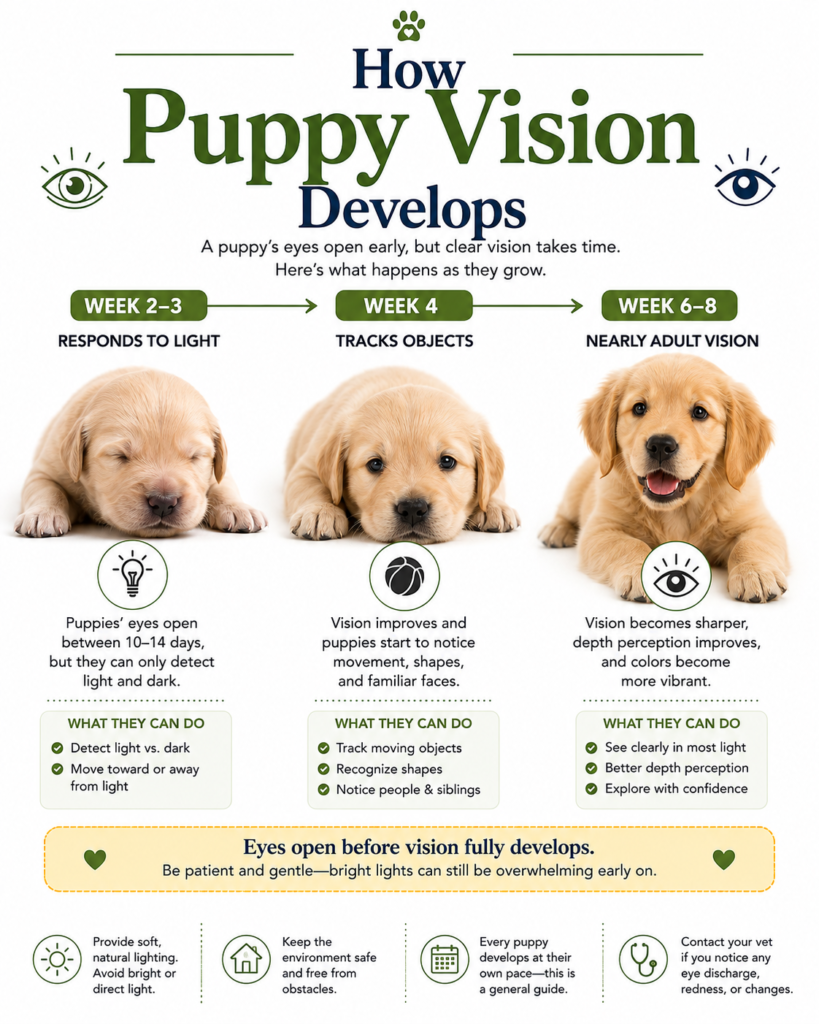
Opening their eyes is only the beginning of a puppy’s visual development. Although the eyelids separate around 10 to 14 days, puppies don’t see clearly right away. Their vision improves gradually over the next 6 to 8 weeks as the eyes and brain continue to mature.
Here’s what you can expect:
| Age | Vision Development |
|---|---|
| 2–3 weeks | Eyes are open, but vision is blurry. Puppies mainly respond to light and movement. |
| 4 weeks | Puppies begin tracking objects and recognizing their littermates visually. |
| 6–8 weeks | Focus, depth perception, and coordination improve significantly. Vision approaches adult levels. |
It’s common for owners to worry when a three-week-old puppy bumps into objects or seems slow to respond to movement. At this age, the visual system is still developing, so this behavior is usually normal.
Takeaway: Puppies don’t gain full vision the moment their eyes open. Their eyesight continues improving until they’re about 6 to 8 weeks old.
Can You Help a Puppy Open Its Eyes?
No. You should never try to force a puppy’s eyelids open.
The eyelids are naturally fused together to protect the delicate tissues underneath while the eyes continue developing. Pulling them apart too early can damage the cornea, introduce bacteria, and lead to permanent vision problems.
Some older advice recommends using warm compresses to encourage the eyelids to open. While gently cleaning dried crust around the eyes is fine, you should never apply pressure or try to separate the eyelids yourself.
If a puppy’s eyes haven’t opened by 18 to 21 days, your veterinarian can examine the eyes and decide whether treatment is needed.
Takeaway: Let the eyes open naturally. Never attempt to separate the eyelids yourself.
What If Your Puppy’s Eyes Don’t Open?
Most puppies open their eyes within the normal 7 to 21-day window. If one or both eyes remain closed after this period, it’s time to contact your veterinarian.
Delayed eye opening may be caused by:
- Congenital eyelid abnormalities
- Infection beneath the fused eyelids
- Swelling or inflammation preventing the eyelids from separating
It’s also important to watch puppies whose littermates have already opened their eyes. One puppy developing a little later than the others is often normal, but a significant delay deserves veterinary attention.
Early treatment is important because infections beneath the eyelids can progress quickly and may permanently damage the eye if left untreated.
Takeaway: If a puppy’s eyes haven’t opened by about three weeks of age, don’t continue waiting—schedule a veterinary examination.
Signs of Eye Problems in Puppies
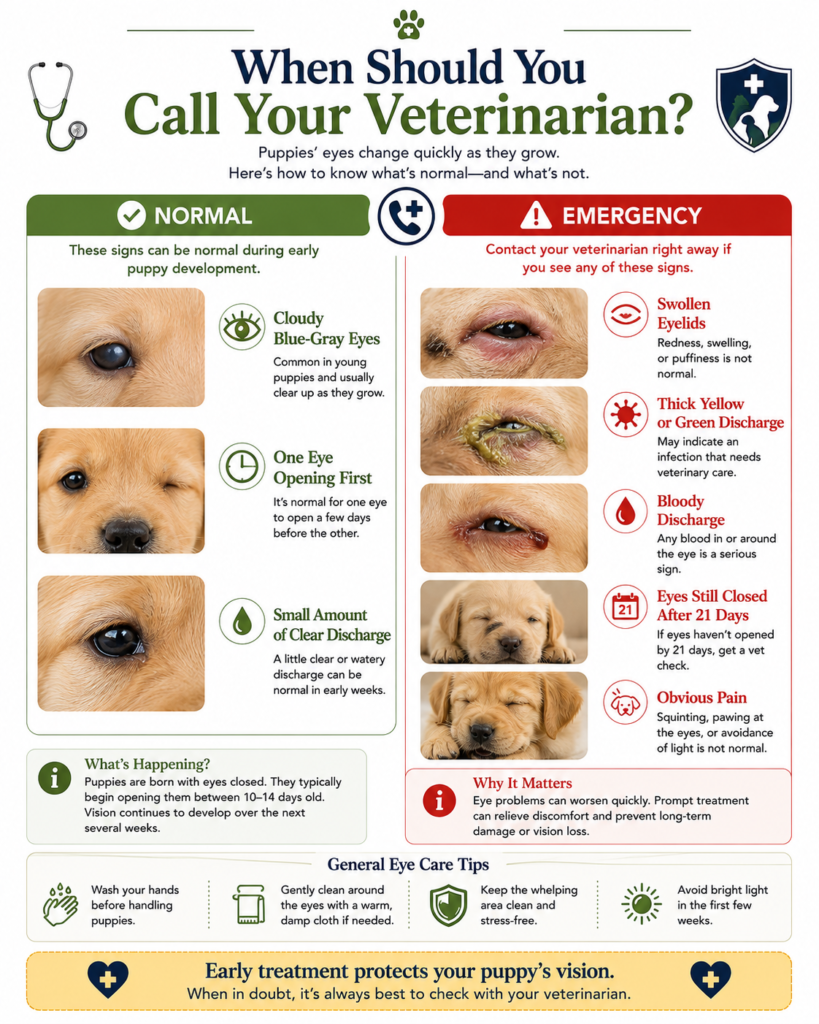
Most puppies open their eyes without any problems, but it’s important to know the warning signs that require immediate veterinary care.
Normal Findings
- Cloudy blue-gray eyes
- Small amount of clear discharge
- One eye opening before the other
- Slow improvement in vision
Contact Your Veterinarian Immediately If You Notice:
| Warning Sign | Possible Concern |
|---|---|
| Swollen eyelids | Infection or inflammation |
| Thick yellow or green discharge | Bacterial infection |
| Bloody discharge | Serious eye injury |
| Redness around the eyes | Infection or irritation |
| Puppy crying or pawing at the face | Pain or discomfort |
| Foul odor from the eye area | Severe infection |
One of the most serious conditions in newborn puppies is neonatal conjunctivitis (ophthalmia neonatorum). This bacterial infection develops beneath the sealed eyelids and requires immediate veterinary treatment to protect the puppy’s eyesight.
Takeaway: Mild cloudiness is normal, but swelling, thick discharge, redness, or pain should always be treated as a veterinary emergency.
When Do Puppies’ Eyes Change Color?
Most puppies are born with blue or blue-gray eyes. As they grow, the iris gradually produces more pigment, causing the eye color to change.
The process usually begins around 3 to 4 weeks of age, with the final eye color becoming established between 8 and 12 weeks.
Most puppies eventually develop brown or amber eyes. However, some breeds—such as Siberian Huskies, Australian Shepherds, and certain merle-patterned dogs—may naturally keep blue eyes throughout adulthood.
Don’t be surprised if your four-week-old puppy still has bright blue eyes. This is a normal part of development, and the final color may not be obvious until they’re close to three months old.
Takeaway: Blue-gray eyes are expected in young puppies. Final eye color usually develops between 8 and 12 weeks of age.
How to Care for Puppies During the Eye-Opening Stage
The eye-opening stage is an exciting milestone, but puppies still need a clean, safe environment while their vision continues to develop. Most of their care focuses on protecting their eyes and reducing the risk of infection.
Here are a few simple ways to support healthy eye development:
- Keep the whelping box clean. Replace bedding regularly to reduce bacteria and moisture.
- Use soft lighting. Avoid bright, direct light while the eyes are still adjusting.
- Monitor the mother. Make sure she’s cleaning the puppies gently and caring for them normally.
- Check the eyes every day. Look for swelling, redness, or unusual discharge.
- Wash your hands before handling puppies. This helps reduce the chance of introducing bacteria.
Newborn puppies also need a warm, draft-free environment because they can’t regulate their body temperature during the first few weeks of life.
Takeaway: A clean environment, gentle handling, and daily observation are the best ways to support healthy eye development.
Can You Touch a Puppy’s Eyes?
Yes, but only with great care.
It’s perfectly fine to gently handle a puppy during routine health checks, but you should never rub the eyes or apply pressure to the eyelids. If you notice a small amount of dried discharge around the eyes, gently wipe the area using a soft cotton pad dampened with warm water.
Never use:
- Human eye drops
- Contact lens solution
- Medicated creams
- Cotton swabs directly on the eye
- Home remedies recommended online
If a puppy’s eyes appear swollen, painful, or produce thick yellow or green discharge, skip home treatment and contact your veterinarian immediately.
Takeaway: Gentle cleaning around the eyes is fine, but never touch the eyeball itself or use human eye medications.
Frequently Asked Questions
Can puppies see as soon as their eyes open?
No. When puppies first open their eyes, their vision is still blurry. They mainly respond to light and movement, and their eyesight continues developing over the next 6 to 8 weeks.
Is it normal for one eye to open before the other?
Yes. One eye often opens a day or two before the other. As long as both eyes open within the normal developmental window and there are no signs of swelling or infection, this is completely normal.
What happens if you force a puppy’s eyes open?
Forcing the eyelids apart can damage the cornea, introduce bacteria, and permanently affect the puppy’s vision. Always allow the eyelids to separate naturally.
Do premature puppies open their eyes later?
They can. Premature puppies may reach developmental milestones later than full-term puppies. If you suspect a puppy was born prematurely, your veterinarian can advise you on the expected timeline and supportive care.
Why do some puppies keep blue eyes?
Most puppies are born with blue-gray eyes that gradually change color as pigment develops. Some breeds, including Siberian Huskies, Australian Shepherds, and certain merle-coated dogs, naturally keep blue eyes throughout life.
Can puppies go blind from eye infections?
Yes. Severe infections beneath the closed eyelids can permanently damage the eyes if they aren’t treated quickly. Swelling, thick discharge, or redness should always be treated as a veterinary emergency.
How can I tell if my puppy’s eyes are developing normally?
Healthy puppies usually open their eyes between 10 and 14 days, have cloudy blue-gray eyes at first, gradually respond to light and movement, and develop clearer vision over several weeks. Swelling, thick discharge, or eyes remaining closed after 21 days should be evaluated by a veterinarian.
Should I clean around my puppy’s eyes?
Yes. If there’s a small amount of dried discharge, gently clean around the eye using a soft cotton pad dampened with warm water. Never use human eye medications unless your veterinarian specifically instructs you to do so.
Conclusion
Watching a puppy open its eyes for the first time is one of the most memorable moments of early development. While most puppies reach this milestone between 10 and 14 days after birth, every puppy develops at its own pace, and small differences are completely normal.
The most important thing you can do is let the process happen naturally. Never force the eyelids open, keep the environment clean, and watch for warning signs such as swelling, thick discharge, or eyes that remain closed beyond three weeks.
When in doubt, it’s always safest to contact your veterinarian. Early treatment can protect your puppy’s eyesight and help ensure healthy development during these important first weeks of life.
References
[1] Sierra Pet Meds – https://sierrapetmeds.com/blog/33/
[2] PawBlooms – When Do Puppies Open Their Eyes Eye Opening Timeline – https://pawblooms.com/when-do-puppies-open-their-eyes-eye-opening-timeline/
[3] Purina – When Do Puppies Eyes Open – https://www.purina.com/articles/dog/puppy/health/when-do-puppies-eyes-open
[4] Dogster – When Puppies Open Eyes – https://www.dogster.com/dog-health-care/when-puppies-open-eyes