

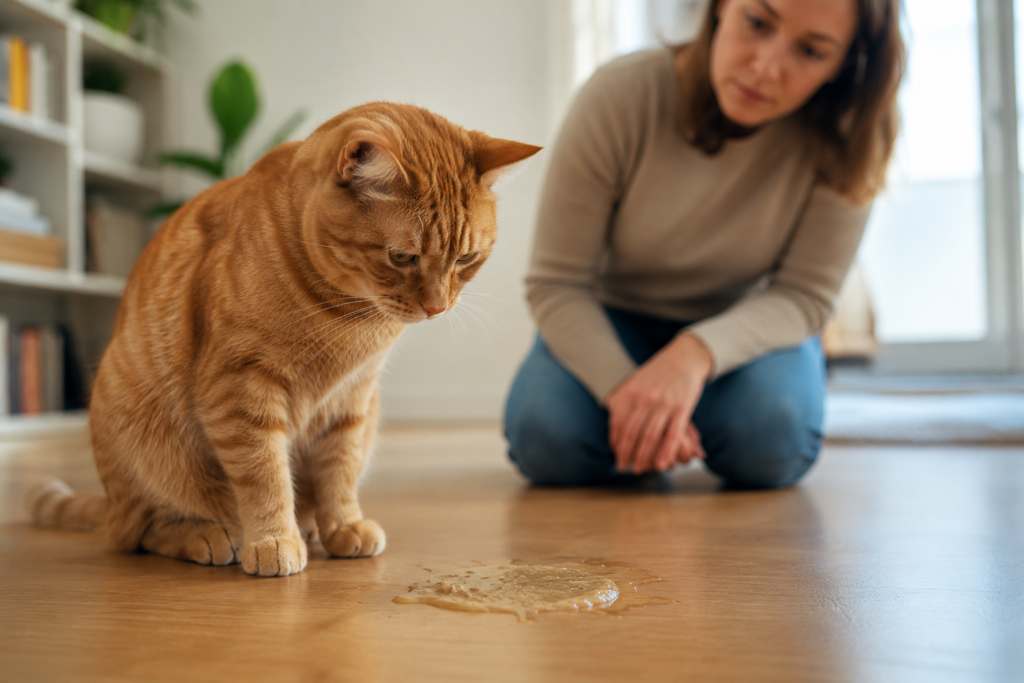
Finding vomit on the floor or watching your cat throw up can be worrying—especially if you don’t know whether it’s just a harmless hairball or a sign of something more serious. While occasional vomiting is fairly common in cats, frequent or severe vomiting can indicate an underlying health problem that needs veterinary attention.
The most common reasons cats vomit include hairballs, eating too quickly, sudden diet changes, and mild stomach upset. However, vomiting can also be an early symptom of conditions such as kidney disease, intestinal blockages, food allergies, or poisoning. Knowing what to look for can help you decide whether it’s safe to monitor your cat at home or if it’s time to call your veterinarian.
In this guide, you’ll learn the most common causes of cat vomiting, how to tell the difference between normal and abnormal vomiting, when it’s an emergency, what treatments may help, and practical steps you can take to reduce future episodes.
At a Glance
🐱 Most common causes: Hairballs, eating too fast, diet changes
🟢 Usually safe to monitor: One isolated episode, otherwise acting normally
🟡 Call your vet: Vomiting several times, loss of appetite, lethargy
🔴 Emergency: Blood in vomit, suspected poisoning, swallowing string, repeated unproductive retching
Quick Answer: An occasional vomiting episode is often caused by hairballs, eating too quickly, or a mild stomach upset. However, vomiting several times in a day, vomiting blood, repeated dry retching, or vomiting alongside lethargy, weight loss, or suspected poisoning requires prompt veterinary attention.
Key Takeaways
- Occasional vomiting is normal in cats; frequent vomiting is not
- Hairballs, fast eating, and dietary changes are the most common causes
- Vomiting and regurgitation are different — and the distinction changes the diagnosis
- Chronic vomiting (more than 3 weeks) may indicate IBD, kidney disease, or hyperthyroidism
- Blood in vomit, repeated retching, or suspected poisoning requires emergency care
- A consistent diet, regular grooming, and slow-feeder bowls can reduce vomiting episodes
- Withholding food briefly can help mild cases — but never withhold water
- Your vet may need blood work, X-rays, or ultrasound to find the underlying cause
What’s the Difference Between Vomiting and Regurgitation in Cats?
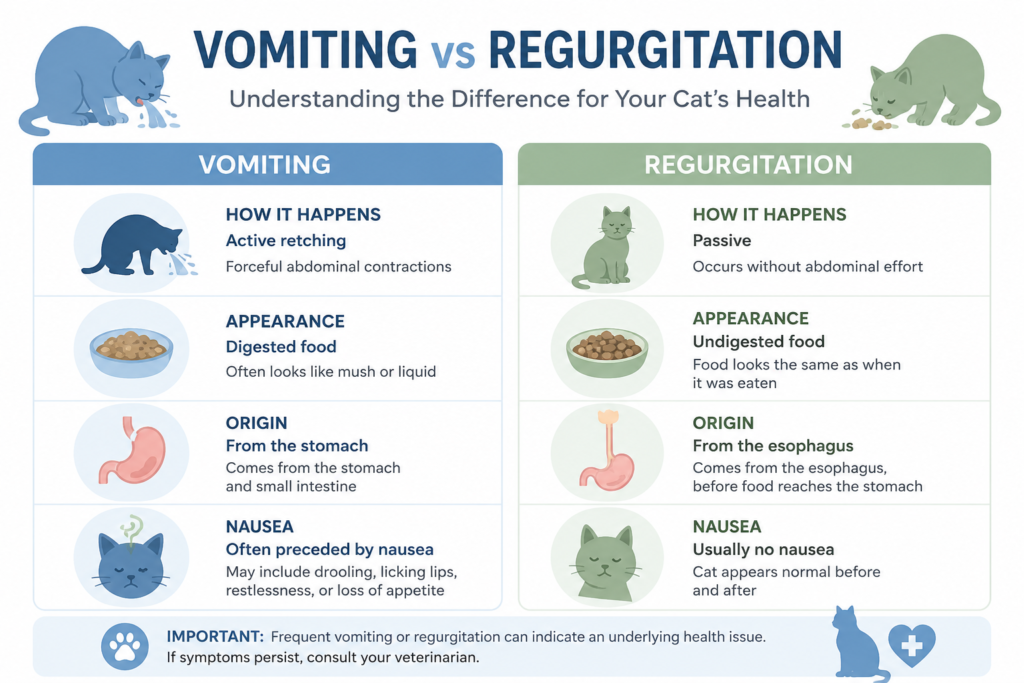
Vomiting and regurgitation may look similar, but they’re two different problems. Vomiting is an active process that starts in the stomach, while regurgitation is a passive process where undigested food comes back up from the esophagus. Knowing which one your cat is experiencing helps your veterinarian narrow down the possible cause much faster.
| Feature | Vomiting | Regurgitation |
|---|---|---|
| Effort | Active retching or heaving | Happens suddenly with little effort |
| Source | Stomach or upper intestines | Esophagus |
| Appearance | Partially digested food, bile, or foam | Undigested tube-shaped food |
| Timing | Can happen hours after eating | Usually within minutes of eating |
| Common causes | Hairballs, illness, diet changes | Esophageal disorders |
Vet Tip: If possible, record a short video of the episode on your phone. What looks like vomiting to you may actually be regurgitation, and seeing it firsthand can help your veterinarian make a quicker diagnosis.
What Are the Most Common Reasons Cats Throw Up?
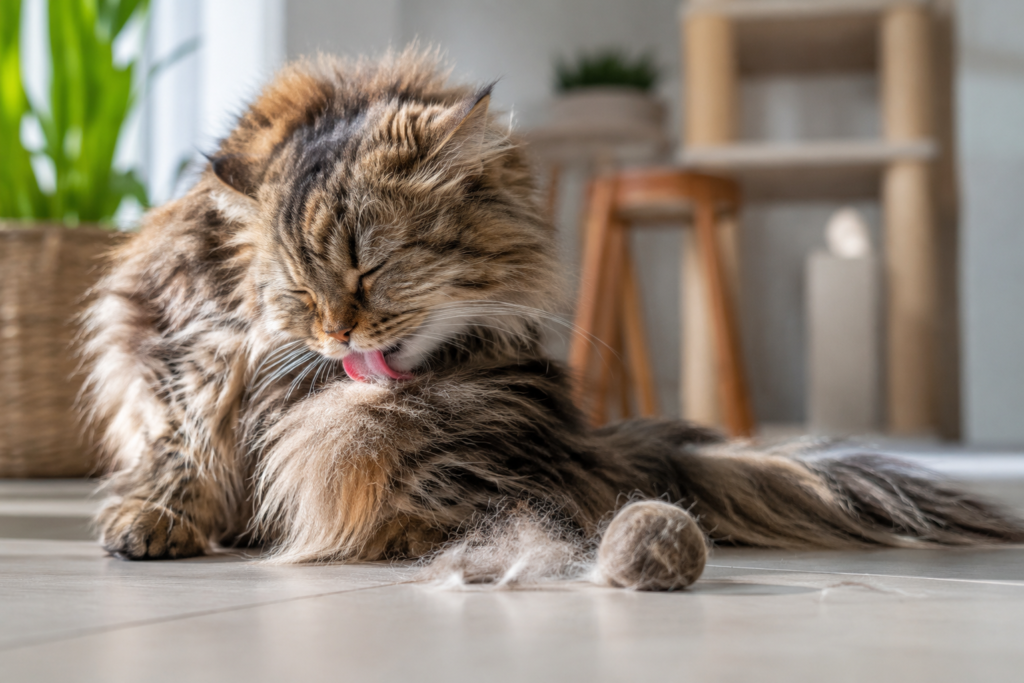
The most common reasons cats vomit include hairballs, eating too quickly, sudden diet changes, food sensitivities, and medical conditions such as kidney disease. While many vomiting episodes are caused by relatively minor problems, frequent or severe vomiting should never be ignored.
Some causes are harmless and temporary, while others require prompt veterinary care. Here’s how to tell them apart.
- Hairballs: Cats swallow loose fur while grooming, and most of it passes through the digestive tract without causing problems. Sometimes, however, the fur builds up in the stomach and is vomited as a tube-shaped clump of hair. If your cat vomits a hairball but is otherwise eating, drinking, and acting normally, it’s usually not a cause for concern.
- Eating too fast: Some cats eat so quickly that they vomit undigested food within minutes of finishing a meal. Slow-feeder bowls or smaller, more frequent meals can often solve the problem.
- Sudden diet changes: Switching your cat’s food too quickly can upset their stomach and cause vomiting. Always transition to a new food gradually over 7–10 days.
- Foreign objects: Swallowing string, rubber bands, or small toys can block the digestive tract and is a medical emergency. Contact your vet immediately if you suspect your cat has swallowed a foreign object.
- Underlying health conditions: Frequent or ongoing vomiting can be a sign of conditions such as kidney disease, hyperthyroidism, diabetes, or liver disease. If your cat is also losing weight, drinking more water, or acting unusually tired, schedule a veterinary visit.
Some cats eat grass before vomiting, possibly to help clear hair or other irritating material from their stomach. Occasional grass eating is usually normal, but frequent vomiting should be checked by a vet.
What Does the Color of My Cat’s Vomit Mean?
The color and appearance of your cat’s vomit can provide helpful clues about the possible cause. While it’s not enough to diagnose a problem on its own, it can help you decide whether your cat can be monitored at home or should be seen by a veterinarian.
| Vomit Appearance | Possible Cause | What You Should Do |
|---|---|---|
| White foam | Empty stomach, mild stomach irritation | Monitor if your cat is otherwise acting normally. |
| Yellow liquid (bile) | Empty stomach or digestive upset | Offer smaller, more frequent meals. See your vet if it keeps happening. |
| Hairball | Swallowed fur | Usually normal unless it happens frequently. |
| Undigested food | Eating too quickly or regurgitation | Feed smaller meals or use a slow-feeder bowl. |
| Clear liquid | Water, mucus, or stomach irritation | Monitor for other symptoms. |
| Blood (red or coffee-ground) | Bleeding in the digestive tract | Seek emergency veterinary care immediately. |
While occasional vomiting of hairballs or bile isn’t always a cause for concern, vomiting blood, repeated vomiting, or vomiting accompanied by lethargy, diarrhea, or loss of appetite should always be evaluated by a veterinarian.
Is Cat Vomiting Always a Sign of Something Serious?
Not always. An otherwise healthy cat that vomits occasionally but continues eating, drinking, and behaving normally is often experiencing a minor issue, such as a hairball or mild stomach upset.
Vomiting becomes more concerning if it happens frequently, lasts more than a day or two, or is accompanied by symptoms such as lethargy, weight loss, increased thirst, diarrhea, or a swollen abdomen. These signs may point to an underlying medical condition that requires veterinary care.
Practical takeaway: Keep a simple log — date, frequency, what the vomit looked like, and whether your cat ate beforehand. Even a week’s worth of notes gives your vet a clearer picture than memory alone.
How Do I Know If My Cat’s Vomiting Is an Emergency?
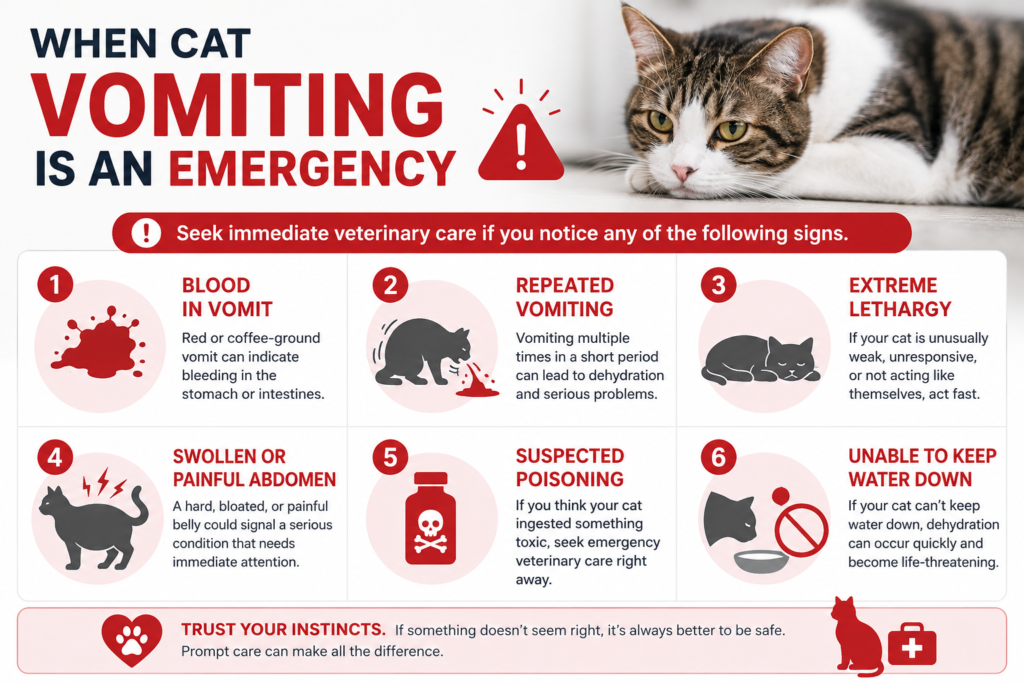
🚨 When to Monitor Your Cat vs. Call the Vet
🟢 Monitor at Home:
- Vomiting once or twice, then acting completely normal
- Hairball vomit with no other symptoms
- Mild stomach upset after a food change
🟡 Contact Your Vet Within 24 Hours:
- Vomiting more than 2–3 times in 24 hours
- Vomiting paired with decreased appetite or mild lethargy
- Vomiting after a recent diet change that isn’t resolving
- Kitten or senior cat vomiting — these age groups dehydrate faster
🔴 Seek Emergency Veterinary Care Immediately:
- Blood in the vomit (red or dark brown/coffee-ground appearance)
- Suspected ingestion of a toxic substance (lilies, antifreeze, medications)
- Repeated retching with nothing coming up — possible obstruction
- Vomiting with a distended or painful abdomen
- Collapse, extreme weakness, or unresponsiveness
- Known or suspected foreign body ingestion (string, toy parts)
Lily poisoning is a true emergency in cats. Even small amounts of Easter, tiger, or daylilies can cause severe kidney damage. If you suspect your cat has chewed any part of a lily, contact an emergency veterinarian immediately.
How Often Is It Normal for Cats to Vomit?
There’s no exact number that’s considered “normal,” but vomiting more than once a week should be discussed with your veterinarian. Some cats occasionally vomit a hairball, while others rarely vomit at all. What’s most important is any change from your cat’s normal pattern.
For example, a cat that vomits after eating too quickly is different from one that vomits several times a week with no obvious cause. Chronic vomiting that lasts longer than three weeks should always be evaluated by a veterinarian.
Can Cat Food Allergies Cause Vomiting?
Yes. Food allergies and food sensitivities can cause ongoing vomiting in some cats. Common triggers include beef, chicken, fish, and dairy.
Unlike a sudden stomach upset, food-related vomiting is usually ongoing rather than a one-time episode. Your veterinarian may recommend a hydrolyzed or novel-protein diet to identify the trigger. Don’t start an elimination diet on your own, as it must be followed strictly to provide accurate results.
Can Stress or Anxiety Make Cats Vomit?
Yes. Stress can upset a cat’s digestive system and trigger vomiting. Changes such as moving house, a new pet, loud noises, or disruptions to their routine are common causes.
If your cat tends to vomit during stressful events, reducing stress may help. Providing hiding places, sticking to a routine, and using calming pheromone diffusers such as Feliway can make a difference. In some cases, your veterinarian may recommend anti-anxiety medication.
What Should I Feed a Cat That Keeps Vomiting?
If your cat vomits once but is otherwise acting normally, wait 2–4 hours before offering a small amount of bland, easily digestible food. Always provide fresh water, as cats can become dehydrated quickly.
Your veterinarian may recommend:
- Plain boiled chicken breast (no seasoning, no skin)
- A small amount of plain white rice mixed with protein
- A prescription gastrointestinal diet from your vet
Cats with ongoing vomiting need a diet based on the underlying cause. For example, high-fiber diets may help with hairballs, while hydrolyzed diets are often used for food allergies. Always speak with your veterinarian before making major dietary changes.
What Home Remedies Help a Vomiting Cat — and Which Ones Don’t?
A few simple home remedies can help with mild, occasional vomiting, but they aren’t a substitute for veterinary care if your cat keeps vomiting or has other symptoms.
What can help:
- Slow-feeder bowls or puzzle feeders to reduce gulping
- Regular brushing to reduce ingested fur (especially in long-haired breeds like Maine Coons and Persians)
- Hairball-control treats or gels containing petroleum jelly or psyllium (vet-approved formulas)
- Feeding smaller, more frequent meals instead of one or two large ones
- Transitioning foods gradually over 7–10 days
What to avoid:
- Never give human medications such as Pepto-Bismol or Imodium unless your veterinarian specifically instructs you to.
- Withholding food for more than a few hours without vet guidance
- Assuming “it’s just hairballs” without ruling out other causes if vomiting is frequent
Hairball remedies only help if hairballs are actually the cause. If your cat continues vomiting despite using them, it’s time to see your veterinarian rather than trying more home treatments.
Common Mistakes Cat Owners Make
Even well-meaning cat owners can make mistakes when trying to help a vomiting cat. Avoiding these common errors can prevent complications and ensure your cat gets the care they need.
- Assuming it’s always a hairball. Frequent vomiting is never normal, even if your cat occasionally produces hairballs.
- Giving human medications. Never give medications such as Pepto-Bismol or Imodium unless your veterinarian specifically tells you to.
- Changing foods too quickly. Sudden diet changes can upset your cat’s stomach and make vomiting worse. Transition to new foods gradually over 7–10 days.
- Waiting too long to seek veterinary care. Repeated vomiting, blood in the vomit, or signs such as weight loss and lethargy should never be ignored.
- Ignoring other symptoms. Vomiting combined with diarrhea, increased thirst, difficulty breathing, or abdominal pain often points to a more serious underlying condition.
When in doubt, it’s always safer to contact your veterinarian rather than trying multiple home remedies without knowing the cause.
When Should I Take My Cat to the Vet for Vomiting?
Contact your veterinarian if your cat vomits more than two or three times in 24 hours, continues vomiting for more than 48 hours, or develops other symptoms such as lethargy, weight loss, diarrhea, blood in the vomit, or changes in appetite. Kittens and senior cats should be examined sooner because they can become dehydrated more quickly.
Trust your instincts. If your cat seems unwell or something doesn’t feel right, it’s always safer to have them examined. Cats often hide signs of illness until they’re seriously sick.
What Tests Does a Vet Do for a Vomiting Cat?
The tests your veterinarian recommends depend on your cat’s age, symptoms, and how long the vomiting has been happening. A physical exam may be all that’s needed for a mild, one-time episode, while ongoing or severe vomiting usually requires additional testing.
For chronic or severe vomiting, the workup typically includes:
- Complete blood count (CBC) and chemistry panel — checks for kidney disease, liver disease, diabetes, and infection
- Thyroid hormone test (T4) — rules out hyperthyroidism, especially in cats over 8
- Urinalysis — assesses kidney function and hydration
- Abdominal X-rays — look for foreign objects, gas patterns, or organ enlargement
- Ultrasound — provides detailed imaging of the stomach wall, intestines, and lymph nodes
- Endoscopy or biopsy — used when inflammatory bowel disease or intestinal lymphoma is suspected
Early testing can identify many conditions before they become more serious. If your cat has been vomiting regularly, don’t wait for it to resolve on its own.
How Can I Prevent My Cat from Vomiting?
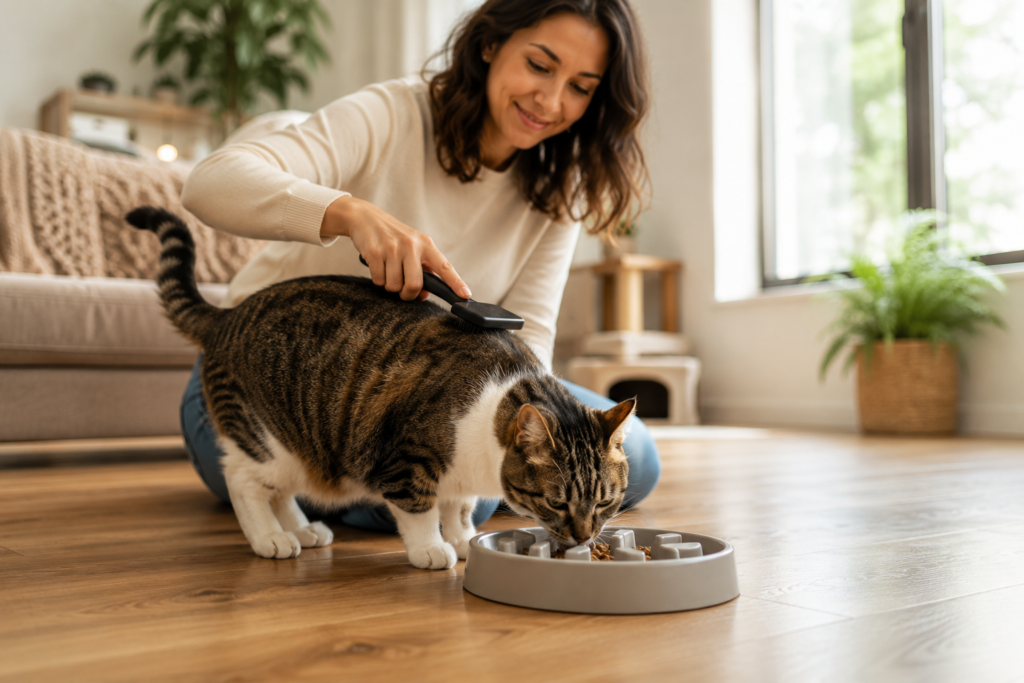
The best way to prevent vomiting depends on the cause, but a few simple habits can reduce the risk for most cats.
Regular brushing helps reduce hairballs, especially in long-haired cats. Feeding smaller meals or using a slow-feeder bowl can prevent vomiting caused by eating too quickly. If you’re changing foods, do so gradually over 7–10 days to avoid upsetting your cat’s stomach. Keep toxic plants, string, rubber bands, and other small objects out of your cat’s reach.
Frequently Asked Questions
Why is my cat vomiting white foam?
White foam typically means the stomach is empty and producing excess acid or mucus. It’s often seen in cats that haven’t eaten for a while, or in cats with gastritis. A single episode in an otherwise healthy cat usually isn’t alarming, but recurring white foam vomiting — especially in the morning — can indicate acid reflux, inflammatory bowel disease, or hyperthyroidism and warrants a vet visit.
Why is my cat vomiting yellow liquid?
Yellow vomit is bile, which means the stomach was empty when the cat vomited. This often happens when a cat goes too long between meals. Feeding smaller, more frequent meals can help. If yellow bile vomiting happens regularly, it may indicate a condition called “bilious vomiting syndrome” or an underlying GI issue — both worth discussing with your vet.
Can worms cause vomiting in cats?
Yes. Intestinal parasites including roundworms, hookworms, and tapeworms can cause vomiting, especially in kittens. In heavy infestations, you may actually see worms in the vomit. Regular deworming and annual fecal tests are the best prevention. If you suspect parasites, don’t use over-the-counter dewormers without vet guidance — the right treatment depends on identifying the specific parasite.
Why does my cat vomit after eating grass?
Grass-eating followed by vomiting is thought to be an instinctive behavior that helps cats clear indigestible material (like fur or feathers) from the stomach. It’s generally harmless for indoor cats with access to cat-safe grass. The concern arises if the grass has been treated with pesticides or herbicides, or if your cat is eating grass compulsively, which can sometimes indicate a nutritional deficiency or GI discomfort.
Is it normal for cats to vomit every day?
No. Daily vomiting is not normal and should be evaluated by a vet. While some cats are more “vomit-prone” than others, daily episodes suggest an underlying cause — whether dietary, parasitic, or systemic — that needs to be identified and treated. Normalizing daily vomiting is one of the most common mistakes cat owners make.
Can a cat’s vomiting be contagious to other pets?
If the cause is infectious — such as feline panleukopenia (feline distemper), certain bacterial infections, or parasites — yes, it can potentially spread to other cats in the household. It cannot spread to dogs or humans. If multiple cats in your home start vomiting around the same time, contact your vet promptly, as this pattern suggests an infectious or environmental cause.
Conclusion
Most vomiting episodes are caused by minor problems such as hairballs or eating too quickly, but frequent or severe vomiting should never be ignored. Paying attention to your cat’s symptoms and acting early can make a big difference.
Actionable next steps:
- Start a simple vomiting log today if your cat vomits more than once a month
- Switch to a slow-feeder bowl if your cat gulps food quickly
- Book a vet visit if vomiting has been happening weekly for more than two weeks
- Go to emergency care immediately if you see blood, suspect poisoning, or repeated unproductive retching
- Ask your vet about annual bloodwork if your cat is over 10 — catching systemic disease early is the most effective form of prevention
If you’re ever unsure whether your cat’s vomiting is serious, it’s always safest to contact your veterinarian. Early treatment often leads to better outcomes.
Editorial Note
This article has been reviewed for accuracy and is based on current veterinary guidance from trusted sources, including the Cornell Feline Health Center, the Merck Veterinary Manual, and other reputable veterinary resources. It is intended for educational purposes only and should not replace professional veterinary advice, diagnosis, or treatment. If your cat is vomiting repeatedly, appears ill, or develops concerning symptoms, contact your veterinarian promptly.
References
- Cornell Feline Health Center.Vomiting. Cornell University College of Veterinary Medicine. Available at: https://www.vet.cornell.edu/departments-centers-and-institutes/cornell-feline-health-center/health-information/feline-health-topics/vomiting (Accessed July 20, 2026).
- Merck Veterinary Manual.Vomiting in Cats. Available at: https://www.merckvetmanual.com/cat-owners/digestive-disorders-of-cats/vomiting-in-cats (Accessed July 20, 2026).
- PetMD.Cat Vomiting: Causes and Types. Available at: https://www.petmd.com/cat/symptoms/cat-vomiting-causes-and-types (Accessed July 20, 2026).
- PetMD.Chronic Vomiting in Cats. Available at: https://www.petmd.com/cat/conditions/digestive/chronic-vomiting-cats (Accessed July 20, 2026).