
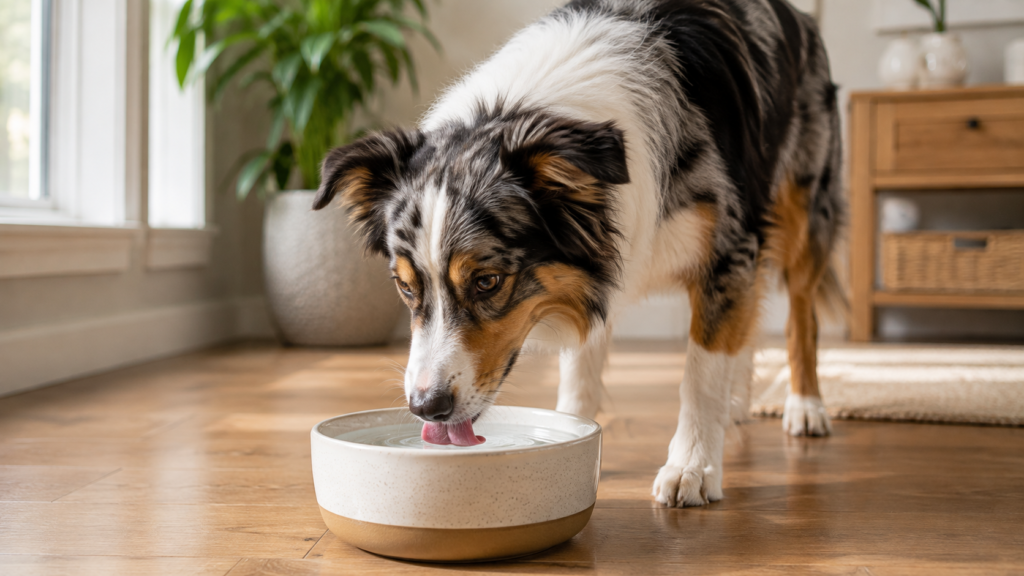
Quick Answer: If your dog is suddenly drinking much more water than usual, it may be caused by something as simple as hot weather, increased exercise, or a change in diet. But persistent excessive thirst, called polydipsia, can also be associated with medical conditions such as kidney disease, diabetes mellitus, Cushing’s disease, liver disease, or pyometra.
A general veterinary guideline is around 50–60 mL of water per kilogram of body weight per day. Consistently drinking around 90–100 mL/kg/day or more is considered excessive and deserves veterinary investigation.
If your dog is drinking more and urinating more, losing weight, vomiting, becoming lethargic, or showing changes in appetite, contact your veterinarian.
Never restrict your dog’s water unless your veterinarian specifically tells you to.
Key Takeaways
- Dogs generally drink around 50–60 mL/kg of water per day, although individual needs vary.
- Consistently drinking around 90–100 mL/kg/day or more can indicate excessive thirst.
- Hot weather, exercise, dry food, and some medications can naturally increase water intake.
- Kidney disease, diabetes mellitus, Cushing’s disease, liver disease, and pyometra can also cause excessive thirst.
- Increased thirst combined with increased urination is especially important to discuss with your veterinarian.
- Measure your dog’s water intake over 24–48 hours instead of estimating by eye.
- Never restrict water without veterinary guidance.
- Sudden excessive thirst accompanied by vomiting, severe weakness, collapse, or other serious symptoms needs prompt veterinary attention.
How Much Water Should a Dog Drink Per Day?
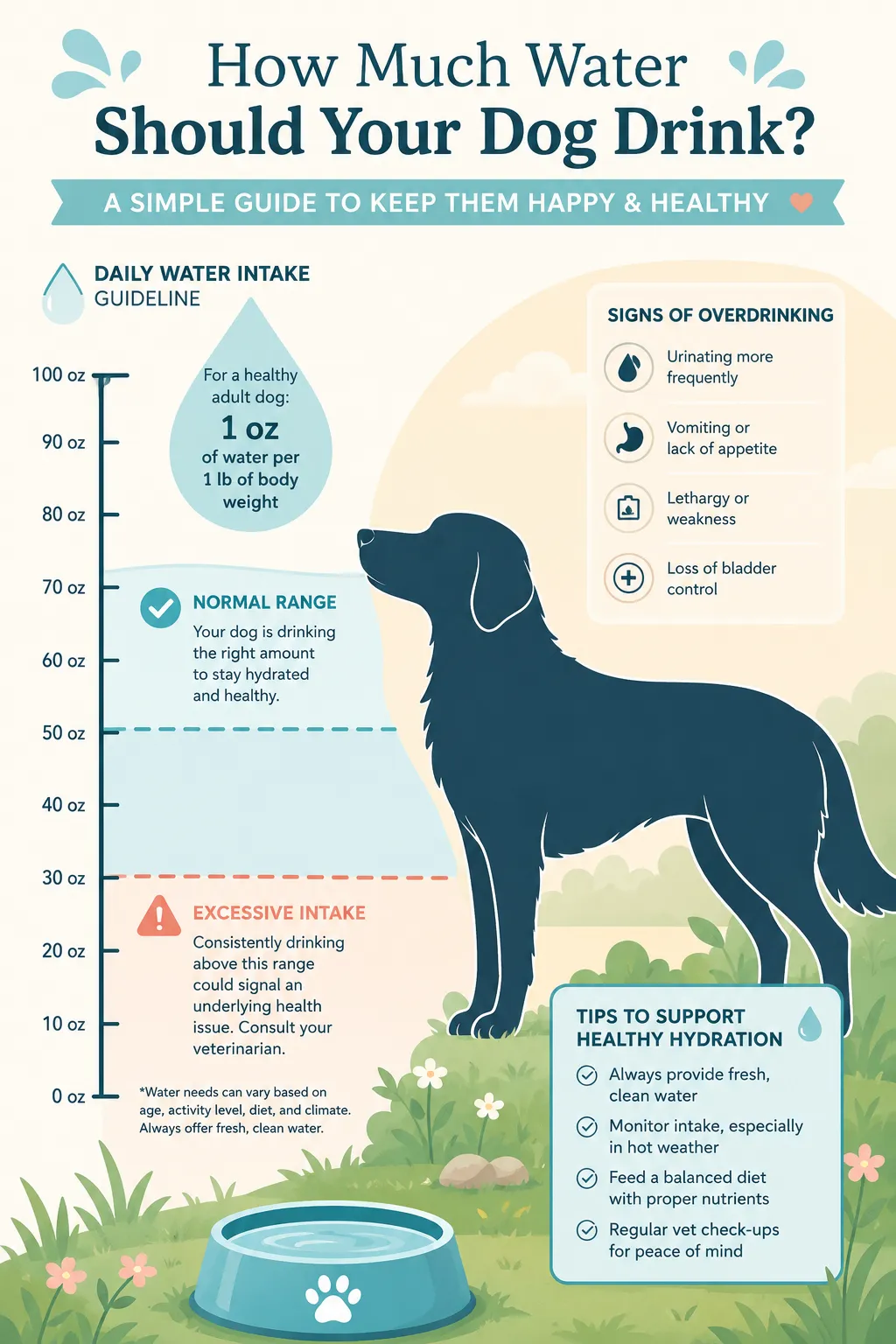
A general guideline is approximately 50–60 mL of water per kilogram of body weight per day, although individual requirements can vary.
For example:
| Dog Weight | Approximate Daily Water |
|---|---|
| 5 kg / 11 lb | 250–300 mL |
| 10 kg / 22 lb | 500–600 mL |
| 20 kg / 44 lb | 1–1.2 L |
| 30 kg / 66 lb | 1.5–1.8 L |
| 40 kg / 88 lb | 2–2.4 L |
These are general estimates, not strict requirements.
A dog’s water needs can change depending on:
- Temperature
- Exercise
- Diet
- Age
- Pregnancy or nursing
- Health
- Medications
Dogs eating canned food may drink less directly from their water bowl because wet food contains substantially more moisture than dry kibble.
Likewise, a dog exercising heavily in hot weather may temporarily drink considerably more than usual.
How to Measure How Much Water Your Dog Drinks
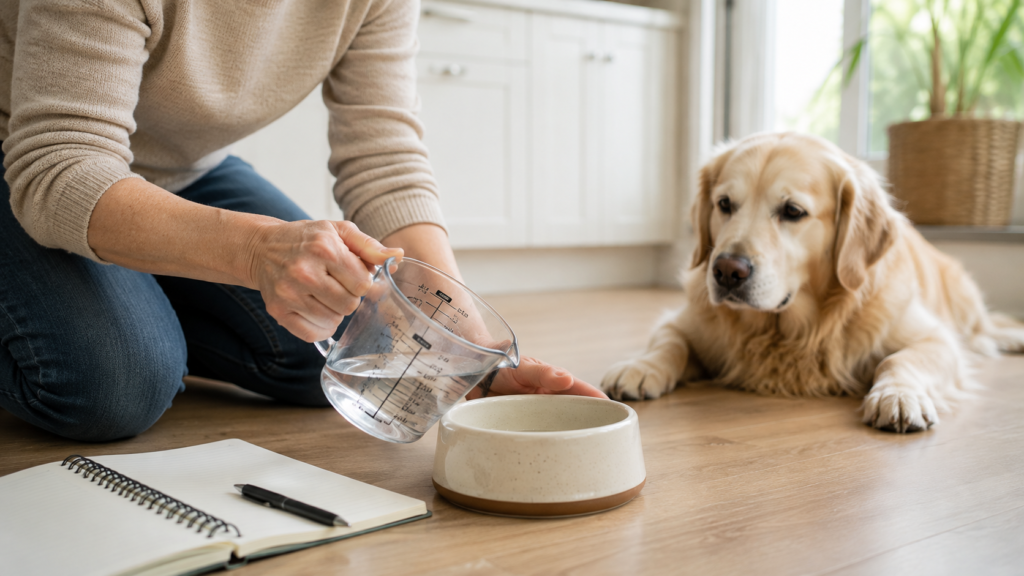
If you’re concerned that your dog is drinking too much, measuring their intake is much more useful than guessing.
Step 1: Measure the Water
Fill the bowl with a measured amount of water each morning.
Step 2: Record Refills
Write down how much water you add each time you refill the bowl.
Step 3: Measure for 24–48 Hours
Continue for at least one full day. Two days can help determine whether the increase is consistent rather than a one-time change.
Step 4: Calculate mL/kg/day
Divide the total amount consumed in milliliters by your dog’s weight in kilograms.
For example:
1,200 mL ÷ 20 kg = 60 mL/kg/day
That’s within the general range described above.
If your dog’s intake consistently approaches or exceeds 90–100 mL/kg/day, contact your veterinarian.
Don’t Forget Other Water Sources
Your measurement can be affected by:
- Wet food
- Ice cubes
- Water added to meals
- Multiple water bowls
- Outdoor water sources
So try to account for these when possible.
🧮 Dog Water Intake Calculator
Use this calculator for a rough estimate of the general daily water range based on body weight.
It is not a diagnostic tool and cannot determine whether your dog’s water intake is medically appropriate.
<divstyle="font-family:Arial,sans-serif;max-width:420px;margin:25pxauto;padding:20px;border:1pxsolid #ddd;border-radius:10px;background:#fafafa"><h3style="text-align:center;margin:008px;color:#333;"> Dog Water Intake Calculator</h3><pstyle="font-size:13px;color:#666;line-height:1.5;"> Enter your dog's weight to estimate the general daily water range.</p><labelfor="dogWaterWeight"style="display:block;margin-bottom:6px;font-size:14px;"> Dog's weight:</label><inputid="dogWaterWeight"type="number"min="0.5"step="0.1"placeholder="Example: 20"style="width:100%;box-sizing:border-box;padding:10px;border:1pxsolid #ccc;border-radius:5px;margin-bottom:8px;"><selectid="dogWaterUnit"style="width:100%;padding:10px;border:1pxsolid #ccc;border-radius:5px;margin-bottom:10px;"><optionvalue="kg">Kilograms (kg)</option><optionvalue="lb">Pounds (lb)</option></select><buttontype="button"onclick="calculateDogWater()"style="width:100%;padding:11px;background:#486B32;color:white;border:0;border-radius:5px;cursor:pointer;font-size:14px;"> Calculate</button><divid="dogWaterResult"style="display:none;margin-top:15px;padding:12px;background:white;border:1pxsolid #eee;border-radius:5px;font-size:14px;line-height:1.6;"></div></div><script>functioncalculateDogWater() {varweight=parseFloat(document.getElementById("dogWaterWeight").value);varunit=document.getElementById("dogWaterUnit").value;if (!weight||weight<=0) {alert("Please enter a valid weight.");return; }varkg=unit==="lb"?weight/2.20462:weight;varnormalLow=Math.round(kg*50);varnormalHigh=Math.round(kg*60);varconcernLow=Math.round(kg*90);varconcernHigh=Math.round(kg*100);document.getElementById("dogWaterResult").style.display ="block";document.getElementById("dogWaterResult").innerHTML ="<strong>Estimated general daily range:</strong> "+normalLow+"–"+normalHigh+" mL<br>"+"<strong>Amount that may warrant investigation if persistent:</strong> "+concernLow+"–"+concernHigh+"+ mL/day<br><br>"+"<small>These are general guidelines, not a diagnosis. Water needs vary between dogs.</small>";}</script>
Why Is My Dog Drinking So Much Water?
Once you’ve ruled out a temporary increase caused by heat or exercise, persistent excessive thirst deserves attention.
There are two broad categories:
- Normal or environmental reasons
- Medical causes
Common Non-Medical Reasons Your Dog May Drink More
Hot Weather
Dogs naturally need more water in hot weather because they lose fluid while cooling themselves.
A dog that drinks more after spending time outdoors on a hot day may simply be replacing lost fluids.
The concern is when the increased thirst continues even after your dog has cooled down and returned to their normal routine.
Exercise
A long walk, running session, or energetic play can temporarily increase water consumption.
Again, the important thing is whether your dog’s drinking returns to normal afterward.
Dry Food
Dogs eating dry kibble generally need to drink more directly from their water bowl than dogs eating wet food because canned food contains much more moisture.
Diet Changes
A change in food, particularly toward a drier or saltier diet, can alter water intake.
Some Medications
Certain medications, including corticosteroids and diuretics, can increase thirst.
Some preventive medications may also list increased drinking as a possible side effect.
If your dog’s drinking changed after starting a medication, talk with your veterinarian before stopping the medication yourself.
Boredom
Some dogs may repeatedly drink water because they are bored or seeking stimulation.
However, persistent excessive drinking shouldn’t automatically be blamed on boredom without first considering medical causes.
Medical Causes of Excessive Thirst in Dogs
When increased drinking is persistent, particularly when it occurs with increased urination or other changes, several medical conditions may be involved.
Kidney Disease
Kidney disease can interfere with the kidneys’ ability to concentrate urine.
As the dog produces more dilute urine, they may drink more water to compensate.
Other possible signs include:
- Increased urination
- Weight loss
- Reduced appetite
- Lethargy
Diabetes Mellitus
With diabetes mellitus, excess glucose can enter the urine and draw water with it.
This can lead to increased urination followed by increased thirst.
Other possible signs include weight loss and changes in appetite.
Cushing’s Disease
Cushing’s disease, also called hyperadrenocorticism, involves excessive cortisol production.
Common signs can include:
- Increased thirst
- Increased urination
- Increased appetite
- A pot-bellied appearance
Diabetes Insipidus
Diabetes insipidus is much less common than diabetes mellitus.
It involves problems with the hormone or kidney response responsible for concentrating urine, which can result in very large amounts of dilute urine and increased drinking.
Electrolyte Imbalances
Certain electrolyte abnormalities, including elevated calcium levels, can contribute to excessive thirst.
The underlying cause needs to be investigated by a veterinarian.
Dehydration
Vomiting, diarrhea, heat exposure, or inadequate water intake can cause dehydration.
A dehydrated dog may become thirsty as the body attempts to restore its fluid balance.
Liver Disease
Liver disease and certain infections can interfere with normal fluid regulation and may be associated with increased drinking.
Pyometra
Pyometra is a potentially life-threatening infection of the uterus that occurs in intact female dogs.
Increased thirst and urination can occur, along with other signs of illness.
A female dog showing signs of serious illness after a recent heat cycle needs prompt veterinary attention.
When Should I Take My Dog to the Vet?
A dog that drinks noticeably more than usual doesn’t necessarily need an emergency visit.
However, persistent excessive drinking should not be ignored.
Contact your veterinarian if:
- Your dog consistently drinks around 90–100 mL/kg/day or more
- Increased drinking continues for several days
- Your dog is urinating much more than usual
- Your dog is losing weight
- Appetite has changed
- Your dog seems unusually tired
- Your dog has repeated vomiting or diarrhea
Seek urgent veterinary care if:
- Your dog collapses
- Your dog is severely weak
- Your dog cannot keep water down
- Your dog has severe or repeated vomiting
- Your dog appears seriously ill
Water Intake Urgency Guide
| Situation | What to Do |
|---|---|
| Drinking slightly more but otherwise normal | Measure intake for 24–48 hours |
| Consistently around 90–100 mL/kg/day or more | Contact your veterinarian |
| Excessive drinking + increased urination | Arrange a veterinary evaluation |
| Excessive drinking + weight loss or lethargy | Contact your vet promptly |
| Excessive drinking + repeated vomiting or severe weakness | Seek urgent veterinary care |
| Collapse or severe illness | Emergency veterinary care |
These guidelines are based on the thresholds and triage information in the supplied draft.
What Happens at the Vet?
Your veterinarian will first want to understand how much your dog is drinking and what other symptoms are present.
They may ask about:
- Diet
- Medications
- Exercise
- Recent changes at home
- Urination
- Appetite
- Weight
- Vomiting or diarrhea
Diagnostic testing may include:
Blood Tests
Blood work can evaluate things such as:
- Kidney function
- Blood glucose
- Liver enzymes
- Electrolytes
Urinalysis
A urine test can provide information about:
- Urine concentration
- Glucose
- Infection
- Other abnormalities
Depending on the findings, your veterinarian may recommend additional tests or imaging. The supplied source also mentions specialized endocrine testing for conditions such as Cushing’s disease.
Frequently Asked Questions
Why is my dog drinking so much water but acting normal?
Temporary increases can happen because of heat, exercise, diet, or medications. However, some medical conditions can cause increased thirst before obvious illness appears.
Measure your dog’s water intake for 24–48 hours. If it remains unusually high, contact your veterinarian.
Why is my dog drinking lots of water and peeing a lot?
Increased thirst combined with increased urination is known as polydipsia and polyuria.
This combination can occur with conditions such as kidney disease, diabetes mellitus, and Cushing’s disease and deserves veterinary evaluation.
Why is my dog drinking so much water and throwing up?
Drinking a very large amount of water quickly can sometimes trigger vomiting.
However, vomiting can also cause dehydration, which makes a dog thirstier. If your dog repeatedly vomits after drinking or cannot keep water down, contact a veterinarian promptly.
Why does my dog drink a lot of water at night?
Nighttime drinking can have several possible explanations, including daytime dehydration, medication effects, or an underlying medical condition.
If your dog suddenly starts waking during the night to drink when this wasn’t previously normal, discuss the change with your veterinarian.
Why is my dog drinking lots of water and licking their paws?
These symptoms can have unrelated causes. Paw licking may be associated with allergies, irritation, pain, or anxiety, while excessive thirst can have environmental or medical causes.
Because the combination isn’t specific to one condition, mention both symptoms to your veterinarian if they persist.
Is it normal for a dog to drink water every hour?
Not necessarily. The frequency of drinking matters less than the total amount consumed over 24 hours.
Measure your dog’s intake rather than judging it by how often they visit the bowl.
Do dogs drink more water before they die?
There isn’t a reliable rule that dogs drink more water before death.
Some serious illnesses, including advanced kidney disease, can cause excessive thirst, but drinking more water by itself cannot tell you that a dog is nearing the end of life.
If you’re concerned about a seriously ill or elderly dog, speak with your veterinarian about their condition and comfort.
Conclusion
If your dog suddenly starts drinking much more water than usual, don’t panic—but don’t ignore it either.
Start by measuring how much your dog actually drinks over 24–48 hours. Hot weather, exercise, dry food, and certain medications can all increase water intake temporarily. But persistent excessive thirst can also be an early sign of conditions such as kidney disease, diabetes, or Cushing’s disease.
The most important thing is not to restrict your dog’s water on your own.
If the increased drinking continues, especially alongside increased urination, weight loss, vomiting, lethargy, or appetite changes, contact your veterinarian.
And if your dog becomes severely weak, collapses, or cannot keep water down, seek urgent veterinary care.
References
- Vets & Clinics — Polydipsia: Leading Causes in Cats and Dogs
Vets & Clinics — Polydipsia - WebVet — Dog Drinking a Lot of Water
WebVet — Dog Drinking a Lot of Water - PubMed Central — Veterinary Polydipsia/Polyuria Research
PubMed Central research - Purina — Why Is My Dog Drinking a Lot of Water?
Purina — Why Is My Dog Drinking a Lot of Water? - American Kennel Club — Why Is My Dog Drinking So Much Water?
American Kennel Club — Why Is My Dog Drinking So Much Water? - Tractive — Why Is My Dog Drinking a Lot of Water?
Tractive — Why Is My Dog Drinking a Lot of Water - Today’s Veterinary Practice — Companion Animal Polyuria and Polydipsia
Today’s Veterinary Practice — Polyuria and Polydipsia