Why Is My Dog Panting? Normal, Stress, or Medical Emergency?
Trusted Pet Advice Team
UpdatedJuly 24, 2026
Quick Answer: Panting is your dog’s natural way of cooling down after exercise, excitement, or warm weather. However, if your dog is panting heavily while resting, during the night, or in a cool room, it may be a sign of pain, anxiety, overheating, heart disease, respiratory illness, or another underlying medical condition.
Normal panting usually settles within 10–20 minutes after activity. If the panting is sudden, severe, or occurs alongside symptoms such as pale gums, collapse, vomiting, or difficulty breathing, seek veterinary care immediately.
Key Takeaways
Dogs pant to regulate body temperature, especially after exercise or in warm weather.
Panting that occurs while resting or in a cool environment is not always normal and should be monitored closely.
Heavy panting combined with pale gums, collapse, vomiting, bloating, or breathing difficulty is a medical emergency.
Senior dogs, brachycephalic breeds, and dogs with heart or respiratory disease are more likely to experience abnormal panting.
Most healthy dogs stop panting within 10–20 minutes after exercise in a cool environment.
If your dog’s panting is sudden, persistent, or unexplained, contact your veterinarian promptly rather than waiting for it to resolve.
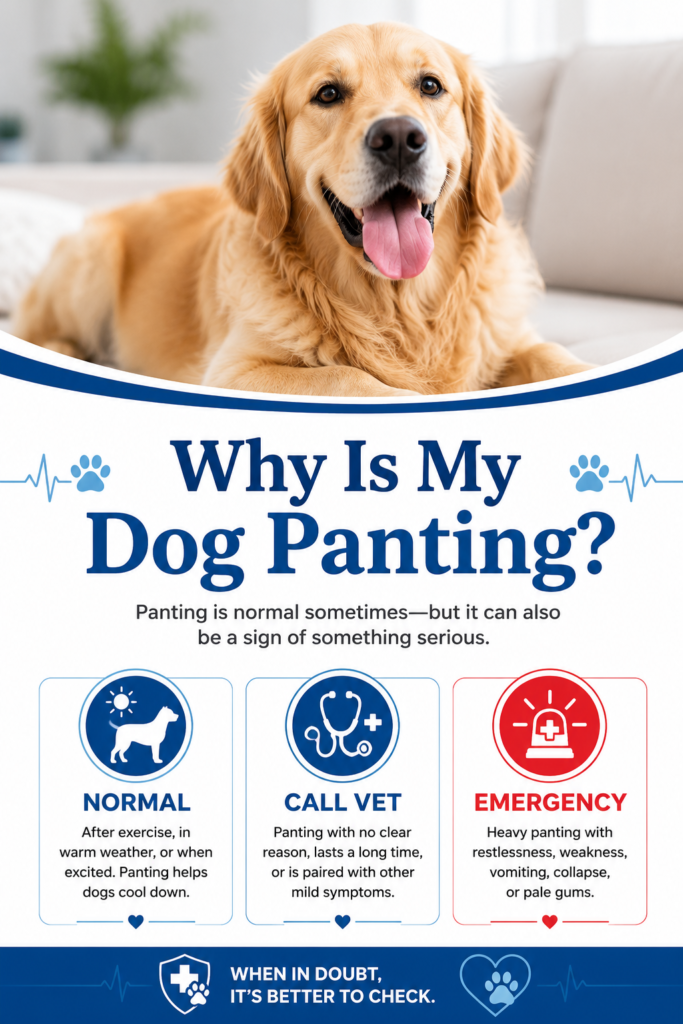
Quick Urgency Guide
Quick Urgency Guide: Is Your Dog’s Panting Normal?
Situation
Likely Cause
What You Should Do
🟢 Panting after exercise or excitement
Normal cooling
Let your dog rest in a cool area and offer fresh water. Panting should improve within 10–20 minutes.
🟡 Panting while resting or in a cool room
Pain, stress, illness, or another underlying issue
Monitor your dog closely and contact your veterinarian if the panting continues or worsens.
🔴 Heavy panting with pale gums, collapse, vomiting, bloating, or difficulty breathing
Medical emergency
Seek emergency veterinary care immediately.
Owner Tip: If your dog’s panting seems unusual for them—even if you can’t identify the cause—it’s safest to contact your veterinarian for guidance.
Why Is My Dog Panting?
Panting is a normal way for dogs to regulate their body temperature because they have very few sweat glands. Instead of sweating like humans, dogs cool themselves by rapidly moving air over the moist surfaces of their tongue, mouth, and upper respiratory tract.
While panting after exercise, excitement, or warm weather is expected, excessive or unexplained panting can be a sign that something isn’t right. Looking at when your dog is panting and whether other symptoms are present can help determine if the behavior is normal or needs veterinary attention.
Normal Causes of Panting
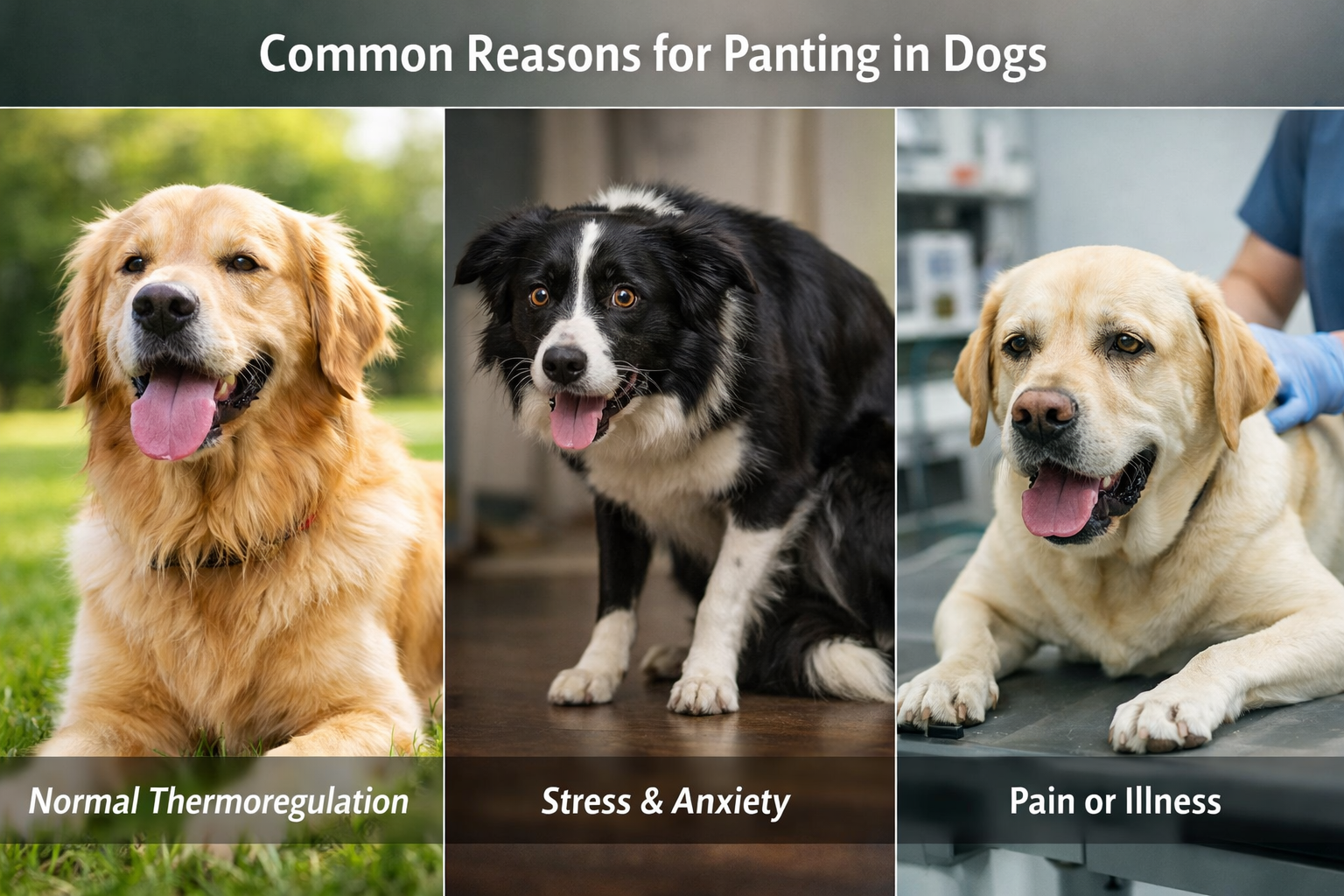
Your dog may pant for several harmless reasons, including:
Exercise or play
Hot or humid weather
Excitement
Temporary stress
Car rides
Mild anxiety
In these situations, panting usually improves once your dog has rested, cooled down, or relaxed.
Abnormal Causes of Panting
Panting that occurs while your dog is resting or continues without an obvious reason may be caused by:
Pain or injury
Anxiety or chronic stress
Fever or infection
Heatstroke
Heart disease
Respiratory disease
Cushing’s disease
Certain medications, including corticosteroids
If your dog also appears weak, restless, or has trouble breathing, veterinary evaluation is recommended.
🩺 Vet Insight: Panting by itself doesn’t always indicate an emergency. Veterinarians evaluate additional signs—such as breathing effort, gum color, heart rate, temperature, and recent activity—to determine whether the panting is normal or a symptom of illness.
When Is Panting an Emergency?
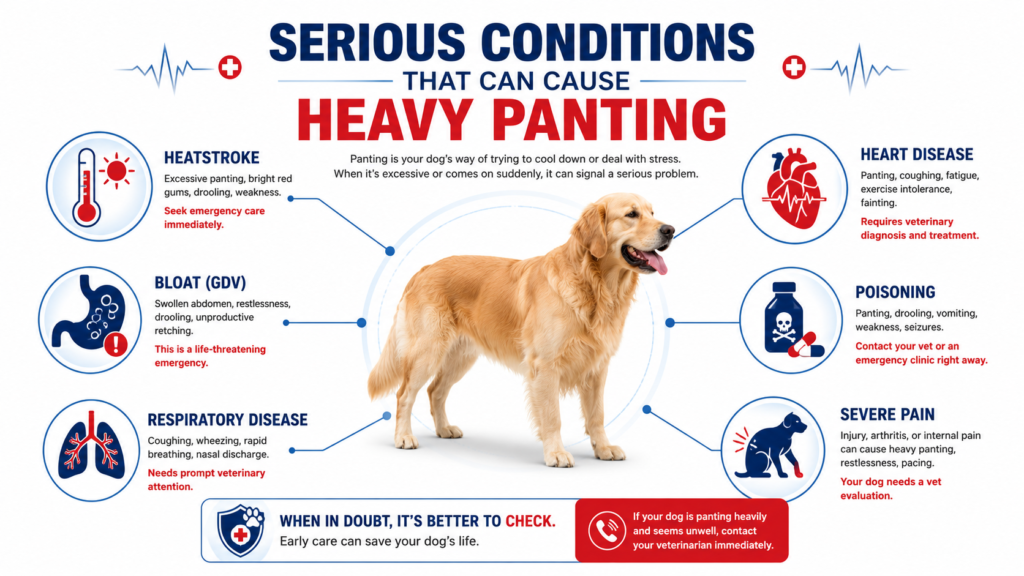
Although many cases of panting are harmless, some require immediate veterinary care. The key is to look for other symptoms that occur alongside panting.
Seek emergency veterinary care immediately if your dog has:
Pale, blue, or gray gums
Difficulty breathing
Collapse or weakness
Continuous heavy panting while resting
Vomiting or repeated retching
A swollen or hard abdomen
Excessive drooling
Loss of consciousness
Seizures
Signs of heatstroke
Common Emergency Conditions
Condition
Warning Signs
Heatstroke
Heavy panting, drooling, weakness, collapse
Bloat (GDV)
Swollen abdomen, pacing, unsuccessful attempts to vomit
Poisoning
Panting, shaking, vomiting, excessive drooling
Heart Disease
Panting at rest, coughing, exercise intolerance
Respiratory Disease
Labored breathing, noisy breathing, blue gums
Emergency Reminder: If your dog is struggling to breathe or collapses, do not wait to see if the symptoms improve. Contact your veterinarian or the nearest emergency animal hospital immediately.
What To Do If Your Dog Is Panting Heavily
If your dog begins panting excessively, stay calm and assess the situation before taking action.
Step 1: Move Your Dog to a Cool Area
Take your dog out of direct sunlight and into a shaded or air-conditioned space. Avoid strenuous activity and encourage them to rest.
Step 2: Offer Fresh Water
Provide small amounts of cool, fresh water. Do not force your dog to drink, especially if they appear weak or nauseated.
Step 3: Check for Other Symptoms
Look for warning signs such as:
Pale or blue gums
Vomiting
Collapse
Swollen abdomen
Difficulty breathing
Shaking or confusion
These symptoms may indicate a medical emergency.
Step 4: Contact Your Veterinarian
If the panting continues without an obvious cause or is accompanied by concerning symptoms, call your veterinarian immediately for advice.
Step 5: Transport Your Dog Safely
If emergency care is needed, keep your dog calm during transport. Avoid overheating the vehicle, and bring any medications or relevant medical history if available.
🐾 Owner Tip: Never cool an overheated dog with ice-cold water. Use cool (not icy) water or cool, damp towels while seeking veterinary care, as rapid cooling can sometimes worsen the situation.
Preventing Future Panting Episodes
While not every cause of panting can be prevented, many episodes are avoidable with proper care and attention to your dog’s health and environment.
Here are some simple ways to reduce the risk of excessive panting:
Exercise your dog during the cooler parts of the day, such as early morning or late evening.
Always provide access to fresh, clean drinking water.
Avoid leaving your dog in a parked car or poorly ventilated area.
Maintain a healthy body weight to reduce strain on the heart and lungs.
Schedule regular veterinary checkups to detect health problems early.
Follow your veterinarian’s advice for managing chronic conditions such as heart disease or arthritis.
Learn what is normal for your dog’s breathing so you can quickly recognize unusual changes.
Keeping your dog cool, comfortable, and healthy can significantly reduce the risk of heat-related illnesses and other conditions that cause excessive panting.
🐾 Owner Tip: Brachycephalic breeds such as Bulldogs, Pugs, and Boston Terriers are more prone to overheating because of their shortened airways. These dogs should be exercised carefully, especially during warm weather.
Common Mistakes to Avoid
When a dog starts panting heavily, well-meaning owners sometimes make decisions that delay treatment or make the situation worse.
Avoid these common mistakes:
❌ Assuming all panting is caused by hot weather.
❌ Waiting too long to seek veterinary care when panting occurs at rest.
❌ Using ice-cold water or ice baths on an overheated dog.
❌ Ignoring additional symptoms such as vomiting, weakness, or pale gums.
❌ Continuing exercise when your dog is already overheating.
❌ Assuming heavy panting is normal simply because your dog is a brachycephalic breed.
Recognizing the warning signs early and acting quickly can make a significant difference in your dog’s recovery.
Frequently Asked Questions
Why is my dog panting at night?
Occasional panting during sleep may occur after dreaming or changing positions. However, frequent nighttime panting can be associated with pain, anxiety, heart disease, respiratory problems, or cognitive decline in older dogs. If the behavior becomes persistent, consult your veterinarian.
Why is my dog panting while resting?
Panting while resting is not always normal. It may be caused by pain, stress, overheating, medications, heart disease, or another medical condition. If the panting is persistent or accompanied by other symptoms, veterinary evaluation is recommended.
Can stress or anxiety cause excessive panting?
Yes. Dogs experiencing stress or anxiety may pant even when they are not hot. Other signs often include pacing, trembling, yawning, lip licking, or hiding. Removing the source of stress may help, but persistent anxiety should be discussed with your veterinarian.
How long should a dog pant after exercise?
Most healthy dogs stop panting within 10 to 20 minutes after resting in a cool environment with access to fresh water. Panting that continues beyond 30 minutes or becomes more intense should be evaluated by a veterinarian.
Why is my senior dog panting so much?
Older dogs may pant more because of arthritis, chronic pain, heart disease, respiratory disease, or hormonal disorders such as Cushing’s disease. Since these conditions become more common with age, persistent panting in senior dogs should always be assessed by a veterinarian.
Can dehydration cause panting?
Yes. Dehydration makes it harder for dogs to regulate their body temperature, which can lead to excessive panting. Always ensure your dog has access to fresh water, especially during exercise or hot weather.
Can medications make dogs pant?
Yes. Certain medications, particularly corticosteroids such as prednisone, may increase panting as a side effect. If you notice excessive panting after starting a new medication, contact your veterinarian for advice.
When should I take my dog to the emergency vet?
Seek emergency veterinary care immediately if your dog is panting heavily and also has difficulty breathing, pale or blue gums, collapse, a swollen abdomen, repeated vomiting, seizures, or signs of heatstroke.
Conclusion
Panting is a normal way for dogs to cool themselves after exercise, excitement, or exposure to warm weather. However, excessive panting that occurs while resting, lasts longer than expected, or is accompanied by symptoms such as difficulty breathing, pale gums, vomiting, or collapse should never be ignored.
Understanding what is normal for your dog—and recognizing when panting becomes abnormal—can help you respond quickly and potentially prevent a life-threatening emergency. If you are ever unsure about your dog’s condition, it’s always safest to contact your veterinarian for professional guidance.
References
American Kennel Club (AKC). Why Dogs Pant.
American Veterinary Medical Association (AVMA). Heat Stress in Pets.
Merck Veterinary Manual. Respiratory Disorders in Dogs.
VCA Animal Hospitals. Panting in Dogs.
ASPCA Animal Poison Control Center. Pet Poison Safety.
Every article published on Trusted Pet Advice is researched using authoritative veterinary resources, academic publications, and trusted animal health organizations. Our editorial team reviews content for clarity, accuracy, and usefulness before publication. While we strive to provide reliable information, our articles are intended for educational purposes and should not replace professional veterinary advice.
Medical Disclaimer
Trusted Pet Advice provides educational information to help pet owners make informed decisions. Our content is not written or reviewed by licensed veterinarians and should not be used as a substitute for professional veterinary diagnosis, treatment, or emergency care. If your pet is ill, injured, or showing concerning symptoms, contact a licensed veterinarian promptly.