

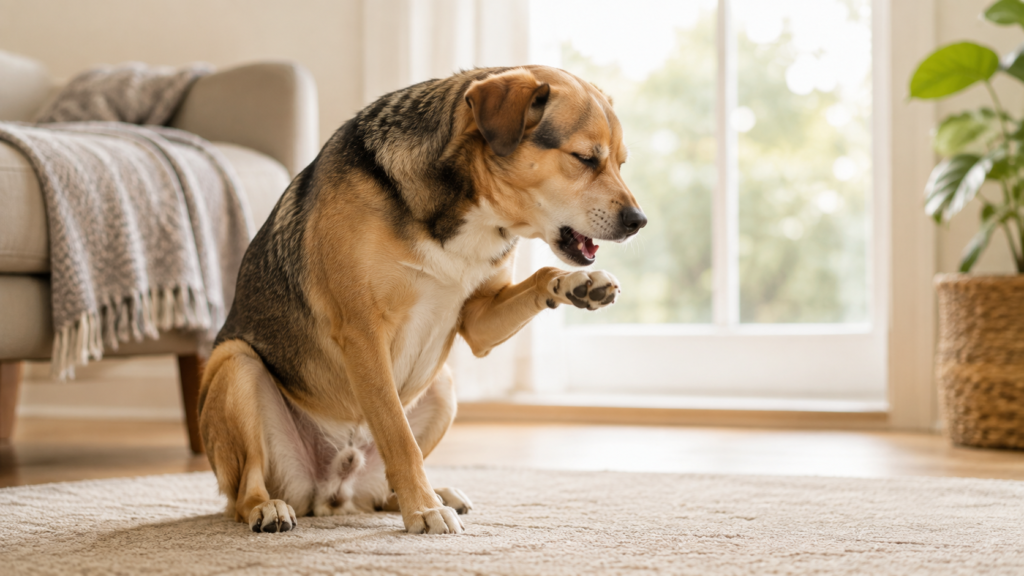
Quick Answer: Dogs cough for many different reasons, from mild throat irritation to respiratory infections, heart disease, or problems affecting the lungs.
Common causes include kennel cough, allergies and environmental irritants, foreign objects, heart disease, pneumonia, and tracheal collapse. The type of cough matters too. A dry, hacking, or honking cough can have different causes from a wet or gurgling cough.
An occasional mild cough in an otherwise healthy dog may be something you can monitor briefly. However, a cough that becomes persistent or worse, or occurs with lethargy, appetite loss, nasal discharge, or breathing difficulty, should be evaluated by a veterinarian.
If your dog is struggling to breathe, has blue, gray, or very pale gums, coughs up blood, collapses, or cannot rest because of the coughing, seek emergency veterinary care immediately.
Dog Coughing Triage Guide
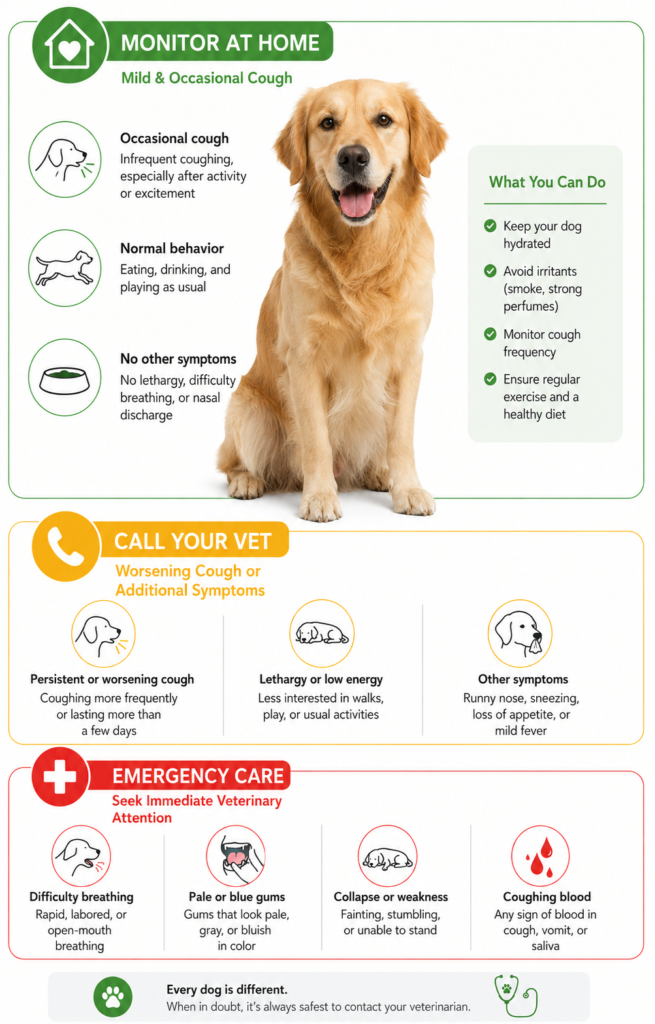
| Monitor at Home | Call Your Vet Today | Go to Emergency Now |
|---|---|---|
| Occasional dry cough | Cough lasting 3–7 days | Labored or rapid breathing |
| Normal energy and appetite | Reduced appetite | Blue, gray, or pale gums |
| No breathing difficulty | Mild lethargy | Coughing up blood |
| Coughing for under 72 hours | Cough getting worse | Collapse or fainting |
| Nasal discharge | Can’t rest because of coughing |
This guide is a starting point, not a diagnosis. If you’re unsure about your dog’s symptoms, contact your veterinarian.
Key Takeaways
- A dog’s cough can have many causes, from irritation to heart or lung disease.
- Kennel cough is a common cause of a dry, hacking or honking cough.
- Wet or gurgling coughs can be associated with problems affecting the lower respiratory tract.
- Small and flat-faced dogs can be more prone to certain respiratory problems.
- A cough that persists, worsens, or occurs with other symptoms deserves veterinary attention.
- Labored breathing, blue or gray gums, collapse, or coughing blood are emergency signs.
- Never give your dog human cough medicine without veterinary guidance.
- Recording your dog’s cough can help your veterinarian understand what is happening.
What Causes a Dog to Cough?
Coughing is a protective reflex that helps clear the airways of irritants, mucus, or foreign material.
The cause can be something relatively minor, such as dust or throat irritation, or a more serious condition affecting the respiratory system or heart.
Common causes include:
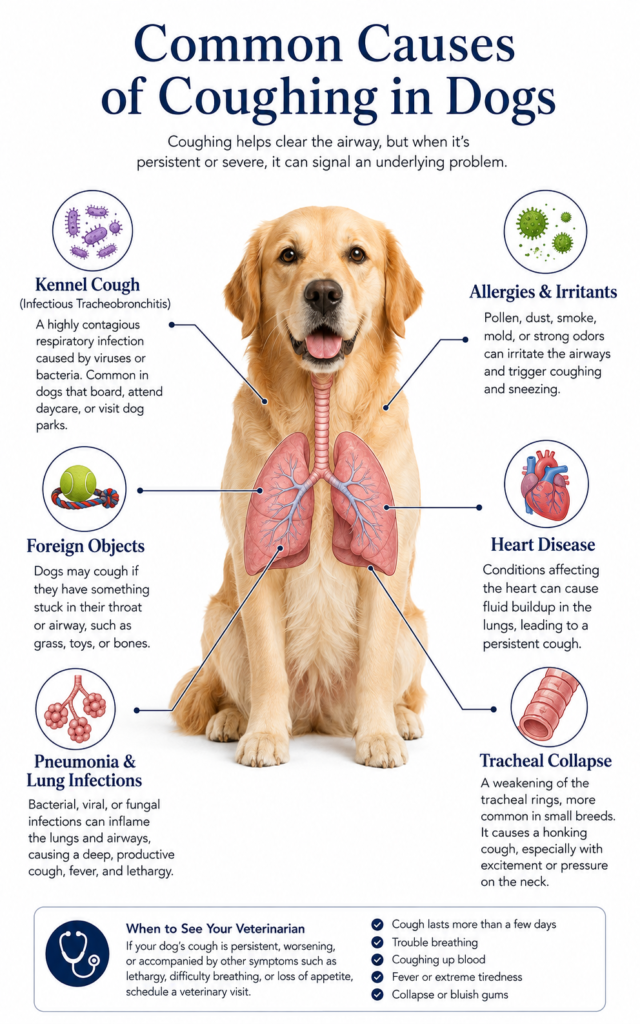
Kennel cough:
Also called infectious tracheobronchitis, kennel cough is a contagious respiratory infection that commonly spreads where dogs gather, including boarding facilities, dog parks, and grooming facilities.
Allergies and irritants:
Dust, pollen, smoke, and strong odors can irritate sensitive airways and trigger coughing.
Foreign objects:
Grass awns, food, or small objects can become lodged in the throat or airway.
Heart disease:
Heart disease can contribute to coughing, particularly in older dogs and some small breeds. An enlarged heart may affect the airway, while heart failure can cause fluid to accumulate in the lungs.
Pneumonia and lung infections:
Respiratory infections can cause inflammation and fluid in the lungs.
Tracheal collapse:
This condition is particularly common in toy breeds and can produce a characteristic honking cough.
Breeds That May Be More Prone to Coughing
Some dogs are predisposed to particular respiratory or cardiac conditions.
Toy breeds such as Chihuahuas, Pomeranians, and Yorkshire Terriers can be prone to tracheal collapse. Flat-faced breeds such as Pugs, French Bulldogs, and Bulldogs can have airway problems.
Cavalier King Charles Spaniels are prone to mitral valve disease, while some larger breeds can develop heart conditions associated with coughing.
Takeaway: Your dog’s age, breed, recent exposure to other dogs, and the sound of the cough can all provide useful clues, but they cannot replace a veterinary diagnosis.
When Should I Take My Coughing Dog to the Vet?
Not every cough is an emergency, but you should pay attention to how long it lasts and whether other symptoms appear.
A mild, dry cough in an otherwise healthy dog may sometimes be monitored briefly. Your source suggests watching a mild cough for up to about 72 hours, while a cough lasting more than several days or becoming worse warrants veterinary attention.
Contact your veterinarian if your dog’s cough:
- Is getting worse
- Continues for several days
- Lasts more than 7–10 days
- Comes with reduced appetite
- Comes with lethargy
- Occurs with nasal discharge
- Is disrupting sleep or normal rest
- Appears repeatedly during exercise
It can also help to record when the cough happens. Note whether it occurs after eating, during exercise, at night, or after your dog gets excited.
A short video of the cough can also be extremely useful to your veterinarian.
Emergency Signs
Some symptoms require immediate veterinary attention.
Go to an emergency veterinarian if your dog has:
- Labored or rapid breathing
- Open-mouth breathing at rest
- Blue, gray, or very pale gums or tongue
- Coughing up blood or pink-tinged froth
- Collapse or fainting
- Severe weakness
- Inability to rest comfortably because of coughing
These signs can indicate a serious problem with breathing or circulation.
Do not wait to see whether these symptoms disappear on their own.
What Does Kennel Cough Sound Like?
Kennel cough often produces a dry, hacking or honking cough.
Many owners describe it as sounding like a goose honk or as though something is stuck in the dog’s throat.
Some dogs gag or retch at the end of a coughing episode, which can make it look like they are trying to vomit.
The cough may initially be dry and can sometimes become more productive as the illness progresses.
How Long Does Kennel Cough Last?
Your source states that many cases resolve within approximately 1–3 weeks.
Puppies, senior dogs, and dogs with weakened immune systems can be more vulnerable to complications such as pneumonia.
Is Kennel Cough Contagious?
Yes. Kennel cough can spread easily between dogs through respiratory droplets and contaminated surfaces.
If your dog develops a suspected contagious respiratory infection, keep them away from other dogs and contact your veterinarian for advice.
What’s the Difference Between a Dry and Wet Cough?
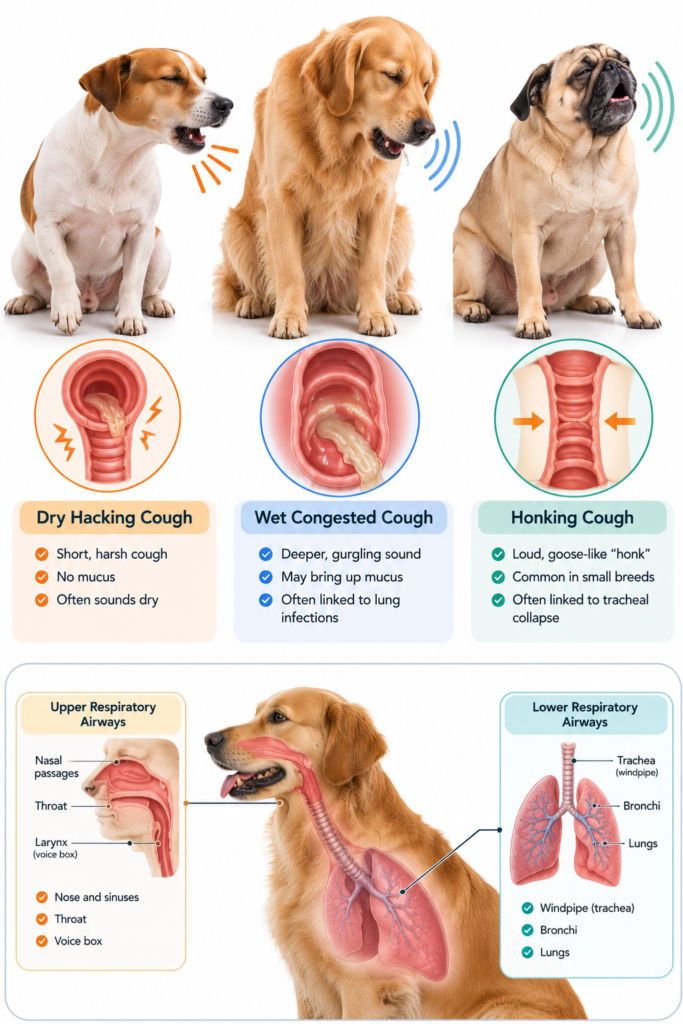
The sound of your dog’s cough can provide clues about what may be happening.
| Cough Type | Sound | Possible Causes |
|---|---|---|
| Dry, hacking | Sharp or harsh | Kennel cough, allergies, tracheal collapse |
| Wet, gurgling | Moist or productive | Pneumonia, bronchitis, fluid in the lungs |
| Gagging/retching | Throat-clearing or retching | Foreign object, kennel cough, throat irritation |
| Honking | Goose-like | Tracheal collapse, kennel cough |
A wet or productive cough can be more concerning because it may indicate fluid or inflammation affecting the lower respiratory tract.
Important: The sound alone cannot tell you exactly what is wrong. A veterinarian may need to examine your dog and perform diagnostic tests.
Is My Dog Coughing or Gagging?
Coughing and gagging can look very similar.
Coughing is a forceful expulsion of air from the respiratory tract.
Gagging is more of a reflex involving the back of the throat and can look like dry heaving.
Dogs with kennel cough may gag or retch after a coughing fit, which is one reason owners sometimes mistake coughing for vomiting.
Repeated gagging without a typical cough can have different causes, including throat irritation or a foreign object.
If your dog is repeatedly gagging, pawing at their mouth, drooling excessively, or struggling to breathe, seek veterinary care.
Helpful Tip
Record a video.
A video of the episode can help your veterinarian distinguish coughing, gagging, and other respiratory sounds.
How to Help a Coughing Dog at Home

Home care should be considered supportive care, not a substitute for finding the cause of the cough.
Use a Harness
If your dog coughs when pulling on a leash, a harness can reduce pressure on the throat compared with a collar. This may be particularly useful for dogs prone to tracheal problems.
Keep Your Dog Calm
Excitement and strenuous exercise can trigger more coughing.
Allow your dog to rest while you monitor their symptoms.
Add Moisture to the Air
A humidifier may help soothe irritated airways.
Offer Soft Food if Needed
If throat irritation makes dry food uncomfortable, your source suggests offering warm, soft food.
What About Honey?
Your source mentions honey as a possible throat-soothing measure but specifically notes that you should check with your veterinarian first and that it is not appropriate for diabetic dogs.
Because your article is veterinary health content, I would keep this as a minor optional point rather than presenting honey as a treatment.
What Medications Help a Dog’s Cough?
The medication depends entirely on the underlying cause.
Your source mentions that veterinarians may use:
- Antibiotics for certain bacterial infections
- Cough suppressants for some dry, nonproductive coughs
- Bronchodilators for certain airway problems
- Heart medications when heart disease is responsible
Never give human cough medicine without veterinary guidance.
Human medications can contain ingredients that are dangerous for dogs, and the appropriate dose depends on the individual animal.
Is Dog Coughing Contagious to Other Dogs?
Some causes of coughing are contagious, while others are not.
Kennel cough and other respiratory infections can spread between dogs through:
- Airborne droplets
- Direct contact
- Shared water bowls
- Toys
- Bedding
- Other contaminated surfaces
If your dog has a new cough and you suspect an infectious illness, keep them away from other dogs until your veterinarian advises otherwise.
Vaccination against kennel cough may reduce the severity of illness, although it does not prevent every possible respiratory infection.
Frequently Asked Questions
Can I give my dog human cough medicine?
No. Never give human cough medicine unless your veterinarian specifically tells you to use a particular product and dose.
Some human medications can be dangerous to dogs, and suppressing a productive cough may not be appropriate.
Why does my dog cough more at night?
Nighttime coughing can occur with several conditions, including heart disease, airway irritation, or environmental triggers such as dust.
A persistent nighttime cough should be discussed with your veterinarian.
What is reverse sneezing, and is it the same as coughing?
No. Reverse sneezing involves rapid inhalation through the nose and can sound like snorting or gagging.
It can be confused with coughing, particularly in small and flat-faced dogs.
Recording an episode can help your veterinarian determine what your dog is actually doing.
Can a dog cough from pulling on the leash?
Yes. Pressure from a collar can irritate the trachea and trigger coughing, particularly in dogs prone to airway problems.
A properly fitted harness can reduce pressure on the throat.
Does kennel cough require antibiotics?
Not always. Your source notes that many cases resolve with supportive care, while antibiotics may be used when a bacterial component is suspected or the illness isn’t improving.
Your veterinarian should decide whether medication is appropriate.
Can puppies get kennel cough?
Yes. Puppies can develop kennel cough and may be more vulnerable to complications such as pneumonia.
A persistent cough in a young puppy deserves prompt veterinary attention.
Conclusion
A coughing dog isn’t always experiencing an emergency, but the type of cough, how long it lasts, and what other symptoms appear can help you decide how quickly your dog needs care.
A mild, occasional cough in an otherwise healthy dog may sometimes be monitored briefly. But persistent or worsening coughing, wet coughs, nighttime coughing, reduced appetite, lethargy, or nasal discharge should prompt a veterinary call.
And if your dog has difficulty breathing, blue or gray gums, coughing blood, collapse, or severe distress, seek emergency care immediately.
If you’re unsure what you’re hearing, record a short video of the episode. That simple step can give your veterinarian useful information when trying to determine whether your dog is coughing, gagging, or experiencing another respiratory problem.
When it comes to your dog’s breathing, it’s always better to ask when you’re unsure.
References
- PDSA — Coughing in Dogs
PDSA — Coughing in Dogs - Preventive Vet — Why Dogs Cough
Preventive Vet — Why Dogs Cough - Blue Cross — Why Do Dogs Cough?
Blue Cross — Why Do Dogs Cough? - WebMD — Kennel Cough in Dogs
WebMD — Kennel Cough in Dogs - GoodRx — Dog Coughing
GoodRx — Dog Coughing - Carey Animal Hospital — Dog Coughing
Carey Animal Hospital — Dog Coughing