
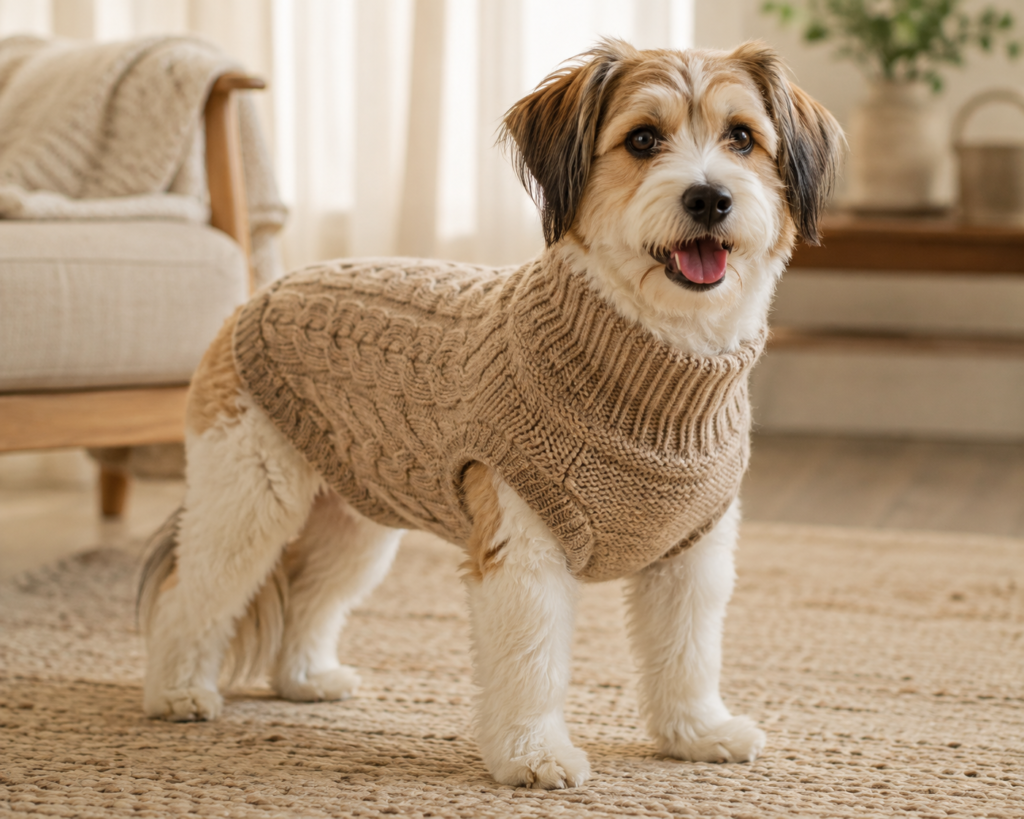
Quick Answer: Finding the right dog coat knitting pattern starts with your dog’s measurements and your knitting skill level. Beginners can start with simple flat-knit designs using basic stitches, while experienced knitters can try shaped coats, cables, collars, and hoods.
Before you begin, measure your dog’s chest girth, neck circumference, and back length. A gauge swatch is also important because your knitting tension can change the finished size.
For most dog coats, washable worsted or bulky-weight acrylic, superwash wool, or suitable blends are practical choices. A simple coat may take several hours to complete, depending on your dog’s size, the yarn, and the pattern.
Key Takeaways
- Measure your dog’s chest, neck, and back before choosing a pattern.
- Chest girth is especially important for getting the fit right.
- Always make a gauge swatch before starting the coat.
- Washable yarn is practical because dog coats can get dirty quickly.
- Garter stitch, stockinette, and ribbing are useful for beginner projects.
- A belly strap can help prevent a knitted coat from slipping.
- Small and large dogs may need different amounts of coverage and different fastening designs.
- Free patterns can work well for simple projects, while paid patterns may offer more detailed sizing and tutorials.
- Choose a pattern based on your dog’s actual measurements rather than breed alone.
Why Knit Your Own Dog Coat?
Knitting your own dog coat gives you control over the fit, yarn, color, and design.
A ready-made coat may not fit every dog perfectly, especially dogs with unusual body shapes. When you knit the coat yourself, you can adjust the length, chest opening, neckline, belly coverage, and fastenings.
You can also choose a yarn that feels comfortable against your dog’s coat and skin.
Benefits of knitting your own coat
- Custom sizing
- Choice of yarn and colors
- Adjustable chest and belly coverage
- Personalized designs
- A rewarding handmade project
The main downside is time. A handmade coat takes longer than buying one ready-made.
A knitted coat may also not provide the same waterproof protection as a purpose-made outdoor dog coat. If your dog needs protection from heavy rain or wet conditions, a waterproof commercial coat may be more practical.
How to Measure Your Dog and Choose the Right Coat Size
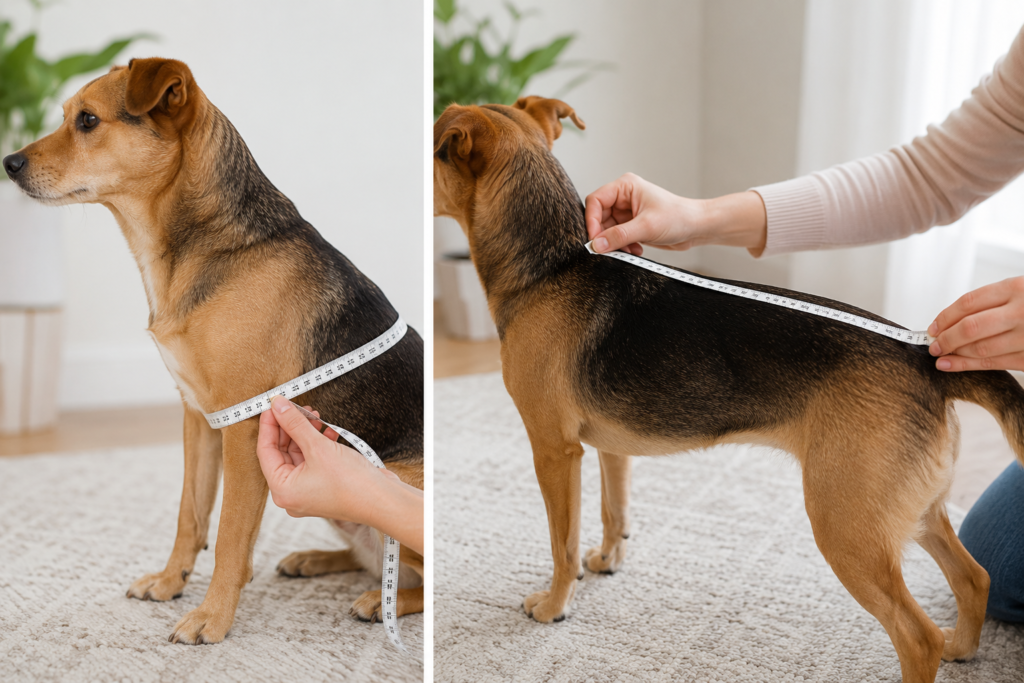
Before casting on, measure your dog carefully.
You’ll need three main measurements.
Chest Girth
Measure around the widest part of your dog’s chest, usually directly behind the front legs.
This is one of the most important measurements because the coat needs to fit securely without restricting movement.
Neck Circumference
Measure around the base of your dog’s neck where the neckline will sit.
Keep the measuring tape comfortable rather than pulling it tightly.
Back Length
Measure from the base of the neck to the base of the tail.
This determines how much of your dog’s back the coat will cover.
Example Size Guide
| Dog Size | Chest Girth | Back Length | Suggested Yarn Weight |
|---|---|---|---|
| Small | 14–18 in | 8–12 in | DK or Worsted |
| Medium | 19–24 in | 13–18 in | Worsted |
| Large | 25–32 in | 19–26 in | Bulky |
These measurements are only a general starting point. Always compare your dog’s measurements with the specific pattern’s sizing chart.
Don’t Choose a Size by Breed Alone
Dogs of the same breed can have different body shapes and chest depths.
Your dog’s actual measurements are more useful than simply choosing a pattern labeled “Labrador” or “Chihuahua.”
Make a Gauge Swatch
Even if you’ve chosen the correct size, your coat can still come out too large or too small if your knitting tension doesn’t match the pattern.
Make a gauge swatch before starting and adjust your needle size if necessary.
Best Beginner Dog Coat Knitting Patterns and Stitches
If you’re new to knitting dog clothing, choose a pattern that uses basic stitches and minimal shaping.
Knit Stitch
The basic knit stitch is enough for many simple dog coat patterns.
Purl Stitch
The purl stitch can be combined with the knit stitch to create texture and patterns.
Garter Stitch
Garter stitch is made by knitting every row.
It creates a stretchy, textured fabric and is one of the easiest choices for beginners.
Stockinette Stitch
Stockinette alternates knit and purl rows to create a smooth surface.
It gives a classic knitted appearance, although the edges can curl if they aren’t finished properly.
Ribbing
Ribbing alternates knit and purl stitches and creates a stretchy edge.
It’s particularly useful around neck openings.
What Makes a Good Beginner Pattern?
Look for a pattern with:
- Basic stitches
- Clear measurements
- A sizing chart
- Simple shaping
- Minimal seaming
- Straightforward fastenings
- Clear instructions
A simple flat-knit rectangle with a belly strap can be an excellent first project.
How to Knit a Dog Coat Step by Step
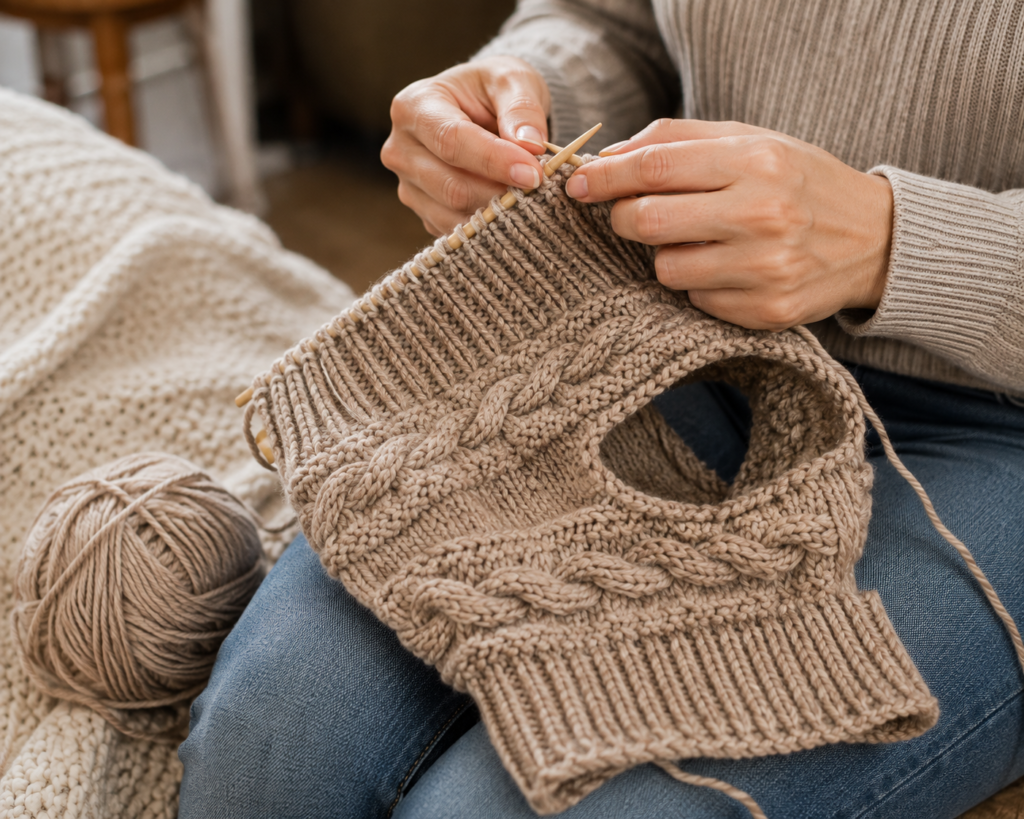
Most simple dog coats can be broken into a few basic stages.
1. Knit a Gauge Swatch
Cast on approximately 20 stitches and knit a small swatch.
Measure your stitches per inch and compare them with the pattern instructions.
2. Cast On the Body
Using the measurements and gauge required by your pattern, cast on the correct number of stitches.
Work the main back panel according to the pattern.
3. Shape the Chest
Some patterns use increases or decreases to shape the chest.
Simpler designs may use a separate belly flap or strap instead.
Follow the instructions for your chosen pattern carefully.
4. Bind Off and Block
Once you’ve completed the coat, bind off the stitches.
If the yarn and pattern allow blocking, gently shape the coat to the correct dimensions and allow it to dry flat.
5. Add the Fastening
Finish the coat with an appropriate fastening.
Options include:
- Buttons
- Hook-and-loop tape
- Knitted straps
Make sure the fastening is securely attached and doesn’t interfere with your dog’s movement.
Best Yarn for Knitting Dog Coats
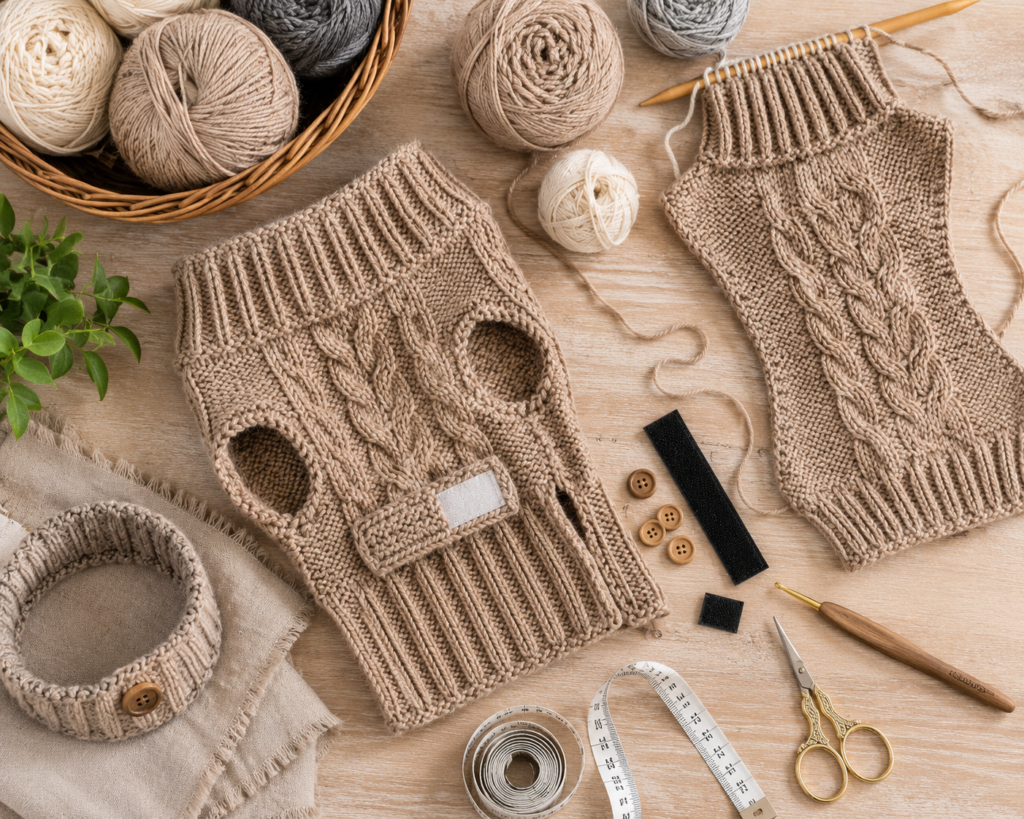
The best yarn depends on the weather, your dog’s comfort, and how often the coat will need washing.
Acrylic
Acrylic yarn is affordable, durable, and generally easy to care for.
It’s a practical choice for a coat that may get muddy during walks.
Superwash Wool
Superwash wool can provide warmth while being easier to wash than untreated wool.
Wool Blends
Wool blends can combine warmth with durability and may be easier to care for than some pure wool yarns.
Cotton
Cotton is breathable and washable, but it generally has less elasticity and warmth than wool or acrylic.
What Should You Look For?
For most dog coats, choose yarn that is:
- Washable
- Comfortable against your dog’s coat
- Durable
- Appropriate for the climate
- Suitable for the pattern
If your dog has sensitive skin, choose a soft yarn and watch for signs of irritation.
Dog Coat Customization Ideas
Once you’ve mastered a basic coat, you can personalize it in several ways.
Add a Belly Strap
A belly strap can help keep the coat from slipping sideways or falling off.
Add a Collar
Pick up stitches around the neck opening and work a few inches of ribbing.
Bind off loosely so the collar remains comfortable.
Add a Hood
For a simple hood, knit a rectangle wide enough to cover your dog’s head.
Fold it in half, seam the top, and attach the lower edge to the coat’s neck opening.
A hood requires more fitting than a simple collar, so it’s better suited to knitters with some experience.
Change the Coverage
You can also adjust:
- Back length
- Chest coverage
- Belly coverage
- Neckline
- Fastening position
Always make sure the finished coat allows your dog to move comfortably.
If Your Knitted Dog Coat Keeps Falling Off
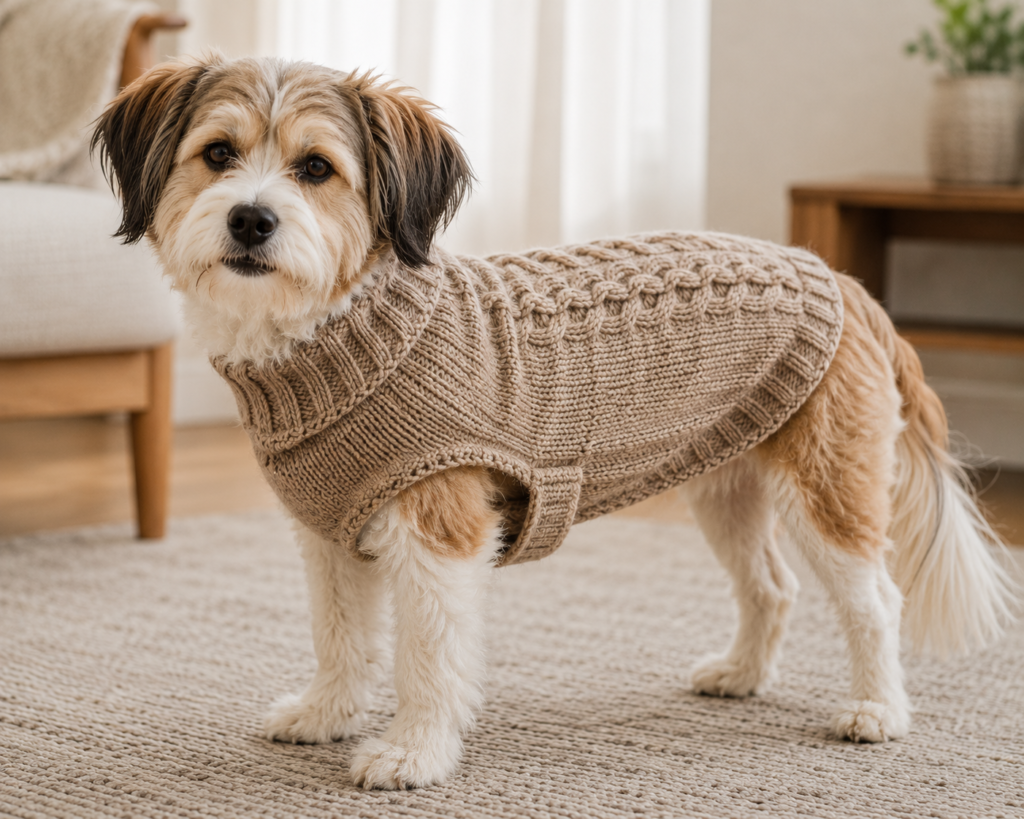
A coat that constantly slips usually needs a fit or fastening adjustment.
Common causes include:
- Chest straps that are too loose
- A neckline that is too wide
- Incorrect measurements
- Knitted fabric stretching with wear
- Buttons positioned too far apart
How to Fix It
Try:
- Moving the buttons closer together
- Shortening the belly strap
- Adding an adjustable fastening
- Adding another belly strap
- Rechecking the chest measurement
A coat should stay securely in place without feeling tight.
If your dog repeatedly tries to remove the coat, check whether it is uncomfortable, itchy, or restricting movement.
How to Wash a Hand-Knitted Dog Coat
The correct washing method depends on the yarn.
Acrylic and many superwash wool yarns are easier to wash than untreated wool, but you should always follow the care instructions on the yarn label.
If machine washing is permitted:
- Use the recommended water temperature.
- Choose a gentle cycle.
- Consider placing the coat in a mesh laundry bag.
- Use a mild detergent.
- Avoid high heat.
- Lay the coat flat to dry when recommended.
Avoid putting the coat in a dryer unless the yarn manufacturer specifically says that machine drying is safe.
Because dog coats can collect dirt and mud, washability is worth considering before you choose your yarn.
Free vs. Paid Dog Coat Knitting Patterns
Free patterns are a good starting point for beginners and simple projects.
Paid patterns may be useful when you want more detailed sizing, photographs, tutorials, or designer support.
| Feature | Free Patterns | Paid Patterns |
|---|---|---|
| Cost | Free | Usually a small fee |
| Sizing | May be limited | Often more detailed |
| Instructions | Usually basic | Often more comprehensive |
| Photos | Varies | More likely to include tutorials |
| Support | Limited | May include designer support |
| Best for | Simple projects | Detailed/custom designs |
If you’re making your first coat, a clear free pattern may be all you need.
If your dog has an unusual body shape or you want a more fitted design, a paid pattern with detailed measurements can be worth considering.
How Long Does It Take to Knit a Dog Coat?
The time depends on:
- Your knitting speed
- Your dog’s size
- Yarn weight
- Pattern complexity
- Amount of shaping
- Decorative details
A simple coat may take around 8–12 hours for an average knitter, while a larger or more detailed design can take considerably longer.
Bulky yarn and larger needles can speed up simple projects because fewer stitches are required.
If you’re short on time, choose a simple pattern with bulky yarn and basic stitches.
Frequently Asked Questions
What is the easiest dog coat knitting pattern for beginners?
A simple flat-knit design using garter stitch is one of the easiest options. A basic rectangle with a belly strap requires less shaping than a highly fitted coat.
What is the best yarn for a dog coat?
Washable acrylic, superwash wool, and suitable wool blends are practical choices. Choose a soft yarn if your dog has sensitive skin.
How do I measure my dog for a knitted coat?
Measure the chest at its widest point, the neck circumference, and the back length from the base of the neck to the base of the tail.
Should I knit a dog coat flat or in the round?
Flat knitting is generally easier for beginners because it avoids techniques such as magic loop or double-pointed needles. Knitting in the round can reduce seaming but may make some fitting adjustments more complicated.
How do I stop my dog from chewing their knitted coat?
Check the fit first. A coat that is too tight, itchy, or uncomfortable may encourage chewing.
You can also distract your dog with a toy or treat while they get used to wearing it.
If your dog continues trying to remove the coat, don’t force them to wear it.
Are knitted dog coats warm enough for winter?
A knitted coat can provide an additional warm layer, depending on the yarn, thickness, and construction.
For very cold, wet, or windy conditions, a knitted coat may need to be combined with or replaced by a purpose-made outdoor coat.
Can I use cotton yarn for a dog coat?
Yes. Cotton is breathable and washable, although it generally provides less warmth and elasticity than wool or acrylic.
What is the best fastening for a knitted dog coat?
Hook-and-loop tape is easy to adjust and can provide a secure fit. Buttons can also work if they are firmly attached and positioned where your dog cannot easily chew them.
Conclusion
Knitting a coat for your dog can be a fun project that gives you the freedom to create a garment specifically for your pet.
The key is to start with accurate measurements, choose a pattern that matches your skill level, and select a comfortable, washable yarn.
If you’re a beginner, start with a simple flat-knit design using basic stitches such as garter stitch. Once you’re comfortable, you can experiment with shaping, collars, hoods, cables, and other details.
Most importantly, check the finished coat carefully. Your dog should be able to walk, sit, lie down, and move naturally without the coat restricting them.
With the right measurements and a suitable pattern, you can create a comfortable handmade coat that is both practical and personal.