

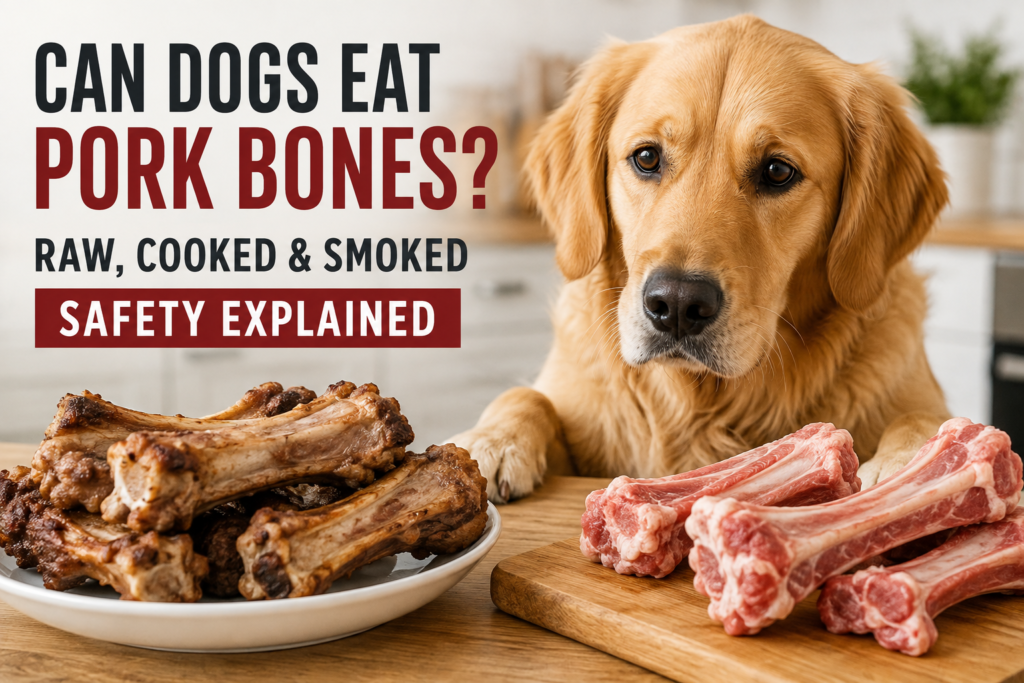
Quick Answer: Dogs should not eat cooked, smoked, roasted, or boiled pork bones. Cooking makes bones more brittle, increasing the risk that they break into sharp pieces that can cause choking, mouth injuries, intestinal blockages, or internal injuries.
Raw pork bones are different because they are less likely to splinter in the same way, but they are not risk-free. Raw bones can carry bacteria and parasites and can still cause choking, dental injuries, or digestive problems.
If your dog has eaten a pork bone, especially a cooked or smoked one, contact your veterinarian for advice rather than waiting for symptoms to appear.
Quick Safety Reference: Pork Bones & Dogs
| Bone Type | Recommendation | Main Concern |
|---|---|---|
| Raw pork bones | ⚠️ Avoid unless your vet approves | Bacteria, parasites, choking, dental injury |
| Cooked pork bones | ❌ No | Splintering, choking, internal injury |
| Smoked pork bones | ❌ No | Brittle bone and splintering |
| Pork rib bones | ❌ No | Thin pieces can break into sharp fragments |
| Store-bought raw bones | ⚠️ Discuss with your vet | Size, chewing behavior, bacteria, and injury risk |
The safest choice is to avoid pork bones altogether and use an appropriate chew or dental product instead.
Key Takeaways
- Cooked pork bones are not safe for dogs.
- Smoking, roasting, boiling, or otherwise cooking pork bones can make them brittle and more likely to splinter.
- Raw pork bones are less likely to splinter than cooked bones, but they still carry bacterial, parasite, choking, and dental risks.
- Pork rib bones can be particularly problematic because of their thin structure.
- Don’t assume that a bone sold as a dog treat is automatically safe.
- If your dog swallows a pork bone, contact your veterinarian for guidance.
- Puppies should not be given pork bones.
- Safer alternatives include appropriate rubber chew toys and veterinarian-approved dental chews.
- Never use a bone as a substitute for proper dental care or a balanced diet.
Can Dogs Eat Pork Bones? What Are the Risks?
The simple answer is no for cooked pork bones.
When pork bones are cooked, they become brittle and can break into sharp fragments. A dog may swallow these pieces before you have a chance to intervene.
Those fragments can cause several problems, including:
Choking
A whole bone or broken fragment can become lodged in the throat. This is especially concerning with smaller dogs or dogs that tend to swallow things quickly.
Mouth and tongue injuries
Sharp fragments can cut the gums, tongue, or other tissues inside the mouth.
Digestive tract injuries
Sharp pieces can potentially injure the stomach or intestines as they move through the digestive tract.
Intestinal blockage
A piece of bone that does not pass normally can become lodged and cause an obstruction.
Bacterial and parasite exposure
Raw pork bones can carry bacteria such as Salmonella and may also carry parasites.
This is why simply choosing a raw bone instead of a cooked bone does not remove every risk.
Bottom line: Cooked pork bones should never be given to dogs. Raw pork bones also require caution and veterinary guidance.
Raw vs. Cooked vs. Smoked Pork Bones
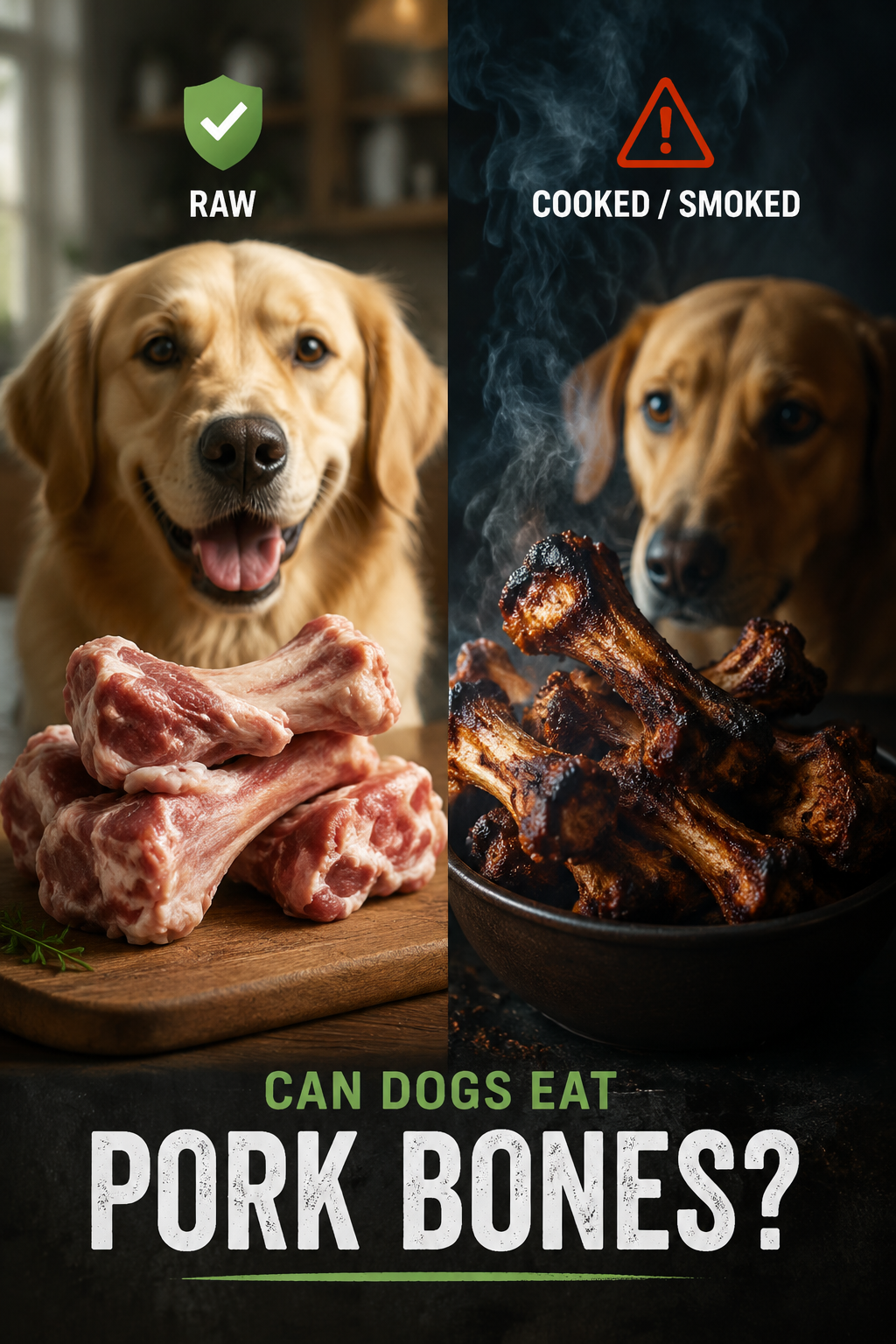
Not all pork bones have the same mechanical risks, but none should be treated as a completely risk-free chew.
Cooked Pork Bones
Avoid them.
Cooking changes the structure of bone and makes it more brittle. When a dog chews the bone, it can break into sharp fragments.
This includes pork bones that have been:
- Boiled
- Roasted
- Baked
- Grilled
- Fried
- Cooked with a meal
The fact that the bone came from food your dog can otherwise eat does not make the bone itself safe.
Smoked Pork Bones
Avoid them too.
Smoked pork bones have been exposed to heat during processing, so they can have the same splintering concern as other cooked bones.
The fact that a smoked bone is sold in a pet store doesn’t automatically mean it is safe for every dog.
If you’re considering a bone-based chew, check with your veterinarian and consider safer alternatives.
Raw Pork Bones
Raw bones are less brittle than cooked bones and are therefore less likely to produce the same type of sharp splinters.
However, that doesn’t make raw pork bones risk-free.
Potential concerns include:
- Bacterial contamination
- Parasites
- Choking
- Tooth damage
- Mouth injuries
- Digestive obstruction
Your dog’s chewing style and the size and shape of the bone also matter.
For these reasons, I would not recommend casually giving a dog a raw pork bone simply because it hasn’t been cooked.
If you are considering raw bones for your dog, talk with your veterinarian first.
Pork Rib Bones
Pork rib bones deserve extra caution because they are relatively thin.
Once cooked, they can break into small, sharp pieces that may be easy for a dog to swallow.
For that reason, cooked pork rib bones should never be offered as treats.
What to Do If Your Dog Eats a Pork Bone
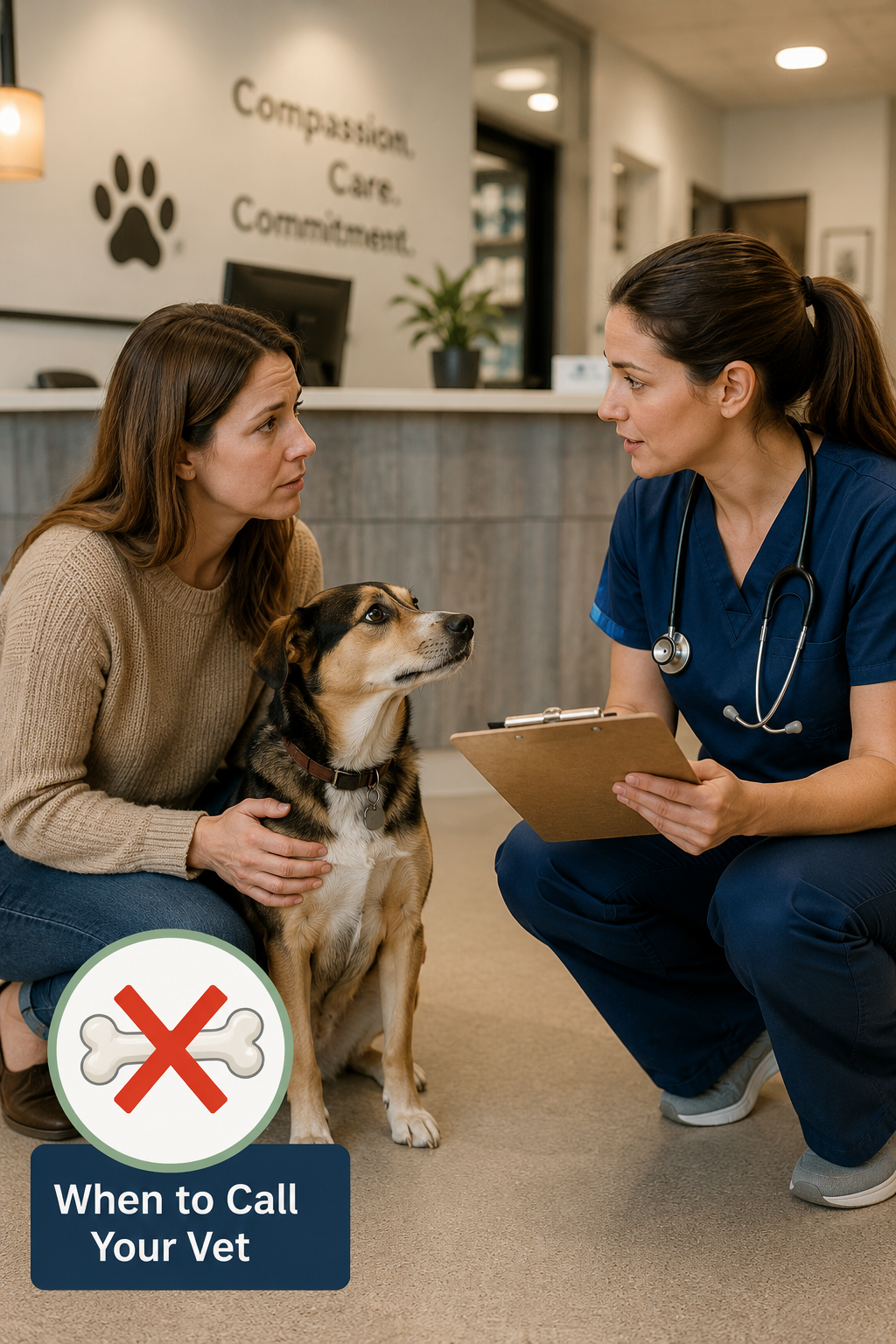
If your dog has swallowed a pork bone, don’t assume everything will be fine simply because your dog looks normal at first.
The appropriate response depends on the type and size of the bone, how much was eaten, and your dog’s size and health.
Contact your veterinarian promptly if:
- Your dog swallowed a pork bone.
- The bone was cooked, roasted, boiled, or smoked.
- Your dog swallowed a large piece.
- You don’t know how much was eaten.
- Your dog has a history of digestive problems or other health conditions.
Watch for concerning signs such as:
- Vomiting
- Loss of appetite
- Lethargy
- Abdominal discomfort
- Straining to defecate
- Bloody stool
- Difficulty swallowing
- Excessive drooling
Seek emergency veterinary care if your dog:
- Is choking
- Has difficulty breathing
- Collapses
- Shows severe distress
- Has significant bleeding
- Is repeatedly vomiting
- Becomes extremely weak
Do not try to make your dog vomit unless a veterinarian specifically tells you to do so.
Safer Alternatives to Pork Bones
If your dog loves to chew, you don’t have to give them a bone to satisfy that instinct.
Consider alternatives such as:
Rubber chew toys
Durable rubber toys can provide a chewing activity without the sharp fragments associated with cooked bones.
Choose a size appropriate for your dog and inspect the toy regularly for damage.
Veterinarian-approved dental chews
Some dental chews are specifically designed to encourage chewing while supporting dental hygiene.
Ask your veterinarian which type is appropriate for your dog’s size and chewing habits.
Other appropriate dog chews
There are many commercially available chew products designed specifically for dogs. Choose products appropriate for your dog’s size and chewing style.
The key point is that a safer chew is preferable to taking a chance with a cooked pork bone.
Are Pork Bones Safe for Puppies?
Puppies should not be given pork bones.
Puppies are still developing their teeth and jaws, and they may also be more likely to chew or swallow inappropriate objects.
A bone can create risks such as:
- Choking
- Tooth damage
- Mouth injuries
- Digestive obstruction
- Internal injury
Puppies also don’t need bones as part of their diet.
Their main food should be a complete and balanced puppy diet appropriate for growth.
If you’re looking for a chew for a puppy, ask your veterinarian about an age- and size-appropriate option.
What About Pork Without the Bone?
Plain, thoroughly cooked pork is a different issue from pork bones.
The meat itself can be suitable for dogs when prepared appropriately, but it should be:
- Plain
- Fully cooked
- Free from bones
- Free from onion and garlic
- Free from heavily seasoned sauces
- Served in moderation
Avoid giving your dog processed pork products such as heavily salted or seasoned meats.
Most importantly, never assume that because the pork meat is safe, the cooked bone is also safe.
Frequently Asked Questions
Can dogs eat raw pork bones?
Raw pork bones are less likely to splinter than cooked bones, but they still carry risks from bacteria, parasites, choking, dental injuries, and digestive problems. Talk to your veterinarian before offering one.
Can dogs eat cooked pork bones?
No. Cooked pork bones can become brittle and splinter into sharp fragments. They can cause choking, blockages, and injuries to the digestive tract.
Can dogs eat smoked pork bones?
No. Smoked bones have been exposed to heat and can become brittle. They should not be treated as a safer alternative to cooked bones.
Can dogs eat pork rib bones?
Cooked pork rib bones should not be given to dogs. Their thin structure makes them particularly concerning when they break into fragments.
What should I do if my dog ate a cooked pork bone?
Contact your veterinarian for advice. Tell them what type of bone your dog ate, whether it was cooked or raw, approximately how much was eaten, and when it happened.
If your dog is choking, struggling to breathe, collapsing, or showing severe distress, seek emergency veterinary care immediately.
Conclusion
So, can dogs eat pork bones?
For cooked, smoked, roasted, or boiled pork bones, the answer is no.
These bones can become brittle and break into sharp pieces that may cause choking, mouth injuries, intestinal blockages, or internal injuries.
Raw pork bones are less likely to splinter, but they still aren’t risk-free. They can expose dogs to bacteria and parasites and can cause choking, dental damage, or digestive problems.
If your dog enjoys chewing, choose an appropriate chew toy or veterinarian-approved dental chew instead. And if your dog has already swallowed a pork bone, contact your veterinarian for advice rather than waiting for symptoms.
A bone may seem like a natural treat, but there are safer ways to satisfy your dog’s need to chew.
Disclaimer
This article is for general educational purposes and does not replace veterinary advice. If your dog has swallowed a pork bone or another potentially dangerous object, contact a licensed veterinarian for individualized guidance. Seek emergency veterinary care for choking, difficulty breathing, collapse, or severe distress.
References
[1] Can Dogs Eat Pork Bones – https://www.akc.org/expert-advice/nutrition/can-dogs-eat-pork-bones/
[2] FDA Consumer Update: Reasons Not to Give Your Dog Bones – https://www.nasc.cc/news/fda-consumer-update-reasons-not-give-dog-bones/
[3] Can Dogs Eat Pork Bones? We’ve Got the 411 – https://carolinaprimepet.com/blogs/blog/can-dogs-eat-pork-bones-weve-got-the-411
[4] Can Dogs Eat Pork Bones: Safe Feeding Tips and Better Alternatives – https://www.pawstruck.com/blogs/pawstruck-press/can-dogs-eat-pork-bones-safe-feeding-tips-and-better-alternatives