
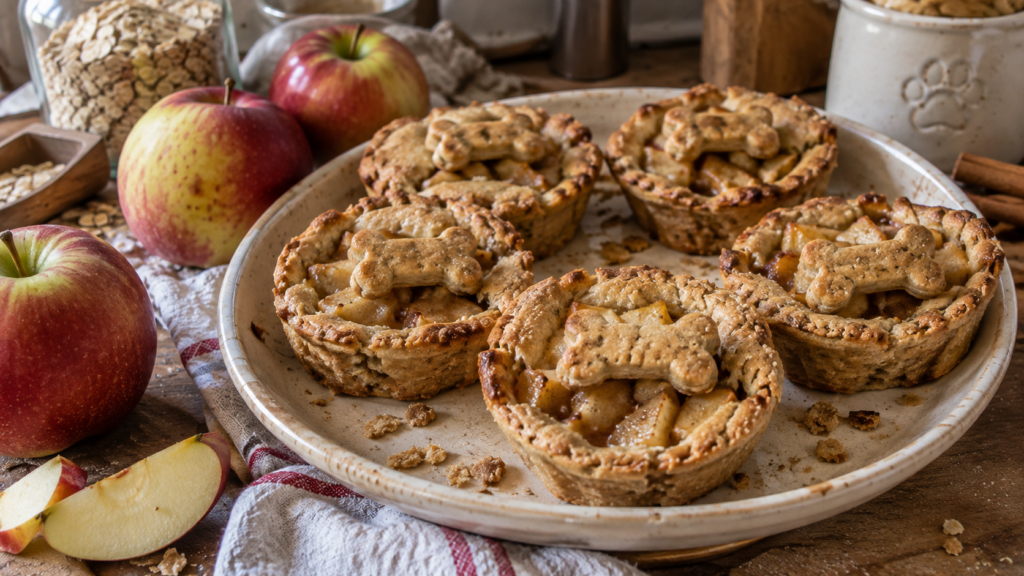
I love making little homemade treats for my dog, especially when I can take something I enjoy, like apple pie, and turn it into a version they can safely enjoy too. This homemade apple pie for dogs is one of those recipes. It has soft, warm apples, a little cinnamon, and a simple homemade crust without all the sugar and extras that go into a traditional apple pie.
I usually make these as small individual pies because they’re cute, easy to portion, and perfect for a special treat. They also make the kitchen smell amazing while they’re baking!
Quick Answer
Yes, dogs can enjoy a small homemade apple pie made specifically with dog-friendly ingredients.
This version uses fresh apples, plain unsweetened applesauce, a small amount of cinnamon, and a simple homemade crust. It contains no added sugar, raisins, nutmeg, chocolate, or artificial sweeteners.
Serve it as an occasional treat and allow the pie to cool completely before giving it to your dog.
Recipe Snapshot
| Prep Time | 25 minutes |
| Cook Time | 25–30 minutes |
| Total Time | About 55 minutes |
| Yield | 6 small mini pies |
| Oven Temperature | 350°F (175°C) |
| Texture | Soft apple filling with a firm crust |
| Best For | Occasional treats |
Key Takeaways
- Fresh apples make a naturally sweet filling without added sugar.
- Always remove the apple seeds, stem, and core.
- Use plain, unsweetened applesauce.
- A small amount of cinnamon adds flavor without making the recipe overly spiced.
- Avoid nutmeg, raisins, grapes, chocolate, and sugar-free sweeteners.
- Mini pies make portion control easier.
- Let the pies cool completely before serving.
- Store leftovers in the refrigerator or freezer.
- These pies are an occasional treat, not a complete meal.
What Makes This Apple Pie Dog-Friendly?
Traditional apple pie can contain plenty of sugar, butter, rich pastry, and heavily spiced filling. A dog-friendly version doesn’t need all of those ingredients.
This recipe focuses on a few simple components that work well together:
- Fresh apples
- Plain unsweetened applesauce
- A small amount of cinnamon
- Whole-wheat flour
- Rolled oats
- Egg
- A modest amount of coconut oil
There is no added sugar, and the filling is kept simple so you can control exactly what goes into your dog’s treat.
Preparing the Apples
Apples can be used as an occasional treat for dogs, but preparation matters.
Wash the apples thoroughly, then remove the stem, core, and seeds before chopping.
Cut the apple into small pieces so the filling cooks evenly and is easier for your dog to eat.
You can leave the skin on if the apples are washed well, although peeling them can produce a softer filling.
Keeping the Filling Simple
The apples and unsweetened applesauce provide plenty of natural sweetness, so additional sugar isn’t necessary.
Choose applesauce that contains only simple ingredients and does not contain added sweeteners or spices.
A small amount of cinnamon adds the familiar apple-pie flavor without making the filling heavily spiced.
Ingredients to Avoid
Keep this recipe different from a traditional human dessert by leaving out ingredients that aren’t appropriate for dogs.
Do not add:
- Nutmeg
- Raisins
- Grapes
- Chocolate
- Xylitol or other sugar-free sweeteners
- Caramel
- Large amounts of sugar
- Excessive salt
How to Make Homemade Apple Pie for Dogs
Ingredients
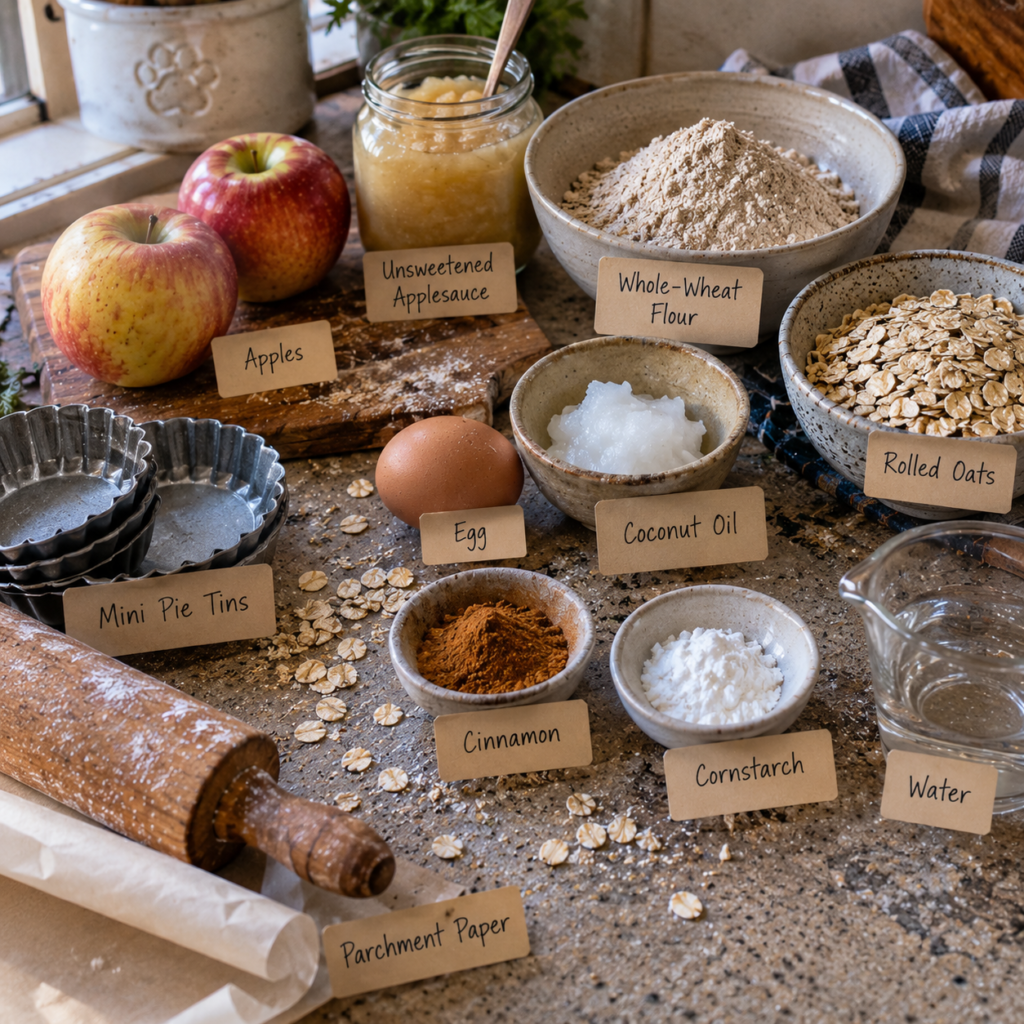
For the Crust
- 1½ cups whole-wheat flour
- ¼ cup plain rolled oats, ground into flour
- ¼ cup melted coconut oil, cooled
- ½ cup plain unsweetened applesauce
- 2–4 tablespoons water, as needed
For the Apple Filling
- 2 medium apples
- ½ cup plain unsweetened applesauce
- ½ teaspoon ground cinnamon
- 1 tablespoon cornstarch
- 2 tablespoons water
Equipment
- 6-cup muffin tin or six small pie tins
- Mixing bowl
- Rolling pin
- Small round cookie cutter or drinking glass
- Small saucepan
- Baking sheet
- Parchment paper
1. Prepare the Oven
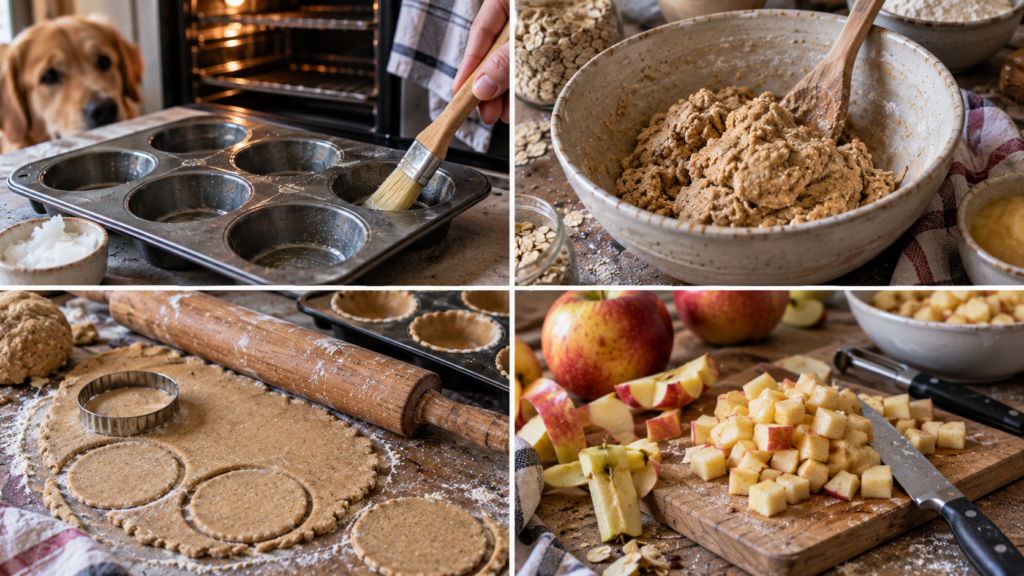
Preheat the oven to 350°F (175°C).
Lightly grease six muffin cups or small pie tins.
2. Make the Crust
Add the whole-wheat flour and ground oats to a mixing bowl.
Stir in the cooled melted coconut oil and applesauce.
Mix until the dough starts coming together.
Add water one tablespoon at a time if necessary. Stop adding water as soon as the dough becomes soft enough to roll.
The dough should be workable without being sticky.
3. Roll and Shape the Crust
Lightly flour your work surface and roll the dough to approximately ⅛ inch thick.
Cut six circles slightly larger than the muffin cups or mini pie tins.
Gently press each piece of dough into the cups, working it slightly up the sides.
Reserve some dough if you’d like to add simple decorative pieces to the tops.
4. Prepare the Apples
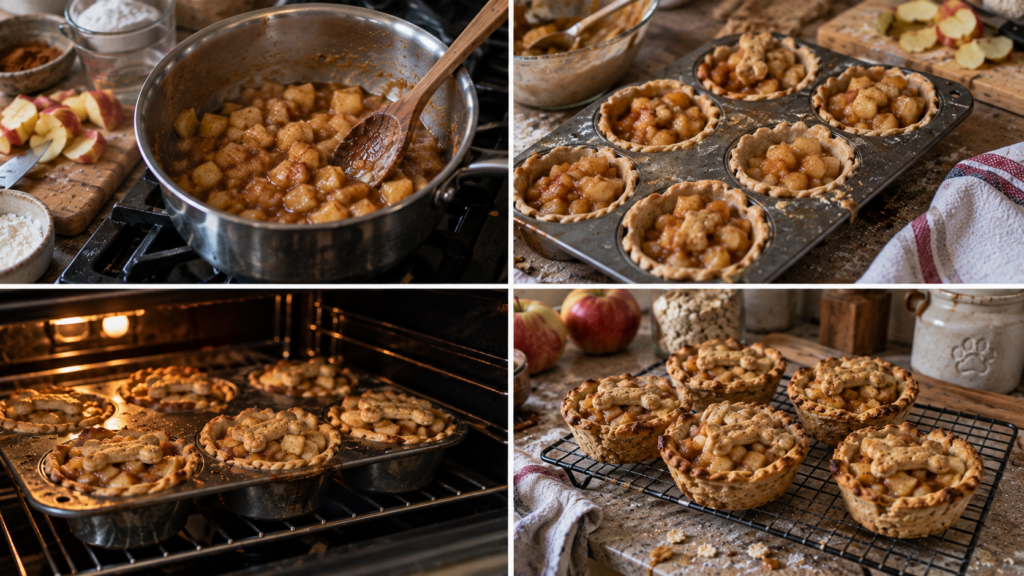
Wash the apples thoroughly.
Remove the stems, cores, and seeds.
Chop the apples into small pieces.
Small pieces will soften more quickly and make the finished filling easier to portion.
5. Cook the Filling
Add the chopped apples, applesauce, and cinnamon to a small saucepan.
Cook over medium-low heat for about 5–8 minutes, stirring occasionally, until the apples begin to soften.
In a small bowl, mix the cornstarch with 2 tablespoons of water.
Stir the mixture into the apples and continue cooking for another 1–2 minutes, until the filling thickens.
Remove from the heat and allow it to cool slightly.
6. Fill the Pies
Spoon the apple filling into the prepared crusts.
Don’t overfill them. Leave a little room at the top so the filling doesn’t bubble over during baking.
If desired, use leftover dough to make small strips or simple bone-shaped decorations for the tops.
7. Bake
Bake for 25–30 minutes, or until the crust is lightly golden and cooked through.
The exact baking time will vary depending on the size and thickness of your pies.
8. Cool Completely
Remove the pies from the oven and place them on a cooling rack.
Allow them to cool completely before serving.
The apple filling can stay very hot even after the crust begins to cool, so check the center carefully.
Serving, Storage & Variations
Serving Size
These mini pies are intended to be occasional treats.
A reasonable starting portion is:
- Small dogs: ¼ mini pie
- Medium dogs: ½ mini pie
- Large dogs: 1 mini pie
Your dog’s ideal treat portion depends on their size, activity level, overall diet, and individual calorie needs.
If you’re introducing the recipe for the first time, start with a smaller portion and see how your dog responds.
Storage
Allow the pies to cool completely before storing.
Place them in an airtight container and refrigerate for 5–7 days.
For longer storage, freeze individual pies in a freezer-safe container with parchment between them.
Frozen pies can be stored for up to 3 months for best quality.
Thaw them in the refrigerator before serving.
A Simple Topping
For an occasional special treat, you can add a small spoonful of plain, unsweetened Greek yogurt after the pie has completely cooled.
Choose plain yogurt without added sugar, artificial sweeteners, fruit flavoring, or other unnecessary ingredients.
Making Smaller Pies
For small dogs, use a smaller cutter or mini muffin tin to create bite-sized portions.
Smaller pies also make it easier to control how much your dog receives at one time.
Making One Larger Pie
You can bake the recipe as one small pie instead of making individual portions.
Keep in mind that a larger pie will require additional baking time. Check the crust carefully and make sure the filling is fully heated before removing it from the oven.
Common Mistakes
Leaving the Apple Core or Seeds
Don’t skip the coring step.
Remove the entire core and all visible seeds before chopping the apples.
Using Sweetened Applesauce
Plain applesauce is the best choice for this recipe.
Check the ingredient label carefully and avoid products containing added sugar, artificial sweeteners, or spices.
Using Store-Bought Apple Pie Filling
Pre-made pie filling is unnecessary for this recipe and can contain ingredients you don’t want in a dog treat.
Fresh apples and plain applesauce give you much more control over the finished filling.
Adding Nutmeg
Nutmeg is a common ingredient in human apple desserts, but it should be left out of dog-friendly recipes.
The cinnamon in this recipe is enough to give the filling that familiar warm flavor.
Making the Crust Too Rich
A dog-friendly pie doesn’t need a buttery, sugary pastry crust.
Keep the crust simple and avoid adding extra sugar, salt, butter, or other rich ingredients.
Serving the Pie Hot
The filling can remain very hot after baking.
Always allow the pies to cool completely before serving.
Giving Too Much at Once
Even homemade treats can contribute significant calories when portions become too large.
Keep the pieces small and account for treats as part of your dog’s overall daily food intake.
FAQ
Can dogs eat apple pie?
Dogs can have a small portion of homemade apple pie when it is made specifically with dog-friendly ingredients. Traditional human apple pie may contain ingredients and quantities that aren’t appropriate for dogs.
Can dogs eat apples?
Yes, plain apple flesh can be given to dogs as an occasional treat. Always remove the seeds, stem, and core before serving.
Can dogs eat cinnamon?
Small amounts of plain cinnamon can be used in dog treats. Avoid giving large quantities or concentrated cinnamon products.
Can puppies eat homemade apple pie?
Healthy puppies that are already eating solid food can have a very small amount as an occasional treat. Keep portions appropriate for their size and introduce new foods gradually.
Can I use applesauce in dog apple pie?
Yes. Use plain, unsweetened applesauce without xylitol, added sugar, or spices.
Can I add honey to the filling?
There’s no need to add honey. The natural sweetness from the apples and applesauce is enough for this recipe.
Can dogs eat apple pie crust?
Dogs can have a simple homemade crust made with dog-friendly ingredients in moderation. Human pie crust is often much richer and may contain unnecessary sugar, salt, or fat.
How much apple pie can my dog eat?
Start with a small portion. For this recipe, ¼ mini pie is a reasonable starting point for a small dog, while larger dogs may tolerate a larger portion depending on their individual diet and calorie needs.
Can I make this recipe without coconut oil?
Yes. The coconut oil can be omitted, although the finished crust may have a slightly different texture.
Conclusion
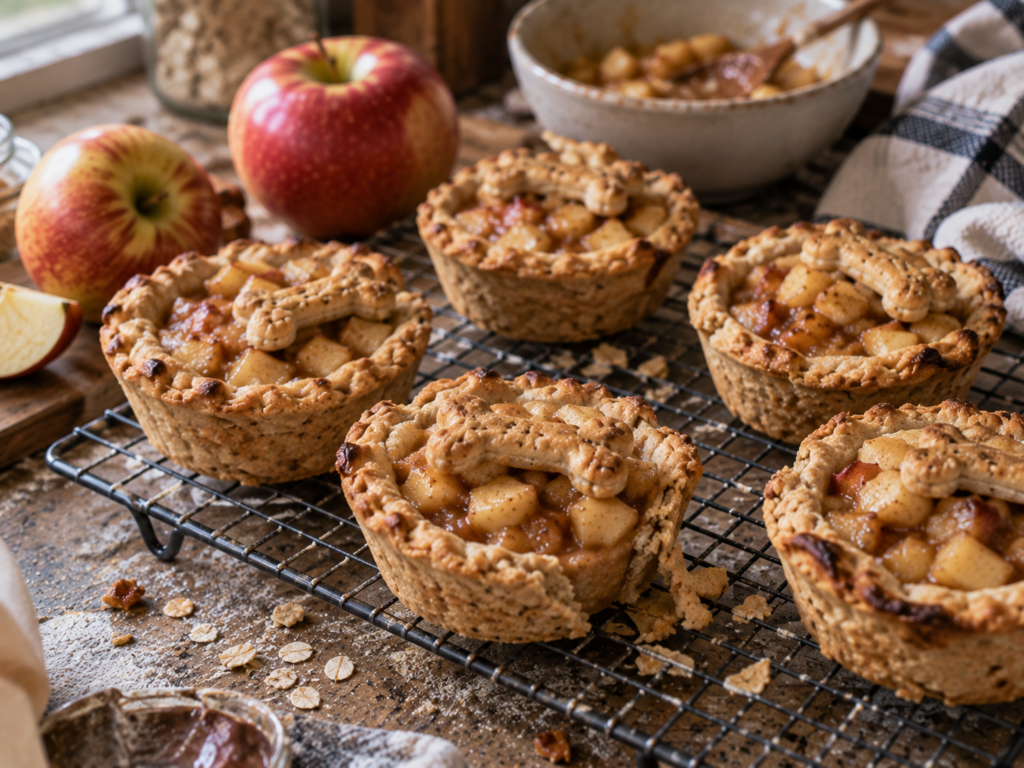
This homemade apple pie for dogs brings the comforting flavors of a classic apple dessert into a much simpler homemade treat. Fresh apples, unsweetened applesauce, and a little cinnamon create a naturally sweet filling, while the simple oat-and-flour crust keeps unnecessary ingredients out.
The key is to prepare the apples carefully, keep the ingredient list simple, and avoid traditional dessert additions such as nutmeg, raisins, chocolate, and sugar-free sweeteners.
Make the pies small, let them cool completely, and serve them occasionally alongside your dog’s normal complete and balanced diet.
Medical Disclaimer
This recipe is intended as an occasional treat for healthy dogs and is not a substitute for a complete and balanced diet or veterinary care.
Dogs with diabetes, pancreatitis, food allergies, gastrointestinal disease, prescription diets, or other medical conditions may require individualized dietary advice. Speak with your veterinarian before introducing homemade treats if your dog has a medical condition or specific dietary restriction.