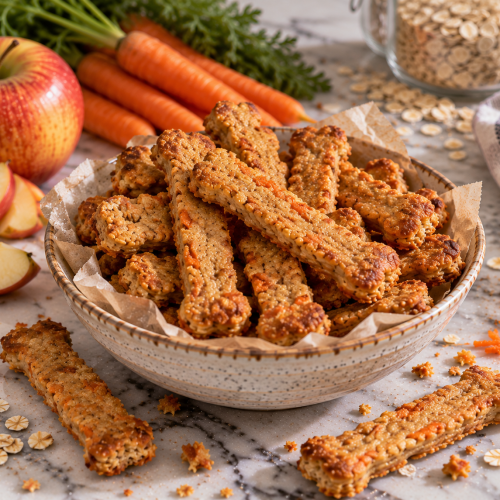

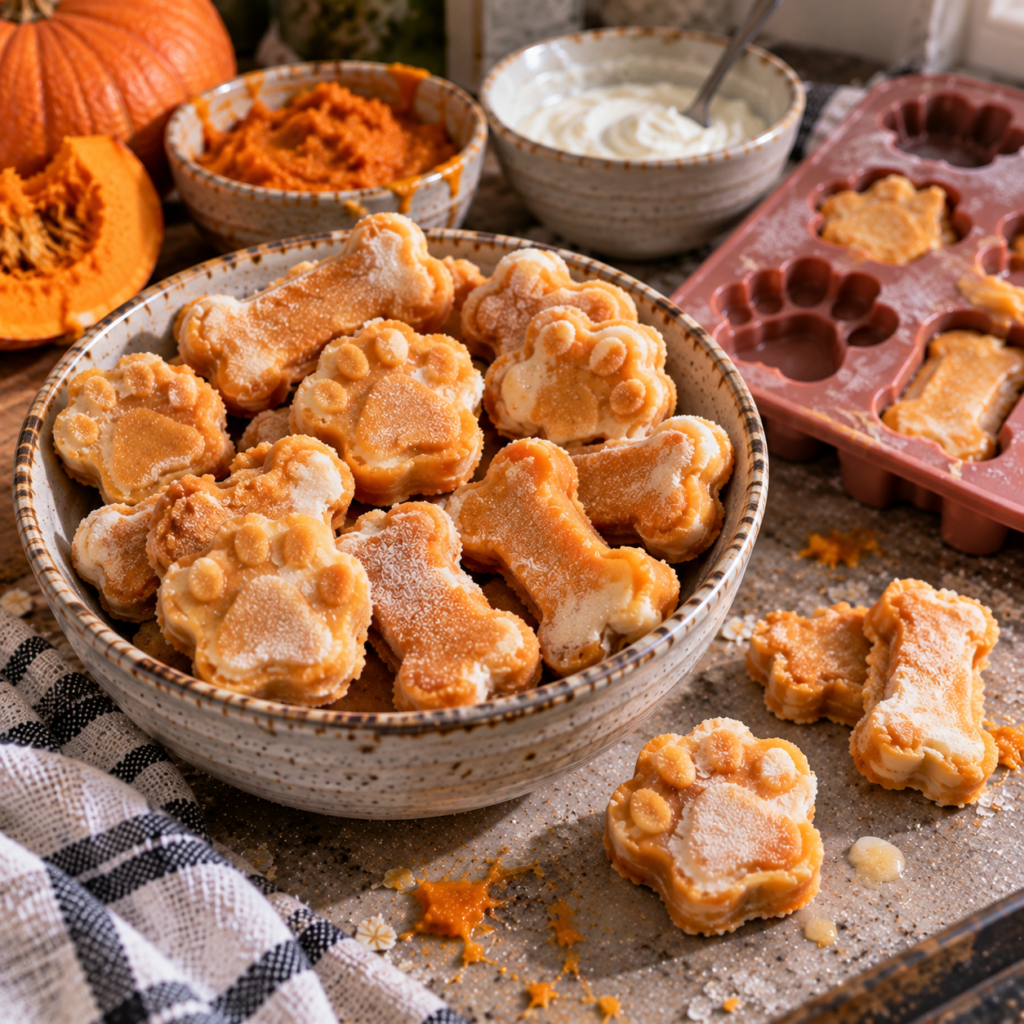
I love having a few homemade treats in the freezer that I can make in just a few minutes, and these frozen pumpkin yogurt dog treats are one of the easiest. There’s no oven, no complicated dough, and barely any cleanup—just a bowl, a silicone mold, and two simple ingredients.
The combination of creamy plain yogurt and smooth pumpkin makes a soft, refreshing treat that dogs can enjoy straight from the freezer. I especially like making these in little paw and bone molds because they’re easy to portion and look adorable when they come out.
They’re also a great recipe to have on hand when you have leftover plain pumpkin in the fridge.
Quick Answer
Yes, dogs can enjoy frozen pumpkin yogurt treats when they’re made with plain 100% pumpkin puree and plain, unsweetened yogurt that contains no xylitol or other unsafe sweeteners. Pumpkin is a source of fiber, while plain yogurt can provide protein and, depending on the product, live cultures.
The key is keeping the recipe simple. Avoid pumpkin pie filling, sweetened yogurt, flavored yogurt, and products containing xylitol. Dogs that do not tolerate dairy may need a different base.
Recipe Snapshot
| Details | |
|---|---|
| Prep Time | 10 minutes |
| Freeze Time | 3–4 hours |
| Total Time | About 4 hours |
| Yield | 12–16 small treats |
| Difficulty | Easy |
| Method | No-bake, frozen |
Ingredients
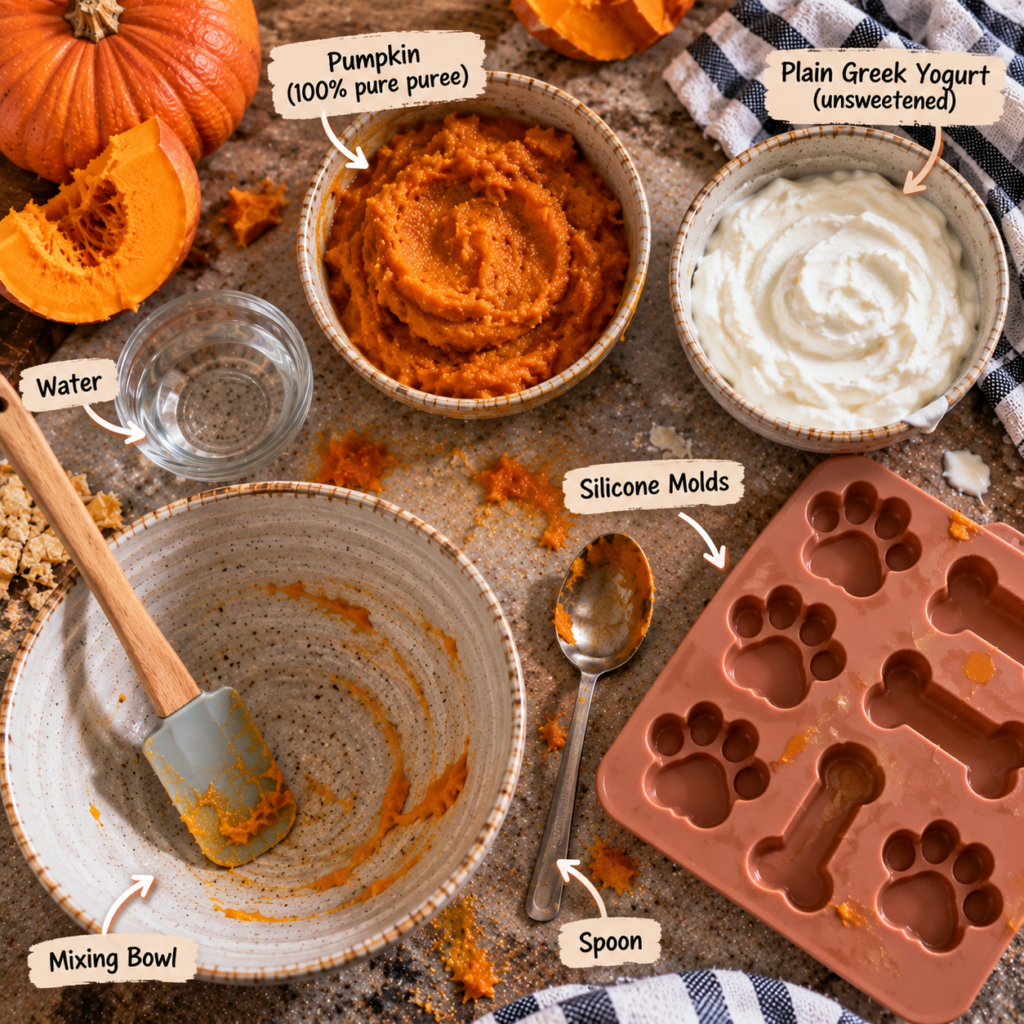
- ½ cup 100% pure pumpkin puree
- ½ cup plain unsweetened Greek yogurt
- 1–2 tablespoons water, only if needed for blending
Equipment
- Mixing bowl
- Spoon or small whisk
- Silicone dog treat mold or ice cube tray
- Freezer-safe container
Why Pumpkin and Yogurt Work Well Together
Pumpkin adds a naturally creamy texture and fiber without needing sugar or other flavorings. Plain cooked pumpkin and 100% canned pumpkin without added ingredients are generally safe for dogs when given in moderation.
Plain yogurt provides a creamy base and can contain beneficial bacterial cultures. However, some dogs have difficulty digesting lactose, so yogurt is not suitable for every dog. Greek yogurt is often a practical choice because it generally contains less lactose than regular yogurt.
Together, pumpkin and yogurt freeze into small, creamy bites that make a particularly convenient homemade treat.
Vet Insight: Pumpkin should not be treated as a cure for ongoing digestive problems. If your dog has persistent diarrhea, constipation, vomiting, appetite changes, or other symptoms, talk with your veterinarian rather than relying on treats.
How to Make Frozen Pumpkin Yogurt Dog Treats
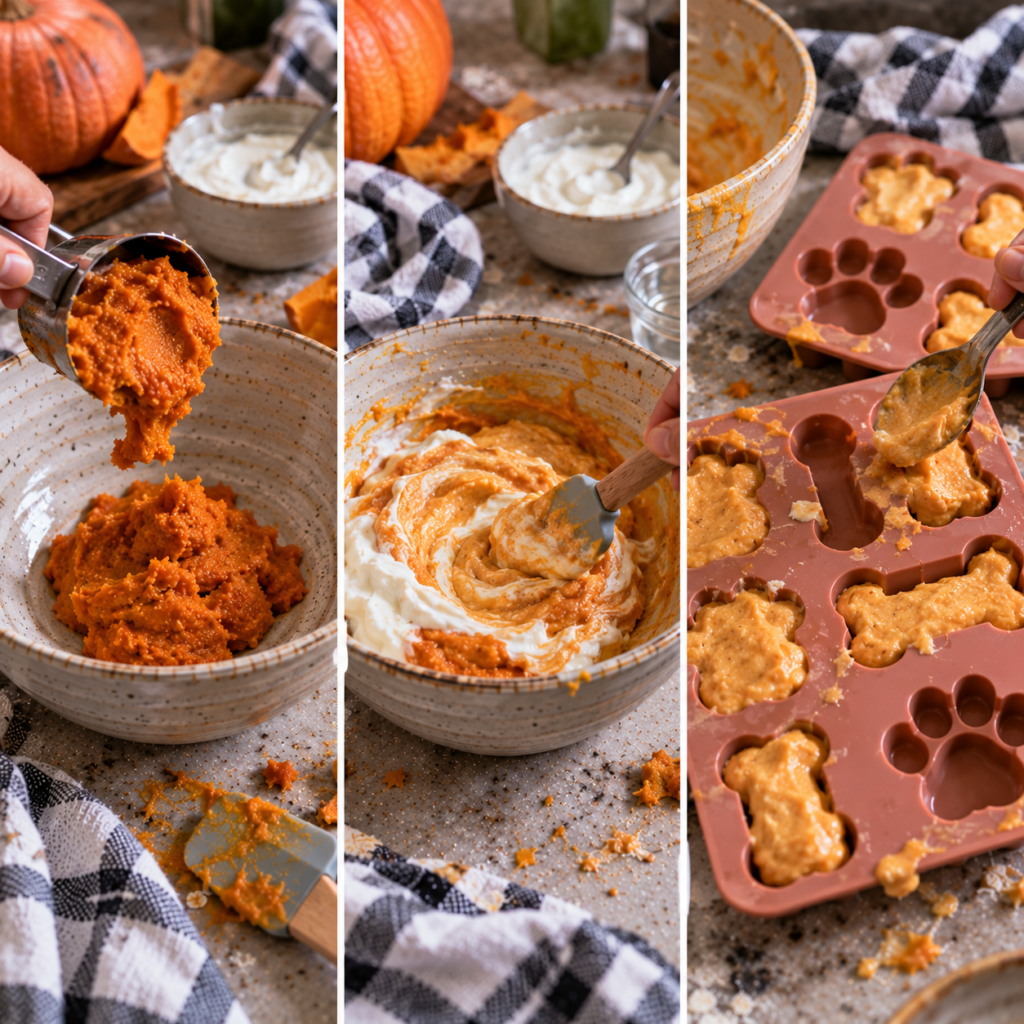
1. Combine the pumpkin and yogurt
Add the pumpkin puree and plain Greek yogurt to a mixing bowl.
Stir until the mixture is smooth and evenly combined. If it seems unusually thick, add 1 tablespoon of water and mix again. Add another tablespoon only if necessary.
The finished mixture should be thick enough to spoon into a mold without running everywhere.
2. Fill the molds
Place your silicone mold on a small tray or flat plate. This makes it much easier to move the filled mold into the freezer.
Spoon the pumpkin-yogurt mixture into each cavity, filling them nearly to the top.
Gently tap the tray against the counter once or twice to settle the mixture and release large air pockets.
3. Freeze
Place the tray in the freezer and freeze for at least 3–4 hours, or until the treats are completely firm.
For larger molds, you may need additional freezing time.
4. Remove and serve
Once frozen, gently pop the treats out of the silicone mold.
Serve one small treat at a time and keep the remaining treats frozen in an airtight freezer container.
Serving, Storage & Variations
How Much Should You Give Your Dog?
Start with a small portion, particularly if your dog is trying pumpkin or yogurt for the first time.
A tiny paw-shaped treat can work well as a starting portion for a small dog, while larger dogs may be able to enjoy a larger treat. The appropriate amount depends on the size of the treat, your dog’s diet, activity level, and individual tolerance.
Treats should remain a small part of your dog’s overall daily calorie intake. A commonly used guideline is to keep treats to no more than about 10% of daily calories.
Storage
Keep the treats frozen in an airtight freezer-safe container or bag.
For the best texture and flavor, I like using them within 1–2 months, although they can remain frozen longer if properly stored.
Pumpkin and Banana
Add a small amount of mashed ripe banana for a naturally sweeter variation. Remember that banana adds additional carbohydrates and calories, so keep the amount modest.
Pumpkin and Blueberry
A few mashed blueberries can add color and texture. Use plain fresh or frozen blueberries without added sugar.
Dairy-Free Option
If your dog does not tolerate dairy, you can experiment with a suitable unsweetened, dog-safe dairy-free yogurt alternative. Check the ingredient label carefully for sweeteners and other additives.
Owner Tip: Freeze the mold on a small baking tray. It keeps the silicone from bending when you move it and prevents the mixture from spilling before it freezes.
Common Mistakes
Using pumpkin pie filling
Pumpkin pie filling is not the same as plain pumpkin puree. It can contain added sugar and spices or other ingredients that aren’t appropriate for dogs. Stick with a product labeled 100% pumpkin.
Choosing flavored yogurt
Vanilla, fruit, dessert-style, and sweetened yogurts can contain unnecessary sugar or sweeteners. Plain, unsweetened yogurt is the safer choice.
Forgetting to check for xylitol
Always check the ingredient list before giving yogurt to your dog. Xylitol is highly toxic to dogs and can cause dangerously low blood sugar and potentially life-threatening complications.
Making the treats too large
Frozen treats can take longer to eat, so small molds are useful for controlling portions. You can always give another small treat later rather than starting with an oversized one.
Giving too many at once
Pumpkin and yogurt may be well tolerated in appropriate amounts, but suddenly giving a large quantity of a new food can cause digestive upset.
FAQ
Can dogs eat pumpkin yogurt treats?
Yes. Dogs can generally enjoy treats made with plain 100% pumpkin and plain unsweetened yogurt, provided the ingredients are safe for that individual dog and the treats are given in moderation.
Can I use regular yogurt instead of Greek yogurt?
Yes, provided it is plain and unsweetened and contains no xylitol or other unsafe ingredients. Greek yogurt is often a convenient option because it tends to contain less lactose and more protein than regular yogurt.
Can puppies have pumpkin yogurt treats?
Puppies can have some dog-safe human foods, but their nutritional needs are different from adult dogs. Introduce any new treat in a small amount and check with your veterinarian if your puppy has dietary restrictions or a sensitive stomach.
Can dogs with sensitive stomachs eat pumpkin yogurt treats?
Not necessarily. Pumpkin may be tolerated well by some dogs, while dairy can cause digestive upset in dogs that have difficulty digesting lactose. Start with a very small amount if your veterinarian has not advised avoiding these ingredients.
How long do pumpkin yogurt treats take to freeze?
Small treats generally need around 3–4 hours to become completely firm. Larger molds may require longer.
Can I make these without a silicone mold?
Absolutely. An ice cube tray works well. You can also spoon small portions onto a parchment-lined tray and freeze them until firm.
Can I give these treats every day?
They can fit into an occasional treat routine, but they should not replace a balanced diet. Keep portions appropriate and account for treats as part of your dog’s daily calorie intake.
Conclusion
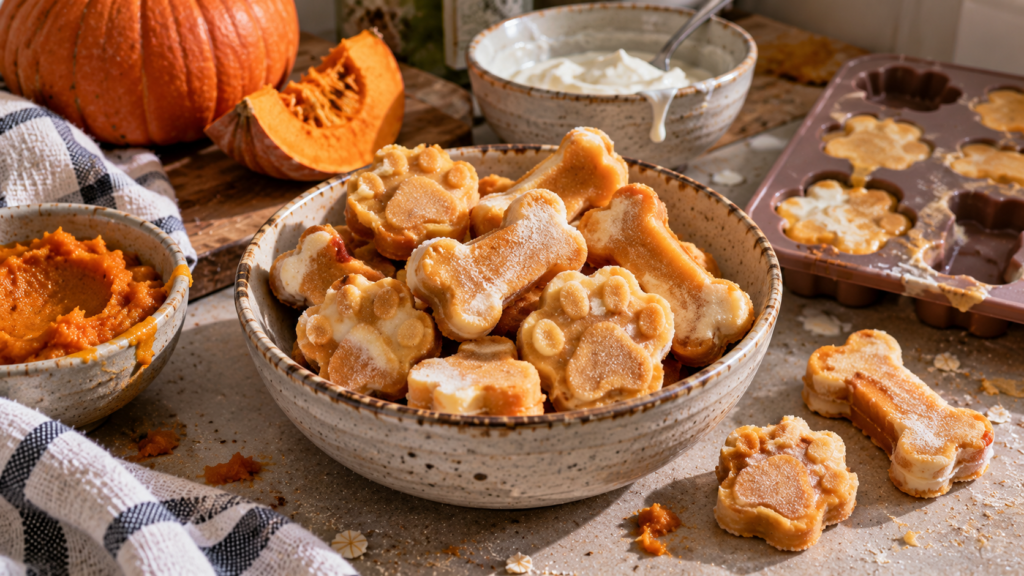
These frozen pumpkin yogurt dog treats are a great example of how simple homemade dog treats can be. With just pumpkin, plain yogurt, and a few minutes of preparation, you can make a freezer batch without turning on the oven.
I especially like using small paw-shaped molds because they make portioning easy and give the treats a fun homemade touch. Just remember to use plain ingredients, check the labels carefully, and introduce the treats gradually if your dog is new to pumpkin or yogurt.
Medical Disclaimer
This recipe is intended as a treat and is not a replacement for complete and balanced dog food or veterinary care. Every dog is different, and dogs with allergies, food intolerances, chronic medical conditions, or prescription diets may need different ingredients. If you are unsure whether pumpkin, yogurt, or any other ingredient is appropriate for your dog, consult your veterinarian before serving it.