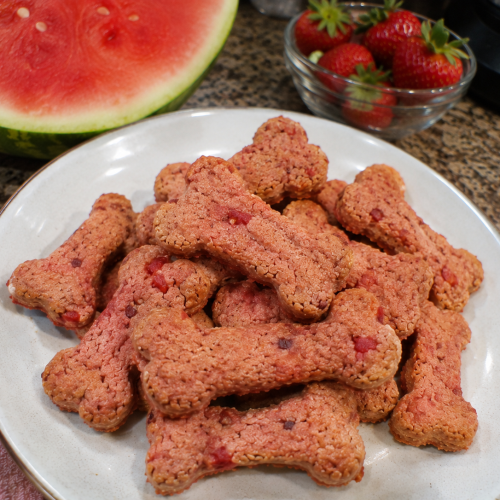

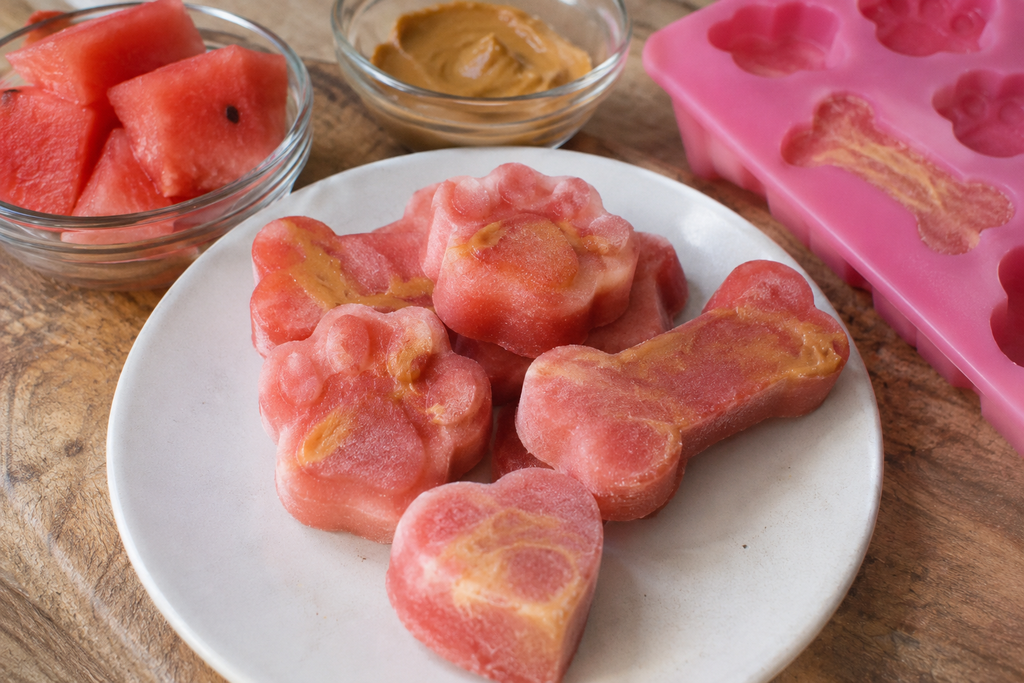
Give your dog a refreshing homemade snack with these watermelon peanut butter dog treats. Made with fresh watermelon and a little dog-safe peanut butter, these frozen bites are simple to prepare and perfect for a warm day.
You only need two main ingredients, a blender, and a silicone mold or ice cube tray. The watermelon provides a naturally sweet flavor, while a small amount of peanut butter adds a creamy finish.
Quick Answer
Yes, dogs can enjoy small amounts of fresh, seedless watermelon and plain peanut butter as occasional treats. To make these frozen bites, blend seedless watermelon, add a little xylitol-free peanut butter, portion into molds, and freeze until firm. Always remove the watermelon rind and seeds before preparing the recipe.
Recipe Details
| Detail | Information |
|---|---|
| Prep time | 10 minutes |
| Freezing time | 3–4 hours |
| Total time | About 4 hours |
| Yield | 12–16 small treats |
| Difficulty | Easy |
| Cooking | No baking required |
Equipment Needed – Watermelon Peanut Butter Dog Treats
- Blender – To purée the watermelon.
- Cutting board – For preparing the watermelon.
- Sharp knife – To remove the rind and cut the watermelon.
- Measuring cups – To measure the watermelon.
- Measuring spoon – For the peanut butter.
- Small mixing bowl – To prepare the peanut butter.
- Silicone paw or bone mold – To shape the treats.
- Freezer-safe container – To store the finished treats.
Ingredients
You will need:
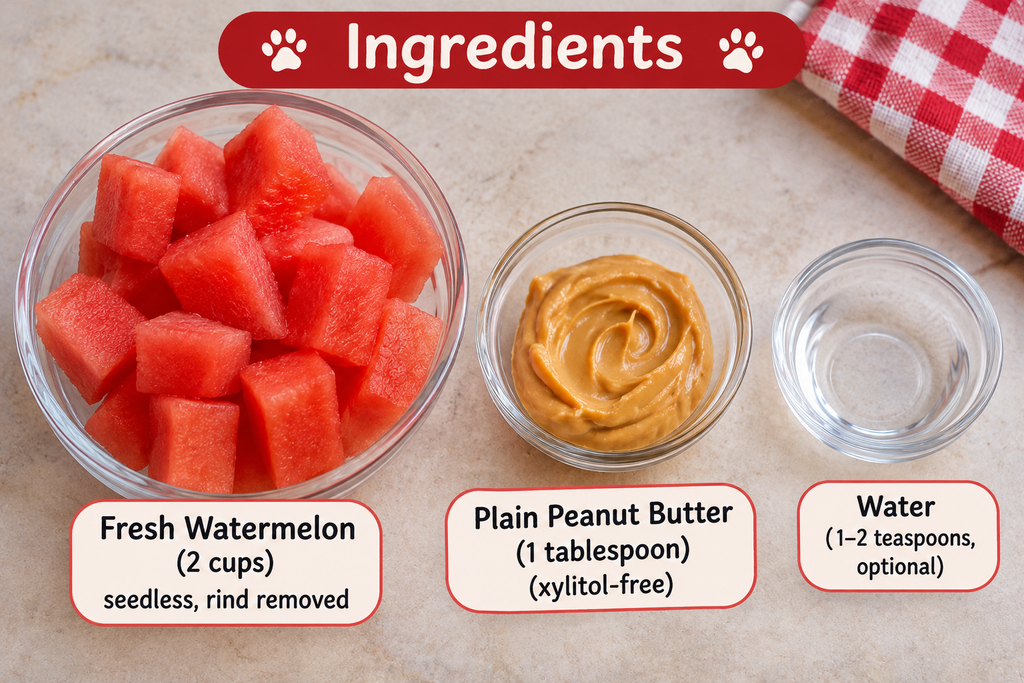
- 2 cups fresh watermelon: Remove all seeds and rind. Use only the red flesh.
- 1 tablespoon plain peanut butter: Choose an unsweetened variety with no xylitol.
- 1–2 teaspoons water (optional): Use only if needed to help blend the watermelon.
Choose ripe watermelon and plain peanut butter without chocolate, added sweeteners, or other unsuitable ingredients.
Step-by-Step Instructions
1. Prepare the watermelon
Wash the outside of the watermelon before cutting it. Remove the rind and any visible seeds, then cut the red flesh into small cubes.
Measure out approximately 2 cups.
2. Blend the watermelon
Place the watermelon cubes in a blender and blend until smooth. Watermelon contains plenty of liquid, so you usually won’t need to add water.
3. Prepare the peanut butter
Place the peanut butter in a small bowl. If it is too thick to portion easily, stir in a teaspoon of warm water to make it softer.
4. Fill the molds
Pour the watermelon purée into small silicone molds or an ice cube tray, filling each compartment about halfway.
Add a small dab of peanut butter to each portion. You can gently swirl it into the watermelon mixture with a toothpick.
5. Freeze
Place the molds flat in the freezer and freeze for approximately 3–4 hours, or until the treats are completely firm.
6. Remove and serve
Once frozen, gently remove the treats from the molds. Let one soften slightly before offering it to your dog, especially if the pieces are large or very hard.
Watermelon and Peanut Butter Safety Tips
Both ingredients can be suitable for many dogs in small amounts, but preparation matters.
- Remove all seeds: Watermelon seeds are best avoided because they can create a choking or intestinal blockage risk, particularly if many are swallowed.
- Never serve the rind: The tough rind is difficult to digest and may cause digestive upset or an intestinal blockage.
- Check peanut butter labels: Xylitol is highly toxic to dogs. It may also be listed as birch sugar or wood sugar. Never use peanut butter containing this sweetener.
- Keep peanut butter portions small: It is calorie-dense and high in fat.
- Avoid overfeeding: Too much watermelon can cause loose stools or stomach upset because of its water and natural sugar content.
If your dog has diabetes, pancreatitis, food allergies, or a prescribed diet, ask your veterinarian before offering these treats.
Serving Size and Storage
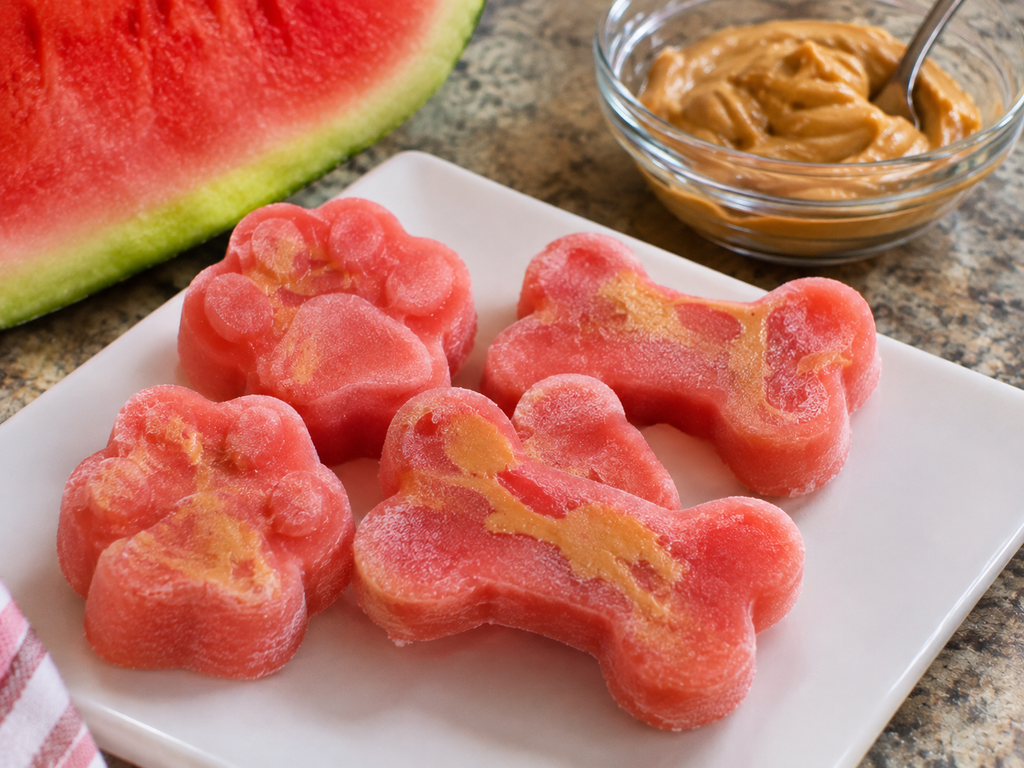
Start with one small treat to see how your dog responds. The right portion depends on your dog’s size, daily calorie needs, and overall diet.
These frozen bites are snacks, not meal replacements. Treats should generally make up no more than 10% of your dog’s daily calories.
Store the finished treats in an airtight freezer-safe container or bag. For best quality, use within about one month. Remove only the number you plan to serve, and avoid repeatedly thawing and refreezing the batch.
Do not leave the treats sitting out for long periods, especially in warm weather. Discard any that become contaminated or develop an unusual smell or appearance.
Frequently Asked Questions
Can dogs eat watermelon every day?
Small amounts of plain watermelon may be suitable for many healthy dogs, but it should not replace their regular food. Consider your dog’s overall diet and daily calorie allowance before offering it regularly.
Can I use frozen watermelon?
Yes. You can blend frozen watermelon for this recipe. Allow it to soften slightly if your blender struggles with frozen pieces, and make sure all seeds and rind have been removed.
Is peanut butter safe for dogs?
Plain peanut butter can be suitable for many dogs in small amounts. Always check the label for xylitol and avoid chocolate-flavored or heavily sweetened varieties.
Can I make these treats without peanut butter?
Yes. Simply freeze the blended watermelon in small molds. The treats will still be refreshing, although they won’t have the peanut butter swirl.
Can puppies eat frozen watermelon treats?
A puppy may tolerate a tiny amount of plain watermelon, but frozen treats can be too hard for some young dogs. Offer a softened, very small portion only if appropriate, and ask your veterinarian if your puppy is still very young or has a sensitive stomach.
Conclusion
Watermelon peanut butter dog treats are an easy frozen snack made with just two main ingredients. Blend fresh seedless watermelon, add a little xylitol-free peanut butter, and freeze in small portions. Remember to remove the rind and seeds, keep servings modest, and enjoy these refreshing bites as an occasional treat.
Editorial Note
This recipe is intended as an occasional snack for healthy dogs. It is not a complete or balanced meal. Always check ingredient labels and consult your veterinarian if your dog has dietary restrictions or an underlying health condition.