
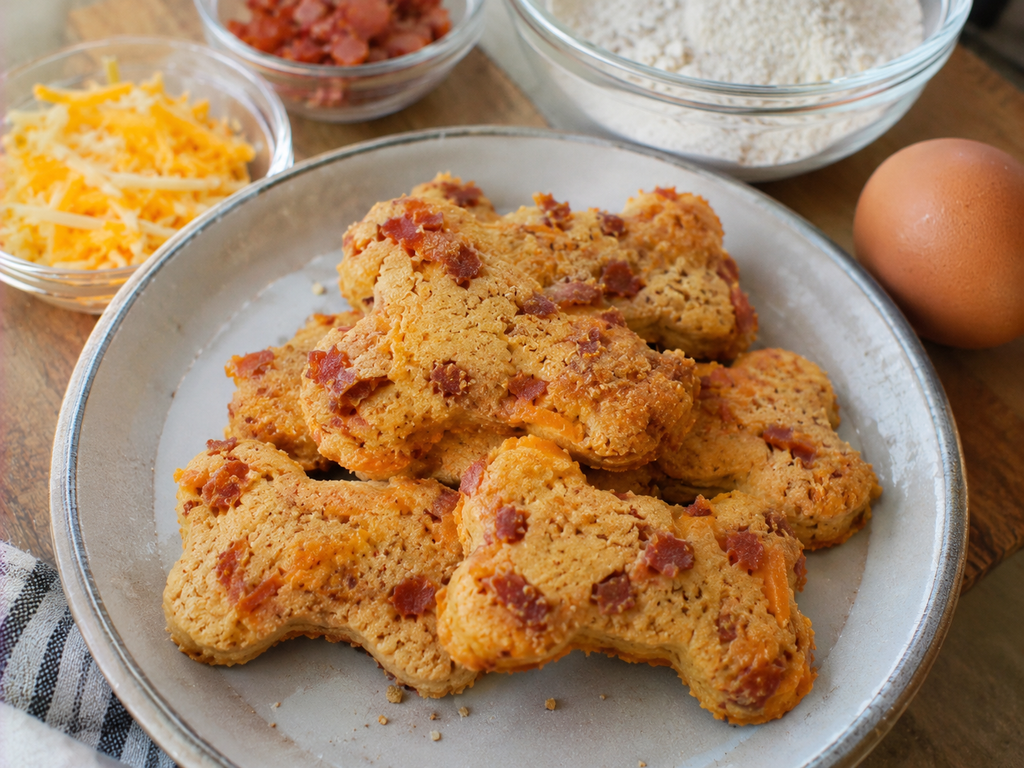
If your dog loves savory treats, these homemade Bacon and Cheese Dog Cookies are a fun addition to your treat jar. They’re made with oat flour, a little cooked bacon, shredded cheese, and egg for a simple dough that bakes into crunchy, golden cookies.
The recipe uses a modest amount of bacon and cheese because both can add extra fat and sodium to a dog’s diet. Make a small batch, let the cookies cool completely, and serve them as occasional treats.
Quick Answer
Homemade bacon and cheese dog cookies are baked treats made with oat flour, cooked bacon, cheese, and egg. Mix the ingredients into a firm dough, cut into small cookies, and bake at 325°F (165°C) until firm and lightly golden.
Recipe Details
| Detail | Information |
|---|---|
| Prep time | 15 minutes |
| Baking time | 20–25 minutes |
| Cooling time | 20 minutes |
| Total time | About 1 hour |
| Yield | 15–20 small cookies |
| Difficulty | Easy |
Equipment Needed
- Mixing bowl: For combining the ingredients.
- Measuring cups and spoons: To measure each ingredient.
- Baking sheet: For baking the cookies.
- Parchment paper: To prevent sticking.
- Fork or mixing spoon: For mixing the dough.
- Rolling pin: To roll the dough evenly.
- Small cookie cutter: For cutting the cookies into shapes.
- Knife or kitchen scissors: For chopping the cooked bacon.
- Cooling rack: To cool the cookies after baking.
Ingredients
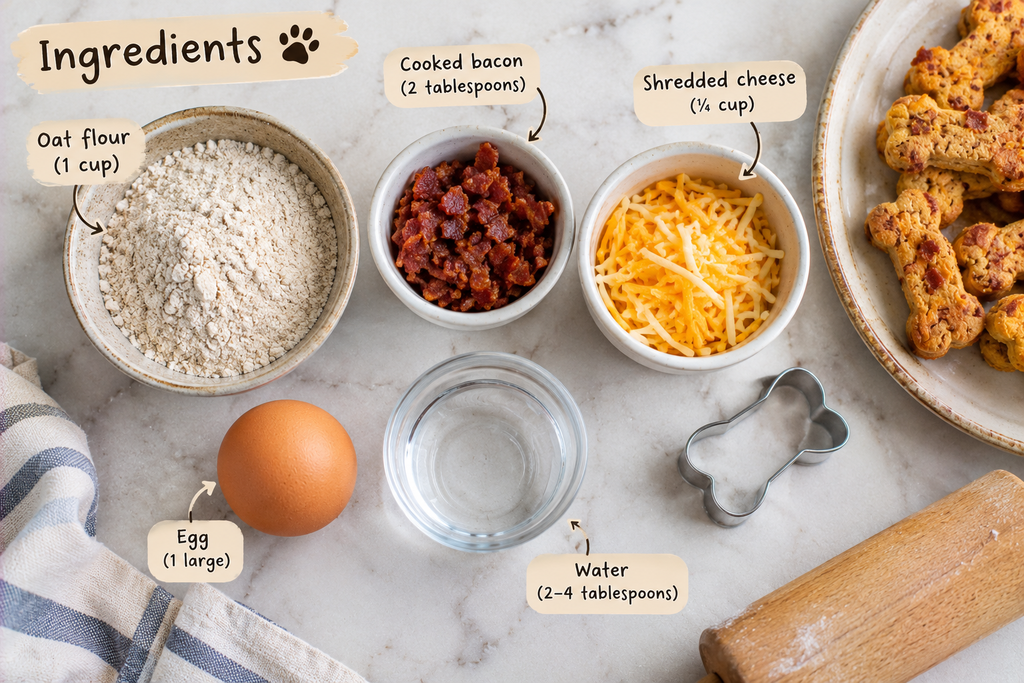
- 1 cup oat flour: Use plain, finely ground oats.
- 2 tablespoons cooked bacon: Choose plain bacon, cook thoroughly, drain well, and crumble finely. Use a small amount because bacon is salty and fatty.
- ¼ cup shredded low-fat cheese: Plain part-skim mozzarella or a lower-fat cheddar works well.
- 1 large egg: Helps bind the dough.
- 2–4 tablespoons water: Add gradually to bring the dough together.
Use unseasoned ingredients. Avoid bacon cooked with garlic, onion, spicy seasonings, or extra salt.
Step-by-Step Instructions
1. Prepare the oven
Preheat your oven to 325°F (165°C). Line a baking sheet with parchment paper.
2. Cook the bacon
Cook the bacon thoroughly in a pan without adding oil or seasoning. Transfer it to a paper towel and allow excess grease to drain.
Once cool, crumble it into very small pieces. Avoid adding visible pools of bacon grease to the dough.
3. Mix the dry ingredients
Add the oat flour and shredded cheese to a mixing bowl. Stir until the cheese is evenly distributed.
4. Add the wet ingredients
Add the egg and crumbled bacon. Mix until the ingredients begin to form a crumbly dough.
5. Adjust the dough
Add water one tablespoon at a time, mixing after each addition. Stop when the dough holds together without becoming sticky.
If it feels too wet, add a little oat flour.
6. Roll and cut
Place the dough on a lightly floured surface. Roll it to approximately ¼ inch thick.
Use a small cookie cutter to make your preferred shapes. Bone-shaped cutters work nicely, but simple rounds or squares are fine too.
7. Arrange the cookies
Place the cookies on the prepared baking sheet, leaving a little space between them. Gather leftover dough, roll it again, and cut additional cookies.
8. Bake
Bake for approximately 20–25 minutes, checking toward the end of the baking time.
The cookies should look lightly golden and feel firm. Thicker cookies may need a little longer. Avoid allowing the cheese or bacon edges to burn.
9. Cool completely
Remove the cookies from the oven and transfer them to a cooling rack. Allow them to cool completely before offering one to your dog.
They will firm up further as they cool.
Bacon and Cheese Safety Tips
Bacon and cheese can be appealing ingredients, but they aren’t suitable for every dog.
- Keep bacon limited: Bacon is processed meat and can contain substantial fat and sodium. Use only the small quantity in this recipe.
- Choose plain cheese: Lower-fat cheese is preferable. Some dogs have difficulty digesting dairy, so watch for gas, loose stools, or vomiting.
- Avoid seasonings: Onion and garlic are unsafe for dogs. Don’t use flavored cheese or seasoned bacon.
- Consider health conditions: Dogs with pancreatitis, obesity, high blood fats, or a prescribed low-fat diet should not be given these rich treats without veterinary approval.
- Keep portions modest: These cookies are treats, not a replacement for balanced dog food.
Serving Size and Storage
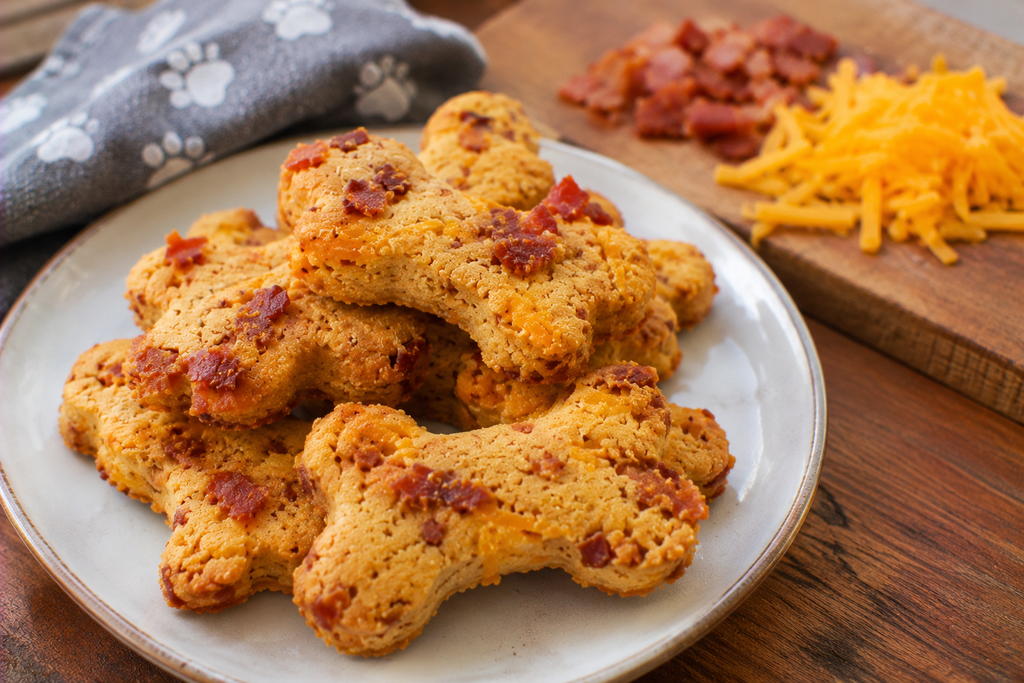
Break larger cookies into smaller pieces for small dogs. Start with a small piece when introducing the recipe for the first time.
Because these cookies contain cooked meat and cheese, store them in an airtight container in the refrigerator. Use within 3–4 days as a conservative homemade storage guideline.
For longer storage, freeze completely cooled cookies in a freezer-safe container for up to 2 months for best quality. Thaw in the refrigerator before serving.
Discard cookies that develop an unusual smell, visible mold, or other signs of spoilage.
Frequently Asked Questions
Can I use cheddar cheese?
Yes. A small amount of plain cheddar can be used, although lower-fat cheese is a better choice. Keep the quantity modest because cheese can add considerable fat and calories.
Can I use whole-wheat flour instead of oat flour?
Yes, plain whole-wheat flour can work. Add water gradually because different flours absorb moisture differently.
Can I use bacon bits from a packet?
It’s better to use freshly cooked, plain bacon. Packaged bacon bits may contain added salt, flavorings, or other ingredients that aren’t appropriate for dogs.
Can puppies eat bacon and cheese cookies?
Puppies eating solid food may tolerate small amounts of suitable ingredients, but these rich treats aren’t ideal for frequent feeding. Ask your veterinarian before introducing them, especially for very young puppies.
How do I make the cookies crunchier?
Roll the dough evenly and bake until the cookies are firm without burning them. Allow them to cool completely before checking their final texture.
Conclusion
These Homemade Bacon and Cheese Dog Cookies are a simple savory baking project for dog owners who enjoy making occasional treats at home. With a little cooked bacon, a modest amount of cheese, and a few everyday ingredients, you can prepare a small batch of crunchy cookies your dog may enjoy.
Keep portions small, use plain ingredients, and remember that these treats are best enjoyed occasionally.
Editorial Note
This recipe is intended as an occasional treat and is not a complete or balanced dog food. Bacon and cheese add fat and sodium, so these cookies may not be suitable for dogs with certain health conditions or dietary restrictions. Consult your veterinarian if you’re unsure whether they are appropriate for your dog.
References
VCA Animal Hospitals – Nutrition and Pancreatic Disease in Dogs
World Small Animal Veterinary Association – Feeding Treats to Your Dog
American Kennel Club – Human Foods Dogs Can and Can’t Eat
Cornell University College of Veterinary Medicine – Re-evaluating Your Dog’s Diet