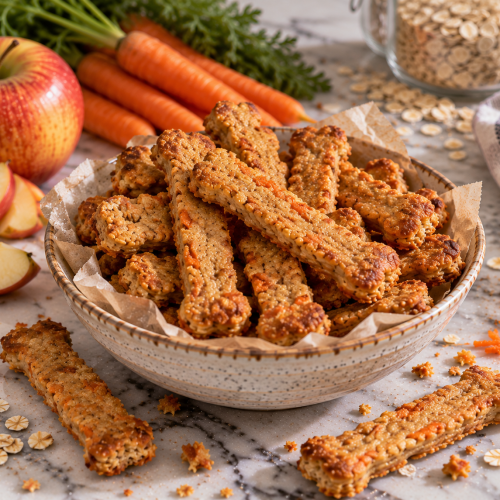

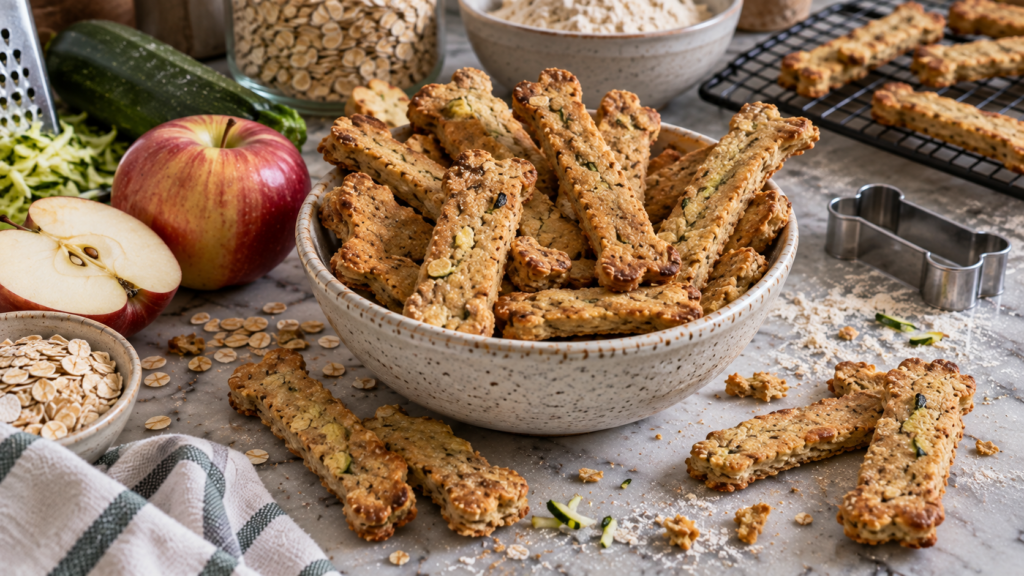
I love making homemade treats that feel a little different from the usual dog biscuits, and these apple and zucchini chew sticks are one of my favorites. They’re simple, lightly sweet from apple, and packed with finely grated zucchini for a soft, wholesome texture.
Instead of cutting the dough into traditional little biscuits, I shape it into long sticks. That makes them fun for dogs to hold and nibble, and baking them until firm gives them a more satisfying chew.
They’re also a great way to use up a little extra zucchini sitting in the refrigerator. Just make sure the apple is properly prepared, and the zucchini is plain before adding them to the dough.
Quick Answer
Yes, healthy dogs can generally enjoy homemade apple and zucchini treats in moderation. Wash and prepare apples without the stem, core, or seeds, and keep zucchini plain and free of salt, oil, garlic, onions, and other seasonings.
These chew sticks combine both ingredients with oat flour and egg to create a simple baked treat. They are intended as an occasional snack, not a replacement for your dog’s complete and balanced diet.
Recipe Snapshot
| Detail | Amount |
|---|---|
| Prep time | 15 minutes |
| Bake time | 35–40 minutes |
| Drying time | 20–30 minutes |
| Total time | About 1 hour 10 minutes |
| Yield | About 18–24 sticks |
| Difficulty | Easy |
| Storage | Refrigerator or freezer |
Key Takeaways
- Use plain zucchini with no added salt, oil, garlic, onion, or seasoning.
- Remove the apple core, stem, and seeds before grating the apple.
- Squeeze excess moisture from both the zucchini and apple so the sticks hold their shape.
- Shape the dough into fairly narrow sticks rather than thick logs.
- Bake until firm, then allow the sticks to cool completely before serving.
- Treats should remain a small part of your dog’s overall diet.
Why Apple and Zucchini Work Well in Homemade Dog Treats
Apples can be a low-calorie source of fiber and nutrients for dogs when served properly. The important part is preparation: the core, stem, and seeds should be removed before the apple is given to a dog. Too much apple can also cause digestive upset.
Zucchini is another dog-friendly ingredient when served plain and in moderation. It provides fiber and several vitamins and minerals while being relatively low in calories. Large pieces of raw zucchini can be difficult for some dogs to chew, which is one reason grating it finely works particularly well in this recipe.
The combination works nicely in a baked treat because the apple contributes natural sweetness and moisture while zucchini adds moisture and a mild vegetable flavor.
How to Make Apple and Zucchini Chew Sticks for Dogs
Ingredients
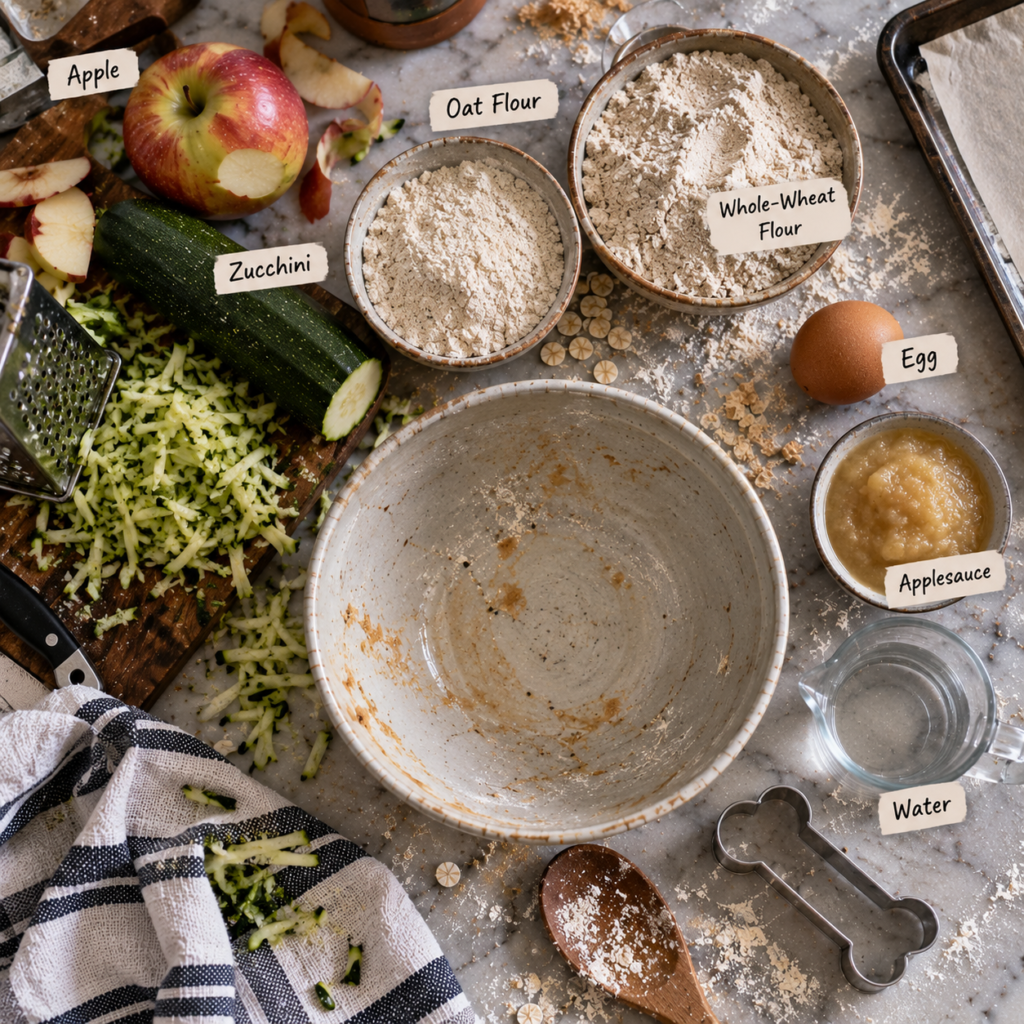
- 1 cup oat flour
- ¾ cup whole-wheat flour
- ½ cup finely grated zucchini, squeezed very dry
- ½ cup finely grated apple, core and seeds removed
- 1 large egg
- 1 tablespoon plain unsweetened applesauce
- 1–3 tablespoons water, only if needed
Instructions
1. Prepare the apple.
Wash the apple thoroughly. Remove the stem, core, and all seeds. Grate the flesh finely. There is no need to add sugar or cinnamon.
2. Prepare the zucchini.
Wash the zucchini and grate it finely. Place it in a clean kitchen towel or several layers of paper towel and squeeze firmly to remove as much water as possible.
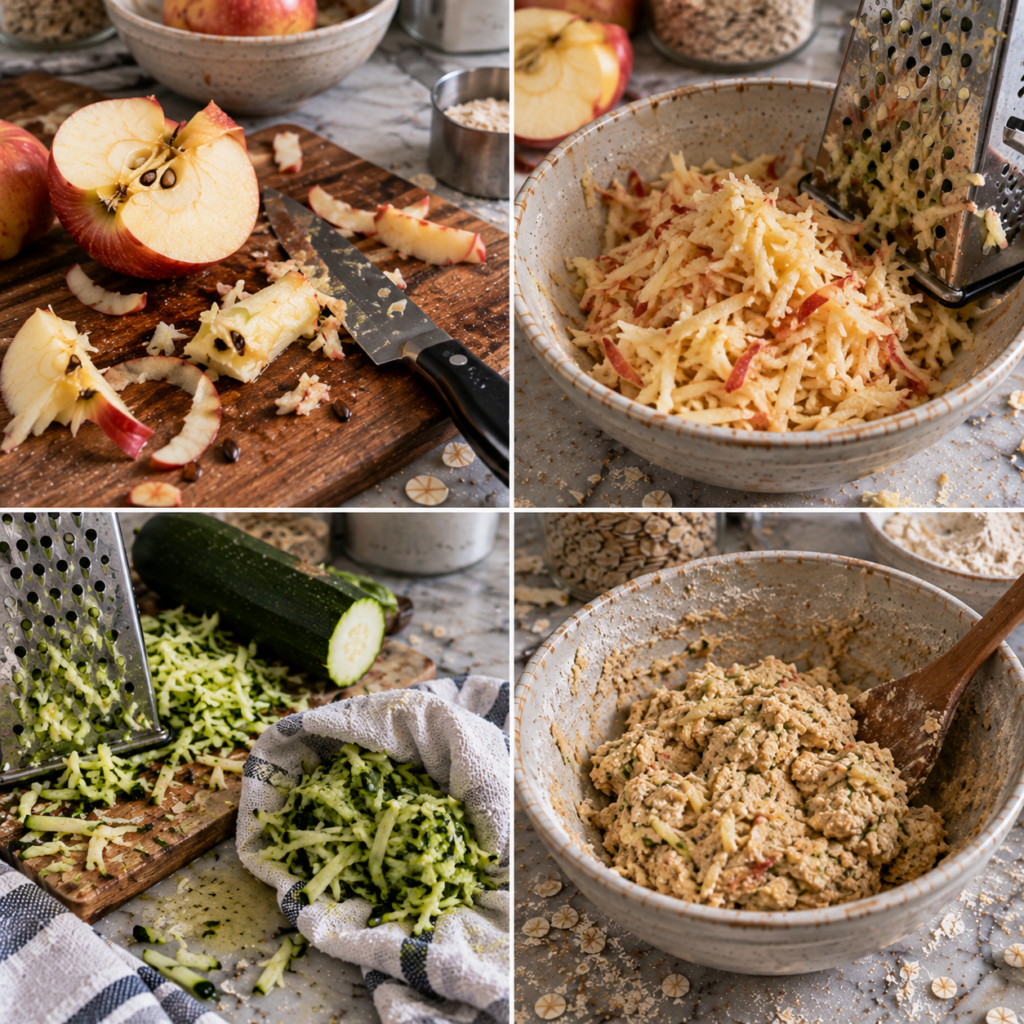
3. Squeeze the apple.
The grated apple also releases quite a bit of moisture. Give it a gentle squeeze so the dough doesn’t become overly wet.
4. Make the dough.
Add the oat flour and whole-wheat flour to a mixing bowl. Stir in the grated apple and zucchini. Add the egg and applesauce and mix until a rough dough forms.
If the mixture feels too dry to come together, add water one tablespoon at a time. You want a firm dough that can be rolled without sticking excessively to your hands.
5. Shape the chew sticks.
Place the dough on a lightly floured surface and roll it into a rectangle about ¼-inch thick.
Cut the dough into strips approximately ½-inch wide and 3–4 inches long.
For smaller dogs, make the sticks shorter and thinner.
6. Prepare for baking.
Place the sticks on a parchment-lined baking sheet, leaving a little space between them.
For a firmer texture, prick each stick once or twice with a fork. This helps some of the internal moisture escape during baking.
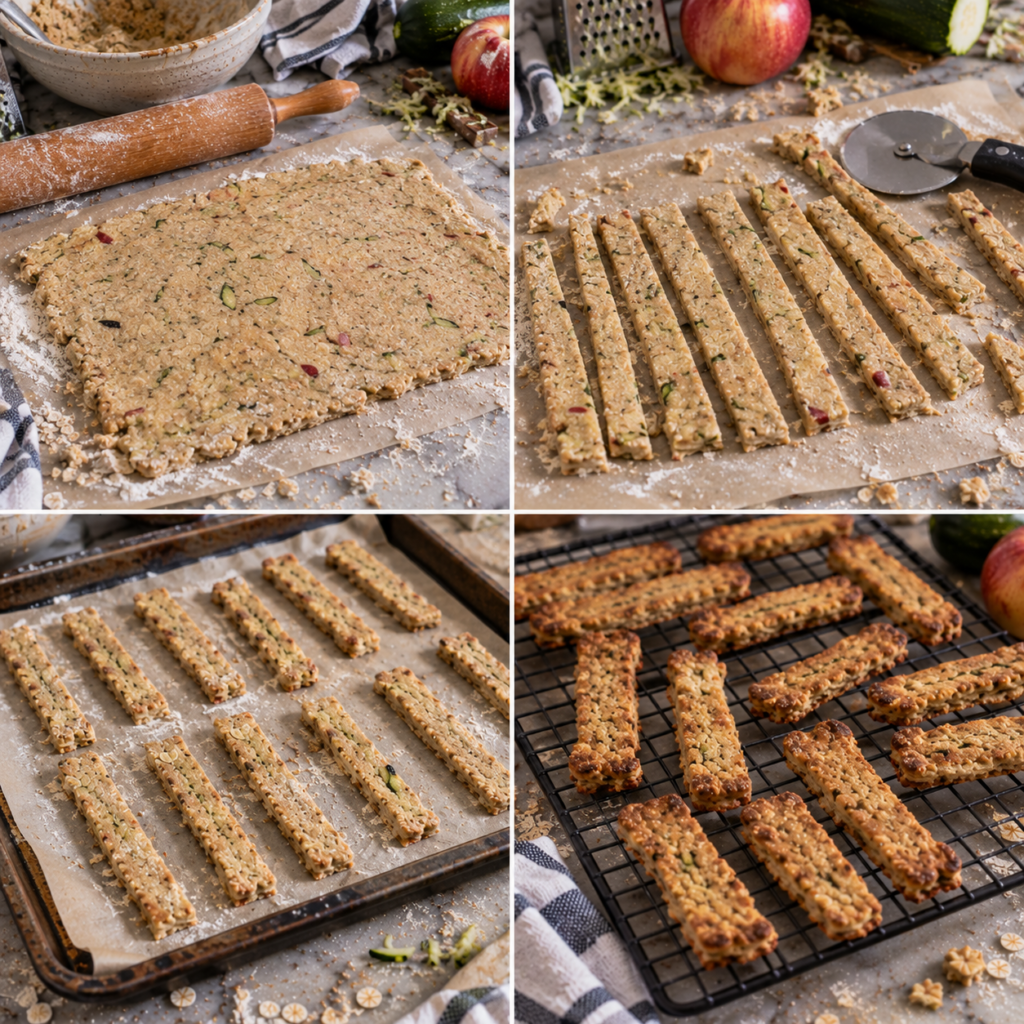
7. Bake.
Bake at 325°F (165°C) for about 35–40 minutes, turning the sticks halfway through.
They should feel firm and look lightly browned around the edges.
8. Dry for a chewier texture.
Turn the oven off and leave the sticks inside for another 20–30 minutes with the oven door slightly open.
This extra drying step helps remove moisture and produces a firmer chew.
9. Cool completely.
Transfer the sticks to a wire rack and allow them to cool completely before giving one to your dog.
They will become firmer as they cool.
Serving, Storage & Variations
How Much Should You Give Your Dog?
Start with a small piece, especially if your dog hasn’t eaten apple or zucchini before.
Because these are homemade treats, the appropriate amount depends on your dog’s size, calorie needs, activity level, and overall diet. Treats and other extras should generally make up no more than about 10% of a dog’s daily calorie intake.
How to Store Them
Because these treats contain fresh fruit and vegetables, I prefer storing them in the refrigerator rather than leaving them at room temperature for several days.
Once completely cool:
- Store in an airtight container in the refrigerator for up to 5 days.
- Freeze for up to 2 months for longer storage.
- Thaw one stick in the refrigerator or at room temperature before serving.
If a stick develops mold, an unusual smell, or a noticeably different texture, discard it.
Make Them Softer
For dogs that prefer softer treats, skip the extra drying step and bake only until the sticks are cooked through and firm around the edges.
Store softer versions in the refrigerator and use them more quickly.
Make Them Smaller
For puppies, small breeds, or dogs that don’t chew large treats comfortably, cut the dough into short strips instead of long sticks.
The shape is flexible—the important thing is choosing a size your dog can safely manage.
Use Different Apple Varieties
Sweet or tart apples can work in this recipe. The important thing is that the apple is fresh and properly prepared, without the core, stem, or seeds.
Common Mistakes
Leaving the Apple Core or Seeds In
Don’t grate the whole apple. Always remove the core, stem, and seeds first. Apple seeds contain cyanogenic compounds, and the tough core can also present a choking or obstruction risk.
Not Squeezing the Zucchini
Fresh zucchini contains a lot of water. If you add it straight from the grater, the dough can become too wet and difficult to shape.
Making the Sticks Too Thick
Thick pieces hold more moisture in the center and take considerably longer to dry. Keeping them relatively thin gives you a firmer, more consistent chew.
Adding Human Seasonings
These treats don’t need salt, garlic, onion, butter, or seasoning. Plain zucchini is the better choice for a dog treat.
Serving Too Many
Even wholesome ingredients can cause digestive upset when a dog eats too much at once. Introduce new treats gradually and keep portions appropriate for your dog’s overall diet.
FAQ
Can dogs eat apple and zucchini together?
Yes. Both apples and plain zucchini can be suitable for dogs when properly prepared and served in moderation.
Can puppies eat these chew sticks?
Puppies may be able to enjoy small amounts of properly prepared apple and zucchini, but the texture and size of the treat should match their chewing ability. Start with a small piece and supervise them while eating.
Do I need to peel the apple?
No. Apple skin is generally safe for dogs. However, peeling it can make the fruit easier to digest for some dogs. The core, stem, and seeds should always be removed.
Can I use green zucchini?
Yes. Regular green zucchini works perfectly well.
Can I use applesauce instead of fresh apple?
You can replace some of the fresh apple with plain, unsweetened applesauce, but avoid products containing added sugar, spices, or artificial sweeteners. Fresh grated apple gives these sticks better texture and natural flavor.
Are these dental chews?
No. Although the firm texture encourages chewing, these homemade treats should not be considered a substitute for tooth brushing, veterinary dental care, or professionally formulated dental products.
Why did my chew sticks turn soft?
The most common reason is excess moisture from the apple or zucchini. Squeeze both ingredients well before mixing and allow the finished sticks to dry in the switched-off oven after baking.
Conclusion
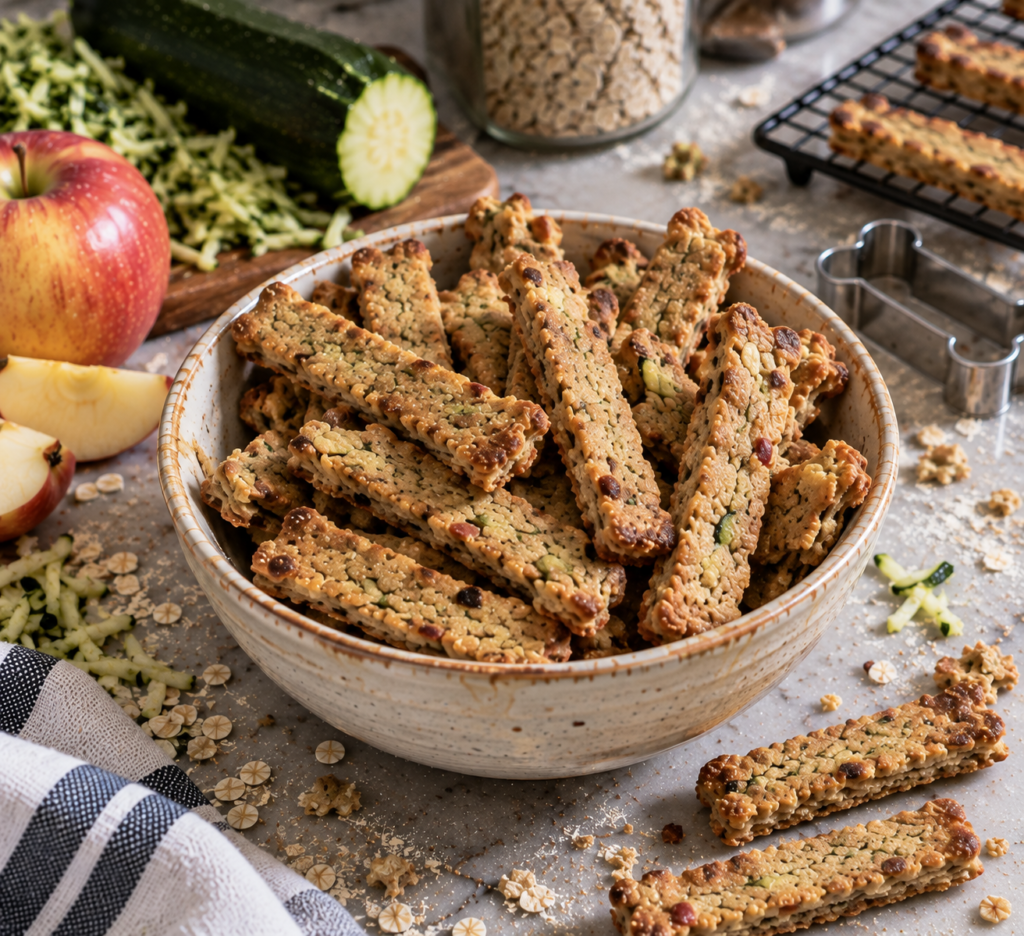
These apple and zucchini chew sticks are a simple way to turn a couple of fresh ingredients into a homemade treat your dog can enjoy. The recipe keeps things uncomplicated—fresh apple, zucchini, oat flour, whole-wheat flour, and egg—without relying on sugar, salt, or heavy seasonings.
I especially like the stick shape because it makes the treats feel different from ordinary biscuits. You can make them longer for larger dogs or cut them into smaller pieces for little ones.
Just remember that homemade treats are still treats. Start with a small portion, watch how your dog responds, and keep them as part of an otherwise complete and balanced diet.
Medical Disclaimer
This recipe is intended as a treat for generally healthy dogs and is not a substitute for veterinary nutrition advice. Dogs with allergies, diabetes, digestive disorders, food sensitivities, or other medical conditions may have different dietary needs. If your dog is on a prescription diet or you are unsure whether these ingredients are appropriate, speak with your veterinarian before introducing the recipe.