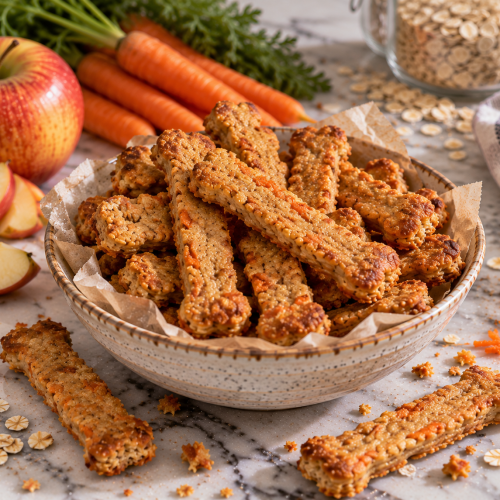

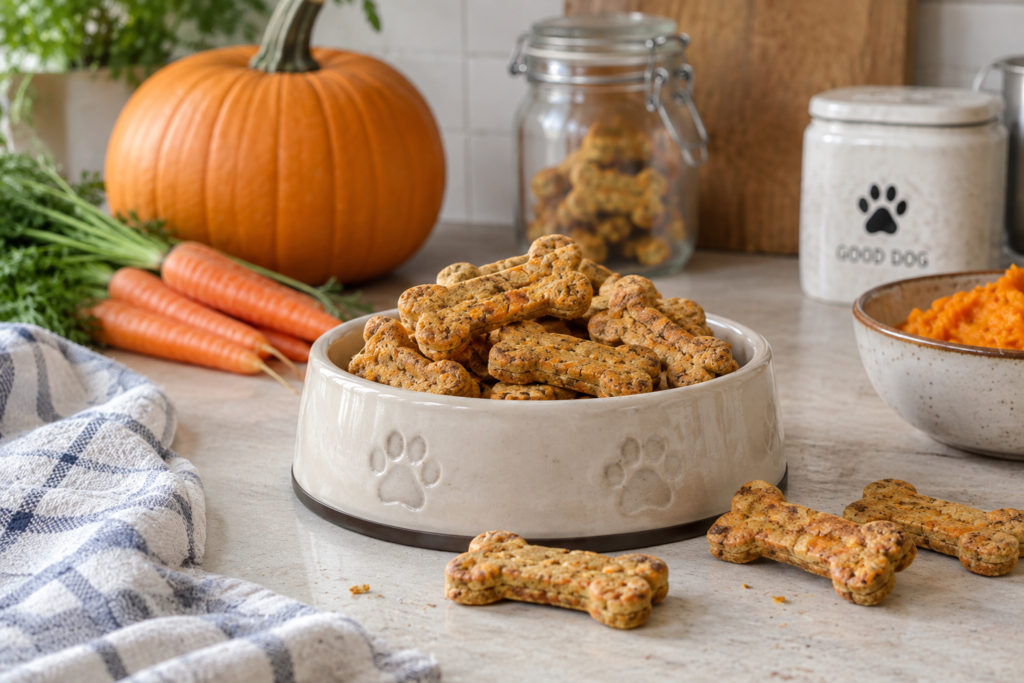
Homemade pumpkin and carrot dog cookies are an easy baked treat made with simple ingredients you can recognize: plain pumpkin purée, grated carrot, eggs, and flour. These lightly crisp cookies are easy to cut into bone or paw shapes and make a convenient homemade reward for dogs.
This recipe takes about 35 minutes from start to finish and makes approximately 80 small 2-inch treats, depending on the cookie cutter you use. The most important ingredient rule is to use 100% plain pumpkin purée—not pumpkin pie filling, which can contain added sugar, spices, or other ingredients that aren’t appropriate for dogs.
Quick Answer
Yes, dogs can generally enjoy homemade pumpkin and carrot cookies when they’re made with dog-safe ingredients and served in moderation. This recipe combines plain pumpkin, fresh carrot, eggs, and whole-wheat flour into a simple dough that’s rolled, cut, and baked at 350°F (177°C) for about 18–20 minutes.
The cookies are intended as an occasional treat, not a replacement for your dog’s complete and balanced food. If your dog has food allergies, follows a prescription diet, or has a medical condition, check with your veterinarian before introducing homemade treats.
Recipe Snapshot
| Detail | Info |
|---|---|
| Prep Time | 15 minutes |
| Cook Time | 18–20 minutes |
| Total Time | About 35 minutes |
| Yield | About 80 small 2-inch cookies |
| Oven Temperature | 350°F (177°C) |
| Storage | Refrigerate up to 2 weeks |
| Freezer | Up to 3 months |
| Main Ingredients | Pumpkin, carrot, egg, whole-wheat flour |
Are Pumpkin and Carrot Cookies Safe for Dogs?
For most healthy dogs, pumpkin and carrots can be safe ingredients when they’re prepared plainly and served in moderation. Plain pumpkin is a source of fiber, while carrots provide fiber and beta-carotene. Both are commonly included in dog-friendly foods and treats.
The key is keeping the recipe simple. Dogs don’t need the sugar, butter, heavy fats, or concentrated spices commonly found in human cookies.
Pumpkin
Use 100% plain pumpkin purée with no added sugar, spices, or other ingredients. Canned pumpkin is convenient, but check the label carefully.
Do not substitute pumpkin pie filling. Pumpkin pie products can contain ingredients that aren’t appropriate for dogs, including added sugars and spices, and some formulations may contain xylitol, which is toxic to dogs.
Carrots
Carrots are generally safe for dogs and can provide fiber and beta-carotene. They can be served raw or cooked, but large pieces can create a choking or blockage risk, so preparing them appropriately for your dog’s size is important.
For these cookies, finely grated carrot is ideal because it distributes evenly through the dough.
What About the Flour?
This version uses whole-wheat flour, which provides the structure needed to roll and cut the cookies. If your dog has a known wheat or grain sensitivity, don’t automatically assume another flour is appropriate. Ask your veterinarian which alternative fits your dog’s diet.
What Should You Avoid?
Do not add ingredients such as:
- Pumpkin pie filling
- Added sugar
- Chocolate
- Raisins or grapes
- Xylitol or other unsafe sweeteners
- Nutmeg or pumpkin-spice blends
- Onion or garlic
- Excessive salt
Some spices and ingredients commonly used in human baked goods can be harmful to dogs. Pumpkin itself is not the problem—it’s often the additional ingredients in human pumpkin desserts that create the risk.
🩺 Vet Insight: A homemade treat can still be inappropriate for an individual dog. Dogs on prescription diets or those with food allergies should not receive new treats without veterinary guidance.
How to Make Pumpkin and Carrot Dog Cookies
These homemade dog cookies use four basic ingredients and require only a mixing bowl, rolling pin, cookie cutter, and baking sheet. The dough should be firm enough to roll without being excessively sticky.
Ingredients
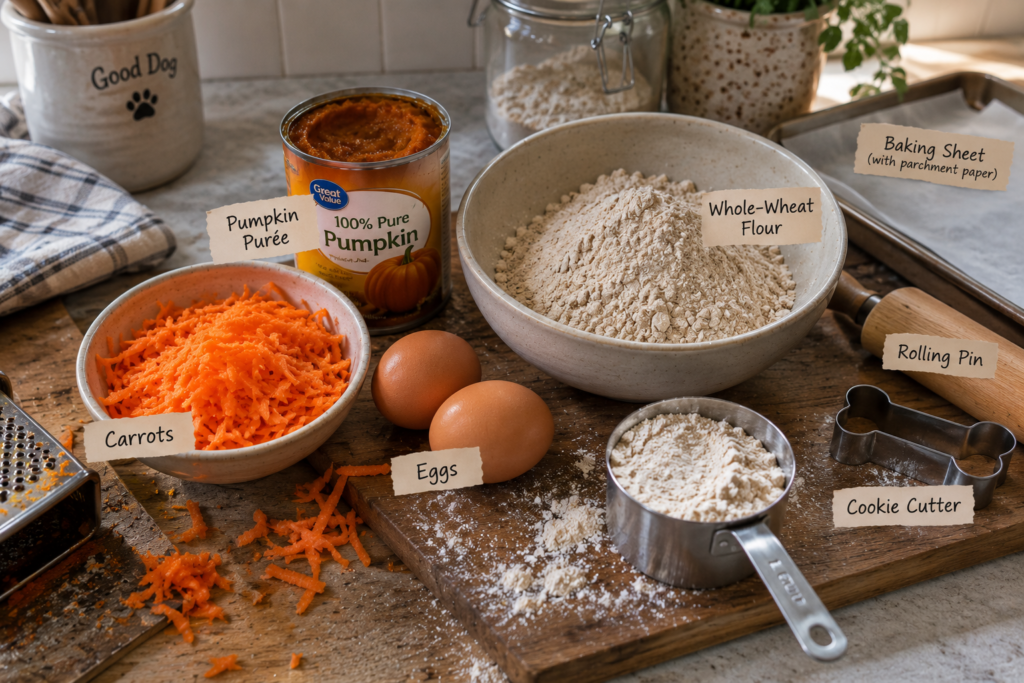
- 3 cups (360 g) whole-wheat flour
- 1 cup (225–240 g) plain pumpkin purée
- 2 large eggs
- ½ cup (about 50 g) finely grated carrot
The quantities and baking method are based on a simple four-ingredient pumpkin-carrot dog treat recipe that yields approximately 80 small cookies.
Equipment
- Large mixing bowl
- Rubber spatula or spoon
- Rolling pin
- 2-inch cookie cutter
- Baking sheet
- Parchment paper
- Cooling rack
Instructions
1. Preheat the Oven
Preheat your oven to 350°F (177°C).
Line a baking sheet with parchment paper.
2. Combine the Ingredients
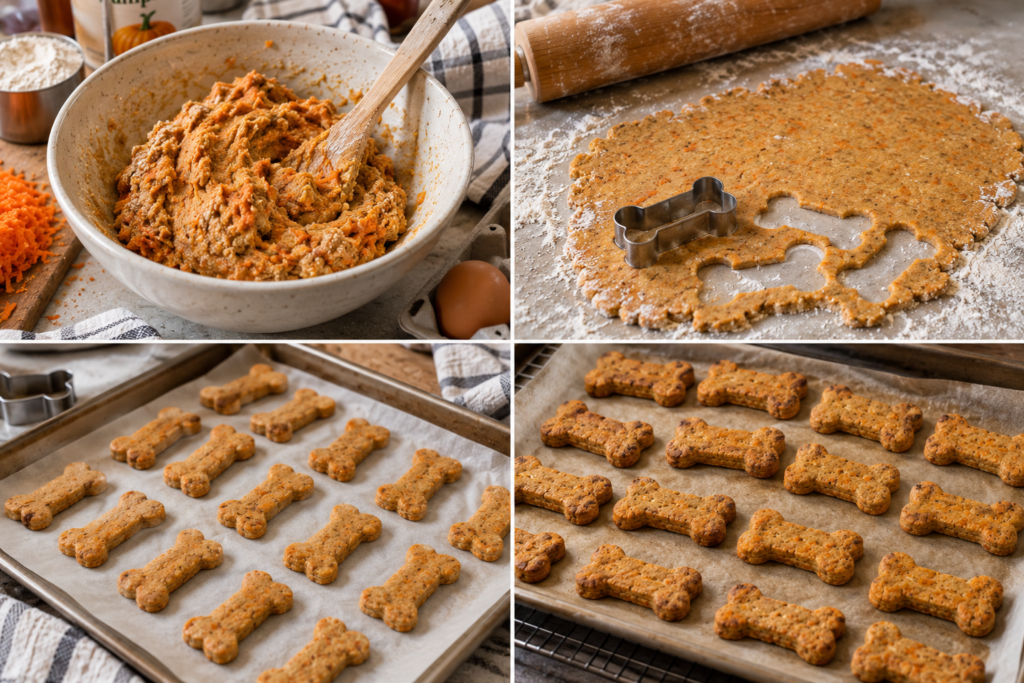
Add the flour, pumpkin purée, eggs, and grated carrot to a large mixing bowl.
Stir with a spatula or spoon until most of the flour has been incorporated.
3. Finish the Dough
Once the mixture becomes difficult to stir, use clean hands to work the remaining flour into the dough.
The finished dough should be uniform and firm enough to roll.
4. Roll Out the Dough
Lightly flour your work surface and rolling pin.
Roll the dough to approximately ⅛ inch thick. A thinner dough produces a firmer, crunchier cookie.
5. Cut the Cookies
Use a small cookie cutter to cut the dough into shapes.
A 2-inch bone-shaped cutter works well, but you can use any small shape appropriate for your dog.
Transfer the cookies to the parchment-lined baking sheet.
6. Bake
Bake for 18–20 minutes, or a few minutes longer if you prefer a crunchier cookie.
The cookies should be firm when finished.
7. Cool Completely
Remove the baking sheet from the oven and allow the cookies to cool completely before giving one to your dog.
Don’t serve them while they’re still hot.
🐾 Owner Tip: If you want a crunchier cookie, roll the dough thinner and extend the baking time slightly while watching closely. Thicker cookies will retain more moisture and have a softer texture.
How Many Cookies Can My Dog Have?
There isn’t one cookie count that’s appropriate for every dog because calorie requirements vary by size, age, activity level, and health status.
A practical approach is to start with one small cookie and adjust the amount based on the size of the treat and your dog’s overall daily treat allowance.
For small dogs, consider using a smaller cookie cutter so individual treats contain fewer calories.
How to Store Pumpkin Carrot Dog Cookies
Allow the cookies to cool completely before storing.
Place them in an airtight container and refrigerate for up to 2 weeks.
Check the treats before serving and discard them if you notice:
- Mold
- An unusual smell
- Excessive moisture
- A slimy or visibly altered texture
Can You Freeze Them?
Yes. The cookies can be frozen in an airtight freezer-safe container for up to 3 months.
Freeze them in a single layer initially if you want to prevent them from sticking together, then transfer them to a freezer-safe container or bag.
Thaw only the amount you intend to serve.
Common Mistakes to Avoid
Using Pumpkin Pie Filling
This is one of the most serious mistakes to avoid. Use plain 100% pumpkin purée, not pumpkin pie filling.
Making the Cookies Too Thick
Very thick cookies retain more moisture and may have a softer center. Rolling the dough to approximately ⅛ inch helps create a firmer cookie.
Adding Human Cookie Ingredients
Skip sugar, frosting, chocolate, excessive butter, and pumpkin-spice blends. Dogs don’t need these ingredients, and some can be unsafe.
Serving Them Before They Cool
Freshly baked cookies can remain hot inside even when the outside feels cool. Let them cool completely before serving.
Giving Too Many
Even nutritious ingredients can contribute unnecessary calories when offered in excess. Treats should complement—not replace—a complete and balanced diet.
🐾 Owner Tip: Make smaller cookies for training rewards. You can give your dog several tiny rewards throughout the day without using large treats each time.
Frequently Asked Questions
Can dogs eat pumpkin and carrot cookies?
Yes, most healthy dogs can enjoy pumpkin and carrot cookies made with dog-safe ingredients. Use plain pumpkin purée and serve the finished cookies in moderation.
Can I use pumpkin pie filling?
No. Use 100% plain pumpkin purée instead. Pumpkin pie filling may contain added sugar, spices, and other ingredients that aren’t appropriate for dogs.
Can puppies eat pumpkin and carrot dog cookies?
Puppies can potentially have small amounts of dog-safe treats, but their nutritional needs are different from adult dogs. Introduce new treats cautiously and check with your veterinarian if your puppy is very young or has dietary restrictions.
Can I use oat flour instead of whole-wheat flour?
Yes, oat flour is used in other pumpkin-carrot dog treat recipes, although the dough texture can differ depending on the flour.
How long do homemade pumpkin carrot cookies last?
This recipe can be refrigerated in an airtight container for up to 2 weeks. They can also be frozen for up to 3 months.
Can dogs eat carrots every day?
Carrots can be part of a dog’s diet in moderation, but treats and additional foods should not displace a complete and balanced diet. Dogs new to carrots should be introduced gradually and monitored for digestive upset.
Are pumpkin cookies good for dogs with diarrhea?
Plain pumpkin is sometimes used as a source of fiber for dogs with mild digestive upset, but these cookies should not be considered a treatment for diarrhea. Persistent, bloody, or severe diarrhea requires veterinary attention.
Conclusion
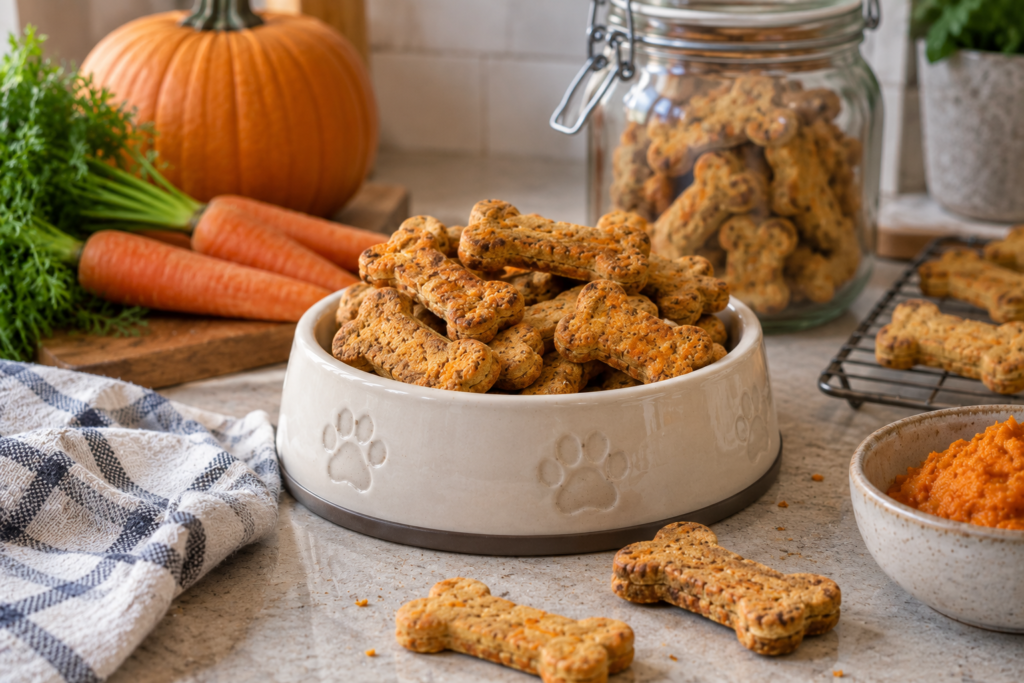
Pumpkin and carrot dog cookies are a simple homemade treat made with ingredients you can easily recognize and control. With plain pumpkin purée, grated carrot, eggs, and flour, you can make a batch of crunchy little cookies without the sugar, frosting, and unnecessary ingredients found in many human baked goods.
For the best results, use 100% plain pumpkin, keep the cookies appropriately sized for your dog, allow them to cool completely, and store them properly. Most importantly, remember that even wholesome homemade treats are still treats—serve them in moderation alongside a complete and balanced diet.
Medical Disclaimer
This article is for informational purposes only and does not replace professional veterinary advice, diagnosis, or treatment. Dogs have individual nutritional and medical needs. If your dog has food allergies, gastrointestinal disease, pancreatitis, is following a prescription diet, or you are unsure whether a new ingredient is appropriate, consult your veterinarian before introducing these treats.
References
- PetMD — Can Dogs Eat Pumpkin? — Veterinary-reviewed guidance on plain pumpkin, pumpkin pie filling, serving considerations, and digestive safety.
- PetMD — Can Dogs Eat Carrots? — Veterinary-reviewed information on carrot safety, preparation, and moderation.