
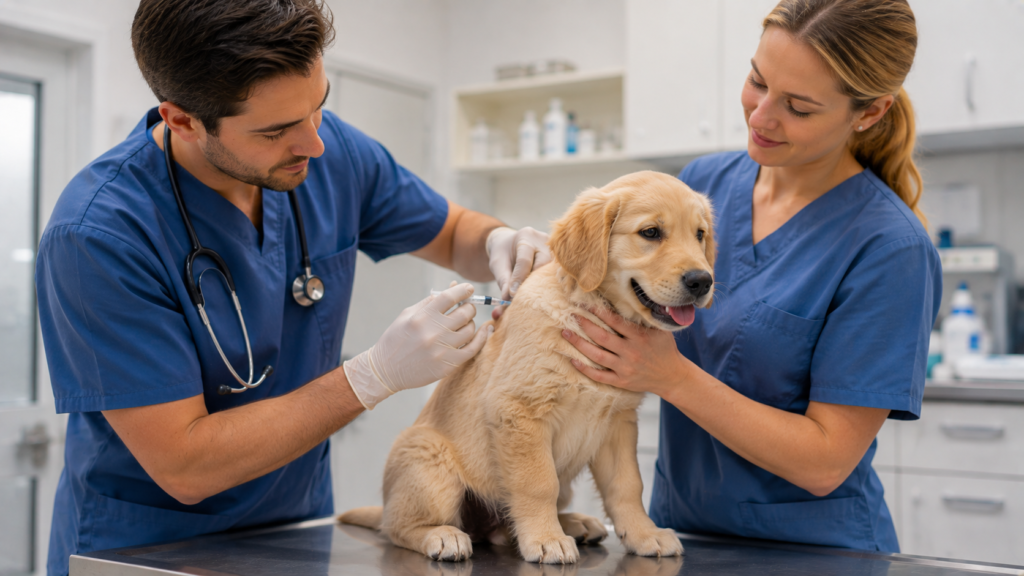
Quick Answer: Most puppies begin their core vaccination series at around 6–8 weeks of age, with additional doses given every 3–4 weeks until at least 16 weeks. Rabies vaccination is generally given according to local law and your veterinarian’s recommendations.
The exact schedule can vary depending on your puppy’s age when vaccination begins, vaccine products used, health history, lifestyle, and local disease risks.
Because maternal antibodies can interfere with early vaccine responses, puppies receive a series of vaccinations rather than relying on a single puppy shot.
Table of Contents
Key Takeaways
- Puppies generally start core vaccinations at 6–8 weeks.
- DAPP/DHPP vaccines protect against several serious canine diseases.
- Core doses are generally repeated every 3–4 weeks until at least 16 weeks.
- Rabies timing depends on local legal requirements and veterinary guidance.
- Bordetella, leptospirosis, Lyme, and canine influenza may be recommended according to lifestyle and exposure risk.
- Indoor puppies still need core vaccinations.
- Puppies can be socialized before completing their vaccine series, but high-risk environments should be avoided.
- Mild tiredness, soreness, reduced appetite, and a small injection-site lump can occur after vaccination.
- Difficulty breathing, collapse, severe swelling, or other serious reactions require immediate veterinary attention.
- If you miss a vaccination appointment, contact your veterinarian rather than restarting the series yourself.
What Vaccines Do Puppies Need?
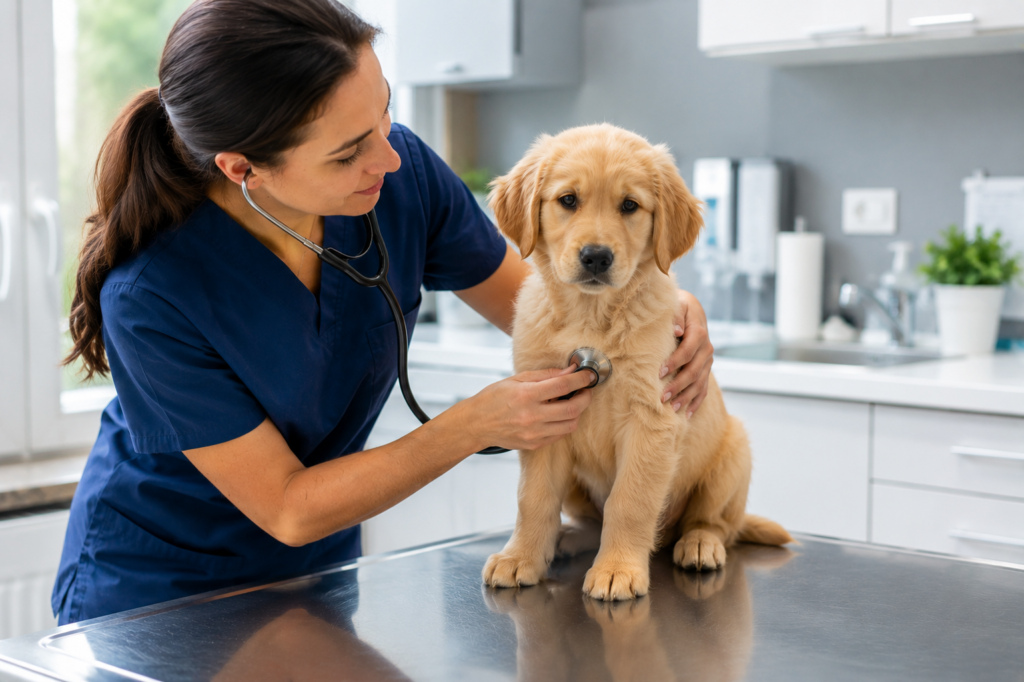
Puppy vaccination is built around core vaccines and non-core vaccines.
Core vaccines are broadly recommended because they protect against serious infectious diseases. Non-core vaccines are selected according to your puppy’s lifestyle, geographic location, and exposure risk.
Core Vaccines
The source identifies the main core protection as:
- Canine distemper
- Canine adenovirus
- Canine parvovirus
- Rabies
DAPP/DHPP combination vaccines may protect against several of these diseases in one vaccination.
Non-Core Vaccines
Depending on your puppy’s lifestyle, your veterinarian may recommend:
- Bordetella
- Leptospirosis
- Lyme disease
- Canine influenza
A non-core vaccine isn’t necessarily unimportant. It simply means the need depends more heavily on the individual dog’s exposure risk.
For example, a puppy attending daycare or boarding facilities may have different vaccine needs from one that rarely encounters other dogs.
What About Indoor Puppies?
Indoor puppies still need their core vaccines.
Diseases such as parvovirus can persist in the environment and potentially be brought indoors on shoes, clothing, or other animals. Rabies vaccination may also be required by law regardless of whether a dog spends most of its time indoors.
Non-core vaccines are more lifestyle-dependent. Your veterinarian can help decide which ones make sense based on your puppy’s environment.
What About Breed Differences?
The source states that the core vaccination schedule is generally the same across breeds. However, some breeds or small puppies may have a greater tendency toward vaccine reactions, so your veterinarian may make individual adjustments when appropriate.
The important point is that breed does not automatically mean a different basic vaccination schedule.
Puppy Vaccination Schedule: 6 Weeks to 16 Months
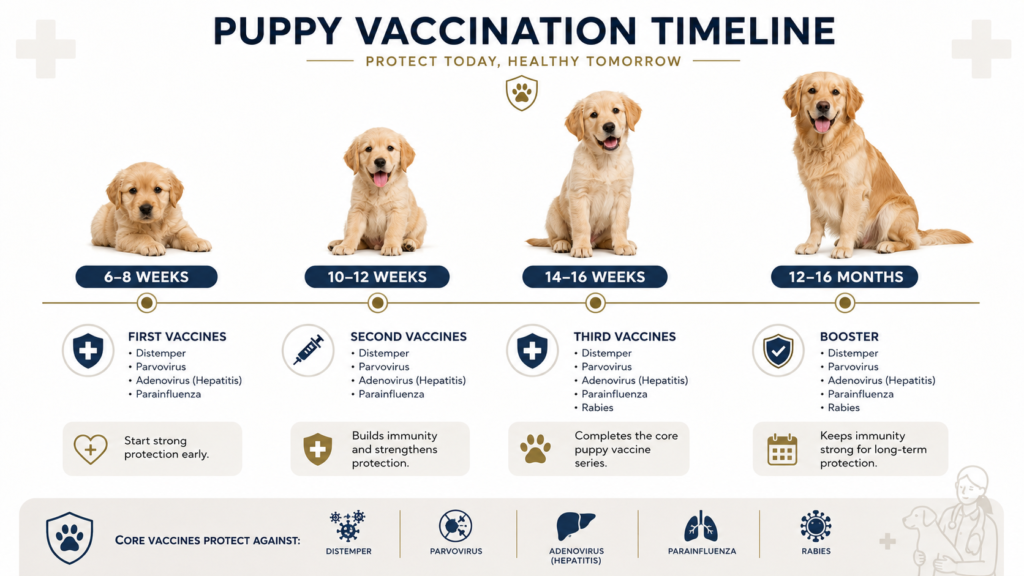
Most puppies begin their first core vaccines around 6–8 weeks, followed by additional doses every 3–4 weeks until at least 16 weeks.
Maternal antibodies passed from the mother can interfere with vaccine responses during early puppyhood. Giving several doses helps provide protection as those maternal antibodies decline.
Puppy Vaccine Schedule
| Age | Core Vaccines | Non-Core / Lifestyle | Other Care |
|---|---|---|---|
| 6–8 weeks | DAPP/DHPP — 1st dose | Based on risk | Exam, deworming |
| 10–12 weeks | DAPP/DHPP — 2nd dose | Bordetella, leptospirosis when appropriate | Veterinary assessment |
| 14–16 weeks | DAPP/DHPP — 3rd dose | Lyme, canine influenza when appropriate | Rabies according to local law |
| 12–16 months | DAPP/DHPP booster | Non-core boosters as needed | Rabies booster according to requirements |
The source notes that some clinics use a 3-dose series, while others may use a 4-dose schedule depending on when vaccination starts and the protocol used.
So don’t worry if your veterinarian’s schedule doesn’t look exactly like an internet chart. Your puppy’s age, vaccine history, and the products being used all matter.
Keep a Puppy Vaccine Record
Keep a record of:
- Vaccination dates
- Vaccine names
- Vaccine brands
- Lot numbers when available
- Veterinary clinic
- Recommended next vaccination date
This can be useful for future veterinary visits, boarding, travel, grooming, and other situations where vaccination records may be requested.
How Much Do Puppy Vaccinations Cost?
Vaccination costs vary by clinic, location, vaccine type, examination fees, and whether your veterinarian offers a puppy package.
The source gives the following approximate costs:
| Vaccine / Service | Estimated Cost |
|---|---|
| DAPP/DHPP per dose | $20–$45 |
| Rabies | $15–$35 |
| Bordetella | $20–$45 |
| Leptospirosis | $20–$35 |
| Lyme | $20–$40 |
| Canine influenza | $25–$45 |
| Exam fee per visit | $40–$75 |
These are estimates, not guaranteed current prices.
Some clinics bundle vaccinations with examinations and deworming, while shelters and low-cost vaccination programs may offer lower-cost options.
If you’re comparing clinics, ask what is included in the total price rather than comparing the vaccine price alone.
Can You Skip or Delay Puppy Vaccinations?
Skipping the initial puppy series is not recommended.
Core vaccines protect against serious diseases, including parvovirus and distemper, that can be particularly dangerous for puppies.
If you’re worried about vaccine reactions, discuss those concerns with your veterinarian rather than simply declining vaccination.
Your veterinarian may consider your puppy’s:
- Previous vaccine reactions
- Age
- Size
- Health history
- Lifestyle
- Required vaccines
What If You Miss an Appointment?
Don’t restart the vaccination schedule yourself.
Contact your veterinarian and provide the date of your puppy’s last vaccination. The veterinarian can determine whether the series can continue from where it stopped or whether additional vaccination is needed.
The source notes that longer gaps may sometimes require an additional dose to help ensure adequate immunity.
If Cost Is the Problem
Ask your veterinarian about:
- Puppy vaccine packages
- Low-cost vaccination clinics
- Animal shelters
- Humane societies
- Mobile veterinary services
The source notes that some low-cost programs offer core vaccinations for less than standard private-clinic pricing.
Can Puppies Go Outside Before They’re Fully Vaccinated?
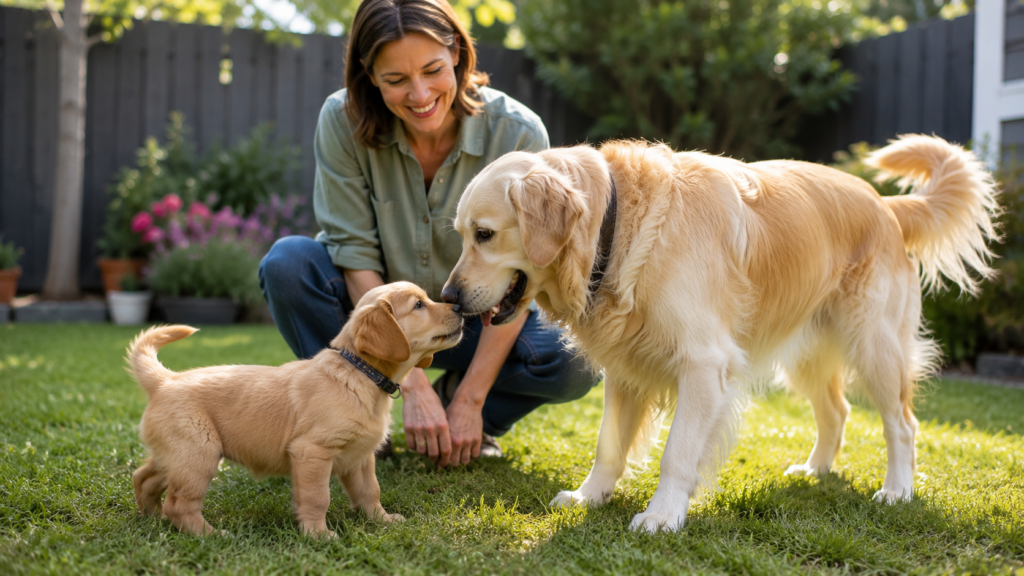
Yes, but the type of exposure matters.
Keeping a puppy completely isolated until every vaccination is finished can make socialization more difficult. At the same time, young puppies should avoid environments with a high risk of exposure to infectious disease.
Safer Socialization
Depending on your veterinarian’s advice, you can introduce your puppy to:
- Healthy, fully vaccinated dogs you know
- New people
- Household sounds
- Car rides
- Your private yard
- Carefully managed puppy socialization settings
The source specifically notes that puppies can interact with healthy, fully vaccinated dogs in controlled environments.
Higher-Risk Places to Avoid
Until your puppy has adequate protection, be cautious with:
- Dog parks
- High-traffic pet areas
- Pet-store floors
- Areas frequented by unknown dogs
- Shared water bowls
- Sick or unvaccinated dogs
The source recommends waiting approximately 1–2 weeks after the final round of puppy shots before exposing a puppy to high-traffic dog environments, while lower-risk walks may be possible sooner depending on veterinary advice.
Puppy Boosters After the Initial Series
Finishing the puppy series doesn’t mean vaccinations are finished forever.
The source’s schedule includes a 12–16 month booster for core vaccines, with future boosters determined according to the vaccine, your veterinarian’s protocol, and local requirements.
Rabies boosters are particularly dependent on local laws and the vaccine used.
Your veterinarian can create a long-term preventive-care schedule so you don’t have to remember every date yourself.
Puppy Vaccine Schedule Checker
Enter your puppy’s age to see where they generally fall within the initial vaccination timeline.
🐶 Puppy Vaccine Schedule Checker
Slide to your puppy’s age (in weeks) or type it in below to see where they generally fall within the initial vaccination timeline.
This tool provides general guidance only and is not a substitute for advice from your veterinarian. Vaccine protocols vary by region, breed, and individual health history.
Puppy Vaccine Side Effects: What’s Normal and When to Call the Vet
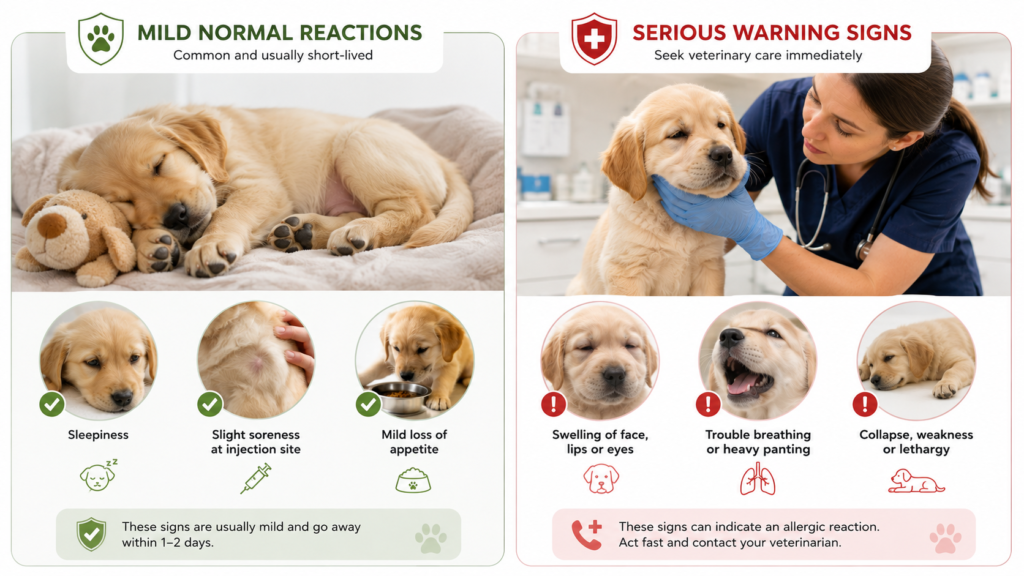
Mild reactions after vaccination are common.
Your puppy may experience:
- Temporary tiredness
- Mild fever
- Reduced appetite
- Soreness at the injection site
- A small lump under the skin
- Sneezing after an intranasal vaccine
The source notes that these reactions are generally mild and self-limiting.
A quiet day after vaccination can help your puppy rest while their immune system responds.
When to Call Your Vet
Contact your veterinarian if your puppy develops:
- Vomiting
- Diarrhea
- Hives
- Facial swelling
- Lethargy lasting more than 24 hours
- Persistent fever
A small injection-site lump can be normal, but your veterinarian should examine a lump that grows, becomes painful, or persists longer than expected.
When It’s an Emergency
Seek emergency veterinary care if your puppy develops:
- Difficulty breathing
- Wheezing
- Collapse
- Unresponsiveness
- Severe or rapidly increasing swelling of the face, lips, or throat
- Repeated vomiting or bloody diarrhea
Severe allergic reactions are rare but can become life-threatening quickly.
🚨 Puppy Vaccine Reaction Triage
Usually monitor: Mild tiredness, slight soreness, reduced appetite, mild fever, or a small injection-site lump.
Call your veterinarian: Vomiting, diarrhea, hives, facial swelling, persistent fever, or lethargy lasting more than 24 hours.
Emergency: Difficulty breathing, collapse, unresponsiveness, severe facial/throat swelling, or repeated severe vomiting or bloody diarrhea.
Frequently Asked Questions
Can my puppy get all vaccines at once?
Several vaccines may be given during the same veterinary visit. Combination vaccines such as DAPP/DHPP already protect against multiple diseases.
Some veterinarians may separate vaccines depending on the puppy’s size, health, or previous reaction history.
How long after the last vaccine can my puppy go to a dog park?
The source recommends waiting approximately 1–2 weeks after the final round of puppy vaccinations before exposing your puppy to high-traffic dog areas.
Your veterinarian can give you a more specific recommendation based on local disease risk.
Can my puppy be around vaccinated dogs before finishing all their shots?
Yes, controlled interaction with healthy, fully vaccinated dogs can be part of puppy socialization.
Avoid dogs that are sick or whose vaccination status is unknown.
Do puppy vaccines contain mercury or harmful preservatives?
The source notes that some vaccines may contain thimerosal in very small amounts and states that research has not shown these trace amounts to be harmful in dogs. If you have concerns about vaccine ingredients, discuss them with your veterinarian.
What is titer testing, and can it replace puppy vaccines?
Titer testing measures antibody levels in the blood to assess existing immunity.
The source notes that it can help inform some booster decisions in adult dogs, but it is not a replacement for the initial puppy vaccination series.
Can my puppy get rabies before 12 weeks?
Rabies vaccination timing depends on local law and veterinary guidance. The source places rabies vaccination around 12–16 weeks.
Your veterinarian should determine the appropriate timing where you live.
Conclusion
Your puppy’s vaccination series is an important part of preventive care during the first months of life.
Most puppies begin their core vaccines around 6–8 weeks and continue receiving doses every 3–4 weeks until at least 16 weeks, followed by boosters according to the vaccine and your veterinarian’s recommendations.
The best things you can do are:
- Book your puppy’s first veterinary visit.
- Keep every vaccination appointment.
- Ask which non-core vaccines fit your puppy’s lifestyle.
- Keep an accurate vaccination record.
- Socialize your puppy while avoiding high-risk environments.
- Know which vaccine reactions are normal and which require veterinary care.
- Ask about future boosters before completing the initial series.
Your veterinarian is the best person to turn this general schedule into a plan specifically for your puppy.
References
- PetAdoptNow — The Complete Pet Vaccine Schedule for Dogs and Cats (2026 Update)
PetAdoptNow — Complete Pet Vaccine Schedule 2026 - PetClues — Puppy Vaccination Schedule 2026: Month-by-Month Shot Timeline
PetClues — Puppy Vaccination Schedule 2026 - Beomelo — Dog Vaccination Schedule 2026: Puppy to Adult Chart
Beomelo — Dog Vaccination Schedule 2026 - American Animal Hospital Association (AAHA) — 2022 Canine Vaccination Guidelines
AAHA — Canine Vaccination Guidelines - BossPaws — Puppy Vaccination Schedule Cost 2026
BossPaws — Puppy Vaccination Schedule Cost 2026 - PawCost — Puppy Vaccination Schedule
PawCost — Puppy Vaccination Schedule