


Quick Answer: Dogs inherited howling from their wolf ancestors as a natural way to communicate over long distances. When people ask, “Why do dogs howl?”, the answer is usually linked to communication, territorial behavior, social bonding, or responding to sounds like sirens. In most cases, howling is completely normal. However, if your dog’s howling changes suddenly or is accompanied by signs of illness or distress, it could point to anxiety, pain, or an underlying medical problem.
🚨 Howling Urgency Guide
🟢 Usually Normal
- Howling at sirens or emergency vehicles
- Responding to other dogs howling nearby
- Brief howling during excitement or greetings
🟡 Contact Your Vet
- Sudden or unusual howling with no obvious trigger
- Howling accompanied by limping, lethargy, or changes in behavior
🔴 Seek Emergency Care Immediately
- Continuous distressed howling combined with pacing, panting, collapse, or signs of severe pain
Key Takeaways
- Dogs howl because it’s a natural form of communication inherited from their wolf ancestors.
- Common triggers include sirens, other dogs, music, excitement, and territorial behavior.
- Some breeds, such as Huskies, Malamutes, and Beagles, are naturally more vocal than others.
- Sudden or excessive howling may be a sign of pain, illness, separation anxiety, or cognitive decline in senior dogs.
- Punishing a dog for howling is rarely effective and may increase stress or anxiety.
- The best way to reduce excessive howling is to identify the cause and address the underlying trigger.
The first time I heard a dog howl at an ambulance, I honestly wondered if something was wrong. Many dog owners have the same reaction. A long, loud howl can sound dramatic, especially if your dog rarely makes that noise.
The good news is that howling is usually a completely normal behavior. Dogs use it to communicate, respond to sounds, express excitement, or connect with other dogs. It’s one of the many instincts they inherited from their wolf ancestors.
In this guide, you’ll learn why dogs howl, what different types of howling can mean, when it’s perfectly normal, and when it’s a sign that your dog may need veterinary attention.
Why Do Dogs Howl?
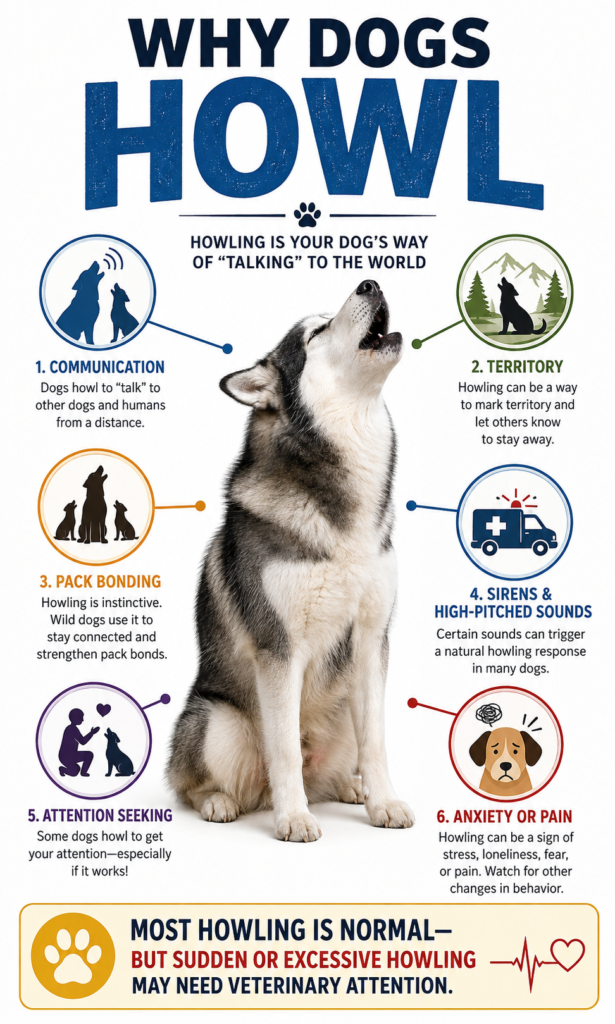
Howling is a hardwired form of communication that helps dogs announce their presence, locate family members, or warn others to stay away from their territory. For most dogs, it’s a completely normal behavior and usually isn’t something to worry about.
Modern dogs howl for many different reasons. They may be responding to another dog’s howl, reacting to a siren, expressing excitement when you come home, or simply communicating with their family. Some dogs also learn that howling gets attention, and if they’re rewarded for it, they’re more likely to repeat the behavior.
One of the most common questions owners ask is, “Why do dogs howl at sirens?” High-pitched sounds such as ambulance sirens, fire trucks, musical instruments, or certain television sounds can resemble the long-distance vocalizations dogs naturally respond to. Instead of being frightened by the noise, many dogs are simply joining what they perceive as another dog’s call.
If your dog howls at sirens regularly and it becomes disruptive, gradual desensitization training can help. Playing recordings at a low volume while rewarding calm behavior can teach your dog that these sounds aren’t something they need to respond to.
🐕 Dog Howling Quick Checker
Answer a few questions to understand why your dog might be howling
Practical takeaway: Before trying to stop your dog’s howling, look at what triggered it. In many cases, it’s simply your dog’s natural way of communicating rather than a behavior that needs correcting.
Do Some Dog Breeds Howl More Than Others?

Yes. Some dog breeds are naturally more vocal than others because of their genetics and breeding history. Northern breeds and hounds are much more likely to howl because they were originally bred to communicate over long distances and work closely with other dogs.
Breeds like Siberian Huskies, Alaskan Malamutes, and Beagles are well known for their frequent howling. They often use howls instead of barks to communicate with their owners or other dogs. On the other hand, some breeds rarely howl. For example, Basenjis are often called “barkless dogs,” although they can make unique yodel-like sounds instead of traditional barks.
Many owners also wonder why some dogs bark while others howl. The answer often comes down to their original purpose. Retrievers, guard dogs, and many companion breeds were developed to bark when alerting people to nearby activity. Hounds and northern working breeds, however, relied on long-distance howls to communicate with their pack over large areas.
Practical takeaway: If you own a Husky, Beagle, Malamute, or another vocal breed, occasional howling is usually part of their normal behavior rather than a training problem.
When Should You Worry About Dog Howling?
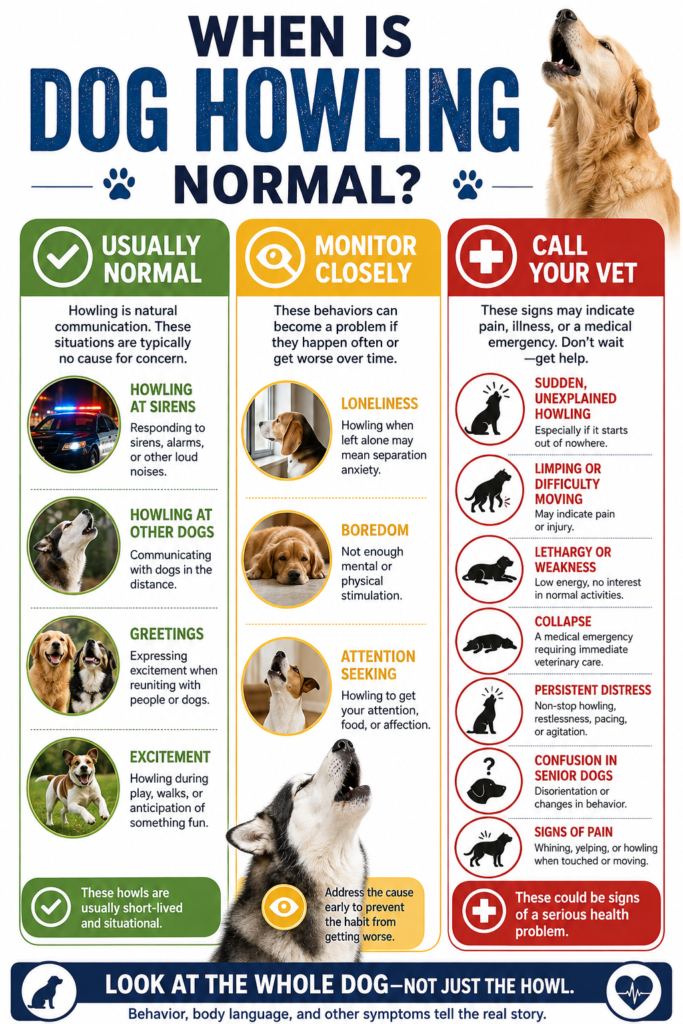
Most howling is completely normal, but there are times when it can signal that something isn’t right. The key is to pay attention to when your dog howls and whether anything else has changed.
Normal Reasons Dogs Howl
Dogs commonly howl when they:
- Hear sirens or other high-pitched sounds
- Respond to another dog howling
- Become excited when you come home
- Communicate with family members
- Protect their territory
These situations usually aren’t a cause for concern.
Howling That May Signal a Medical Problem
Sudden or excessive howling can sometimes be caused by pain or illness. Medical conditions such as arthritis, injuries, digestive discomfort, or canine cognitive dysfunction (dog dementia) may cause a dog to vocalize more than usual.
Watch for other symptoms such as:
- Limping
- Panting
- Loss of appetite
- Lethargy
- Restlessness
- Reluctance to be touched
If your dog’s howling starts suddenly and is accompanied by any of these signs, contact your veterinarian.
Howling Caused by Anxiety or Loneliness
Dogs are social animals, and some howl because they feel anxious or lonely when left alone. Separation anxiety usually begins shortly after the owner leaves the house and may continue until they return. Dogs with separation anxiety often show other behaviors as well, including destructive chewing, pacing, excessive barking, or accidents inside the home.
Helping an anxious dog often involves gradual training, puzzle toys, regular exercise, and making departures and arrivals calm and low-key.
Practical takeaway: Look at the whole picture, not just the howl itself. The timing, trigger, and your dog’s overall behavior usually reveal whether the howling is normal or something that needs veterinary attention.
How to Stop Excessive Dog Howling

If your dog howls frequently, the first step is figuring out why they’re doing it. Once you identify the trigger, you can choose the best way to manage the behavior.
1. Identify the Trigger
Notice when your dog howls. Is it because of sirens, being left alone, excitement, boredom, or attention? Understanding the cause makes finding a solution much easier.
2. Give Your Dog More Physical and Mental Exercise
Dogs with extra energy are more likely to vocalize. Daily walks, training sessions, puzzle toys, and interactive games can help reduce boredom-related howling.
3. Reward Quiet Behavior
If your dog howls for attention, avoid rewarding the behavior. Instead, praise and reward them when they’re calm and quiet so they learn which behavior gets your attention.
4. Reduce Anxiety
For dogs that howl when left alone, gradually teach them that being alone is safe. Short practice departures, enrichment toys, and consistent routines can help reduce separation anxiety over time.
5. Rule Out Medical Problems
If your dog suddenly starts howling without an obvious reason or seems uncomfortable, schedule a veterinary examination. Treating an underlying medical condition is often the only way to stop the behavior.
Practical takeaway: The most effective way to stop excessive howling isn’t by punishing your dog—it’s by understanding what’s causing the behavior in the first place.
FAQ
Is howling normal dog behavior or something to worry about?
Howling is a completely normal behavior inherited from wolves. It usually becomes a concern only when it starts suddenly, becomes excessive, or is accompanied by signs of illness, pain, or unusual behavior.
Why do dogs howl at the moon?
Despite the popular myth, dogs don’t actually howl at the moon. They’re usually responding to distant sounds such as other dogs, sirens, or environmental noises that are easier to hear at night.
Why does my dog howl when I sing or play music?
Some musical notes and singing can sound similar to a dog’s howl. Your dog may simply be joining in because they perceive it as another member of the pack communicating.
Will my dog stop howling if I ignore them?
If your dog howls only to get attention, ignoring the behavior while rewarding quiet moments can help reduce it. However, ignoring howling caused by anxiety, fear, or pain won’t solve the underlying problem.
Do puppies howl more than adult dogs?
Yes. Puppies often howl when they’re separated from their mother or littermates. As they settle into their new home and gain confidence, this type of howling usually becomes less frequent.
Should I punish my dog for howling?
No. Punishing a dog for howling can increase fear and anxiety and may make the behavior worse. Positive reinforcement and addressing the underlying cause are much more effective.
Conclusion
Understanding why dogs howl starts with looking at the situation rather than the sound itself. In most cases, howling is a completely normal behavior that dogs inherited from their wolf ancestors. They may howl to communicate, respond to sirens, greet family members, or react to other dogs.
However, if your dog’s howling changes suddenly, becomes excessive, or is accompanied by signs of pain, illness, or anxiety, it’s important to investigate the cause instead of ignoring it. Paying attention to when the howling happens and what triggers it can help you decide whether simple training is enough or if it’s time to visit your veterinarian.
By understanding why your dog howls and responding with patience, positive reinforcement, and proper care, you can strengthen your bond while making sure your dog’s physical and emotional needs are being met.
References
[1] Howling – https://www.aspca.org/pet-care/dog-care/common-dog-behavior-issues/howling
[2] Why Do Dogs Howl – https://www.akc.org/expert-advice/advice/why-do-dogs-howl/
\[3] Why Do Dogs Howl – https://study.com/academy/lesson/why-do-dogs-howl.html
[4] Why Do Dogs Howl – https://www.chewy.com/education/dog/training-and-behavior/why-do-dogs-howl