
Quick Answer: Dogs lick people, themselves, other dogs, and objects for many different reasons. Licking is a normal canine behavior used to show affection, gather information, groom, communicate, and self-soothe. While occasional licking is completely normal, excessive or sudden licking can sometimes point to allergies, anxiety, pain, or another medical problem that should be checked by a veterinarian.
Dog Licking Triage Tool
Use this quick guide to help decide whether your dog’s licking is normal or if it needs veterinary attention.
| Behavior | What You Should Do |
|---|---|
| Brief face licking during greetings | ✅ Usually normal—no action needed |
| Occasional paw grooming | ✅ Normal behavior |
| Paw licking causing redness or hair loss | ⚠️ Schedule a veterinary visit—possible allergies or infection |
| Air licking with repeated lip smacking and swallowing | ⚠️ Contact your veterinarian—may indicate nausea or dental pain |
| Licking a wound until it becomes raw or bleeds | 🚨 Prevent further licking with a cone and seek veterinary care immediately |
| Sudden obsessive licking with vomiting or lethargy | 🚨 Contact your veterinarian as soon as possible |
Key Takeaways
- Licking is a normal canine behavior used for communication, grooming, affection, and exploring the world.
- Dogs may lick people to show affection, greet them, or gather information through scent and taste.
- Constant paw licking often points to allergies, irritation, pain, or infection rather than simple grooming.
- Excessive licking that causes hair loss, bleeding, or open sores should never be ignored.
- Air licking and repeated lip smacking may be signs of nausea, dental disease, or stomach problems.
- Dogs naturally lick wounds, but too much licking delays healing and increases the risk of infection.
- Anxiety and boredom can also cause repetitive licking behaviors.
- If licking suddenly increases or is accompanied by vomiting, lethargy, or loss of appetite, contact your veterinarian.
I’ve noticed that almost every dog owner eventually asks the same question: “Why does my dog lick everything?” Whether it’s your hands, your face, their paws, the couch, or even the air, licking is one of the most common behaviors dogs display.
The good news is that most licking is completely normal. Dogs use their tongues to communicate, gather information about their surroundings, strengthen social bonds, and even comfort themselves during stressful situations. However, when licking becomes excessive or suddenly changes, it can sometimes signal an underlying medical or behavioral problem.
In this guide, you’ll learn why dogs lick people, why they lick their paws and wounds, when licking is normal, when it could indicate illness, and what you can do if your dog’s licking becomes excessive.
Why You’ll Find This Guide Helpful
There are many reasons dogs lick, and not all of them mean the same thing. This guide separates normal canine behavior from signs that may require veterinary attention.
You’ll learn:
- ✔ Why dogs lick people and what they’re trying to communicate
- ✔ The most common medical reasons behind constant licking
- ✔ How to tell the difference between affectionate licking and anxiety-driven licking
- ✔ Why dogs lick their paws, wounds, other dogs, and even the air
- ✔ When licking becomes excessive and should be evaluated by a veterinarian
- ✔ Practical ways to reduce excessive licking without punishment
Whether your dog gives you an occasional kiss or spends hours licking the same spot, this guide will help you understand what the behavior means and when it’s time to take action.
Dog Licking Triage Tool
Use this quick checklist to decide your next steps.
| Behavior | Action |
|---|---|
| Brief face licking during greetings | Normal – No action needed |
| Paw licking causing red fur or hair loss | Call Vet – Likely allergies |
| Air licking with lip smacking & swallowing | Call Vet – Check for nausea |
| Licking a surgical wound until it bleeds | Emergency – Use cone & go |
Why Do Dogs Lick People?
Dogs lick people for many different reasons. Most of the time, it’s a normal behavior that helps them communicate, strengthen social bonds, and learn more about the people they love. A quick lick on your hand or face is usually nothing to worry about.
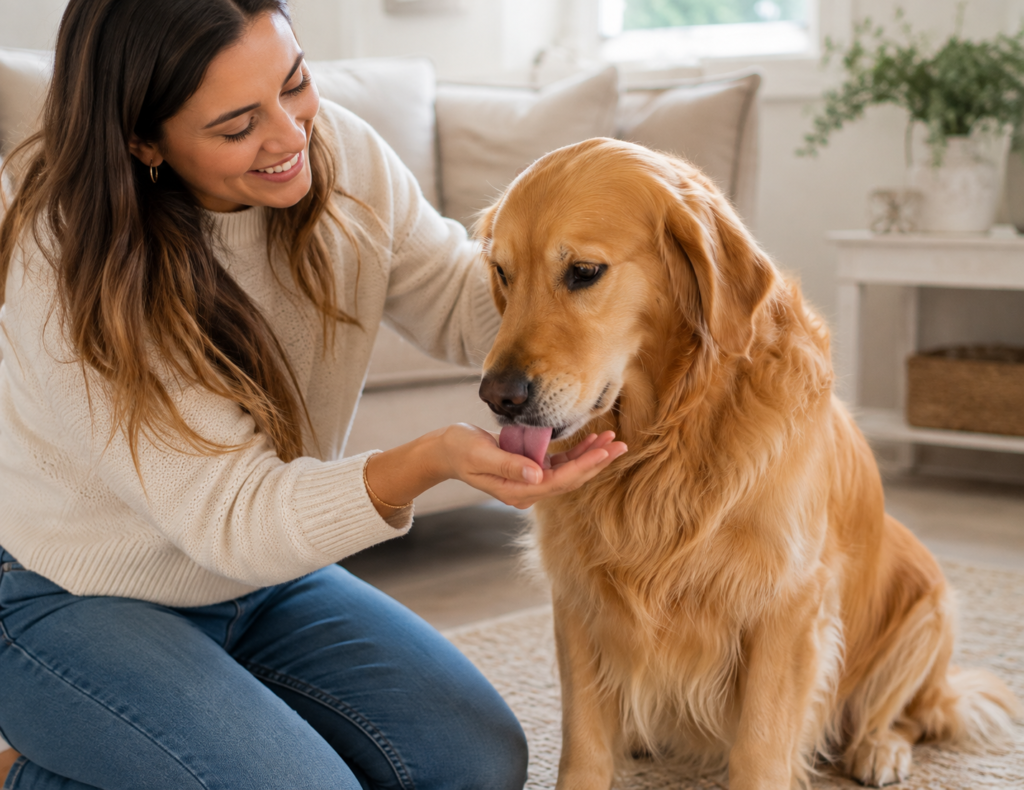
One of the most common reasons dogs lick people is to show affection. Licking is a social behavior that begins in puppyhood. Puppies lick their mother’s face, and many dogs carry this habit into adulthood as a way of greeting and bonding with their human family.
Dogs are also naturally curious. Your skin carries scents from sweat, food, lotions, and the environment, giving your dog plenty of information through taste and smell. They’re especially attracted to the salty taste of human skin and the scent glands around your face.
Licking can also be a calming signal. If you lean over your dog, make direct eye contact, or approach them during a stressful moment, they may lick you to communicate peaceful intentions and reduce tension.
Some dogs develop a bedtime licking routine. As the house becomes quiet, they may lick your hand or arm before settling down to sleep. The repetitive motion helps many dogs relax, and the familiar scent of their owner provides additional comfort.
However, not all licking is driven by affection. If your dog begins licking you constantly, appears restless, pants excessively, or shows other signs of stress, anxiety may be contributing to the behavior.
Takeaway: Most dogs lick people to show affection, gather information, or relax. Excessive licking combined with anxious behavior may deserve closer attention.
Why Is My Dog Constantly Licking Its Paws?
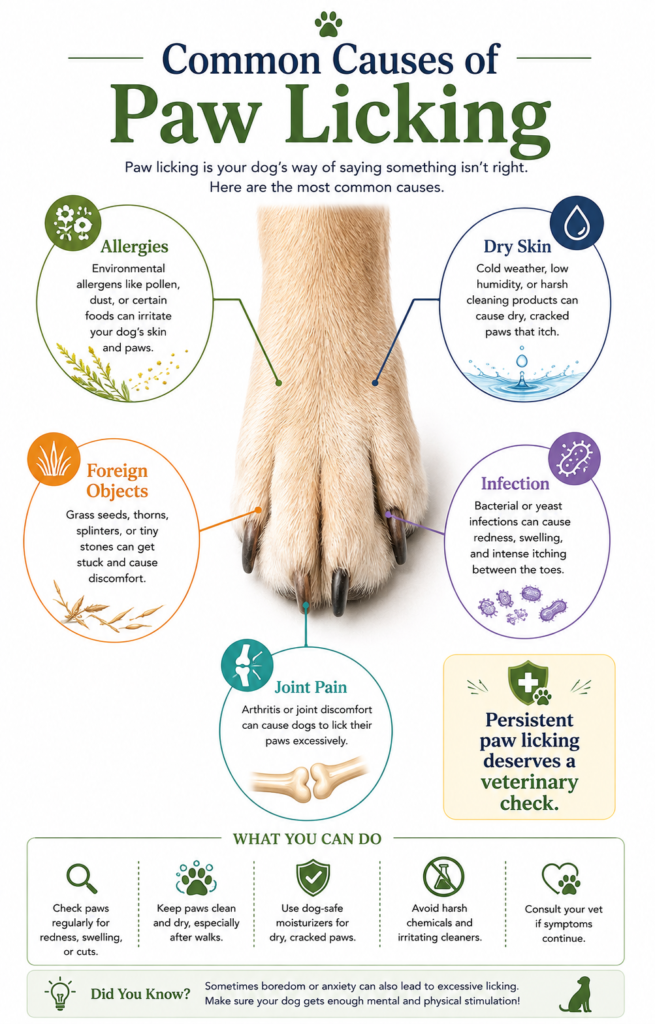
Occasional paw grooming is completely normal, but constant paw licking usually points to an underlying problem.
Allergies are one of the most common causes. Environmental allergens such as pollen, grass, or dust mites can make your dog’s paws itchy, while food allergies may also trigger persistent licking. The moisture created by constant licking can lead to yeast or bacterial infections, making the irritation even worse.
Pain is another possible cause. A thorn, small cut, cracked paw pad, insect sting, or arthritis in the toes may cause your dog to repeatedly lick the affected area in an attempt to relieve discomfort.
Behavioral issues can also play a role. Some dogs lick their paws out of boredom or anxiety, especially if they don’t receive enough physical exercise or mental stimulation.
Treatment depends on the underlying cause. Your veterinarian may recommend allergy medication, antibiotics for infection, pain relief, or changes to your dog’s diet. If anxiety is contributing to the behavior, increasing exercise, enrichment, and training may help reduce repetitive licking.
Takeaway: Persistent paw licking isn’t usually just grooming. Check for redness, swelling, cuts, or foreign objects, and contact your veterinarian if the behavior continues.
Why Do Dogs Lick Wounds and Should You Stop Them?
Dogs naturally lick wounds because they’re instinctively trying to clean and soothe the injured area. A few quick licks may remove dirt from a minor scrape, but repeated licking does far more harm than good.
Although saliva contains enzymes that may help clean small wounds, a dog’s mouth also contains bacteria. Constant licking keeps the wound moist, damages new tissue, delays healing, and increases the risk of infection. Some dogs develop painful lick granulomas—thickened sores caused by repeated licking that can take weeks to heal.
For surgical incisions or larger wounds, veterinarians recommend preventing licking altogether. An Elizabethan collar (cone), inflatable recovery collar, or protective sleeve can stop your dog from reopening the wound while it heals.
Always follow your veterinarian’s aftercare instructions and keep the area clean.
Takeaway: A few instinctive licks are normal, but continuous wound licking delays healing and should be prevented.
Why Do Dogs Lick Other Dogs?
Dogs lick one another as part of their natural social behavior. It’s a way of greeting, strengthening relationships, and maintaining harmony within a group.
Many dogs gently lick another dog’s ears, face, or muzzle during friendly interactions. Puppies often lick adult dogs, and submissive dogs may lick more confident dogs to communicate peaceful intentions and avoid conflict.
In homes with multiple dogs, mutual licking can also function as a form of social grooming that helps reinforce family bonds.
However, licking should remain mutual and relaxed. If one dog repeatedly corners another, forces excessive licking, or causes the other dog to growl, snap, or try to escape, it’s time to interrupt the interaction and give both dogs space.
Takeaway: Gentle licking between dogs is usually a healthy social behavior, but obsessive or unwanted licking should be redirected.
Why Do Dogs Lick the Air or Their Lips?
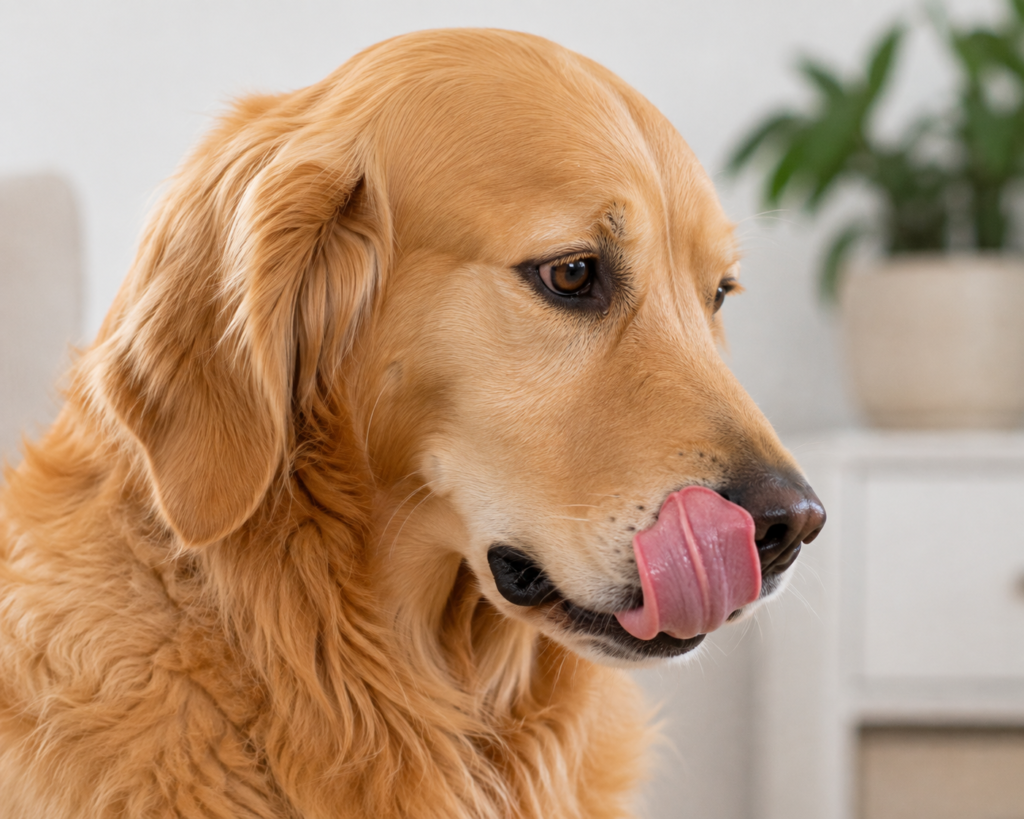
Air licking and repeated lip licking are different from normal affectionate licking and often suggest that something is bothering your dog.
One of the most common causes is nausea. Dogs that feel sick to their stomach may repeatedly lick their lips, swallow, drool, or lick the air before vomiting.
Dental problems are another possibility. A broken tooth, gum disease, or an object stuck in the mouth can make dogs lick repeatedly in an attempt to ease discomfort.
Sometimes the problem is farther down the throat or digestive tract. In rare cases, persistent air licking may even be linked to neurological disorders.
If the behavior lasts more than a few minutes, happens repeatedly, or is accompanied by vomiting, drooling, loss of appetite, or obvious discomfort, your dog should be examined by a veterinarian.
Takeaway: Persistent air licking or lip smacking usually points to nausea, dental pain, or another medical issue rather than normal behavior.
Does Dog Licking Behavior Vary by Breed?
Yes. While every dog is an individual, some breeds naturally lick more than others because of the jobs they were originally bred to do and their personality traits.
Highly social breeds, such as Golden Retrievers, Labrador Retrievers, and Spaniels, often use licking as a way to interact with people and strengthen social bonds. These breeds generally enjoy close contact with their families and may greet owners with enthusiastic licking.
Herding breeds like Border Collies and Australian Shepherds are highly attentive to their owners and sometimes use licking to seek attention or communicate. If they don’t receive enough mental stimulation, repetitive licking can become a habit.
Some breeds are also more prone to anxiety or obsessive behaviors. Dogs such as German Shepherds and Border Collies may develop compulsive licking if they’re stressed, bored, or under-stimulated.
Breed tendencies can influence licking, but your dog’s environment, health, daily routine, and personality usually play an even bigger role.
Takeaway: Some breeds naturally lick more than others, but sudden changes in licking behavior should always be investigated, regardless of breed.
When Is Excessive Licking a Problem?
Occasional licking is completely normal. It only becomes a concern when it happens so often that it interferes with your dog’s daily life or causes physical damage.
Excessive licking may be caused by:
- Environmental or food allergies
- Skin infections
- Pain or arthritis
- Anxiety or compulsive behaviors
- Dental disease
- Stomach or digestive problems
Watch for warning signs such as:
- Hair loss
- Red, inflamed skin
- Bleeding or open sores
- Constant licking that cannot be interrupted
- Vomiting or diarrhea
- Loss of appetite
- Lethargy or changes in behavior
Keeping a simple record of when the licking happens can help your veterinarian identify patterns. Note which body part your dog licks, how long it lasts, and whether anything seems to trigger it.
Takeaway: If licking causes skin damage, starts suddenly, or is accompanied by other symptoms, schedule a veterinary examination as soon as possible.
Can Puppies Lick Too Much?
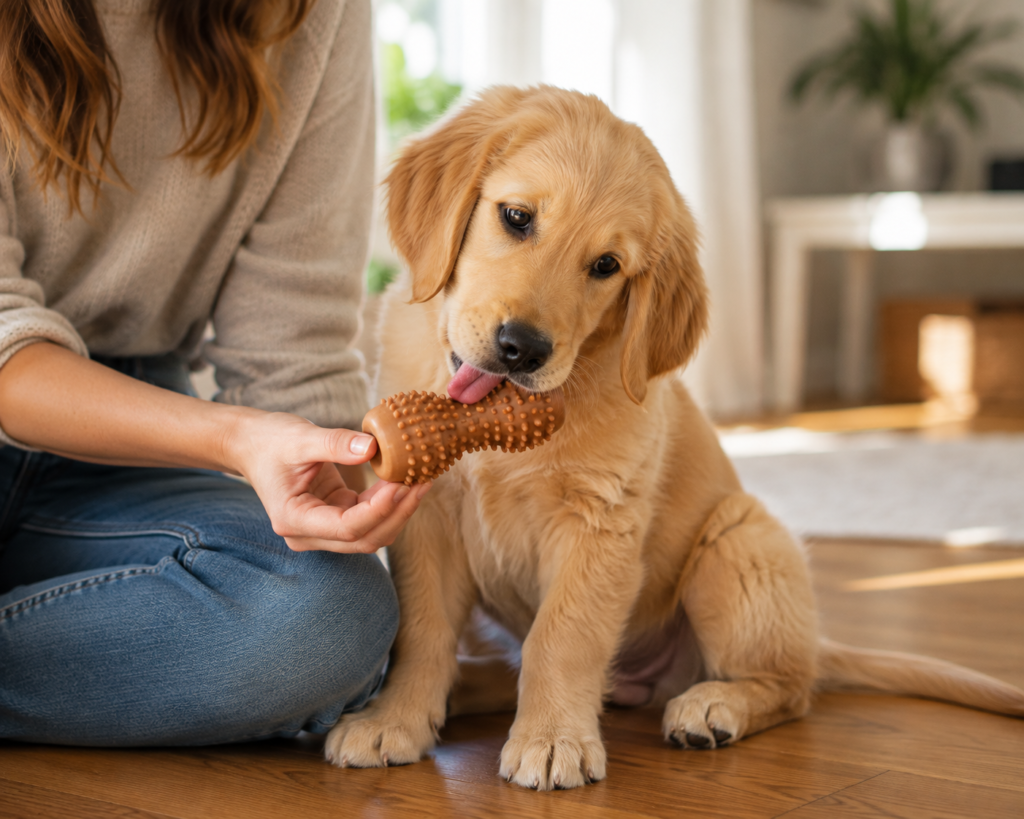
Yes, but the reason often depends on their age.
Young puppies naturally explore the world with their mouths and tongues. They may lick people, toys, bedding, and even themselves simply because they’re curious. During teething, puppies may also lick more often as they try to soothe sore gums.
As puppies grow, licking becomes part of normal social behavior. They often lick their mother, littermates, and owners as a way of greeting, bonding, and seeking attention.
However, excessive licking isn’t normal, even in puppies. Constant paw licking, repeated air licking, or licking that causes hair loss, redness, or sores may indicate allergies, parasites, pain, or another medical problem that should be checked by a veterinarian.
Takeaway: Curious licking is normal in puppies, but persistent or obsessive licking should never be ignored.
Frequently Asked Questions
Why does my dog lick me all the time?
Most dogs lick their owners to show affection, gather information through scent and taste, or seek attention. If the licking suddenly becomes excessive or is accompanied by signs of anxiety, it may be worth discussing with your veterinarian.
Why do dogs lick the air?
Air licking is commonly linked to nausea, dental pain, irritation in the mouth, or gastrointestinal discomfort. If the behavior continues or happens frequently, your dog should be examined by a veterinarian.
Is it normal for dogs to lick excessively?
No. While normal grooming is healthy, excessive licking that causes hair loss, skin irritation, or open sores usually points to an underlying medical or behavioral problem.
Why do dogs lick their wounds?
Dogs instinctively lick wounds in an attempt to clean and soothe them. Unfortunately, repeated licking slows healing and increases the risk of infection, so most wounds should be protected during recovery.
Can anxiety cause excessive licking?
Yes. Some dogs repeatedly lick themselves, people, or household objects to cope with stress or anxiety. If the behavior becomes frequent or difficult to interrupt, your veterinarian or a certified behaviorist can help identify the cause.
Should I stop my dog from licking me?
Occasional licking is perfectly normal and is often a sign of affection. If the licking becomes excessive or bothersome, calmly redirect your dog to a toy or another activity instead of using punishment.
Conclusion
Licking is one of the many ways dogs communicate with the people and animals around them. Whether your dog is giving you a quick greeting, grooming another dog, or exploring the world through taste and smell, most licking is a completely normal part of canine behavior.
The key is paying attention to the context. Occasional licking is rarely a cause for concern, but sudden, repetitive, or obsessive licking—especially when it’s accompanied by redness, hair loss, vomiting, or changes in behavior—may signal an underlying health problem that needs veterinary care.
Understanding why your dog licks helps you tell the difference between healthy behavior and signs that something isn’t right. When in doubt, trust your instincts and speak with your veterinarian if the behavior changes or becomes excessive.
References
[1] The Behavioural Science Behind Canine Hand Licking – https://www.pinegroveveterinaryhospital.ca/news/the-behavioural-science-behind-canine-hand-licking-insights-and-responses
[2] How Can I Get My Dog To Stop Licking So Much – https://www.gallant.com/blog/how-can-i-get-my-dog-to-stop-licking-so-much/
[3] Excessive Licking Chewing And Grooming Dogs – https://www.petmd.com/dog/general-health/excessive-licking-chewing-and-grooming-dogs
[4] Why Is My Dog Licking Me – https://www.akc.org/expert-advice/advice/why-is-my-dog-licking-me/