
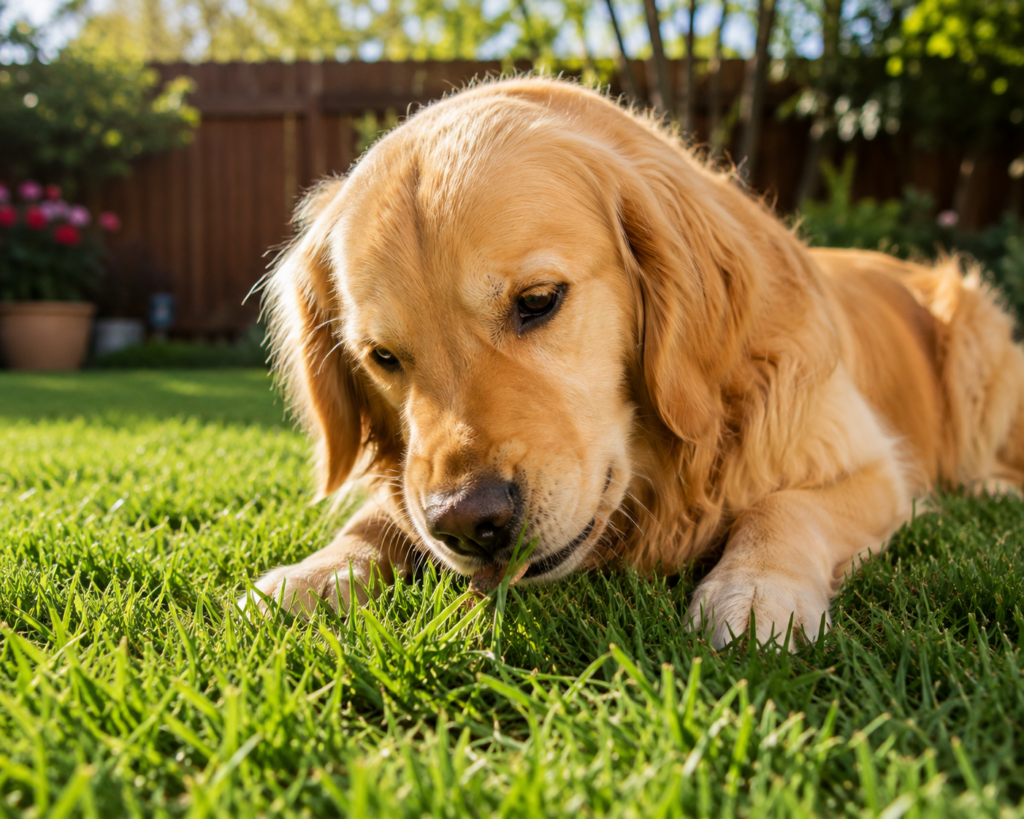
Quick Answer: Dogs eat grass for many different reasons, including curiosity, taste, boredom, or mild digestive discomfort. In most cases, it’s completely normal behavior and isn’t a sign that something is wrong. Studies show that fewer than 10% of dogs appear sick before eating grass, and only about 25% vomit afterward. If your dog only nibbles grass occasionally and acts normally, there’s usually no reason to worry. However, sudden, obsessive grass-eating or grazing that’s accompanied by vomiting, diarrhea, or lethargy should be checked by your veterinarian.
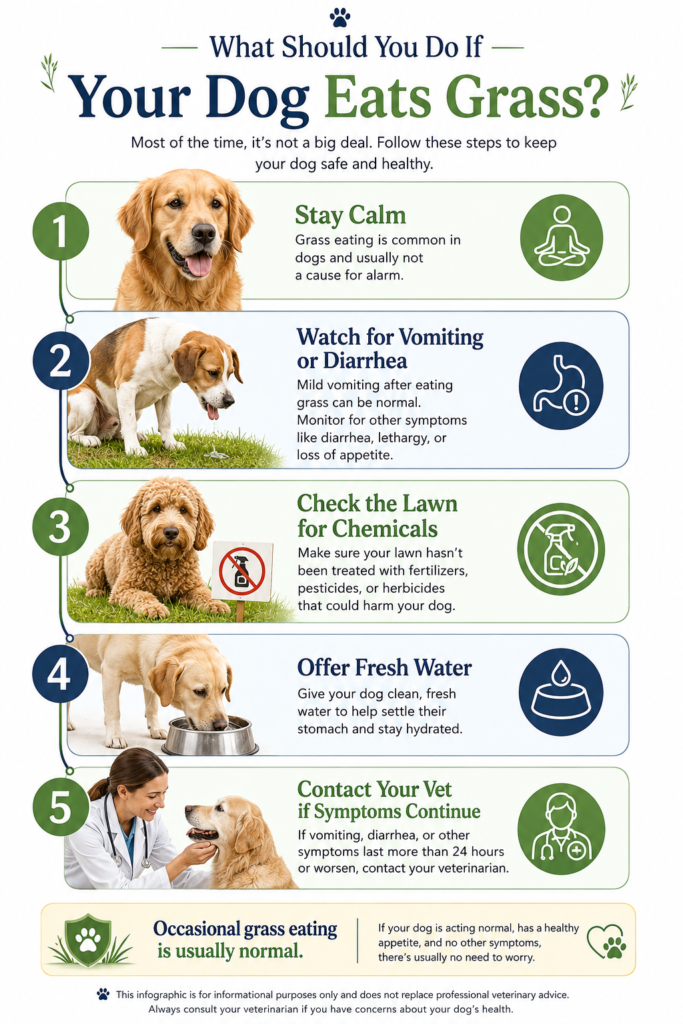
🚨 Grass-Eating Urgency Guide
✅ Usually Normal
- Occasionally nibbling a few blades of grass
- No vomiting or diarrhea
- Normal appetite and energy levels
- Stops eating grass after a few bites
⚠️ Contact Your Vet
- Grass-eating becomes much more frequent
- Vomiting after eating grass more than once
- Loss of appetite or mild diarrhea
- Sudden change in normal behavior
🚨 Seek Emergency Care
- Repeated vomiting
- Bloody stool
- Bloated abdomen
- Severe lethargy
- Gagging without producing anything
- Suspected exposure to pesticides or toxic plants
Key Takeaways
- Eating grass is a normal behavior for many dogs and usually isn’t caused by illness.
- Most dogs eat grass because they enjoy the taste, texture, or natural instinct to graze.
- Only about 1 in 4 dogs vomit after eating grass.
- The biggest danger isn’t the grass itself—it’s pesticides, herbicides, fertilizers, and toxic plants growing nearby.
- Sudden changes in grass-eating habits are more concerning than occasional grazing.
- Boredom, anxiety, and lack of mental stimulation can also encourage grass-eating.
- Contact your veterinarian if grass-eating is accompanied by vomiting, diarrhea, lethargy, or a loss of appetite.
I’ve seen many dogs stop during a walk, grab a few bites of grass, and then carry on as if nothing happened. It’s one of those behaviors that often surprises dog owners and leaves them wondering if their pet is trying to tell them something.
The good news is that, for most dogs, eating grass is completely normal. Some dogs simply enjoy the taste, while others nibble grass out of curiosity, boredom, or instinct. Although many people believe dogs eat grass only when they have an upset stomach, research suggests that’s only part of the story.
In this guide, you’ll learn why dogs eat grass, when it’s perfectly normal, when it could signal a health problem, and how to tell the difference between harmless grazing and behavior that deserves a call to your veterinarian.
Why You’ll Find This Guide Helpful
There’s a lot of conflicting information online about dogs eating grass. Some sources say it’s always a sign of an upset stomach, while others claim dogs simply enjoy it. The truth is somewhere in between.
In this guide, you’ll discover:
- ✔ Why dogs really eat grass based on current veterinary research
- ✔ Whether eating grass means your dog is sick
- ✔ Why some dogs vomit after grazing while others don’t
- ✔ The biggest dangers to watch for, including pesticides and toxic plants
- ✔ When grass-eating is completely normal and when it’s time to call your veterinarian
- ✔ Simple ways to reduce excessive grass-eating if it becomes a habit
Whether your dog grabs a few blades during walks or grazes every day in the backyard, this guide will help you understand what’s normal and when you should be concerned.
Why Do Dogs Eat Grass?
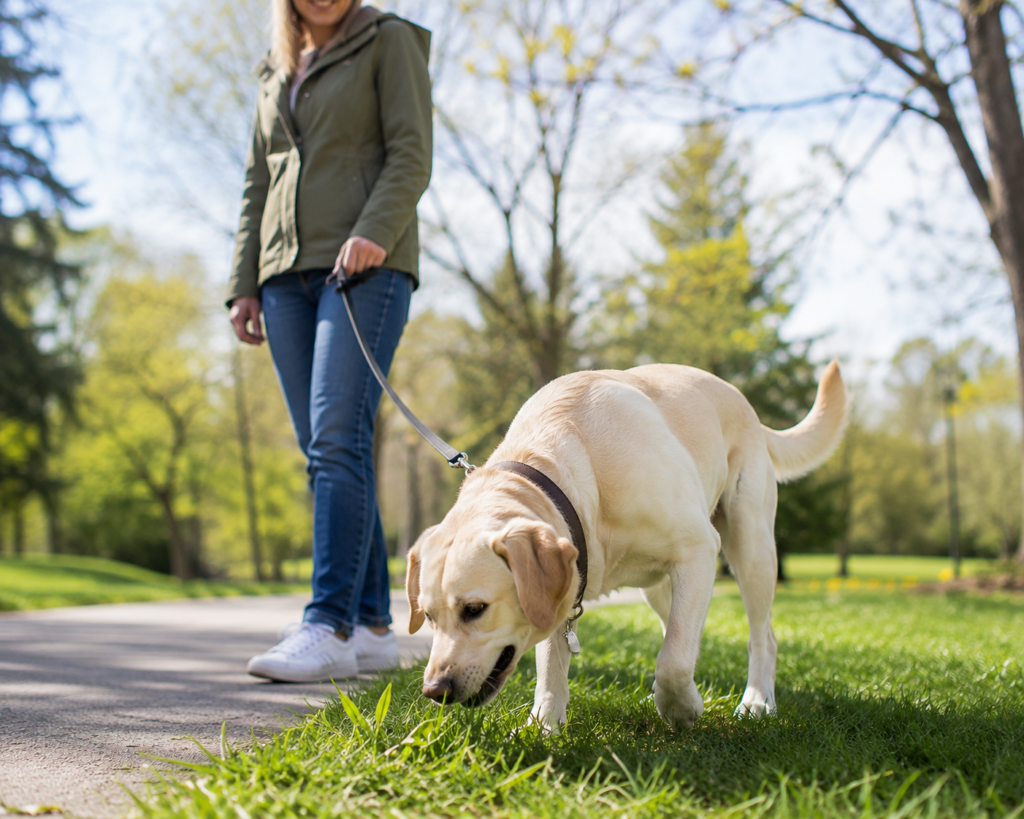
The simple answer is that most dogs eat grass because it’s a normal part of their behavior. Wild relatives such as wolves and coyotes also eat plant material, so grazing isn’t unusual for dogs. In many cases, dogs simply enjoy the taste or texture of fresh grass, especially in the spring.
Several factors may explain why dogs eat grass:
- They enjoy the taste or texture. Fresh, tender grass may simply be appealing.
- It’s part of their natural instinct. Dogs descended from omnivorous ancestors that ate both meat and plant material.
- Grass contains fiber. Some dogs may benefit from the extra roughage, although it’s usually not essential if they’re eating a balanced diet.
- Boredom or anxiety. Some dogs graze as a way to occupy themselves or relieve stress, much like people bite their nails or fidget.
Many owners believe dogs only eat grass when they have an upset stomach, but research doesn’t fully support that idea. Studies have found that fewer than 10% of dogs show signs of illness before eating grass, suggesting that digestive upset isn’t the main reason most dogs graze.
That said, some dogs do appear to eat grass when they feel nauseated. In these cases, the grass may help trigger vomiting and relieve stomach discomfort. This seems to happen in some dogs, but it isn’t the most common explanation.
Not every dog vomits after eating grass. In fact, only about 25% of dogs throw up afterward. When vomiting does happen, it’s often because the dog ate a large amount of grass quickly, which can irritate the stomach or throat. If your dog repeatedly vomits every time they eat grass, or vomits several times in one day, it’s important to contact your veterinarian.
Takeaway: Most dogs eat grass simply because it’s normal behavior. Occasional grazing, even without vomiting, usually isn’t a cause for concern.
When Is Grass Eating Dangerous?
Grass itself isn’t toxic to dogs, but what grows on it—or what’s sprayed on it—can be dangerous.
The biggest risks include:
- Pesticides and herbicides
- Chemical fertilizers
- Toxic plants mixed into the grass
- Parasites from contaminated soil
- Grass awns (foxtails) that can become lodged in the ears, nose, eyes, or skin
Long blades of grass swallowed whole can also cause gagging or irritation, although serious blockages are uncommon.
The pattern of your dog’s grass-eating is often more important than the behavior itself.
| Sign | Usually Normal | May Need Veterinary Attention |
|---|---|---|
| Frequency | Occasional grazing | Multiple times every day |
| Vomiting | Rare or never | Every time or repeated vomiting |
| Appetite | Eating normally | Refusing food |
| Energy | Normal activity | Lethargy or weakness |
| Behavior | Eats a few bites then stops | Obsessive grazing that’s hard to interrupt |
A dog that has always nibbled a little grass during walks is usually behaving normally. However, if your dog suddenly begins eating large amounts of grass, especially alongside vomiting, diarrhea, weight loss, or changes in behavior, they should be examined by a veterinarian.
Takeaway: Grass is rarely the problem. Chemicals, toxic plants, parasites, and sudden changes in your dog’s behavior are the real reasons to be concerned.
How Much Grass Is Too Much?
There’s no exact amount of grass that’s considered “safe” because every dog is different. For most healthy dogs, eating a few blades during a walk or while relaxing in the yard isn’t a problem.
The concern begins when grass-eating becomes frequent, excessive, or starts replacing normal eating habits.
You should pay closer attention if your dog:
- Grazes several times every day.
- Eats large amounts of grass at once.
- Chooses grass instead of their regular food.
- Suddenly starts eating much more grass than usual.
Some dogs naturally graze more often than others. Personality, breed, diet, boredom, anxiety, and the amount of daily exercise all play a role. Dogs that don’t receive enough mental stimulation may also develop grass-eating as a repetitive habit.
If your dog regularly eats large amounts of grass, it’s worth reviewing their diet, exercise routine, and daily enrichment before assuming there’s a medical problem.
Takeaway: A few blades of grass are usually harmless. Frequent or obsessive grazing deserves a closer look, especially if it’s a new behavior.
Should You Stop Your Dog From Eating Grass?

Most of the time, no. Occasional grass-eating is normal and doesn’t need to be stopped. Instead of trying to eliminate the behavior completely, focus on keeping your dog safe and reducing excessive grazing if it becomes a habit.
Here are a few simple ways to help:
- Review your dog’s diet. Ask your veterinarian whether a higher-fiber food might be appropriate.
- Provide more exercise and mental stimulation. Daily walks, puzzle toys, and training sessions can reduce boredom-related grazing.
- Supervise outdoor time. Redirect your dog before they begin eating large amounts of grass.
- Avoid treated lawns. Keep your dog away from grass that has recently been sprayed with pesticides, herbicides, or fertilizers.
- Offer safe alternatives. Crunchy vegetables such as carrots, green beans, or cucumber slices can satisfy dogs that enjoy chewing on plants.
Avoid punishing your dog for eating grass. Punishment doesn’t address the underlying cause and may increase anxiety, making the behavior worse.
Takeaway: You don’t need to stop occasional grass-eating. Focus on preventing access to unsafe grass and addressing excessive grazing if it becomes a regular habit.
Can Puppies Eat Grass?
Yes. Puppies often explore the world by putting things in their mouths, including grass. Occasional nibbling is usually a normal part of learning about their environment.
Because puppies have developing immune systems, it’s especially important to prevent them from eating grass that’s been treated with chemicals or may be contaminated by other animals.
If your puppy eats a few blades of clean grass and behaves normally afterward, there’s usually no reason to worry. However, frequent vomiting, diarrhea, loss of appetite, or repeated grass-eating should be discussed with your veterinarian.
Takeaway: Occasional grass-eating is common in puppies, but they should always be supervised outdoors and kept away from treated lawns.
Frequently Asked Questions
Why does my dog eat grass every day?
Some dogs simply enjoy eating grass and make it part of their daily routine. However, if your dog suddenly starts grazing much more than usual or eats grass obsessively, it’s worth discussing the behavior with your veterinarian to rule out medical or behavioral causes.
Should I let my dog eat grass during walks?
Yes, as long as the grass hasn’t been treated with pesticides, herbicides, or fertilizers and doesn’t contain toxic plants. A few bites of clean, untreated grass are usually harmless for healthy dogs.
Why does my dog eat grass and then throw up?
Some dogs vomit after eating grass, but most do not. Vomiting may happen because the dog ate a large amount of grass quickly or because they already felt nauseated before grazing. If your dog vomits every time they eat grass or vomits repeatedly, contact your veterinarian.
Is eating grass a sign of a nutritional deficiency?
Not usually. Most dogs that eat a complete and balanced diet aren’t missing important nutrients. While some experts believe dogs may occasionally seek extra fiber, research suggests that most grass-eating is simply normal canine behavior.
Can indoor dogs eat grass?
Yes. Indoor dogs may nibble grass when they’re outside, just like dogs that spend more time outdoors. Always supervise them and avoid lawns that may have been treated with chemicals.
What should I do if my dog eats grass treated with chemicals?
Contact your veterinarian immediately, especially if you know the grass was treated with pesticides, herbicides, or fertilizer. Watch for vomiting, diarrhea, drooling, weakness, tremors, or unusual behavior while seeking veterinary advice.
Conclusion
Watching your dog stop to nibble a few blades of grass can be surprising, but in most cases, it’s completely normal. Many dogs simply enjoy the taste, follow their natural instincts, or occasionally graze out of curiosity. Research shows that most dogs aren’t sick before they eat grass, and most won’t vomit afterward.
The real concern isn’t the grass itself—it’s sudden changes in your dog’s behavior or exposure to chemicals, toxic plants, or other hazards. Paying attention to how often your dog grazes and whether they have other symptoms will help you decide when it’s normal and when it’s time to call your veterinarian.
If your dog only eats a little clean, untreated grass and otherwise seems healthy, there’s usually no reason to worry. When in doubt, trust your instincts and speak with your veterinarian if the behavior suddenly changes or becomes excessive.