
Quick Answer: Dogs can eat many store-bought mushrooms safely in small, plain portions, but wild mushrooms are a different story entirely. Several wild species are severely toxic to dogs and can cause liver failure or death. If your dog eats a wild mushroom, treat it as an emergency and contact your vet immediately.
The gap between a safe portobello from the grocery store and a toxic Amanita from your backyard is enormous. Understanding that difference could save your dog’s life.
🍄 Mushroom Safety at a Glance| Mushroom Type | Safe for Dogs? | Notes |
|---|---|---|
| White button (store-bought) | ✅ Yes | Plain only, small amount |
| Cremini / Baby bella | ✅ Yes | Plain only, small amount |
| Portobello | ✅ Yes | Plain only, small amount |
| Shiitake | ✅ Yes | Plain only, small amount |
| Amanita (wild) | 🚫 No | Potentially fatal, emergency |
| Galerina (wild) | 🚫 No | Potentially fatal, emergency |
| Any unknown wild mushroom | 🚫 No | Never assume safe |
Mushrooms can be a confusing food for dog owners. While many mushrooms sold in grocery stores are safe for dogs when served plain and in moderation, wild mushrooms can be extremely dangerous. Some toxic species can cause severe liver damage, neurological problems, or even death, making it essential to know the difference.
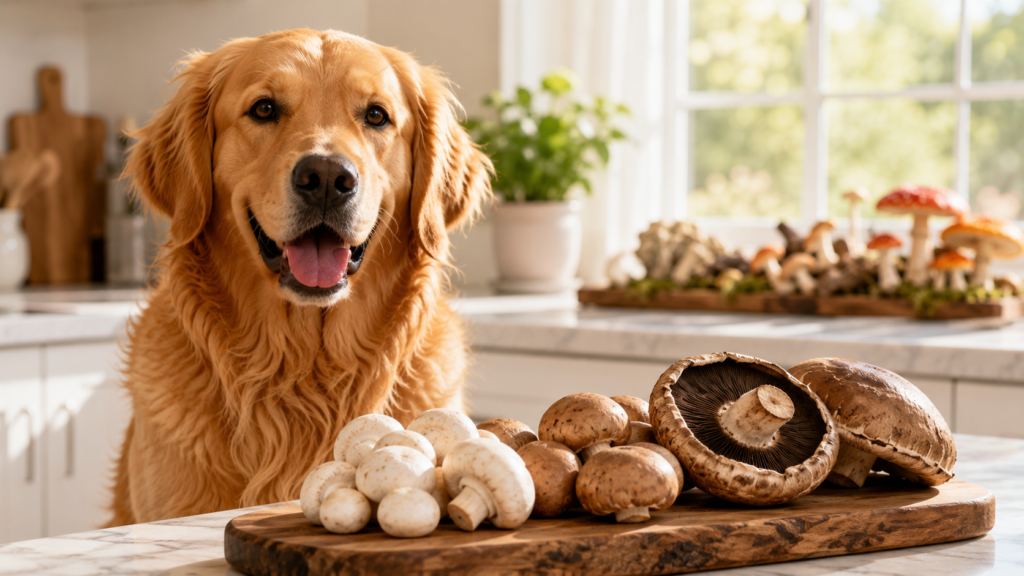
The good news is that common store-bought mushrooms such as button, cremini, portobello, and shiitake mushrooms are generally safe as an occasional treat. However, mushrooms growing in your yard, garden, or on hiking trails should never be considered safe, even if they look harmless.
In this guide, you’ll learn which mushrooms dogs can eat, which varieties to avoid, the warning signs of mushroom poisoning, what to do if your dog eats a wild mushroom, and how to safely offer store-bought mushrooms as part of a balanced diet.
Are All Mushrooms Dangerous to Dogs?
No, not all mushrooms are dangerous to dogs. Many mushrooms sold in grocery stores, including white button, cremini, portobello, and shiitake mushrooms, are generally safe when served plain and in moderation. The greatest risk comes from wild mushrooms, which may contain toxins that can cause severe illness or even be fatal.
Unfortunately, it’s almost impossible for pet owners to tell the difference between a safe and a poisonous wild mushroom. Even experienced mushroom foragers can misidentify certain species because many toxic mushrooms closely resemble harmless ones.
For that reason, veterinarians recommend a simple rule: only feed your dog commercially grown mushrooms from a grocery store, and never allow them to eat mushrooms growing outdoors.
If you’re unsure where a mushroom came from or what type it is, don’t let your dog eat it. Taking a cautious approach is the safest way to protect your pet from accidental mushroom poisoning.
Wild Mushrooms: A Hidden Danger for Dogs
Wild mushrooms are one of the most serious poisoning hazards dogs can encounter. Unlike commercially grown mushrooms sold in grocery stores, wild mushrooms can contain powerful toxins that affect the liver, kidneys, nervous system, or digestive tract. Some species are so toxic that eating even a small amount can become life-threatening.
The biggest challenge is that poisonous and non-poisonous wild mushrooms often look almost identical. Because it’s nearly impossible to identify them accurately without expert knowledge, veterinarians recommend treating every wild mushroom as potentially dangerous.
Some of the most toxic species include Death Cap (Amanita phalloides), Destroying Angel (Amanita ocreata), and Galerina mushrooms. These can cause severe liver damage, kidney failure, neurological problems, and, in some cases, death if treatment is delayed.
Another concern is that symptoms may not appear immediately. A dog can seem perfectly normal for several hours while the toxins are already causing serious internal damage. That’s why you should never wait for symptoms before seeking veterinary advice if your dog has eaten a wild mushroom.
If your dog eats any wild or unidentified mushroom, contact your veterinarian or an emergency animal poison service immediately. Early treatment gives your dog the best chance of a full recovery.
What Are the Symptoms of Mushroom Poisoning in Dogs?
The symptoms of mushroom poisoning vary depending on the type of mushroom your dog eats and the amount consumed. Some dogs develop signs within 30 minutes, while others may not show symptoms for several hours. In cases involving highly toxic mushrooms, delayed symptoms can be especially dangerous because serious liver or kidney damage may already be occurring.
Common signs of mushroom poisoning include:
- Vomiting
- Diarrhea
- Excessive drooling
- Abdominal pain
- Loss of appetite
- Weakness or lethargy
- Tremors or muscle twitching
- Difficulty walking or loss of coordination
- Seizures
- Yellowing of the gums, eyes, or skin (jaundice)
Some poisonous mushrooms primarily affect the digestive system, causing vomiting and diarrhea that may resolve with treatment. Others attack the liver, kidneys, or nervous system and can quickly become life-threatening.
Even if your dog seems normal after eating a wild mushroom, don’t assume they’re safe. Certain toxins have a delayed onset, meaning symptoms may not appear until significant internal damage has already occurred. If you suspect your dog has eaten a wild or unidentified mushroom, contact your veterinarian immediately rather than waiting for signs of illness to develop.
🚨 Emergency Triage: Mushroom Poisoning in DogsMonitor at home (mild GI signs only, known safe store-bought mushroom):
Mild stomach upset, single vomiting episode, normal energy level
Call your vet today (symptoms developing, unknown mushroom source):
Repeated vomiting, diarrhea, abdominal pain, excessive drooling, lethargy
Go to emergency care NOW (any of these):
Seizures, collapse, jaundice (yellow gums/eyes), bloody vomiting or diarrhea, unresponsiveness, suspected Amanita or Galerina ingestion
What to Do if Your Dog Eats a Wild Mushroom
If your dog eats a wild or unidentified mushroom, don’t wait for symptoms to appear. Contact your veterinarian or an animal poison control center immediately. Early treatment can make a significant difference, especially if the mushroom is highly toxic.
Follow these steps:
- Remove your dog from the area to prevent them from eating more mushrooms.
- Take a photo or collect a sample of the mushroom if it’s safe to do so. This can help your veterinarian identify the species and recommend the most appropriate treatment.
- Call your veterinarian or an emergency animal poison service right away. Be prepared to provide your dog’s weight, the estimated amount eaten, and approximately when the mushroom was consumed.
- Do not induce vomiting unless your veterinarian specifically instructs you to do so. Some situations require different treatment approaches.
- Monitor your dog closely while traveling to the clinic. Even if they appear normal, dangerous toxins can take several hours to cause visible symptoms.
The most common mistake pet owners make is waiting to see if their dog becomes sick. Because some mushroom toxins don’t cause immediate symptoms, delaying treatment can reduce the chances of a successful recovery. When in doubt, always treat wild mushroom ingestion as a veterinary emergency.
🚨 When to Call Your Vet
Contact your veterinarian immediately if your dog has eaten any wild or unidentified mushroom, even if they aren’t showing symptoms. Some of the most dangerous mushroom toxins can take several hours to cause visible signs while serious damage to the liver, kidneys, or nervous system is already underway.
You should also call your vet if your dog:
- Eats a large amount of store-bought mushrooms
- Eats mushrooms prepared with garlic, onions, butter, or other harmful ingredients
- Develops vomiting or diarrhea after eating mushrooms
- Becomes unusually tired, weak, or unsteady
- Shows signs of excessive drooling, tremors, or seizures
- Has yellow gums, eyes, or skin (jaundice)
- Experiences difficulty breathing or collapses
Your veterinarian may recommend inducing vomiting (only if it’s safe to do so), administering activated charcoal to help reduce toxin absorption, providing intravenous fluids, or hospitalizing your dog for supportive care. Treatment depends on the type of mushroom consumed, the amount eaten, and how quickly veterinary care begins.
The sooner your dog receives treatment, the better their chances of making a full recovery. If you suspect mushroom poisoning, don’t wait for symptoms to worsen—seek veterinary advice immediately.
How to Feed Store-Bought Mushrooms Safely
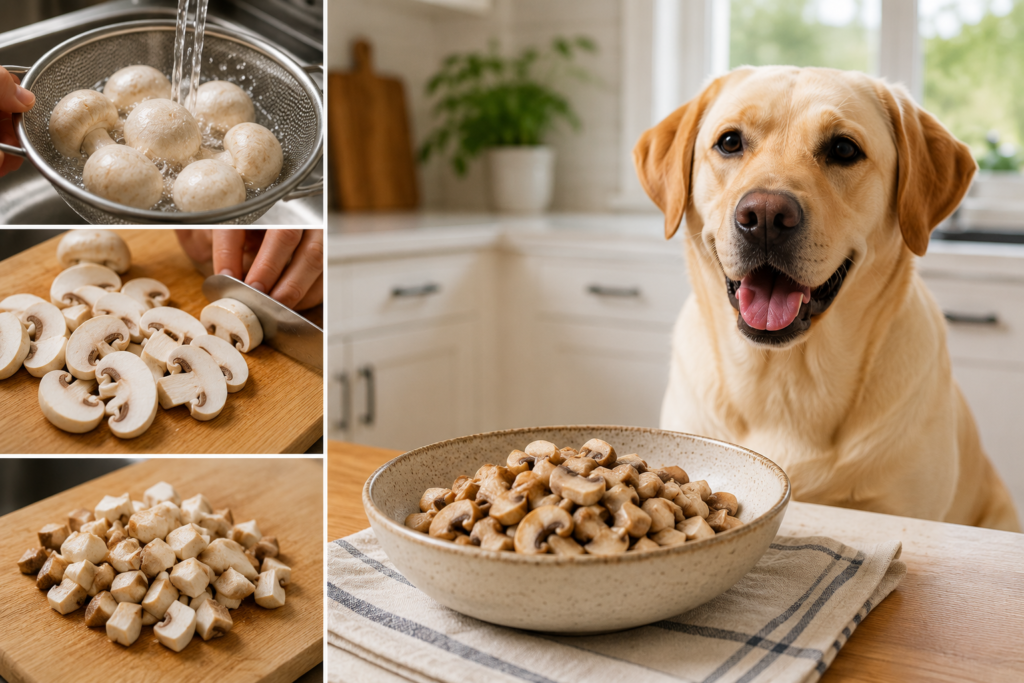
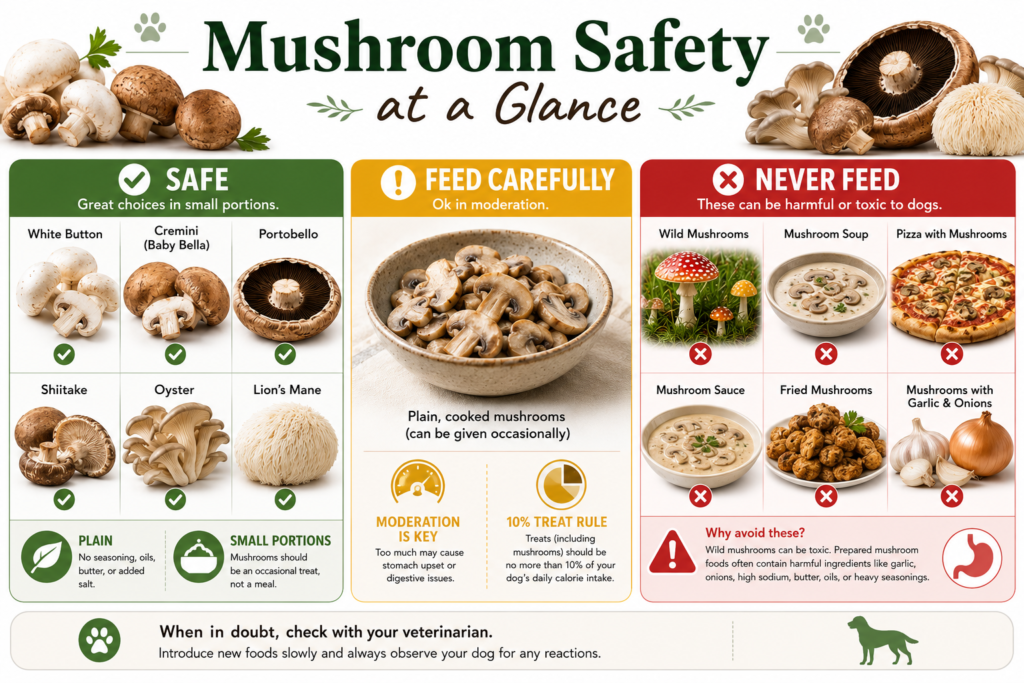
Commercially grown mushrooms from grocery stores are generally safe for dogs when served plain and in moderation. Safe varieties include white button, cremini (baby bella), portobello, shiitake, oyster, enoki, maitake, porcini, lion’s mane, and king trumpet mushrooms.
Dogs can eat these mushrooms either raw or cooked, but they should always be fresh, thoroughly washed, and cut into small, bite-sized pieces. While raw mushrooms are considered safe in small amounts, lightly cooking them without added ingredients may make them easier for some dogs to digest.
The biggest concern isn’t the mushroom itself—it’s how it’s prepared. Many mushroom dishes contain ingredients that are harmful to dogs, including garlic, onions, butter, cream, oils, excessive salt, and seasonings.
Avoid feeding your dog:
- Mushroom soup
- Mushroom sauces or gravy
- Mushrooms on pizza
- Breaded or fried mushrooms
- Pickled mushrooms
- Any mushroom dish containing garlic, onions, or heavy seasonings
Even plain store-bought mushrooms should only be offered occasionally. Treats, including mushrooms, should make up no more than 10% of your dog’s daily calorie intake, while the remaining 90% should come from a complete and balanced dog food.
If you’re ever unsure whether a mushroom is safe or where it came from, don’t feed it to your dog. It’s always better to skip the treat than risk exposing your pet to a potentially toxic mushroom.
FAQ
Can dogs eat cooked mushrooms?
Yes, dogs can eat plain, cooked store-bought mushrooms in small amounts. Avoid mushrooms prepared with garlic, onions, butter, cream, salt, or other seasonings, as these ingredients can be harmful to dogs.
Can dogs eat raw mushrooms?
Yes. Plain, store-bought mushrooms are generally safe for dogs whether they’re raw or cooked. However, cooked mushrooms may be easier to digest. Never allow your dog to eat raw wild mushrooms.
Can puppies eat mushrooms?
Puppies can eat small amounts of plain, store-bought mushrooms occasionally, but they have more sensitive digestive systems than adult dogs. Introduce any new food slowly and consult your veterinarian if you have concerns.
Can dogs eat mushroom soup or mushrooms on pizza?
No. Mushroom soup, pizza toppings, sauces, and other prepared mushroom dishes often contain garlic, onions, butter, cream, or excessive salt, all of which can be harmful to dogs.
Can dogs tell which mushrooms are poisonous?
No. Dogs cannot reliably identify toxic mushrooms by smell, taste, or instinct. They may eat poisonous and non-poisonous mushrooms alike, which is why all wild mushrooms should be treated as potentially dangerous.
What should I do if my dog eats a wild mushroom?
Contact your veterinarian or an emergency animal poison service immediately, even if your dog appears normal. Some mushroom toxins don’t cause symptoms until serious internal damage has already begun, so early treatment is essential.
Are mushroom stems and caps both safe for dogs?
Yes. Both the stem and cap of plain, store-bought mushrooms are safe for dogs. There is no meaningful difference in safety between the two parts, provided the mushroom is a non-toxic variety and is served without seasonings.
Conclusion
Dogs can safely eat many store-bought mushrooms, including button, cremini, portobello, and shiitake mushrooms, as long as they’re served plain and in moderation. The real danger comes from wild mushrooms, which can be extremely toxic and are impossible to identify reliably without expert knowledge.
If your dog eats a wild or unidentified mushroom, don’t wait for symptoms to appear. Contact your veterinarian or an animal poison control service immediately, as early treatment can be lifesaving.
When feeding mushrooms at home, choose fresh, commercially grown varieties, prepare them without butter, garlic, onions, or seasonings, and offer only small portions as an occasional treat. When in doubt, it’s always safest to keep mushrooms off your dog’s menu.
Editorial Note
Every article published on Trusted Pet Advice is researched using trusted veterinary resources and evidence-based references to help pet owners make informed decisions. Our editorial team reviews each article for accuracy and updates the content as new guidance becomes available.
This article is intended for educational purposes only and should not replace professional veterinary advice, diagnosis, or treatment. If your dog has eaten a wild or potentially poisonous mushroom, or you have concerns about their health, contact your veterinarian or an animal poison control service immediately.
References
Vetnique. Can Dogs Eat Mushrooms? Available at: https://vetnique.com/blogs/vets-corner/can-dogs-eat-mushrooms-vetnique
American Kennel Club (AKC). Can Dogs Eat Mushrooms? Available at: https://www.akc.org/expert-advice/nutrition/can-dogs-eat-mushrooms/
Pooch & Mutt. Can Dogs Eat Mushrooms? Available at: https://www.poochandmutt.co.uk/blogs/can-dogs-eat/mushrooms
PetMD. Mushroom Poisoning in Dogs. Available at: https://www.petmd.com/dog/poisoning/mushroom-poisoning-in-dogs
Merck Veterinary Manual. Overview of Mushrooms Toxic to Animals. Available at: https://www.merckvetmanual.com/toxicology/poisonous-mushrooms/overview-of-mushrooms-toxic-to-animals
Garden State Veterinary Specialists (GSVS). Can Dogs Eat Mushrooms? Emergency Guide. Available at: https://www.gsvs.org/woodbridge-nj/blog/can-dogs-eat-mushrooms-emergency/
Dogs Naturally Magazine. Can Dogs Eat Mushrooms? Available at: https://www.dogsnaturallymagazine.com/can-dogs-eat-mushrooms/