


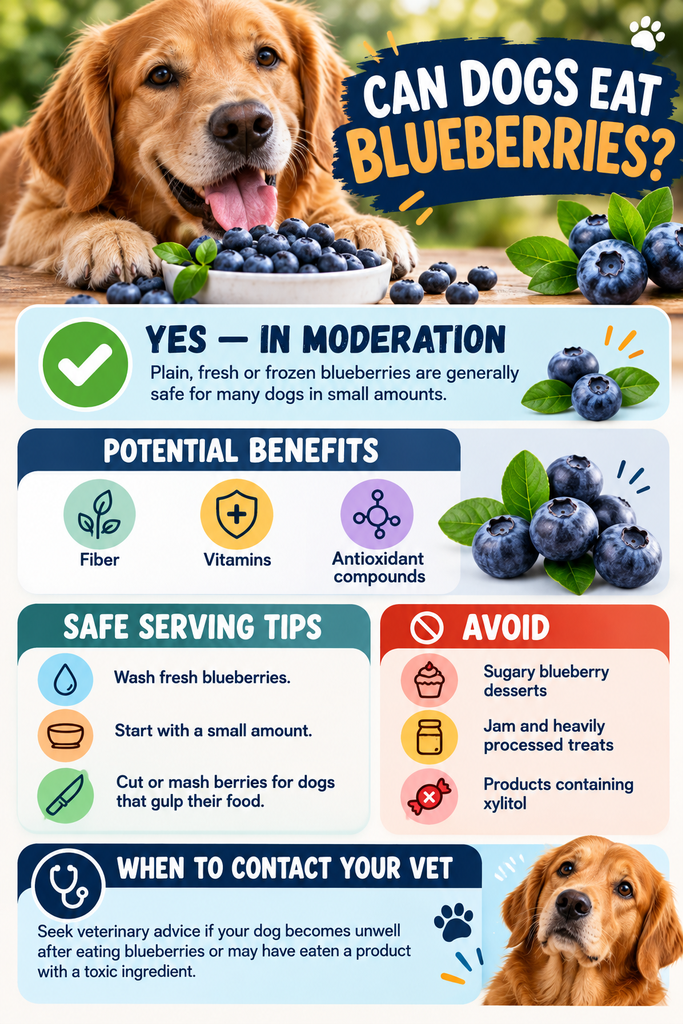
Can Dogs Eat Blueberries? Yes, dogs can eat plain, fresh, or frozen blueberries in moderation. These small fruits contain fiber, vitamins, and antioxidants, making them a convenient occasional treat for many healthy dogs.
However, portion size matters, and not every blueberry-flavored food is suitable for pets. Too many berries may cause digestive upset, while some processed products contain ingredients that are dangerous to dogs.
In this guide, you’ll learn how to serve blueberries safely, how much to offer, their potential nutritional benefits, and which blueberry products to avoid.
Key Takeaways
- Plain fresh blueberries are generally safe for dogs in moderation.
- Plain frozen blueberries can also be offered if their texture and size are appropriate for your dog.
- Blueberries provide fiber, vitamins, and antioxidant compounds, but they are not a substitute for complete and balanced dog food.
- Treats should generally account for no more than 10% of a dog’s daily calories.
- Avoid blueberry products containing xylitol, chocolate, grapes, or raisins.
- Introduce blueberries gradually and contact your veterinarian if your dog develops concerning symptoms.
Are Blueberries Safe for Dogs?
Yes, plain blueberries are generally considered safe for dogs when served in appropriate portions. They are different from grapes and raisins, which can cause serious kidney injury in dogs. [1][2]
Wash fresh blueberries before serving them to remove dirt and potential surface contaminants. Most dogs can eat whole blueberries, but small dogs, puppies, and dogs that gulp their food may benefit from berries that have been cut or mashed to reduce choking risk.
Be cautious when offering wild berries. Make sure they have been correctly identified as blueberries rather than assuming that an unfamiliar berry is safe because it looks similar.
Safe and unsafe blueberry foods
| Generally suitable | Avoid |
|---|---|
| Plain fresh blueberries | Blueberry muffins and pastries |
| Plain frozen blueberries, prepared appropriately | Jam, syrup, and pie filling |
| Properly identified, washed wild blueberries | Products containing grapes or raisins |
| Plain mashed blueberries | Sugar-free products that contain xylitol |
Blueberry-flavored foods may contain added sugar, fat, or other ingredients that are unsuitable for dogs. Always check the ingredient list before sharing human food with your pet.
What Are the Potential Benefits of Blueberries for Dogs?
Blueberries contain several nutrients and plant compounds that can contribute to a varied diet. However, their benefits should be viewed in context: blueberries are an occasional treat, not a treatment for disease.
Antioxidants and vitamins
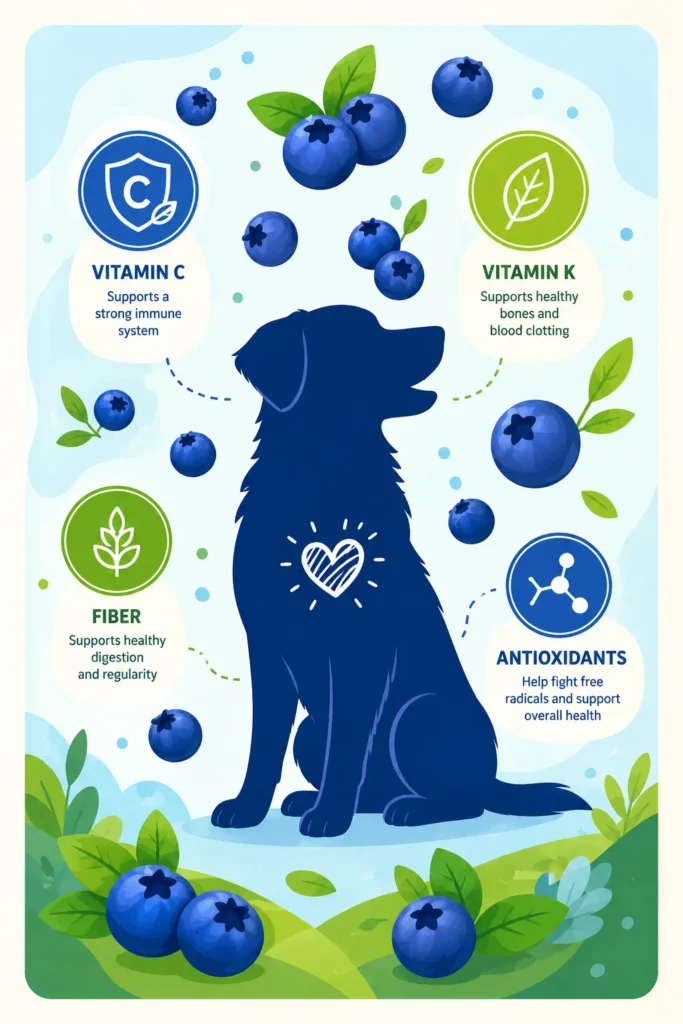
Blueberries contain anthocyanins and other plant compounds that contribute to their blue color. They also provide vitamins C and K.
Antioxidants are studied for their role in protecting cells from oxidative damage. Some canine nutrition research has explored antioxidant-rich diets and cognitive health in older dogs, but this does not establish that feeding blueberries alone prevents cognitive decline or treats a specific disease. [9]
Fiber and digestive health
Blueberries contain dietary fiber, which contributes to normal digestive function. Small portions may fit comfortably into a dog’s diet, but too many berries can cause loose stools, diarrhea, or stomach discomfort.
Are blueberries good for senior dogs?
Many senior dogs can enjoy a few plain blueberries as an occasional treat. Their nutritional content may complement a balanced diet, but they should not be presented as a treatment for arthritis, age-related cognitive decline, or other medical conditions.
If your older dog has diabetes, digestive disease, dental problems, or dietary restrictions, ask your veterinarian whether blueberries are appropriate.
How Many Blueberries Can a Dog Eat?
The appropriate amount depends on your dog’s size, calorie requirements, general health, and the other treats it receives. There is no single daily berry count that is guaranteed to suit every dog.
A commonly used veterinary nutrition guideline is that treats should make up no more than about 10% of a dog’s daily calories, with the remaining calories coming primarily from a complete and balanced diet. [4][6][7]
How to choose an appropriate portion
- Toy and small dogs: Start with one or two small berries, or a smaller amount if your dog has a sensitive stomach.
- Medium dogs: Introduce a few berries and assess how your dog tolerates them.
- Large and giant dogs: Larger dogs may tolerate a greater portion, but their individual calorie needs and overall diet still matter.
These are cautious starting points, not precise daily prescriptions. Berry size, your dog’s activity level, other treats, and medical conditions can all affect the appropriate amount.
Introduce blueberries gradually rather than giving a large serving immediately. If your dog develops digestive upset, stop offering them and contact your veterinarian if symptoms persist or become severe.
Can Puppies Eat Blueberries?
Puppies can generally try plain blueberries in very small quantities, provided they are prepared to reduce choking risk. Mash or cut the berries into small pieces, especially for small puppies.
Introduce new foods gradually and watch for vomiting, diarrhea, or other signs of digestive upset. Blueberries should remain an occasional treat and must not displace a puppy’s complete and balanced growth-formula food.
If your puppy has a medical condition or is following a veterinarian-prescribed diet, ask your veterinarian before introducing new treats.
Can Dogs Eat Frozen or Wild Blueberries?
Frozen blueberries
Plain frozen blueberries can be offered to dogs if they are an appropriate size and texture. However, frozen berries can be firm and difficult for some dogs to chew. Thawing or mashing them is a sensible precaution for puppies, small dogs, and dogs that tend to swallow food whole. [1][6]
Check the ingredient list when using frozen fruit from a mixed bag. Never give your dog a mixture containing grapes or raisins.
Wild blueberries
Wild blueberries may be suitable if they have been correctly identified and are free from contamination. Wash them before serving and avoid berries collected from areas that may have been treated with pesticides.
Do not allow your dog to eat unidentified wild berries. If you are uncertain about a plant or fruit, keep it away from your pet.
What Happens If a Dog Eats Too Many Blueberries?
Eating too many blueberries may cause digestive upset, including loose stools, diarrhea, vomiting, or abdominal discomfort. The risk depends on how much your dog ate and its individual sensitivity.
What should you do?
- If your dog ate a few extra plain blueberries and seems well: Remove the remaining berries, provide access to fresh water, and watch for symptoms.
- If your dog has repeated vomiting, persistent diarrhea, abdominal pain, or weakness: Contact your veterinarian promptly.
- If the berries were mixed with grapes, raisins, xylitol, or chocolate: Contact a veterinarian or animal poison service immediately. Do not wait for symptoms to appear.
Do not induce vomiting or attempt home treatments unless a veterinary professional specifically instructs you to. Difficulty breathing, collapse, or severe distress requires emergency veterinary care.
Can Dogs with Allergies or Diabetes Eat Blueberries?
Dogs with food allergies
Many dogs with food allergies may tolerate blueberries, but no food is guaranteed to suit every dog. If your dog is following an elimination diet or a veterinarian-prescribed food trial, do not introduce blueberries without checking with your veterinarian.
Stop offering blueberries if you notice a suspected reaction, such as itching, skin irritation, vomiting, or diarrhea. These symptoms can have several causes, so consult your veterinarian if they persist or worsen.
Dogs with diabetes
Blueberries contain naturally occurring sugars and carbohydrates. A dog with diabetes may need treats carefully incorporated into its feeding plan.
Ask your veterinarian whether blueberries are appropriate for your dog and what portion, if any, fits its individual dietary needs. Do not change insulin or other medication based on a treat.
Can Dogs Eat Blueberry Muffins, Jam, or Yogurt?
Plain blueberries are different from processed blueberry foods, which may contain added sugar, fat, and ingredients that are unsuitable for dogs. [3]
Blueberry muffins and baked goods
Avoid sharing muffins, pastries, and cakes as routine treats. They can contain substantial amounts of sugar and fat, and some recipes include chocolate, raisins, or other potentially dangerous ingredients.
Blueberry jam and pie filling
These products often contain added sugar or syrup and offer little advantage over plain fruit. Keep them out of your dog’s regular treat routine.
Blueberry yogurt
Check the ingredient list carefully. Added sugar may be excessive, dairy can upset the stomachs of dogs that do not tolerate it, and some sugar-free products contain xylitol, which is highly toxic to dogs.
Blueberry-flavored candy
Avoid candy and other heavily processed products. Their ingredients may be unsuitable for dogs, and sugar-free varieties can pose a serious risk if they contain xylitol.
If your dog eats a product containing xylitol, grapes, raisins, or chocolate, contact a veterinarian or animal poison service immediately.
What Other Fruits Can Dogs Eat?
Several plain fruits can be offered as occasional treats when prepared appropriately. Options may include apple flesh without seeds or core, banana, strawberries, and watermelon without seeds or rind.

Wash fruit, remove inedible pits and cores, and cut pieces to a size suitable for your dog. Avoid grapes and raisins because they can cause serious kidney injury. Do not feed unidentified wild fruit, and check unfamiliar foods with your veterinarian before offering them.
Frequently Asked Questions
Can dogs eat blueberry stems and leaves?
It is best to offer washed blueberries without stems or leaves. If your dog eats a large amount of plant material or develops symptoms afterward, contact your veterinarian. Confirm any specific toxicity claims with a reliable veterinary source before relying on them.
Do blueberries clean a dog’s teeth?
No. Blueberries are not a substitute for toothbrushing or veterinary dental care. Use toothbrushing and dental products recommended by your veterinarian to help maintain oral health.
Can I mix blueberries into my dog’s kibble?
Yes, a small amount of plain, mashed blueberries can be used as a topper for many dogs. Keep the portion modest and account for the extra calories. If your dog is on a prescription diet, check with your veterinarian first.
How should I store blueberries for my dog?
Store fresh blueberries in the refrigerator and discard berries that are moldy, spoiled, or damaged. Keep frozen berries sealed in the freezer. Wash fresh berries before serving, and avoid leaving cut or mashed fruit at room temperature for extended periods.
Conclusion
Plain blueberries can be an occasional treat for many dogs. Wash them, choose an appropriate portion and texture, and avoid processed products that contain unsafe ingredients. Introduce new foods gradually, and ask your veterinarian if your dog has diabetes, food allergies, or other dietary needs.
If you suspect your dog has eaten grapes, raisins, xylitol, or another potentially toxic ingredient, contact a veterinarian promptly.
References
[1] PetMD — Can Dogs Eat Blueberries?
https://www.petmd.com/dog/nutrition/can-dogs-eat-blueberries
[2] Whitney Veterinary Hospital — Can Dogs Eat Blueberries?
https://whitneyvet.com/can-dogs-eat-blueberries/
[3] Petsecure — Can Dogs Eat Blueberries?
https://www.petsecure.com/en-ca/blogs/can-dogs-eat-blueberries
[4] CareCredit — Can Dogs Eat Blueberries?
https://www.carecredit.com/well-u/pet-care/can-dogs-eat-blueberries/
[5] Glenwood Pet Hospital
https://glenwoodpethospital.com/?p=822
[6] Hill’s Pet Nutrition — Can Dogs Eat Blueberries?
https://www.hillspet.com/dog-care/nutrition-feeding/can-dogs-eat-blueberries
[7] Purina UK — Can Dogs Eat Blueberries?
https://www.purina.co.uk/articles/dogs/feeding/what-dogs-eat/can-dogs-eat-blueberries
[8] Reddit — My Dog Likes to Eat Blueberries: Anything to Worry About?
https://www.reddit.com/r/dogs/comments/pidua1/my_dog_likes_to_eat_blueberries_anything_to_worry/
[9] Bark & Whiskers — Blueberries for Pets
https://www.barkandwhiskers.com/2024-06-02-blueberries-for-pets/