

Quick Answer
No, dogs should never eat corn on the cob. The cob itself is indigestible and can lodge in the stomach or intestine, causing a life-threatening blockage that often requires emergency surgery[4][6][13]. Plain corn kernels removed from the cob, in small amounts, are generally fine as an occasional treat[5][9][10].
Key Takeaways
- Corn on the cob is unsafe for dogs of any size because the cob can cause choking or intestinal obstruction[4][5][9][10].
- Corn kernels alone are not toxic, the danger comes from the cob’s shape and texture, not a chemical toxin[4][5][7][9][15].
- Small dogs face higher risk since even a small cob fragment can fully block their narrower intestines[4][13].
- Obstructions can perforate the gut wall in 48-72 hours if left untreated, leading to severe infection[4][6][13].
- Common warning signs include vomiting, loss of appetite, lethargy, and a hunched “prayer” posture from belly pain[1][4][5][6][10][12][13][14].
- Never induce vomiting at home unless a vet specifically tells you to, a lodged cob can cause more damage coming back up[4][6][12].
- Call a vet immediately if you know or suspect your dog swallowed a cob, rather than waiting for symptoms[1][4][5][6][10][12].
- Safer alternatives include plain cooked kernels, sweet potato, or dog-safe vegetables in appropriate portions[5][9][10].
Can dogs eat corn on the cob safely?
No. There is no safe way for a dog to eat corn on the cob. Veterinary sources consistently warn that the cob should never be given to dogs, regardless of breed, size, or chewing habits[4][5][9][10][14].
Dogs don’t chew the way humans do. Many will gnaw off chunks and swallow them whole, or crunch through a cob in big pieces that are still too large to pass through the digestive tract. Even dogs that seem to “handle” corn cobs fine in the moment can develop a blockage hours or days later[4][13].
Decision rule: If a cob is anywhere near your dog’s reach, on a plate, in the trash, or left on a picnic table, treat it the same as any dangerous foreign object. Pick it up immediately.
What happens if a dog eats corn on the cob?
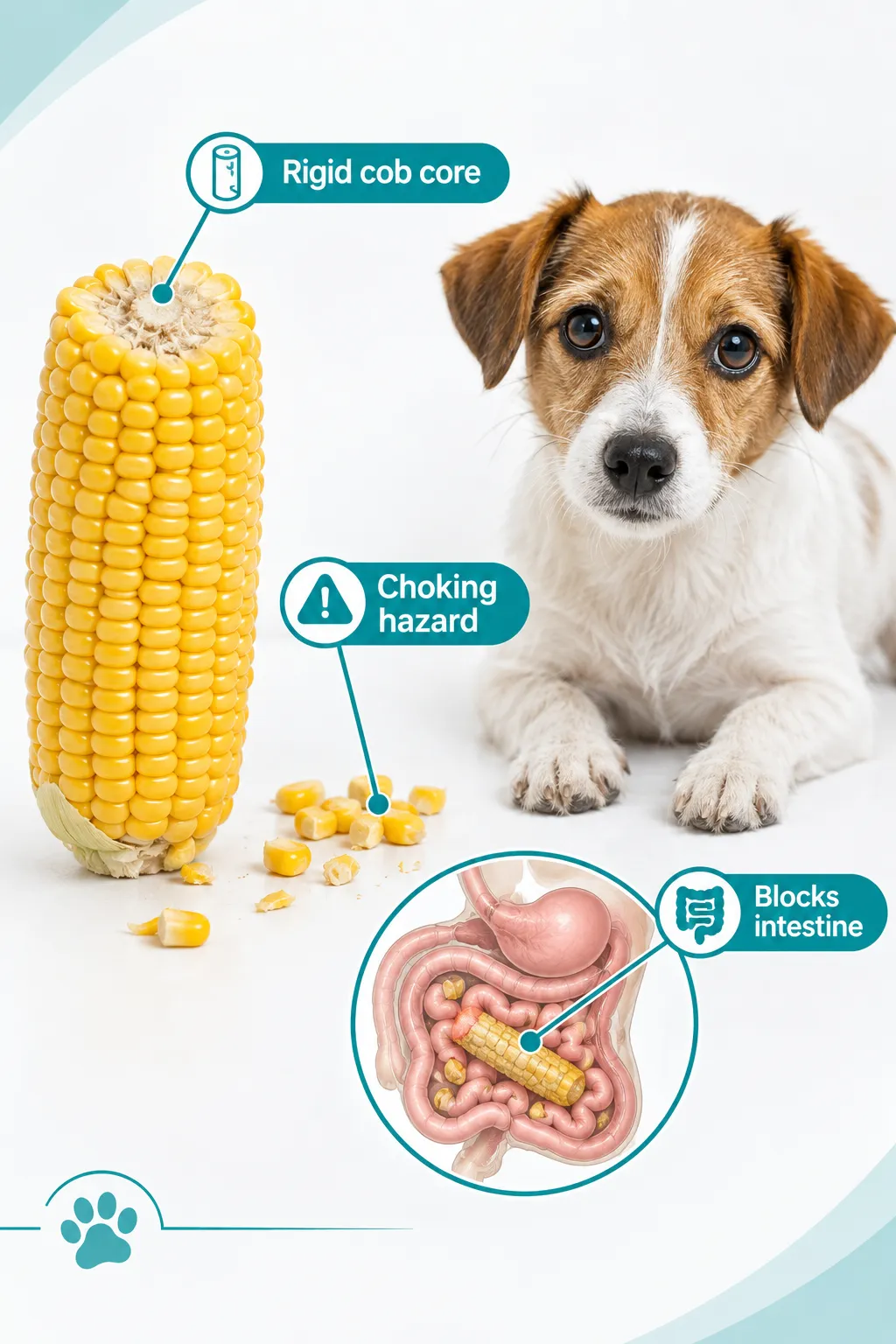
When a dog swallows a corn cob or a large piece of one, it can become lodged in the stomach or small intestine, blocking the normal movement of food, fluid, and gas[4][6][13]. This is a mechanical blockage, not poisoning.
Once stuck, the cob doesn’t soften or dissolve. The intestine keeps contracting against something it can’t move, which causes pain, swelling, and reduced blood flow to that section of tissue. Left alone, this can progress to tissue death and rupture.
- Hours 1-24: Vomiting, restlessness, reduced appetite
- Hours 24-48: Worsening pain, dehydration, possible diarrhea or straining
- Hours 48-72: Risk of intestinal perforation and infection spreading into the abdomen[4][6][13]
Common mistake: Owners often wait to “see if it passes.” With cob obstructions, waiting is the single biggest factor that turns a routine vet visit into emergency surgery[1][4][6][12][13].
Is corn on the cob toxic to dogs?
Corn on the cob is not toxic in the chemical sense, it won’t poison your dog the way chocolate or xylitol would. The danger is purely mechanical: choking and intestinal blockage[4][5][7][9][15].
Major toxicity lists from groups like the AVMA focus on substances such as chocolate, grapes, onions, and xylitol, and corn does not appear among them[7]. In fact, corn is a legitimate ingredient in many commercial dog foods[5][9]. The cob, however, isn’t food at all from a digestive standpoint, it’s fibrous plant material the body can’t break down.
| Corn Part | Toxic? | Physical Risk | Verdict |
|---|---|---|---|
| Kernels (plain, cooked) | No | Low, if chewed | Occasional treat OK[5][9][10] |
| Whole cob | No | High (blockage) | Never feed[4][5][9][10] |
| Husk | No | Moderate (choking) | Avoid[4] |
| Buttered/salted corn | No (but adds fat/sodium) | Low-moderate | Skip seasonings[5][9] |
Can dogs choke on corn cobs?
Yes. Corn cobs are a recognized choking hazard for dogs, especially when a dog tries to swallow a piece larger than its throat can safely pass[4][14]. Choking is a separate risk from the intestinal blockage that can follow if the piece goes down.
A dog gnawing on a cob can bite off chunks that get stuck in the throat or esophagus. Signs of choking include pawing at the mouth, gagging, distress, and difficulty breathing, this needs immediate emergency attention, separate from blockage symptoms that show up later.
Edge case: Dogs that swallow cobs “whole enough” to avoid choking aren’t in the clear, the cob simply moves on to cause a blockage further down the digestive tract instead[4][13].
Are corn cobs a choking hazard for dogs, and how much corn can dogs eat safely?
Yes, corn cobs are a choking hazard, and even corn kernels should be fed only in small, controlled amounts. The cob poses a mechanical danger regardless of portion size, while kernels are fine only as a minor part of the diet, not a meal replacement[5][9][10].
For kernels, general guidance from pet nutrition sources suggests:
- Small dogs: A tablespoon or two, occasionally
- Medium dogs: 2-3 tablespoons, occasionally
- Large dogs: A small handful, occasionally
These are general portions, not a specific dosage from any single veterinary study, always factor treats into no more than 10% of daily calories, a common rule of thumb in canine nutrition.
Is corn safe for dogs but not the cob?
Yes, this is the key distinction every owner should know. Plain, cooked corn kernels removed from the cob are generally safe in moderation, while the cob itself is never safe[5][9][10][14].
Corn kernels offer fiber and some nutrients, but they don’t add anything a complete, balanced dog food doesn’t already provide. Many commercial dog foods already include corn as an ingredient[5][9]. So treating your dog to extra kernels is more about variety than nutrition.
Choose plain kernels if: your dog has no corn allergy, is at a healthy weight, and the corn is unseasoned. Skip corn entirely if: your dog has a known grain or corn sensitivity, is prone to weight gain, or has a history of pancreatitis (fatty toppings like butter are a bigger risk than the corn itself).
For more on which human foods are generally fine in small amounts, see this guide on what dogs can eat.
What should I do if my dog ate corn on the cob?
Contact a veterinarian or emergency animal clinic immediately, don’t wait to see if symptoms appear[1][4][5][6][10][12]. Corn cob ingestion is treated as an urgent situation even if your dog seems normal right now.
Steps to take:
- Stay calm and note details: how much of the cob is missing, how long ago it happened, and your dog’s size.
- Call your vet or an emergency clinic right away, even outside normal hours[1][4][12].
- Do not induce vomiting unless a vet specifically tells you to, forcing a lodged piece back up can cause additional injury[4][6][12].
- Don’t give anti-diarrheal medication or other home remedies without veterinary guidance[4][6][12].
- Watch for symptoms on the way to or while waiting for the vet: vomiting, lethargy, refusal to eat, or a hunched posture.
- Follow through on imaging (X-rays or ultrasound) if recommended, this is how vets confirm whether the cob is causing a blockage[1][4][6][12][13].
What are the signs of corn cob blockage in dogs?
The most common signs of a corn cob blockage include repeated vomiting, loss of appetite, lethargy, abdominal pain, and straining or changes in bowel movements[1][4][5][6][10][12][13][14]. These signs can appear hours to a few days after ingestion.
Watch for:
- 🤢 Repeated vomiting or dry heaving
- 😣 Hunched “prayer” posture from belly pain
- 🍽️ Sudden loss of appetite
- 😴 Unusual lethargy or low energy
- 💧 Drooling or restlessness
- 🚽 Diarrhea, constipation, or straining to pass stool
“Any of these signs after known or suspected cob ingestion should be treated as a veterinary emergency.”, reflects consistent guidance across current veterinary resources[1][4][5][6][10][12][13][14]
Can dogs digest corn cob, and why is it bad for them?
No, dogs cannot digest corn cob. It’s made of tough plant fiber that the canine digestive system has no way to break down, which is exactly why it becomes dangerous once swallowed[4][6][13].
Unlike kernels, which contain starches and nutrients the body can process, the cob is rigid and fibrous all the way through. It doesn’t soften with stomach acid the way food does. That rigidity is precisely what makes it so good at getting stuck, and so bad for your dog’s gut.
Why vets call it a top obstruction culprit: emergency practices report corn cobs among the most common foreign bodies causing intestinal blockage in dogs, alongside items like socks and bones[1][4]. Compare this to risks from bone chewing, where splinters, not whole blockage, are usually the main concern.
Can puppies eat corn on the cob?
No. Puppies should never eat corn on the cob, and the risk is arguably higher than in adult dogs because puppies have smaller digestive tracts and tend to chew less carefully[4][13].
A puppy’s curiosity often outweighs caution, they’ll gnaw and swallow things adult dogs might leave alone. A cob fragment that an adult Labrador might pass with difficulty could fully block a 10-week-old puppy’s intestine. If a puppy swallows any part of a cob, call a vet immediately rather than monitoring at home.
Is corn on the cob okay for dogs with sensitive stomachs?
No. Dogs with sensitive stomachs should avoid corn on the cob entirely, and even plain kernels should be limited or skipped if your dog has a history of digestive upset, food allergies, or pancreatitis[5][9].
For dogs prone to loose stools or vomiting from dietary changes, the fiber and fat often paired with corn (like butter) can trigger a flare-up even without a blockage. If your dog has ongoing GI sensitivity, talk to your vet before adding any new treat, including kernels, and consider gentler options first. For related guidance on gut-friendly treats, see can dogs eat sweet potatoes and can dogs eat peas.
What are safer alternatives to corn on the cob for dogs?
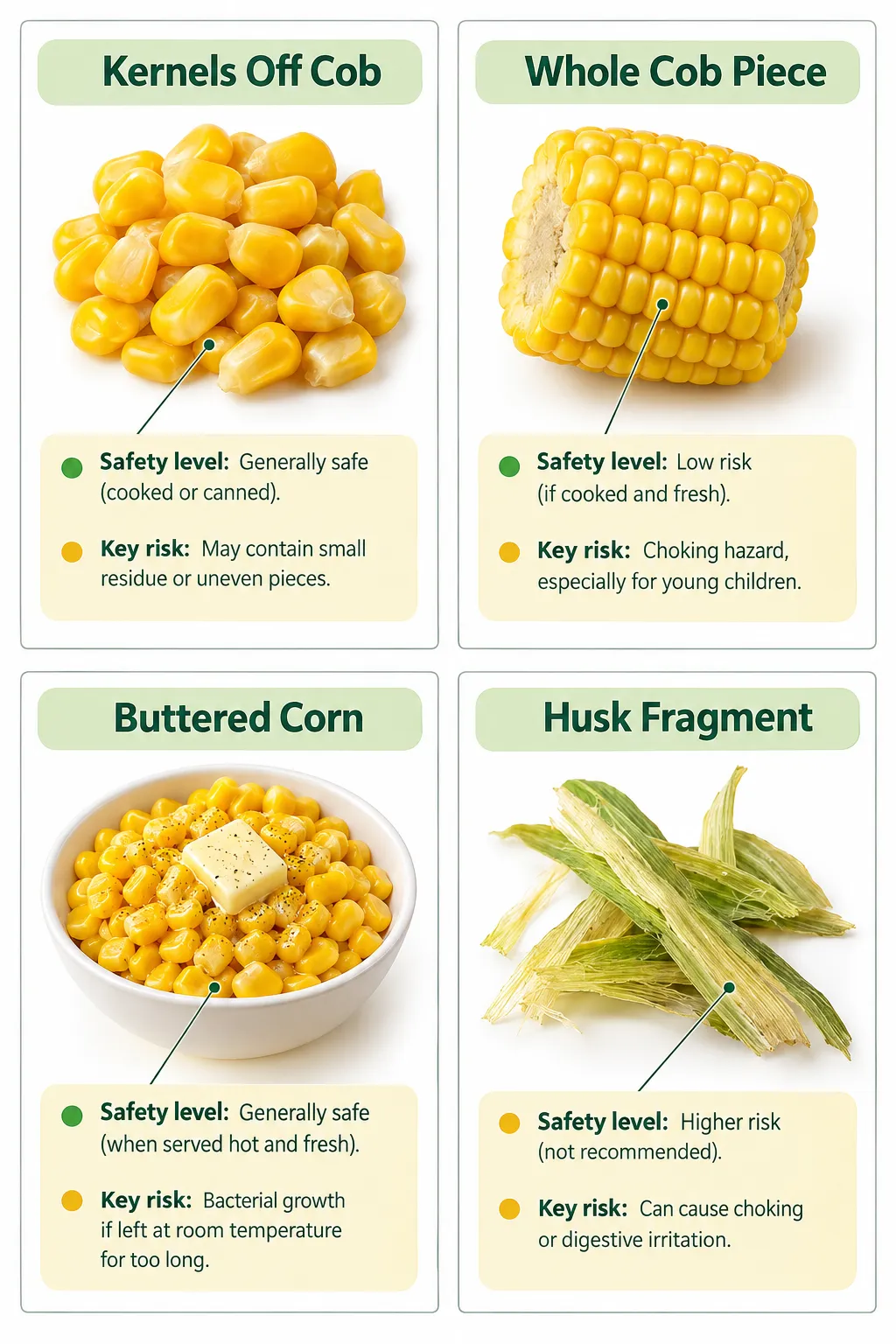
Several dog-safe foods offer the same “fun snack” appeal without the choking and blockage risk that comes with a cob. Good options include plain cooked kernels, certain fruits, and vegetables cut into appropriate sizes.
- Plain cooked corn kernels (off the cob, no butter or salt)[5][9][10]
- Sweet potatoes, cooked and cubed
- Blueberries as a low-calorie treat
- Cucumbers, sliced for crunch without the cob risk
- Pumpkin seeds in small, plain amounts
If you’re building out a broader list of safe snacks, this roundup of fruits dogs can eat is a useful companion resource.
Conclusion
Corn on the cob is one of those backyard-barbecue hazards that catches owners off guard because the danger isn’t poison, it’s physics. The cob can choke a dog or lodge in the gut, and that blockage can turn into a surgical emergency within days[4][6][13]. Plain kernels, cut off the cob and served without butter or salt, remain a fine occasional treat for most healthy dogs[5][9][10].
Next steps: Keep cobs sealed in the trash or composted where dogs can’t reach them, especially during grilling season. If your dog ever gets hold of a cob, skip the “wait and see” approach and call your vet or an emergency clinic right away[1][4][5][6][10][12]. When in doubt, a quick phone call beats a midnight trip to emergency surgery.
FAQ
Can dogs eat corn on the cob at all, even a small piece? No. Even a small piece of cob can lodge in a dog’s intestine, especially in smaller breeds, so no amount is considered safe[4][13].
Will my dog pass a corn cob on its own? Sometimes, but there’s no reliable way to predict this, and waiting risks perforation within 48-72 hours[4][6][13]. Always call a vet instead of guessing.
How do vets treat a corn cob blockage? Vets typically use X-rays or ultrasound to confirm the blockage, then may attempt removal via endoscopy or surgery depending on location and severity[1][4][6][12][13].
Is it safe to feed dogs corn that’s already in dog food? Yes, corn used as an ingredient in commercial dog food is processed and ground, which is completely different from whole kernels or a cob[5][9].
Can dogs eat the corn husk? No, husks are fibrous and hard to digest, posing a similar, though generally lesser, choking and digestive risk compared to the cob[4].
What if my dog only licked butter off a cob? Licking butter alone usually isn’t an emergency, but monitor for stomach upset and keep the actual cob away from your dog[5][9].
Are certain breeds more at risk from corn cobs? Smaller breeds face higher risk because their intestines are narrower, but any dog that swallows a cob piece is at risk[4][13].
Can corn cause allergies in dogs separate from the cob risk? Yes, some dogs have corn or grain sensitivities unrelated to the cob hazard; watch for itching or digestive upset after kernels[5][9].
References
[1] My Dog Ate Corn Cob Emergency – https://www.gsvs.org/staten-island-ny/blog/my-dog-ate-corn-cob-emergency/ [4] Corn Cob Dogs – https://www.petcro.com/toxicity/corn-cob-dogs [5] Can Dogs Eat Corn – https://www.petmd.com/dog/nutrition/can-dogs-eat-corn [6] What To Do If Your Dog Eats A Corncob – https://www.peta.org/lifestyle/animal-companions/what-to-do-if-your-dog-eats-a-corncob/ [7] Household Hazards – https://www.avma.org/resources-tools/pet-owners/petcare/household-hazards [9] Can Dogs Eat Corn – https://www.purina.co.uk/articles/dogs/feeding/what-dogs-eat/can-dogs-eat-corn [10] Can Dogs Eat Corn – https://www.akc.org/expert-advice/nutrition/can-dogs-eat-corn/ [12] What To Do If Your Dog Eats A Corncob – https://www.peta.org/lifestyle/animal-companions/what-to-do-if-your-dog-eats-a-corncob/ [13] Corn Cob Dogs – https://www.petcro.com/toxicity/corn-cob-dogs [14] Can Dogs Eat Corn – https://www.akc.org/expert-advice/nutrition/can-dogs-eat-corn/ [15] Household Hazards – https://www.avma.org/resources-tools/pet-owners/petcare/household-hazards