

Quick Answer
Can Dogs Have Almond Milk?
Yes, dogs can have almond milk in very small amounts, but only if it’s plain, unsweetened, and free of xylitol. It offers no real nutritional benefit to dogs, and most vets say it’s safest to skip it altogether rather than make it a regular treat [2] [6].
Key Takeaways
- Plain, unsweetened almond milk in tiny amounts is unlikely to harm most healthy adult dogs [1].
- Sweetened or “lite” versions often contain xylitol, a sugar substitute that is highly toxic to dogs [5] [9].
- Almond milk has little nutritional value for dogs, it’s mostly water and offers no essential nutrients they need [1] [4].
- Lactose intolerant dogs may tolerate almond milk better than cow’s milk, but it still isn’t a true substitute [4] [7].
- Puppies and dogs with pancreatitis history should avoid almond milk entirely [2].
- Dogs don’t need milk of any kind, fresh water and complete dog food cover their needs [4] [7].
- Always check the label for xylitol, added sugar, and flavorings before offering even a small amount [5] [9].
Is Almond Milk Safe for Dogs to Drink?
Plain, unsweetened almond milk is generally safe for healthy adult dogs in very small quantities, but it’s not something vets recommend making a habit [1] [8]. Almond milk itself isn’t toxic, it’s mostly water with trace amounts of almond extract, but it isn’t formulated for canine digestion either [1].
The real risk comes from what’s added to almond milk, not the almond milk base itself. Many commercial brands include:
- Added sugars that upset a dog’s stomach
- Flavorings like vanilla or chocolate, which can be harmful
- Xylitol in “sugar-free” varieties, which is genuinely dangerous [5] [9]
Choose plain, unsweetened almond milk if you want to offer a small taste. Skip it entirely if the label lists anything other than almonds and water, or if you’re unsure of the ingredient list [9].
🐾 Is This Almond Milk Safe for My Dog?
What Happens If a Dog Drinks Almond Milk?
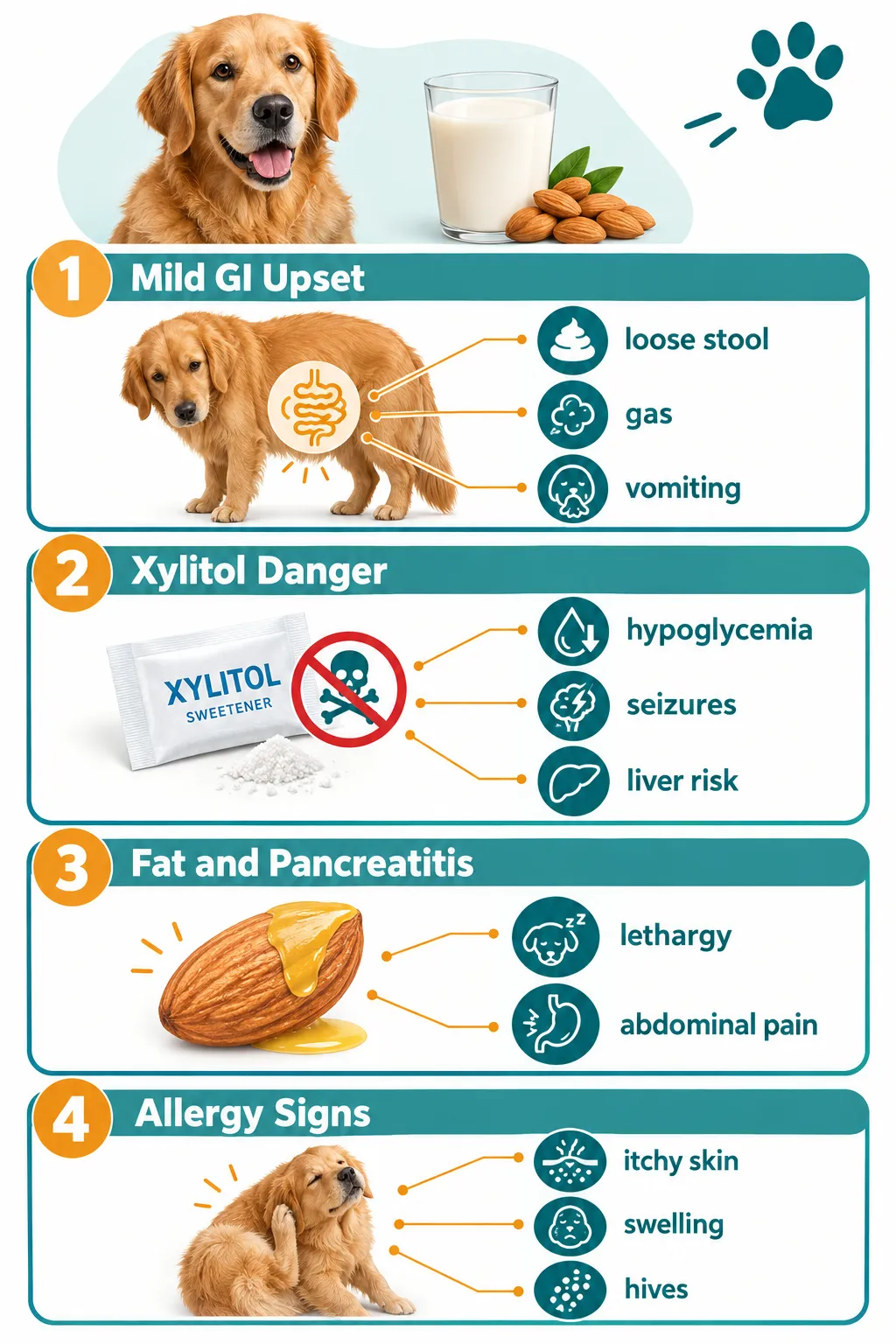
Most dogs who sip a small amount of plain almond milk show no reaction at all, but some experience mild digestive upset [2] [6]. The outcome depends heavily on the dog’s size, sensitivity, and how much they consumed.
Common reactions include:
- Loose stool or diarrhea within a few hours, especially in dogs unused to new foods
- Gas or bloating from the fiber and fat content
- Vomiting, usually mild and self-limiting
- Allergic symptoms like itchy skin, facial swelling, or hives in dogs sensitive to tree nuts [3] [6]
A common mistake is assuming “plant-based” automatically means “gentle.” Almond milk can still irritate a dog’s gut the same way any unfamiliar food might. If a dog shows swelling, trouble breathing, or repeated vomiting, that’s an emergency, contact a vet immediately. For general digestive troubleshooting, see this guide on why dogs get diarrhea.
How Much Almond Milk Can Dogs Have?
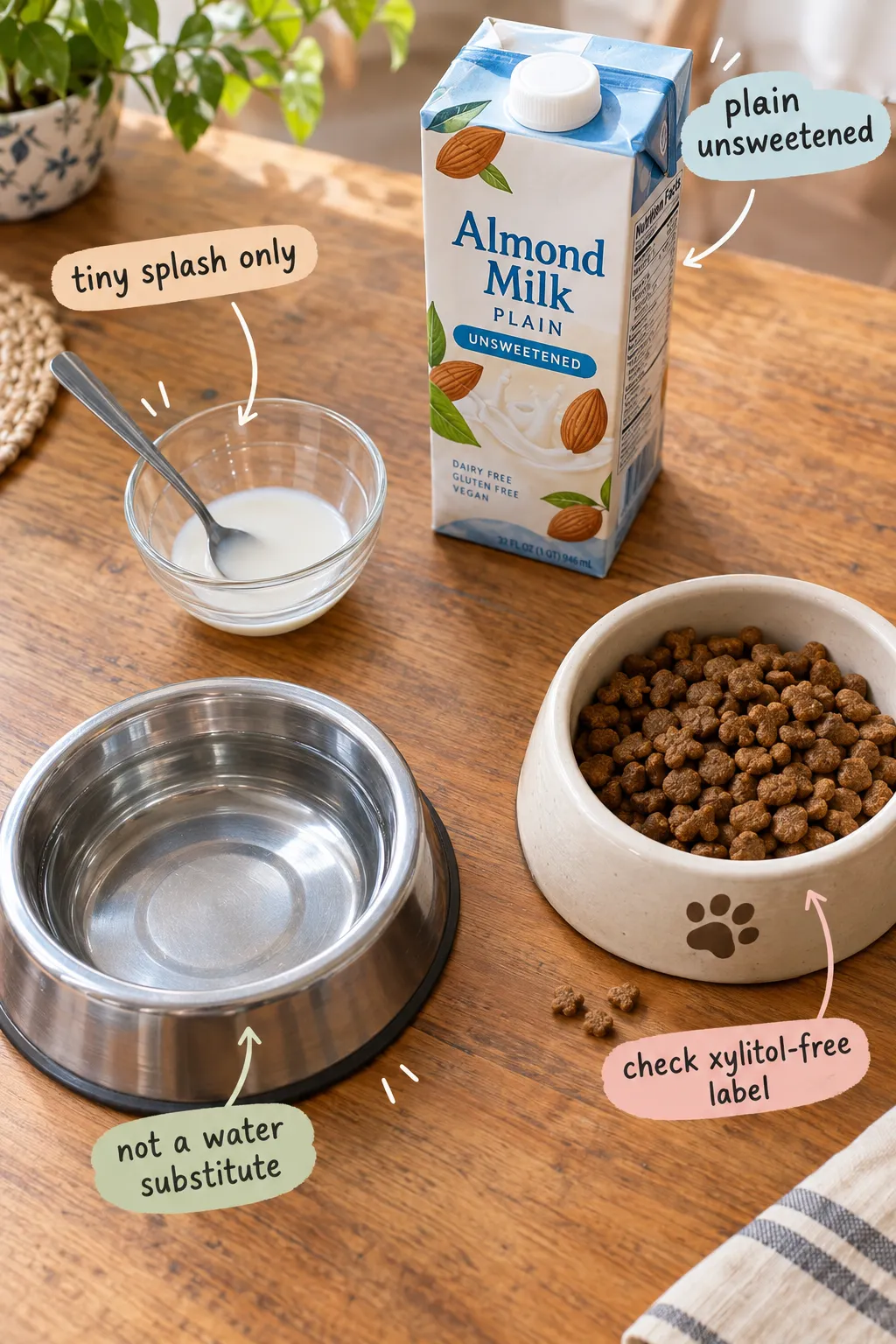
A dog-safe serving is a teaspoon or two for small dogs and up to a tablespoon for large dogs, offered rarely, not daily [1] [8]. There’s no official “recommended dose” because almond milk isn’t a necessary part of canine nutrition; any amount is purely optional.
Practical guidance:
| Dog size | Occasional “safe splash” | Frequency |
|---|---|---|
| Small (under 20 lbs) | 1 teaspoon | Once in a while |
| Medium (20-50 lbs) | 1-2 teaspoons | Once in a while |
| Large (50+ lbs) | 1 tablespoon | Once in a while |
Edge case: Dogs with a history of pancreatitis, obesity, or food allergies should avoid almond milk even at these small amounts, because the fat content can still trigger flare-ups [2].
Almond Milk vs Regular Milk for Dogs
Almond milk and regular cow’s milk share one thing in common: neither is necessary for dogs, and both can cause stomach upset [4]. The difference lies mainly in lactose and fat content.
| Factor | Almond milk | Cow’s milk |
|---|---|---|
| Lactose | None | Yes (problem for lactose-intolerant dogs) |
| Fat content | Low (plain, unsweetened) | Moderate to high |
| Nutritional value for dogs | Minimal | Some calcium, but not formulated for dogs |
| Common risk | Xylitol in sweetened versions | Diarrhea from lactose intolerance |
Most adult dogs lose the ability to digest lactose efficiently after weaning, which is why cow’s milk often causes looser stool than plain almond milk [4] [7]. If you’re comparing other nut-based snacks, this breakdown of whether dogs can eat almonds covers the whole-nut version of this question.
Best Milk Alternatives for Dogs (and Lactose-Intolerant Options)
The best “milk” for a lactose-intolerant dog is usually a small amount of plain dog-safe yogurt or a vet-approved milk replacer, not a plant-based human product [4] [7]. Almond milk can work in a pinch, but it isn’t formulated to meet a dog’s dietary needs.
Reasonable options, in order of preference:
- Plain, unsweetened dog yogurt in small amounts, easier to digest than most milks
- Goat’s milk (unsweetened, plain), lower in lactose than cow’s milk
- Lactose-free cow’s milk, formulated to avoid digestive upset
- Plain almond milk, lowest nutritional priority, use sparingly
For a frozen treat idea that uses dog-safe dairy, check out these frozen yogurt bombs for dogs, a better everyday option than milk-based treats.
Do Dogs Need Milk at All?
No, dogs do not need milk of any kind once they’re weaned off their mother’s milk [4] [7]. A complete, balanced commercial dog food already supplies the protein, fat, vitamins, and minerals dogs need, and fresh water handles hydration.
Milk, whether dairy or plant-based, is considered a treat at best, never a nutritional requirement. Owners sometimes offer milk thinking it adds hydration or calcium, but:
- Water is the only hydration source dogs truly need
- Complete dog food already contains the calcium and nutrients dogs require
- Milk alternatives add calories without meaningful nutritional return
If you’re exploring other everyday foods dogs can safely share, this complete safe and toxic foods guide is a useful reference point.
Almond Milk With Xylitol: Is It Toxic to Dogs?
Yes, xylitol found in some sugar-free or “lite” almond milk brands is highly toxic to dogs and can cause a dangerous drop in blood sugar within 30 to 60 minutes [5] [9]. This is the single biggest modern risk tied to almond milk, more concerning than the almond content itself.
Signs of xylitol poisoning include:
- Sudden weakness or wobbliness
- Vomiting
- Seizures
- Collapse in severe cases
This is a true emergency. If a dog consumes any xylitol-sweetened almond milk, call a vet or animal poison control immediately, don’t wait for symptoms. In 2026, more plant-based milk brands use xylitol or other sugar alcohols as sweeteners than in past years, which is why reading labels matters more than ever [5] [9].
Unsweetened Almond Milk for Dogs: Is It Really Safer?
Yes, unsweetened, plain almond milk is the only version considered reasonably safe for occasional dog consumption, since it skips added sugars, xylitol, and artificial flavors [1] [8]. “Unsweetened” and “plain” are the two words to look for on the carton.
Still, even unsweetened almond milk:
- Offers no real nutritional benefit to dogs
- Can cause mild GI upset in sensitive dogs
- Should never replace water or dog food
Common mistake: Assuming “unsweetened” also means “flavor-free.” Some unsweetened cartons still include vanilla extract, which isn’t ideal for dogs in larger amounts. Always double-check the full ingredient list, not just the front label [9].
Can Puppies Have Almond Milk?
No, puppies should not be given almond milk. Their digestive systems are still developing, and their nutritional needs are tightly tied to puppy-formulated food, not human beverages [2] [6]. Even a small amount of a new food can trigger diarrhea or vomiting in a puppy’s sensitive gut.
Puppies need calorie-dense, nutrient-complete puppy food and water, nothing else is required for healthy growth. If a puppy accidentally licks or laps a small amount of plain almond milk, it’s not typically an emergency, but sweetened or xylitol-containing versions require an immediate vet call regardless of the dog’s age [2].
Homemade Almond Milk for Dogs: Recipe Tips
Homemade almond milk isn’t recommended for dogs, even though it avoids commercial additives, because almonds themselves are hard for dogs to digest and can pose a choking or pancreatitis risk in larger quantities [3]. If almonds are soaked and blended, trace amounts of fat and fiber still carry over into the liquid.
If you still want to offer a dog-safe “milk” at home:
- Use a tiny amount of plain water-based almond milk, strained well
- Skip any sweeteners, salt, or flavoring entirely
- Offer only a teaspoon as a one-off, not a recipe staple
For a nut-based snack comparison, this guide on almond butter safety for dogs explains why whole almonds and almond butter carry different risks than the milk itself.
When Should You Not Give Dogs Almond Milk?
Avoid almond milk entirely if a dog is a puppy, has a history of pancreatitis, has a known nut allergy, or if the product contains any sweetener, flavoring, or xylitol [2] [5] [9]. These situations carry enough risk that most vets recommend skipping almond milk rather than testing it.
Also avoid it when:
- The dog has unexplained vomiting or diarrhea already
- You can’t verify the full ingredient list
- The dog is on a prescription diet for weight, kidney, or digestive issues
Decision rule: Choose a tiny splash of plain, unsweetened almond milk only if the dog is a healthy adult, the label is fully verified xylitol-free, and it’s an occasional treat, not a pattern. Choose water or dog-safe yogurt instead if any of those conditions aren’t met [4] [8].
Frequently Asked Questions
Can dogs have almond milk every day? No. Even plain almond milk should stay an occasional treat, not a daily addition, since it offers no nutritional value and can add unnecessary calories [1] [4].
Is almond milk better than cow’s milk for dogs? It can be gentler on lactose-intolerant dogs since it contains no lactose, but it’s not a nutritionally better choice overall, both are optional treats at best [4] [7].
What are allergy symptoms in dogs after almond milk? Watch for itchy skin, facial swelling, hives, or digestive upset within a few hours of exposure; these signs warrant a vet call, especially if swelling is involved [3] [6].
Does almond milk count toward a dog’s water intake? No. Almond milk should never replace water. It doesn’t hydrate as effectively and shouldn’t be used as a substitute for a dog’s regular water supply [7].
Can dogs with pancreatitis have almond milk? It’s best avoided. Even the modest fat content in almond milk can be enough to aggravate a dog that’s prone to pancreatitis flare-ups [2].
Is vanilla almond milk safe for dogs? It’s not recommended. Added vanilla flavoring and sugar content make flavored almond milk a poorer choice than plain, unsweetened versions [9].
What should I do if my dog drinks a lot of almond milk? Monitor for vomiting, diarrhea, or lethargy over the next 24 hours, and call a vet if symptoms appear or if the product contained xylitol [5] [6].
Are there dog-specific milk products available instead? Yes, some pet brands sell lactose-free or goat’s milk products formulated for dogs, which are generally a better option than human almond milk [4] [7].
Conclusion
Almond milk isn’t poison for dogs, but it isn’t a health food for them either. A plain, unsweetened splash now and then is unlikely to cause harm in a healthy adult dog, while sweetened, flavored, or xylitol-containing versions cross into genuinely dangerous territory. Puppies, dogs with pancreatitis history, and any dog with a known nut sensitivity should skip almond milk altogether.
Next steps: Check any almond milk carton in the house for xylitol or added sugar before offering even a taste, keep servings to a teaspoon or two for occasional use only, and lean on water and complete dog food as the real foundation of a dog’s diet. When in doubt about a specific product or a dog’s reaction, a quick call to a vet beats guessing.
References
[1] Almond Milk – https://www.dogsafer.com/foods/almond-milk [2] Can Dogs Eat Almond Milk A Vets Opinion – https://clinic.vetnoms.com/en/can-dogs-eat-almond-milk-a-vets-opinion/ [3] Can Dogs Eat Almonds – https://www.petmd.com/dog/nutrition/can-dogs-eat-almonds [4] Can Dogs Drink Milk – https://www.petmd.com/dog/nutrition/can-dogs-drink-milk [5] Can Dogs Drink Almond Milk – https://www.dogsafer.com/resources/can-dogs-drink-almond-milk [6] Can Dogs Have Almond Milk – https://www.dogster.com/dog-nutrition/can-dogs-have-almond-milk/ [7] Is It Ok To Give My Dog Plant Based Milk – https://firstvet.com/us/articles/is-it-ok-to-give-my-dog-plant-based-milk [8] Can Dogs Drink Almond Milk – https://www.petscare.com/news/faq/can-dogs-drink-almond-milk [9] Is Almond Milk Safe For Dogs – https://www.petscare.com/news/faq/is-almond-milk-safe-for-dogs [10] Can Dogs Drink Almond Milk – https://paws-tales.com/health-wellbeing/can-dogs-drink-almond-milk