

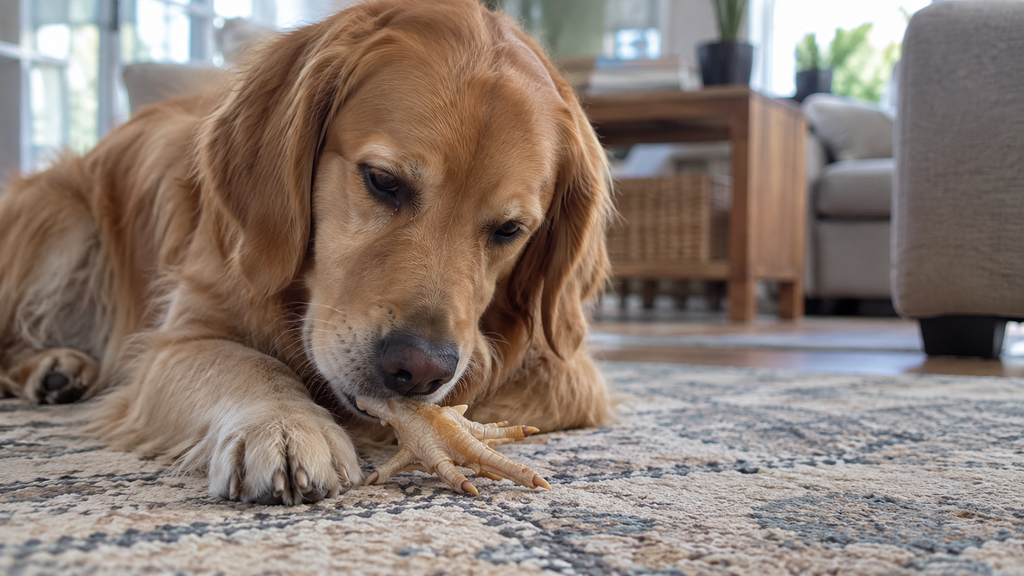
Chicken feet are sometimes offered to dogs as a crunchy treat, but are they safe? They contain cartilage, skin, connective tissue, and small bones, and some owners use them as chews for their dogs.
However, preparation matters. Raw chicken feet can carry harmful bacteria, while cooked bones can splinter. Even dehydrated products can pose choking or digestive risks.
In this guide, you’ll learn about the potential benefits of chicken feet, the risks to consider, how to choose treats more carefully, and when to contact your veterinarian.
Quick Answer: Can Dogs Eat Chicken Feet?
Some healthy adult dogs may be able to eat commercially prepared chicken feet as an occasional chew, but they are not risk-free. Raw chicken feet can carry harmful bacteria; cooked chicken feet should be avoided because their bones can splinter, and dehydrated products can still pose choking or digestive risks.
Key takeaways:
- Avoid cooked chicken feet and cooked chicken bones.
- Raw chicken feet can expose dogs and people to harmful bacteria.
- Dehydrated products are convenient, but drying does not guarantee that pathogens have been eliminated.
- Supervise your dog closely whenever offering a chew.
- Ask your veterinarian before giving bone-in treats to puppies or dogs with medical conditions, dental problems, or a history of swallowing food whole.
Are Chicken Feet Safe for Dogs? Raw vs. Dehydrated vs. Cooked
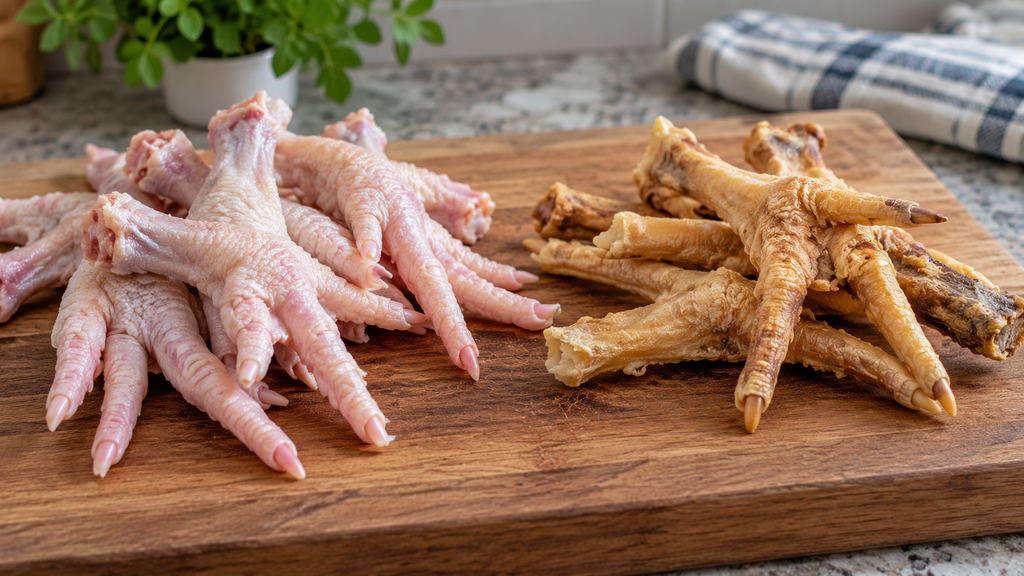
The main safety concerns are bone-related injuries, choking, and bacterial contamination. The way chicken feet are prepared affects these risks.
Raw chicken feet
Raw chicken feet may contain bacteria such as Salmonella and other pathogens. Dogs can become ill, and they may also spread bacteria to people through their mouths, saliva, bowls, or contaminated surfaces.
Freezing and ordinary washing do not reliably eliminate these pathogens. Raw poultry also presents a food-handling risk for households with young children, older adults, pregnant people, or anyone with a weakened immune system.
Dehydrated chicken feet
Dehydrated chicken feet are sold as dog chews and are easier to store than fresh raw poultry. However, dehydration alone does not guarantee that harmful bacteria have been destroyed.
Choose products from reputable manufacturers that provide clear safety and storage instructions. Follow the package directions, supervise chewing, and discard any chew that becomes small enough to swallow whole.
Cooked chicken feet
Do not give dogs cooked chicken feet or cooked chicken bones. Cooking can make bones more brittle and prone to splintering, potentially causing choking, mouth injuries, digestive tract damage, or obstruction.
Avoid boiled, roasted, fried, or otherwise cooked chicken feet, including leftovers from human meals.
Potential Benefits of Chicken Feet for Dogs
Chicken feet contain cartilage, connective tissue, skin, and bone. They may provide nutrients, and chewing can offer enrichment, but the benefits should not be overstated.
Joint health
Chicken feet contain cartilage and naturally occurring compounds such as glucosamine and chondroitin. These substances are associated with joint health, but the amount provided by an individual chicken foot can vary.
There is not enough consistent evidence to conclude that feeding chicken feet will treat arthritis, repair cartilage, or prevent joint disease. They should not replace a veterinarian-recommended joint supplement or treatment plan.
Dental health
Chewing can help remove some surface material from teeth, depending on the chew and the way a dog uses it. However, chicken feet are not a proven replacement for toothbrushing or professional dental care.
Hard or unsuitable chews can also damage teeth. Ask your veterinarian whether a particular chew is appropriate for your dog’s size, chewing style, and dental condition.
Practical takeaway: Consider chicken feet a potential treat, not a medical treatment or a substitute for balanced nutrition and routine veterinary care.
How Often Can Dogs Eat Chicken Feet?
There is no single portion or feeding frequency that is appropriate for every dog. The right choice depends on your dog’s size, chewing behavior, health, daily calorie needs, and the specific product.
If your veterinarian considers the treat suitable:
- Start cautiously and watch for digestive changes.
- Account for treats within your dog’s overall daily calorie intake.
- Follow the manufacturer’s feeding guidance where applicable.
- Stop offering the treat if it causes vomiting, diarrhea, difficulty chewing, or other concerning symptoms.
Treats generally should make up no more than about 10% of a dog’s daily calories, with the rest coming from a complete and balanced diet. This is a general guideline, not a guarantee that chicken feet are suitable for an individual dog.
Dogs with a history of pancreatitis, obesity, food sensitivities, gastrointestinal disease, or other dietary restrictions should be assessed by a veterinarian before receiving rich or bone-in treats.
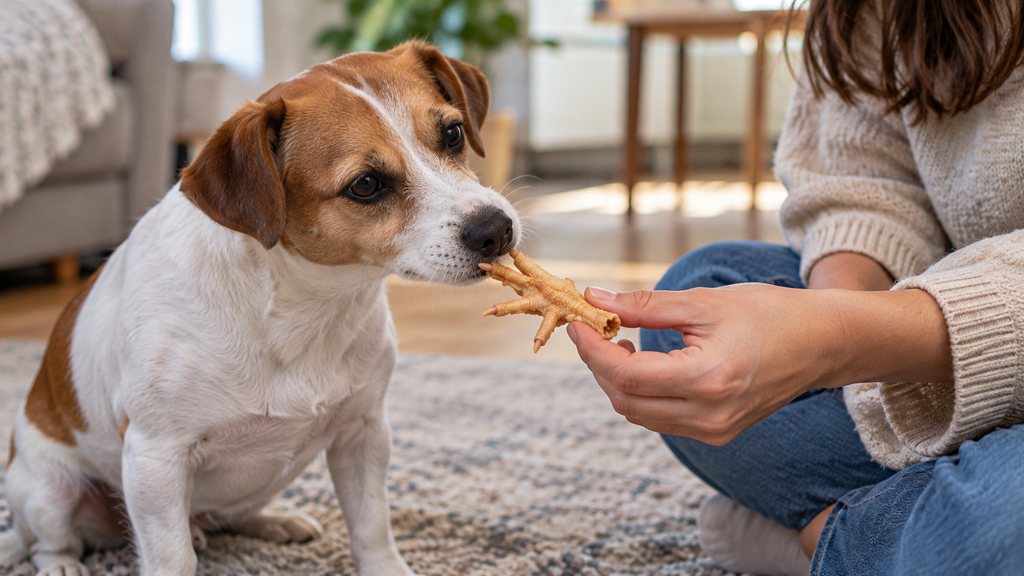
Can Puppies and Small Dogs Eat Chicken Feet?
Puppies and small dogs require particular care because a chew that seems manageable for one dog may be a choking hazard for another.
Puppies have developing teeth and chewing skills, and their age alone does not establish whether a bone-in chew is safe. Small dogs may also struggle with the size or shape of a whole chicken foot.
Before offering chicken feet to a puppy or small dog, ask your veterinarian to assess whether the product is appropriate. Do not assume that cutting a chicken foot into smaller pieces makes it safer; small pieces can sometimes be swallowed whole.
Avoid bone-in chews for dogs that gulp food, have difficulty chewing, or have previously choked or swallowed inappropriate objects.
Where to Buy Chicken Feet for Dogs and How to Store Them
Chicken feet may be available from pet stores, specialist pet-food suppliers, and some butchers or grocery stores. If you choose to purchase them, prioritize product safety and clear handling instructions over price alone.
When shopping:
- Look for products specifically prepared and labelled for pets.
- Check the ingredients for added salt, seasonings, or other ingredients that may be unsuitable for dogs.
- Review the manufacturer’s safety, storage, and feeding instructions.
- Check packaging integrity, expiry information, and any signs of spoilage.
- Avoid products with an unclear preparation process or questionable storage history.
Follow the package instructions for storage and disposal. Keep raw poultry separate from human food, wash hands and contact surfaces after handling it, and clean your dog’s bowl and feeding area carefully.
Do not assume that a homemade dehydrating temperature or drying time makes raw poultry safe. If you are considering preparing chicken feet at home, use a validated food-safety process rather than relying on appearance or texture.
Chicken Feet Allergies and Other Health Concerns
Chicken is a potential food allergen for some dogs. If your dog has a diagnosed chicken allergy or develops signs of a reaction after eating chicken feet, stop feeding the product and contact your veterinarian.
Possible signs of a food-related reaction include persistent itching, skin irritation, recurrent ear problems, or digestive upset. These symptoms can have other causes, so they do not confirm a chicken allergy on their own.
Chicken feet may also be unsuitable for dogs that need a restricted diet or have certain digestive or medical conditions. For example, dogs with a history of pancreatitis may need careful fat management. Ask your veterinarian about suitable alternatives for your dog’s specific needs.
Choking Risks and When to Contact a Veterinarian
Chicken feet can cause choking, and bones may injure or obstruct the digestive tract. Supervise your dog closely whenever it chews, and do not leave a dog alone with a bone-in treat.
Seek emergency veterinary care immediately if your dog:
- Has difficulty breathing or appears to be choking.
- Has blue, grey, or unusually pale gums.
- Collapses or becomes severely weak.
- Shows severe distress or cannot swallow normally.
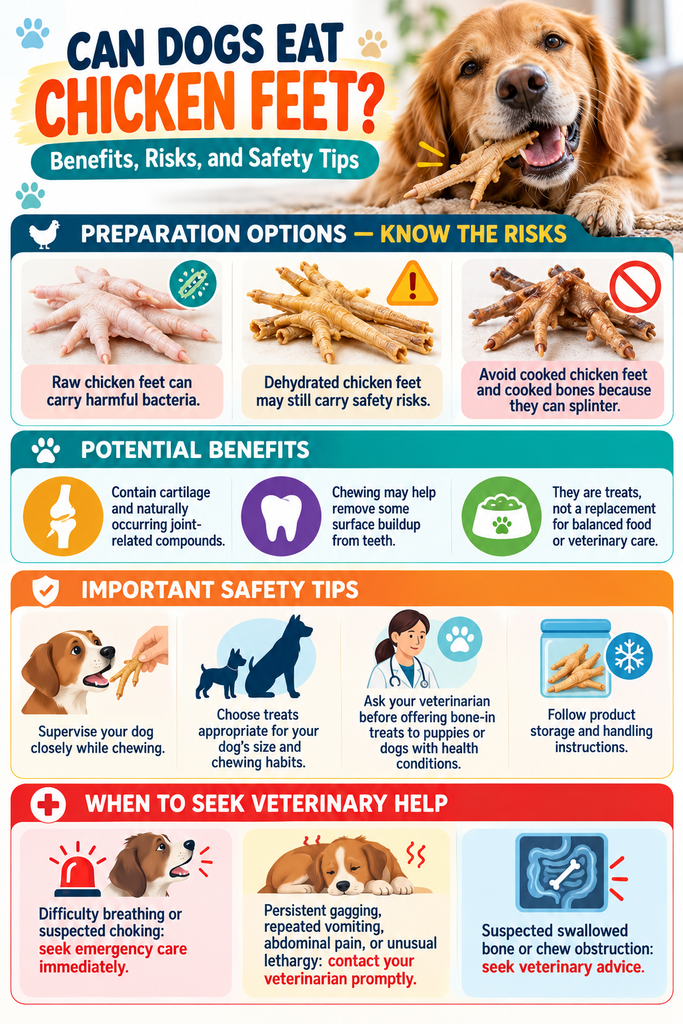
Contact your veterinarian promptly if your dog:
- Has persistent coughing, gagging, or excessive drooling after chewing.
- Repeatedly vomits or cannot keep water down.
- Develops abdominal pain, loss of appetite, or unusual lethargy.
- Has blood in vomit or stool, or develops black, tarry stool.
If you suspect your dog has swallowed a bone or a large piece of a chew, contact your veterinarian for advice even if your dog initially appears normal. Do not induce vomiting or attempt to pull out an embedded object unless a veterinary professional specifically instructs you to do so.
Frequently Asked Questions
Can dogs eat chicken feet with the nails?
The nails and small bones may present choking or injury risks, depending on the dog and the product. Do not assume that every part is harmless simply because it is a chicken foot. Ask your veterinarian whether the specific chew is appropriate.
Are dehydrated chicken feet safer than raw chicken feet?
Dehydrated products may be easier to handle and store, but their safety depends on how they are processed. Dehydration does not automatically eliminate harmful bacteria, and choking or bone-related risks remain.
Can chicken feet cause diarrhea in dogs?
Yes. A new or rich treat can upset a dog’s digestive system. Stop feeding it if digestive symptoms develop and contact your veterinarian if symptoms are severe, persistent, or accompanied by other concerning signs.
Can dogs with pancreatitis eat chicken feet?
Do not introduce chicken feet to a dog with pancreatitis without veterinary guidance. The fat content can vary, and some affected dogs need a carefully controlled diet.
Can chicken feet replace joint supplements?
No. Although chicken feet contain naturally occurring cartilage compounds, their nutrient content varies and they are not a reliable substitute for a veterinarian-recommended supplement or treatment.
How should dehydrated chicken feet be stored?
Follow the manufacturer’s storage directions and keep the product protected from moisture and contamination. Do not use it if the packaging is damaged or the product shows signs of spoilage.
Conclusion
Chicken feet may be suitable as an occasional chew for some dogs, but they are not risk-free. Avoid cooked chicken feet, take bacterial contamination seriously with raw products, and remember that dehydration does not remove every safety concern. Consider your dog’s size, chewing habits, and medical history before choosing any bone-in treat.
When in doubt, ask your veterinarian to recommend an appropriate chew for your dog.
References
[1] AnimalWised — Can Dogs Eat Chicken Feet?
https://www.animalwised.com/can-dogs-eat-chicken-feet-4611.html
[2] Natural Pet Warehouse — Chicken Feet for Dogs: Safety and Benefits
https://www.naturalpetwarehouse.com/chicken-feet-for-dogs-safe-benefits
[3] Safe Food for Dogs — Chicken Feet for Dogs
https://www.safefoodfordogs.com/foods/chicken-feet-dogs
[4] Dogster — Can Dogs Eat Raw Chicken Feet?
https://www.dogster.com/dog-nutrition/can-dogs-eat-raw-chicken-feet/
[5] Vet Explains Pets — Can I Give Chicken Feet to My Dog?
https://vetexplainspets.com/can-i-give-chicken-feet-to-my-dog/
[6] Petful — Can Dogs Eat Chicken Bones?
https://www.petful.com/food/can-dogs-eat-chicken-bones/
[7] Total Vet — Chicken Feet for Dogs
https://total.vet/safe-food-dog-chicken-feet/