
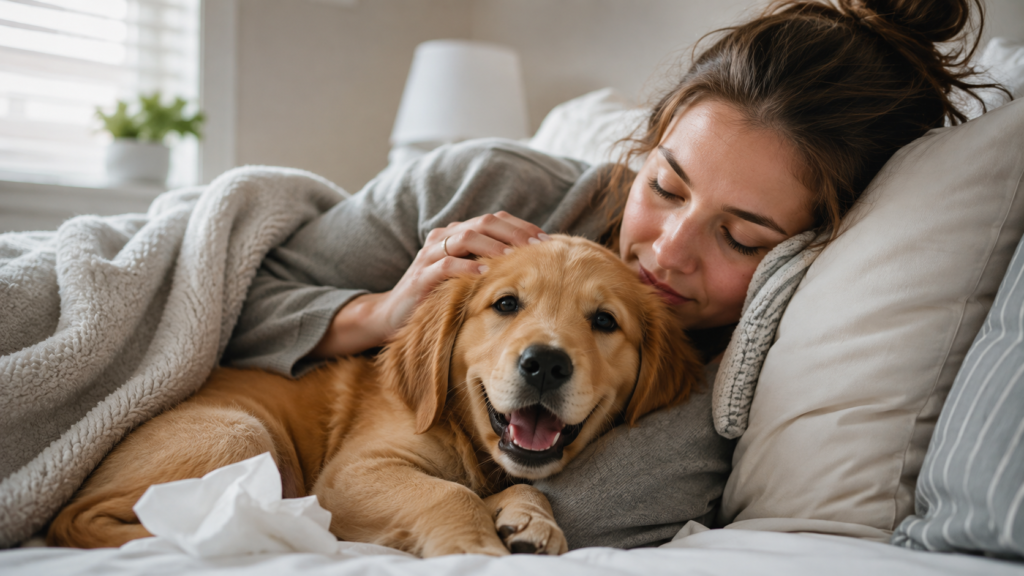
Quick Answer: No. Puppies generally cannot catch the ordinary common cold from humans. The viruses that commonly cause human colds are different from the pathogens that cause most canine respiratory infections.
However, puppies can develop their own respiratory illnesses, including kennel cough and other canine infectious respiratory diseases. These can cause coughing, sneezing, nasal discharge, watery eyes, reduced appetite, and tiredness.
Because puppies are still developing their immune systems and may not have completed their vaccinations, respiratory symptoms deserve closer attention than they might in a healthy adult dog.
If your puppy has difficulty breathing, blue or very pale gums, collapse, or severe weakness, seek urgent veterinary care.
Puppy Respiratory Triage Guide
| Monitor Closely | Contact Your Vet | Seek Emergency Care |
|---|---|---|
| Occasional sneeze | Persistent cough | Difficulty breathing |
| Clear, mild nasal discharge | Worsening cough | Blue, gray, or very pale gums |
| Normal appetite | Reduced appetite | Collapse |
| Normal energy | Unusual lethargy | Severe weakness |
| Normal breathing | Persistent discharge | Gasping or obvious breathing distress |
This is a general guide, not a diagnosis. Puppies can become seriously ill, so contact your veterinarian if you’re unsure.
Key Takeaways
- Puppies generally do not catch ordinary human colds.
- Puppies can develop their own respiratory infections.
- Kennel cough is a common contagious respiratory illness in dogs.
- Coughing, sneezing, nasal discharge, poor appetite, and lethargy can indicate illness.
- Puppies that haven’t completed their vaccinations may need extra protection from infectious diseases.
- Keep a coughing or potentially contagious puppy away from other dogs.
- Never give human cold medicine to a puppy unless your veterinarian specifically recommends it.
- Breathing difficulty, abnormal gum color, collapse, or severe weakness require urgent veterinary attention.
Can Puppies Catch Colds From Humans?
The ordinary human common cold is not generally transmitted to dogs.
Human colds are caused by viruses that normally infect people, while dogs have their own respiratory pathogens. So if you have a typical cold, you generally don’t need to isolate yourself from your puppy.
You can continue normal interaction, including cuddling and spending time together.
What About Human Flu?
Influenza is more complicated than the ordinary common cold. Most respiratory infections affecting dogs are caused by canine-specific pathogens, but unusual cross-species influenza infections have been documented.
For everyday puppy care, the bigger concern is exposure to other dogs with contagious respiratory disease.
If you have a confirmed infectious illness and are concerned about your puppy, ask your doctor or veterinarian about the specific infection.
What Are Signs a Puppy Has a Respiratory Infection?

There isn’t one illness called a “puppy cold.” Owners often use the term to describe cold-like symptoms.
Possible signs include:
- Sneezing
- Coughing
- Runny nose
- Nasal congestion
- Watery eyes
- Reduced appetite
- Lethargy
- Fever
A mild sneeze in an otherwise playful puppy isn’t necessarily a reason to panic.
What matters is the combination, severity, and duration of symptoms.
How Long Can Symptoms Last?
The timeline depends on the underlying infection. Some mild respiratory illnesses improve within a few weeks, while others can last longer or become more serious.
If your puppy is not improving, develops additional symptoms, or becomes increasingly tired or unwilling to eat, contact your veterinarian.
A short video of your puppy’s cough or unusual breathing can also be useful during a veterinary appointment.
What’s the Difference Between a Puppy Cold and Kennel Cough?
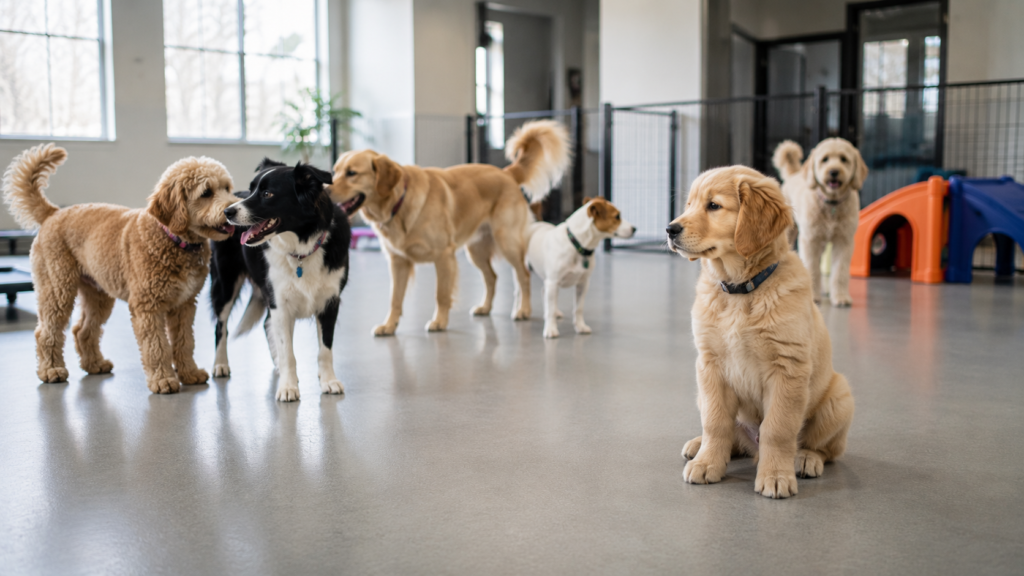
“Puppy cold” is an informal term rather than a specific diagnosis.
Kennel cough refers to a group of contagious canine respiratory illnesses. It can involve several different viruses and bacteria.
A typical kennel cough may sound:
- Dry
- Harsh
- Hacking
- Honking
Some dogs may gag or retch after coughing.
| Feature | General Respiratory Illness | Kennel Cough |
|---|---|---|
| Possible signs | Sneezing, cough, discharge | Often a hacking or honking cough |
| Causes | Several possible pathogens | Multiple possible pathogens |
| Contagious | Depends on cause | Highly contagious |
| Common exposure | Varies | Daycare, boarding, grooming, dog parks |
| Typical course | Depends on cause | Often around 1–3 weeks |
| Prevention | Depends on disease | Vaccination may reduce risk/severity |
If your puppy develops a persistent cough after spending time around other dogs, contact your veterinarian.
Why Are Puppies More Vulnerable to Respiratory Infections?
Puppies are still developing their immune systems, and many have not yet completed their initial vaccination series.
This doesn’t mean you need to keep a puppy isolated from the world. Safe socialization is important. But your veterinarian can help you decide which environments are appropriate based on your puppy’s age, vaccination status, and local disease risks.
Higher-risk environments can include:
- Dog parks
- Daycare
- Boarding facilities
- Grooming facilities
- Training classes
- Dog shows
- Other areas where many dogs gather
Some Dogs Need Extra Attention
Flat-faced breeds such as Pugs, French Bulldogs, and Boston Terriers can have underlying airway abnormalities.
For these dogs, breathing changes deserve particular attention.
How to Care for a Puppy With Mild Respiratory Symptoms
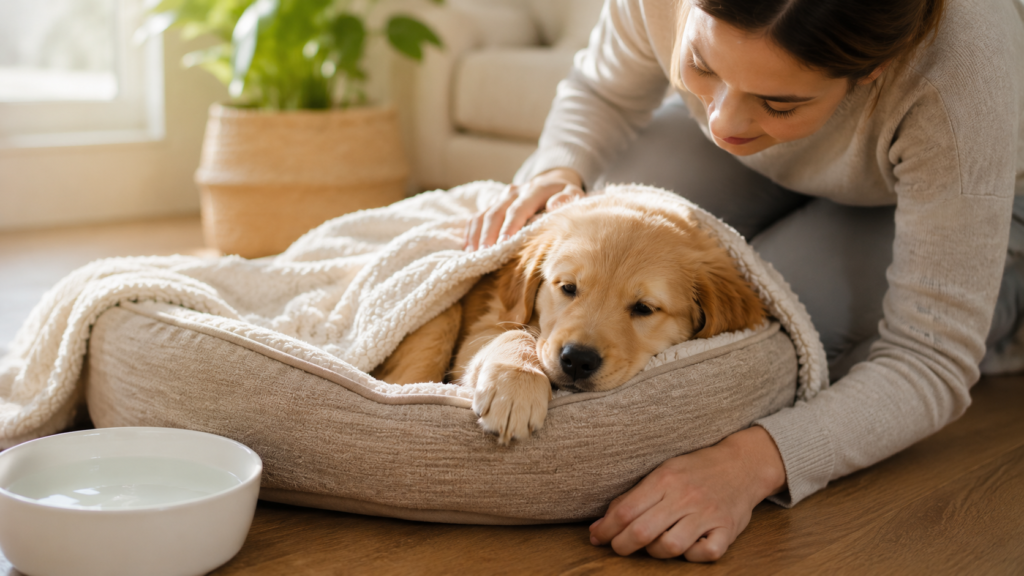
If your veterinarian determines that your puppy has a mild illness that can be managed at home, supportive care may help keep them comfortable.
Encourage Rest
Give your puppy a quiet, comfortable place to sleep.
Avoid strenuous activity if it triggers coughing.
Keep Fresh Water Available
Make sure your puppy has access to clean water.
If your puppy is refusing water or cannot keep fluids down, contact your veterinarian.
Keep the Air Comfortable
Avoid smoke, strong fragrances, aerosol sprays, dust, and other respiratory irritants.
A veterinarian may also recommend humidified air for some respiratory conditions.
Make Food Appealing
If your puppy’s appetite is slightly reduced, ask your veterinarian whether warming their usual food or offering an appropriate alternative is suitable.
Never Give Human Cold Medicine
Do not give your puppy human cold, cough, pain, or decongestant medication unless your veterinarian specifically instructs you to.
Human medications can contain ingredients that are unsafe for dogs, and dosing is particularly important in puppies.
Keep a Sick Puppy Away From Other Dogs
If your puppy may have a contagious respiratory illness, keep them away from other dogs until your veterinarian says it is safe.
How Can I Prevent Puppy Respiratory Infections?
The biggest prevention focus should be reducing exposure to contagious canine respiratory illness.
Helpful steps include:
- Keep vaccinations up to date.
- Follow your veterinarian’s advice about puppy socialization.
- Avoid visibly sick dogs.
- Don’t take a coughing puppy to daycare or dog parks.
- Keep sick dogs away from shared bowls and toys.
- Wash your hands after handling sick animals.
- Clean bedding, bowls, toys, and frequently touched surfaces.
Vaccination does not prevent every respiratory infection, but it can reduce the risk or severity of certain important diseases.
When Should I Take My Sick Puppy to the Vet?
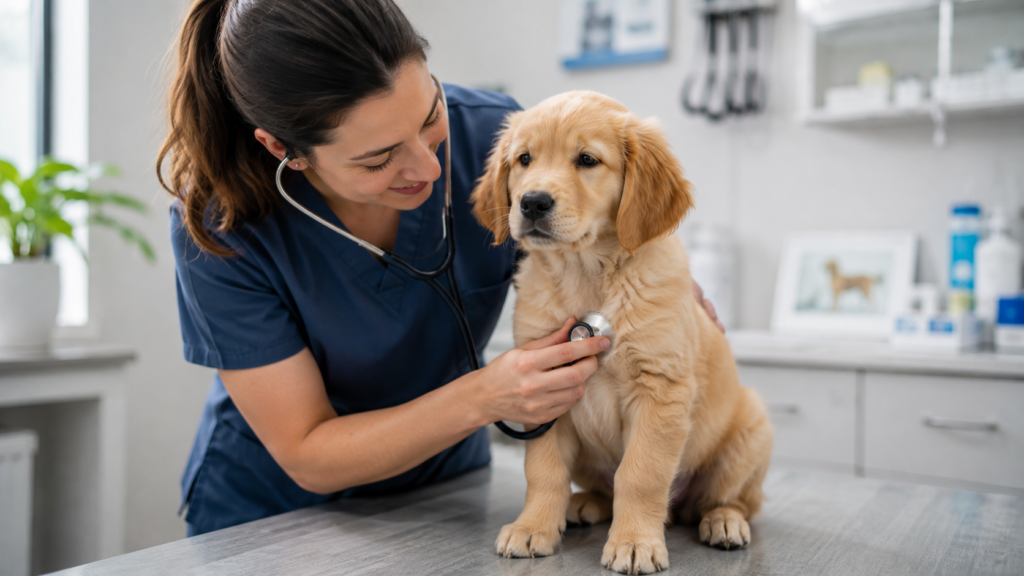
A mild sneeze in a happy, eating puppy is very different from a puppy that is struggling to breathe.
Contact Your Veterinarian If Your Puppy Has:
- A persistent or worsening cough
- Persistent nasal discharge
- Reduced appetite
- Unusual tiredness
- Repeated sneezing with other symptoms
- Symptoms that aren’t improving
- A cough after exposure to other dogs
Seek Emergency Care If Your Puppy Has:
- Difficulty breathing
- Gasping
- Blue, gray, or very pale gums
- Collapse
- Severe weakness
- Obvious respiratory distress
Do not wait for a respiratory emergency to resolve on its own.
🐶 Puppy Respiratory Symptom Checker
Use this as a general guide only. It does not diagnose illness and should never delay emergency veterinary care.
<divstyle="font-family:Arial,sans-serif;max-width:480px;margin:25pxauto;padding:20px;border:1pxsolid #ddd;border-radius:10px;background:#fafafa"><h3style="text-align:center;color:#486B32;margin-top:0;"> Puppy Respiratory Symptom Checker</h3><pstyle="font-size:13px;color:#666;line-height:1.5;"> Select any symptoms your puppy is currently showing.</p><labelstyle="display:block;margin:10px0;"><inputtype="checkbox"id="puppyBreathing"> Difficulty or labored breathing</label><labelstyle="display:block;margin:10px0;"><inputtype="checkbox"id="puppyGums"> Blue, gray, or very pale gums</label><labelstyle="display:block;margin:10px0;"><inputtype="checkbox"id="puppyCollapse"> Collapse or severe weakness</label><labelstyle="display:block;margin:10px0;"><inputtype="checkbox"id="puppyCough"> Persistent or worsening cough</label><labelstyle="display:block;margin:10px0;"><inputtype="checkbox"id="puppyAppetite"> Reduced appetite or refusing food</label><labelstyle="display:block;margin:10px0;"><inputtype="checkbox"id="puppyLethargy"> Unusual lethargy</label><labelstyle="display:block;margin:10px0;"><inputtype="checkbox"id="puppyDischarge"> Persistent nasal discharge</label><buttontype="button"onclick="checkPuppyRespiratorySymptoms()"style="width:100%;padding:11px;margin-top:10px;background:#486B32;color:#fff;border:0;border-radius:5px;cursor:pointer;"> Check Symptoms</button><divid="puppySymptomResult"style="display:none;margin-top:15px;padding:14px;background:#fff;border:1pxsolid #eee;border-radius:6px;font-size:14px;line-height:1.6;"></div></div><script>functioncheckPuppyRespiratorySymptoms() {varemergency=document.getElementById("puppyBreathing").checked ||document.getElementById("puppyGums").checked ||document.getElementById("puppyCollapse").checked;varvet=document.getElementById("puppyCough").checked ||document.getElementById("puppyAppetite").checked ||document.getElementById("puppyLethargy").checked ||document.getElementById("puppyDischarge").checked;varresult=document.getElementById("puppySymptomResult");result.style.display ="block";if (emergency) {result.innerHTML ="<strong>Seek emergency veterinary care now.</strong><br>"+"Breathing difficulty, abnormal gum color, or collapse can indicate a serious emergency."; } elseif (vet) {result.innerHTML ="<strong>Contact your veterinarian.</strong><br>"+"Your puppy has symptoms that deserve veterinary assessment, especially if they are persistent or worsening."; } else {result.innerHTML ="<strong>Monitor closely.</strong><br>"+"If your puppy is eating, drinking, active, and breathing normally, continue monitoring. Contact your veterinarian if symptoms persist or worsen."; }}</script>
Frequently Asked Questions
Can my puppy get sick if I sneeze near them?
An ordinary human cold is not generally transmitted to dogs. You can continue normal interaction with your puppy while practicing good hygiene.
Should I keep my puppy away from me when I have a cold?
Usually, no. A typical human cold isn’t considered a significant risk to dogs.
Can puppies catch colds from cats?
Dogs and cats have different respiratory pathogens, so a typical human-style cold isn’t simply passed between them. However, some infectious organisms can cross species, so separating sick pets and practicing good hygiene is sensible.
Is reverse sneezing a sign that my puppy has a cold?
Not necessarily. Reverse sneezing is different from ordinary coughing or sneezing and can look dramatic.
If you aren’t sure what you’re seeing, record a video and show your veterinarian.
Can my puppy go to daycare with a mild cough?
It’s best to keep a coughing puppy away from daycare and other dogs until you’ve spoken with your veterinarian.
Kennel cough and other respiratory illnesses can spread easily between dogs.
Does the Bordetella vaccine prevent every respiratory infection?
No. Bordetella vaccination helps protect against an important cause of kennel cough, but kennel cough can involve several different pathogens.
Vaccination can reduce risk and/or severity but cannot guarantee that a dog will never develop respiratory disease.
Conclusion
The good news is that your puppy generally won’t catch your ordinary human cold.
So if you’re dealing with a runny nose and sneezing, you don’t need to stop cuddling your puppy.
What you do need to remember is that puppies can develop their own respiratory infections, particularly after exposure to other dogs.
Watch for coughing, persistent sneezing, nasal discharge, poor appetite, lethargy, and changes in breathing. Keep a potentially contagious puppy away from other dogs and contact your veterinarian when symptoms persist or worsen.
And if your puppy has difficulty breathing, blue or very pale gums, collapse, or severe weakness, seek emergency veterinary care immediately.