
Quick Answer: Black puppy poop usually means your puppy is passing digested blood in their stool, a condition called melena. This often indicates bleeding somewhere in the stomach or upper small intestine and should always be treated as a veterinary emergency until proven otherwise. Puppies have much less blood volume than adult dogs, so even a small amount of internal bleeding can become serious quickly. If your puppy’s stool is black, sticky, shiny, or tar-like, contact your veterinarian immediately.
🚨 Puppy Black Stool Urgency Guide
✅ Monitor (Less Likely to Be an Emergency)
- Stool is dark brown rather than black
- Puppy recently ate foods or supplements that can darken stool
- Puppy is eating, drinking, and playing normally
- Stool is firm and not sticky or tar-like
⚠️ Call Your Veterinarian Today
- Stool appears black, or you’re unsure whether it’s black or dark brown
- Black stool without other symptoms
- Recent diet change followed by unusually dark stool
- Puppy has mild diarrhea but is otherwise acting normally
🚨 Seek Emergency Veterinary Care Immediately
- Black, tarry stool with vomiting
- Weakness, collapse, or extreme tiredness
- Pale or white gums
- Refusing food or water
- Bloated or painful abdomen
- Unvaccinated puppy under six months old with black diarrhea
Key Takeaways
- Black, tarry puppy poop (melena) usually means digested blood from the upper digestive tract.
- Puppies with black stool should be treated as a veterinary emergency until a veterinarian identifies the cause.
- Parvovirus is one of the most serious causes of black diarrhea in unvaccinated puppies.
- Some foods and medications can darken stool, but they don’t usually produce the sticky, tar-like appearance of true melena.
- Healthy puppy poop should be chocolate brown, firm, and log-shaped.
- Never wait to see if black, sticky stool clears on its own. Early treatment gives puppies the best chance of recovery.
Finding black poop in your puppy can be frightening, especially if you’ve never seen it before. Many owners immediately wonder whether it’s something their puppy ate or a sign of a serious illness.
Unfortunately, black stool is one symptom you should never ignore. While certain foods and supplements can make stool appear darker than usual, true black, sticky, tar-like stool often means there’s bleeding somewhere in your puppy’s digestive tract.
In this guide, you’ll learn what black puppy poop means, how to tell the difference between black and dark brown stool, the most common causes, when it’s an emergency, and what you should do before reaching your veterinarian.
Why You’ll Find This Guide Helpful
When you search online for black puppy poop, you’ll often find conflicting advice. Some sources say it’s caused by food, while others recommend rushing to the emergency clinic immediately.
This guide helps you understand the difference.
You’ll learn:
- ✔ What black puppy poop (melena) actually means
- ✔ How to tell black stool from normal dark brown stool
- ✔ The most common medical and dietary causes
- ✔ Which warning signs require emergency veterinary care
- ✔ What to do before you arrive at the veterinary clinic
- ✔ When dark stool may simply be caused by food or medication
Whether your puppy seems perfectly normal or is showing signs of illness, this guide will help you understand the urgency of the situation and make the safest decision for your puppy.
What Does Black Puppy Poop Mean?
Black puppy poop usually means your puppy is passing digested blood in their stool, a condition veterinarians call melena. Unlike bright red blood, which comes from the lower digestive tract, melena indicates bleeding higher up in the stomach or upper small intestine.
As blood moves through the digestive system, stomach acid and digestive enzymes break it down, turning it black. This is why melena looks very different from normal stool.
True melena often has these characteristics:
- Black rather than dark brown
- Shiny or glossy appearance
- Sticky, tar-like consistency
- Unusually foul or metallic odor
Many owners mistake very dark brown stool for black stool. Looking at the stool against a white paper towel or tissue can make the color easier to judge.
Because puppies have much less blood than adult dogs, even a relatively small internal bleed can become dangerous quickly.
Takeaway: Black, sticky, tar-like stool usually means digested blood and should never be ignored.
Is Black Puppy Poop Normal or Should You Worry?
No. Black, tarry stool is never considered normal in puppies and should always be taken seriously.
Veterinarians often describe melena in puppies as “an emergency until proven otherwise.” Young puppies lose blood much faster than adult dogs, making them more vulnerable to anemia, dehydration, and shock.
The risk is even higher if your puppy:
- Is under six months old
- Hasn’t completed their vaccinations
- Has black diarrhea instead of formed stool
- Seems weak, tired, or refuses food
One of the most serious concerns in young, unvaccinated puppies is parvovirus. This highly contagious virus damages the intestinal lining, causing severe diarrhea, bleeding, dehydration, and rapid illness.
Not every dark-colored stool means there’s internal bleeding. Certain foods and medications can darken stool without causing harm. The biggest clue is the texture—diet-related stool is usually dark brown and firm, while melena is black, sticky, and tar-like.
Takeaway: If you’re unsure whether your puppy’s stool is black or simply dark brown, it’s safest to contact your veterinarian the same day.
What Causes Black Poop in Puppies?
Several different conditions can cause black stool in puppies. Some are medical emergencies, while others are much less serious.
Common Medical Causes
- Parvovirus – One of the leading causes of black diarrhea in unvaccinated puppies. It damages the intestinal lining and can cause severe bleeding.
- Stomach or intestinal ulcers – Ulcers can slowly bleed, producing black, tarry stool.
- Intestinal parasites – Hookworms and whipworms feed on blood and may lead to dark stool.
- Foreign objects – Sharp objects swallowed by curious puppies can injure the digestive tract and cause internal bleeding.
- Poisoning – Certain rat poisons prevent normal blood clotting, leading to internal bleeding.
Can Food Cause Black Puppy Poop?
Yes, but the stool usually looks very dark brown, not true black melena.
Foods and products that may darken stool include:
- Liver
- Red meat
- Iron supplements
- Activated charcoal
- Bismuth-containing medications
- Blueberries and other dark-colored foods
If your puppy recently started one of these foods or supplements and otherwise seems healthy, diet may be responsible. However, if the stool is sticky, shiny, foul-smelling, or your puppy appears unwell, don’t assume food is the cause.
Takeaway: Medical causes are far more concerning than dietary causes. When in doubt, let your veterinarian make the diagnosis.
Puppy Poop Color Chart: What’s Healthy?
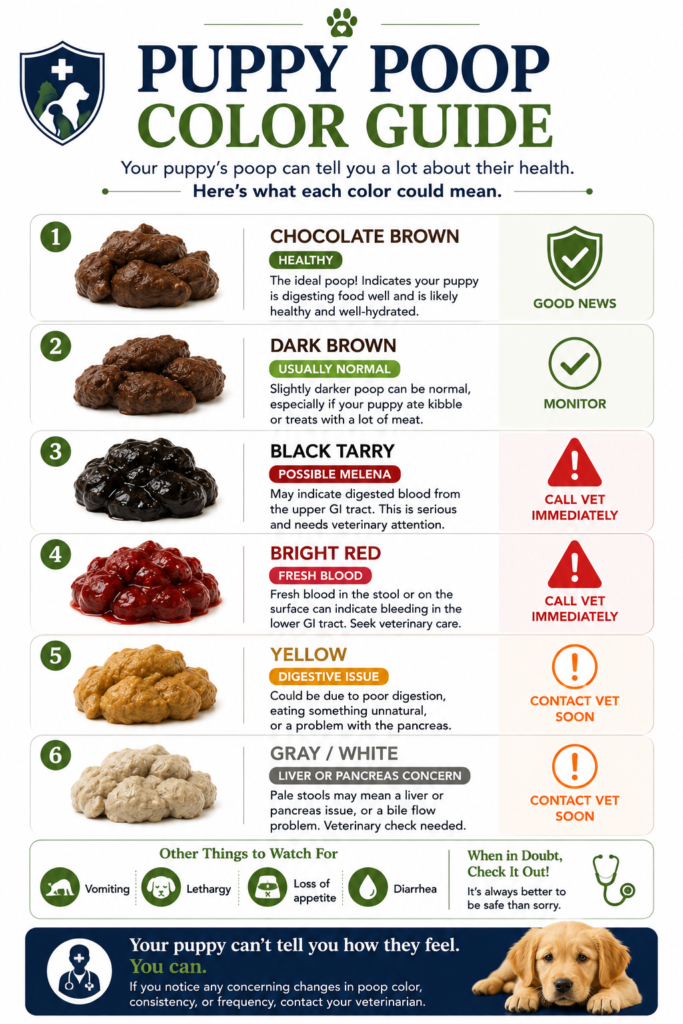
Healthy puppy poop should be chocolate brown, firm enough to hold its shape, and easy to pick up.
Here’s a quick guide:
| Color | Likely Meaning | What You Should Do |
|---|---|---|
| Chocolate brown | Healthy digestion | No action needed |
| Dark brown | Usually diet-related or normal | Monitor |
| Black, tarry | Digested blood (melena) | Call your veterinarian today |
| Bright red | Fresh blood from the lower digestive tract | Contact your veterinarian |
| Yellow | Digestive or absorption problem | Veterinary advice recommended |
| Gray or white | Liver or pancreatic concern | Veterinary evaluation |
| Green | Grass eating or bile-related issue | Monitor; call if it continues |
If you’re struggling to tell whether the stool is black or dark brown, place a small amount on a white paper towel. True melena appears almost jet black, while normal dark stool still has a noticeable brown tint.
Takeaway: Chocolate brown is normal. Black, sticky stool should always be treated as a veterinary concern.
Blood in Puppy Poop vs Black Poop: What’s the Difference?
Although both involve bleeding, red blood and black stool usually come from different parts of the digestive tract.
| Red Blood | Black Tarry Stool |
|---|---|
| Fresh blood | Digested blood |
| Lower digestive tract | Upper digestive tract |
| Bright red streaks or drops | Black, shiny, sticky stool |
| Often linked to the colon or rectum | Usually linked to the stomach or upper small intestine |
Many owners assume bright red blood is always more serious because it’s easier to see. In reality, black stool often indicates bleeding that’s been occurring for longer and may involve the upper digestive tract, making it especially concerning in puppies.
Both types of blood deserve veterinary attention, but black, tarry stool should be treated with greater urgency.
Takeaway: Red blood and black stool have different causes, but both require a veterinary examination. Black, tarry stool is generally the more urgent finding in puppies.
When Should I Take My Puppy to the Vet for Black Stool?
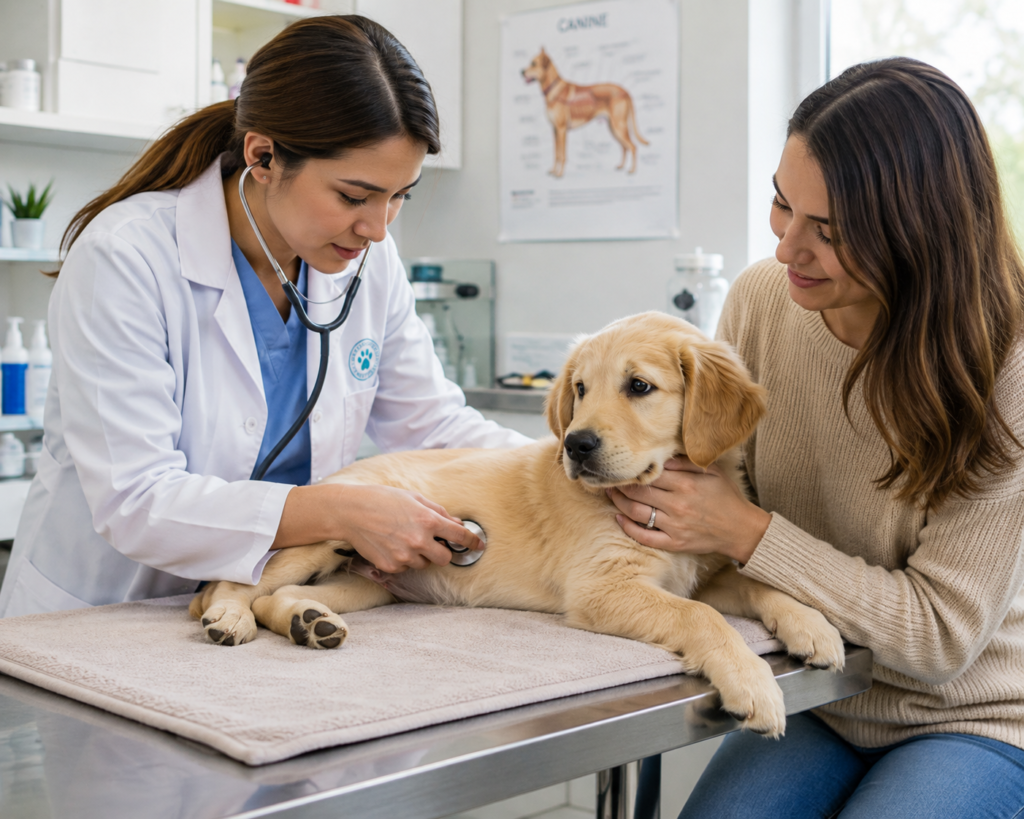
If your puppy has black, tarry stool, contact your veterinarian the same day, even if they seem to be acting normally. Puppies have much less blood volume than adult dogs, so internal bleeding can become serious very quickly.
Go to an emergency veterinary clinic immediately if your puppy has black stool along with any of these signs:
- Vomiting, especially if the vomit contains blood or looks like coffee grounds
- Extreme tiredness, weakness, or collapse
- Pale or white gums
- Refusing food or water
- A swollen or painful abdomen
- Black diarrhea in an unvaccinated puppy under six months old
If your puppy has black stool but otherwise seems bright and active, don’t wait to see if it improves. Call your veterinarian the same day for advice.
Before leaving for your appointment:
- Collect a fresh stool sample if possible.
- Write down when you first noticed the black stool.
- Make a list of recent foods, treats, medications, or supplements.
- Bring your puppy’s vaccination records if available.
Takeaway: Black puppy poop should always be treated as urgent. Early veterinary care gives your puppy the best chance of a full recovery.
How to Treat Black Poop in Puppies at Home
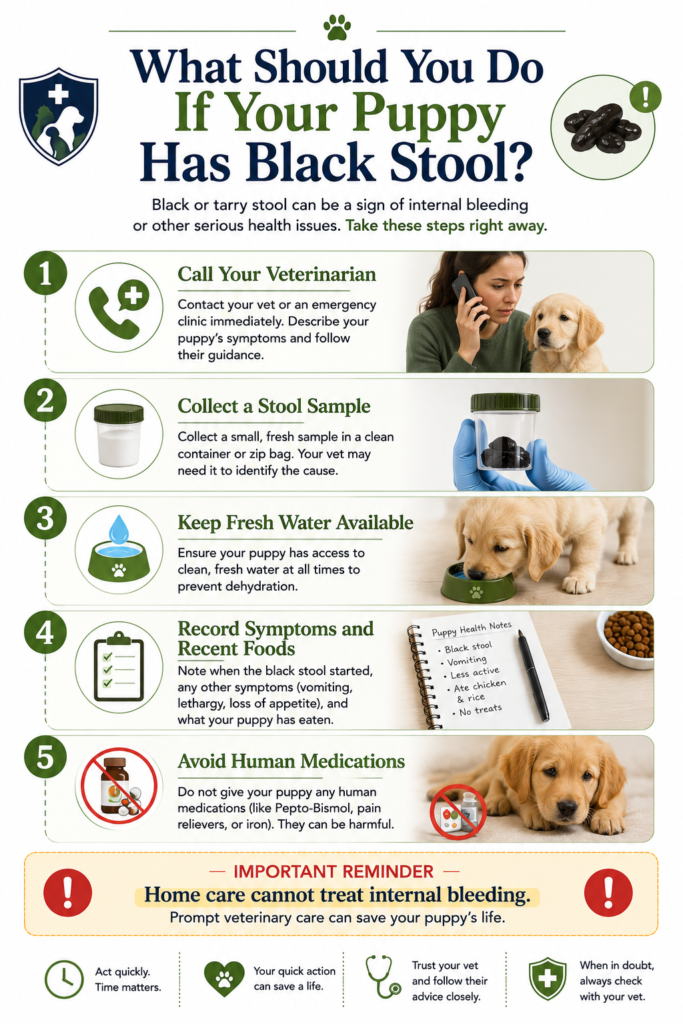
There isn’t a safe home treatment for true black, tarry stool. If melena is caused by internal bleeding, ulcers, parvovirus, poisoning, or another serious condition, your puppy needs veterinary care rather than home remedies.
While you’re waiting to see your veterinarian, you can:
- Call your veterinarian immediately and follow their instructions.
- Collect a stool sample in a clean container if possible.
- Keep fresh water available unless your veterinarian advises otherwise.
- Write down recent foods, medications, supplements, and symptoms to help your veterinarian identify the cause.
- Keep your puppy calm and avoid strenuous activity until they’ve been examined.
Do not:
- Give Pepto-Bismol or other human medications.
- Give ibuprofen, aspirin, or pain relievers made for people.
- Assume the stool is only food-related without veterinary advice.
- Delay seeking care to see if the stool returns to normal.
If your veterinarian determines the stool is dark because of diet rather than melena, they’ll explain whether any dietary changes are needed.
Takeaway: The safest thing you can do at home is contact your veterinarian immediately and avoid giving any human medications.
Frequently Asked Questions
Can teething cause black poop in puppies?
No. Puppies may swallow tiny amounts of blood while teething, but it’s rarely enough to turn their stool black. Black stool during teething should always be investigated by a veterinarian.
How quickly can black puppy poop become dangerous?
Very quickly. Puppies have much less blood volume than adult dogs, so internal bleeding can lead to anemia, dehydration, and shock within hours. That’s why same-day veterinary care is recommended.
Will black puppy poop go away on its own?
If the stool is dark because of food or supplements, it may return to normal after the trigger is removed. However, true melena caused by internal bleeding will not improve without treating the underlying problem.
Can stress cause black poop in puppies?
Severe stress may contribute to stomach ulcers in some cases, but stress alone is rarely the direct cause of black stool. More serious conditions should always be ruled out first.
Is black puppy poop contagious?
The stool itself isn’t contagious, but the condition causing it may be. Diseases such as parvovirus and some intestinal parasites can spread to other dogs. Keep your puppy separated until your veterinarian determines the cause.
Does deworming cause black poop?
Deworming medication doesn’t normally turn stool black. However, puppies with heavy parasite infections may have some intestinal irritation after treatment. If you notice black, tarry stool after deworming, contact your veterinarian.
Conclusion
Seeing black poop in your puppy is frightening, but acting quickly can make a huge difference. While certain foods and supplements can make stool appear darker than usual, true black, sticky, tar-like stool usually means digested blood and should never be ignored.
Because puppies have very little blood volume, even a small amount of internal bleeding can become serious in a short time. The safest approach is to contact your veterinarian as soon as you notice black stool, even if your puppy still seems bright and playful.
When it comes to black puppy poop, it’s always better to have your puppy examined and discover it’s nothing serious than to wait and risk a life-threatening emergency.
References
Petfolk. Dog Black Diarrhea (Melena): Causes, Signs & Care
https://petfolk.com/petfolklore/dog-black-diarrhea-melena-causes-signs-care
American Kennel Club (AKC). Blood in Dog Poop
https://www.akc.org/expert-advice/health/blood-in-dog-poop/
PDSA. Blood in Your Dog’s Stools
https://www.pdsa.org.uk/pet-help-and-advice/pet-health-hub/symptoms/blood-in-your-dogs-stools
Vet Help Direct. My Dog’s Poo Is Black – What’s Wrong?
https://vethelpdirect.com/vetblog/2021/05/13/my-dogs-poo-is-black-whats-wrong/
Pumpkin Pet Insurance. Black Dog Poop: Causes, Symptoms & When to Worry
https://www.pumpkin.care/post/black-dog-poop
Trooper Veterinary Hospital. Dog Stool Blood: Causes and What to Do
https://www.troopervet.com/site/blog/2023/01/15/dog-stool-blood