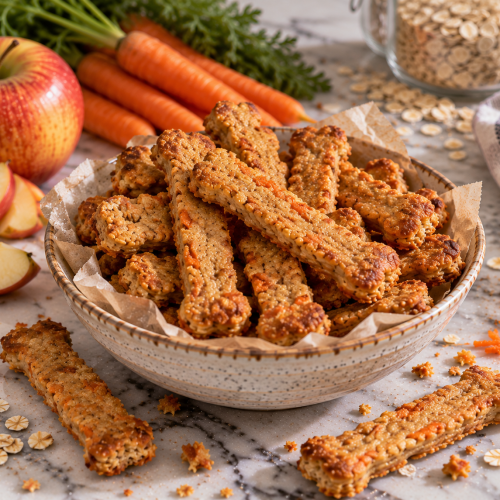

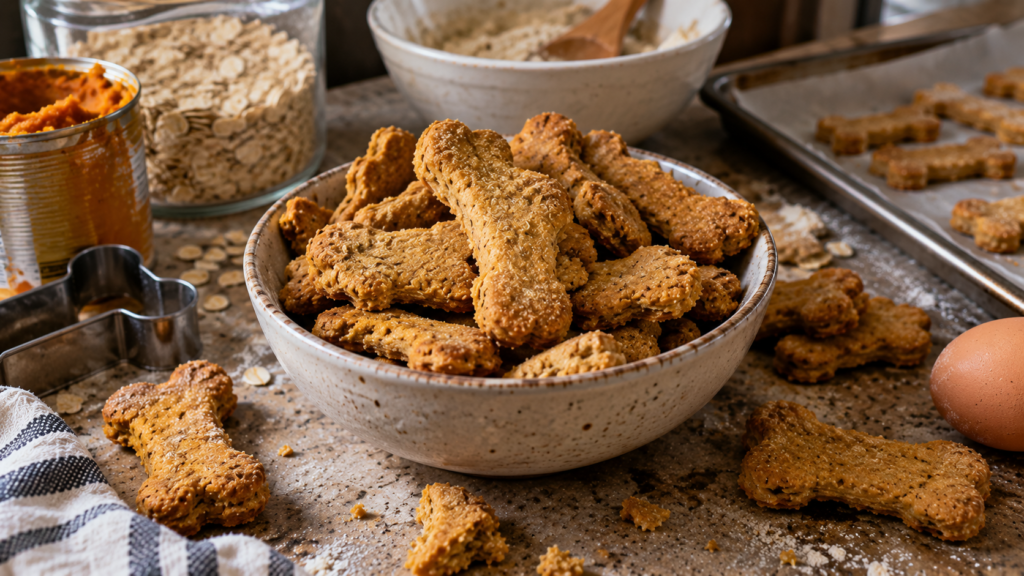
I love making homemade treats for my dog, especially when I have a little extra pumpkin in the kitchen. These homemade pumpkin biscuits for dogs are one of my favorites because they’re simple, lightly crisp around the edges, and easy to make with ingredients I usually already have.
I make them into little bone shapes when I have the time, but honestly, my dog cares much more about the smell than the shape. The pumpkin gives these biscuits a naturally warm color and a subtle sweetness without needing added sugar.
They’re also a nice option when I want a homemade treat without a long ingredient list.
Quick Answer
Yes, dogs can eat plain pumpkin, and homemade pumpkin biscuits can be a safe occasional treat when they’re made with dog-friendly ingredients.
For this recipe, use 100% plain pumpkin puree, not pumpkin pie filling. Avoid adding sugar, salt, nutmeg, or heavily spiced pumpkin-seasoning blends. Pumpkin is naturally rich in fiber, but too much can still cause digestive upset, so these biscuits should be treated as an occasional snack rather than a replacement for your dog’s regular food.
Recipe Snapshot
| Prep time | 10 minutes |
| Bake time | 18–22 minutes |
| Total time | About 30 minutes |
| Yield | About 30–40 small biscuits |
| Oven temperature | 350°F / 175°C |
| Best for | Occasional treats |
Key Takeaways
- Use 100% plain pumpkin puree, never pumpkin pie filling.
- Old-fashioned oats make a simple, hearty base.
- No added sugar, salt, butter, or pumpkin spice is needed.
- Make the biscuits small so portions are easy to manage.
- Let the biscuits cool completely before serving.
- Store them properly to keep them fresh.
- Treats should remain a small part of your dog’s overall diet.
Why Pumpkin Works Well in Homemade Dog Biscuits
Plain pumpkin is generally safe for dogs when served in appropriate amounts. It provides fiber along with nutrients such as vitamins A, C, and E, potassium, and iron. Its fiber content is one reason pumpkin is sometimes included in dog diets to support normal digestion.
That doesn’t mean more pumpkin is always better. Introducing too much pumpkin or too much of any unfamiliar food can lead to digestive upset. These biscuits are therefore best used as treats alongside a complete and balanced diet.
The biggest thing to watch is the type of pumpkin you use.
Choose:
- 100% pumpkin puree
- Plain cooked pumpkin
- Pumpkin with no added sugar, salt, spices, or sweeteners
Avoid:
- Pumpkin pie filling
- Pumpkin pie mix
- Sweetened pumpkin
- Pumpkin products containing xylitol
- Pumpkin seasoned with nutmeg or other potentially unsafe ingredients
Owner Tip: If you’re using canned pumpkin, check the ingredient label. The simplest option is one that lists pumpkin as the only ingredient.
How to Make Homemade Pumpkin Biscuits for Dogs
Ingredients
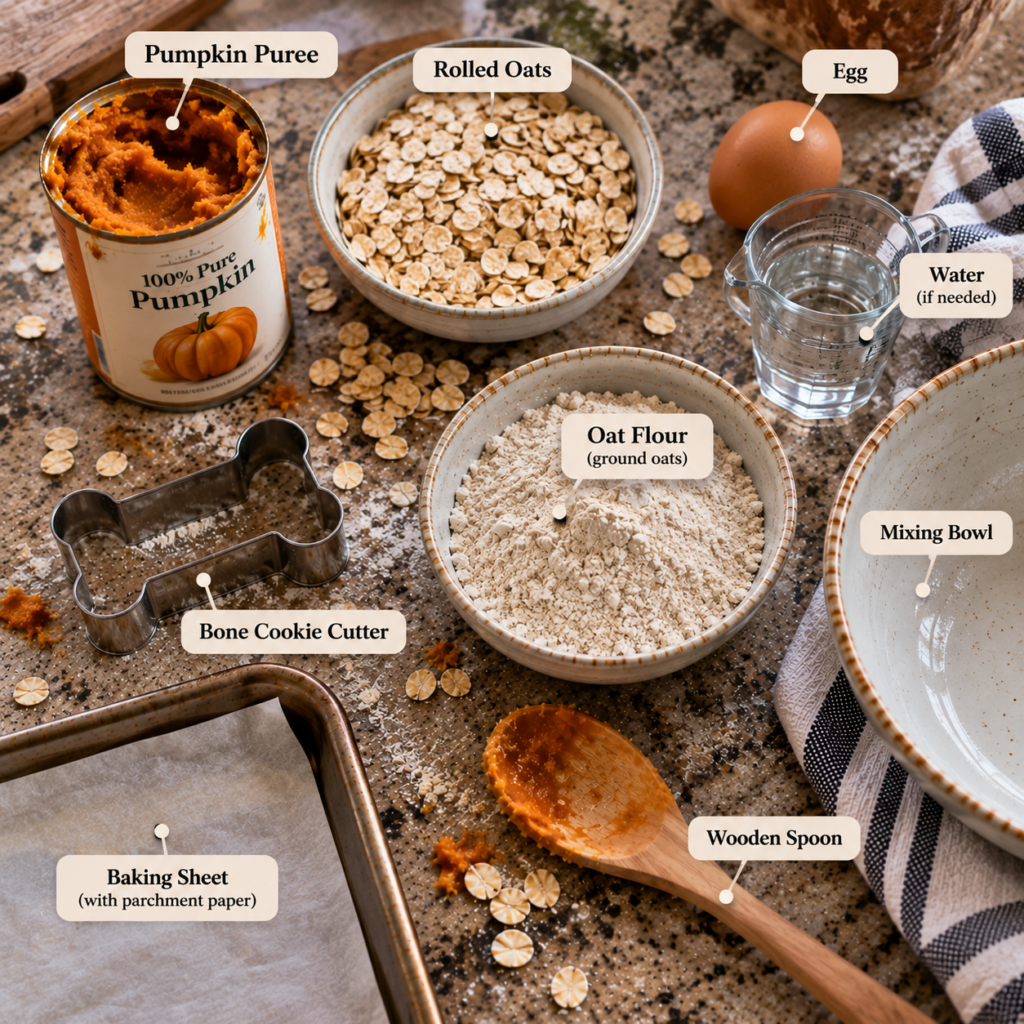
- 1 cup 100% pure pumpkin puree
- 2 cups old-fashioned rolled oats, ground into oat flour
- 1 egg
- 1–2 tablespoons water, only if needed
Instructions
1. Prepare the oven
Preheat your oven to 350°F (175°C).
Line a baking sheet with parchment paper.
2. Make the oat flour
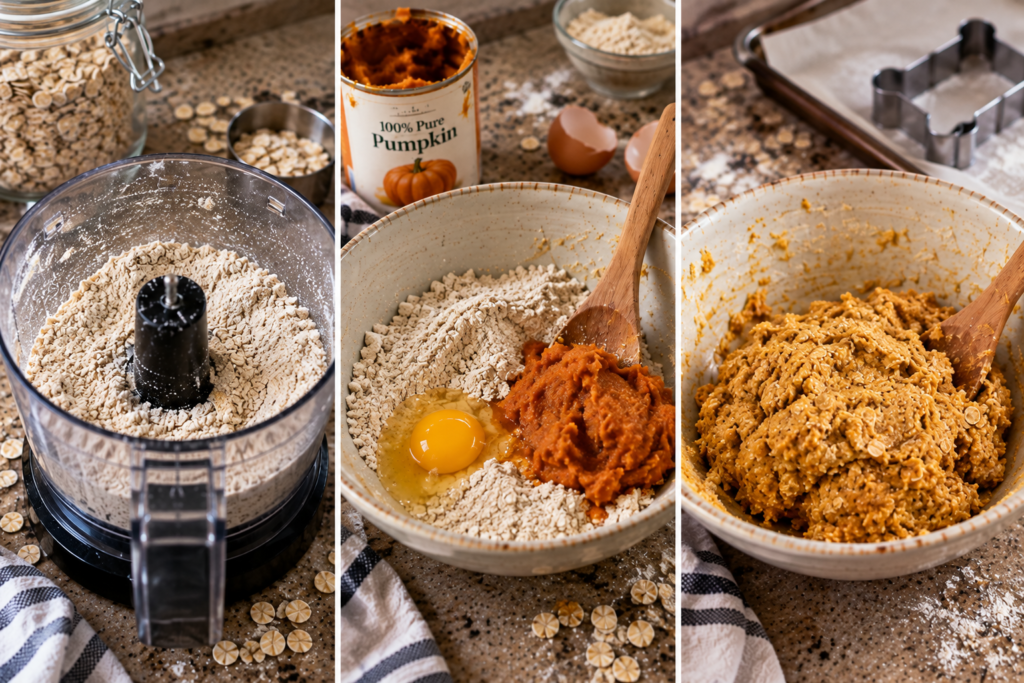
Add the rolled oats to a blender or food processor and pulse until they have a fine, flour-like texture.
It doesn’t need to be perfectly smooth. A few small oat pieces are completely fine.
3. Mix the dough
Add the oat flour, pumpkin puree, and egg to a mixing bowl.
Stir until a soft dough forms.
If the dough feels too dry or crumbly, add water 1 tablespoon at a time until it comes together.
If it feels very sticky, add a little more ground oats.
4. Roll and cut
Lightly dust your work surface with oat flour.
Roll the dough to about ¼-inch thick.
Cut into small shapes using a dog-bone cookie cutter or another small cookie cutter.
Place the biscuits on the prepared baking sheet with a little space between them.
5. Bake
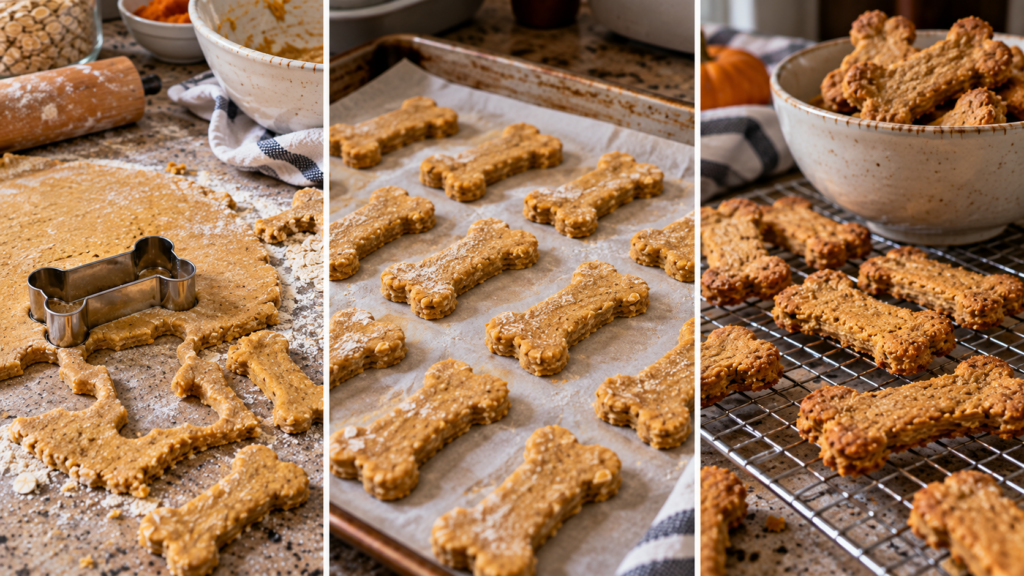
Bake for approximately 18–22 minutes, depending on the size and thickness of the biscuits.
The edges should look set and lightly browned.
For a firmer, crunchier biscuit, you can leave them in the turned-off oven for another 10–15 minutes after baking, with the oven door slightly open.
6. Cool completely
Transfer the biscuits to a wire rack and allow them to cool completely before giving one to your dog.
They will firm up further as they cool.
Serving, Storage & Variations
How Many Pumpkin Biscuits Can Dogs Have?
Start with a small biscuit, especially if your dog has never had homemade pumpkin treats before.
A useful starting point is:
- Small dogs: ½–1 small biscuit
- Medium dogs: 1–2 small biscuits
- Large dogs: 2–3 small biscuits
These are general treat portions, not veterinary feeding recommendations. Your dog’s size, diet, age, activity level, and health all matter.
Keep all treats—including homemade biscuits—to a modest portion of your dog’s daily calories.
How to Store Them
Because these biscuits contain pumpkin and egg, I prefer refrigerating them rather than leaving a large batch at room temperature for an extended period.
Store cooled biscuits in an airtight container in the refrigerator for about 5–7 days.
For longer storage, freeze them in a freezer-safe container or bag for up to 3 months.
Let a frozen biscuit thaw slightly before serving, particularly for smaller dogs.
Can I Make Them Crunchier?
Yes.
Roll the dough slightly thinner and bake the biscuits toward the longer end of the baking time.
You can also allow them to dry further in the warm oven after baking.
Just make sure they aren’t so hard that they become difficult for your dog to chew.
Can I Use Fresh Pumpkin?
Yes. Cook the pumpkin until soft, remove the skin and seeds, and puree the flesh until smooth.
Canned pumpkin is simply more convenient.
Can I Add Cinnamon?
I prefer leaving it out.
There’s no need for pumpkin spice to make these biscuits appealing, and avoiding unnecessary seasonings keeps the ingredient list simple.
Most importantly, never substitute pumpkin pie filling for plain pumpkin. Pumpkin pie products can contain ingredients such as nutmeg, sugar, and other additives that aren’t appropriate for dogs.
Common Mistakes
Using pumpkin pie filling
This is probably the easiest mistake to make.
Pumpkin puree and pumpkin pie filling are not interchangeable. Always check the label before adding pumpkin to your dog’s treats.
Adding too many extras
Dogs don’t need sugar, frosting, butter, salt, or a complicated spice mixture in their biscuits.
Keeping the recipe simple also makes it easier to identify an ingredient if your dog develops an upset stomach.
Making the biscuits too large
Large homemade biscuits can add calories quickly.
Small cutters make portion control much easier, especially when the treats are being used during training.
Giving too many at once
Pumpkin contains fiber, and a sudden increase in dietary fiber can cause digestive changes.
If your dog is trying pumpkin for the first time, start with a small amount and see how they respond.
Giving biscuits before they cool
Freshly baked biscuits are softer and hotter than they appear.
Let them cool completely before serving.
FAQ
Can dogs eat homemade pumpkin biscuits?
Yes, homemade pumpkin biscuits can be an occasional dog treat when they’re made with dog-safe ingredients and plain pumpkin.
Is canned pumpkin safe for dogs?
Yes, 100% plain canned pumpkin is generally safe for dogs in appropriate amounts. Avoid pumpkin pie filling and products with added sugar, spices, or sweeteners.
Can puppies eat pumpkin biscuits?
Puppies can potentially have small amounts of dog-safe pumpkin treats, but their nutritional needs are different from adult dogs. Keep treats small and occasional, and check with your veterinarian if you’re introducing new foods to a young puppy.
Can dogs eat pumpkin pie filling?
It’s best to avoid it. Pumpkin pie filling can contain sugar, spices, and other ingredients that aren’t appropriate for dogs, including potentially dangerous ingredients such as nutmeg or xylitol in some products.
Are pumpkin biscuits good for dogs with diarrhea?
Plain pumpkin is sometimes used to support dogs with mild digestive upset, but these biscuits shouldn’t be considered a treatment for diarrhea.
If diarrhea is persistent, severe, bloody, or accompanied by other concerning symptoms, contact your veterinarian rather than relying on homemade treats.
Can I make these biscuits without eggs?
Yes. You can experiment with a small amount of plain unsweetened applesauce or a prepared egg substitute to help bind the dough, although the texture may change.
Can I use whole-wheat flour instead of oats?
Yes. You can replace the oat flour with whole-wheat flour if your dog tolerates wheat and grains. You may need to adjust the amount slightly to get a workable dough.
Conclusion
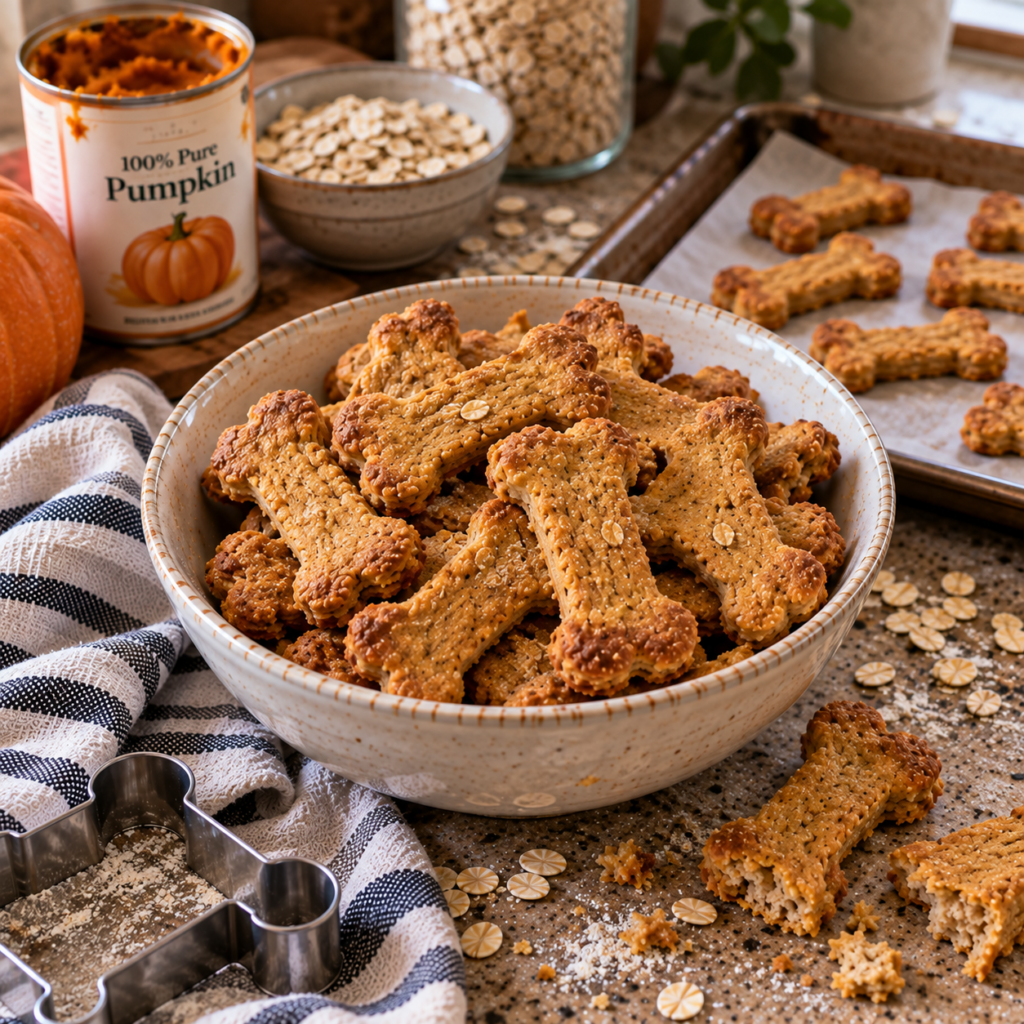
These homemade pumpkin biscuits are a simple way to turn a few basic ingredients into a special treat for your dog. I like that they don’t need sugar, complicated spices, or a long list of ingredients—the pumpkin does most of the work.
Make them small, let them cool completely, and keep the portions modest. If your dog enjoys pumpkin, these little biscuits can be a fun addition to your homemade treat rotation.
Medical Disclaimer
This recipe is intended as an occasional treat for healthy dogs and is not intended to replace a complete and balanced diet or veterinary care. Dogs with allergies, food sensitivities, diabetes, gastrointestinal disease, prescription diets, or other health conditions may need different ingredients or restrictions. Speak with your veterinarian before introducing new foods if you’re unsure whether this recipe is appropriate for your dog.