
Quick Answer: Dog reverse sneezing and coughing describe two different airway reflexes that owners often confuse. Reverse sneezing is a short, snorting spasm caused by irritation of the soft palate and throat, while coughing usually points to the lower airway, lungs, or heart. Most reverse sneeze episodes last under a minute and clear up on their own, but frequent coughing alongside reverse sneezing deserves a veterinary look.
Key Takeaways
- Reverse sneezing is a reflex, not a disease, it happens when the soft palate spasms and pulls air in through the nose instead of pushing it out.
- A typical reverse sneeze episode lasts between a few seconds and about two minutes [5].
- Small and brachycephalic dogs (Pugs, Bulldogs, Yorkies) reverse sneeze more often because of their shorter nasal passages [8].
- Allergies, nasal mites, foreign material, and dental disease are among the most common triggers [6].
- Reverse sneezing is almost never dangerous on its own, though repeated episodes paired with coughing, nasal discharge, or weight loss can signal illness [4].
- Gently massaging the throat or covering the nostrils for a second can shorten an episode [1].
- Call a veterinary clinic if reverse sneezing becomes constant, worsens over weeks, or appears alongside a real cough, wheeze, or breathing trouble.
What Is Reverse Sneezing in Dogs?
Reverse sneezing in dogs is a sudden, repeated snorting reflex that happens when a dog pulls air rapidly through the nose instead of expelling it, unlike a normal sneeze. It looks dramatic, the dog stands still, extends its neck, and makes loud honking or snorting sounds, but it is generally harmless [4].
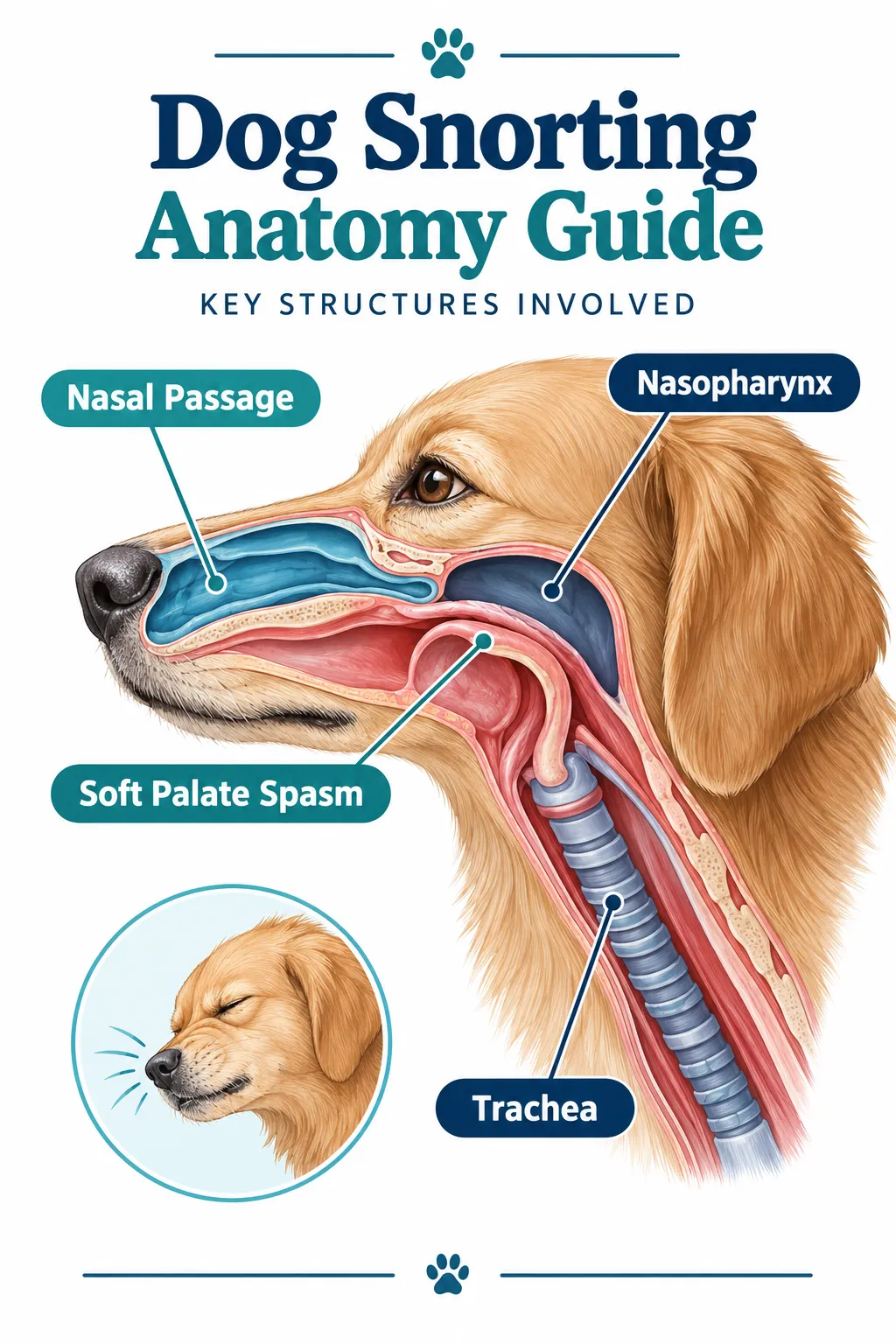
The reflex starts when something irritates the soft palate and nasopharynx, the soft tissue at the back of the throat near the nose [5]. The muscles spasm, the throat narrows, and the dog repeatedly snorts air inward to clear the irritation. Veterinary Partner describes it as a protective reflex rather than a sign of a sneeze “gone wrong” [2]. Many owners first witness the dreaded reverse sneeze during a walk, after drinking water too fast, or right after waking from a nap, and it can look alarming the first time it happens.
Why Do Dogs Reverse Sneeze and Cough? Common Causes
Reverse sneezing and coughing in dogs usually trace back to irritation somewhere in the nose, throat, or airway. The exact cause varies, but the triggers tend to fall into a handful of categories pet owners can watch for.
Common causes reverse sneezing episodes include:
- Allergens, pollen, dust, mold, and household cleaners can inflame the nasal passage [6]
- Nasal mites, foreign material, grass seeds, or debris lodged near the throat [7]
- Excitement or over-exertion, which can trigger a spasm even in healthy dogs
- Collar pressure pulling on the trachea during leash walks
- Dental care issues, since tooth root infections sit close to the nasal cavity [9]
- Respiratory infections, including kennel cough or dog flu (canine influenza), which can cause both coughing and reverse sneezing together [3]
Dogs though cause their own episodes sometimes simply by sniffing too hard at an interesting smell. While most triggers are minor, chronic cases deserve a veterinary exam to rule out nasal masses or chronic rhinitis [10].
Reverse Sneezing vs. Coughing in Dogs: What’s the Difference?
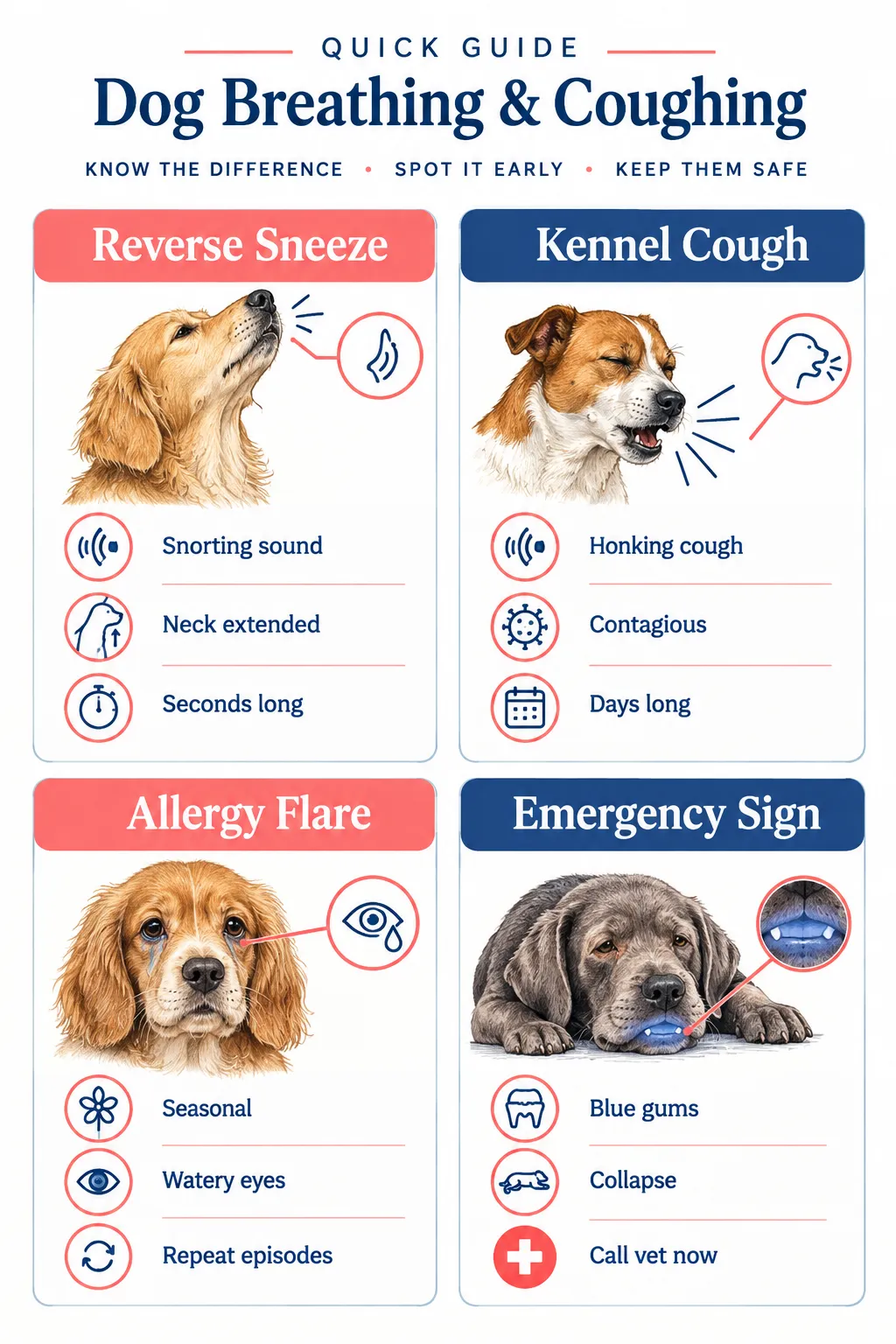
Reverse sneezing and coughing look similar but come from different parts of the airway. Reverse sneezing is a nasal-throat reflex with a snorting sound and the dog’s neck extended; coughing is a lower-airway reflex that sounds harsher and often repeats in bursts.
| Feature | Reverse Sneezing | Coughing | Kennel Cough |
|---|---|---|---|
| Sound | Snorting, honking | Dry or wet hack | Repetitive “goose honk” |
| Body position | Neck stretched, standing still | Normal posture, may retch | Normal posture |
| Duration | Seconds to ~2 minutes | Varies, can repeat for days | Days to 2+ weeks |
| Contagious | No | Sometimes | Yes |
| Common cause | Nasal/throat irritation | Lung, heart, or airway disease | Bacterial/viral infection |
People Also Ask about dog reverse sneezing and coughing at night often describe a dog waking suddenly to snort, then settling back down, this pattern usually fits reverse sneezing more than a true cough. For a deeper breakdown of persistent coughing causes, see this guide on why your dog is coughing. If sneezing (forward, not reverse) is the bigger concern, this resource on why dogs sneeze so much covers nasal triggers in more detail.
Is Dog Reverse Sneezing Dangerous or Serious?
Reverse sneezing dangerous to dogs? Rarely. The reflex does not block the airway and almost never causes lasting harm, even though the sudden snorting can startle a pet owner [8].
“Reverse sneezing looks far scarier than it actually is for most dogs.”, paraphrased from veterinary guidance [1]
Can reverse sneezing kill a dog? Essentially no, it’s a self-limiting reflex, not a blockage [4]. That said, dangerous dogs cases do exist where a similar-looking episode is actually a collapsing trachea, heart disease, or a tumor pressing on the airway, so a dog whose “reverse sneeze” is getting worse, lasting longer, or paired with blue-tinted gums needs same-day veterinary care [9].
How Long Does Reverse Sneezing Last in Dogs?
A typical reverse sneezing episode lasts anywhere from a few seconds to about one or two minutes before the dog returns to normal breathing [5]. Episodes can recur several times a day in dogs prone to allergies, or just a few times a year in others.
Puppies born in spring (April through June) and dogs adopted in July often have their first dreaded reverse sneeze witnessed by a surprised new owner within weeks of coming home, while senior dogs may show symptoms that build through October, November, and December as indoor heating season begins. If a single episode stretches well past two minutes or the dog seems distressed afterward, that’s outside the normal pattern and worth a call to a veterinary clinic.
What Should You Do When Your Dog Reverse Sneezes?
During a reverse sneeze episode, stay calm and give the dog a gentle, short intervention rather than panicking. Most episodes end on their own within a minute or two without any treatment [1].
Try these steps to stop a dog from reverse sneezing:
- Stay calm, dogs pick up on owner stress, which can prolong the episode.
- Gently stroke the throat downward to help the muscles relax [7].
- Briefly cover one nostril for a second to interrupt the spasm [10].
- Offer a small distraction, like blowing softly on the face or offering a lick of water.
- Move away from irritants such as cleaning spray, smoke, or dust.
Home remedies for dog reverse sneezing and coughing also include keeping a humidifier running in dry winter months (January and February are common flare months when heaters dry indoor air), using fragrance-free cleaning products, and keeping collars loose during walks. A dog that starts reverse sneezing in July heat with dusty air may simply need a cooler, less dusty room and fresh water.
When to Take Your Dog to the Vet for Reverse Sneezing
See a veterinary professional if reverse sneezing episodes happen daily, last longer than normal, or come with nasal discharge, bleeding, weight loss, or a real cough. These signs suggest something beyond the usual dreaded reverse sneeze [6].
Owners often notice patterns tied to the calendar: a dog that reverse sneezes every August and September near ragweed season, or one that snorts through January and February heating season, may be dealing with allergies rather than a random episode. Clinics such as DuPont Veterinary Clinic and similar practices regularly field calls asking whether a reverse sneeze episode is an emergency, in most cases it is not, but any pet showing labored breathing, collapse, or blue gums needs urgent care immediately, not a wait-and-see approach.
Is Reverse Sneezing Normal in Certain Dog Breeds?
Yes. Brachycephalic breeds, Pugs, Bulldogs, Boxers, and Shih Tzus, along with small breeds like Yorkies and Chihuahuas reverse sneeze more often because of their compact nasal structure [8]. This is considered normal for these dogs and usually doesn’t need treatment unless episodes intensify.
Can Allergies Cause Reverse Sneezing in Dogs?
Yes, environmental allergens are among the most common causes reverse sneezing triggers in sensitive dogs [6]. Seasonal flare-ups in April, June, August, and September often line up with pollen, mold, or ragweed. For more on sorting allergy-driven symptoms from other causes, see this comparison of environmental versus food allergies in dogs.
Reverse Sneezing With Other Symptoms: What Does It Mean?
Reverse sneezing paired with lethargy, appetite loss, or nasal discharge can point to infection, nasal mites, or dental disease rather than simple irritation [9]. A dog showing head shaking alongside sneezing may have an ear or sinus issue worth checking through this guide on why dogs keep shaking their heads.
Related Articles & Resources for Pet Owners
Pet owners researching reverse sneezing often also look into related respiratory topics like dog flu (canine influenza) and allergy management, since all three can overlap in symptoms. Veterinary clinics typically group these topics together under a “Pet Care & Wellness” resource section on their websites.
Helpful related reading includes:
- Why is my dog breathing fast?, for distinguishing normal panting from distress
- Why is my dog’s nose dry?, nasal health basics
- Why is my dog coughing?, a closer look at true coughing causes
Veterinary guidance on reverse sneezing has evolved steadily over the years. Cornell’s Riney Canine Health Center page has been a trusted reference since 2016, with notable owner-education updates in 2018, 2019, 2020, and 2021. WebMD and VCA Hospitals refreshed their reverse sneeze pet guidance in 2022 and 2023, PDSA’s hub followed in 2024, and most clinic blogs now carry 2025 and 2026 review dates. Many clinics, including hospitals similar to Northeast Indiana Veterinary Emergency Specialty Hospital and Southwest Veterinary Urgent Care, list hours, emergencies, and a Map & Directions page alongside a simple “check availability, location, and book” button so pet owners can request an appointment quickly when a sick patient needs urgent care.
Frequently Asked Questions
What do you do if your dog is reverse sneezing?
Stay calm, gently rub the dog’s throat, and briefly cover one nostril to interrupt the spasm. Most episodes stop within a minute without intervention. Keep the dog away from irritants like smoke or strong cleaners, and contact a veterinary clinic if episodes become frequent or severe.
What home remedy can I give my dog for coughing?
Honey in small amounts, warm humid air from a bathroom shower, and a cool-mist humidifier can soothe mild coughing. Avoid human cough medicine without veterinary approval. Persistent coughing lasting more than a few days, or paired with lethargy, needs a vet visit rather than home care alone.
What could be causing my dog to wheeze?
Wheezing often points to airway narrowing from allergies, kennel cough, collapsing trachea, or heart disease. Brachycephalic breeds wheeze more easily due to shorter airways. Any dog wheezing alongside blue gums, collapse, or labored breathing needs emergency veterinary care right away.
What is the pinch test for kennel cough?
The pinch test involves gently pressing the front of a dog’s throat near the trachea. A dog with kennel cough typically responds with an immediate, repetitive honking cough. This simple check helps differentiate a contagious respiratory infection from a one-off reverse sneeze or mild throat irritation.
Conclusion
Dog reverse sneezing and coughing can look alarming, but the two reflexes usually point to very different things: a brief nasal-throat spasm versus a lower-airway or lung issue. Reverse sneezing on its own rarely signals danger, especially in small and brachycephalic breeds prone to the dreaded reverse sneeze. Watch for episodes that worsen, last longer than two minutes, or come paired with real coughing, nasal discharge, or breathing trouble, those are the signs that call for a veterinary visit rather than home care. Keep a simple log of when episodes happen (season, time of day, recent activity) and bring it to the next appointment; it helps a veterinary team spot patterns fast and keep a pet’s care on track.
References
[1] Reverse Sneezing In Dogs – https://www.webvet.com/reverse-sneezing-in-dogs/ [2] Default – https://veterinarypartner.vin.com/default.aspx?pId=19239&id=4952493&meta=604 [3] Default – https://veterinarypartner.vin.com/default.aspxv&catid=254018&ind=1731/default.aspx?pid=19239&catId=254102&id=4952493&ind=506&objTypeID=1007 [4] What Is Reverse Sneezing Dogs – https://www.webmd.com/pets/dogs/what-is-reverse-sneezing-dogs [5] Reverse Sneezing – https://www.vet.cornell.edu/departments-centers-and-institutes/riney-canine-health-center/canine-health-information/reverse-sneezing [6] Reverse Sneezing In Dogs – https://www.pdsa.org.uk/pet-help-and-advice/pet-health-hub/conditions/reverse-sneezing-in-dogs [7] Reverse Sneezing In Dogs – https://www.zooplus.co.uk/magazine/dog/dog-health-and-care/reverse-sneezing-in-dogs [8] Reverse Sneeze In Dogs – https://vcahospitals.com/know-your-pet/reverse-sneeze-in-dogs [9] Default – https://veterinarypartner.vin.com/default.aspx?pid=19239&catId=254102&id=4952493 [10] Reverse Sneezing In Dogs – https://www.dogster.com/ask-the-vet/reverse-sneezing-in-dogs/