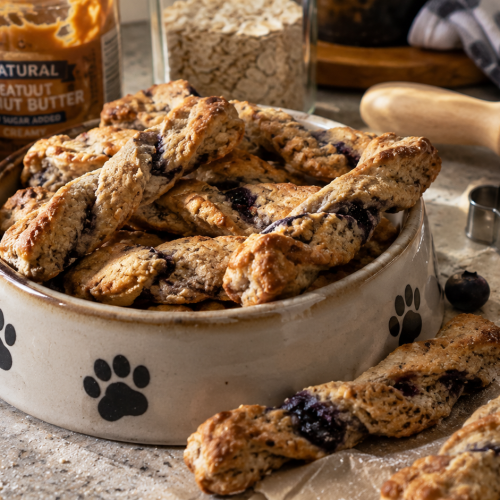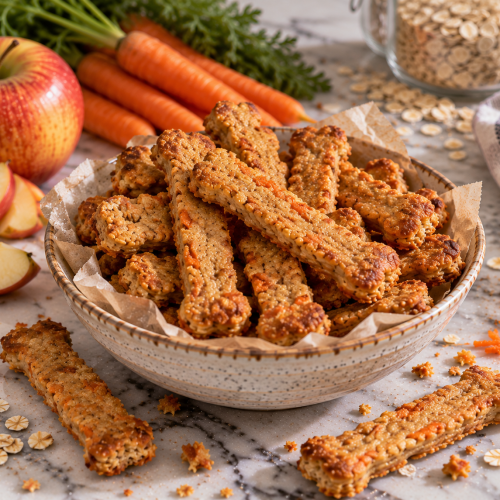

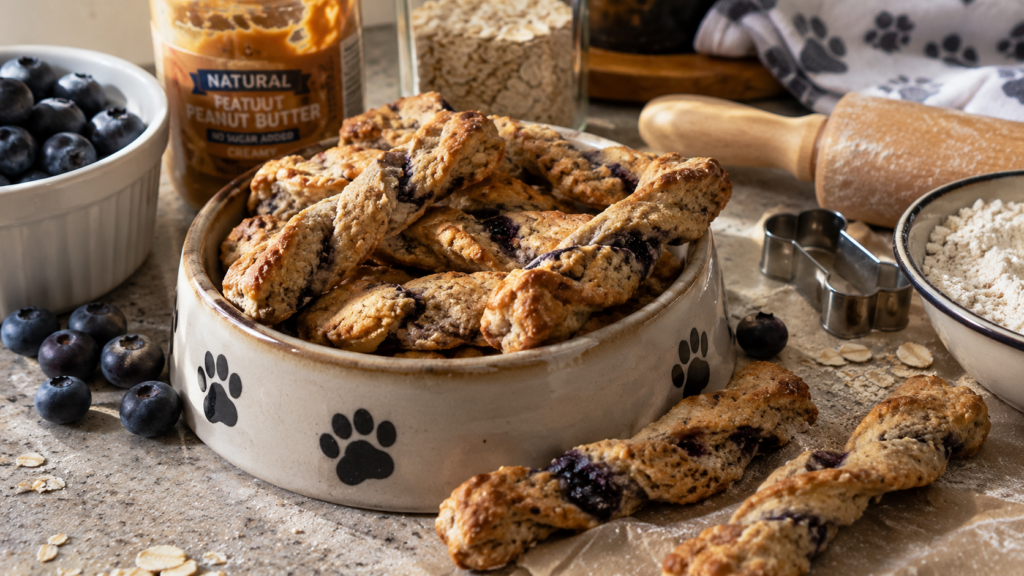
There are a few homemade dog treats that look much more complicated than they actually are, and these blueberry and peanut butter twists are a perfect example. The dough comes together with a handful of simple ingredients, but rolling it into little twisted ropes makes the finished treats feel a bit more special.
I like the combination of blueberries and peanut butter here because the blueberries add a naturally fruity flavor while the peanut butter gives the treats a richer taste and helps bring the dough together. There is no need for added sugar, frosting, or complicated decorations.
The twists are also easy to make in different sizes, so you can keep them small for everyday treating or make slightly larger ones for a special homemade snack.
Quick Answer
Yes, dogs can generally enjoy blueberries and xylitol-free peanut butter in moderation. Fresh or plain frozen blueberries are suitable for most dogs, while peanut butter should be checked carefully for xylitol, also known as birch sugar, before it is used.
These homemade twists combine both ingredients with oat flour and egg to create a simple baked dog treat.
Recipe Snapshot
| Prep Time | 15 minutes |
| Bake Time | 20–25 minutes |
| Total Time | About 40 minutes |
| Yield | 14–16 twists |
| Oven | 350°F / 175°C |
| Difficulty | Easy |
| Storage | Refrigerate up to 1 week |
Key Takeaways
- Use plain blueberries rather than canned berries, pie filling, or fruit packed in syrup.
- Choose peanut butter that contains no xylitol or birch sugar.
- Natural peanut butter with minimal ingredients is the easiest choice.
- Lightly mashing the blueberries makes the dough easier to shape.
- Add water gradually so the dough does not become sticky.
- Pinch the ends of each twist firmly so they stay together while baking.
- Keep portions small because peanut butter is relatively calorie-dense.
- Allow the twists to cool completely before storing them.
Why Blueberries and Peanut Butter Work in Dog Treats
Blueberries are naturally sweet and provide fiber, vitamins, minerals, and antioxidant compounds. They are generally safe for dogs when offered in appropriate amounts. Fresh or plain frozen blueberries are preferable to sweetened or syrup-packed versions.
Peanut butter adds flavor and helps give these treats their soft, workable dough. However, it is also relatively high in fat and calories, so it works best as a small ingredient rather than something dogs should eat in large quantities.
The most important safety step is checking the ingredient label. Never use peanut butter containing xylitol or birch sugar. Xylitol is highly toxic to dogs and can cause a dangerous drop in blood sugar and other serious effects.
How to Make Blueberry and Peanut Butter Twists for Dogs
Ingredients
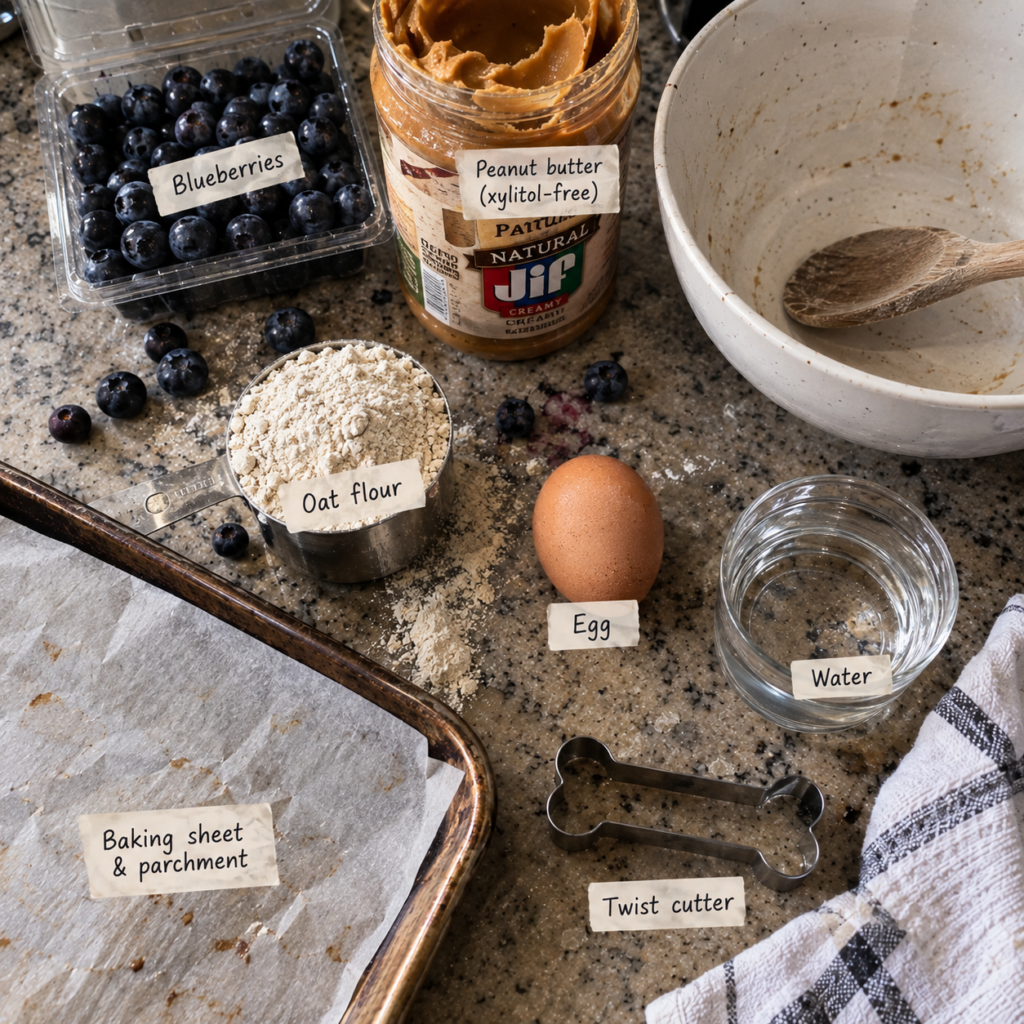
- 2 cups oat flour
- ⅓ cup natural peanut butter, xylitol-free
- ½ cup fresh blueberries or plain frozen blueberries, thawed and drained
- 1 large egg
- 2–4 tablespoons water, as needed
1. Prepare the Oven
Preheat the oven to 350°F (175°C).
Line a baking sheet with parchment paper.
2. Mix the Flour and Peanut Butter
Add the oat flour and peanut butter to a large mixing bowl.
Stir until the mixture resembles coarse crumbs and the peanut butter is evenly distributed.
3. Add the Blueberries and Egg
Lightly mash the blueberries with a fork, leaving some small pieces intact.
Add the blueberries and egg to the flour mixture. Stir until the dough begins coming together.
The dough may look crumbly at first, so don’t add all the water at once.
4. Adjust the Dough
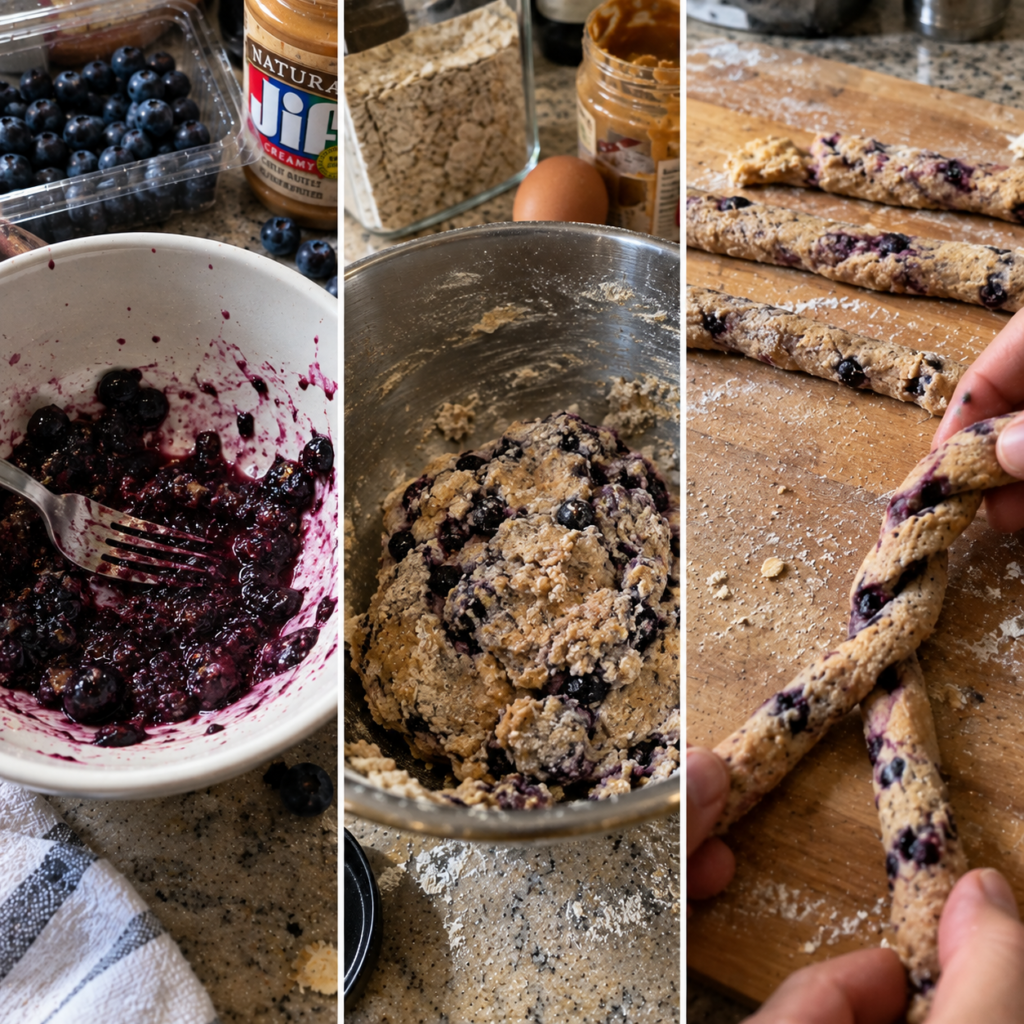
Add water one tablespoon at a time, mixing after each addition.
Stop when the dough forms a firm ball that can be handled without being excessively sticky.
If the dough becomes too soft, add a little more oat flour.
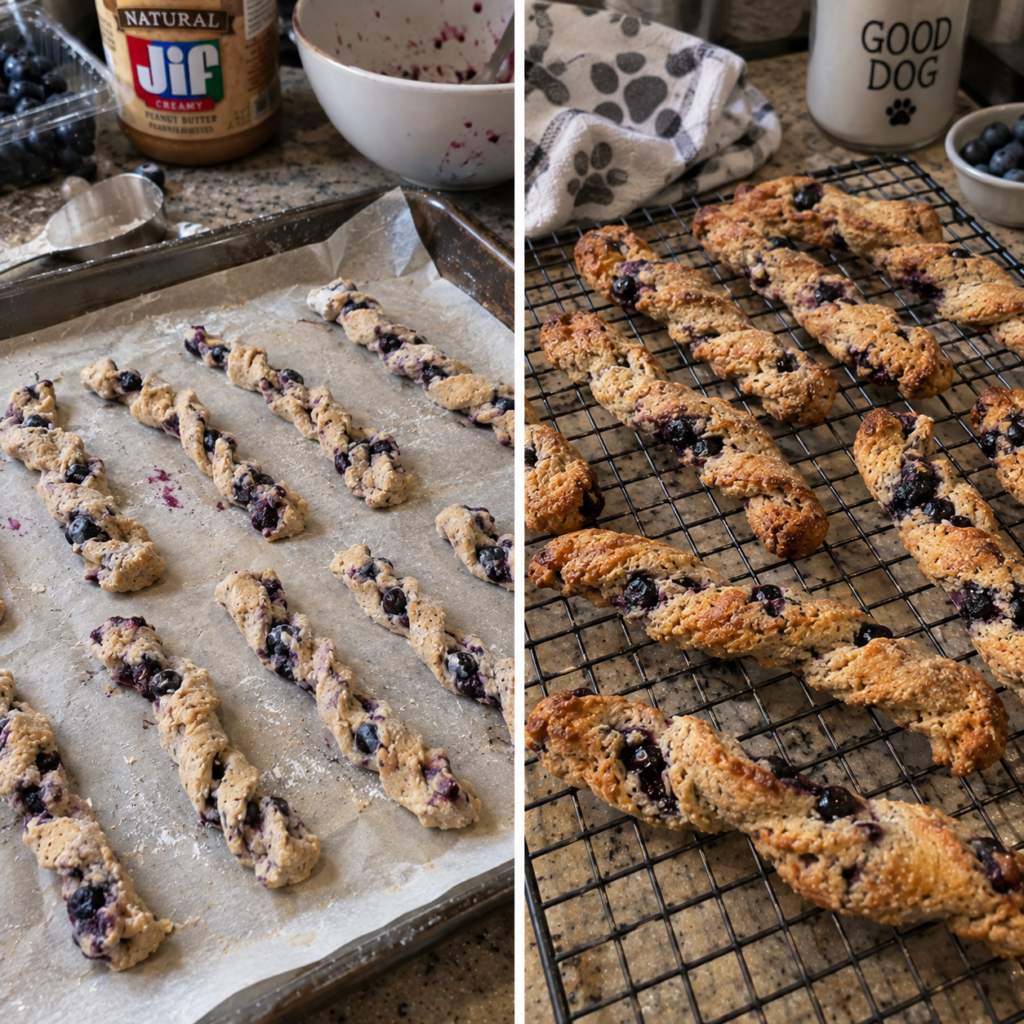
5. Form the Twists
Divide the dough into roughly 14–16 portions.
Roll each portion into a thin rope about 5–6 inches long.
Fold the rope in half, then twist the two strands around each other two or three times.
Pinch the two ends together firmly.
Don’t worry if every twist looks slightly different. Small variations are normal with homemade dough.
6. Bake
Arrange the twists on the prepared baking sheet with a little space between them.
Bake for 20–25 minutes, or until the treats feel firm and are lightly golden around the edges.
For a softer treat, begin checking around 18–20 minutes.
7. Cool Completely
Remove the baking sheet from the oven and allow the twists to cool completely.
They will become firmer as they cool.
Do not seal warm treats in a container because trapped heat and moisture can encourage spoilage.
Serving, Storage & Variations
Serving Size
These should be treated as occasional snacks rather than a replacement for your dog’s regular balanced diet.
A small dog may only need part of a twist, while a larger dog may be able to have one whole twist depending on its overall diet and calorie needs.
As a general guideline, treats and other extras should make up no more than about 10% of a dog’s daily calories.
Storage
Store completely cooled twists in an airtight container in the refrigerator for up to 1 week.
For longer storage, freeze the treats in a single layer before transferring them to a freezer-safe container or bag.
They can be frozen for approximately 3 months for best quality.
Softer Twists
For dogs that prefer a softer texture, bake for slightly less time and allow the treats to cool completely before serving.
Always consider your individual dog’s chewing ability when choosing treat texture.
Firmer Twists
For a firmer biscuit-like texture, bake closer to the full 25 minutes, watching carefully toward the end so the treats do not become excessively hard.
Easy Shape Alternative
The twisting step is mostly for appearance.
If you don’t want to shape individual ropes, roll the dough into small balls and flatten them slightly before baking.
You can also cut the dough into small strips or use a small cookie cutter.
Blueberry Substitutions
A small amount of mashed banana or finely diced, cored apple can work in place of the blueberries.
Because different fruits contain different amounts of moisture, you may need to adjust the oat flour slightly.
Common Mistakes
Using the Wrong Peanut Butter
This is the most important mistake to avoid.
Always check the ingredient list for xylitol or birch sugar before using peanut butter in homemade dog treats.
Adding Too Much Water
Blueberries release moisture as they are mashed, so the dough may need less water than expected.
Add it gradually rather than pouring in the full amount at once.
Using Sweetened Blueberries
Skip blueberry pie filling, canned berries in syrup, sweetened dried blueberries, and flavored fruit products.
Plain fresh or frozen blueberries are the better choice.
Making the Ropes Too Thin
Very thin ropes can become overly hard after baking.
Keep the dough thick enough to produce a sturdy little twist.
Not Pinching the Ends
If the ends aren’t pressed together firmly, the twist can unravel while baking.
Pinch them together and gently tuck the joined ends underneath if necessary.
Overbaking
These treats continue to firm as they cool.
If you want a slightly softer texture, take them out as soon as they are set and lightly golden rather than waiting for deep browning.
FAQ
Can dogs eat blueberry and peanut butter treats?
Most dogs can enjoy blueberries and peanut butter in moderation, provided the peanut butter is free from xylitol and other unsuitable ingredients.
Is peanut butter safe for dogs?
Plain peanut butter can be safe for dogs in small amounts, but always check the label for xylitol or birch sugar. Peanut butter is also calorie- and fat-dense, so portions should remain modest.
Can I use frozen blueberries?
Yes. Thaw plain frozen blueberries first and drain excess liquid before mashing them into the dough.
Can puppies eat these twists?
Puppies can potentially have small amounts of dog-safe ingredients such as blueberries and xylitol-free peanut butter, but treats should be appropriate for their age, size, chewing ability, and overall diet. A softer version may be easier for young dogs to manage.
Why is my dough too sticky?
The blueberries and peanut butter both contribute moisture. Add oat flour one tablespoon at a time until the dough becomes firm enough to roll.
Why did my twists fall apart?
The ends may not have been pinched firmly enough. Press the joined ends together before placing the twists on the baking sheet.
Can I use crunchy peanut butter?
You can, provided the product is free from xylitol and other unsuitable ingredients. However, creamy peanut butter generally makes the dough easier to roll and twist.
Can I make these without twisting them?
Absolutely. The twist is simply a fun shape. Small flattened rounds, strips, or bone-shaped biscuits can be made from the same dough.
How long do homemade blueberry peanut butter twists last?
For the most conservative storage approach, keep them refrigerated in an airtight container for up to one week. They can also be frozen for longer storage.
Conclusion
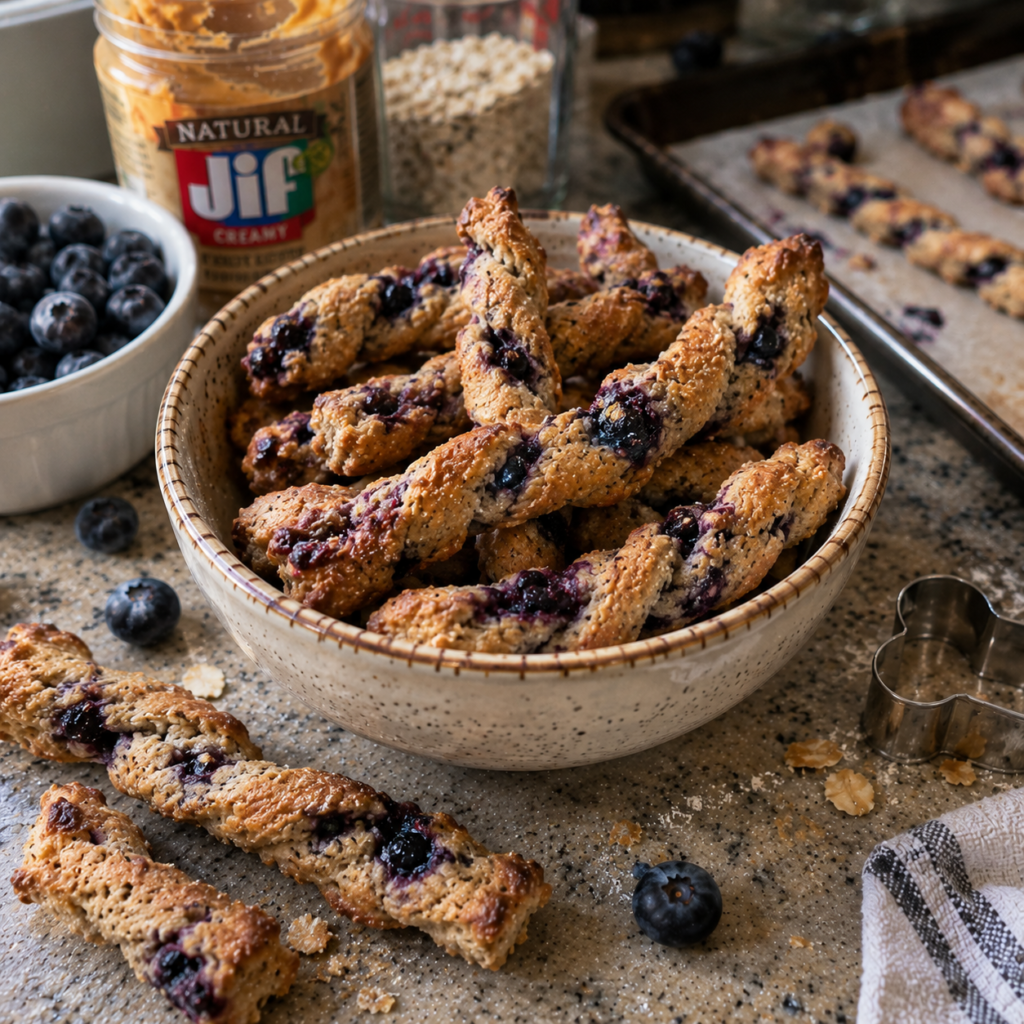
These blueberry and peanut butter twists are a simple way to turn a few dog-friendly ingredients into a homemade treat with a little extra character.
The dough is easy to work with, the twist shape doesn’t require special equipment, and the blueberries add natural flavor without needing added sugar.
The biggest thing to remember is the peanut butter label: xylitol has no place in a dog treat. Once you’ve chosen a suitable peanut butter and kept the portions sensible, these little twists make a fun addition to your homemade treat rotation.
Medical Disclaimer
This recipe is intended as an occasional treat and is not a complete or balanced diet for dogs. Every dog is different, and ingredients that are tolerated by one dog may not be appropriate for another. If your dog has allergies, digestive problems, pancreatitis, diabetes, obesity, or is following a veterinary-prescribed diet, check with your veterinarian before introducing new treats.
If you suspect your dog has eaten peanut butter containing xylitol, contact a veterinarian or emergency veterinary service immediately.