
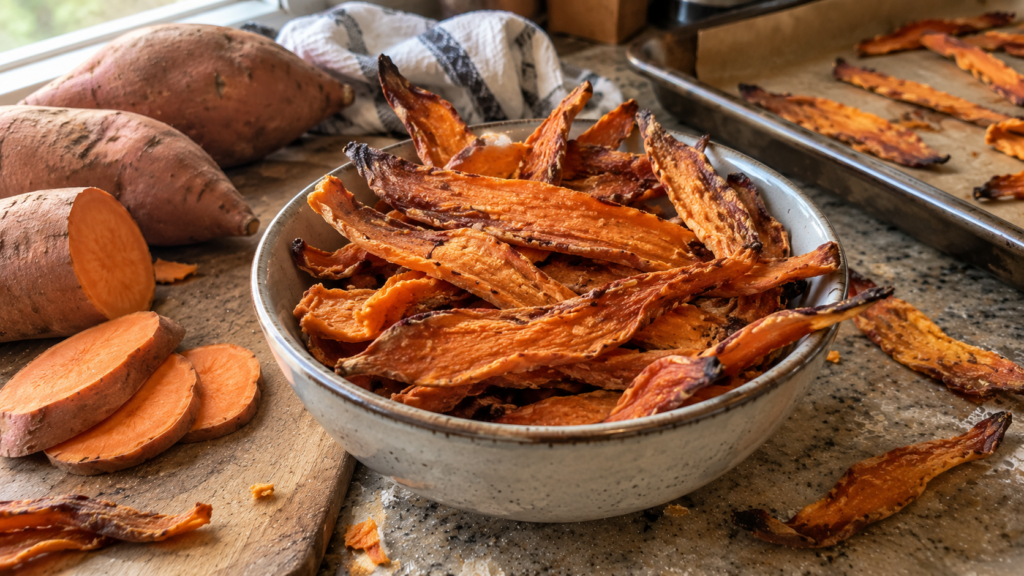
I started making these sweet potato dog chews when I wanted something simple I could give my dog without pulling out a long list of ingredients. Sweet potatoes are already naturally flavorful, so I found that I really didn’t need to add much at all.
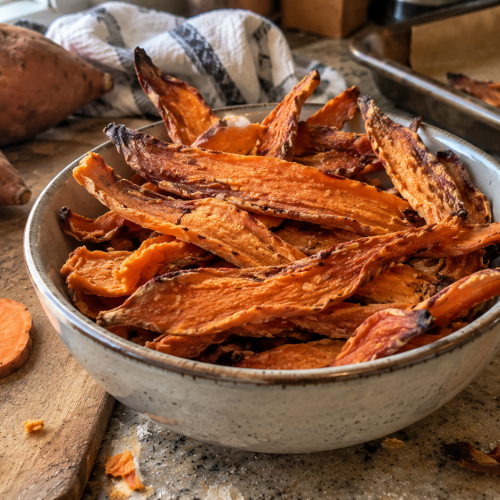
What I like most about this recipe is how easy it is. I slice the sweet potatoes into long strips, put them in the oven, and let them slowly dry until they’re chewy and firm. The pieces don’t all come out perfectly — some are thicker, some curl a little, and the edges get darker than others — and honestly, that’s part of what makes them feel homemade.
I usually make a batch at once and keep the cooled chews in the refrigerator so I have a simple treat ready when I need one. They’re especially handy when I want to give my dog something different without making another complicated recipe.
Quick Answer
Yes, dogs can eat plain, fully cooked sweet potato in moderation. For homemade chews, use fresh sweet potatoes and avoid adding sugar, salt, butter, oil, spices, or sweeteners.
These chews are made by slicing sweet potatoes lengthwise and slowly baking them at a low temperature until they are dried and chewy.
Important: These are treats, not a replacement for your dog’s regular balanced diet, and they should always be given according to your dog’s size, chewing habits, and individual needs.
Recipe Snapshot
| Detail | Homemade Sweet Potato Dog Chews |
|---|---|
| Prep Time | 10 minutes |
| Cook Time | About 3 hours |
| Total Time | About 3 hours 10 minutes |
| Ingredients | 1 |
| Yield | About 15–20 chews |
| Texture | Chewy and slightly firm |
| Storage | Refrigerate after cooling |
Key Takeaways
- You only need sweet potatoes.
- Peel the potatoes if you want an easier-to-digest chew.
- Cut the slices evenly so they dry at a similar rate.
- About ¼ inch thick works well for chewy pieces.
- Bake slowly at 250°F / 120°C.
- Let the chews cool completely before storing.
- Start with a small portion when introducing sweet potato to your dog.
- Treats should remain a small part of your dog’s overall diet.
Are Sweet Potatoes Safe for Dogs?
Plain, fully cooked sweet potato can be a suitable occasional treat for many dogs. Sweet potatoes provide fiber and nutrients, but they are still a carbohydrate-rich food, so portion size matters.
Raw sweet potato is harder to chew and digest and can create a choking or digestive risk, particularly when served in large pieces. Cooking softens the vegetable and makes it easier to eat.
For these chews, avoid turning the recipe into a human-style snack. There is no need for butter, brown sugar, maple syrup, salt, cinnamon, nutmeg, or other seasonings.
If your dog has diabetes, a prescribed diet, digestive problems, or another health condition affected by diet, check with your veterinarian before adding homemade treats.
How to Make Sweet Potato Dog Chews
Ingredients
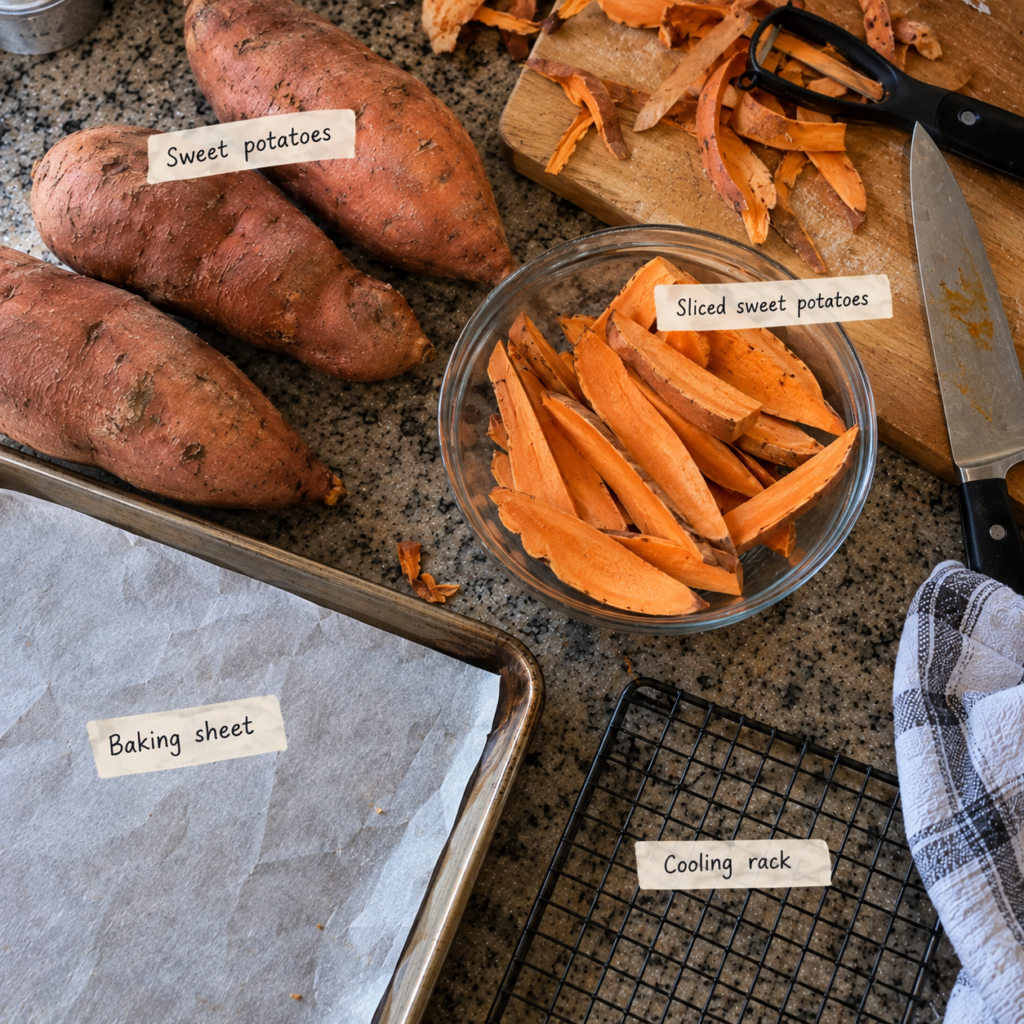
- 2 medium sweet potatoes
That’s it.
Choose firm sweet potatoes without soft spots, mold, sprouts, or green areas.
1. Wash the Sweet Potatoes
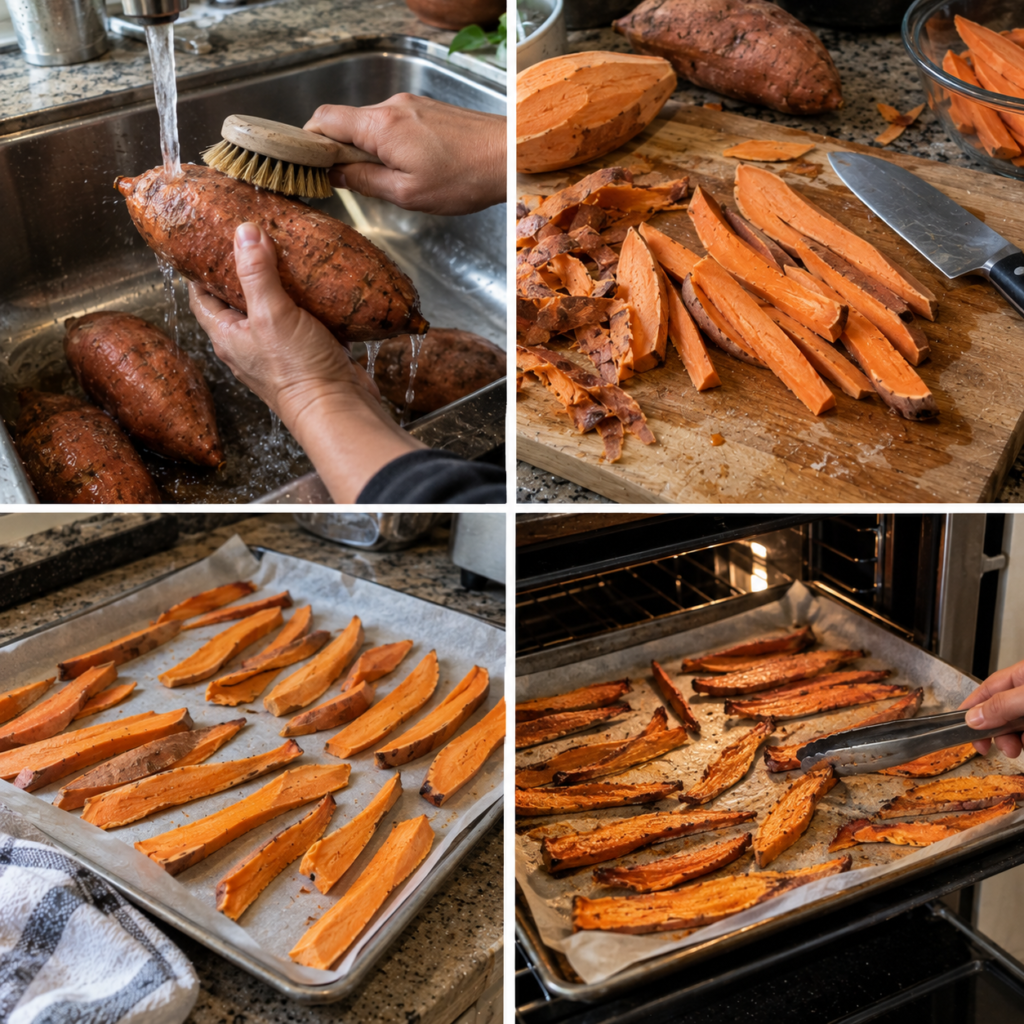
Scrub the sweet potatoes thoroughly under running water.
If you prefer, peel them completely. Removing the skin gives you a smoother chew and eliminates the need to worry about pieces of tough skin.
Pat the potatoes dry before slicing.
2. Slice Into Long Strips
Cut the sweet potatoes lengthwise into strips approximately ¼ inch thick.
Try to keep the thickness as consistent as possible. Very thin slices will dry much faster and may become crisp, while thicker pieces will take longer and retain more chew.
For larger dogs, longer strips can work well. For smaller dogs, make the pieces shorter after drying or start with smaller portions.
3. Arrange on a Baking Sheet
Line a baking sheet with parchment paper.
Place the sweet potato slices in a single layer with a little space between them. Avoid overlapping the pieces because trapped moisture will slow the drying process.
You do not need to add oil or cooking spray.
4. Bake Low and Slow
Preheat your oven to 250°F / 120°C.
Bake the sweet potato slices for approximately 3 hours, turning them about halfway through.
The exact time will depend on the thickness of the slices and how much moisture your sweet potatoes contain.
You’re looking for pieces that are dried and firm on the outside while still having some flexibility when bent.
5. Cool Completely
Remove the chews from the oven and allow them to cool completely on the baking sheet or a wire rack.
They will continue to firm up as they cool.
Do not seal warm chews in a container because trapped heat and moisture can encourage spoilage.
Getting the Right Chewy Texture
The thickness of your slices makes a noticeable difference.
For softer, chewier pieces:
Cut them closer to ¼–⅓ inch thick and stop baking once they are dry on the outside but still flexible.
For firmer chews:
Use slightly thinner slices or extend the baking time.
For smaller treats:
Cut the finished strips into bite-sized pieces after they have cooled.
Don’t aim for a rock-hard texture. A homemade sweet potato chew should be appropriately sized for the individual dog and easy for them to manage.
Serving, Storage & Variations
How Much Can I Give My Dog?
Start with a small piece the first time you offer sweet potato.
A small dog may only need a small bite, while a larger dog can generally handle a larger treat. The correct amount depends on the dog’s size, normal diet, activity level, and overall health.
Keep these treats within the dog’s daily treat allowance rather than adding them on top of unlimited snacks.
How Should I Store Them?
Once completely cool, place the chews in an airtight container and refrigerate them.
Because these are homemade treats without preservatives, refrigeration is a safer storage choice than leaving a batch at room temperature for an extended period.
Discard any pieces that develop mold, an unusual smell, or excessive moisture.
Can I Freeze Them?
Yes. After cooling completely, arrange the chews in a freezer-safe container or bag and freeze them.
Separate layers with parchment paper if the pieces stick together.
Thaw only the amount you intend to use.
Can I Make Them in a Dehydrator?
Yes. A food dehydrator can work particularly well for this type of treat because it is designed to remove moisture gradually.
Drying time will vary considerably depending on the dehydrator, slice thickness, and desired texture, so use flexibility and dryness rather than a fixed time as your guide.
Can I Add Other Ingredients?
You can, but you don’t need to.
Keeping the recipe to one ingredient makes it especially easy to control what goes into your dog’s treat.
If you do create variations, avoid ingredients that are unsafe for dogs or that add unnecessary sugar, salt, fat, or seasoning.
Common Mistakes
Cutting the slices too thin
Very thin slices can turn into crunchy chips rather than chewy treats.
Making the slices different thicknesses
Thin pieces may burn or become brittle while thicker pieces are still moist.
Adding oil or seasoning
Sweet potatoes don’t need anything added for this recipe. Extra ingredients can change the nutritional profile and may introduce ingredients dogs shouldn’t eat.
Baking at a high temperature
High heat can brown the outside before enough moisture has been removed from the center.
Storing them while warm
Allow the chews to cool completely before placing them in a sealed container.
Giving a very large piece
Even a simple homemade treat can become a choking concern if the piece is inappropriate for the dog. Choose a size and texture your individual dog can safely manage and supervise while eating.
FAQ
Can dogs eat sweet potato chews?
Yes, plain homemade sweet potato chews can be an occasional treat for many dogs when prepared properly and served in appropriate portions.
Can I use raw sweet potato?
Use raw sweet potato for preparing the chews, but don’t feed it raw to your dog. The slices should be thoroughly cooked and dried before serving.
Should I peel sweet potatoes for dog chews?
Peeling is a good option because the skin can be tougher and more difficult to digest. If you leave the skin on, scrub the potatoes extremely well and make sure the finished pieces are appropriate for your dog.
How long do sweet potato dog chews last?
Because homemade chews contain no preservatives, storage life depends on how thoroughly they were dried and how they are stored. Refrigeration is recommended, and frozen storage can extend their keeping time.
Are sweet potato chews a replacement for rawhide?
No. These homemade treats should not automatically be considered a substitute for rawhide or a dental chew. Their texture varies with preparation, and dogs should always be supervised when eating homemade chews.
Can puppies eat sweet potato chews?
Puppies can eat small amounts of plain, cooked sweet potato, but their treats should be appropriately soft, small, and easy to manage. Introduce new foods gradually.
Can dogs eat sweet potato every day?
Sweet potato is best treated as an occasional addition rather than a major part of a dog’s diet. Too much can add unnecessary calories and carbohydrates and may cause digestive upset.
Conclusion
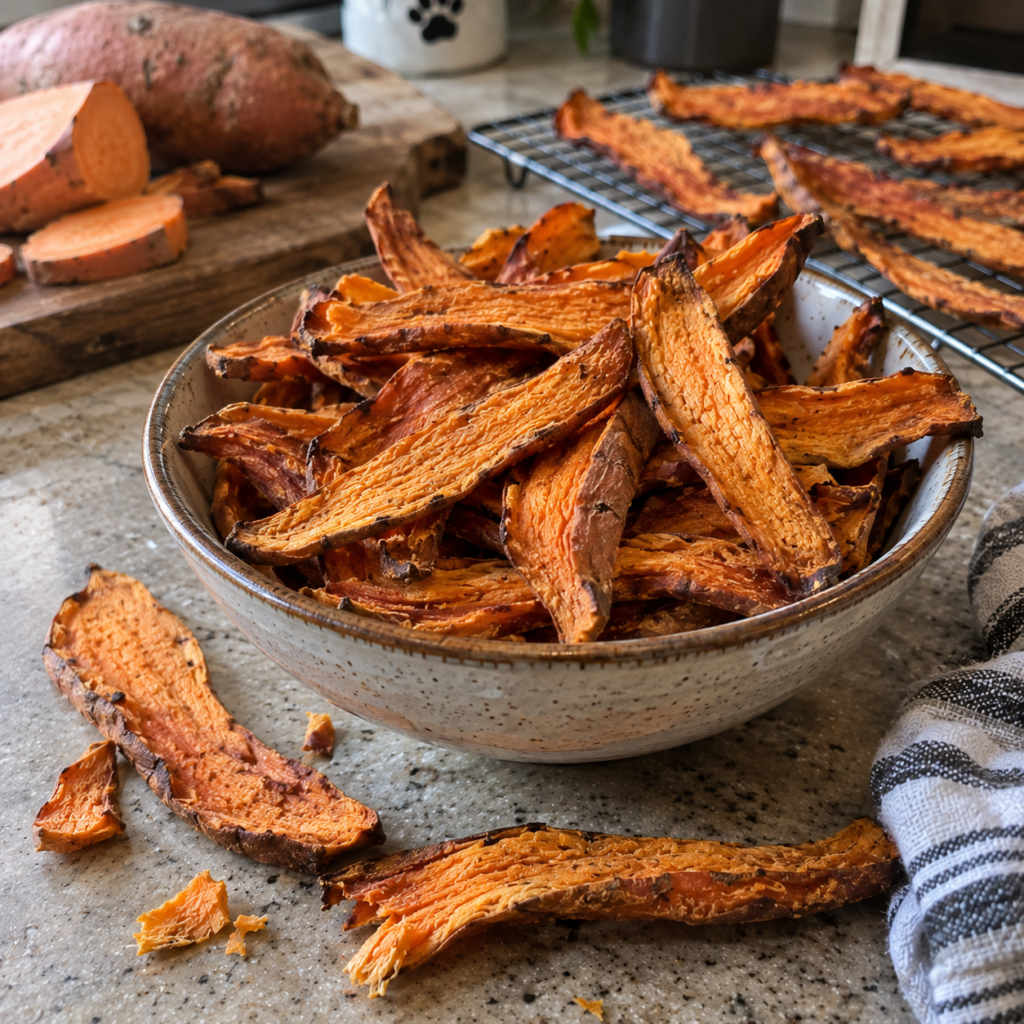
These homemade sweet potato dog chews are about as simple as homemade treats get. With one ingredient and a little patience, you can turn fresh sweet potatoes into naturally chewy pieces without adding sugar, salt, oil, or unnecessary extras.
The key is taking your time: slice evenly, bake gently, let the moisture gradually escape, and cool the finished chews completely before storing them.
Once you know the texture your dog enjoys, you can adjust the thickness and drying time to make each batch a little softer or firmer.
Medical Disclaimer
This recipe is intended as general information and is not a substitute for veterinary advice. Every dog has different nutritional needs and may respond differently to new foods. If your dog has a medical condition, food sensitivity, prescribed diet, or you are unsure whether sweet potato is appropriate, speak with your veterinarian before introducing these treats.
References
- PetMD — Can Dogs Eat Sweet Potatoes?
- AKC — Can Dogs Eat Sweet Potatoes?
- Zoetis Petcare — Homemade Sweet Potato Dog Chews Recipe
- The Purposeful Pantry — Easy DIY Dog Chews from Dehydrated Sweet Potatoes
- Nourish and Nestle — Sweet Potato Dog Chews Recipe