


Quick Answer: Yes, dogs can eat watermelon as an occasional treat, but it should be prepared properly. Give your dog only the soft red or pink flesh, and remove the hard black seeds and the green and white rind first.
Watermelon is mostly water and can be a refreshing, relatively low-calorie snack. However, eating too much may cause digestive upset, while seeds and rind can create choking or gastrointestinal obstruction concerns.
For most healthy dogs, a few small pieces are enough. Watermelon should complement, not replace, a complete and balanced diet.
Table of Contents
Key Takeaways
- Dogs can eat plain watermelon flesh in moderation.
- Remove the hard black seeds before serving.
- Never intentionally feed watermelon rind.
- Start with a small portion if your dog has never tried watermelon.
- Too much watermelon may cause loose stool, diarrhea, or stomach discomfort.
- Puppies can have small amounts once they are reliably eating solid food.
- Dogs with diabetes, kidney disease, or other health conditions may need individualized dietary advice.
- Avoid watermelon products containing added sugar, syrups, or artificial sweeteners.
- If your dog eats a large amount of rind or seeds and develops symptoms, contact your veterinarian.
Is Watermelon Safe for Dogs?
Plain watermelon flesh is generally safe for dogs when served correctly.
Watermelon is about 92% water and contains nutrients including vitamins A, B6, and C. Its high water content also makes it a refreshing treat, particularly during warm weather.
However, not every part of the fruit is appropriate for dogs.
Before giving watermelon to your dog:
- Remove the green outer rind.
- Remove the white inner rind.
- Remove the hard black seeds.
- Cut the remaining flesh into small pieces.
- Give only a modest portion.
Watermelon should remain a treat, not a replacement for your dog’s normal complete and balanced food.
Which Parts of Watermelon Can Dogs Eat?
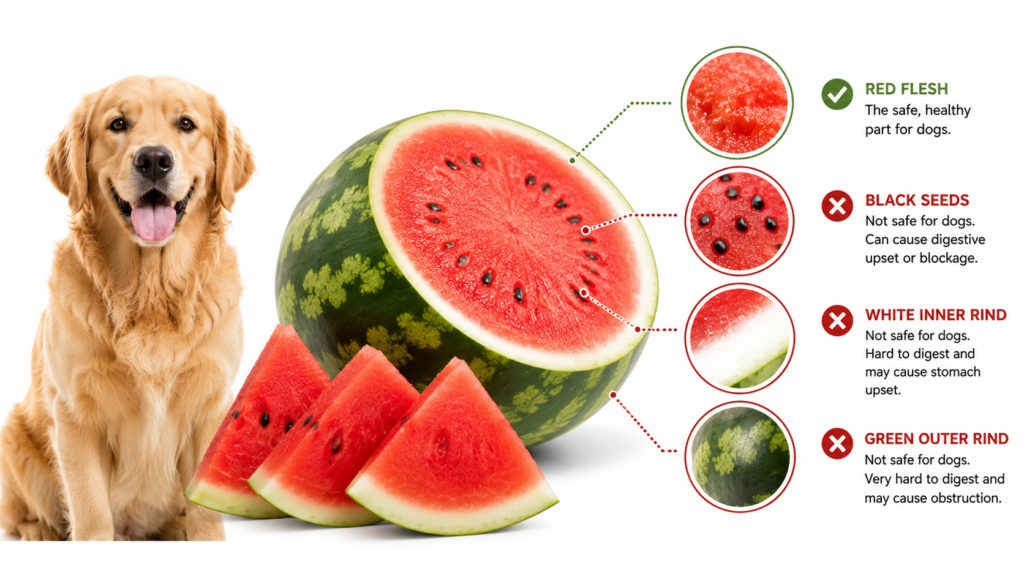
The safest part for dogs is the soft red or pink flesh.
| Part of Watermelon | Safe for Dogs? | Why |
|---|---|---|
| Red/pink flesh | ✅ Yes | Safe when plain and given in moderation |
| Hard black seeds | ❌ Avoid | May create a choking or gastrointestinal obstruction risk |
| Green outer rind | ❌ Avoid | Tough and difficult to digest |
| White inner rind | ❌ Avoid | Can be difficult to digest and may contribute to gastrointestinal problems |
What If My Dog Eats a Few Seeds?
Don’t automatically panic if your dog accidentally swallows one or two seeds.
A small number may pass without causing a problem, particularly in a larger dog. However, risk depends on the amount swallowed and the dog’s size.
Watch for:
- Vomiting
- Loss of appetite
- Abdominal discomfort
- Lethargy
- Difficulty passing stool
If your dog swallowed a large number of seeds, is very small, or develops concerning symptoms, contact your veterinarian.
What About Watermelon Rind?
Avoid intentionally feeding the rind.
The green outer skin and firm white portion are much tougher than the flesh and can be difficult for dogs to digest. Large pieces may also present a choking or obstruction concern.
If your dog eats a small piece accidentally, monitor them rather than assuming an emergency. Contact your veterinarian if vomiting, abdominal pain, loss of appetite, weakness, or other concerning symptoms develop.
Watermelon Benefits and Nutritional Value for Dogs
Watermelon can be a useful occasional treat because it is:
- High in water
- Relatively low in calories
- A source of vitamins A, B6, and C
- Naturally sweet when served plain
Its high water content makes it a refreshing snack, especially on warm days.
Is Watermelon a Necessary Part of a Dog’s Diet?
No.
A complete and balanced dog food should provide the nutrients your dog needs. Watermelon is simply an optional treat.
The supplied draft gives approximately 46 calories per cup of watermelon, although actual calories can vary depending on serving size.
So while watermelon can be a lighter treat than some calorie-dense snacks, portion size still matters.
How Much Watermelon Can Dogs Eat?

Start small, especially if your dog has never eaten watermelon before.
A few small pieces are enough to see how your dog’s digestive system responds.
The appropriate amount depends on:
- Your dog’s size
- Weight
- Activity level
- Overall diet
- Health conditions
- Other treats given that day
The original material suggests approximately 1–3 small cubes per 10 pounds of body weight and keeping treats within about 10% of daily calories.
Rather than treating those numbers as a strict prescription for every dog, use them as a conservative starting point.
Simple Starting Portions
| Dog Size | Starting Portion |
|---|---|
| Small dog | 1–2 small cubes |
| Medium dog | A few small cubes |
| Large dog | A small handful of small cubes |
If your dog tolerates watermelon well, you can occasionally offer a little more, while still keeping treats reasonable within their overall diet.
How Often Can Dogs Have Watermelon?
There is no universal number of days per week that applies to every dog.
For most healthy dogs, watermelon is best treated as an occasional snack rather than an everyday dietary staple.
How to Safely Prepare and Serve Watermelon
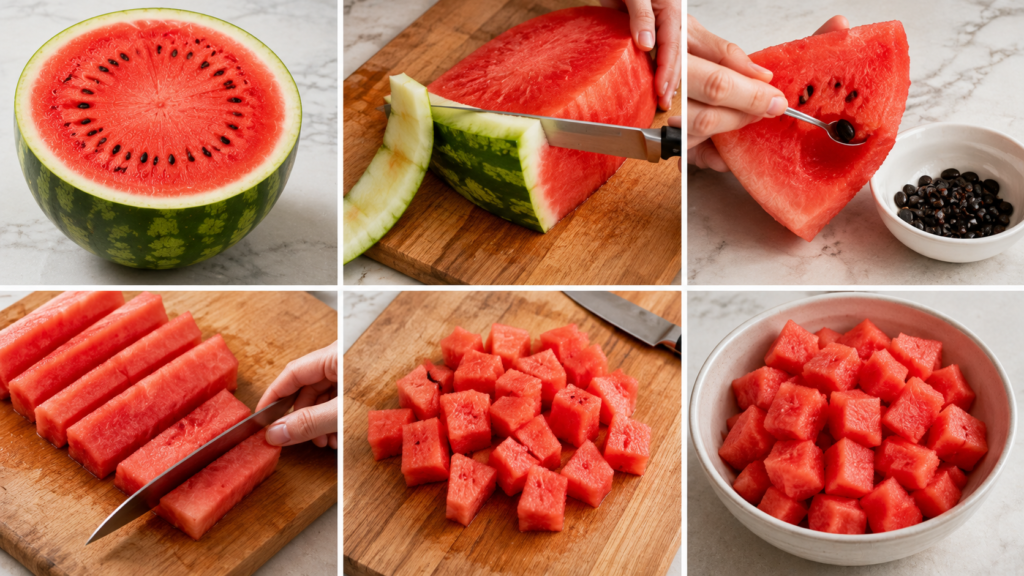
The safest preparation is simple: plain, seedless, rind-free watermelon flesh.
Step-by-Step
- Cut the watermelon into manageable sections.
- Remove the green outer rind.
- Remove the white inner rind.
- Remove visible hard black seeds.
- Cut the flesh into small, bite-sized pieces.
- Give your dog a small portion.
Fresh Watermelon
Fresh watermelon can be served chilled or at room temperature.
Avoid giving your dog watermelon that contains:
- Added sugar
- Syrup
- Chocolate
- Artificial sweeteners
- Other ingredients that may be unsafe for dogs
Frozen Watermelon
Plain watermelon flesh can also be frozen for a refreshing treat.
Cut it into appropriately sized pieces before freezing, and consider your dog’s chewing and swallowing habits.
For dogs that gulp food, avoid giving pieces that are too large or extremely hard.
What About Watermelon Juice?
Plain watermelon blended into a liquid is different from commercial watermelon drinks.
Avoid store-bought juices or flavored drinks that may contain added sugar, sweeteners, or other ingredients that aren’t appropriate for dogs.
For simplicity, plain watermelon pieces are the better choice.
Risks of Feeding Watermelon to Dogs
For most healthy dogs, the main concerns are portion size and preparation.
Too Much Watermelon
Eating a large amount can cause:
- Loose stool
- Diarrhea
- Gas
- Stomach discomfort
If your dog develops digestive upset after eating watermelon, stop offering it and monitor them.
Seeds
Hard black seeds may create a choking or gastrointestinal obstruction concern, particularly when a dog eats a larger quantity.
Rind
Large pieces of rind are tough and can be difficult to digest.
Added Ingredients
Watermelon candy, desserts, sweetened drinks, and other flavored products can contain ingredients that are unsuitable for dogs.
Plain watermelon is the safest option.
If Your Dog Ate Rind or Seeds
The appropriate response depends on:
- How much was eaten
- Your dog’s size
- Whether the material was swallowed
- Whether symptoms develop
| Situation | What to Do |
|---|---|
| Small amount of watermelon flesh | Monitor |
| A few accidentally swallowed seeds | Monitor closely |
| Large number of seeds | Contact your veterinarian |
| Large piece of rind | Contact your veterinarian |
| Repeated vomiting | Contact your veterinarian promptly |
| Abdominal pain or loss of appetite | Contact your veterinarian |
| Severe pain, bloating, weakness, or collapse | Emergency veterinary care |
Do not try to make your dog vomit unless a veterinarian specifically tells you to.
If your dog has swallowed a potentially obstructive piece of rind or a large quantity of seeds, contacting your veterinarian early is safer than waiting for symptoms to develop.
Can Puppies and Dogs With Health Conditions Eat Watermelon?
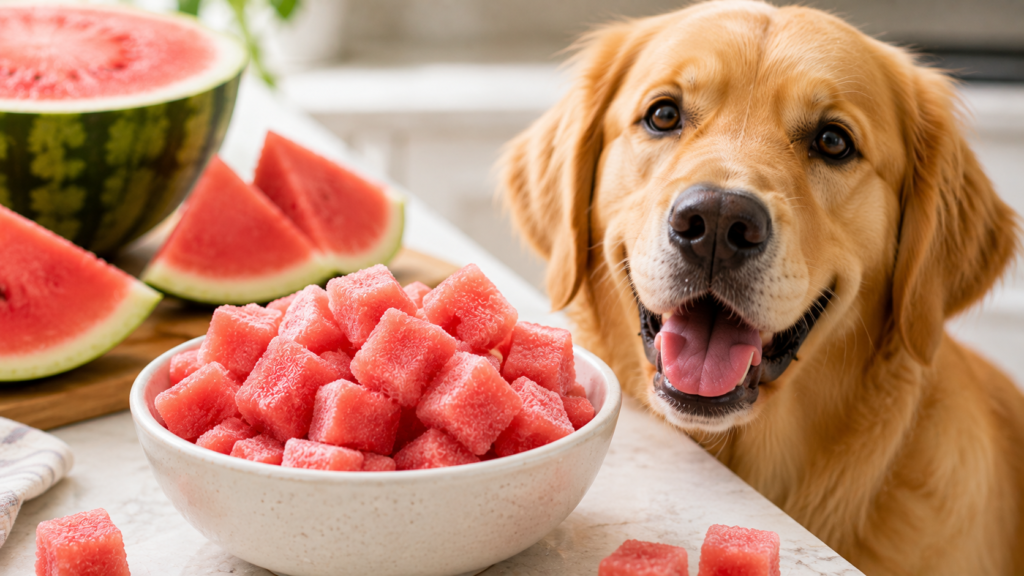
Most healthy puppies can have a small amount of watermelon once they are reliably eating solid food.
Because puppies can have sensitive digestive systems, start with a tiny piece and monitor them.
If your puppy develops vomiting or diarrhea, stop offering the treat and contact your veterinarian if symptoms are severe or don’t resolve.
Dogs With Diabetes
Watermelon contains naturally occurring sugar.
A small amount may fit into some diabetic dogs’ diets, but don’t assume it is appropriate for every dog with diabetes.
Your veterinarian can help determine whether watermelon and other treats fit into your dog’s glucose-management plan.
Dogs With Kidney Disease
Dogs with kidney disease may have individualized dietary requirements involving nutrients such as phosphorus, sodium, potassium, protein, and fluid intake.
Don’t add watermelon to a therapeutic kidney diet without first asking your veterinarian.
Other Medical Conditions
Dogs with obesity, digestive disease, food sensitivities, or other chronic conditions may also need individualized dietary advice.
When in doubt, ask the veterinarian managing your dog’s condition.
Watermelon vs. Other Fruits for Dogs
Watermelon is one of several fruits that can be used as an occasional dog treat.
| Fruit | Approx. Calories per Cup | Potential Benefit |
|---|---|---|
| Watermelon | ~46 | Hydration and a light treat |
| Blueberries | ~84 | Nutrient-dense fruit option |
| Apples | ~57 | Fiber and crunchy texture |
| Bananas | ~105 | Higher-energy fruit with potassium |
These calorie values are approximate and can vary depending on serving size and preparation.
There isn’t one fruit that is automatically “best” for every dog.
The right choice depends on your dog’s overall diet, health, calorie needs, and individual tolerance.
Frequently Asked Questions
Can dogs eat seedless watermelon?
Yes. Seedless watermelon can be convenient because it contains fewer hard black seeds.
Still remove the rind and check the flesh for any remaining hard seeds before serving.
Is watermelon good for dehydrated dogs?
Watermelon contains a lot of water, but it should not be used to treat significant dehydration.
A dehydrated dog may need veterinary treatment, particularly when dehydration is caused by vomiting, diarrhea, heat exposure, or illness.
Can dogs drink watermelon juice?
Plain watermelon blended with no added ingredients is different from commercial watermelon drinks.
Avoid products containing added sugar, artificial sweeteners, or other ingredients that may be unsafe for dogs.
Plain watermelon pieces are generally the simpler choice.
Can dogs eat frozen watermelon?
Yes, as long as it is plain, seedless, and rind-free.
Cut it into an appropriate size for your dog and supervise them while eating.
Does watermelon have too much sugar for dogs?
Watermelon contains natural sugar, but a small serving can fit into the diet of many healthy dogs.
The important factors are portion size and your dog’s overall diet.
Conclusion
Yes, dogs can eat watermelon.
The safest way to share it is simple: remove the seeds and rind, serve only the red or pink flesh, and keep the portion small.
Watermelon can be a refreshing, water-rich treat, especially during warm weather, but it isn’t necessary for a healthy canine diet.
If your dog accidentally eats a small amount of seed or rind, don’t panic. Monitor them closely.
If they eat a large amount or develop vomiting, abdominal pain, loss of appetite, weakness, bloating, or other concerning symptoms, contact your veterinarian.
For dogs with diabetes, kidney disease, obesity, digestive disorders, or other medical conditions, check with your veterinarian before adding watermelon to their diet.
References
- American Kennel Club — Can Dogs Eat Watermelon?
- PetMD — Can Dogs Eat Watermelon?
- Chewy — Can Dogs Eat Watermelon?
- Wellbeloved — Can Dogs Eat Watermelon?
- Petful — Can Dogs Eat Watermelon Rind?
- Rover — Can Dogs Eat Watermelon?
- Hill’s Pet Nutrition — Can Dogs Eat Watermelon?
- Tractive — Can Dogs Eat Watermelon