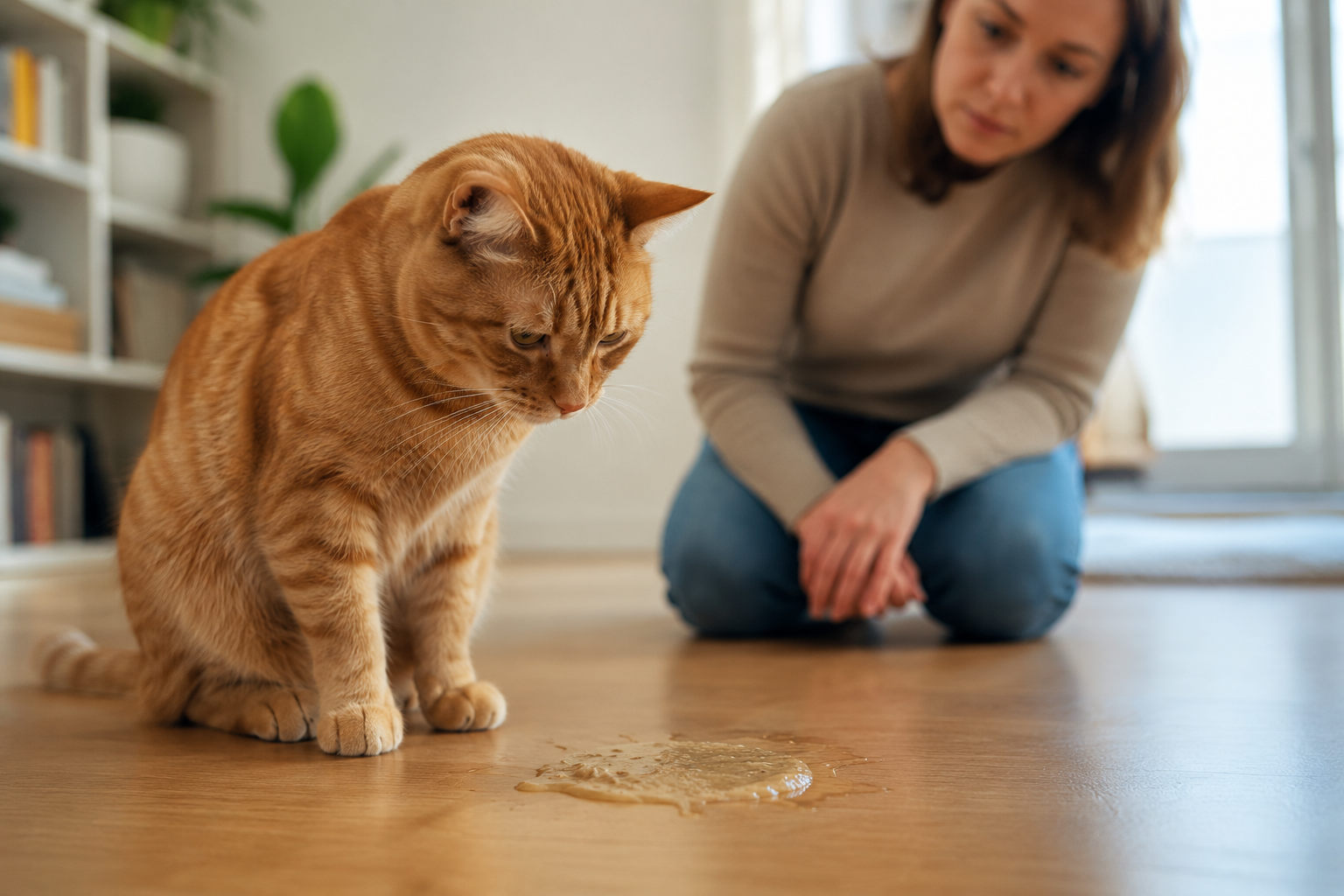
Finding vomit on the floor or watching your cat throw up can be worrying—especially if you don’t know whether it’s just a harmless hairball or a sign of something more serious. While occasional vomiting is fairly common in cats, frequent or severe vomiting can indicate an underlying health problem that needs veterinary attention. The most common reasons cats vomit include hairballs, eating too quickly, sudden diet changes, and mild stomach upset. However, vomiting can also be an early symptom of conditions such as kidney disease, intestinal blockages, food allergies, or poisoning. Knowing what to look for can help you decide whether it’s safe to monitor your cat at home or if it’s time to call your veterinarian. In this guide, you’ll learn the most common causes of cat vomiting, how to tell the difference between normal and abnormal vomiting, when it’s an emergency, what treatments may help, and practical steps you can take to reduce future episodes. At a Glance 🐱 Most common causes: Hairballs, eating too fast, diet changes 🟢 Usually safe to monitor: One isolated episode, otherwise acting normally 🟡 Call your vet: Vomiting several times, loss of appetite, lethargy 🔴 Emergency: Blood in vomit, suspected poisoning, swallowing string, repeated unproductive retching Quick Answer: An occasional vomiting episode is often caused by hairballs, eating too quickly, or a mild stomach upset. However, vomiting several times in a day, vomiting blood, repeated dry retching, or vomiting alongside lethargy, weight loss, or suspected poisoning requires prompt veterinary attention. Key Takeaways What’s the Difference Between Vomiting and Regurgitation in Cats? Vomiting and regurgitation may look similar, but they’re two different problems. Vomiting is an active process that starts in the stomach, while regurgitation is a passive process where undigested food comes back up from the esophagus. Knowing which one your cat is experiencing helps your veterinarian narrow down the possible cause much faster. Feature Vomiting Regurgitation Effort Active retching or heaving Happens suddenly with little effort Source Stomach or upper intestines Esophagus Appearance Partially digested food, bile, or foam Undigested tube-shaped food Timing Can happen hours after eating Usually within minutes of eating Common causes Hairballs, illness, diet changes Esophageal disorders Vet Tip: If possible, record a short video of the episode on your phone. What looks like vomiting to you may actually be regurgitation, and seeing it firsthand can help your veterinarian make a quicker diagnosis. What Are the Most Common Reasons Cats Throw Up? The most common reasons cats vomit include hairballs, eating too quickly, sudden diet changes, food sensitivities, and medical conditions such as kidney disease. While many vomiting episodes are caused by relatively minor problems, frequent or severe vomiting should never be ignored. Some causes are harmless and temporary, while others require prompt veterinary care. Here’s how to tell them apart. Some cats eat grass before vomiting, possibly to help clear hair or other irritating material from their stomach. Occasional grass eating is usually normal, but frequent vomiting should be checked by a vet. What Does the Color of My Cat’s Vomit Mean? The color and appearance of your cat’s vomit can provide helpful clues about the possible cause. While it’s not enough to diagnose a problem on its own, it can help you decide whether your cat can be monitored at home or should be seen by a veterinarian. Vomit Appearance Possible Cause What You Should Do White foam Empty stomach, mild stomach irritation Monitor if your cat is otherwise acting normally. Yellow liquid (bile) Empty stomach or digestive upset Offer smaller, more frequent meals. See your vet if it keeps happening. Hairball Swallowed fur Usually normal unless it happens frequently. Undigested food Eating too quickly or regurgitation Feed smaller meals or use a slow-feeder bowl. Clear liquid Water, mucus, or stomach irritation Monitor for other symptoms. Blood (red or coffee-ground) Bleeding in the digestive tract Seek emergency veterinary care immediately. While occasional vomiting of hairballs or bile isn’t always a cause for concern, vomiting blood, repeated vomiting, or vomiting accompanied by lethargy, diarrhea, or loss of appetite should always be evaluated by a veterinarian. Is Cat Vomiting Always a Sign of Something Serious? Not always. An otherwise healthy cat that vomits occasionally but continues eating, drinking, and behaving normally is often experiencing a minor issue, such as a hairball or mild stomach upset. Vomiting becomes more concerning if it happens frequently, lasts more than a day or two, or is accompanied by symptoms such as lethargy, weight loss, increased thirst, diarrhea, or a swollen abdomen. These signs may point to an underlying medical condition that requires veterinary care. Practical takeaway: Keep a simple log — date, frequency, what the vomit looked like, and whether your cat ate beforehand. Even a week’s worth of notes gives your vet a clearer picture than memory alone. How Do I Know If My Cat’s Vomiting Is an Emergency? 🚨 When to Monitor Your Cat vs. Call the Vet Lily poisoning is a true emergency in cats. Even small amounts of Easter, tiger, or daylilies can cause severe kidney damage. If you suspect your cat has chewed any part of a lily, contact an emergency veterinarian immediately. How Often Is It Normal for Cats to Vomit? There’s no exact number that’s considered “normal,” but vomiting more than once a week should be discussed with your veterinarian. Some cats occasionally vomit a hairball, while others rarely vomit at all. What’s most important is any change from your cat’s normal pattern. For example, a cat that vomits after eating too quickly is different from one that vomits several times a week with no obvious cause. Chronic vomiting that lasts longer than three weeks should always be evaluated by a veterinarian. Can Cat Food Allergies Cause Vomiting? Yes. Food allergies and food sensitivities can cause ongoing vomiting in some cats. Common triggers include beef, chicken, fish, and dairy. Unlike a sudden stomach upset, food-related vomiting is usually ongoing rather than a one-time episode. Your veterinarian may recommend a hydrolyzed or novel-protein diet