
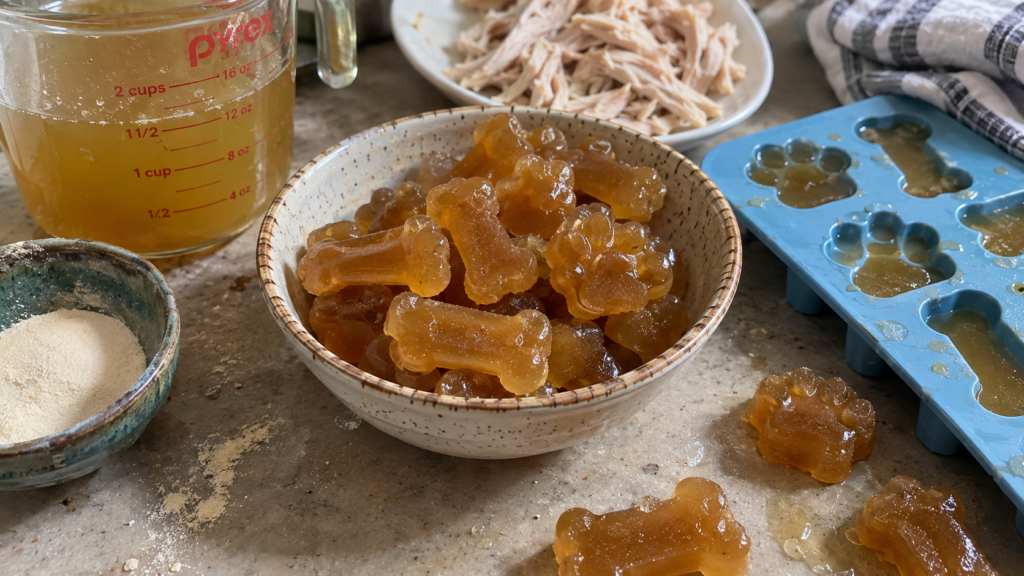
Some homemade dog treats are worth keeping in the refrigerator simply because they’re so easy to grab when you need a quick reward. These chicken bone broth gummy treats are one of those recipes.
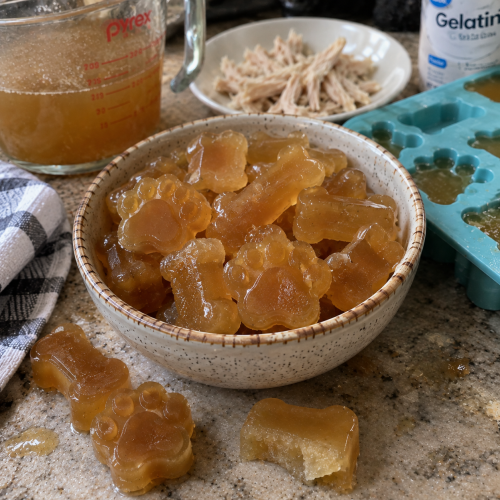
They’re soft, chewy, savory, and made with just a couple of simple ingredients. The broth gives them a rich chicken flavor, while plain gelatin transforms the liquid into little bite-sized gummies that are easy to portion.
I make these in small paw or bone-shaped silicone molds, which makes the finished treats especially cute. Once they’re set, they’re ready to keep in the fridge for a quick homemade snack whenever your dog deserves a little something extra.
The important part is choosing the right broth. It needs to be plain and free from onion, garlic, chives, excessive salt, and seasoning blends.
Quick Answer
Yes, dogs can have homemade chicken bone broth gummy treats when they’re made with dog-safe chicken broth and plain, unflavored gelatin.
The broth should contain no onion, garlic, chives, or other unsafe ingredients, and any homemade broth must be thoroughly strained so that no bones or bone fragments remain.
These gummies are intended as an occasional treat rather than a replacement for your dog’s regular food.
Recipe Snapshot
| Detail | Information |
|---|---|
| Prep Time | 10 minutes |
| Chill Time | 2–3 hours |
| Total Time | About 2 hours 10 minutes |
| Yield | 20–30 small gummies |
| Difficulty | Easy |
| Storage | Refrigerator |
| Main Ingredients | Chicken bone broth + unflavored gelatin |
Key Takeaways
- Choose plain, unsalted or low-sodium chicken bone broth.
- Check the ingredient label for onion, garlic, chives, and seasoning blends.
- Use plain, unflavored gelatin rather than flavored gelatin dessert mixes.
- Strain homemade broth thoroughly before using it.
- Never put cooked chicken bones or bone fragments into the finished treats.
- Small silicone molds make portioning much easier.
- Store the finished gummies in the refrigerator.
- Introduce any new treat gradually.
- These are treats, not a complete and balanced meal.
What Makes These Chicken Bone Broth Gummies Dog-Friendly?
The recipe is intentionally simple.
Chicken broth provides the savory base, while gelatin gives the treats their firm, chewy texture. There is no need to add sugar, salt, spices, artificial flavors, or complicated supplements.
The biggest consideration is the broth itself.
Commercial chicken broths can contain ingredients that aren’t appropriate for dogs, particularly onion and garlic. Both are members of the Allium family and can cause problems for dogs.
For that reason, always read the label before using a packaged broth.
A good broth for this recipe should be:
- Plain
- Unsalted or low in sodium
- Free from onion
- Free from garlic
- Free from chives
- Free from seasoning mixes
- Free from artificial sweeteners
- Free from bones or bone fragments
If you’re making the broth yourself, allow it to cool and remove excess fat from the surface if there is a substantial amount.
How to Make Chicken Bone Broth Gummy Treats for Dogs
Ingredients
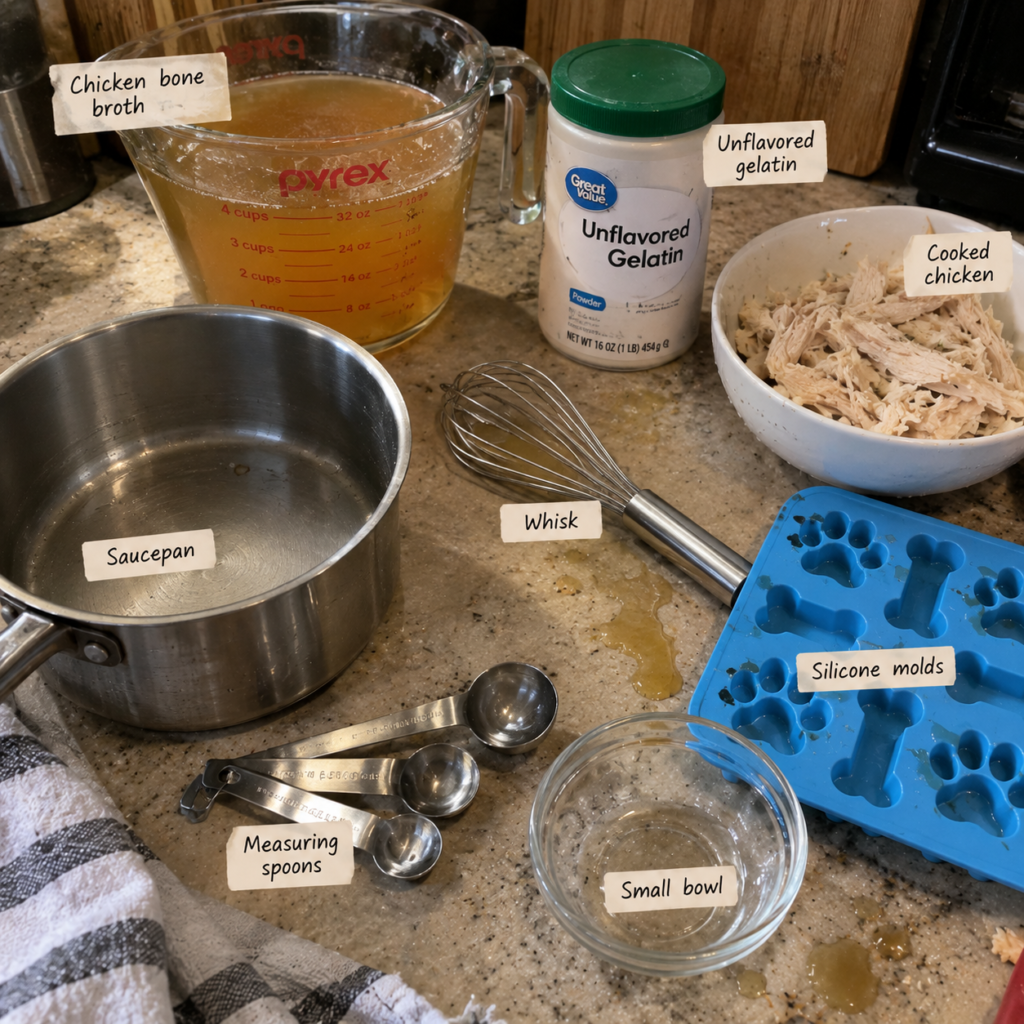
- 2 cups plain, unsalted chicken bone broth
- 3 tablespoons plain, unflavored gelatin powder
- Small silicone dog treat molds
Instructions
1. Check the broth
Read the ingredient list carefully before you begin.
Make sure the broth contains no onion, garlic, chives, heavy seasoning, or other ingredients that aren’t appropriate for dogs.
If you’re using homemade chicken bone broth, strain it carefully to remove all bones and bone fragments.
2. Warm the broth
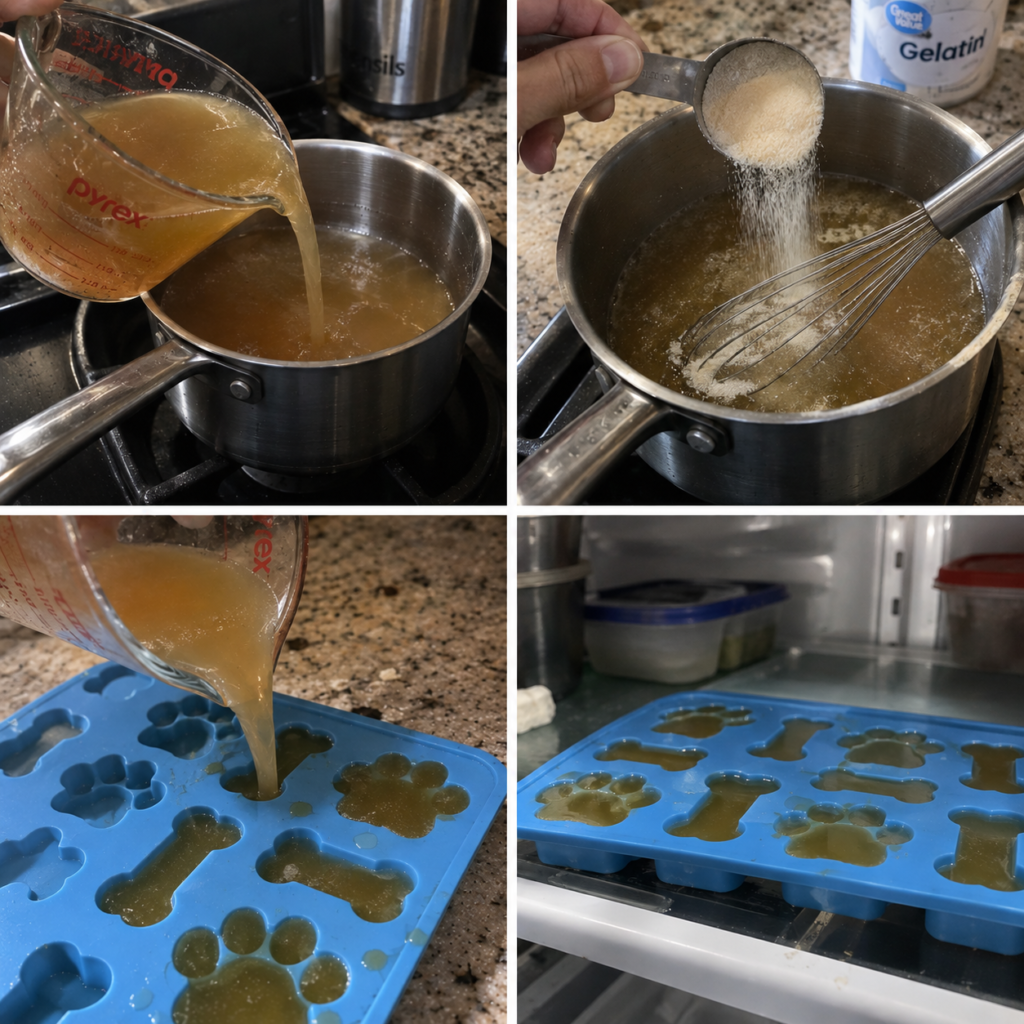
Pour the broth into a small saucepan.
Heat it gently over low to medium-low heat until warm. It doesn’t need to reach a rolling boil.
3. Add the gelatin
Slowly sprinkle the gelatin over the warm broth while whisking continuously.
Continue whisking until the gelatin has completely dissolved and the liquid is smooth.
If the gelatin is clumping, give it another minute of gentle whisking rather than turning the heat up too high.
4. Fill the molds
Place the silicone molds on a small baking sheet or tray.
This makes them much easier to carry to the refrigerator without spilling.
Carefully pour the warm broth mixture into the cavities, filling them almost to the top.
Small paw, bone, or heart-shaped molds work particularly well.
5. Refrigerate
Place the filled molds in the refrigerator.
Let them chill for about 2–3 hours, or until the gummies are completely firm.
Larger molds may need additional chilling time.
6. Remove the gummies
Once firm, gently press the silicone mold around each treat to release it.
Transfer the finished gummies to an airtight container.
Keep them refrigerated until you’re ready to serve them.
Serving, Storage & Variations
How Many Gummies Can a Dog Have?
Start small, especially if your dog hasn’t had gelatin or bone broth before.
For many dogs, one small gummy is a reasonable starting portion. Larger dogs may tolerate a larger portion, while very small dogs may need only a small piece.
Treats should remain a small part of the overall diet rather than replacing a complete and balanced dog food.
How to Store Them
Keep the gummies in an airtight container in the refrigerator.
Because these are moist homemade treats without preservatives, they shouldn’t be stored at room temperature.
For best quality, use them within about 5–7 days.
Discard them if you notice mold, an unusual smell, discoloration, or another obvious sign of spoilage.
Can You Freeze the Gummies?
Yes.
Place the gummies in a freezer-safe container or bag and freeze them in a single layer until firm. Once frozen, they can be transferred into a larger container.
Thaw individual portions in the refrigerator before serving.
The texture may be slightly different after freezing and thawing, but they can still work well as homemade treats.
Can You Add Chicken?
You can add a small amount of plain, fully cooked chicken if you want a little texture in the gummies.
Remove all bones, skin, and excess fat first, and chop the chicken very finely.
For the simplest version, however, I prefer leaving the gummies smooth.
Can You Add Pumpkin?
A small amount of plain pumpkin puree can be mixed into the broth before adding the gelatin.
Make sure it is plain pumpkin puree, not pumpkin pie filling, which can contain added sugar and spices.
Keep additions modest so the gummies remain easy to portion.
Common Mistakes
Using Regular Seasoned Chicken Broth
This is probably the biggest mistake to avoid.
Some chicken broths contain onion, garlic, concentrated seasonings, or a significant amount of sodium.
Don’t choose a broth simply because the front of the package says “chicken broth.” Check the ingredient list.
Using Chicken Bones in the Gummies
Bone broth is made using bones, but that does not mean the finished treats should contain pieces of bone.
Always strain homemade broth thoroughly.
Chicken bones can splinter and may cause choking, obstruction, or injury to the digestive tract.
Using Flavored Gelatin
Avoid flavored gelatin dessert mixes.
They can contain sugar, sweeteners, colors, and other ingredients that aren’t needed for this recipe.
Plain, unflavored gelatin is all you need.
Making Huge Gummies
Large treats make portion control unnecessarily difficult.
Small molds are much better for homemade dog treats, especially when you’re making them for dogs of different sizes.
Adding Too Much Fat
Homemade bone broth can develop a thick layer of fat after chilling.
If your broth contains a lot of visible fat, remove some before making the gummies. Very rich or fatty foods can cause digestive problems in some dogs and may be especially unsuitable for dogs with a history of pancreatitis.
Leaving the Gummies Out
These aren’t shelf-stable treats.
Keep them refrigerated and return the container to the refrigerator after serving.
FAQ
Can dogs eat chicken bone broth?
Dogs can have plain chicken broth when it doesn’t contain harmful added ingredients such as onion or garlic. Plain, low-sodium broth can be given in small amounts.
Is chicken bone broth better than regular chicken broth for dogs?
Not necessarily. For these gummies, the important thing is that the broth is dog-safe, appropriately prepared, and free from harmful seasonings. You don’t need to use bone broth specifically if you have a suitable plain chicken broth.
Can puppies have chicken bone broth gummies?
Puppies have different nutritional requirements from adult dogs. If you’re introducing homemade treats to a young puppy, start with a very small amount and check with your veterinarian if you have concerns about their diet or digestion.
Can I use store-bought chicken broth?
Yes, provided the ingredient list is suitable for dogs. Avoid broths containing onion, garlic, chives, heavy seasoning, or excessive sodium.
Why didn’t my gummies set?
The most common causes are too much liquid, too little gelatin, or gelatin that wasn’t fully dissolved.
Measure the ingredients carefully and whisk the gelatin into the warm broth until smooth.
Can I make these without gelatin?
Gelatin is what gives this recipe its gummy texture. Without it, the broth won’t set into the same firm treats.
Can dogs eat the chicken bones used to make bone broth?
The finished gummies should contain no chicken bones or bone fragments. Cooked chicken bones can splinter and cause choking, obstruction, or serious digestive tract injuries.
How long do chicken bone broth gummies last?
Keep them refrigerated in an airtight container and use them within about 5–7 days for best quality. You can also freeze them for longer storage.
Conclusion
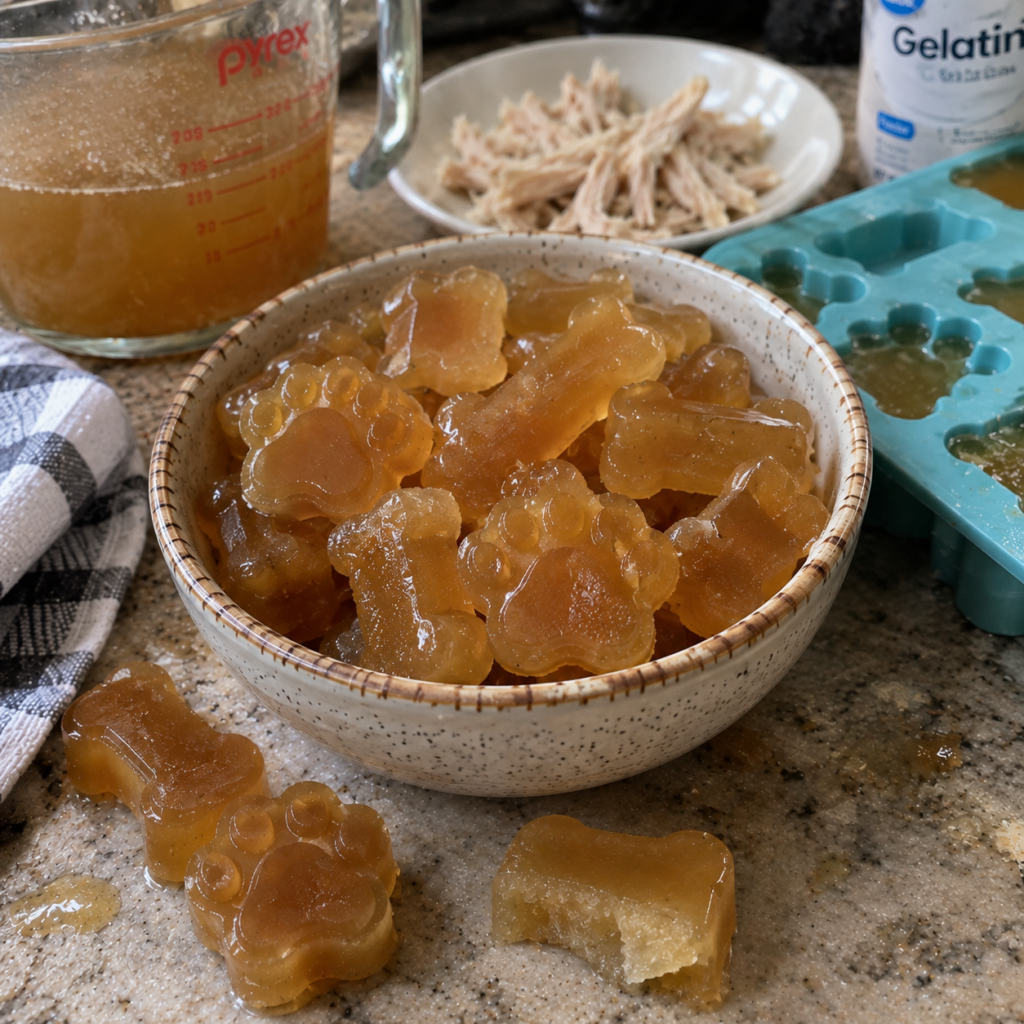
These chicken bone broth gummy treats are about as simple as homemade dog treats get. A little warm broth, plain gelatin, a few minutes of preparation, and some time in the refrigerator are all you need.
The most important step isn’t the gelatin or the molds—it’s choosing a safe broth. Avoid onion, garlic, chives, excessive salt, and heavy seasonings, and make sure homemade broth has been carefully strained before it goes into the recipe.
Once the gummies are firm, you’ll have a batch of soft, savory treats that are easy to portion and convenient to keep in the refrigerator for those moments when your dog deserves a little homemade reward.
Medical Disclaimer
This recipe is intended as an occasional treat and is not a substitute for a complete and balanced canine diet or professional veterinary advice. Dogs with food allergies, digestive conditions, kidney or heart disease, pancreatitis, or other medical conditions may have different dietary requirements. Speak with your veterinarian before introducing new foods or treats if you’re unsure whether this recipe is appropriate for your dog.