
Table of content
Table of Contents
Quick Answer
Dogs develop diarrhea when the gastrointestinal tract cannot properly absorb water and nutrients. Common causes include dietary indiscretion, sudden food changes, parasites, infections, stress, toxins, and underlying disease.
Many mild cases of acute diarrhea resolve with supportive care, but diarrhea accompanied by repeated vomiting, black or bloody stool, dehydration, marked lethargy, or other signs of illness needs veterinary attention. Cornell University notes that veterinary care should be sought when diarrhea lasts beyond 48–72 hours or is accompanied by vomiting, lack of appetite, lethargy, or black/tarry stool [3][7].
Key Takeaways
- Common causes include eating something unusual, sudden diet changes, parasites, infections, stress, toxins, and underlying gastrointestinal or systemic disease [3][6][9].
- Mild acute diarrhea is often self-limiting when a dog remains bright, hydrated, and otherwise well [3][6].
- Blood or black, tarry stool, repeated vomiting, dehydration, severe lethargy, or collapse are warning signs that require prompt veterinary attention [3][7][10].
- Fresh water should remain available while a dog has diarrhea [3][9].
- A short period without food may be recommended for some otherwise healthy adult dogs, followed by small portions of an easily digestible diet [3][9].
- Bland diets such as boiled chicken with white rice may be useful short-term, but they are not nutritionally complete and should not replace a balanced diet for long periods [3].
- Current veterinary antimicrobial guidelines advise against routine antibiotics for most mild and moderate cases of acute diarrhea [2][5].
- An over-the-counter FortiFlora Diarrhea Response Kit was launched in August 2026, combining a kaolin-pectin stool binder with a probiotic for occasional diarrhea in dogs and cats [4].
Why Does My Dog Have Diarrhea?
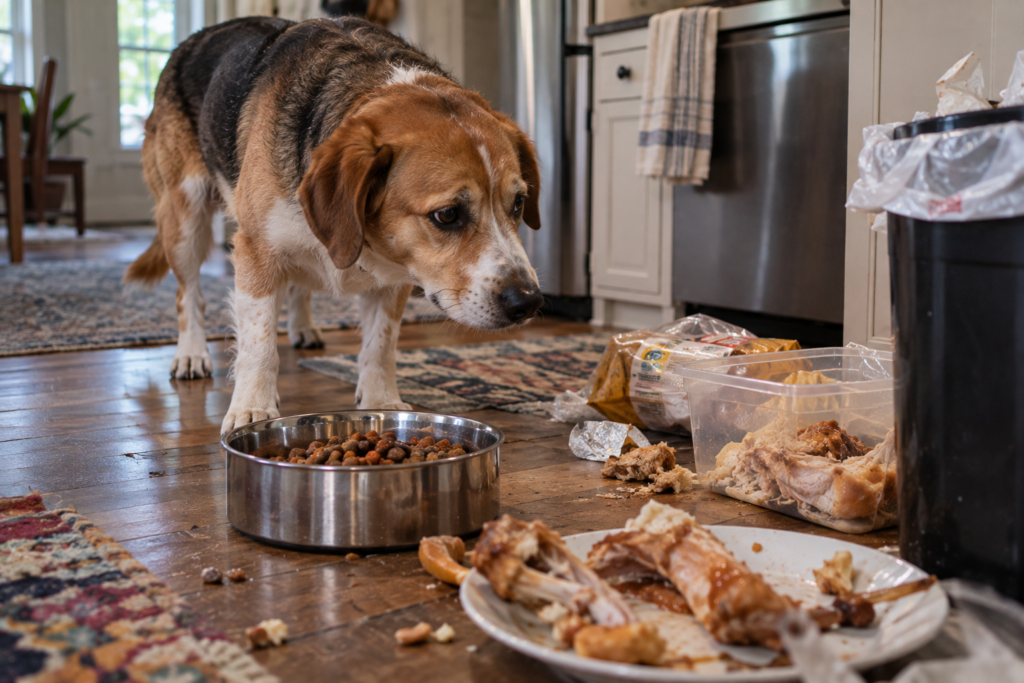
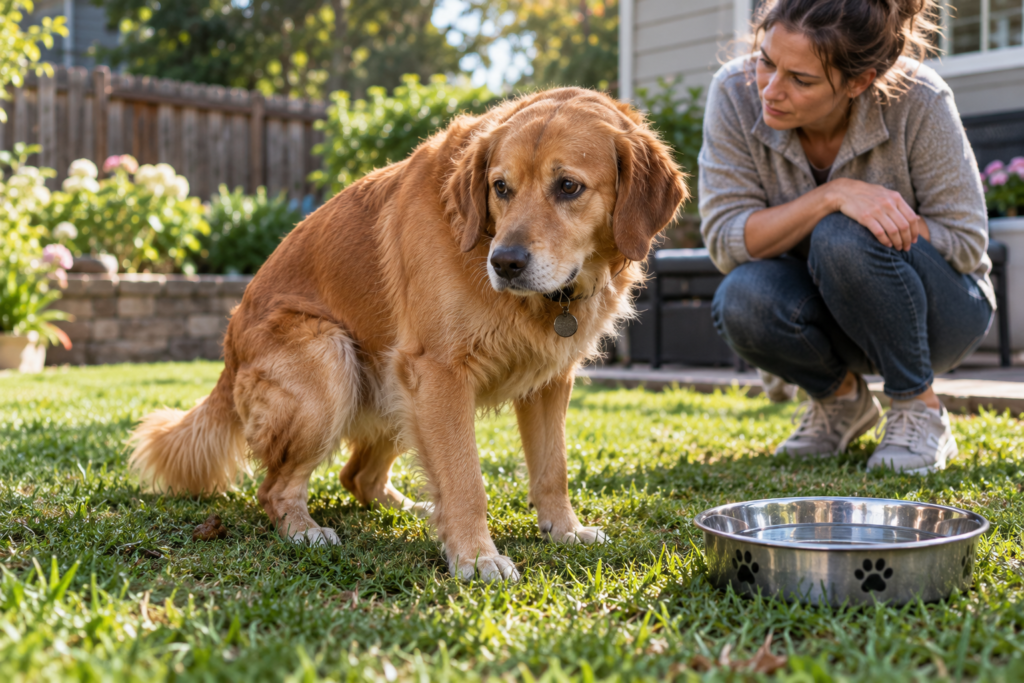
Diarrhea can develop for many different reasons, so the most useful starting point is to think about what changed recently.
Common causes include:
- Dietary indiscretion: Eating garbage, spoiled food, table scraps, or something unusual.
- Sudden diet changes: Switching foods too quickly can upset the gastrointestinal tract.
- Intestinal parasites: Giardia, worms, and other parasites can cause loose or watery stool.
- Infections: Viral and bacterial infections, including parvovirus in susceptible dogs, can cause diarrhea [3][9].
- Stress: Boarding, travel, moving, veterinary visits, fireworks, and other stressful events can trigger digestive upset [3][9].
- Foreign material: Swallowed objects can irritate or obstruct the intestinal tract.
- Toxins: Certain poisonous substances can cause diarrhea, often along with vomiting or other symptoms [9].
- Underlying disease: Conditions involving the intestines, pancreas, liver, kidneys, hormones, or immune system can cause persistent or recurrent diarrhea [3][6][9].
A dog that has one or two loose stools after eating something unusual but remains energetic and hydrated may be appropriate for close home monitoring. A puppy with significant watery diarrhea, however, deserves more caution because infections such as parvovirus can become serious quickly [3].
Foods That Commonly Cause Diarrhea
Fatty table scraps, spoiled food, sudden food changes, and foods a dog does not tolerate can all contribute to diarrhea.
Dairy products can also cause digestive upset in some dogs, particularly when they consume more than they are accustomed to. Rich or fatty foods may be especially problematic because they can irritate the gastrointestinal tract and, in some dogs, contribute to pancreatitis.
Suddenly changing from one dog food to another is another common trigger. If a new food causes diarrhea, returning temporarily to the previous diet and making the next transition more gradually may help [3].
A practical food transition can take a week or longer, depending on how sensitive your dog’s stomach is. Cornell recommends gradually increasing the new food rather than changing diets abruptly [3].
Stress-Related Diarrhea and Colitis
Stress can affect intestinal movement and contribute to loose stool or stress-related colitis.
Common triggers include:
- Moving to a new home
- Boarding or daycare
- Traveling
- Fireworks or thunderstorms
- Veterinary visits
- Separation from the owner
- Major changes in routine
Some dogs develop diarrhea only during or shortly after a stressful event. Keeping track of when the diarrhea occurs can help identify a pattern.
Stress should not automatically be assumed to be the cause, however. If diarrhea is severe, persistent, recurrent, or accompanied by other symptoms, medical causes should still be considered [3][9].
How Long Dog Diarrhea Usually Lasts
Mild acute diarrhea often improves within a few days, particularly when the dog remains bright, continues drinking, and has no other concerning symptoms [3][6].
Acute diarrhea is generally defined as diarrhea lasting less than 14 days. Persistent or recurrent diarrhea is more concerning because it can indicate parasites, food intolerance, inflammatory disease, pancreatic problems, endocrine disease, or another underlying condition [6].
Veterinary attention is appropriate if diarrhea continues beyond about 48–72 hours, or sooner if other warning signs develop [3][7].
A dog that has two mildly soft stools but is otherwise acting completely normally is different from a dog that has frequent watery diarrhea, refuses food, vomits, or becomes lethargic.
Emergency Signs and Dehydration
Diarrhea becomes more concerning when it occurs alongside other signs of illness.
Seek prompt veterinary care if your dog has:
- Black, tarry stool
- Fresh blood in the stool
- Repeated vomiting
- Marked lethargy or weakness
- Refusal to eat or drink
- Signs of dehydration
- Collapse or severe weakness
- Significant abdominal pain
- Persistent or rapidly worsening diarrhea
Black, tarry stool can indicate digested blood, while fresh red blood generally indicates bleeding farther down the gastrointestinal tract [3][7].
Diarrhea also causes the body to lose water and electrolytes. Vomiting at the same time can accelerate dehydration.
Dry or tacky gums can be a warning sign, but home checks cannot reliably determine the severity of dehydration. If you suspect your dog is significantly dehydrated, veterinary assessment is the safest option.
When a Dog With Diarrhea Needs a Vet
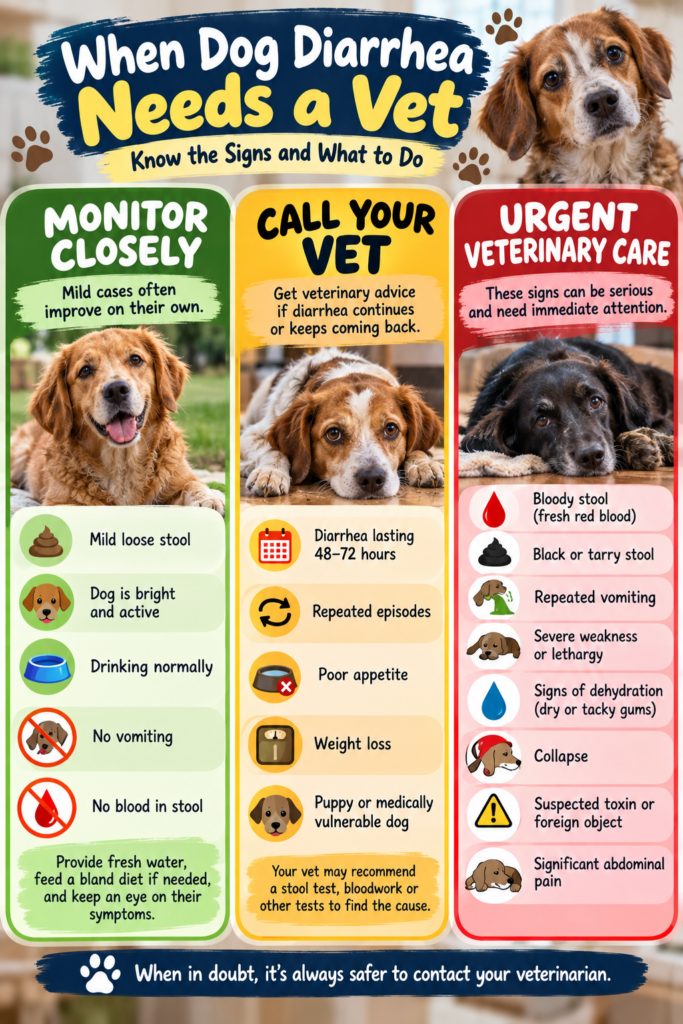
A veterinary examination is particularly important when:
- Diarrhea lasts longer than 48–72 hours.
- Your dog has repeated episodes.
- Your dog stops eating.
- Vomiting occurs with the diarrhea.
- Blood or black stool appears.
- Your dog becomes lethargic or weak.
- Your dog is losing weight.
- You suspect a toxin or foreign object was swallowed.
- A puppy or medically vulnerable dog develops significant diarrhea.
A veterinarian may recommend a fecal examination for parasites, bloodwork, X-rays if a blockage is suspected, or other testing depending on the dog’s symptoms [3][9].
If you visit the veterinarian, bringing a fresh stool sample can also be helpful.
Fasting and Feeding During Diarrhea
For some otherwise healthy adult dogs with mild diarrhea, a short period without food may be recommended before reintroducing small meals. Cornell describes withholding food for approximately 12–24 hours before introducing a bland diet, while maintaining access to fresh water [3].
Fasting should not be treated as a universal solution. Puppies, dogs with diabetes, very small dogs, dogs with other medical conditions, and dogs showing significant illness may need individualized feeding instructions from a veterinarian.
Do not withhold water.
If diarrhea is accompanied by repeated vomiting or your dog cannot keep water down, veterinary care is more important than trying to manage the problem at home.
What to Feed a Dog With Diarrhea
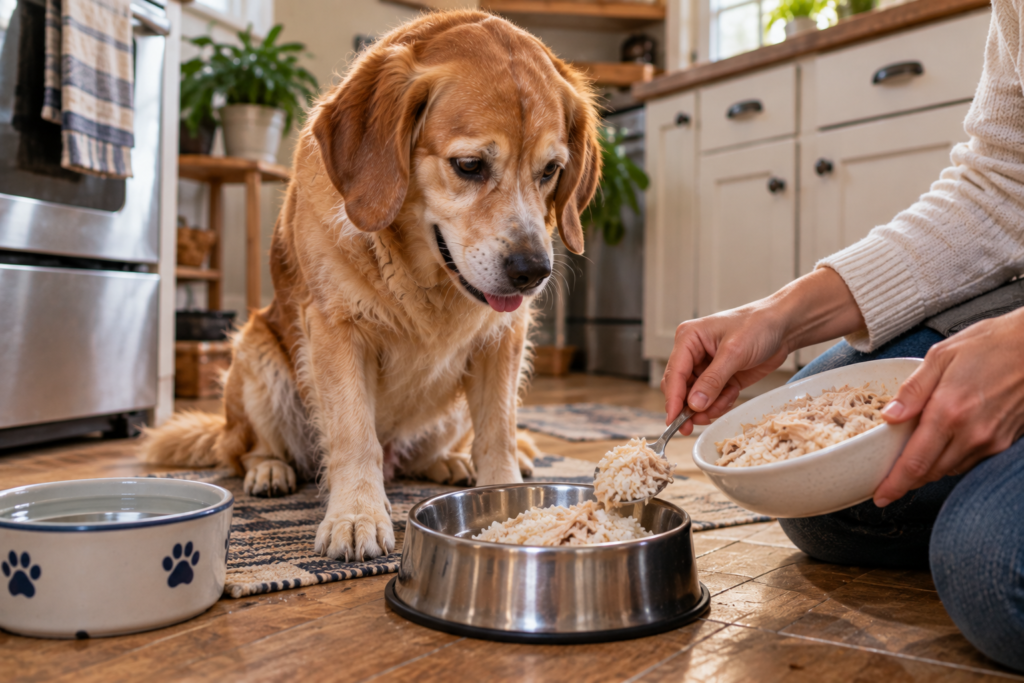
Once feeding is appropriate, small portions of an easily digestible, low-fat diet can be used temporarily.
Common short-term options include:
- Boiled chicken with plain white rice
- Lean cooked hamburger with excess fat removed
- Plain cooked pasta
- A veterinary gastrointestinal diet recommended by your veterinarian [3]
Feed smaller portions more frequently rather than immediately returning to full-size meals.
Avoid:
- Fatty foods
- Table scraps
- Rich treats
- New foods
- Large meals
- Foods your dog has previously reacted to
Bland homemade diets are intended for short-term use. Chicken and rice, for example, are not nutritionally complete enough to replace a balanced dog food over the long term [3].
As stools improve, gradually transition your dog back to their normal balanced diet.
Home Care, Probiotics and Over-the-Counter Products
For mild diarrhea in an otherwise healthy dog, supportive care may include hydration, appropriate feeding, and veterinary-recommended probiotics.
Some dogs may benefit from products containing stool-binding ingredients such as kaolin-pectin, but over-the-counter diarrhea products should not automatically be considered appropriate for every dog.
In August 2026, Nestlé Purina launched the FortiFlora Diarrhea Response Kit, an over-the-counter two-step product combining a kaolin-pectin binder with a probiotic for occasional diarrhea in dogs and cats [4].
The product’s launch does not mean every episode of diarrhea should be treated with an OTC product. Dogs with blood in the stool, repeated vomiting, significant lethargy, worsening diarrhea, or other concerning signs should be evaluated rather than relying on home treatment [4].
Antibiotics Are Not Routine Treatment
Current WSAVA/ENOVAT guidance recommends against routine antimicrobial treatment for most mild and moderate cases of acute canine diarrhea. Antibiotics are generally reserved for selected severe cases or situations where a veterinarian identifies a specific reason for their use [2][5].
Do not give your dog leftover antibiotics or human anti-diarrheal medication without veterinary guidance.
Fecal Scoring Chart for Dogs
Fecal scoring can help describe changes in stool consistency, although it cannot diagnose the underlying cause of diarrhea.
| Score | Stool Description | What It Means | Action to Take |
|---|---|---|---|
| 1 | Very hard, dry balls | Constipation / unusually dry stool | Encourage hydration and discuss persistent constipation with a vet |
| 2 | Firm, segmented, holds shape | Healthy stool | No action needed |
| 3 | Moist, log-shaped, leaves some residue | Normal to slightly soft | Monitor |
| 4 | Very soft, loses shape | Mild diarrhea | Monitor closely and consider supportive care |
| 5 | Watery or liquid stool | Significant diarrhea | Contact a vet if persistent or accompanied by other symptoms |
The score is useful for tracking changes, but frequency, duration, blood, vomiting, appetite, hydration, energy level, and other symptoms are equally important when deciding whether veterinary care is needed.
Conclusion
Dog diarrhea can have something as simple as a sudden food change or stressful event behind it, but it can also signal parasites, infection, toxins, foreign material, or underlying disease.
If your dog has mild diarrhea but is otherwise bright, drinking, and comfortable, supportive care and close monitoring may be appropriate. Keep fresh water available, avoid rich foods, and use a short-term easily digestible diet when appropriate.
The most important thing is knowing when home monitoring is no longer enough. Blood or black stool, repeated vomiting, dehydration, marked lethargy, refusal to eat, collapse, or persistent diarrhea are reasons to involve a veterinarian promptly.
FAQ
Can dog diarrhea go away on its own?
Yes. Many mild cases of acute diarrhea resolve on their own when the dog remains otherwise healthy and hydrated [3][6].
Is dog diarrhea an emergency?
It can be. Black or tarry stool, fresh blood, repeated vomiting, dehydration, severe lethargy, weakness, or collapse are warning signs that require veterinary attention [3][7][10].
What over-the-counter medicine helps dog diarrhea?
Some veterinary products containing ingredients such as kaolin-pectin or probiotics may be used for occasional mild diarrhea. The FortiFlora Diarrhea Response Kit is one OTC option launched in 2026 [4]. Ask your veterinarian before giving any medication, especially if your dog has other symptoms.
Should I fast my dog if it has diarrhea?
A short 12–24-hour food break may be recommended for some otherwise healthy adult dogs, while water remains available [3]. Puppies, diabetic dogs, very small dogs, and dogs with other medical concerns may need different guidance.
What foods cause diarrhea in dogs?
Sudden food changes, fatty foods, spoiled food, excessive treats, table scraps, and foods a dog does not tolerate can cause diarrhea [3][9].
Can stress cause diarrhea in dogs?
Yes. Stressful events such as boarding, moving, travel, fireworks, or veterinary visits can contribute to diarrhea or stress-related colitis [3][9].
How long does dog diarrhea last?
Many mild cases improve within 48–72 hours, although acute diarrhea can last several days [3][6]. Persistent or recurrent diarrhea should be evaluated.
When should I take my dog to the vet for diarrhea?
Contact your veterinarian if diarrhea lasts beyond 48–72 hours, keeps returning, or occurs with vomiting, blood, black stool, poor appetite, lethargy, dehydration, weakness, or other concerning symptoms [3][7][10].
Medical Disclaimer
This article is for general educational purposes and does not replace veterinary diagnosis or treatment. Diarrhea can have many causes, and the appropriate treatment depends on your dog’s age, health, symptoms, hydration status, and medical history. Contact a veterinarian if you are concerned about your dog’s condition.
References
[1] Diarrhoea And Abs 1
https://ebvminpractice.org/wp-content/uploads/2025/08/diarrhoea-and-abs-1.pdf
[2] Canine Acute Diarrhea V11 — WSAVA/ENOVAT
https://wsava.org/wp-content/uploads/2025/02/Canine-acute-diarrhea_V11.pdf
[3] Diarrhea — Cornell University College of Veterinary Medicine
https://www.vet.cornell.edu/departments-centers-and-institutes/riney-canine-health-center/canine-health-topics/diarrhea
[4] Purina Releases FortiFlora Diarrhea Kit for Dogs and Cats — dvm360
https://www.dvm360.com/view/purina-releases-fortiflora-diarrhea-kit-for-dogs-and-cats
[5] ENOVAT Guidelines for Antimicrobial Use in Canine Acute Diarrhea — WSAVA
https://wsava.org/wp-content/uploads/2024/09/ENOVAT-GUIDELINES-FOR-ANTIMICROBIAL-USE-IN-CANINE-ACUTE-DIARRHEA.pdf
[6] PMC7465157 — Acute Diarrhea in Dogs
https://pmc.ncbi.nlm.nih.gov/articles/PMC7465157/
[7] Dog Diarrhea — GoodRx
https://www.goodrx.com/pet-health/dog/dog-diarrhea
[8] Pets — New York Post
https://nypost.com/tag/pets/
[9] Diarrhea — Washington State University Veterinary Teaching Hospital
https://hospital.vetmed.wsu.edu/2022/01/04/diarrhea/
[10] Dog Diarrhea 101 — IDEXX Pet Health
https://www.idexxpethealth.com/articles/dog-diarrhea-101