
Quick Answer: A healthy adult dog should always have access to fresh drinking water. While a dog may survive for up to 72 hours without water under ideal conditions, that’s a biological survival limit—not a safe guideline. In reality, 24 hours without drinking is considered a veterinary emergency, and puppies, senior dogs, and sick dogs can become dangerously dehydrated much sooner.
If your dog hasn’t had water for 12 to 24 hours, refuses to drink, or shows signs of dehydration such as dry gums, sunken eyes, weakness, vomiting, or diarrhea, contact your veterinarian immediately. Acting early is much safer than waiting to see if your dog improves.
🚨 Dog Hydration Emergency Guide
✅ Monitor at Home
- Your dog missed one drink but is now drinking normally.
- They’re eating, playing, and acting like themselves.
- Gums are moist and pink.
- Skin quickly returns to normal after a gentle skin tent test.
⚠️ Call Your Veterinarian Today
- Your dog hasn’t drunk water for 12–24 hours.
- They seem less interested in drinking than usual.
- Gums feel sticky or dry.
- Mild vomiting or diarrhea is present.
🚨 Seek Emergency Veterinary Care Immediately
- No water for 24 hours or longer.
- Severe vomiting or diarrhea.
- Weakness, collapse, or difficulty standing.
- Sunken eyes or skin that stays tented.
- Puppies, senior dogs, or sick dogs refusing water.
Key Takeaways
- A dog’s absolute survival limit without water is around 72 hours, but serious dehydration begins much sooner.
- 24 hours without drinking is a veterinary emergency for most dogs.
- Puppies, senior dogs, and sick dogs lose water much faster than healthy adults.
- Dogs cool themselves by panting, which causes them to lose significant amounts of water.
- Most healthy dogs need about 1 ounce of water per pound of body weight each day.
- Fresh drinking water should always be available.
- Low-sodium broth, pet fountains, and different bowl types may encourage reluctant drinkers.
Water is just as important to your dog’s health as food. Every organ in your dog’s body depends on proper hydration to function normally. Even mild dehydration can affect circulation, body temperature, digestion, and kidney function.
Many owners ask, “How long can a dog go without water?” The answer depends on your dog’s age, overall health, activity level, and the weather. While some dogs may survive for up to three days without water under ideal conditions, serious dehydration can begin within the first 12 to 24 hours.
In this guide, you’ll learn how long dogs can safely go without water, the early signs of dehydration, which dogs are at the greatest risk, how much water dogs need every day, and what to do if your dog refuses to drink.
Why You’ll Find This Guide Helpful
It’s easy to assume a thirsty dog will simply drink when they need to. Unfortunately, that’s not always true. Illness, pain, nausea, and hot weather can all affect a dog’s ability or desire to drink, allowing dehydration to develop surprisingly quickly.
In this guide, you’ll discover:
- How long dogs can safely go without water
- The early warning signs of dehydration
- Which dogs become dehydrated the fastest
- How much water your dog should drink each day
- Simple ways to encourage your dog to drink more
- When dehydration becomes a veterinary emergency
Whether you’re caring for a healthy adult dog, a playful puppy, or a senior companion, this guide will help you recognize dehydration early and know when it’s time to seek veterinary care.
How Long Can a Dog Go Without Water?
A healthy adult dog may survive for 48 to 72 hours without water under ideal conditions, but this is a biological survival limit—not a safe amount of time to wait.
In most cases, dehydration begins much sooner. Within 12 to 24 hours, the body starts losing the fluids it needs to keep the heart, kidneys, and other organs working properly. As dehydration worsens, circulation slows, toxins build up, and the risk of organ damage increases.
Here’s a general timeline:
| Time Without Water | What Happens |
|---|---|
| 0–12 hours | Mild dehydration may begin, especially in hot weather or after exercise. |
| 12–24 hours | Dry gums, reduced energy, and early dehydration become more noticeable. Contact your veterinarian if your dog refuses to drink. |
| 24–48 hours | Severe dehydration develops, increasing the risk of kidney damage and shock. Veterinary care is urgently needed. |
| 48–72 hours | Life-threatening dehydration and organ failure become increasingly likely. This is a medical emergency. |
Dogs eating wet food receive some moisture from their meals, but wet food alone isn’t enough to replace drinking water.
Takeaway: Never use the 72-hour survival limit as a guideline. If your dog hasn’t had water for 24 hours, seek veterinary care immediately.
How to Tell if Your Dog Is Dehydrated
Learning to recognize dehydration early can prevent a minor problem from becoming a medical emergency.
Common signs of dehydration include:
- Dry or sticky gums
- Sunken eyes
- Lethargy or weakness
- Thick saliva
- Heavy panting
- Loss of skin elasticity
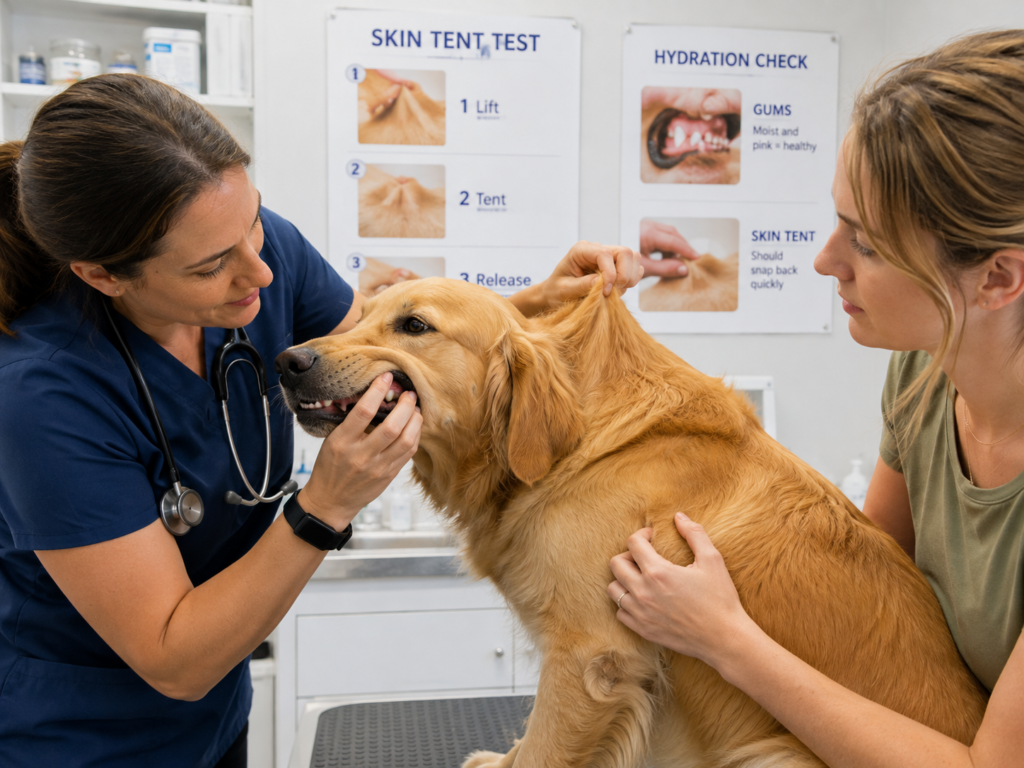
You can also perform two simple checks at home.
Gum Moisture Test
Lift your dog’s upper lip and gently touch the gums.
Healthy gums should:
- Feel moist and slippery
- Return to their normal pink color within one to two seconds after being pressed
Dry, sticky gums or slow color return may indicate dehydration.
Skin Tent Test
Gently lift the loose skin between your dog’s shoulder blades and let it go.
Healthy skin should spring back immediately.
If the skin stays raised or returns slowly, your dog may be dehydrated.
These home checks are useful, but they don’t replace a veterinary examination.
Takeaway: Dry gums, sunken eyes, or a skin tent that doesn’t quickly return to normal are signs your dog should be seen by a veterinarian.
How Much Water Does a Dog Need Every Day?
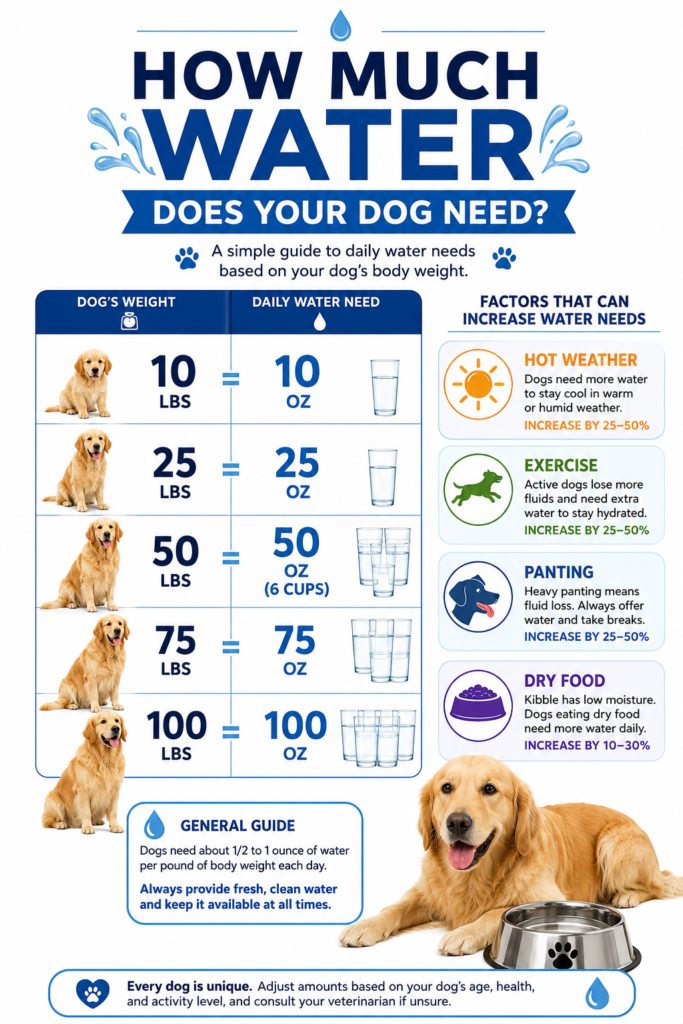
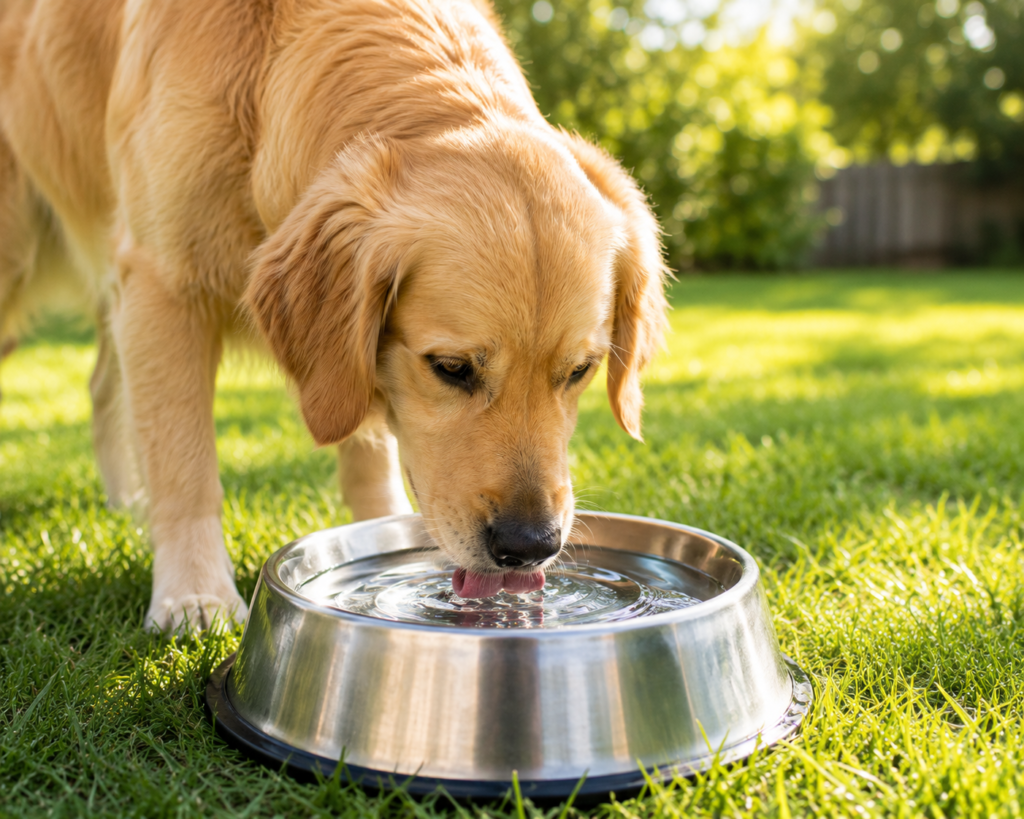
Dogs need fresh water every day to regulate body temperature, support healthy organs, and replace fluids lost through normal activities.
A simple guideline is:
About 1 ounce of water per pound of body weight each day.
For example:
| Dog Weight | Approximate Daily Water Intake |
|---|---|
| 10 lbs | 10 ounces |
| 25 lbs | 25 ounces |
| 50 lbs | 50 ounces (about 6 cups) |
| 75 lbs | 75 ounces |
| 100 lbs | 100 ounces |
Some dogs naturally need more water than others.
Water requirements increase if your dog:
- Exercises regularly
- Pants heavily
- Lives in hot or humid weather
- Eats mostly dry kibble
- Is pregnant or nursing
Dogs eating canned food often drink a little less because wet food contains a large amount of moisture.
Tracking how much your dog drinks each day can help you notice changes that may signal an underlying health problem.
Takeaway: Most dogs need about 1 ounce of water per pound of body weight every day, but activity, diet, and weather can increase that amount.
Which Dogs Become Dehydrated Faster?
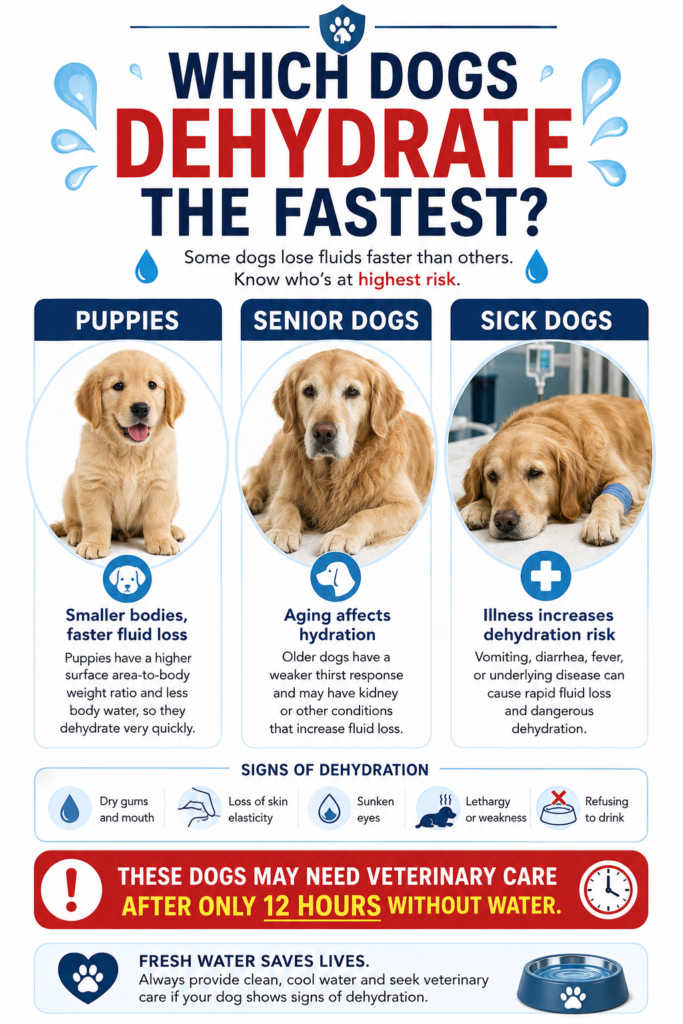
Some dogs lose water much more quickly than others and need closer monitoring.
Puppies
Puppies have fast metabolisms and small bodies, so even mild vomiting, diarrhea, or refusing water can lead to dehydration within a short time.
Senior Dogs
Older dogs may drink less because of arthritis, reduced mobility, or age-related illness. They may also lose more water if they have kidney disease or diabetes.
Sick Dogs
Dogs with vomiting, diarrhea, fever, or nausea lose fluids rapidly and may refuse to drink because they don’t feel well.
For puppies, senior dogs, and sick dogs, waiting 24 hours before calling a veterinarian is too long. If they haven’t been drinking for about 12 hours or are showing signs of dehydration, contact your veterinarian as soon as possible.
Takeaway: Puppies, older dogs, and sick dogs can become dangerously dehydrated much faster than healthy adult dogs.
What to Do if Your Dog Won’t Drink Water
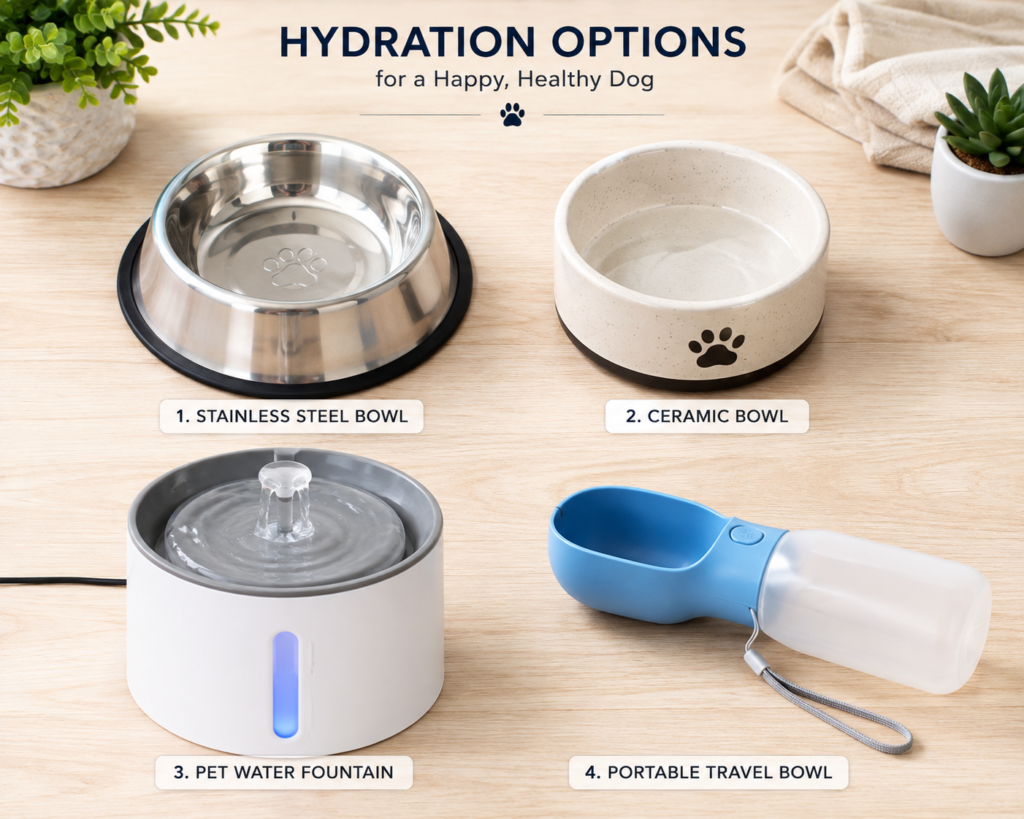
If your dog refuses water, don’t panic—but don’t ignore it either.
Sometimes the problem is as simple as a dirty bowl or warm water. In other cases, refusing to drink can be a sign of pain, nausea, dental disease, or another medical condition.
You can encourage your dog to drink by:
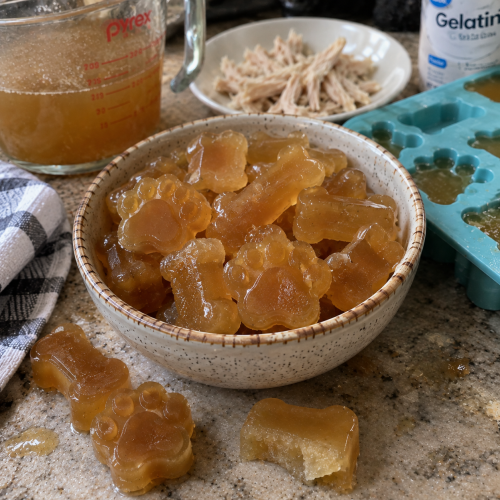
- Adding a small amount of low-sodium chicken broth to the water
- Offering fresh, cool water more often
- Trying a stainless steel or ceramic bowl instead of plastic
- Using a pet water fountain
- Offering a few ice cubes if your dog enjoys them
If your dog still refuses water for more than 12 hours, or if they’re also vomiting, have diarrhea, or seem weak, contact your veterinarian immediately.
Takeaway: Encourage your dog to drink with fresh water, broth, or a different bowl, but never wait too long if they continue refusing water.
Can Dogs Drink Too Much Water?
Yes. While dehydration is much more common, dogs can also drink too much water. This condition, called water intoxication or water poisoning, is uncommon but can become life-threatening if it isn’t treated quickly.
Water intoxication usually happens when a dog drinks a very large amount of water in a short period, such as while swimming, playing with sprinklers, or repeatedly biting at a garden hose.
Signs of water intoxication include:
- Vomiting
- Bloating
- Excessive drooling
- Loss of coordination
- Confusion
- Tremors or seizures
Some dogs also drink unusually large amounts of water because of an underlying health problem. Conditions such as kidney disease, diabetes, Cushing’s disease, and certain medications can all increase thirst.
If your dog suddenly begins drinking far more water than usual or shows any of the signs above, schedule a veterinary examination.
Takeaway: Both drinking too little and drinking too much can signal a health problem. Sudden changes in water intake should never be ignored.
Frequently Asked Questions
Can a dog go 8 hours without water?
Yes. A healthy adult dog can usually go about 8 hours without water, such as overnight while sleeping. However, fresh water should always be available during the day.
Will a dehydrated dog always drink water?
Not always. Dogs that are severely dehydrated, nauseous, or seriously ill may refuse to drink even when they need fluids. If your dog won’t drink and appears unwell, contact your veterinarian immediately.
How long can a dog go without water after surgery?
Some dogs may not drink for a few hours after anesthesia because they feel sleepy or nauseous. Once they’re fully awake, they should begin drinking normally. If they refuse water for more than 12 hours, contact your veterinarian.
Can a dog recover from dehydration at home?
Mild dehydration may improve by encouraging your dog to drink small amounts of water. Moderate or severe dehydration usually requires veterinary treatment with intravenous or subcutaneous fluids.
Does wet food provide enough water?
Wet food contains a lot of moisture and can help increase your dog’s fluid intake. However, dogs still need access to fresh drinking water throughout the day.
What are the earliest signs of dehydration?
Early signs include:
- Dry or sticky gums
- Thick saliva
- Reduced energy
- Heavy panting
- Skin that returns slowly during the skin tent test
Recognizing these signs early can help prevent more serious dehydration.
Conclusion
Water is essential for every part of your dog’s body, from regulating body temperature to supporting healthy organs and circulation. Although a healthy adult dog may survive for up to 72 hours without water under ideal conditions, serious dehydration begins much sooner.
As a general rule, 24 hours without drinking should always be treated as a veterinary emergency, and puppies, senior dogs, and sick dogs often need help much sooner than that.
By providing fresh water every day, watching for early signs of dehydration, and acting quickly if your dog refuses to drink, you can help prevent a minor problem from becoming a life-threatening emergency.
When it comes to hydration, it’s always safer to contact your veterinarian early than to wait until your dog becomes seriously dehydrated.
References
Pets on Broadway Veterinary Hospital. How Long Can a Dog Go Without Water?
https://www.petsonbroadway.net/site/blog/2024/08/15/dog-without-water
PetMD. Dog Not Drinking Water: Causes, Symptoms & What to Do
https://www.petmd.com/dog/symptoms/dog-not-drinking-water
Animal Emergency Clinic of San Diego. How Long Can a Dog Go Without Water?
https://www.animalemergencysd.com/site/blog/2024/08/15/how-long-dog-without-water
Van Roekel & Associates Veterinary Care. How Long Can a Dog Go Without Water?
https://www.vanroekelassociates.com/site/blog/2023/05/30/how-long-can-dog-go-without-water
Kleinpeter Veterinary Hospital. How Long Can Dogs Go Without Water?
https://www.kleinpeter-vet.com/site/blog/2022/10/15/how-long-dog-go-without-water
Wilderness Medical Society. Veterinary Medicine: Canine Hydration
https://wms.org/magazine/magazine/1112/Vet-Medicine-Canine-Hydration/default.aspx