


Quick Answer
Can Dogs Eat Dragon Fruit? Yes, dogs can eat dragon fruit in moderation. The soft flesh of ripe dragon fruit is generally considered safe for many dogs when served plain and in small amounts. However, you should remove the outer skin and cut the flesh into bite-sized pieces before offering it to your dog.
Dragon fruit contains water, fiber, and several nutrients. However, it should be an occasional treat rather than a replacement for your dog’s regular, balanced food. Introduce it gradually and watch for signs of digestive upset.
Key Takeaways
- Dragon fruit flesh is generally safe: Offer plain, ripe flesh in small portions.
- Remove the skin: The tough peel may be difficult to digest and can pose choking or obstruction risks.
- The seeds are generally safe: The tiny seeds inside the flesh can usually be eaten with the fruit.
- Start with a small serving: Too much dragon fruit may cause diarrhea, gas, or stomach discomfort.
- Puppies need extra care: Their main diet should remain complete puppy food.
- Keep treats limited: All treats combined should generally account for no more than 10% of your dog’s daily calories.
What Is Dragon Fruit, and Is It Safe for Dogs?
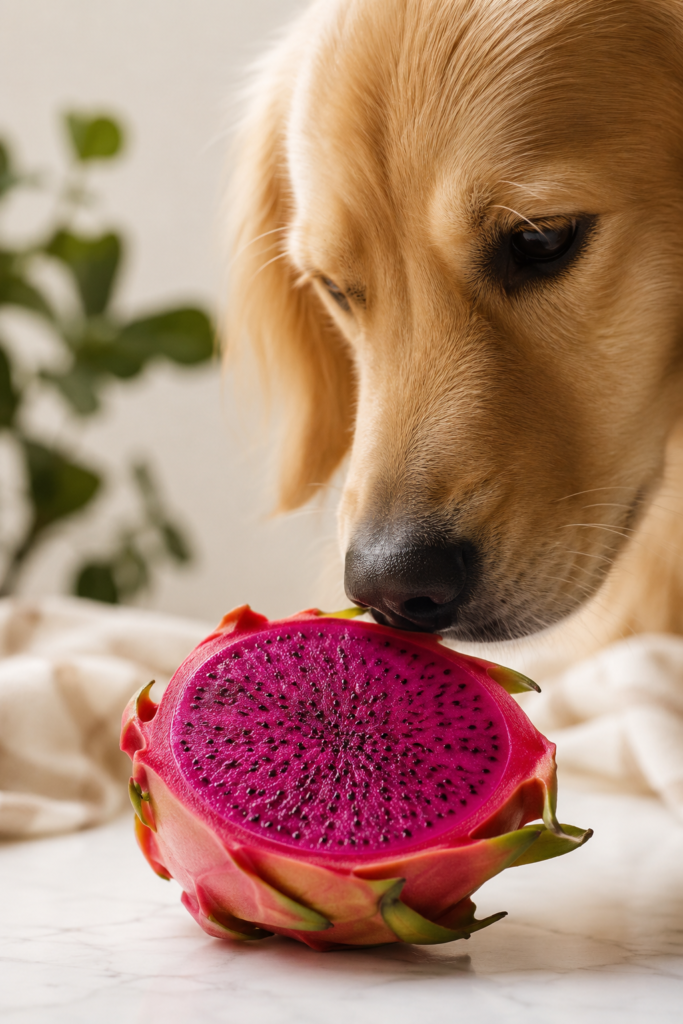
Dragon fruit, also known as pitaya, is a tropical fruit that grows on certain cactus species. It is recognizable by its bright outer skin and soft flesh, which may be white or red with tiny black seeds.
Dogs can generally eat the flesh of dragon fruit in small amounts. It contains water, fiber, and other nutrients that can contribute to a varied selection of treats. However, dragon fruit is not essential if your dog already eats a complete and balanced diet.
Preparation is important. Wash the fruit before cutting it, remove the outer skin completely, and offer only the soft flesh. Cut it into appropriately sized pieces to reduce choking risk, especially for small dogs and dogs that tend to swallow food quickly.
If your dog has a medical condition or follows a veterinarian-prescribed diet, ask your veterinarian before introducing new foods.
Can Dogs Eat Dragon Fruit Seeds and Skin?
Are dragon fruit seeds safe for dogs?
The tiny black seeds inside dragon fruit flesh are generally considered safe for dogs to eat. They are small and soft, so they usually do not need to be removed.
Nevertheless, serve the fruit in modest quantities. Even if the seeds are not a concern, eating too much fruit can upset your dog’s stomach.
Can dogs eat dragon fruit skin?
It is best to avoid feeding dragon fruit skin to dogs. The outer peel is tough and may be difficult to digest. Large pieces can also create choking or intestinal obstruction risks.
Remove the peel entirely before serving the fruit, and check that no tough pieces remain attached to the flesh. Never give your dog a whole dragon fruit to chew on.
How Much Dragon Fruit Can I Give My Dog?
The appropriate amount depends on your dog’s size, usual diet, health, and tolerance for unfamiliar foods. There is no universally established dragon-fruit serving size for every dog.
A cautious approach is to begin with one or two tiny pieces and observe your dog for digestive changes. If your dog tolerates the fruit, you can occasionally offer a little more while keeping all treats within the daily calorie allowance.
The following are conservative starting points, not medically established serving recommendations:
| Dog size | Cautious starting portion |
|---|---|
| Small dogs | One tiny piece |
| Medium dogs | One or two small pieces |
| Large dogs | A few small pieces |
Treats should generally make up no more than 10% of your dog’s daily calories, with the rest coming from a complete and balanced diet.
Avoid making dragon fruit a daily requirement. Your dog can enjoy a healthy diet without eating it at all.
Health Benefits of Dragon Fruit for Dogs

Dragon fruit contains water, dietary fiber, vitamin C, and other plant compounds. These contribute to the fruit’s nutritional profile, but there is limited direct evidence that feeding dragon fruit produces specific health improvements in dogs.
It is important to distinguish between nutrients a fruit contains and health benefits proven in dogs. Dragon fruit should not be promoted as a treatment for illness or a substitute for balanced nutrition.
1. Provides Water
Dragon fruit has a high water content, making its flesh a moist snack. A few pieces can contribute a small amount of water to your dog’s diet.
However, fresh drinking water should always be available. Dragon fruit should never replace water or be used to treat dehydration.
2. Contains Dietary Fiber
Dragon fruit contains dietary fiber, which plays a role in normal digestive function.
Small quantities may fit into your dog’s selection of treats. Too much fiber, however, can contribute to gas, loose stools, or other digestive problems.
If your dog has persistent constipation or diarrhea, consult your veterinarian rather than using fruit as a treatment.
3. Contains Vitamins and Antioxidant Compounds
Dragon fruit contains vitamin C and other plant compounds, including antioxidants. The amounts vary depending on the variety and ripeness of the fruit.
There is not enough evidence to claim that feeding dragon fruit prevents disease or significantly boosts a healthy dog’s immune system. Dogs generally produce their own vitamin C, so dragon fruit is not usually necessary as a vitamin C supplement.
4. Offers Variety as an Occasional Treat
Some dogs enjoy the soft texture and mild sweetness of ripe dragon fruit. A small serving can provide variety when your dog tolerates it.
Fruit is optional, however. It should not replace complete dog food or veterinary-recommended nutritional supplements.
Potential Risks of Feeding Dragon Fruit to Dogs
Dragon fruit flesh is generally considered safe in small amounts, but not every dog will tolerate it equally well.
The main concerns involve excessive portions, digestive sensitivity, preparation, and your dog’s individual health needs.
1. Gastrointestinal Upset
Eating too much dragon fruit may cause:
- Loose stools or diarrhea
- Gas or bloating
- Vomiting
- Temporary stomach discomfort
Introduce the fruit gradually. If your dog develops digestive symptoms, stop offering it and provide access to fresh water.
Contact your veterinarian if symptoms are persistent or severe, or if they are accompanied by weakness, blood in the stool, repeated vomiting, or other concerning changes.
2. Choking or Intestinal Obstruction
Large pieces of fruit and tough pieces of peel may be difficult to swallow or digest.
To reduce the risk:
- Remove all outer skin.
- Cut the flesh into small pieces appropriate for your dog’s size.
- Supervise your dog while eating.
- Avoid large chunks for dogs that gulp their food.
If your dog swallows a large piece of peel and develops repeated vomiting, abdominal pain, loss of appetite, or difficulty passing stool, seek veterinary advice promptly.
3. Extra Sugar and Calories
Dragon fruit contains naturally occurring sugars. Although small portions may fit into many dogs’ diets, frequent or generous servings can add unnecessary calories.
Dogs with diabetes, obesity, or other conditions requiring dietary management may need stricter limits. Ask your veterinarian whether dragon fruit is appropriate for your individual dog.
4. Individual Food Sensitivities
Any unfamiliar food may cause an unwanted reaction in an individual dog.
Watch for itching, hives, facial swelling, vomiting, or diarrhea after introducing dragon fruit. Facial swelling or difficulty breathing requires emergency veterinary attention.
Best Way to Serve Dragon Fruit to Dogs
The safest approach is to serve plain, ripe dragon fruit that has been properly prepared.
Follow these steps:
- Wash the fruit: Rinse the outside before cutting to reduce the chance of transferring dirt or contaminants to the flesh.
- Remove the skin: Peel the fruit completely and discard the outer rind.
- Cut the flesh into small pieces: Make the pieces suitable for your dog’s size and eating habits.
- Start with a tiny portion: Offer only a little the first time.
- Monitor your dog: Watch for changes in stool, vomiting, itching, or other unusual symptoms.
- Keep it plain: Avoid added sugar, syrup, spices, and sweetened fruit preparations.
You can offer a few pieces by themselves or use them as a small topper on your dog’s regular food, provided the food remains appropriate for their dietary needs.
You can also chill the fruit before serving. If you freeze it, use small pieces and avoid serving pieces that are so hard that your dog may struggle to chew them.
Dragon Fruit vs. Other Fruits for Dogs
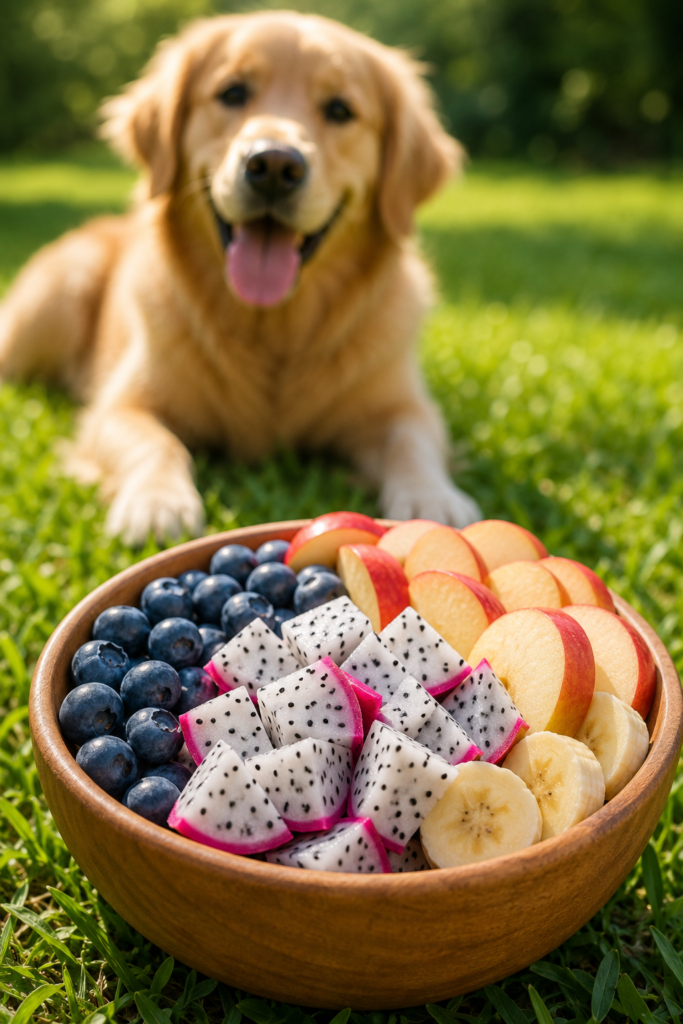
Dragon fruit is one of several fruits that can be offered to dogs in small quantities. Other options include blueberries, apples prepared without seeds or cores, and watermelon without seeds or rind.
Each fruit has different nutritional characteristics, and none is essential when your dog already receives a complete and balanced diet.
| Fruit | General serving guidance |
|---|---|
| Dragon fruit | Serve peeled flesh in small pieces. |
| Blueberries | Wash and offer a few at a time. |
| Apples | Remove seeds and core, then cut into small pieces. |
| Watermelon | Remove the rind and seeds before serving. |
| Bananas | Offer small slices because they contain natural sugars. |
| Grapes and raisins | Never feed these to dogs; they can cause serious kidney injury. |
Always prepare fruit appropriately and introduce unfamiliar foods gradually. When in doubt, check with your veterinarian before sharing a new food.
Can Puppies Eat Dragon Fruit?
Puppies may be able to tolerate a tiny amount of plain dragon fruit flesh, but it is not a necessary part of their diet.
Growing puppies need carefully balanced nutrition to support healthy development. Too many extras can displace the nutrients they need from their regular puppy food.
If you choose to introduce dragon fruit, ask your veterinarian whether it is appropriate for your puppy, offer a very small piece, and observe for digestive upset. Avoid giving puppies the skin or large pieces of fruit.
For very young puppies or puppies with digestive problems, follow their recommended feeding plan unless your veterinarian advises otherwise.
When Should I Avoid Giving My Dog Dragon Fruit?
It may be best to avoid dragon fruit or seek veterinary advice first if your dog:
- Has diabetes or needs strict calorie management.
- Has a history of digestive sensitivity or recurring diarrhea.
- Is following a prescription diet.
- Has previously reacted badly to unfamiliar foods.
- Has difficulty chewing or swallowing food.
Dogs with obesity or other health conditions do not necessarily need to avoid every fruit, but portion size and total calorie intake may require closer management.
If you are unsure whether dragon fruit fits your dog’s diet, your veterinarian can provide advice based on your dog’s health, weight, and nutritional needs.
A Simple Guide to Feeding Dragon Fruit Safely

Dragon fruit can be an occasional treat for many dogs when served properly. The most important steps are to remove the skin, offer small pieces of flesh, and monitor your dog after trying it for the first time.
Keep these points in mind:
- Serve only the prepared flesh.
- Keep portions small.
- Do not add sugar or other ingredients.
- Keep fresh drinking water available.
- Stop feeding the fruit if your dog develops symptoms.
- Contact your veterinarian if your dog becomes unwell or has a medical condition that affects their diet.
A balanced, complete dog food should remain the foundation of your pet’s nutrition. Dragon fruit is an optional extra, not a treatment or nutritional necessity.
Frequently Asked Questions
Is dragon fruit a laxative for dogs?
Dragon fruit is not a veterinary-approved laxative treatment. It contains fiber and water, but feeding too much may cause loose stools or diarrhea. If your dog is constipated, ask your veterinarian about the cause and appropriate treatment.
What fruits can’t dogs eat?
Grapes and raisins should never be fed to dogs because they can cause serious kidney injury. Some fruit pits and seeds can also pose choking, obstruction, or toxicity risks. Remove apple seeds and cores, cherry pits, and other hazardous parts before serving appropriate fruits. When unsure, verify the safety of a fruit before offering it.
Is toast good for dogs?
Plain toast is not generally toxic to dogs, provided it contains no harmful ingredients and your dog tolerates wheat. However, it offers little nutritional benefit and is not a treatment for stomach problems. Avoid toast containing raisins, xylitol, garlic, or other potentially harmful ingredients, and do not use it as a substitute for veterinary care.
Can dragon fruit help keep a dog hydrated?
Dragon fruit contains water, so a small serving contributes some fluid. However, it should not be relied upon to prevent or treat dehydration. Make sure your dog always has access to fresh drinking water, and contact a veterinarian if your dog shows signs of dehydration or illness.
Can dogs eat red dragon fruit?
Dogs can generally eat the flesh of red-fleshed dragon fruit in small amounts, just as they can eat the flesh of other common dragon fruit varieties. Remove the skin, cut the flesh into small pieces, and introduce it gradually. The color of the flesh does not make it a necessary or medically proven health supplement.
Can dogs eat dragon fruit every day?
There is no need to feed dragon fruit every day. It is better treated as an occasional snack, with all treats kept within your dog’s daily calorie allowance. Your dog’s main diet should provide the nutrients needed for good health.
Conclusion
So, can dogs eat dragon fruit? Yes, many dogs can enjoy small amounts of the flesh as an occasional treat. Remove the tough skin, cut the fruit into bite-sized pieces, and introduce it gradually to reduce the risk of digestive upset.
Dragon fruit contains water, fiber, and other nutrients, but claims that it boosts immunity, improves a dog’s coat, or treats digestive problems should not be overstated. It is not a substitute for balanced dog food or veterinary care.
If your dog has a medical condition or develops symptoms after eating dragon fruit, contact your veterinarian for advice. When offered carefully and in moderation, dragon fruit can be an optional addition to your dog’s treat choices.
References
- American Kennel Club (AKC). Dog Nutrition and Safe Foods. https://www.akc.org/
- Merck Veterinary Manual. Nutrition in Animals. https://www.merckvetmanual.com/
- VCA Animal Hospitals. Nutrition and Feeding for Dogs. https://vcahospitals.com/
- American Veterinary Medical Association (AVMA). Pet Health and Safety Resources. https://www.avma.org/
- PetMD. Dog Nutrition and Food Safety Articles. https://www.petmd.com/dog
- Purina. Dog Nutrition and Feeding Advice. https://www.purina.com/articles/dog