

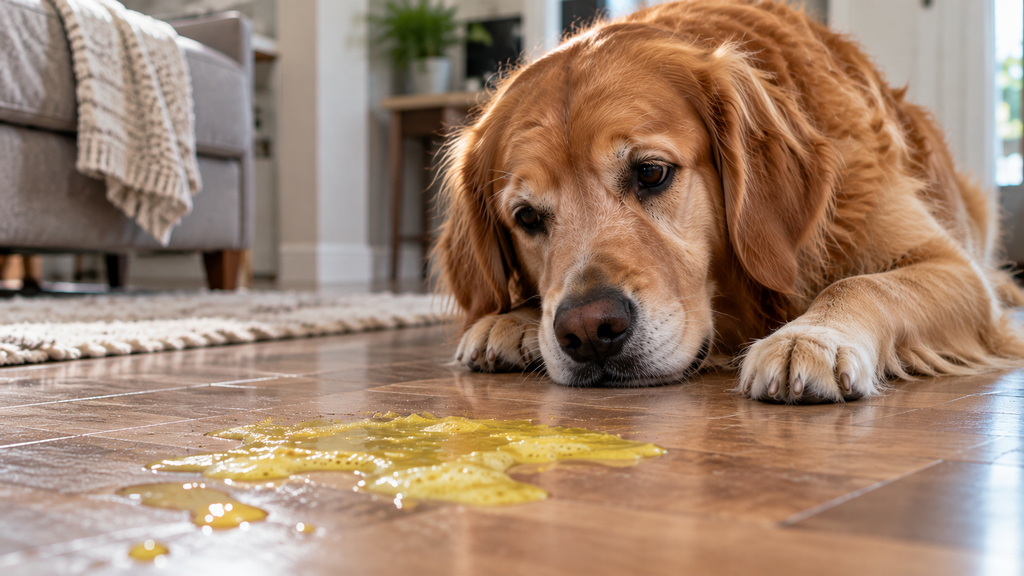
Seeing your dog throw up yellow liquid can be worrying, especially when it happens early in the morning. In many cases, the yellow fluid contains bile, a digestive fluid that helps the body process fats. However, yellow vomit can also occur with gastrointestinal illness and other medical conditions.
The timing of the vomiting, how often it happens, and whether your dog has other symptoms can help determine how urgently veterinary care is needed.
A single episode in an otherwise healthy, active dog may be less concerning than repeated vomiting, but the color alone cannot tell you the cause. This guide explains why dogs vomit yellow liquid, what you can safely do at home, and when to contact a veterinarian.
Quick Triage Guide: When Should You Worry?
| Situation | What to do |
|---|---|
| One isolated episode, with your dog otherwise behaving normally | Monitor closely and contact your vet if symptoms return or you are concerned. |
| Repeated vomiting, reduced appetite, diarrhea, or unusual tiredness | Contact your veterinarian promptly for advice. |
| Blood in the vomit, a swollen abdomen, severe pain, collapse, or repeated unproductive retching | Seek emergency veterinary care immediately. |
| Suspected toxin ingestion or swallowed foreign object | Contact a veterinarian or emergency animal hospital immediately. Do not wait for symptoms. |
Important: Puppies, elderly dogs, and dogs with underlying medical conditions may deteriorate more quickly. Seek veterinary advice sooner rather than relying on home monitoring.
Key Takeaways
- Yellow vomit often contains bile, but it does not always mean your dog’s stomach is empty.
- Bilious vomiting syndrome can cause recurring vomiting, often early in the morning, in dogs that otherwise appear well.
- Smaller, more frequent meals may help some dogs when prolonged gaps between meals are the trigger.
- Repeated vomiting, appetite loss, abdominal pain, or lethargy warrants prompt veterinary assessment.
- Pancreatitis, intestinal obstruction, gastrointestinal disease, and systemic illnesses can also cause vomiting.
- Do not give human medications or force food into a dog that is actively vomiting.
- Emergency warning signs require immediate veterinary attention.
What Is Yellow Bile, and Why Do Dogs Vomit It?
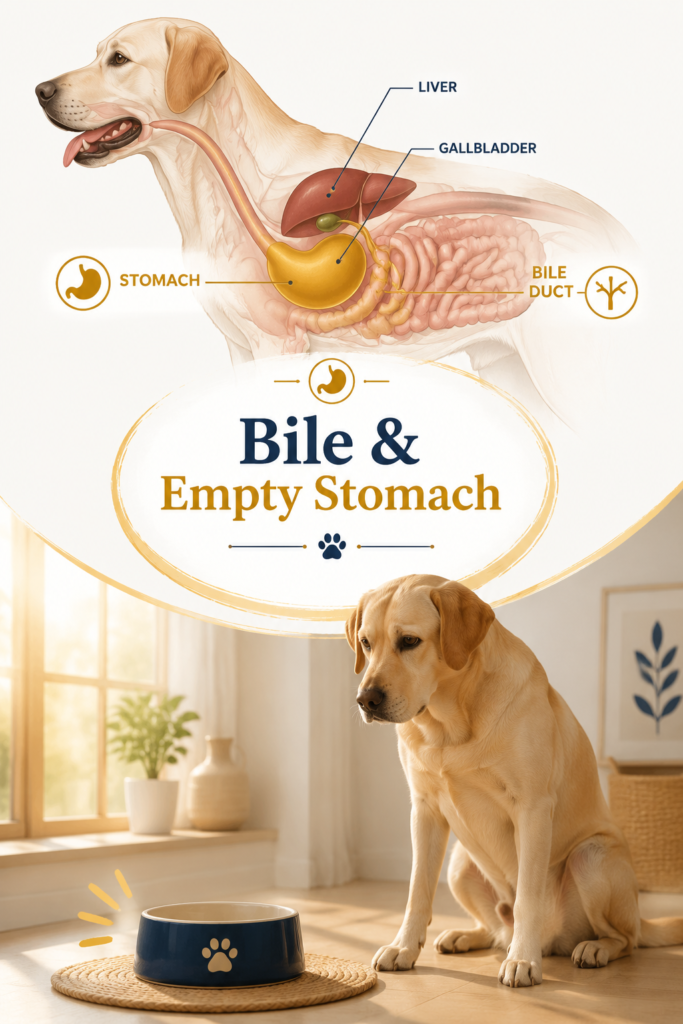
Yellow bile is a digestive fluid produced by the liver and stored in the gallbladder. It enters the small intestine, where it helps with the digestion and absorption of fats.
When bile moves backward from the small intestine into the stomach, it can contribute to irritation and vomiting. The resulting fluid may look yellow or yellow-green and may be watery or mixed with foam.
Dogs may vomit bile when their stomachs have been empty for a prolonged period. However, bile can also appear in vomit caused by other digestive problems, so it should not automatically be blamed on hunger.
Yellow vomit may contain:
- Bile: A yellow or yellow-green digestive fluid.
- Stomach fluid: Liquid produced in the stomach.
- Mucus and foam: These may appear when the dog retches on an empty stomach.
- Food or other material: Depending on what the dog has eaten and how recently.
White foam and yellow foam can overlap in appearance. Neither color alone can establish a diagnosis.
What Does It Mean When a Dog Throws Up Yellow Liquid?
When a dog vomits yellow liquid, one possible explanation is bile reflux associated with an empty stomach. This is particularly plausible when vomiting occurs before breakfast and the dog otherwise behaves normally.
However, other causes must be considered, especially if vomiting recurs or the dog appears unwell.
Potential explanations include:
- Bilious vomiting syndrome
- Dietary indiscretion, such as eating garbage or unfamiliar food
- Sudden changes in diet or food intolerance
- Gastritis or other gastrointestinal conditions
- Pancreatitis
- Intestinal obstruction
- Liver, kidney, or hormonal disorders
The practical takeaway: Pay attention to the whole picture, not just the color. Record when the vomiting occurs, how many times it happens, whether your dog can keep water down, and whether appetite, energy, stools, or behavior have changed.
Common Causes of Yellow Vomit in Dogs
1. Bilious Vomiting Syndrome (BVS)
Bilious vomiting syndrome is a condition associated with bile reflux into the stomach. It can cause recurring vomiting, often after a long interval without food.
Dogs with this pattern may vomit yellow fluid early in the morning and then appear hungry and comfortable afterward. Nevertheless, a veterinarian should assess recurring episodes before bilious vomiting syndrome is assumed to be the cause.
If your veterinarian suspects BVS, they may recommend changing meal timing, feeding smaller meals more frequently, or offering a small portion of the dog’s normal food before bedtime.
Do not assume that every dog vomiting in the morning has BVS. Other digestive and medical conditions can produce similar symptoms.
2. Hunger or a Prolonged Gap Between Meals
Some dogs develop vomiting associated with long gaps between meals. If your dog regularly vomits yellow fluid before breakfast but otherwise appears well, meal timing may be worth discussing with your veterinarian.
Depending on the cause, dividing the usual daily food allowance into smaller, more frequent meals may help.
Avoid increasing the total amount of food simply to prevent vomiting. Instead, adjust the timing and portions while maintaining an appropriate daily calorie intake.
If vomiting continues despite a feeding change, arrange a veterinary assessment.
3. Dietary Indiscretion and Food Sensitivities
Dogs sometimes eat things they should not, including rubbish, spoiled food, fatty scraps, grass, or unfamiliar treats. These may irritate the digestive tract and trigger vomiting.
Sudden changes in food can also upset some dogs’ digestive systems. Food sensitivities may be considered when vomiting occurs repeatedly, particularly if it accompanies diarrhea, skin problems, or other ongoing symptoms.
If vomiting started after a new food, treat, or unusual meal, tell your veterinarian. Do not repeatedly switch foods or begin an elimination diet without appropriate guidance.
4. Pancreatitis
Pancreatitis is inflammation of the pancreas and can cause vomiting, abdominal discomfort, reduced appetite, and lethargy. Some cases are associated with fatty foods, although the cause is not always clear.
A dog with pancreatitis may look noticeably unwell rather than simply vomiting once and returning to normal.
If your dog has repeated vomiting, a painful abdomen, marked tiredness, or refuses food, seek prompt veterinary care. Pancreatitis cannot be diagnosed from the color of the vomit alone.
5. Gastrointestinal Diseases
Conditions affecting the stomach or intestines can cause recurring vomiting. Examples include gastritis, inflammatory bowel disease, ulcers, and certain infections.
Other signs may include diarrhea, changes in appetite, weight loss, abdominal discomfort, or reduced energy.
Recurring yellow vomiting should not be managed indefinitely with feeding adjustments alone. Your veterinarian may recommend an examination and, depending on the symptoms, blood tests, stool tests, or diagnostic imaging.
6. Intestinal Blockages
A dog that swallows a toy, cloth, bone fragment, or another foreign object may develop an intestinal obstruction. Vomiting can include yellow bile, particularly when the stomach is empty.
Possible warning signs include repeated vomiting, abdominal pain, loss of appetite, lethargy, and difficulty passing stool. Some dogs may initially show only subtle signs.
An obstruction can be life-threatening. If you suspect your dog has swallowed a foreign object, contact a veterinarian immediately. Do not try to induce vomiting or use home remedies unless specifically instructed by a veterinarian.
7. Addison’s Disease and Other Systemic Conditions
Addison’s disease is a hormonal disorder that affects the body’s ability to regulate certain hormones and electrolytes. Vomiting may occur alongside weakness, reduced appetite, weight loss, or episodes of gastrointestinal illness.
Liver disease, kidney disease, and other systemic conditions can also cause vomiting.
These illnesses cannot be ruled out based on your dog’s appearance after a single episode or the color of the vomit. Persistent or recurring symptoms deserve veterinary investigation.
Is Yellow Vomit in Dogs an Emergency, or Can I Wait?
A single episode of vomiting in a dog that remains bright, comfortable, and otherwise normal may not require an emergency visit. However, close monitoring is important, and you should contact your veterinarian if symptoms return or anything seems unusual.

Seek emergency veterinary care immediately if your dog has:
- Blood in the vomit: Fresh red blood or material resembling dark coffee grounds.
- A swollen or hard abdomen: Especially with restlessness or repeated unproductive retching.
- Repeated or continuous vomiting: Particularly if your dog cannot keep water down.
- Collapse or extreme weakness: These may indicate a serious medical problem.
- Suspected poisoning: Contact a veterinarian immediately, even if your dog appears normal.
- Possible intestinal obstruction: Especially after swallowing a toy, bone, fabric, or another foreign object.
- Severe abdominal pain or breathing difficulties.
Do not wait for additional symptoms when an emergency warning sign is present.
What if my dog vomits once and then acts normally?
If your adult dog has one isolated episode and is otherwise behaving normally, monitor closely and contact your veterinarian if you are uncertain.
A dog that appears normal afterward may still have an underlying problem. Repeated episodes, changes in appetite, diarrhea, or unusual tiredness should prompt veterinary advice.
Puppies and dogs with diabetes or other medical conditions need extra caution because vomiting can become dangerous more quickly.
When Should I Call the Vet About Dog Vomiting Yellow?
Contact your veterinarian promptly if:
- Your dog vomits repeatedly or the episodes are increasing.
- Yellow vomiting keeps returning over several days or weeks.
- Your dog refuses food or shows reduced appetite.
- Vomiting occurs alongside diarrhea, abdominal discomfort, or lethargy.
- Your dog struggles to keep water down.
- Your dog is a puppy, elderly, or has a known medical condition.
Your veterinarian may ask about the timing and frequency of vomiting, recent meals, medication, possible toxin exposure, and whether your dog could have swallowed an object.
Depending on the findings, diagnostic tests may include bloodwork, urinalysis, stool testing, or imaging.
Recurring vomiting should not be indefinitely treated with home remedies, even if your dog seems comfortable between episodes.
How to Help a Dog That Is Throwing Up Yellow Bile
The safest response depends on the suspected cause and how your dog is behaving.
If the episode is isolated and your dog seems well
- Remove access to unusual foods and rubbish. Keep your dog away from fatty scraps, spoiled food, and objects they might swallow.
- Offer water carefully. Allow small, frequent drinks if your dog is alert and able to swallow normally. Do not force water into your dog’s mouth.
- Monitor closely. Watch for further vomiting, appetite changes, diarrhea, pain, or unusual tiredness.
- Contact your veterinarian if symptoms return. Seek urgent help if your dog cannot keep water down or develops warning signs.
Do not automatically withhold food for a prolonged period. Fasting may be inappropriate for puppies, small dogs, diabetic dogs, and dogs with certain medical conditions. Ask your veterinarian how to manage feeding after vomiting.
If your veterinarian suspects empty-stomach vomiting
Your veterinarian may recommend:
- Dividing the normal daily food allowance into smaller, more frequent meals.
- Offering a small portion of the dog’s usual food before bedtime.
- Keeping feeding times consistent.
- Recording when vomiting occurs and whether meal changes help.
These measures may help some dogs, but they are not a substitute for investigating persistent symptoms.
What not to do
- Do not give human anti-nausea medicines or painkillers without veterinary approval.
- Do not induce vomiting unless a veterinarian specifically instructs you to do so.
- Do not force-feed a dog that is actively vomiting.
- Do not assume that yellow vomit always means hunger.
- Do not delay emergency care when serious warning signs appear.
How Do You Settle a Dog’s Stomach After Vomiting Yellow?
After vomiting, the next steps depend on your dog’s age, health, symptoms, and ability to keep water down.
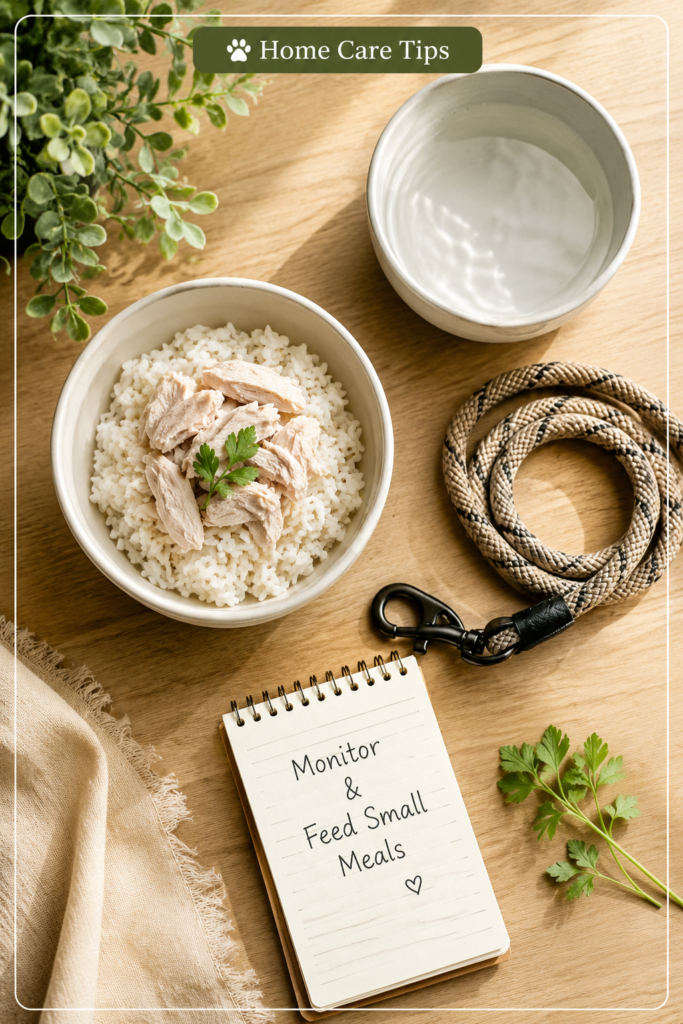
For an otherwise healthy adult dog with one mild episode, a veterinarian may recommend offering small amounts of water and, once vomiting has stopped, small portions of an easily digested food.
A veterinary gastrointestinal diet may be appropriate in some cases. Plain, unseasoned boiled chicken and white rice are sometimes used temporarily, but they are not nutritionally complete for long-term feeding and are not suitable for every dog.
If your dog vomits again after drinking or eating, refuses food, or becomes lethargic, contact your veterinarian rather than continuing home treatment.
Do not impose a fasting period on a puppy, diabetic dog, or medically fragile pet without veterinary advice.
Which Dogs Are More Prone to Throwing Up Yellow Bile?
Some dogs may be more likely to experience vomiting related to meal timing, but yellow vomit is not limited to a particular breed or age group.
Factors that may influence risk include:
- Meal timing: Long gaps between meals may contribute to bile-related vomiting in some dogs.
- Dietary habits: Eating rubbish, unfamiliar foods, or fatty scraps can trigger digestive upset.
- Underlying illness: Gastrointestinal disease and systemic conditions can cause recurrent vomiting.
- Age and health: Puppies, elderly dogs, and dogs with chronic medical conditions may need faster assessment.
Why puppies need extra attention
Puppies can become dehydrated or develop low blood sugar more quickly than healthy adult dogs. Vomiting may also occur with serious infections, including parvovirus, particularly in young or incompletely vaccinated puppies.
If a puppy vomits yellow liquid, contact a veterinarian for guidance promptly. Seek urgent care if vomiting is accompanied by diarrhea, lethargy, poor appetite, or weakness.
FAQ: Dog Vomiting Yellow Bile
What home remedy can I give my dog for vomiting yellow?
There is no single home remedy that is appropriate for every cause of vomiting. For an isolated mild episode in an otherwise healthy adult dog, you may monitor closely and offer small amounts of water. Contact your veterinarian if vomiting recurs or other symptoms develop.
Do not give human medication, herbal remedies, or supplements without veterinary guidance.
Does yellow vomit always mean an empty stomach?
No. An empty stomach and bile reflux are possible explanations, but yellow vomit can also occur with gastrointestinal disease, pancreatitis, intestinal obstruction, and other medical conditions.
The frequency of vomiting, your dog’s behavior, and other symptoms are important when deciding what to do next.
What color is parvo vomit?
Vomiting associated with canine parvovirus can vary in appearance, including yellow or clear fluid. The color is not a reliable way to diagnose parvovirus.
A puppy with vomiting, diarrhea, poor appetite, or lethargy needs prompt veterinary assessment, particularly if vaccination is incomplete.
What should I feed my dog after vomiting yellow bile?
The appropriate feeding plan depends on your dog’s condition. Once vomiting has stopped, a veterinarian may recommend small portions of an easily digested food for a suitable adult dog.
Do not force food, impose prolonged fasting, or repeatedly offer meals if your dog continues to vomit. Puppies and dogs with medical conditions need individualized advice.
Why is my dog throwing up yellow liquid in the morning?
One possibility is bile reflux after a long interval without food. Bilious vomiting syndrome may produce this pattern in some dogs.
However, morning vomiting does not automatically confirm the syndrome. If the episodes recur, arrange a veterinary assessment before assuming that a bedtime snack is all your dog needs.
Why is my dog throwing up yellow liquid but acting normal?
Your dog may have experienced a mild digestive upset or bile reflux, particularly if the episode happened before a meal. However, appearing normal afterward does not completely rule out illness.
Monitor for further episodes and contact your veterinarian if vomiting returns or any other symptoms develop.
Can stress or anxiety cause dogs to throw up yellow liquid?
Stress can affect digestive function in some dogs and may contribute to gastrointestinal signs. However, yellow vomiting should not automatically be attributed to anxiety.
If vomiting repeatedly occurs around stressful events, discuss the pattern with your veterinarian to rule out other causes and develop an appropriate plan.
Can changing my dog’s food stop the yellow vomiting?
It depends on the cause. Adjusting meal timing may help some dogs with bile-related vomiting, while a diet change may be considered for certain food-related problems.
Frequent food changes can themselves cause digestive upset. Discuss recurring symptoms with your veterinarian before starting a restricted or therapeutic diet.
Conclusion
A dog throwing up yellow liquid can have a relatively mild digestive problem, but yellow vomit can also be a sign of an illness that requires treatment. Bile reflux and prolonged gaps between meals are possible explanations, particularly when vomiting occurs before breakfast, but the color alone cannot establish the cause.
If your dog vomits once and otherwise behaves normally, monitor closely and seek veterinary advice if symptoms return. Repeated vomiting, reduced appetite, abdominal pain, or lethargy warrants prompt assessment. Blood in the vomit, a swollen abdomen, collapse, suspected poisoning, or signs of obstruction require emergency care.
Remember: If you are unsure whether your dog needs medical attention, call your veterinarian. Prompt advice is safer than repeatedly treating unexplained vomiting at home.
References
[1] PetMD. Dog Throwing Up Yellow Bile.
https://www.petmd.com/dog/general-health/dog-throwing-up-yellow-bile
[2] UrgentVet. Dog Throwing Up Yellow Bile.
https://urgentvet.com/dog-throwing-up-yellow-bile/
[3] Lincolnway Veterinary Clinic. Dog Yellow Vomit Vet Guide.
https://lincolnwayvet.com/blog/dog-yellow-vomit-vet-guide/
[4] The Spruce Pets. Dog Vomiting Yellow Bile.
https://www.thesprucepets.com/dog-vomiting-yellow-bile-4846474
[5] Dogs Naturally Magazine. Dog Vomiting Yellow Bile.
https://www.dogsnaturallymagazine.com/dog-vomiting-yellow-bile/
[6] Academy Animal Hospital. Vomiting in Pets: Here’s When to Call the Vet.
https://academyanimal.com/news/vomiting-in-pets-here-s-when-to-call-the-vet
[7] Garden State Veterinary Services. Dog Throwing Up Yellow: Urgent Care.
https://www.gsvs.org/woodbridge-nj/blog/dog-throwing-up-yellow-urgent-care/
[8] PetMD. Vomiting in Dogs.
https://www.petmd.com/dog/symptoms/vomiting-in-dogs
[9] TelaVets. Yellow Dog Vomit.
https://www.telavets.com/blog/yellow-dog-vomit
[10] Cherry Creek Veterinary Hospital. Why Is My Dog Throwing Up Yellow Foam?
https://www.cherrycreekvet.com/blog/why-is-my-dog-throwing-up-yellow-foam/