

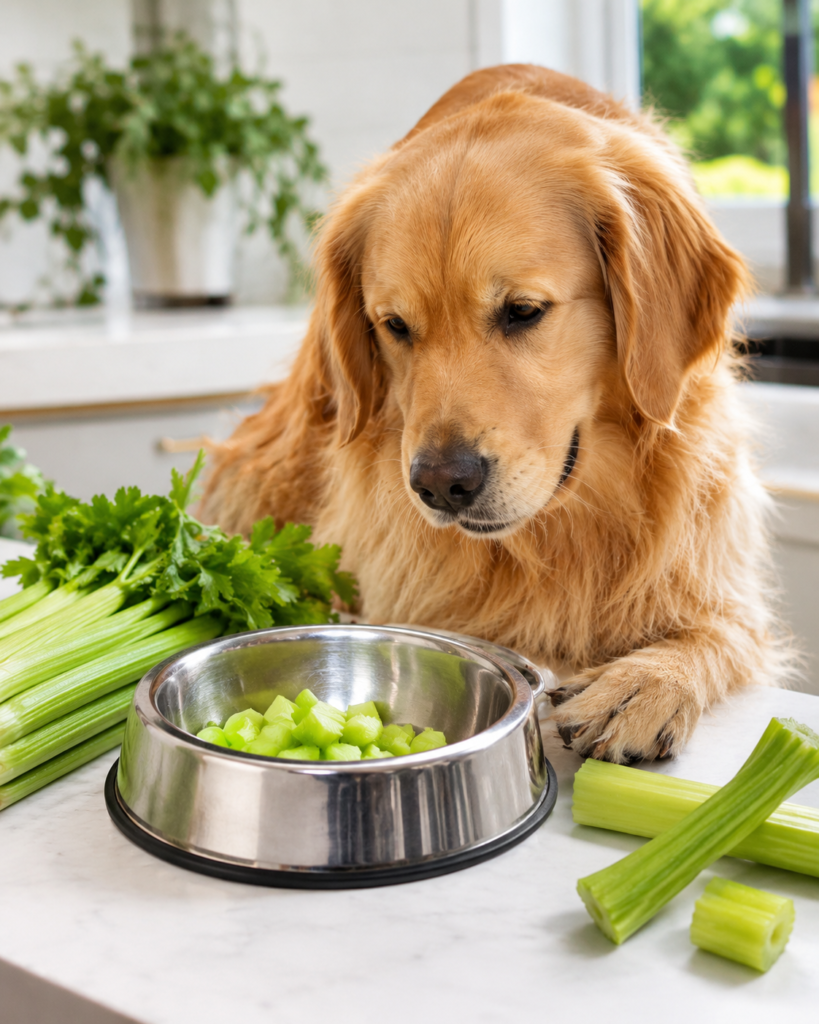
Quick Answer: Yes, dogs can eat celery safely. Celery is generally considered a safe, low-calorie treat for dogs when served in moderation and prepared properly. It contains a lot of water and provides nutrients such as vitamins A, C, and K, along with fiber and potassium.
The main things to watch are portion size and preparation. Large pieces or whole celery stalks can be a choking hazard, especially for small dogs. Too much celery can also cause digestive upset.
Always wash celery thoroughly and cut it into small, bite-sized pieces before giving it to your dog. Treats, including celery, should make up no more than about 10% of your dog’s daily calorie intake.
🥦 Celery for Dogs: Quick Reference
| Factor | Verdict |
|---|---|
| Overall safety | ✅ Safe in moderation |
| Raw celery | ✅ Safe when washed and cut small |
| Cooked celery | ✅ Safe when plain |
| Celery leaves | ⚠️ Wash well; remove if conventionally grown |
| Choking risk | ⚠️ Cut into small pieces |
| Treat portion | ✅ Keep treats within about 10% of daily calories |
| Puppies | ⚠️ Start with a tiny amount |
| Prescription diets | ⚠️ Ask your veterinarian first |
Key Takeaways
- Celery is generally safe for dogs when served in moderation.
- It is low in calories and high in water, making it a reasonable occasional treat.
- Celery contains vitamins and minerals, including vitamins A, C, and K, folate, potassium, and fiber.
- Large pieces and whole stalks can create a choking risk.
- Wash celery thoroughly before serving.
- Cut it into small, bite-sized pieces and remove the tough strings.
- Treats should make up no more than about 10% of your dog’s daily calories.
- Introduce celery slowly, especially if your dog has never eaten it before.
- Dogs on prescription diets should only receive celery if their veterinarian says it is appropriate.
If your dog begs whenever you’re chopping vegetables, you may have wondered whether you can share some of your celery.
The good news is that celery is generally safe for dogs. It can make a crunchy, low-calorie treat, and its high water content makes it a refreshing option. However, celery isn’t something your dog needs to stay healthy. A complete and balanced dog food should provide the nutrition your dog needs, while celery should remain an occasional treat.
The way you serve it also matters. A whole celery stalk can be difficult for a dog to chew and may create a choking risk. Washing the celery, removing the tough strings, and cutting it into small pieces makes it much safer.
In this guide, I’ll explain how much celery dogs can eat, the benefits and possible risks, whether puppies can eat it, how to prepare it safely, and what to do if your dog eats too much.
Why You’ll Find This Guide Helpful
It’s easy to think that because celery is healthy for people, you can give your dog as much as they want. That’s not quite how it works.
This guide will help you understand:
- ✔ Whether celery is safe for dogs
- ✔ How much celery your dog can eat
- ✔ The nutritional benefits of celery
- ✔ The choking and digestive risks to watch for
- ✔ Whether puppies can eat celery
- ✔ Whether raw or cooked celery is better
- ✔ How to wash, cut, and serve celery safely
- ✔ What to do if your dog eats too much
Whether you’re giving your dog celery for the first time or they already love the crunch, these simple guidelines can help you make snack time safer.
Is Celery Safe for Dogs to Eat?
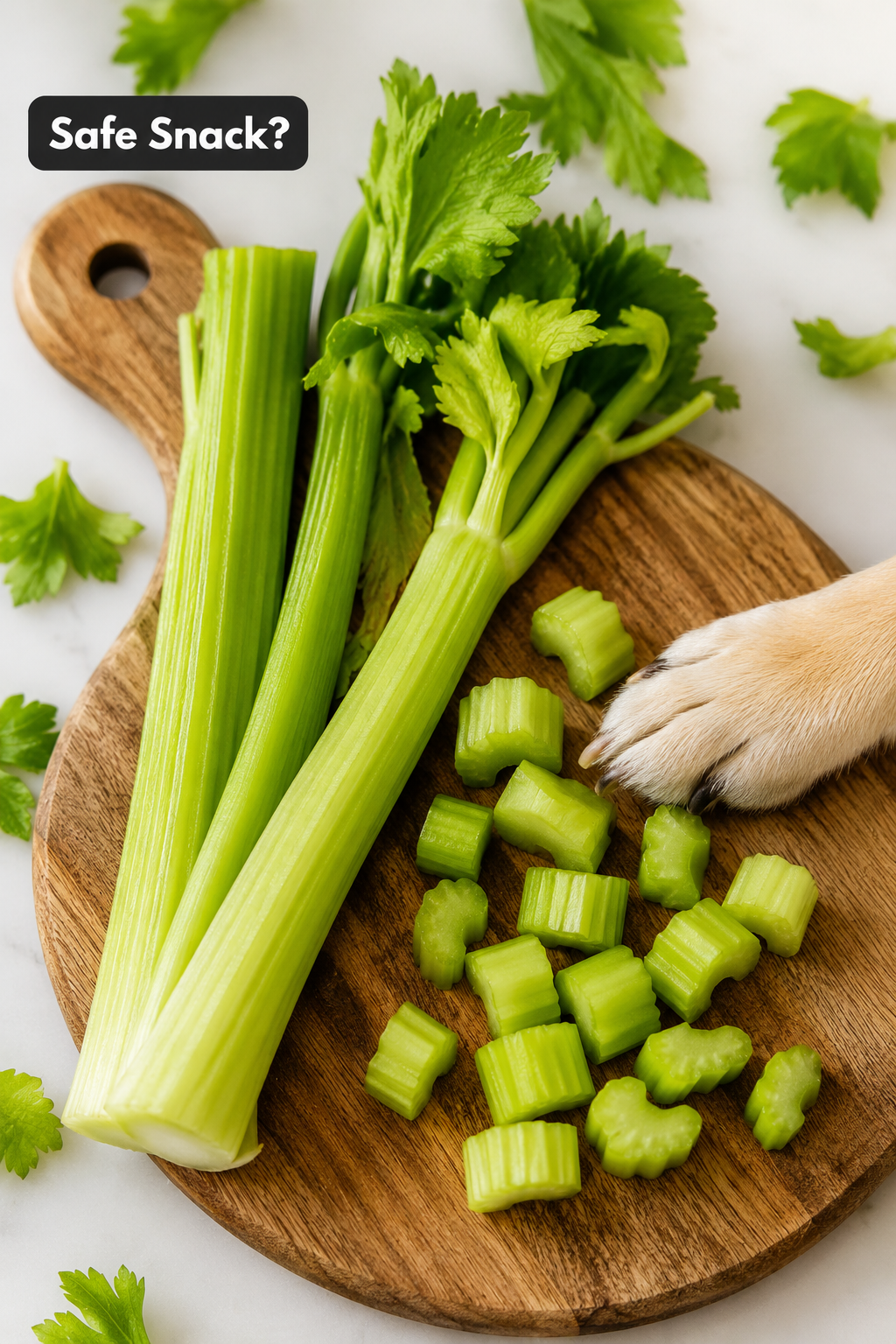
Yes. Celery is generally considered safe for dogs and is included among dog-safe vegetables by veterinary and pet-health sources. It is low in calories, low in fat, and contains a high amount of water.
Celery also contains nutrients such as vitamins A, C, and K, folate, potassium, and fiber. However, these nutrients are a bonus rather than something your dog needs from celery. A complete and balanced dog food should remain the main source of nutrition.
The most important safety issue is how celery is prepared. Whole stalks or large pieces can be difficult to chew and may cause choking, especially in small dogs. Always cut celery into small pieces before serving.
Takeaway: Celery is a safe occasional treat for most healthy dogs when it is washed, cut into small pieces, and served in moderation.
What Are the Benefits of Celery for Dogs?
Celery can be a useful low-calorie treat, particularly for dogs that need to watch their weight. It contains a lot of water and provides several vitamins and minerals.
| Nutrient | Potential Benefit |
|---|---|
| Vitamin A | Supports normal vision and immune function |
| Vitamin C | Provides antioxidant support |
| Vitamin K | Supports normal blood clotting |
| Potassium | Supports normal muscle and nerve function |
| Folate | Supports normal cell function |
| Fiber | Supports normal digestion |
| Water | Adds moisture to the diet |
Celery’s crunchy texture may also help freshen a dog’s breath and may provide some mild mechanical cleaning as they chew. However, celery should not replace regular tooth brushing or professional dental care.
Think of celery as a healthy snack option rather than a supplement. Your dog doesn’t need celery to get these nutrients if they are already eating a complete and balanced diet.
Takeaway: Celery’s biggest practical benefits are that it is low in calories, contains plenty of water, and provides several nutrients while making a crunchy treat.
How Much Celery Can I Give My Dog?
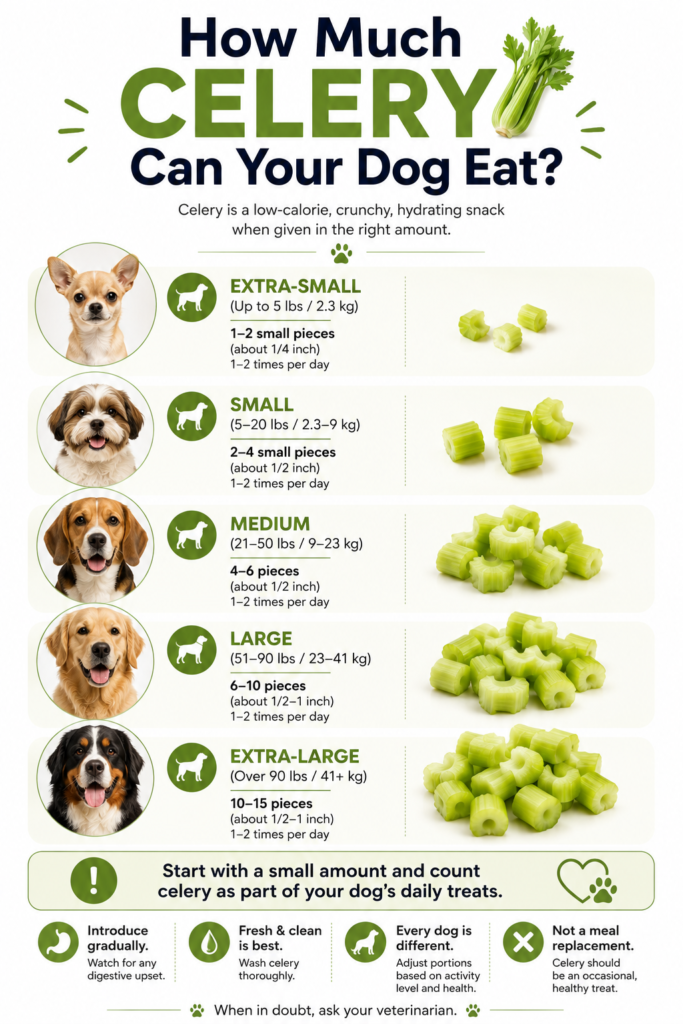
There isn’t one exact amount that works for every dog. The appropriate portion depends on your dog’s size, diet, calorie needs, and the other treats they receive.
A useful general rule is that all treats combined should make up no more than about 10% of your dog’s daily calories.
For a first taste, start with just one or two small pieces and see how your dog responds.
PetMD provides these general serving examples:
| Dog Size | Example Celery Portion |
|---|---|
| Extra-small, 2–20 lb | 1–2 small pieces |
| Small, 21–30 lb | 2–3 pieces |
| Medium, 31–50 lb | 5–6 pieces |
| Large, 51–90 lb | A small handful |
| Extra-large, 91+ lb | A handful |
These are only general examples, not strict prescriptions. If your dog is overweight, has a medical condition, or eats a prescription diet, ask your veterinarian about appropriate treat portions.
Takeaway: Start small and count celery as part of your dog’s total daily treats.
Are There Any Risks or Dogs That Should Avoid Celery?
Celery is safe for most healthy dogs, but there are still a few things to consider.
Choking
Large chunks, whole stalks, and tough celery strings can become choking hazards. Small dogs and dogs that gulp their food are especially important to watch.
Digestive Upset
Too much celery can cause gas, loose stools, or stomach discomfort because of its fiber content. Introduce it slowly and stop giving it if your dog develops digestive problems.
Prescription Diets
If your dog is on a prescription diet, don’t add celery or other treats without checking with your veterinarian first. Even a safe food may not be appropriate for a dog with a specific medical or nutritional requirement.
Dogs With Health Conditions
If your dog has kidney disease, hypertension, a sensitive digestive system, or another condition that affects their diet, ask your veterinarian before making celery a regular treat.
Takeaway: Celery itself isn’t toxic to dogs, but too much can cause stomach upset, and large pieces can be dangerous.
Is Raw or Cooked Celery Better for Dogs?
Both raw and cooked celery can be safe for dogs when prepared correctly.
Raw Celery
Raw celery keeps its crunchy texture and is simple to prepare. Wash it thoroughly, remove the tough strings, and cut it into small pieces.
Cooked Celery
Cooked celery can also be offered, but it should be completely plain. Don’t add salt, butter, garlic, onion, sauces, or other seasonings. Onion and garlic are toxic to dogs.
If you’re choosing between the two, raw celery is usually the easiest option because it requires no cooking. The important thing is not whether it is raw or cooked, but whether it is plain, clean, and served in a safe size.
Takeaway: Raw and plain cooked celery can both be safe. Avoid seasonings and always cut celery into small pieces.

Can Puppies Eat Celery?
Puppies can have celery in small amounts, but introduce it slowly. A puppy’s diet should be built around a complete and balanced puppy food, so celery should remain an occasional treat rather than a regular part of their meals.
Start with one very small piece and watch your puppy for signs of digestive upset. If they tolerate it well, you can occasionally offer another small piece.
Because puppies can be more likely to gulp food, make sure the celery is cut into very small, manageable pieces.
If your puppy is very young, has digestive problems, or is on a special diet, ask your veterinarian before introducing celery.
Takeaway: Puppies can try small amounts of celery, but their main nutrition should always come from a complete puppy diet.
How Do I Prepare Celery for My Dog?
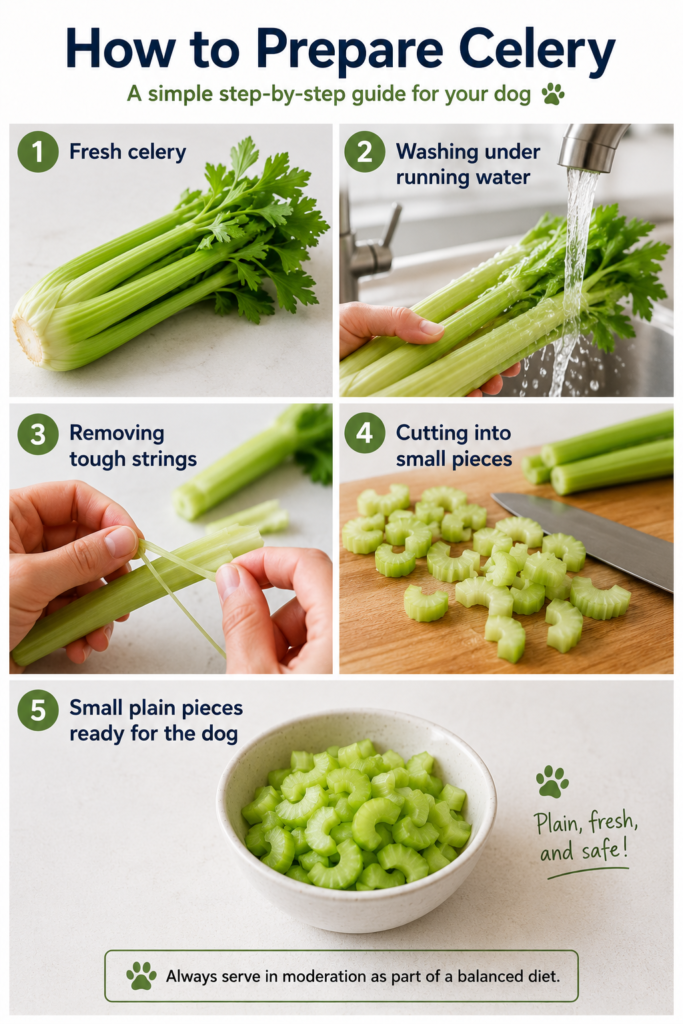
Preparing celery safely is simple.
- Wash it thoroughly. Rinse the celery under running water to remove dirt and surface contaminants.
- Remove the leaves if needed. If you’re using conventionally grown celery, you may prefer to remove the leaves. PetMD notes that the leaves can contain more pesticide residue than the stalk.
- Remove the tough strings. This makes the celery easier for your dog to chew.
- Cut it into small pieces. Bite-sized pieces are much safer than long strips or whole stalks.
- Serve it plain. Don’t add salt, butter, garlic, onion, or sauces.
- Watch your dog while they eat. This is especially important for small dogs and dogs that eat quickly.
You can serve celery raw, plain cooked, or frozen in small pieces.
Takeaway: Wash it, remove the tough strings, cut it small, and serve it plain.
What Vegetables Are Better Than Celery for Dogs?
Celery is a good snack option, but it’s not the only dog-safe vegetable. Depending on what you’re looking for, some alternatives may offer different benefits.
| Vegetable | Why You Might Choose It |
|---|---|
| Carrots | Crunchy, low-calorie, and a source of beta-carotene |
| Cucumber | Very high in water and low in calories |
| Green beans | Low-calorie and a source of fiber |
| Sweet potato | Provides carbohydrates, fiber, and several nutrients when cooked plain |
| Blueberries | Easy to serve and rich in antioxidants |
You don’t need to replace celery if your dog enjoys it. Rotating several safe foods can simply give your dog more variety.
Always introduce new foods gradually and keep treats within the appropriate portion for your dog.
What Happens If My Dog Eats Too Much Celery?
Eating too much celery is unlikely to be toxic to a healthy dog, but it can cause temporary digestive upset.
Your dog may develop:
- Loose stools
- Gas
- Reduced appetite
- Mild stomach discomfort
- Vomiting or diarrhea in more serious cases
If your dog ate a large amount, stop offering celery and make sure fresh water is available. Monitor them closely.
When to Call Your Veterinarian
Monitor at home if your dog has only mild gas or loose stools and otherwise seems normal.
Call your veterinarian if digestive symptoms continue, become severe, or your dog has an underlying health condition that affects their diet.
Seek emergency care if your dog is choking, struggling to breathe, collapses, or develops severe symptoms after eating celery.
Takeaway: Too much celery usually causes digestive upset rather than poisoning, but serious symptoms or choking require prompt veterinary attention.
Frequently Asked Questions
Can dogs eat celery every day?
Small amounts may be fine for some healthy dogs, but celery should remain a treat rather than a major part of the diet. Keep total treats within about 10% of daily calories.
Can dogs eat celery with peanut butter?
Yes, a small amount of plain peanut butter can be used with celery, but check the label carefully. It should contain no xylitol, which is toxic to dogs.
Is celery juice safe for dogs?
Whole celery is the better choice. There is no need to give dogs celery juice, and whole celery provides fiber that juice does not.
Can dogs eat celery salt?
No. Celery salt is a seasoning, not the same thing as plain celery. Dogs should not be given foods with added salt or seasoning.
Can dogs eat celery leaves?
They can, but wash them thoroughly. If the celery is conventionally grown, removing the leaves is a reasonable precaution because the leaves can have more pesticide residue.
Can diabetic dogs eat celery?
Celery is low in calories and sugar, but dogs with diabetes should have dietary changes discussed with their veterinarian.
Is frozen celery safe for dogs?
Yes, plain frozen celery can be offered in small pieces. Make sure the pieces are an appropriate size and that your dog is supervised while eating.
Can large dogs eat bigger pieces?
Large dogs may be able to handle larger pieces, but small, bite-sized pieces are still the safest choice. Cutting celery small also makes portions easier to control.
Conclusion
Yes, dogs can eat celery. For most healthy dogs, it can be a safe, crunchy, low-calorie treat when served properly.
The important part is preparation: wash the celery, remove the tough strings, cut it into small pieces, and serve it plain. Keep the portion small and remember that celery should complement a complete and balanced diet, not replace it.
Celery isn’t a necessary part of your dog’s diet, but it can be a useful alternative to higher-calorie treats. If your dog enjoys it and tolerates it well, there’s no reason it can’t occasionally be part of their treat rotation.
If your dog has a medical condition or eats a prescription diet, check with your veterinarian before adding celery or any other new food.