

A torn cranial cruciate ligament (CCL) can leave your dog struggling to walk, climb stairs, or enjoy everyday activities. TPLO surgery (Tibial Plateau Leveling Osteotomy) is a common surgical treatment that stabilizes the knee by changing the angle of the tibia, helping reduce the instability caused by the torn ligament.
If your veterinarian has recommended TPLO, you probably have questions about how the procedure works, how much it costs, and how long your dog will take to recover. This guide explains what to expect before and after surgery, including potential risks, recovery milestones, and the care your dog may need at home.
Every dog is different, so your veterinarian or veterinary orthopedic surgeon can help determine whether TPLO is appropriate and create a recovery plan tailored to your pet.
What is TPLO Surgery in Dogs and What Does it Treat?
TPLO surgery in dogs treats a torn cranial cruciate ligament CCL by cutting and rotating the tibial plateau to stabilize the stifle joint. It addresses lameness caused by the femur sliding down the tibia during weight-bearing. This procedure eliminates the need for an intra-articular ligament graft.
The cranial cruciate ligament stabilizes a dog’s knee. When this ligament injury occurs, the femur slides down the tibial plateau, causing pain, arthritis, and severe lameness. Unlike humans, dogs rupture this ligament due to gradual degeneration rather than sudden trauma 1.
The TPLO (Tibial Plateau Leveling Osteotomy) procedure changes the bone’s angle. By making a cut in the tibia and rotating the bone segment, the surgeon levels the plateau. This biomechanical shift prevents the femur from sliding, stabilizing the joint without repairing the torn ligament itself 9.
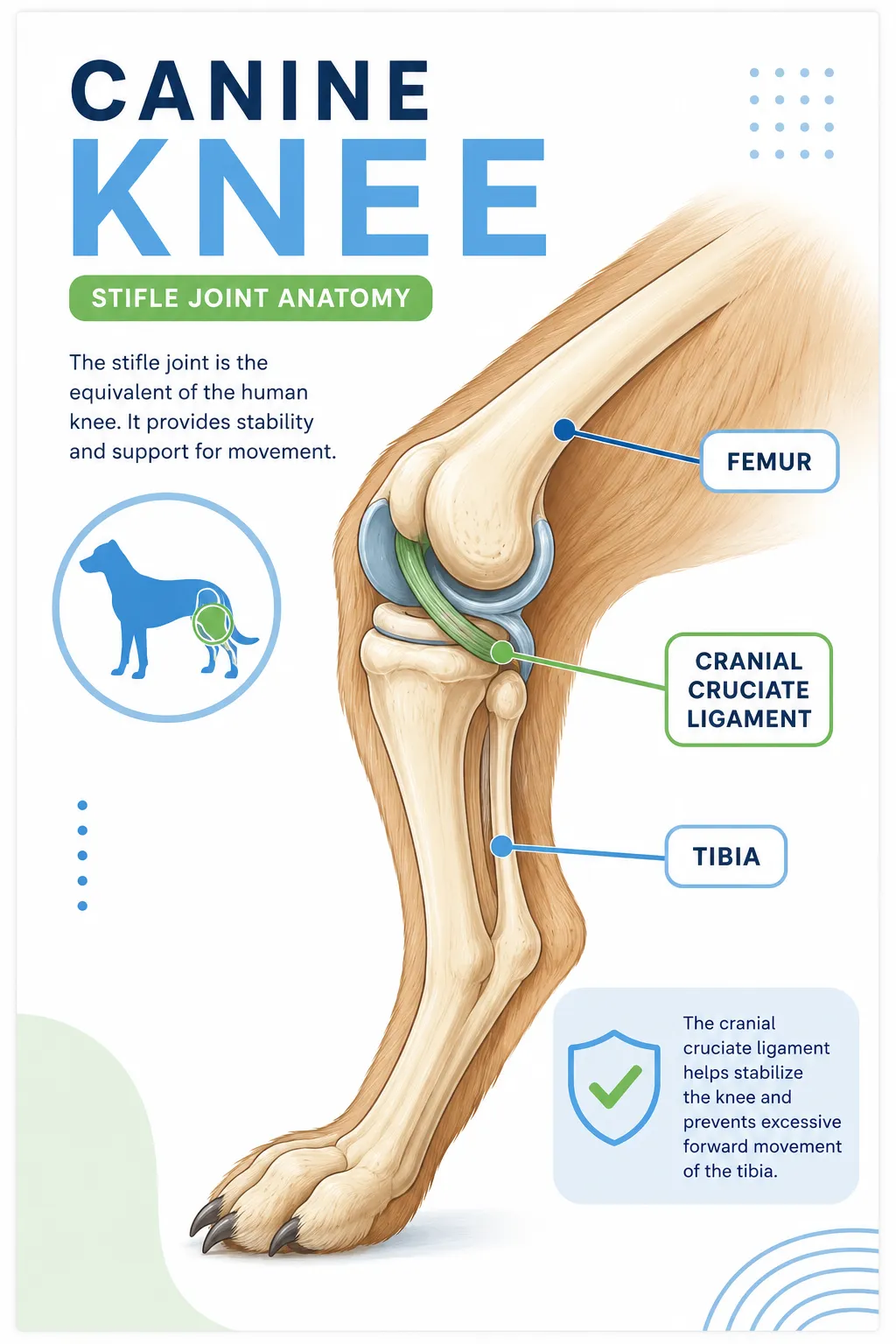
Many owners don’t realize that a partial tear can progress to a full rupture if left untreated. Early intervention prevents excessive joint degeneration. In practice, what vets often find is that the opposite knee is also at risk, as about half of dogs will rupture the other CCL within two years 4.
What Options Are There for Repairing My Dog’s Torn CCL?
There are three main surgical options for a torn CCL: TPLO, TTA, and the traditional lateral suture. TPLO and TTA change the bone’s geometry to stabilize the joint, while the lateral suture uses a synthetic cord to mimic the ligament. The right choice depends on the dog’s size and activity level.
TPLO vs. TTA vs. Traditional Lateral Suture all aim to stabilize the stifle but use different methods. The TPLO and TTA techniques alter the tibial plateau angle. TPLO cuts and rotates the bone, while TTA advances the tibial tuberosity to change the quadriceps pull 10.
The lateral suture technique involves placing a strong nylon cord around the joint to mimic the ligament. This is often recommended for smaller dogs or cats. However, for large, active dogs, the bone-cutting procedures offer superior long-term stability 5.
How to Choose the Right Surgery for Your Dog
- Choose TPLO if: Your dog is large, active, or has a steep tibial plateau angle.
- Choose TTA if: Your dog is medium-sized and you prefer a slightly less invasive bone procedure.
- Choose Lateral Suture if: Your dog is small, a cat, or elderly with low activity levels.
Facilities like Bridger Veterinary Specialists or VCA Animal Hospitals can evaluate your pet to determine the best path forward 1.
What Does TPLO Surgery in Dogs Entail?
The TPLO procedure involves cutting the tibia, rotating the bone segment to level the plateau, and securing it with a specialized bone plate. This surgery stabilizes the stifle joint immediately, preventing the femur from sliding. It requires a veterinary surgeon with advanced orthopedic training.
During surgery, the surgeon makes an incision to expose the knee. The joint is inspected, and any torn ligament fragments are removed. If the meniscus is damaged, it is also trimmed 1.
Next, a curved saw is used to make an osteotomy to cut through the tibia. The tibial plateau leveling osteotomy is completed by rotating the top segment of the bone to reduce the slope to roughly 5 degrees. A steel bone plate is then screwed into place to hold the bones together while they heal 9.
This is major surgery. Clinics like North Oatlands Animal Hospital or Oatlands Animal Hospital emphasize that the precision of the cut is vital. The bone plate acts as an internal cast, allowing the tibia to heal in its new position over several weeks 5.
How Much Does TPLO Surgery Cost for Dogs?
TPLO surgery for dogs typically costs between $3,500 and $5,500, depending on geographic location and the surgeon’s experience. This price usually includes anesthesia, the bone plate, post-op X-rays, and medications. Additional costs may apply for pre-operative bloodwork and physical therapy.
The TPLO surgery cost for dogs varies widely. A general practice might charge less than a board-certified veterinary specialist. The cost reflects the specialized equipment, including jigs, bone saws, and titanium plates 3.
Cost Breakdown:
- Consultation & X-rays: $300 – $600
- Surgery & Anesthesia: $2,500 – $4,000
- Implants & Hardware: $500 – $1,000
- Medications & Recovery Gear: $200 – $400
Pet insurance often covers TPLO surgery if the ligament rupture occurred after the policy was active. If you lack insurance, ask about payment plans. Services like CareCredit or Scratchpay are widely accepted at animal hospitals 6.
Before booking, read the clinic’s Privacy Policy and Terms regarding payment plans. You can often find financing details on their Facebook page or by calling their front desk on a Mon through Fri schedule 3.
How Long Does it Take Dogs to Recover From TPLO Surgery?
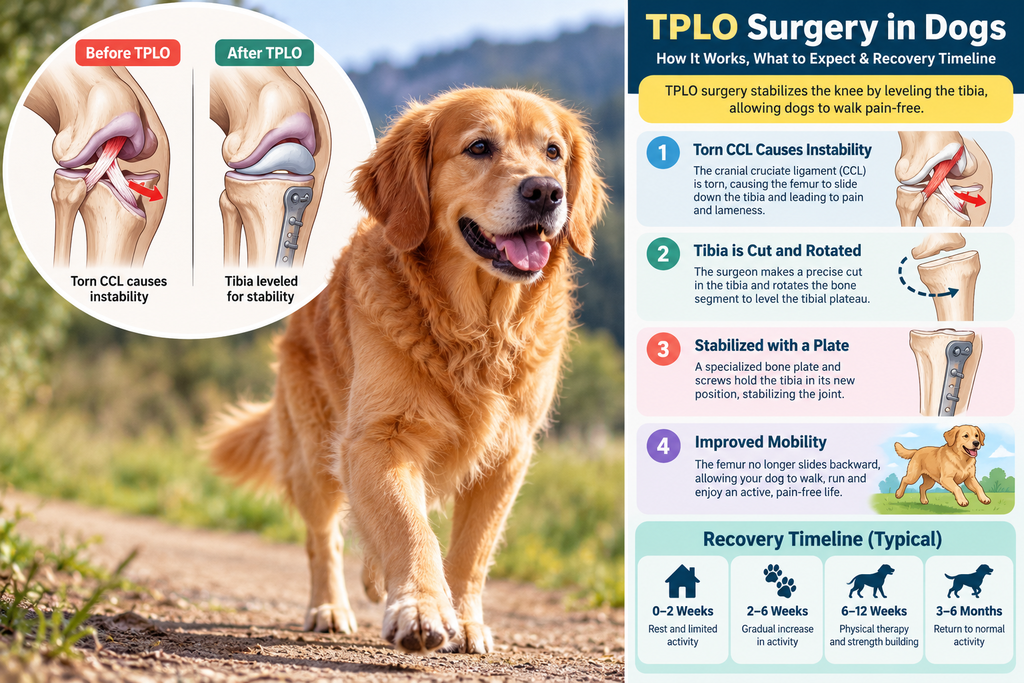
Full recovery from TPLO surgery takes about 12 to 16 weeks, though many dogs begin toe-touching within a few days. Strict exercise restriction is necessary for proper bone healing. The recovery is phased, gradually reintroducing activity over four months.
The surgery recovery timeline is critical. The bone needs time to heal around the plate. Too much activity too soon can cause the screws to loosen or the bone to fracture 4.
Recovery Timeline:
- Weeks 1-2: Strict rest. Short leash walks for bathroom breaks only. Use a sling for support.
- Weeks 3-4: Sutures are removed. Slow, short leash walks begin.
- Weeks 5-8: Bone is actively healing. Increase walk length by 5 minutes weekly.
- Weeks 9-12: X-rays confirm bone healing. Return to off-leash activity if cleared.
- Weeks 12+: Full recovery of joint function.
After TPLO surgery, patience is your greatest tool. TPLO success rates are high, but only if owners follow the rest schedule. Skip excessive activity during the early phases to avoid setbacks 7.
How to Care for Your Dog After TPLO Surgery
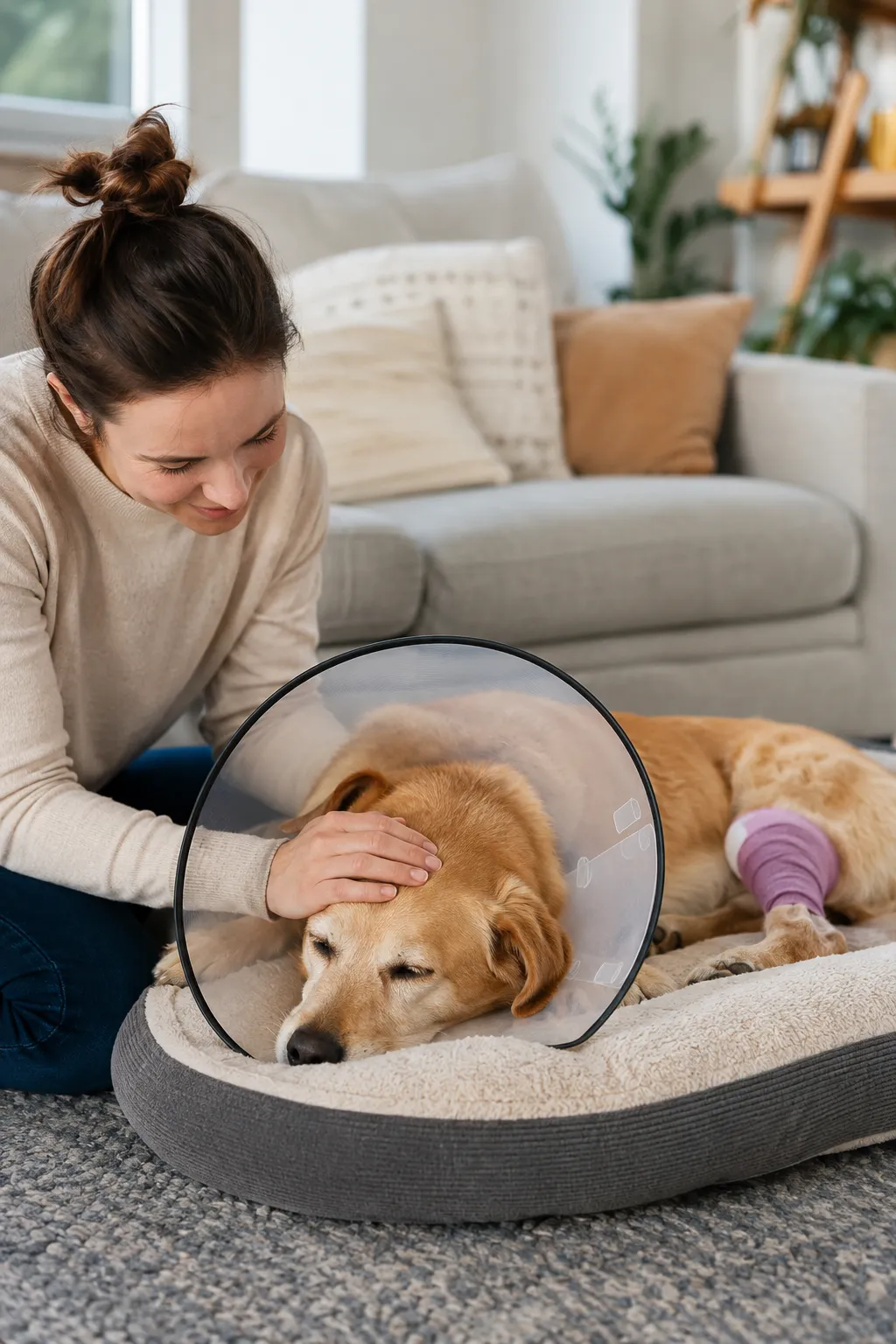
After TPLO surgery, care involves strict rest, administering prescribed medications, and using a cone to prevent licking. Introduce physical therapy and joint support supplements gradually. Managing your dog’s environment is crucial for a smooth surgery recovery.
The first two weeks are the hardest. Your dog will be groggy and need help walking. Use a towel under their belly for amp joint support. You must administer pain medications and antibiotics exactly as prescribed to prevent infection and manage discomfort 2.
Home Care Essentials:
- Confinement: Use a small pen or crate when unsupervised.
- Flooring: Lay down rugs or yoga mats on slippery hardwood floors.
- Wound Care: Check the incision daily for redness, swelling, or discharge.
- Diet: Feed supplements and therapeutic diets designed for bone and joint health.
Preventive care wellness includes adding prevention chews amp and tablets to their routine. These support skin and coat health and reduce inflammation. Laser therapy can also be introduced after the incision heals to boost cellular repair 4.
Behavior changes are common. Your dog may seem depressed or restless. Provide puzzle toys to keep their mind active while their body rests. If your dog is a cat or small breed, the same confinement principles apply, though they may recover faster 2.
TPLO Recovery Timeline Tracker
Click each phase to see care guidelines
Weeks 1-2: Strict Rest
Leash walks for bathroom breaks only. Use a sling for support. Administer pain medications and keep the cone on at all times.
Weeks 3-4: Suture Removal
Sutures are removed. Begin 5-minute slow leash walks. Continue confinement when not walking.
Weeks 5-8: Increased Activity
Increase leash walks by 5 minutes each week. Introduce gentle range-of-motion exercises if cleared by your vet.
Weeks 9-16: Final Healing
X-rays confirm bone healing. Gradually return to normal off-leash activity. Continue joint support supplements.
function cgToggle(element) { var details = element.querySelector(‘.cg-details’); if (details.style.display === ‘none’ || details.style.display === ”) { details.style.display = ‘block’; } else { details.style.display = ‘none’; } }What Are the Risks and Complications of TPLO Surgery?
While TPLO surgery has a high success rate of over 90%, risks include infection, implant failure, and tibial tuberosity fracture. Early detection of complications improves outcomes. Most dogs return to full function without ongoing pain.
The TPLO surgery success rate is excellent, with over 90% of dogs returning to normal or near-normal function 8. However, any orthopedic surgery carries risks.
Common Complications:
- Infection: Occurs in about 5-10% of cases. Treated with antibiotics 10.
- Implant Loosening: Screws can back out if the dog is too active too soon.
- Patellar Luxation: The kneecap can dislocate, requiring a second surgery.
If you notice sudden lameness after a period of improvement, or if the incision opens, contact your vet immediately. Excessive swelling or a foul smell indicates infection. There is no need to wait; early intervention prevents catastrophic failure 1.
When to Contact Your Veterinarian Immediately
After surgery, monitor your dog closely for signs of emergency. Sudden non-weight-bearing lameness, severe swelling, or an open incision require immediate veterinary attention. Do not wait if your dog shows signs of systemic illness like vomiting or lethargy.
The call vets get most often is about the incision. Some bruising is normal, but excessive redness or discharge is not. If the incision dehisces (opens), it must be cleaned and closed immediately to prevent infection 2.
Another red flag is sudden, sharp pain. If your dog was walking fine and suddenly screams or refuses to move, the implant may have failed. This requires an emergency X-ray. Keep your vet’s emergency number handy, as complications can happen on weekends or at night 4.
Frequently Asked Questions
Is TPLO surgery in dogs worth it?
Yes, TPLO surgery is worth it for most medium to large breed dogs. It offers a faster return to function and less arthritis progression compared to conservative management. Without surgery, dogs develop chronic pain and muscle atrophy. The procedure restores stability, allowing active dogs to run and play again without lameness 5.
How do dogs go to the bathroom after TPLO surgery?
Dogs usually need assistance going to the bathroom after surgery. Use a towel sling under their belly to support their hind end during short, leashed walks outside. Keep them on grass and avoid stairs. Most dogs will urinate and defecate within 24 hours of surgery, though appetite and bowel movements may be irregular for a few days due to medications 2.
Should I put my dog down if I can’t afford ACL surgery?
No, you do not need to euthanize your dog if you cannot afford TPLO surgery. Conservative management, including strict rest, joint supplements, and pain medications, can help manage a torn CCL. While surgery offers the best outcome, smaller or less active dogs can live comfortably with medical management. Discuss payment plans or charitable funds with your vet 6.
How painful is TPLO surgery for dogs?
TPLO surgery is a major orthopedic procedure, so it is painful. However, veterinarians use multi-modal pain management, including nerve blocks, opioids, and NSAIDs. Your dog will receive comprehensive pain medications to take at home. Most dogs are comfortable within a few days, though they may pant or seem restless as they adjust to the medications 7.
Conclusion
TPLO surgery in dogs is a highly effective solution for a torn cranial cruciate ligament. By altering the knee’s biomechanics, the procedure provides lasting stability and prevents chronic arthritis. While the cost and recovery require commitment, the vast majority of dogs return to a happy, active lifestyle.
Follow your surgeon’s guidelines strictly, invest in quality joint support, and maintain patience during the 12-week recovery. Your dog’s health and mobility depend on the care you provide right now.
References
[1] What Dog Owners Should Know About TPLO Surgery – https://www.virginiaveterinarycenters.com/blog/what-dog-owners-should-know-about-tplo-surgery
[2] TPLO Surgery Recovery Dogs Cats – https://www.surgipet.com/tplo-surgery-recovery-dogs-cats
[3] How Much Does TPLO Surgery Cost – https://topdoghealth.com/how-much-does-tplo-surgery-cost/
[4] Dog Recovery After TPLO Surgery – https://medcovet.com/blog/dog-recovery-after-tplo-surgery/
[5] Dog TPLO Surgery And Recovery – https://veazievet.com/blog/dog-tplo-surgery-and-recovery/
[6] TPLO Surgery Dog Cost – https://www.lemonade.com/pet/explained/tplo-surgery-dog-cost/
[7] TPLO Recovery – https://vetmed.tamu.edu/news/pet-talk/tplo-recovery/
[8] TPLO Literature – https://tplonashville.com/tplo-literature/
[9] Pmc9748159 – https://pmc.ncbi.nlm.nih.gov/articles/PMC9748159/
[10] Full – https://www.frontiersin.org/journals/veterinary-science/articles/10.3389/fvets.2024.1506848/full.