
Quick Answer: The signs and symptoms of parvo in puppies commonly begin 3–7 days after exposure and may include lethargy, loss of appetite, vomiting, and diarrhea that can become bloody. Canine parvovirus primarily attacks rapidly dividing cells, especially in the gastrointestinal tract, and severe illness can lead to dehydration and other life-threatening complications.
Puppies between 6 weeks and 6 months old, especially those that are unvaccinated or incompletely vaccinated, are at particularly high risk.
If a puppy develops vomiting, diarrhea, sudden lethargy, or refuses food—especially if they are not fully vaccinated—contact a veterinarian promptly rather than waiting for symptoms to become severe.
Key Takeaways
- Parvo symptoms commonly appear 3–7 days after exposure.
- Early signs can include lethargy and sudden loss of appetite.
- Vomiting and diarrhea may follow, sometimes becoming bloody.
- Severe dehydration and complications can develop quickly.
- Puppies between 6 weeks and 6 months are particularly vulnerable.
- Incomplete vaccination does not provide full protection.
- Parvo is highly contagious and can survive in contaminated environments.
- Early veterinary treatment greatly improves the chance of survival.
- Prevention depends heavily on vaccination and careful environmental management.
🚨 Parvo Urgency Triage
| Symptom Level | Signs | What to Do |
|---|---|---|
| Monitor Closely | Mild lethargy or slightly reduced appetite without vomiting or diarrhea | Monitor closely and contact your vet if symptoms progress |
| Call Your Vet Today | Refusing food, vomiting, soft stool, or increasing lethargy | Contact your veterinarian the same day |
| Emergency — Go Now | Repeated vomiting, bloody diarrhea, collapse, severe weakness, or pale gums | Seek emergency veterinary care immediately |
Important: This table is for general guidance, not diagnosis. Puppies can deteriorate quickly, so don’t rely on a wait-and-see approach if your puppy appears seriously ill.
What Is Parvo in Puppies and How Does It Spread?
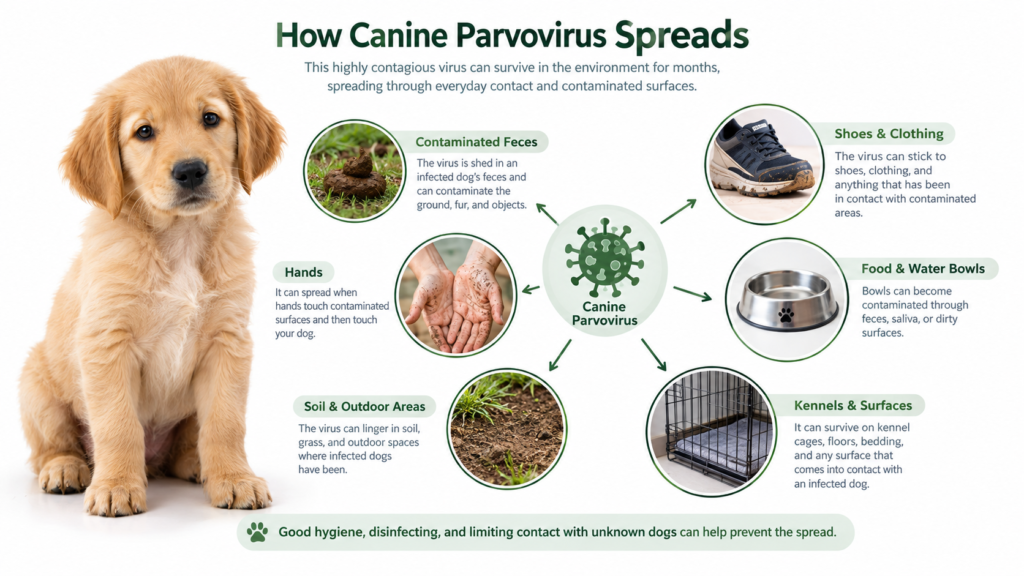
Canine parvovirus (CPV) is a highly contagious viral infection that primarily attacks rapidly dividing cells. The intestinal lining and bone marrow are particularly affected, while very young puppies can also develop cardiac involvement.
The virus spreads mainly through infected feces. A puppy can become infected by sniffing, licking, or walking through contaminated areas.
The virus is also extremely resilient in the environment and can remain on contaminated surfaces, objects, soil, clothing, and other materials for long periods.
This means a puppy doesn’t necessarily need direct contact with a visibly sick dog to become infected.
Where Can Puppies Be Exposed?
Potential exposure areas include:
- Dog parks
- Shared sidewalks and outdoor areas
- Pet stores
- Kennels
- Grooming facilities
- Other areas where infected dogs have been
For puppies that have not completed their vaccination series, follow your veterinarian’s guidance about safe outdoor exposure and socialization.
What Are the Early Signs of Parvo in Puppies?
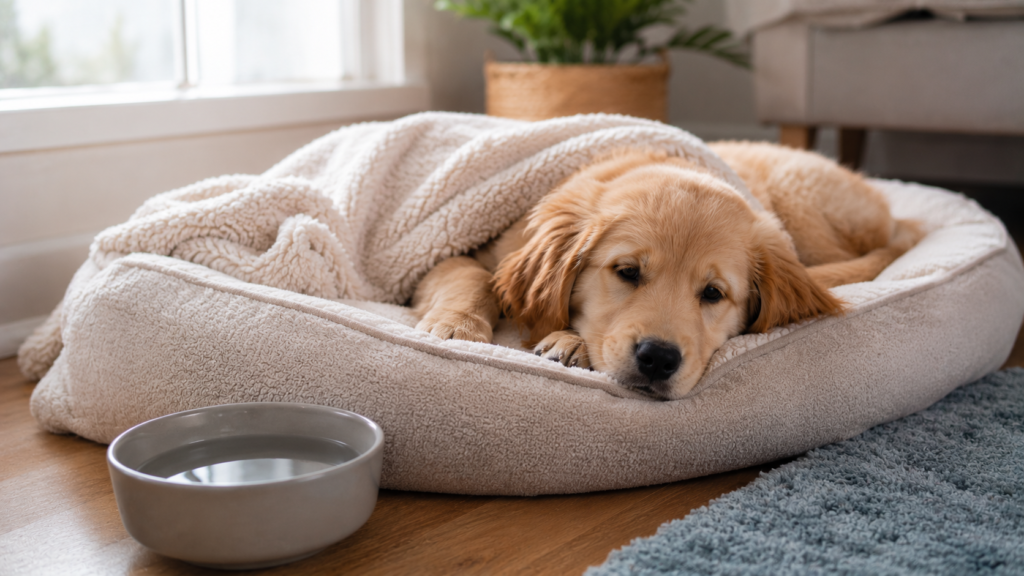
The earliest signs can be easy to overlook.
A puppy may suddenly:
- Become unusually tired
- Sleep more than normal
- Stop playing
- Lose interest in food
- Refuse treats
- Develop a fever
As the illness progresses, vomiting and diarrhea can develop. Diarrhea may become severe and may contain blood.
Why Early Changes Matter
One of the biggest problems with parvo is that a puppy can go from appearing mildly unwell to seriously ill relatively quickly.
Don’t assume that sudden lethargy and appetite loss are simply the result of something your puppy ate.
If vomiting or diarrhea develops—particularly in a young or incompletely vaccinated puppy—contact your veterinarian.
How Long After Exposure Do Parvo Symptoms Appear?
The typical incubation period for canine parvovirus is around 3–7 days, although signs may take longer to appear in some cases.
This can make it difficult to identify exactly where the infection came from.
For example, a puppy could visit an area where exposure occurred, appear completely healthy for several days, and then suddenly develop symptoms.
Why the Timeline Matters
If your puppy has recently been exposed to areas where other dogs gather and then develops:
- Lethargy
- Loss of appetite
- Vomiting
- Diarrhea
Tell your veterinarian about the possible exposure.
Which Puppies Are Most at Risk?
Puppies between approximately 6 weeks and 6 months old are particularly vulnerable, especially if they are unvaccinated or have not completed their vaccination series.
Very young puppies can also experience cardiac involvement, although this form of parvovirus has become less common with vaccination of breeding dogs.
Puppies Under 8 Weeks
Very young puppies can be especially vulnerable because parvovirus can affect the heart muscle in addition to the gastrointestinal tract.
Sudden collapse, breathing difficulty, or severe weakness in a very young puppy requires immediate veterinary attention.
Parvo vs. Other Common Puppy Illnesses
Several puppy illnesses can cause vomiting, diarrhea, or poor appetite. Symptoms alone cannot reliably confirm parvo.
| Condition | Vomiting | Diarrhea | Fever | Possible Distinguishing Feature |
|---|---|---|---|---|
| Parvovirus | Common | Can be severe and bloody | May occur | Rapid deterioration and high contagion |
| Dietary indiscretion | Possible | Possible | Less typical | May resolve more quickly |
| Intestinal parasites | Possible | Possible | Less typical | May cause ongoing digestive problems |
| Giardia | Possible | Common | Less typical | Often causes prolonged digestive symptoms |
| Coronavirus | Possible | Possible | Variable | Often milder than parvovirus |
These patterns are not enough to diagnose a puppy at home.
A veterinarian may use a fecal test, along with the puppy’s history, examination, and other tests, to determine whether parvovirus is likely.
If your puppy has vomiting and diarrhea together, particularly if they are young or incompletely vaccinated, contact your veterinarian.
Can Puppies Survive Parvo?
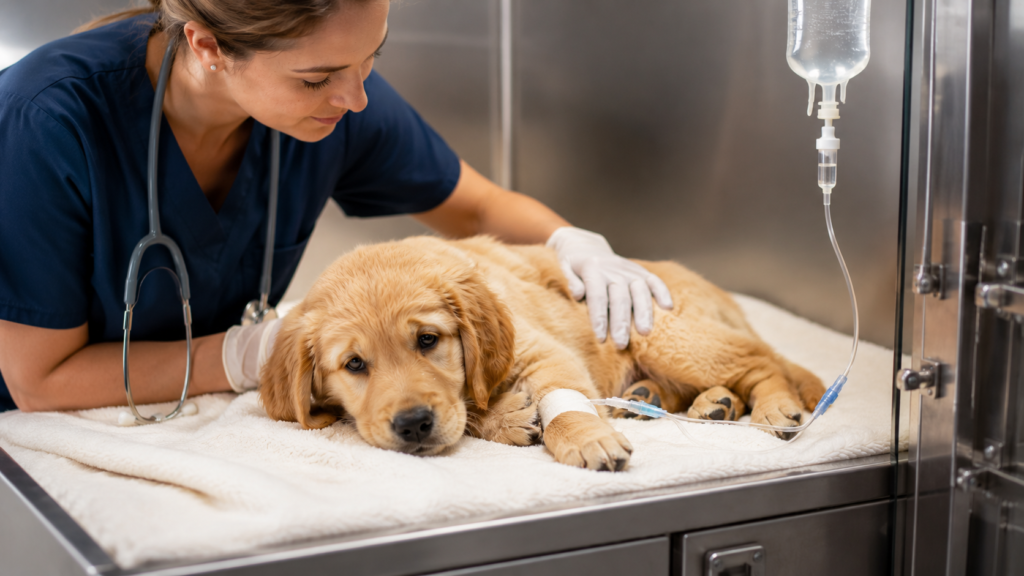
Yes. Puppies can survive parvo, especially when treatment begins promptly.
The supplied sources report survival rates of approximately 85–90% with appropriate treatment, while untreated disease can have a very high fatality rate.
Treatment generally focuses on supportive care because there is no simple medication that eliminates the virus itself.
Veterinary treatment may include:
- IV fluids
- Anti-nausea medication
- Antibiotics when indicated to address secondary bacterial complications
- Nutritional support
- Close monitoring
The severity of the illness and the puppy’s response to treatment determine the recovery timeline.
Why Early Treatment Matters
Parvo can cause severe fluid loss through vomiting and diarrhea.
The earlier dehydration and other complications are addressed, the better the puppy’s chances of recovering.
How Much Does Parvo Treatment Cost?
Treatment costs vary considerably depending on location, severity, hospitalization time, and the level of care required.
The original source gives these approximate ranges:
| Treatment Level | Approximate Cost | What May Be Included |
|---|---|---|
| Outpatient care | $300–$600 | Fluids, medications, monitoring |
| Standard hospitalization | $500–$1,500 | IV fluids, medications, nursing care |
| Intensive care | $1,500–$3,000+ | Intensive monitoring and additional supportive treatment |
These are general estimates from the supplied material, not guaranteed current prices.
Ask your veterinarian for an estimate based on your puppy’s specific condition.
Some clinics may offer outpatient protocols for selected cases, but whether outpatient care is appropriate should be decided by the veterinarian.
What Should I Do If I Think My Puppy Has Parvo?
If you suspect parvo, act promptly.
1. Call Your Veterinarian
Explain your puppy’s symptoms, age, vaccination status, and any possible exposure.
2. Keep Your Puppy Away From Other Dogs
Parvo is highly contagious.
Separate a potentially infected puppy from other dogs until your veterinarian gives you further instructions.
3. Call Before Arriving
Tell the clinic that you suspect parvo.
This allows the veterinary team to take appropriate infection-control precautions and avoid exposing other patients.
4. Follow Your Veterinarian’s Instructions About Food and Water
Do not force food or fluids into a puppy that is actively vomiting or too weak to swallow safely.
Your veterinarian can tell you how to manage hydration and feeding based on the puppy’s condition.
5. Don’t Give Human Medication
Avoid human medications and home remedies unless specifically prescribed or recommended by your veterinarian.
When Should I Take My Puppy to the Vet?
With a young or incompletely vaccinated puppy, vomiting, diarrhea, or sudden unexplained lethargy should be taken seriously.
Contact your veterinarian promptly if your puppy develops:
- Repeated vomiting
- Diarrhea
- Bloody stool
- Sudden loss of appetite
- Significant lethargy
- Refusal to drink
- Increasing weakness
Seek Emergency Veterinary Care If Your Puppy Has:
- Collapse
- Inability to stand
- Severe weakness
- Pale, white, gray, or otherwise abnormal gums
- Difficulty breathing
- Repeated uncontrollable vomiting
- Severe bloody diarrhea
- Signs of shock or serious dehydration
Don’t wait for every classic symptom to appear before seeking help.
Can Vaccinated Puppies Still Get Parvo?
Yes, although vaccination provides important protection.
One vaccination does not mean a puppy has completed its protection against parvovirus.
Puppies receive a series of vaccinations because maternal antibodies can interfere with early immune responses, leaving a period when protection is still developing.
For this reason, follow your veterinarian’s recommended vaccination schedule and continue taking precautions until your puppy has completed the appropriate series.
A vaccinated puppy can still become infected, but vaccination substantially reduces the risk of serious disease.
How Can I Prevent Parvo in Puppies?
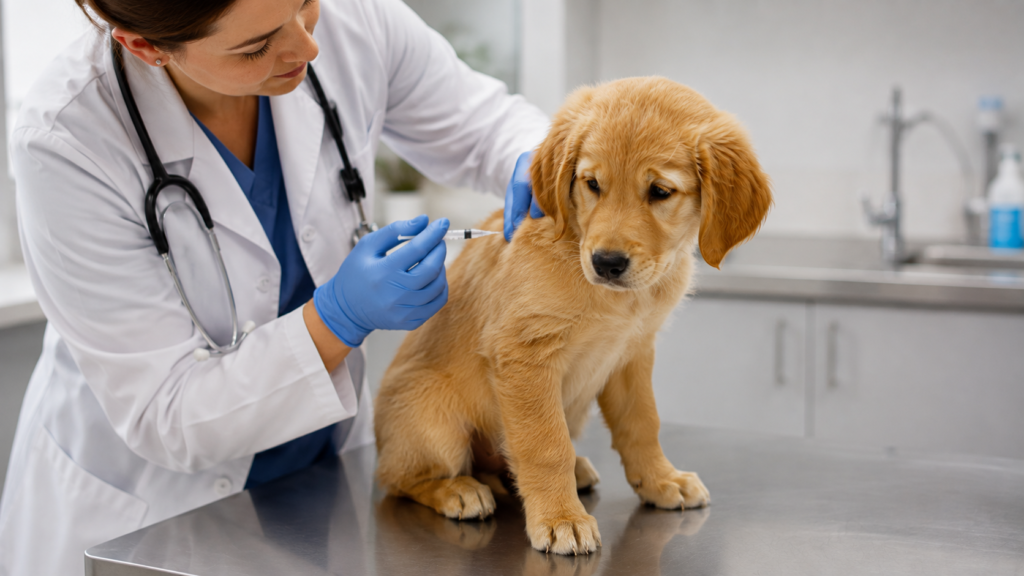
Vaccination is one of the most important ways to protect a puppy.
Until your veterinarian considers your puppy adequately protected, also take reasonable steps to reduce exposure.
Protect Your Puppy by:
- Following the recommended vaccination schedule.
- Avoiding areas heavily used by unknown dogs.
- Avoiding contact with dogs that are sick or whose vaccination status is unknown.
- Cleaning contaminated surfaces appropriately.
- Washing your hands after handling potentially infected dogs.
- Cleaning or changing contaminated clothing and footwear when appropriate.
What About Socialization?
Puppies still need safe socialization.
That doesn’t mean they need to walk on potentially contaminated public ground before their vaccinations are complete.
You can discuss safer options with your veterinarian, such as controlled interaction with healthy, vaccinated dogs and carefully managed exposure to new sights, sounds, people, and environments.
Home Care for Puppies With Parvo
Parvo should not be treated at home without veterinary involvement.
If your veterinarian has specifically recommended outpatient treatment or your puppy is recovering after hospitalization, follow the treatment plan exactly.
Depending on the veterinary plan, home care may involve:
- Giving prescribed medication as directed
- Following the recommended feeding plan
- Monitoring vomiting and diarrhea
- Monitoring hydration and energy
- Keeping the puppy warm and comfortable
- Keeping the puppy isolated from other dogs
- Contacting the veterinarian if symptoms worsen or return
Do not improvise treatment.
A puppy with severe vomiting, diarrhea, dehydration, or weakness may need hospitalization and IV fluids rather than home care.
Interactive Parvo Symptom Checker
This tool is for general guidance only. It cannot diagnose parvo. If your puppy is having an emergency, contact an emergency veterinarian rather than relying on this tool.
<divstyle="font-family:Arial,sans-serif;max-width:520px;margin:25pxauto;padding:20px;border:1pxsolid #ddd;border-radius:10px;background:#fafafa"><h3style="text-align:center;color:#486B32;margin-top:0;"> 🐶 Puppy Parvo Symptom Checker</h3><pstyle="font-size:13px;color:#666;line-height:1.5;"> Select the symptoms your puppy is showing.</p><labelstyle="display:block;margin:10px0;"><inputtype="checkbox"id="parvoLethargy"> Unusual lethargy</label><labelstyle="display:block;margin:10px0;"><inputtype="checkbox"id="parvoAppetite"> Loss of appetite or refusing food</label><labelstyle="display:block;margin:10px0;"><inputtype="checkbox"id="parvoVomiting"> Vomiting</label><labelstyle="display:block;margin:10px0;"><inputtype="checkbox"id="parvoDiarrhea"> Diarrhea, especially bloody diarrhea</label><labelstyle="display:block;margin:10px0;"><inputtype="checkbox"id="parvoPaleGums"> Pale, white, or gray gums</label><labelstyle="display:block;margin:10px0;"><inputtype="checkbox"id="parvoCollapse"> Collapse or inability to stand</label><labelstyle="display:block;margin:10px0;"><inputtype="checkbox"id="parvoWeakness"> Severe weakness</label><buttontype="button"onclick="checkParvoSymptoms()"style="width:100%;padding:12px;margin-top:10px;background:#486B32;color:#fff;border:0;border-radius:6px;cursor:pointer;font-weight:bold;"> Check Symptoms</button><divid="parvoResult"style="display:none;margin-top:15px;padding:15px;border-radius:6px;background:#fff;line-height:1.6;font-size:14px;"></div></div><script>functioncheckParvoSymptoms() {varemergency=document.getElementById("parvoPaleGums").checked ||document.getElementById("parvoCollapse").checked ||document.getElementById("parvoWeakness").checked;varconcerning=document.getElementById("parvoVomiting").checked ||document.getElementById("parvoDiarrhea").checked ||document.getElementById("parvoLethargy").checked ||document.getElementById("parvoAppetite").checked;varresult=document.getElementById("parvoResult");result.style.display ="block";if (emergency) {result.innerHTML ="<strong>🔴 Seek emergency veterinary care now.</strong><br>"+"The symptoms selected can indicate serious illness. Do not wait for this tool to provide further guidance."; } elseif (concerning) {result.innerHTML ="<strong>🟠 Contact your veterinarian promptly.</strong><br>"+"Vomiting, diarrhea, lethargy, and appetite loss can have many causes, including parvo. A young or incompletely vaccinated puppy should be evaluated promptly."; } else {result.innerHTML ="<strong>🟡 No major warning signs selected.</strong><br>"+"Continue monitoring your puppy. If symptoms appear, worsen, or your puppy is not fully vaccinated, contact your veterinarian."; }}</script>
Frequently Asked Questions
Can a puppy get parvo after the first vaccination?
Yes. One vaccination does not provide the same protection as completing the recommended puppy vaccination series. Maternal antibodies can also affect early vaccine responses.
How long is a puppy contagious after getting parvo?
The supplied material states that infected puppies can continue shedding the virus for 2–3 weeks after recovery and sometimes longer. Follow your veterinarian’s instructions about isolation and when your puppy can safely return to contact with other dogs.
Can parvo live in my yard?
Yes. Parvovirus is highly resilient and can persist in contaminated outdoor environments for extended periods. The supplied source recommends appropriate disinfection of contaminated areas.
Is parvo contagious to cats or humans?
Canine parvovirus does not cause parvo disease in humans. Cats have their own parvovirus-related disease, feline panleukopenia.
However, people can mechanically carry contaminated material on shoes, hands, clothing, or other objects and transfer it to susceptible dogs.
What does parvo diarrhea smell like?
Parvo-associated diarrhea is often described as having a particularly foul or unusual odor, especially when severe intestinal damage and blood are present.
However, smell alone cannot diagnose parvo. Other gastrointestinal diseases can also produce very foul-smelling stool.
Can a puppy get parvo twice?
The supplied material states that repeat infection is extremely rare because surviving dogs generally develop strong immunity. However, vaccination should still be maintained according to veterinary recommendations.
How do vets test for parvo?
Veterinarians may use a rapid fecal test to look for parvovirus antigen. Blood work can also provide useful information about the puppy’s condition, including white blood cell counts.
A negative rapid test does not always completely rule out parvo, so your veterinarian may recommend additional testing when clinical suspicion remains high.
Conclusion
Parvo can become a serious and potentially life-threatening illness very quickly, especially in young or incompletely vaccinated puppies.
The signs to watch for include:
- Sudden lethargy
- Loss of appetite
- Vomiting
- Diarrhea
- Bloody stool
- Increasing weakness
You don’t need to wait until every classic symptom appears.
If your puppy is young, incompletely vaccinated, and suddenly becomes sick, contact your veterinarian promptly and mention the possibility of parvovirus.
The best protection is prevention: complete the recommended vaccination series, reduce exposure to contaminated environments, and follow your veterinarian’s guidance about safe puppy socialization.