
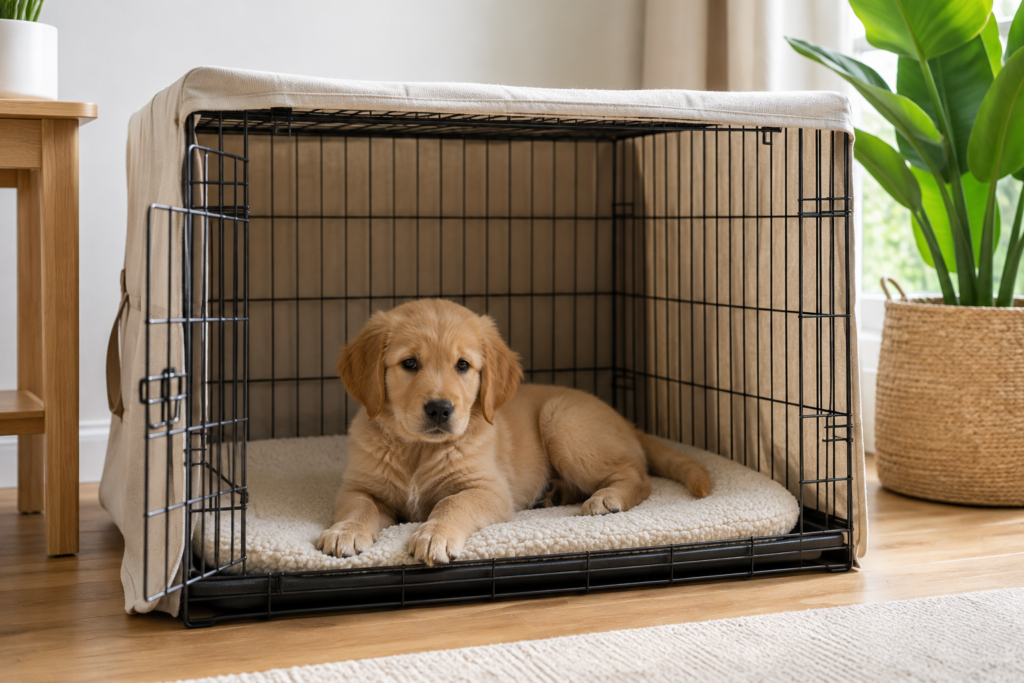
Quick Answer: Yes, you can cover a puppy crate. A lightweight, breathable cover over part of the crate can help reduce visual distractions and create a quieter, more enclosed resting space for some puppies.
The safest approach is to maintain good airflow, avoid trapping heat, and watch how your puppy responds. A crate cover should make the crate feel comfortable—not restrict your puppy or hide signs of distress.
Table of Contents
Quick Setup Checklist
- Use a lightweight, breathable fabric.
- Leave the front open.
- Keep plenty of airflow around the crate.
- Keep the cover away from heaters and direct sunlight.
- Make sure your puppy cannot pull the fabric through the crate bars.
- Check that the crate does not become hot or stuffy.
- Supervise your puppy when introducing the cover.
Why Cover a Puppy Crate?
A crate cover can make the space feel more private and den-like.
For some puppies, reducing visual stimulation can make it easier to settle, particularly when the crate is in a busy part of the home.
A cover may reduce distractions from:
- People walking past
- Other pets
- Household activity
- Bright lights
- Movement around the room
Some puppies may relax more easily when they have a quieter, partially enclosed space.
Can a Crate Cover Help With Anxiety?
It may help puppies whose restlessness is caused by visual stimulation or a busy environment.
However, a cover isn’t a treatment for separation anxiety or significant behavioral problems. If your puppy panics, repeatedly tries to escape, or shows severe distress when alone, address the underlying issue rather than simply covering the crate.
What’s the Safest Way to Cover a Puppy Crate?
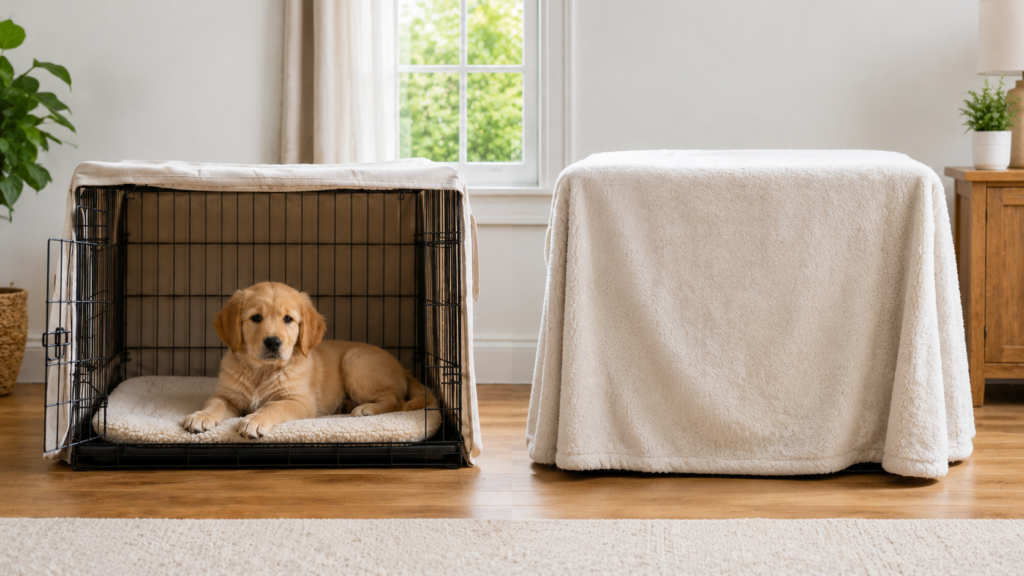
For most puppies, partial coverage is the best starting point.
You can cover the back and one or both sides while leaving the front open.
This provides some privacy without completely enclosing the puppy.
| Crate Setup | Potential Benefit | Main Concern |
|---|---|---|
| Back covered | Reduces distractions | Less privacy |
| Two sides covered | More privacy while maintaining airflow | Monitor temperature |
| Three sides covered | Creates a stronger den-like feeling | Good ventilation is essential |
| Completely covered | Creates a darker environment | Greater risk of restricted airflow and trapped heat |
Choosing a Crate Cover
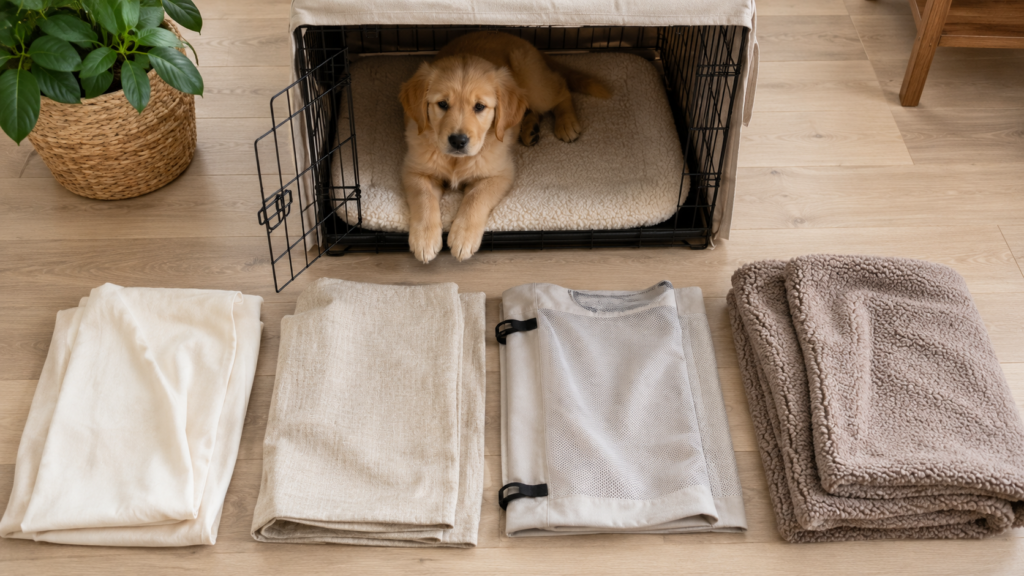
Choose a lightweight, breathable material, such as:
- Lightweight cotton
- Breathable linen
- A purpose-made breathable crate cover
A lightweight blanket may also work if it doesn’t restrict airflow and your puppy can’t pull it through the bars.
Avoid thick materials that can trap heat, particularly in warm rooms.
Also avoid loose fabric if your puppy likes to chew. Swallowing pieces of fabric can create a serious problem.
Can Covering a Crate Make a Puppy Too Hot?
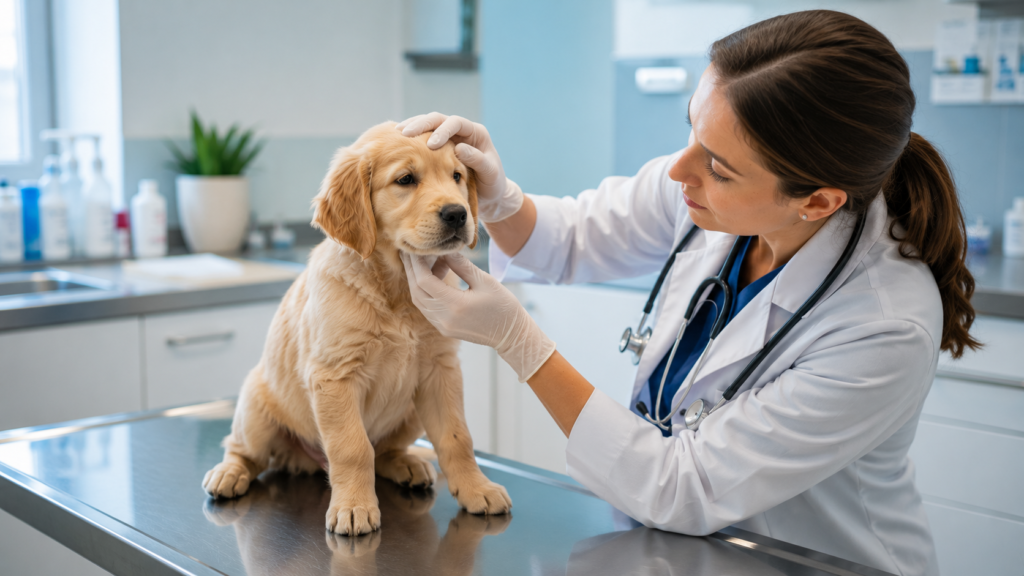
Yes.
A thick cover or excessive coverage can reduce airflow and trap heat inside the crate.
This is particularly important in:
- Warm weather
- Poorly ventilated rooms
- Rooms without adequate cooling
- Crates near heaters
- Crates in direct sunlight
Watch your puppy for signs of discomfort, including:
- Excessive panting
- Restlessness
- Drooling
- Trying to move away from the covered area
- Weakness
If your puppy seems too warm, remove the cover and move the crate to a cooler, well-ventilated location.
If your puppy appears seriously unwell or has difficulty breathing, seek veterinary care promptly.
How to Introduce a Puppy to a Covered Crate
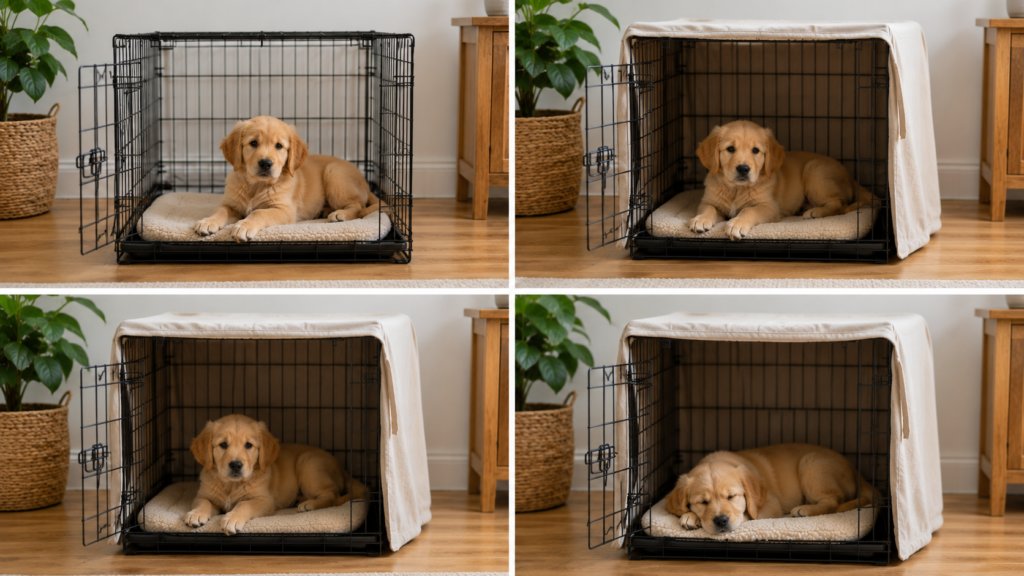
Introduce the cover gradually rather than suddenly covering the entire crate.
Step 1: Start With an Uncovered Crate
Allow your puppy to become comfortable entering, resting, and sleeping in the crate.
Reward calm behavior.
Step 2: Cover One Side
Place a lightweight cover over one side while keeping most of the crate open.
Watch your puppy’s reaction.
Step 3: Increase Coverage Slowly
If your puppy remains relaxed, you can gradually cover another side.
There is no need to cover more if your puppy is already comfortable.
Step 4: Follow Your Puppy’s Behavior
Some puppies enjoy more privacy. Others prefer being able to see what is happening around them.
If your puppy:
- Scratches at the cover
- Whines
- Pants
- Tries to pull the fabric through the bars
- Becomes restless
Reduce the coverage or remove it.
How Long Should You Cover a Puppy Crate?
There isn’t one fixed time limit that applies to every puppy.
The important factors are temperature, airflow, purpose, and your puppy’s behavior.
A partial cover can be used during:
- Daytime naps
- Quiet periods
- Overnight sleep
Provided your puppy remains comfortable and the crate stays properly ventilated.
You don’t need to stop using a cover at a particular age. Some dogs continue enjoying a partially covered crate as adults.
Consider reducing or removing the cover if your puppy:
- Settles better without it
- Becomes interested in the surrounding environment
- Repeatedly pulls at the fabric
- Becomes anxious
- Gets too warm
Frequently Asked Questions
Should I cover my puppy’s crate at night?
Yes, you can use a partial breathable cover at night if your puppy is comfortable with it and the crate remains cool and well ventilated.
Should the front of the crate be covered?
It’s generally best to leave the front open. This allows airflow and makes it easier to monitor your puppy.
Can I use a heavy blanket over a puppy crate?
A heavy blanket isn’t ideal because it can restrict airflow and trap heat. A lightweight breathable cover is preferable.
Conclusion
Yes, you can cover a puppy crate—but you don’t need to cover the entire crate.
A lightweight, breathable cover over one or two sides is a good place to start. If your puppy remains calm and comfortable, you can adjust the coverage according to their needs.
Always prioritize:
- Good airflow
- Comfortable temperature
- Safe materials
- Easy supervision
- Your puppy’s individual response
If your puppy becomes anxious, overheated, or starts chewing the cover, remove it.
A crate cover should help create a calm, comfortable resting space, not make the crate feel restrictive.
Safety Disclaimer
This article provides general pet-care information and does not replace individualized veterinary or professional dog-training advice.
If your puppy shows signs of overheating, breathing difficulty, severe distress, or another concerning health problem, contact a veterinarian promptly.