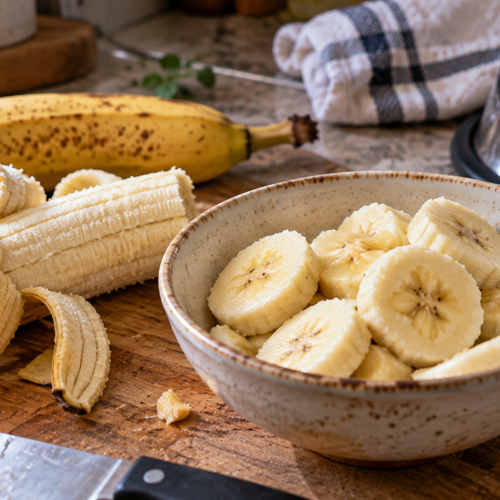

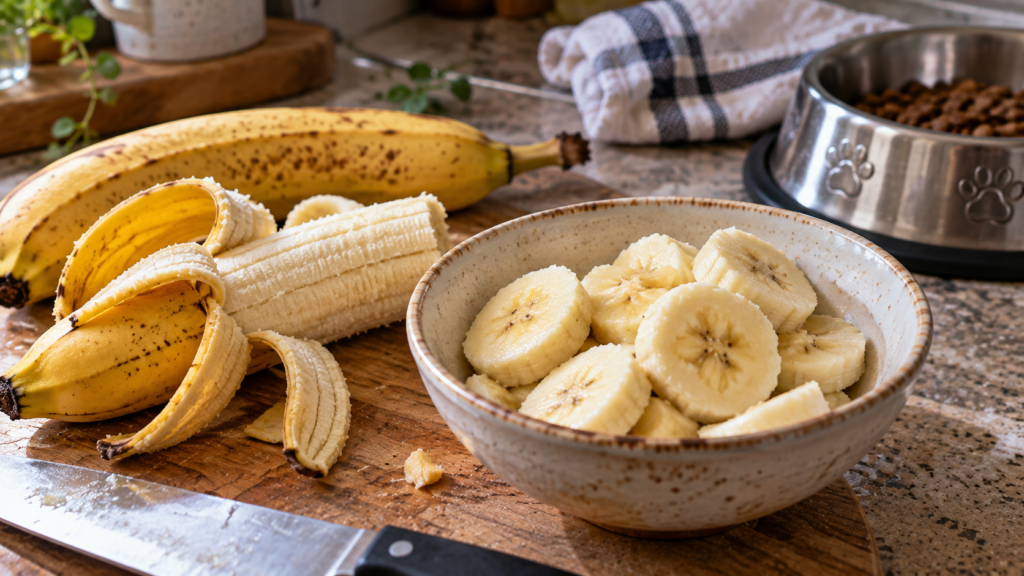
I’ve always liked keeping a few simple fruits around that I can share with my dog, and bananas are one of the easiest. They’re soft, easy to portion, and there’s no cooking involved. I can simply peel one, cut off a few small pieces, and have a quick treat ready.
The part I pay attention to is how much I give. Can dogs eat bananas, but they’re naturally sweet and more calorie-dense than some other fruits. A few pieces can be a nice treat; an entire banana is a very different story, especially for a small dog.
So if you’re wondering whether your dog can have banana, how much is appropriate, or whether the peel is safe, here’s what you need to know.
Quick Answer
Yes, most dogs can eat plain, ripe banana in moderation.
Bananas provide nutrients including potassium, vitamin B6, vitamin C, fiber, and magnesium. However, they also contain natural sugar and calories, so they should remain an occasional treat rather than a regular part of your dog’s diet.
Always:
- Remove the peel.
- Cut the banana into appropriately sized pieces.
- Start with a small amount if your dog has never eaten banana before.
- Keep bananas and other treats within about 10% of your dog’s daily calories.
- Avoid banana products containing added sugar or potentially harmful ingredients.
How Much Banana Can Dogs Eat?
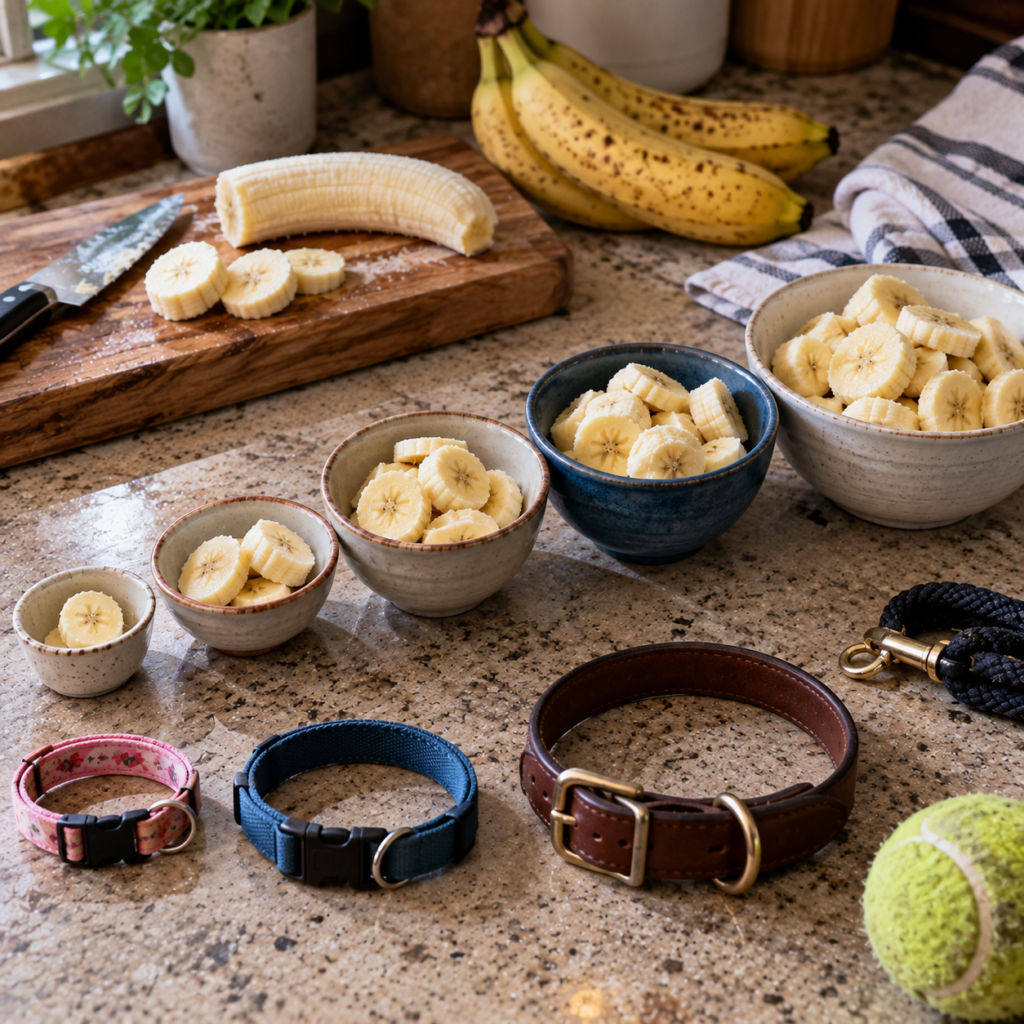
There isn’t one portion that works for every dog. The appropriate amount depends on your dog’s size, weight, age, activity level, overall diet, and health.
A practical starting point is:
| Dog Size | Starting Portion |
|---|---|
| Extra-small | 1–2 thin slices |
| Small | 2–3 thin slices |
| Medium | 3–6 thin slices |
| Large | A small handful of slices |
| Extra-large | Up to about ½ banana |
These are general starting portions, not strict daily requirements. A dog that is overweight, diabetic, or following a calorie-controlled diet may need considerably less.
If you’re introducing banana, start with just one or two small pieces and see how your dog responds.
The bigger rule is that treats—including fruit—should make up only a small part of your dog’s overall calorie intake. Your dog’s complete and balanced food should remain the foundation of their diet.
Are Bananas Good for Dogs?
Bananas contain several nutrients that can make them a useful occasional treat.
Potassium
Potassium helps support normal muscle and nerve function.
Vitamin B6
Vitamin B6 plays a role in normal metabolism and other important functions in the body.
Vitamin C
Bananas provide vitamin C, although healthy dogs generally do not need fruit as a source of vitamin C because their nutritional needs should already be covered by a complete diet.
Fiber
Bananas contain dietary fiber, which is one reason some dogs tolerate small amounts well.
Magnesium
Bananas also provide magnesium, a mineral involved in numerous normal body processes.
These nutrients are a nice bonus, but they don’t make bananas necessary for dogs. Think of banana as a tasty food that can add variety—not something your dog needs to meet their nutritional requirements.
What Happens If a Dog Eats Too Much Banana?
Too much banana can cause digestive upset.
Depending on the dog and how much they ate, you may notice:
- Loose stool or diarrhea
- Gas
- Vomiting
- Reduced appetite
- Abdominal discomfort
The combination of fiber, carbohydrates, and natural sugar can simply be too much for some dogs.
If your dog accidentally eats more banana than intended but otherwise seems normal, remove access to the fruit and keep an eye on them. If vomiting, severe diarrhea, weakness, abdominal pain, or other concerning symptoms develop, contact your veterinarian.
For a dog with an existing medical condition, ask your veterinarian about appropriate treats rather than assuming a food is suitable based on its general safety.
Can Dogs Eat Banana Peels?
No. Don’t intentionally feed banana peels to dogs.
The peel isn’t considered toxic, but it is tough, fibrous, and difficult to digest. A large piece can also create a choking or intestinal blockage risk.
Always peel the banana before giving it to your dog.
If your dog manages to swallow part of a peel, don’t automatically assume something serious will happen. Monitor them closely and contact your veterinarian if they develop vomiting, loss of appetite, abdominal pain, lethargy, constipation, or other unusual symptoms.
If you believe your dog swallowed a large amount of peel or is showing signs of a possible obstruction, seek veterinary care promptly.
Can Puppies Eat Bananas?
Yes, puppies can eat small amounts of banana once they’re eating solid food, but I would introduce it slowly.
Puppies have different nutritional needs from adult dogs, and their complete puppy food should provide the nutrition they need for growth. Banana should remain a very small treat rather than becoming a regular part of their meals.
Start with a tiny piece and avoid introducing several new foods at the same time. That makes it much easier to tell what caused a problem if your puppy develops diarrhea or vomiting.
If your puppy has a sensitive stomach or is on a specific feeding plan, ask your veterinarian before introducing new treats.
Dogs Who May Need to Avoid Bananas
Banana isn’t the right treat for every dog.
Extra caution is appropriate for dogs that:
- Have diabetes
- Are overweight or need strict calorie control
- Have kidney disease or another condition requiring dietary management
- Have a history of digestive problems
- Are following a prescription diet
The natural sugar and calorie content can matter more for these dogs than it does for a healthy dog.
If your dog has a medical condition or is eating a prescription diet, check with your veterinarian before adding banana.
Safe Ways to Give Banana to Your Dog
Once peeled and portioned appropriately, banana is easy to serve.
Fresh Banana Slices
This is the simplest option. Cut the banana into thin slices and make the pieces smaller for small dogs.
Mashed Banana
Mash a small amount and mix it into your dog’s regular food or use it in a food-stuffing toy.
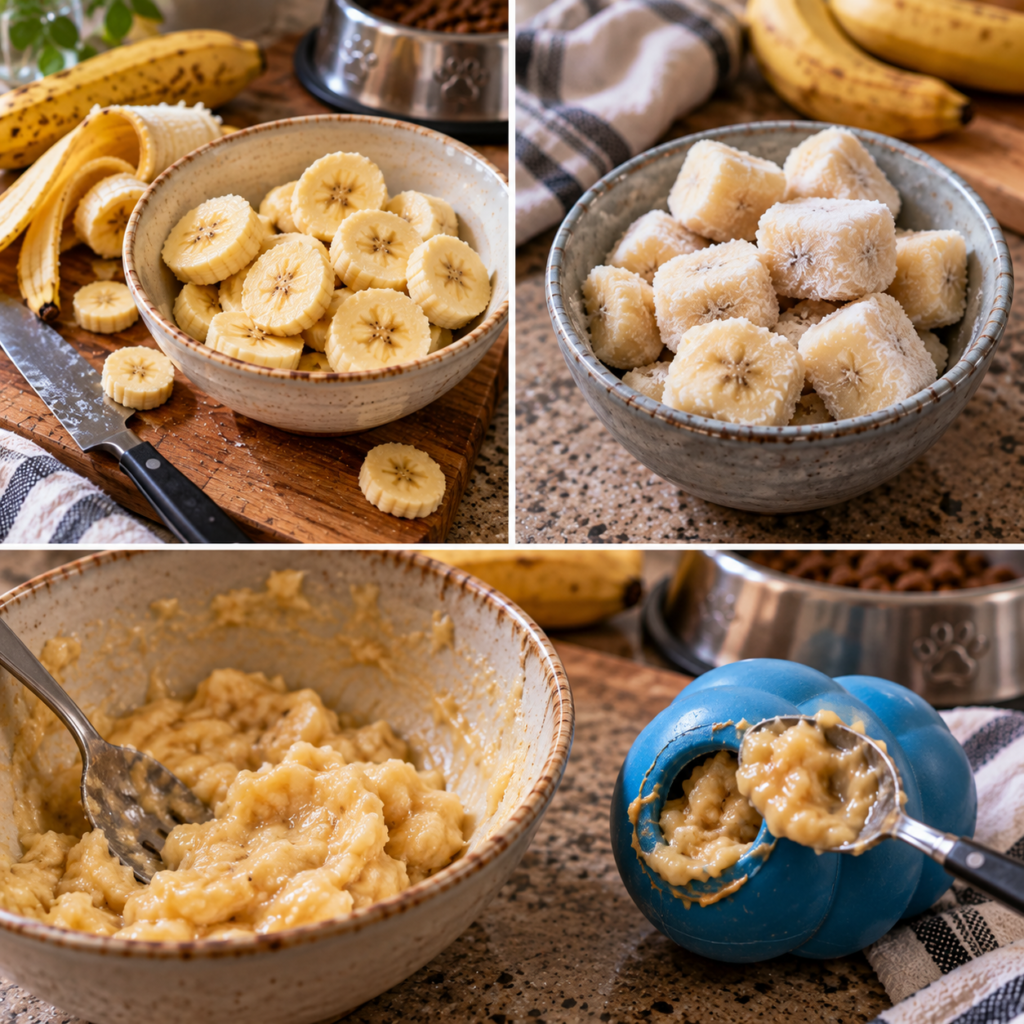
Frozen Banana
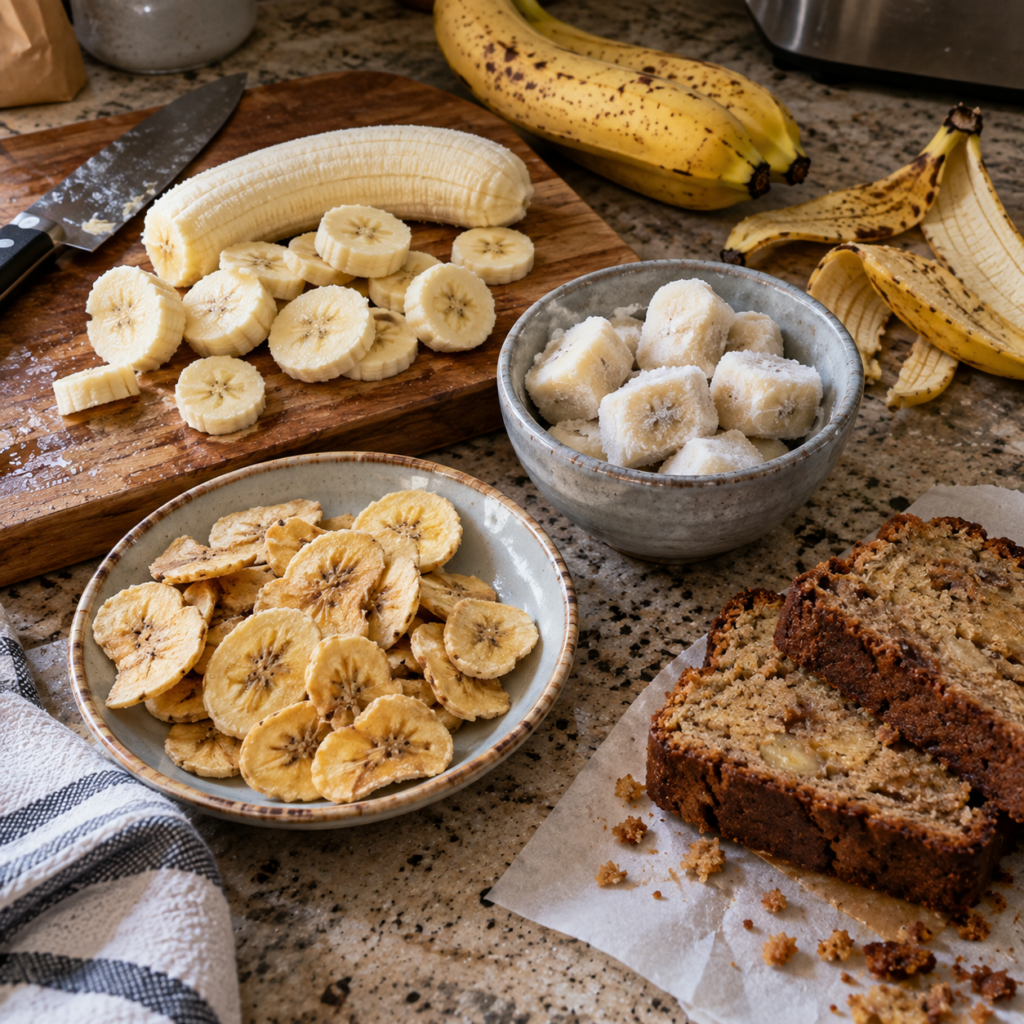
Small frozen pieces can make a refreshing treat on a warm day. Avoid giving your dog a whole frozen banana because the portion is too large and the shape can create a choking or digestive risk.
Homemade Banana Treats
Banana can also be used in homemade dog treats. If you’re baking with it, keep the rest of the ingredients dog-safe and avoid added sugar or sweeteners.
Banana Bread, Banana Chips & Other Banana Products
A banana itself may be suitable for dogs, but that doesn’t mean every banana-flavored food is.
Banana Bread
Skip banana bread made for people.
It often contains large amounts of sugar and fat and may include ingredients that are dangerous to dogs, such as raisins, macadamia nuts, xylitol, or nutmeg.
Store-Bought Banana Chips
Use caution with commercial banana chips. Many contain added sugar, salt, oils, or other ingredients that aren’t appropriate as regular dog treats.
Plain dried banana without added ingredients is a different matter, but fresh banana is generally easier to portion and control.
Banana Pudding
Human banana pudding is also best left off your dog’s menu because it commonly contains added sugar and other ingredients that aren’t necessary for a dog.
The safest approach is simple: give your dog plain banana rather than banana-flavored human desserts.
Banana Allergies and Sensitivities
True banana allergies in dogs appear to be uncommon, but individual dogs can still react poorly to a new food.
After introducing banana, watch for:
- Vomiting
- Diarrhea
- Abdominal discomfort
- Excessive itching
- Skin irritation
- Recurrent ear problems
Digestive upset is more likely to be a food intolerance or simply the result of eating too much rather than a true allergy.
If your dog repeatedly reacts after eating banana, stop offering it and discuss the symptoms with your veterinarian.
Best Way to Introduce Banana
If your dog has never tried banana before, there’s no need to start with a large serving.
I would:
- Peel a ripe banana.
- Cut off one or two small pieces.
- Give them after your dog’s normal meal rather than replacing a meal.
- Watch for digestive upset over the next day.
- If your dog tolerates it well, keep future portions small.
This approach also makes it easier to figure out whether banana agrees with your individual dog.
FAQ
Can dogs eat bananas every day?
Some healthy dogs can tolerate small amounts of banana regularly, but there’s no nutritional need to feed it every day. Because bananas contain natural sugar and calories, it’s generally better to use them as an occasional treat and vary your dog’s snacks.
Can dogs eat frozen bananas?
Yes, small portions of frozen banana can be given to dogs. Cut the banana into appropriately sized pieces before freezing rather than giving a whole frozen banana.
Can dogs eat green bananas?
Green bananas are not toxic, but ripe bananas are generally softer and more palatable. If you’re introducing banana for the first time, a ripe banana is the simpler option.
Can bananas help a dog’s upset stomach?
I wouldn’t use banana as a home treatment for diarrhea or other digestive problems without veterinary guidance. Although bananas contain fiber, their sugar content can also contribute to digestive upset in some dogs.
Can dogs eat bananas with peanut butter?
Yes, a small amount of banana can be paired with peanut butter, provided the peanut butter is free from xylitol and other unsafe ingredients. Remember that peanut butter adds additional calories.
Are bananas better than store-bought dog treats?
Not automatically. Fresh banana has the advantage of being a simple whole food, but it still contains sugar and calories. The best treat depends on your dog’s individual nutritional needs and the overall diet.
Can senior dogs eat bananas?
Many senior dogs can eat small amounts of banana, but portion size matters. Older dogs may have different calorie requirements or medical conditions that affect which treats are appropriate.
What should I do if my dog eats a banana peel?
Monitor your dog closely and contact your veterinarian if they develop vomiting, abdominal pain, loss of appetite, lethargy, constipation, or other concerning symptoms. A large swallowed piece of peel warrants greater concern because of the potential for intestinal obstruction.
Conclusion
Bananas can be a simple, tasty treat for many dogs, and I like them because there’s very little preparation involved. Peel one, cut off a few small pieces, and you’re done.
The important part is keeping the portions sensible. Bananas are naturally sweet, so they’re better as an occasional addition to your dog’s diet than something they receive in large amounts every day.
Remove the peel, serve appropriately sized pieces, introduce banana gradually, and skip human banana desserts such as banana bread and pudding. If your dog has diabetes, weight concerns, kidney disease, or another condition affected by diet, check with your veterinarian before adding banana to their treat rotation.
Medical Disclaimer
This article is for general educational purposes and is not a substitute for veterinary advice. Dogs have different nutritional requirements based on their age, size, health, activity level, and diet. If your dog has a medical condition, food sensitivity, or prescription diet, speak with your veterinarian before introducing new foods.
References
[1] PetMD – Can Dogs Eat Bananas – https://www.petmd.com/dog/nutrition/can-dogs-eat-bananas
[2] Minnieville Animal Hospital – Can Dogs Eat Bananas – https://minnievilleah.com/blog/can-dogs-eat-bananas/
[3] WebMD Pets – Can Dogs Eat Bananas – https://www.webmd.com/pets/dogs/can-dogs-eat-bananas
[4] Chewy – Can Dogs Eat Bananas – https://www.chewy.com/education/dog/food-and-nutrition/can-dogs-eat-bananas
[5] JustFoodForDogs – Can Dogs Eat Bananas – https://blog.justfoodfordogs.com/can-dogs-eat-bananas.html
[6] CareCredit – Can Dogs Eat Bananas – https://www.carecredit.com/well-u/pet-care/can-dogs-eat-bananas/
[7] Forbes Advisor – Can Dogs Eat Bananas – https://www.forbes.com/advisor/pet-insurance/pet-care/can-dogs-eat-bananas/
[8] American Kennel Club – Can Dogs Eat Bananas – https://www.akc.org/expert-advice/nutrition/can-dogs-eat-bananas/