

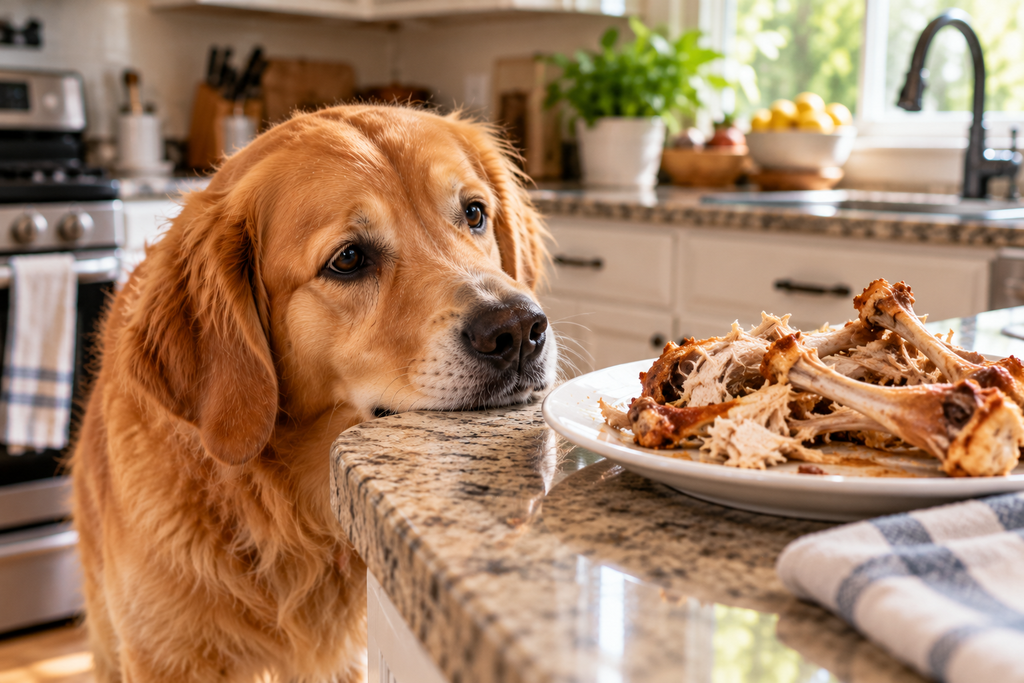
Chicken bones may seem like a harmless leftover to share with your dog, but they can cause serious health problems. Dogs should not be given chicken bones, especially cooked ones, because they can splinter, cause choking, or injure the digestive tract. [1][2][3]
If your dog has already swallowed a chicken bone, don’t panic. The safest next step is to contact your veterinarian promptly for advice, even if your dog appears normal. Never induce vomiting or try home remedies unless your veterinarian specifically instructs you to do so. [2][4]
Quick Answer: Can Dogs Eat Chicken Bones?
No. Chicken bones are not a recommended treat for dogs. Cooked bones can become brittle and break into sharp fragments, while raw chicken bones can carry harmful bacteria and still cause choking or digestive injuries. [2][3][7]
If your dog eats a chicken bone, the level of risk depends on factors such as the size of the dog, the amount swallowed, the type of bone, and whether symptoms develop.
Why Chicken Bones Are Dangerous for Dogs
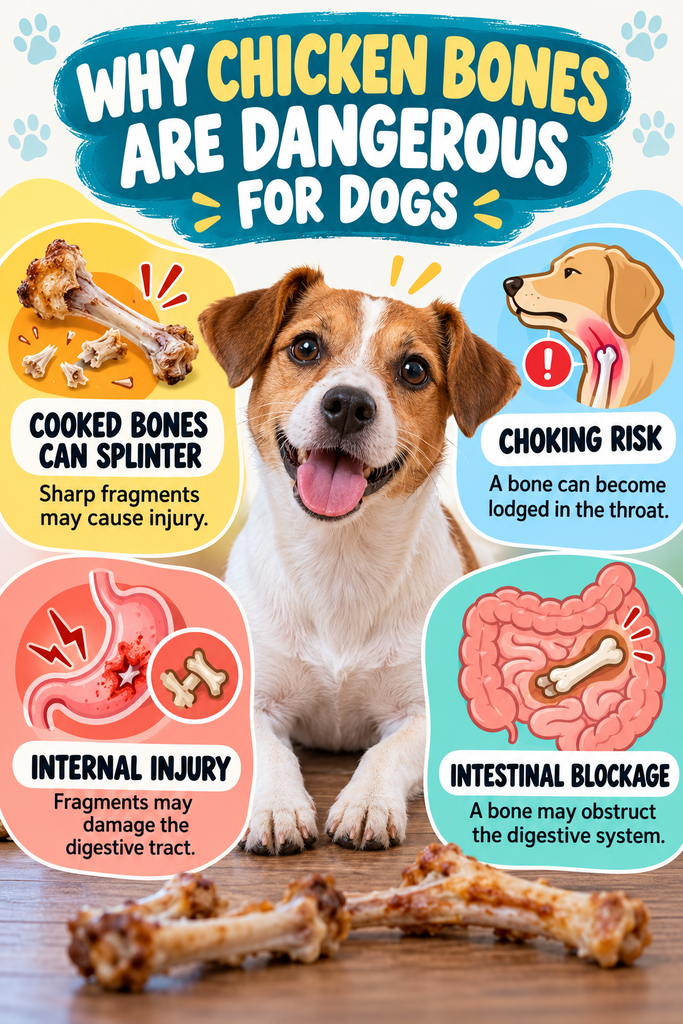
Chicken bones can cause several problems as a dog chews or swallows them. The most important risks include:
- Choking: A bone or fragment can become lodged in the throat or airway.
- Mouth injuries: Sharp fragments may cut the gums, tongue, or other tissues in the mouth.
- Digestive tract injuries: Bone fragments can irritate or damage the esophagus, stomach, or intestines.
- Intestinal blockage: A bone may become stuck and prevent food or waste from moving normally through the digestive tract.
- Constipation or painful defecation: Bone material may contribute to hard stools or discomfort when passing waste.
- Bacterial infection: Raw chicken may carry harmful bacteria, including Salmonella and Campylobacter. [2][3][4][7]
Not every dog that swallows a chicken bone will develop complications. However, it is impossible to determine the outcome safely at home, so veterinary guidance is important.
Cooked Chicken Bones Are Especially Risky
Cooking changes the structure of chicken bones, making them more brittle and likely to break into sharp pieces. These fragments may cause choking or injure the digestive tract. [1][2][3]
Avoid giving dogs bones from cooked chicken, including roasted chicken, fried chicken, grilled chicken, and leftovers from meals.
Removing the meat from a cooked chicken bone does not make the bone itself safe to feed.
Raw Chicken Bones Are Not Risk-Free
Raw chicken bones may be less brittle than cooked bones, but that does not make them safe. They can still cause choking, dental or mouth injuries, digestive obstruction, and internal damage. Raw chicken may also contain bacteria that can make dogs and people sick. [3][5][7]
For these reasons, raw chicken bones are not a risk-free alternative to cooked bones.
What Can Happen If a Dog Eats a Chicken Bone?
The outcome varies from dog to dog. Some dogs may not develop obvious problems, while others may experience complications that require urgent veterinary treatment.
Possible outcomes include:
- A bone becoming lodged in the throat or esophagus.
- Vomiting or irritation of the digestive tract.
- Injury to the stomach or intestinal lining.
- A blockage that prevents normal digestion and bowel movements.
- Pain or difficulty passing stool.
A dog may initially appear comfortable even when a problem is developing. Do not rely on normal behavior alone to decide that your dog is safe. [2][4][9]
What to Do If Your Dog Swallows a Chicken Bone
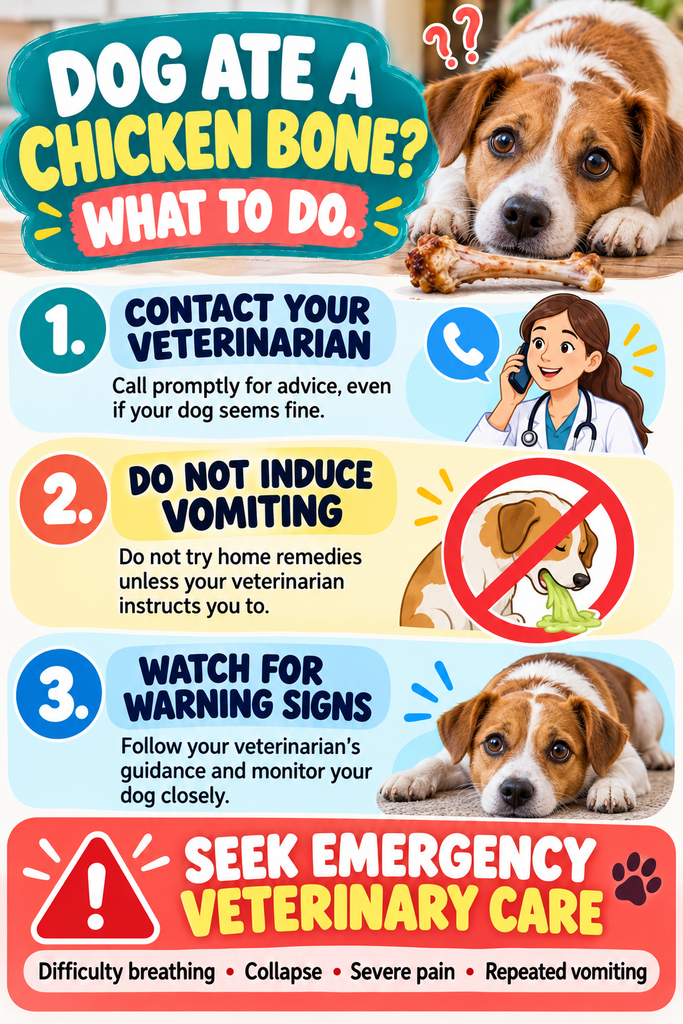
If your dog has eaten a chicken bone, take the following steps.
1. Stay Calm and Remove Any Remaining Bones
Move any leftover bones out of reach, so your dog cannot swallow more. Do not put your fingers deep into your dog’s mouth or throat to retrieve a bone that is lodged there.
2. Contact Your Veterinarian Promptly
Tell your veterinarian what happened, including:
- Whether the bone was cooked or raw.
- Approximately how much your dog swallowed.
- When the incident occurred.
- Your dog’s size and age.
- Whether your dog is showing any symptoms.
Your veterinarian can advise whether your dog needs an immediate examination or other care.
3. Do Not Induce Vomiting
Do not try to make your dog vomit. A sharp bone fragment could cause further injury while coming back up. Only follow instructions from a veterinarian who knows the circumstances. [2][4]
4. Avoid Home Remedies and Forced Feeding
Do not force your dog to eat bread, rice, cotton, or other foods in an attempt to cushion the bone or push it through. These approaches are not a substitute for veterinary assessment and may complicate the situation.
5. Watch for Changes While Following Veterinary Advice
Follow your veterinarian’s instructions and monitor your dog closely. If warning signs develop, seek veterinary care immediately rather than waiting to see whether the bone passes.
Seek emergency veterinary care immediately if your dog has difficulty breathing, is choking, collapses, repeatedly vomits, has severe abdominal pain, or shows other signs of serious distress. [2][4][9]
Signs of a Chicken Bone Injury or Blockage
Symptoms can appear quickly or develop later. Watch for the following warning signs:
| Warning sign | What it may indicate |
|---|---|
| Gagging, choking, or difficulty breathing | A possible airway obstruction |
| Repeated vomiting or retching | Irritation, obstruction, or another complication |
| Excessive drooling or difficulty swallowing | Possible injury or a bone lodged in the mouth or esophagus |
| Abdominal pain, swelling, or a hunched posture | Possible digestive tract irritation or injury |
| Loss of appetite or unusual lethargy | Possible discomfort or illness |
| Straining to defecate or passing very hard stools | Possible difficulty passing waste |
| Blood in vomit or stool | Possible injury or bleeding |
These signs do not confirm that a bone is stuck, but they warrant prompt veterinary attention. Difficulty breathing, collapse, severe pain, repeated vomiting, or significant bleeding should be treated as emergencies. [2][4][9]
Do not wait for every symptom to appear before seeking help. If you know your dog swallowed a chicken bone, contact your veterinarian even if there are no immediate warning signs.
How Long Do Chicken Bones Take to Pass?
There is no reliable timeline that guarantees a swallowed chicken bone will pass safely. The outcome depends on the size and shape of the bone, how much was swallowed, the dog’s size, and whether the bone causes an obstruction or injury.
Some dogs may pass swallowed material without obvious complications, while others may need veterinary treatment. A bowel movement or a period without symptoms does not necessarily prove that everything is fine.
Contact your veterinarian for guidance rather than waiting a specific number of hours or days. Follow any monitoring instructions you receive, and seek urgent care if symptoms develop. [2][4][5]
Are Chicken Bones Dangerous for Puppies?
Yes. Chicken bones can be dangerous for puppies, just as they can be for adult dogs. Puppies are smaller, and a bone or fragment may present a serious choking or obstruction risk.
Puppies may also chew or swallow items before their owners can intervene. Keep chicken bones and food scraps securely out of reach, and contact a veterinarian promptly if a puppy swallows one.
Do not assume that a small piece is harmless simply because it looks too small to cause a problem.
Safer Chews and Alternatives to Chicken Bones
Dogs can enjoy chewing without being given chicken bones. Choose products designed for dogs and appropriate for their size, age, chewing strength, and health needs.
Safer options may include:
- Size-appropriate rubber chew toys: Choose durable toys designed for supervised chewing.
- Veterinarian-recommended dental chews: Select products appropriate for your dog’s size and chewing habits.
- Dog-specific treats: Use treats made for dogs and follow the recommended serving guidance.
- Suitable food-based treats: Small portions of plain, boneless, cooked chicken may be offered to dogs that tolerate it, provided it contains no bones, cooked skin, seasoning, onions, or garlic.
Supervise your dog with chews and toys. Discard products that become damaged or small enough to swallow, and ask your veterinarian for recommendations if your dog is an aggressive chewer or has dental or digestive problems.
Frequently Asked Questions
Can dogs eat cooked chicken bones?
No. Cooked chicken bones can splinter and may cause choking, digestive tract injuries, or intestinal blockage. Keep them away from dogs. [1][2][3]
Can dogs eat raw chicken bones?
Raw chicken bones are not risk-free. They can cause choking or digestive injuries, and raw chicken may carry harmful bacteria. It is safer not to feed them to dogs. [3][7]
What if my dog ate a small chicken bone?
A small bone can still cause a problem. Contact your veterinarian promptly and explain the size of your dog, the type and approximate amount of bone swallowed, and when it happened. Do not induce vomiting or give home remedies unless instructed.
Should I feed my dog bread to help a chicken bone pass?
No. Do not force-feed bread or other foods to cushion or move a swallowed bone. Contact your veterinarian for advice specific to your dog’s situation.
Can a dog pass a chicken bone naturally?
It is possible for some dogs to pass swallowed bone material, but this is not guaranteed. A bone may also cause an injury or blockage. Veterinary guidance is the safest way to decide what to do.
When should I take my dog to an emergency veterinarian?
Seek emergency care for choking, difficulty breathing, collapse, severe abdominal pain, repeated vomiting, or significant bleeding. If your dog has swallowed a chicken bone, contact your veterinarian promptly even if symptoms have not appeared.
Conclusion
Chicken bones are not a safe treat for dogs. Cooked bones can splinter, while raw bones carry their own risks, including choking, digestive injuries, and bacterial exposure.
If your dog swallows a chicken bone, contact your veterinarian promptly, avoid inducing vomiting or trying home remedies, and watch for signs of distress. Choose dog-appropriate chews and treats instead of bones to help keep your pet safe.
Medical Disclaimer
This article is for general educational purposes only and does not replace professional veterinary advice, diagnosis, or treatment. If your dog has swallowed a chicken bone or is showing concerning symptoms, contact a qualified veterinarian. In an emergency, seek veterinary care immediately.
References
- Mesquite Veterinary Hospital — Are Bones Safe for Dogs?
- American Kennel Club — What to Do If Your Dog Eats a Chicken Bone
- PetMD — Can Dogs Eat Chicken?
- PetMD — What to Do If Your Dog Ate a Chicken Bone
- Whole Dog Journal — My Dog Ate Chicken Bones
- MetLife Pet Insurance — Dog Ate Chicken Bones
- VEG — Can Dogs Eat Chicken Bones?
- Webvet — Can Dogs Eat Chicken Bones?
- Garden State Veterinary Services — Dog Chicken Bones Emergency Care
- Adopt a Pet — Dog Ate Chicken Bones