

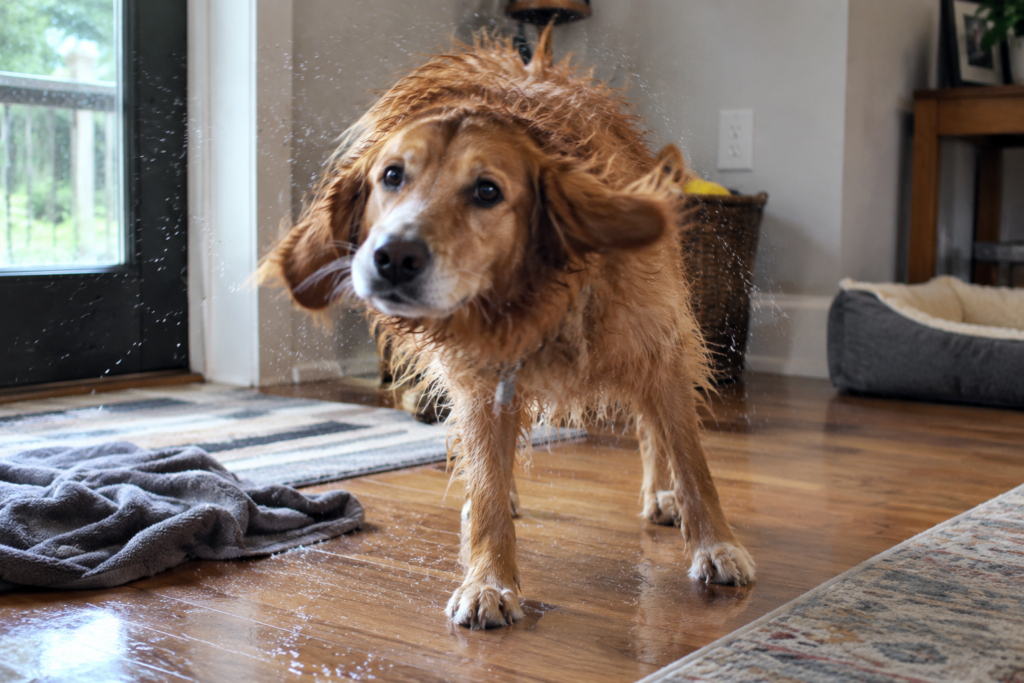
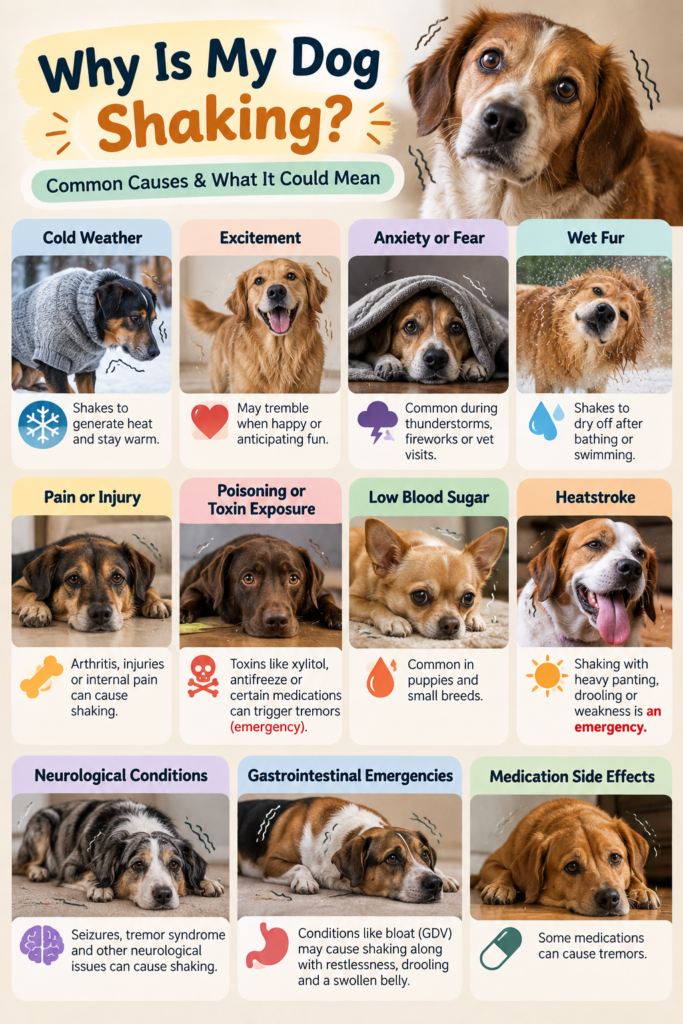
Seeing your dog shake can be alarming, but shaking doesn’t always mean something is wrong. Dogs may tremble because they are cold, wet, excited, frightened, or stressed. It can also be a sign of pain, poisoning, low blood sugar, neurological disease, or another medical problem.
The most important clues are when the shaking happens, how long it lasts, whether it stops when the trigger is removed, and what other symptoms appear alongside it. Brief shaking after a bath is very different from persistent trembling accompanied by vomiting, weakness, heavy panting, or confusion. [1][4][6][7][8]
Table of Contents
Quick Answer
Dogs shake for many different reasons.
Common harmless causes include:
- Cold temperatures
- Being wet
- Excitement
- Fear or temporary stress
- Normal movement during dreaming
More concerning causes include:
- Pain or injury
- Poisoning or toxin exposure
- Low blood sugar
- Addison’s disease and other metabolic problems
- Neurological disorders or seizures
- Heatstroke
- Gastrointestinal emergencies such as bloat
If the shaking is new, persistent, worsening, unexplained, or accompanied by other symptoms, contact your veterinarian. Sudden severe shaking after possible toxin exposure, collapse, seizures, severe weakness, or signs of heatstroke requires urgent veterinary care. [2][3][5][6][8][9]
Key Takeaways
- Cold, wet fur, and excitement are common temporary causes of shaking.
- Anxiety and fear can cause trembling, particularly during fireworks, thunderstorms, unfamiliar situations, or veterinary visits.
- Pain can cause shaking, especially when accompanied by limping, reluctance to move, panting, or changes in behavior.
- Toxin exposure can cause sudden tremors and is a veterinary emergency.
- Low blood sugar can cause trembling and may be particularly concerning in puppies and small dogs.
- Older dogs may develop shaking because of pain, muscle weakness, or age-related medical conditions.
- Shaking with heavy panting, drooling, restlessness, or collapse can indicate a serious emergency such as heatstroke or bloat.
- Neurological conditions can cause tremors or uncontrolled movements.
- Some dogs and breeds are more prone to certain types of tremors, but breed tendencies should never be used to dismiss new or worsening shaking.
- If you cannot identify an obvious temporary cause, it is safest to speak with your veterinarian.
Understanding Why Dogs Shake
Dog shaking can be broadly divided into temporary behavioral or environmental responses and medical causes.
Behavioral and environmental causes
These include:
- Cold
- Wet fur
- Excitement
- Fear
- Anxiety
- Stress
The shaking usually improves once the trigger disappears. For example, a dog may tremble during a thunderstorm and settle once the storm passes, or shake briefly after getting out of cold water. [1][4][7][8]
Medical causes
Medical shaking can result from:
- Pain
- Poisoning
- Metabolic disorders
- Low blood sugar
- Neurological disease
- Infection
- Heatstroke
- Gastrointestinal emergencies
These causes are more concerning when the shaking is persistent or accompanied by other changes in your dog’s behavior or physical condition. [2][3][5][6][8][9]
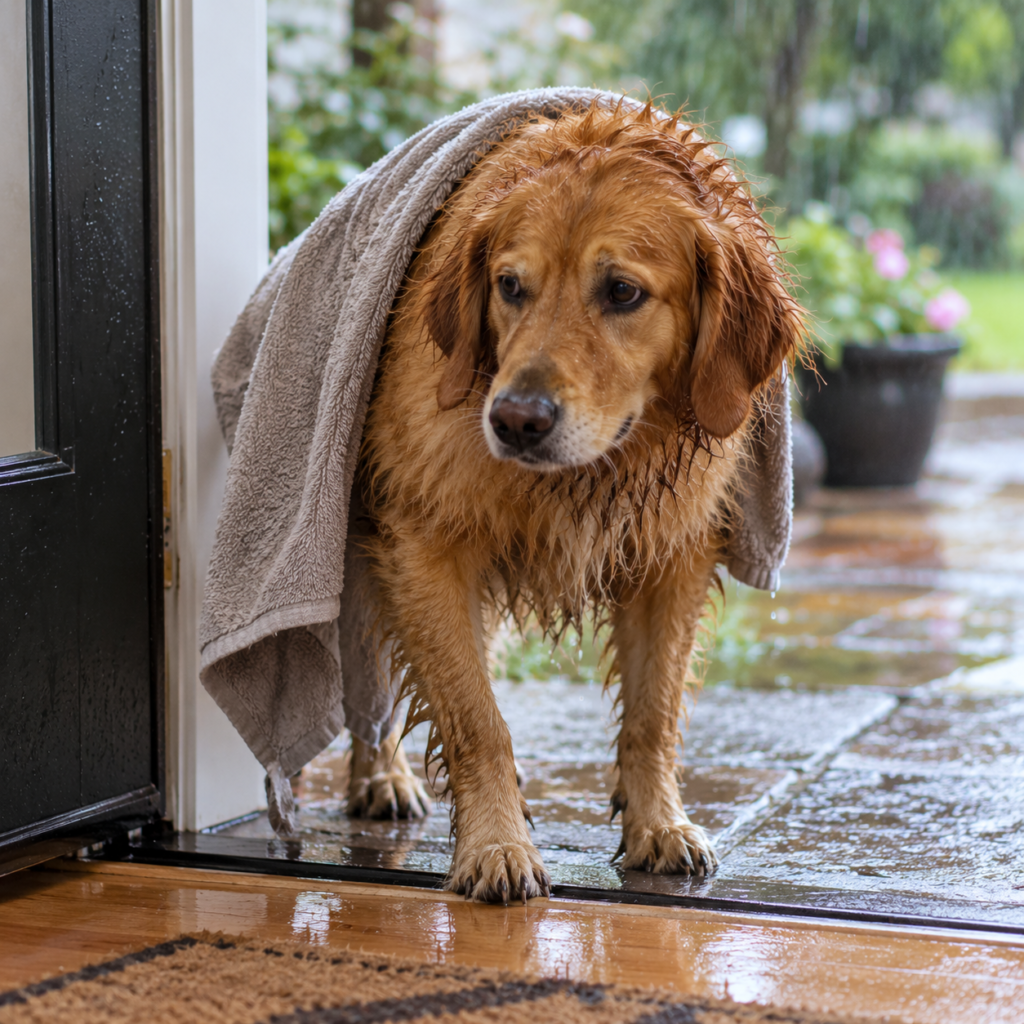
A simple example: A dog that shakes for several seconds after coming inside from the rain is likely drying itself and warming up. A dog that continues shaking for an hour while refusing food or appearing weak needs veterinary attention.
Cold-Related Shaking vs. Concerning Trembling
Shivering in cold conditions is a normal response that helps generate body heat. If your dog warms up and the shaking stops while they otherwise behave normally, cold is a likely explanation. [1][7][8]
The situation is different if shaking continues despite warmth or appears alongside signs of illness.
| Cold-related shaking | More concerning shaking |
|---|---|
| Happens in a cold environment | Can happen regardless of temperature |
| Improves after warming up | Continues despite warmth |
| Dog remains alert and responsive | Dog may seem weak or disoriented |
| No other unusual symptoms | May occur with vomiting, panting, pain, or collapse |
| Usually brief | Persistent or worsening |
When heat may be the problem
Shaking isn’t limited to cold weather. Trembling can also occur with heatstroke, particularly alongside heavy panting, drooling, weakness, confusion, balance problems, or collapse. Heatstroke is an emergency and requires immediate veterinary attention. [8]
If you suspect your dog is overheating, don’t wait for the shaking to resolve on its own.
Medical Causes of Dog Shaking
When shaking is persistent, unexplained, or accompanied by other symptoms, several medical causes are possible.
Pain and musculoskeletal problems
Pain from arthritis, injuries, joint disease, back problems, or abdominal discomfort can cause trembling. Other clues may include limping, reluctance to move, restlessness, whining, panting, or changes in appetite. [8][9]
Older dogs may be particularly affected because arthritis and muscle weakness become more common with age.
Low blood sugar and metabolic disorders
Hypoglycemia, or low blood sugar, can cause trembling and, in severe cases, seizures. Puppies and small dogs can be particularly vulnerable. [2][6]
Other metabolic or endocrine conditions, including Addison’s disease, can also contribute to weakness and shaking. [6][9]
Poisoning and toxin exposure
Trembling can be one of the signs of poisoning. Potentially dangerous exposures include xylitol, certain medications, pesticides, snail bait, moldy food or compost, and antifreeze. [6][9]
If your dog suddenly starts shaking after possibly eating or contacting something toxic, treat the situation as an emergency rather than waiting for additional symptoms.
Neurological conditions
Neurological problems can cause tremors, uncontrolled movements, weakness, changes in awareness, or seizures. Generalized tremor syndrome is another possible cause of persistent shaking in some dogs. [2][6]
A new unexplained tremor should be evaluated rather than assumed to be a harmless breed characteristic.
Gastrointestinal emergencies
Severe gastrointestinal problems can also cause shaking. Bloat, or gastric dilatation-volvulus (GDV), is particularly dangerous.
Possible warning signs include:
- Restlessness
- Abdominal enlargement or distention
- Repeated retching
- Drooling
- Pain
- Shaking
Suspected bloat requires immediate emergency veterinary care. [9]
Signs That Shaking Is Probably Temporary
Shaking is more likely to be a normal response when:
- Your dog has just been outside in cold weather.
- Your dog is wet after a bath or swimming.
- Your dog is excited about food, play, or seeing someone.
- Your dog is briefly frightened by a specific event.
- The shaking stops once the trigger disappears.
- Your dog remains alert and responsive.
- Your dog continues eating, drinking, walking, and behaving normally.
Even when shaking appears harmless, pay attention if the pattern changes or starts happening without an obvious trigger.
Signs That Shaking May Need Veterinary Attention
Arrange veterinary advice when:
- Shaking is continuous or repeatedly returns without an obvious cause.
- The trembling is becoming more frequent or severe.
- Your dog seems painful or reluctant to move.
- Your dog is vomiting or has diarrhea.
- Your dog is unusually tired or weak.
- Your dog refuses food.
- Your dog is disoriented or having difficulty walking.
- The shaking began after possible toxin exposure.
- Your dog is shaking together with heavy panting or excessive drooling.
- Your dog has collapsed or had seizure-like movements.
If possible, record a short video of the shaking. Showing your veterinarian exactly what the movement looks like can make the consultation more useful, particularly when the episode has stopped before the appointment.
Anxiety, Fear, and Stress-Related Shaking
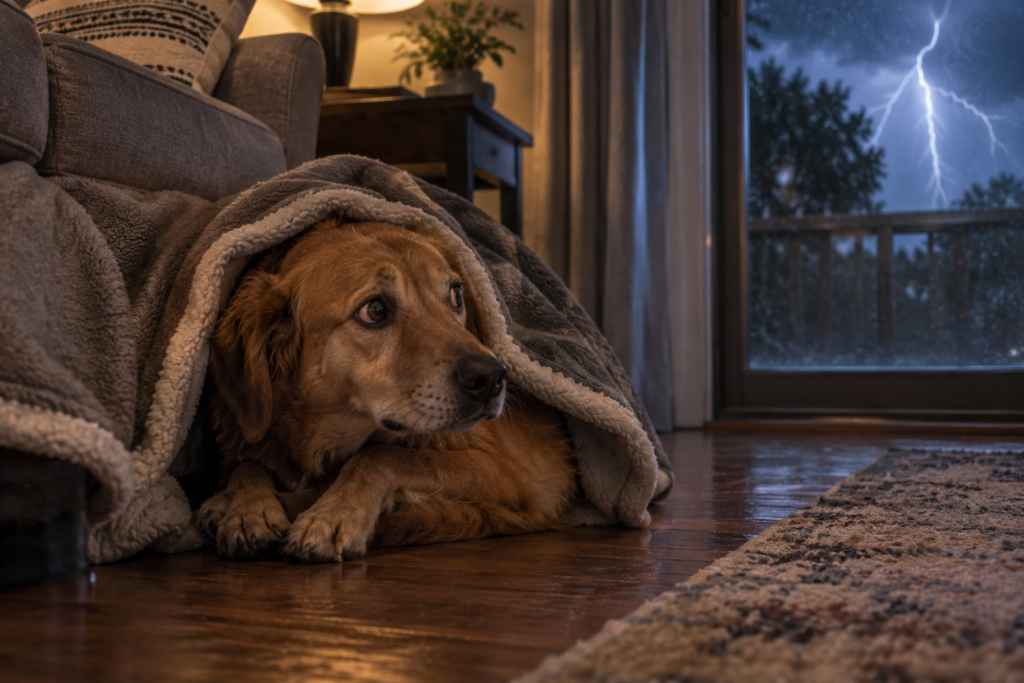
Anxiety is a common behavioral reason dogs tremble. Fireworks, thunderstorms, unfamiliar noises, separation, crowded environments, car rides, and veterinary visits can all trigger stress-related shaking. [7][8]
You may notice other signs at the same time, including:
- Panting
- Hiding
- Restlessness
- Pacing
- Pulling the ears back
- Seeking reassurance
- Trying to escape
- Excessive attention-seeking
If the shaking stops when the stressful situation ends, anxiety may be part of the explanation.
For recurring anxiety, focus on reducing exposure to the trigger where possible and creating a quiet, predictable place where your dog can settle. Persistent anxiety may require a behavior plan developed with your veterinarian or a qualified behavior professional.
Shaking After Exercise
Some dogs may tremble briefly after vigorous exercise because they are tired, excited, or reacting to the temperature.
Normal post-exercise shaking should improve after your dog rests and recovers.
Usually less concerning
- Brief trembling after vigorous activity
- Normal alertness
- Normal breathing after recovery
- Shaking that quickly improves with rest
More concerning
- Shaking that doesn’t settle with rest
- Extreme or prolonged panting
- Weakness
- Confusion
- Collapse
- Abnormal gum color
- Excessive drooling
Exercise in hot weather increases the risk of heat-related illness. Trembling combined with heavy panting, confusion, weakness, or collapse should be treated as an emergency. [8]
Shaking in Older Dogs
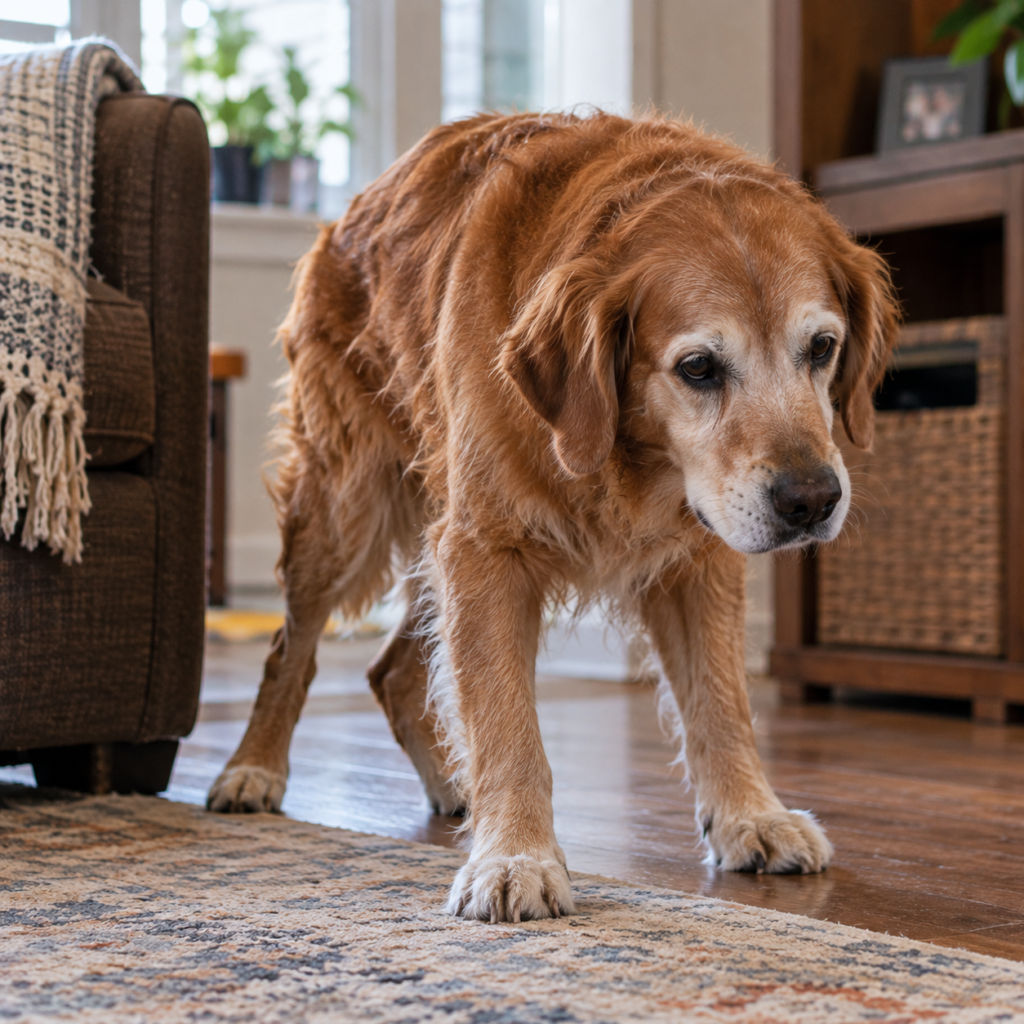
Older dogs may develop trembling because of muscle weakness, arthritis, pain, or other medical conditions. Hind-leg tremors can become noticeable as dogs lose muscle mass or develop joint problems. [6][8]
Possible causes include:
- Arthritis
- Joint pain
- Muscle weakness
- Back or spinal problems
- Neurological conditions
- Chronic disease
Don’t automatically assume that shaking is simply part of getting older. If an older dog has started trembling more often or the pattern has changed, arrange a veterinary examination.
Treatable pain or another underlying condition may be contributing to the behavior.
Shaking and Panting Together
Shaking and panting deserve extra attention because the combination can occur with several different conditions.
Pain
Dogs in pain may pant, tremble, pace, or struggle to settle. [9]
Anxiety
Fearful dogs may pant and shake during thunderstorms, fireworks, travel, or other stressful situations. [7][8]
Heatstroke
Shaking combined with heavy panting, drooling, weakness, confusion, balance problems, or collapse during hot conditions can indicate heatstroke. [8]
Bloat
A dog with GDV may become restless, drool, retch without producing vomit, develop an enlarged abdomen, and show signs of pain or trembling. [9]
Poisoning
Some toxins can produce tremors together with panting, vomiting, weakness, seizures, or changes in coordination. [2][6]
If shaking and panting appear suddenly with severe symptoms, seek emergency veterinary care.
When to Call the Vet
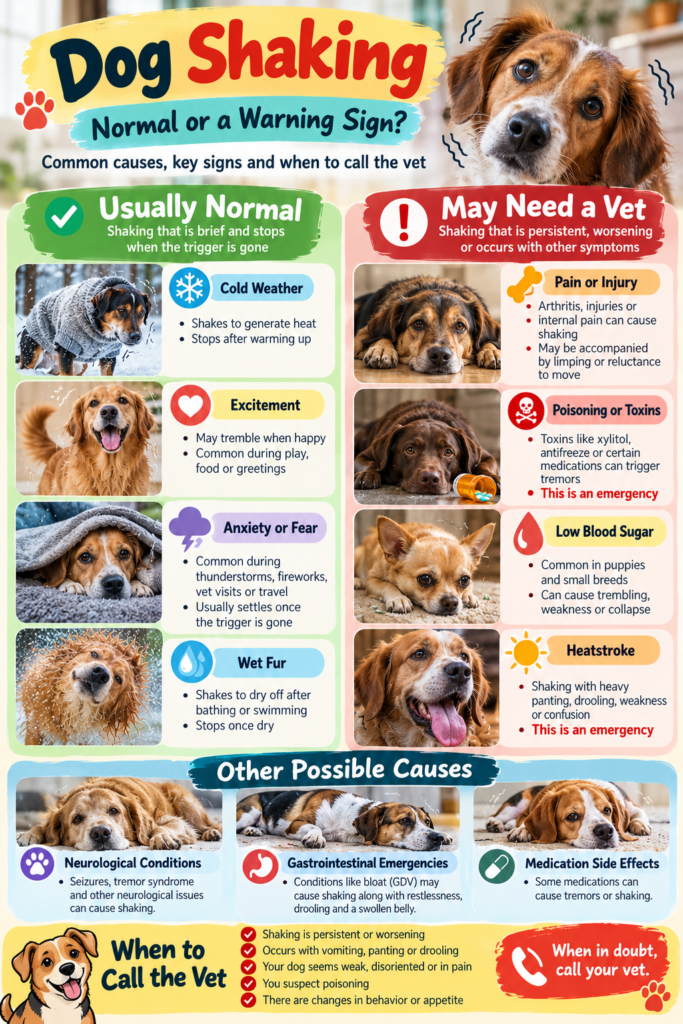
The decision depends on the severity, duration, and other symptoms.
Monitor closely
You may be able to monitor briefly when:
- Your dog is cold or wet.
- The shaking has an obvious temporary trigger.
- It stops after warming, drying, or calming down.
- Your dog is alert and behaving normally.
- There are no other concerning symptoms.
Schedule a veterinary appointment
Arrange a non-emergency appointment when:
- Mild shaking keeps returning.
- Your older dog has gradually started trembling more.
- You suspect pain.
- Shaking is becoming more frequent.
- The cause isn’t clear.
- Your dog’s normal behavior or activity is changing.
Seek emergency care
Go to an emergency veterinarian when:
- You suspect poisoning.
- Your dog collapses.
- Your dog has seizures or severe uncontrolled movements.
- Your dog is severely weak or disoriented.
- Shaking occurs with severe breathing problems.
- Your dog has signs of heatstroke.
- Shaking occurs with severe abdominal pain, repeated retching, or suspected bloat.
When you are unsure, calling a veterinary clinic for triage can help determine how urgently your dog needs to be seen.
Back-Leg Shaking in Dogs
Shaking that mainly affects the back legs can have several causes. In older dogs, arthritis, joint pain, and muscle weakness are common considerations. [6][8]
Other possibilities include:
- Injury or strain
- Spinal problems
- Neurological disease
- Muscle weakness
- Generalized tremor disorders
Pay particular attention to limping, reluctance to stand, difficulty climbing stairs, changes in gait, or obvious pain.
New or persistent hind-leg trembling should be evaluated by a veterinarian rather than dismissed as normal aging.
Breeds and Dogs More Prone to Trembling
Some dogs are more susceptible to certain forms of shaking.
Small dogs can lose body heat more quickly and may therefore shiver more readily in cold conditions. Some small, white breeds are also associated with generalized tremor syndromes. [2][6]
Examples include:
- Chihuahuas
- Maltese
- West Highland White Terriers
- Other toy and small breeds
However, shaking tendencies vary considerably between individual dogs. A breed that commonly trembles can still develop a medical problem, so new, worsening, or unusual shaking should not automatically be considered normal.
Helping a Dog That Is Shaking
The appropriate response depends on the suspected cause.
If your dog is cold
- Move them to a warmer area.
- Dry wet fur thoroughly.
- Provide a comfortable blanket or warm bed.
- Consider appropriate cold-weather clothing for dogs that need it.
If your dog is anxious
- Reduce the source of stress where possible.
- Give your dog access to a quiet, secure area.
- Keep your own behavior calm.
- Use gradual behavior modification for recurring triggers.
- Speak with your veterinarian if anxiety is frequent or severe.
If your dog is excited
Give them a few moments to settle and reward calm behavior. Avoid making highly exciting greetings even more intense.
If you suspect a medical problem
Don’t attempt to treat unexplained shaking at home. Contact your veterinarian, particularly if other symptoms are present.
Common mistake: Focusing on stopping the shaking rather than figuring out why it is happening. Shaking caused by pain, poisoning, heatstroke, or illness needs treatment of the underlying problem.
Night-Time Shaking and Trembling
Dogs can shake or twitch while sleeping. Mild movements during sleep may occur during dreaming and aren’t necessarily a sign of illness.
Other possible reasons for night-time shaking include:
- Cold sleeping conditions
- Anxiety
- Pain
- Arthritis
- Underlying medical conditions
If your dog wakes normally and is otherwise healthy, occasional sleep movements may not be concerning. However, frequent or severe episodes, shaking while awake, or shaking accompanied by other symptoms should be discussed with your veterinarian.
Medication-Related Tremors
Some medications and medication interactions can contribute to trembling or other abnormal movements. If your dog starts shaking after beginning a medication or after a dose change, contact your veterinarian.
Don’t stop a prescribed medication on your own unless your veterinarian tells you to do so.
If your dog accidentally ingests a human medication, contact a veterinarian or appropriate animal poison service immediately.
Frequently Asked Questions
Is it normal for dogs to shake?
Yes. Dogs commonly shake because they are cold, wet, excited, frightened, or stressed. The shaking is generally less concerning when it is brief and stops once the trigger disappears. Persistent or unexplained shaking deserves veterinary attention. [1][6][7][8]
Why does my dog shake when he’s happy?
Excitement can cause temporary trembling. Some dogs shake when greeting their owners, anticipating food, or preparing to play. The behavior should usually settle once the excitement passes. [1][4][7]
Can low blood sugar cause my dog to shake?
Yes. Hypoglycemia can cause trembling and, when severe, seizures. Small dogs, puppies, and dogs with certain medical conditions can be particularly vulnerable. [2][6]
What should I do if my dog is shaking and vomiting?
Shaking combined with vomiting can occur with poisoning, pain, gastrointestinal disease, or other serious conditions. Contact your veterinarian promptly. If the symptoms are severe, sudden, or accompanied by weakness, collapse, severe abdominal symptoms, or possible toxin exposure, seek emergency care. [3][6][9]
Why is my old dog shaking in the back legs?
Arthritis, joint pain, muscle weakness, and neurological problems can all contribute to hind-leg trembling in older dogs. A veterinary examination can help determine whether pain or another underlying condition is responsible. [6][8]
Can fireworks make my dog shake?
Yes. Fireworks are a common trigger for fear and anxiety in dogs, and trembling can occur alongside panting, hiding, pacing, or other stress behaviors. [7][8]
Should I worry if my dog shakes during sleep?
Occasional twitching or trembling during sleep can occur during dreaming. If the movements are severe, happen while your dog is awake, or are accompanied by changes in awareness or other concerning symptoms, contact your veterinarian.
How do I know if my dog’s shaking is from pain?
Pain-related shaking may occur with panting, restlessness, limping, reluctance to move, whining, changes in appetite, or other behavioral changes. If you suspect pain, arrange a veterinary examination. [6][9]
Conclusion
When you’re wondering, “Why is my dog shaking?”, start with the context.
Cold, wet fur, excitement, and temporary stress are common reasons that usually resolve once the trigger disappears. But persistent, worsening, or unexplained shaking can also be associated with pain, poisoning, low blood sugar, neurological disease, heatstroke, or other medical problems.
What to do next
- Look at the trigger. Was your dog cold, wet, excited, frightened, or stressed?
- See whether the shaking stops. Temporary shaking should improve once the trigger is removed.
- Check for other symptoms. Watch for vomiting, diarrhea, panting, drooling, weakness, pain, collapse, confusion, or changes in appetite.
- Consider your dog’s age and history. Older dogs and some small breeds may tremble more readily, but new changes still deserve attention.
- Record an episode if possible. A short video can help your veterinarian understand what you’re seeing.
- Call your vet when the cause isn’t clear. Persistent, severe, or unexplained shaking shouldn’t be ignored.
Your dog’s shaking is a clue, not a diagnosis. Looking at the whole picture is the best way to decide whether you can monitor the behavior or need veterinary help.
References
[1] Why Is My Dog Shaking — VERC Hawaii
https://www.verchawaii.com/blog/why-is-my-dog-shaking
[2] My Dog Shivering or Trembling — WebMD
https://www.webmd.com/pets/dogs/my-dog-shivering-trembling
[3] Dog Shaking Emergency — Garden State Veterinary Services
https://gsvs.org/blog/dog-shaking-emergency/
[4] Why Is My Dog Shaking — Port City Veterinary
https://www.portcityvet.com/blog/why-is-my-dog-shaking
[5] Dog Shaking Emergency — Garden State Veterinary Services
https://www.gsvs.org/woodbridge-nj/blog/dog-shaking-emergency/
[6] Why Is My Dog Shaking — American Kennel Club
https://www.akc.org/expert-advice/health/why-is-my-dog-shaking/
[7] Why Do Dogs Shake? — PetMD
https://www.petmd.com/dog/behavior/why-do-dogs-shake
[8] Shaking Advice — Dogs Trust
https://www.dogstrust.org.uk/dog-advice/understanding-your-dog/shaking-advice
[9] Shaking: Causes and Treatments — Animal Medical Center
https://www.amcny.org/pet_health_library/shaking-causes-and-treatments/
[10] Why Do Dogs Shake? — Chewy
https://www.chewy.com/education/dog/training-and-behavior/why-do-dogs-shake