

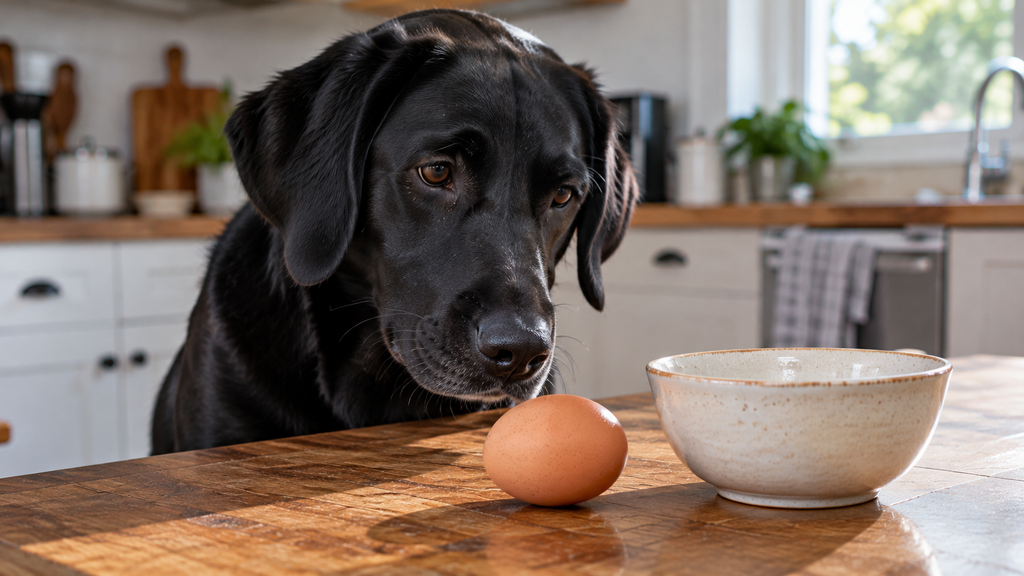
Quick Answer: Dogs can eat a raw egg without necessarily becoming ill, but raw eggs are not recommended for dogs because they may contain harmful bacteria, including Salmonella. Raw egg whites also contain avidin, a protein that interferes with biotin absorption when raw eggs are fed regularly.
The safer option is to serve eggs fully cooked, plain, and without added salt, butter, oil, onion, garlic, or seasoning. Cooked eggs provide protein and other nutrients without the same bacterial risks.
Key Takeaways
- Cooked eggs are safer than raw eggs for most dogs.
- Raw eggs may carry Salmonella and other harmful bacteria.
- Regularly feeding raw egg whites can interfere with biotin absorption.
- Puppies, senior dogs, pregnant dogs, and dogs with weakened immune systems should avoid raw eggs.
- Eggs should be an occasional treat, not a replacement for complete and balanced dog food.
- Clean up raw egg spills and wash your hands and food-preparation surfaces.
- If your dog accidentally eats a raw egg, monitor for symptoms and contact your veterinarian if concerns arise.
Can Dogs Eat Raw Eggs Safely?
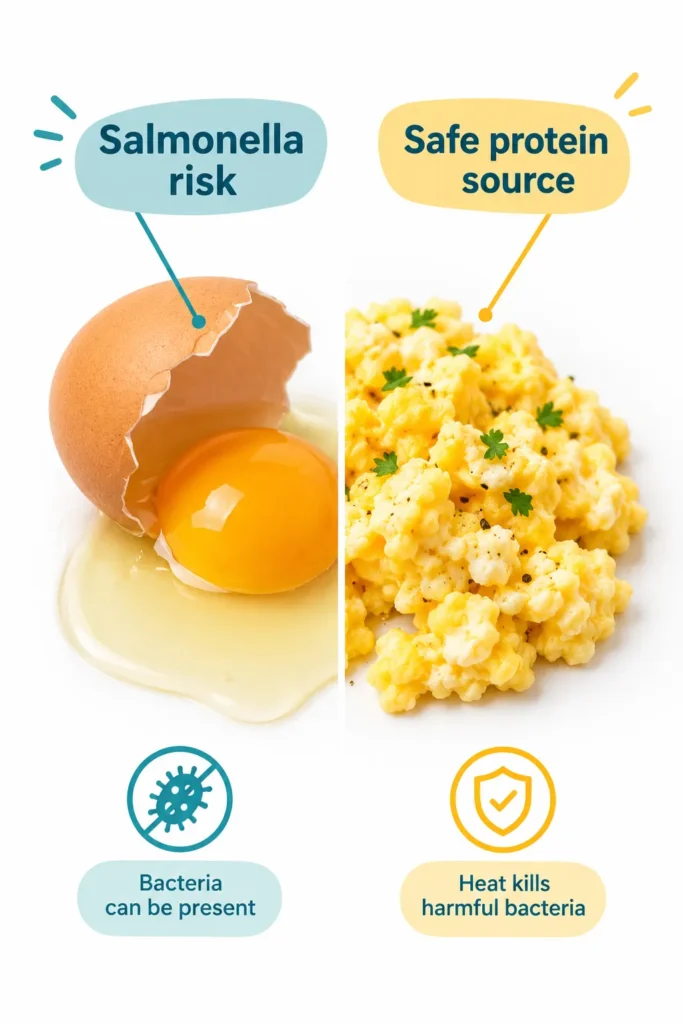
Dogs can physically eat raw eggs, and a single accidental egg does not automatically mean your dog will become sick. However, raw eggs carry avoidable risks, so cooked eggs are the better choice.
There are two main concerns:
- Bacterial contamination: Raw eggs may contain Salmonella and other harmful bacteria.
- Biotin absorption: Raw egg whites contain avidin, which binds to biotin, a B vitamin important for healthy skin and coat. Repeated raw-egg feeding can contribute to a deficiency.
Cooking eggs thoroughly reduces the bacterial risk and deactivates avidin. This allows your dog to benefit from the egg’s nutrients without the same concerns associated with feeding it raw.
The practical rule: Choose a fully cooked egg, especially for puppies, senior dogs, pregnant dogs, and pets with weakened immune systems.
What Happens If a Dog Eats a Raw Egg?
The outcome depends on whether the egg is contaminated, how much your dog eats, and your dog’s overall health. Some dogs show no obvious symptoms after eating a raw egg, while others may develop digestive problems.
Possible signs include:
- Vomiting
- Diarrhea or loose stools
- Reduced appetite
- Unusual tiredness or lethargy
- Fever or signs of dehydration if illness develops
Salmonella infection can cause illness in dogs, but an infected dog may sometimes shed bacteria without appearing sick. This matters because contaminated feces can expose people and other animals in the household.
When Should You Contact a Vet?
Contact your veterinarian if your dog develops repeated vomiting, persistent diarrhea, marked lethargy, or refuses food and water. Puppies, older dogs, pregnant dogs, and pets with existing medical conditions may need earlier advice.
Seek urgent veterinary care for severe weakness, collapse, bloody diarrhea, or signs of significant dehydration.
Does Raw Egg Give Dogs Salmonella?
Yes, raw eggs can carry Salmonella. The risk is not limited to eggs that look dirty, smell unusual, or come from a particular type of farm. A clean-looking, fresh egg is not guaranteed to be free of harmful bacteria.
If a dog eats a contaminated egg, it may:
- Develop gastrointestinal illness.
- Shed bacteria in its feces, sometimes without obvious symptoms.
- Spread contamination to household surfaces or people through poor hygiene.
Other bacteria can also be associated with raw animal products. Cooking eggs thoroughly is a straightforward way to reduce the risk.
After handling raw eggs: Wash your hands, clean bowls and utensils, and disinfect surfaces that came into contact with raw egg. Avoid allowing your dog to lick contaminated preparation areas.
Are Raw Eggs Good for Dogs?
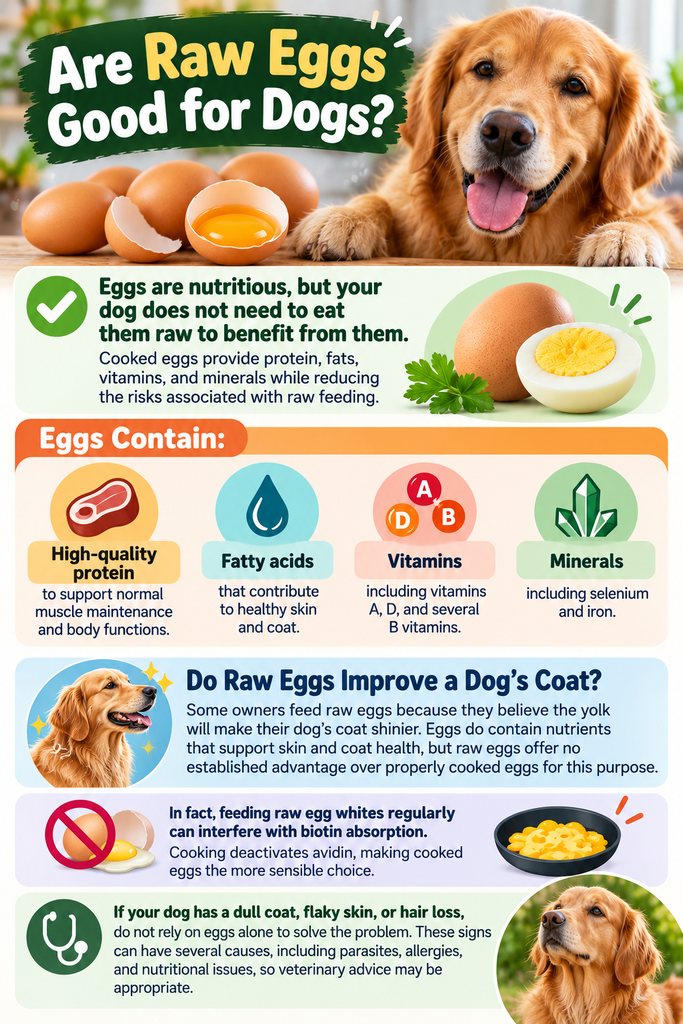
Eggs are nutritious, but your dog does not need to eat them raw to benefit from them. Cooked eggs provide protein, fats, vitamins, and minerals while reducing the risks associated with raw feeding.
Eggs contain:
- High-quality protein to support normal muscle maintenance and body functions.
- Fatty acids that contribute to healthy skin and coat.
- Vitamins, including vitamins A, D, and several B vitamins.
- Minerals, including selenium and iron.
Do Raw Eggs Improve a Dog’s Coat?
Some owners feed raw eggs because they believe the yolk will make their dog’s coat shinier. Eggs do contain nutrients that support skin and coat health, but raw eggs offer no established advantage over properly cooked eggs for this purpose.
In fact, feeding raw egg whites regularly can interfere with biotin absorption. Cooking deactivates avidin, making cooked eggs the more sensible choice.
If your dog has a dull coat, flaky skin, or hair loss, do not rely on eggs alone to solve the problem. These signs can have several causes, including parasites, allergies, and nutritional issues, so veterinary advice may be appropriate.
Raw Eggs vs. Cooked Eggs
Cooked eggs are the preferred option for dogs because they reduce bacterial risks and prevent the biotin-binding effect of avidin in raw egg whites.
| Factor | Raw eggs | Cooked eggs |
|---|---|---|
| Bacterial risk | Possible Salmonella contamination | Significantly reduced when cooked thoroughly |
| Avidin | Can interfere with biotin absorption | Heat deactivates avidin |
| Protein | Provides protein | Provides protein |
| Household hygiene | Greater concern from raw egg and possible bacterial shedding | Lower food-handling risk |
| Best choice for dogs | Not recommended | Preferred in plain, moderate portions |
Boiled, scrambled, or poached eggs can all be suitable as long as they are fully cooked and contain no ingredients that are unsafe for dogs.
How Often Can Dogs Eat Eggs?
Eggs should be an occasional addition to your dog’s regular food rather than a daily staple. The right amount depends on your dog’s size, activity, health, and calorie needs.
The following are broad portion examples for fully cooked eggs, not recommendations for raw eggs:
- Small dogs: Start with a small piece, such as a quarter of an egg.
- Medium dogs: A few slices or up to half an egg may be suitable.
- Large dogs: Up to one egg may fit some dogs’ treat allowance.
These are only starting points. A whole egg may be too much for a small dog or one that needs to limit calories. Treats and other extras should generally make up no more than 10% of daily calories, with the rest coming from a complete and balanced diet.
Which Dogs Should Avoid Raw Eggs?
Raw eggs are especially unsuitable for:
- Puppies: Their developing bodies make avoiding preventable bacterial exposure particularly important.
- Senior dogs: Some older dogs are more vulnerable to complications from illness and dehydration.
- Pregnant or nursing dogs: Foodborne illness can create additional concerns for the mother and litter.
- Immunocompromised dogs: Pets with weakened immune systems may be at greater risk of complications.
- Dogs with existing health problems: Your veterinarian can advise whether eggs are appropriate for a specific medical or dietary condition.
Even for healthy adult dogs, cooked eggs are the safer choice.
Can Dogs Eat Eggshells?
Eggshells are not inherently toxic to dogs and contain calcium. However, they are not necessary for most dogs eating a complete and balanced commercial diet.
If eggshells are being considered as a supplement, preparation and the dog’s nutritional requirements matter.
- Clean and dry the shells thoroughly.
- Grind them into a fine powder rather than offering whole or sharp pieces.
- Do not add eggshell powder without considering the calcium already present in your dog’s diet.
Whole or cracked shells can pose choking or digestive risks. Excess calcium can also be harmful, particularly for growing puppies whose mineral requirements need careful balancing.
Ask your veterinarian before using eggshell powder as a calcium supplement. Adding extra calcium to an already balanced diet may do more harm than good.
How to Prepare Eggs Safely
Preparing eggs for dogs is simple. Cook them fully and keep the recipe plain.
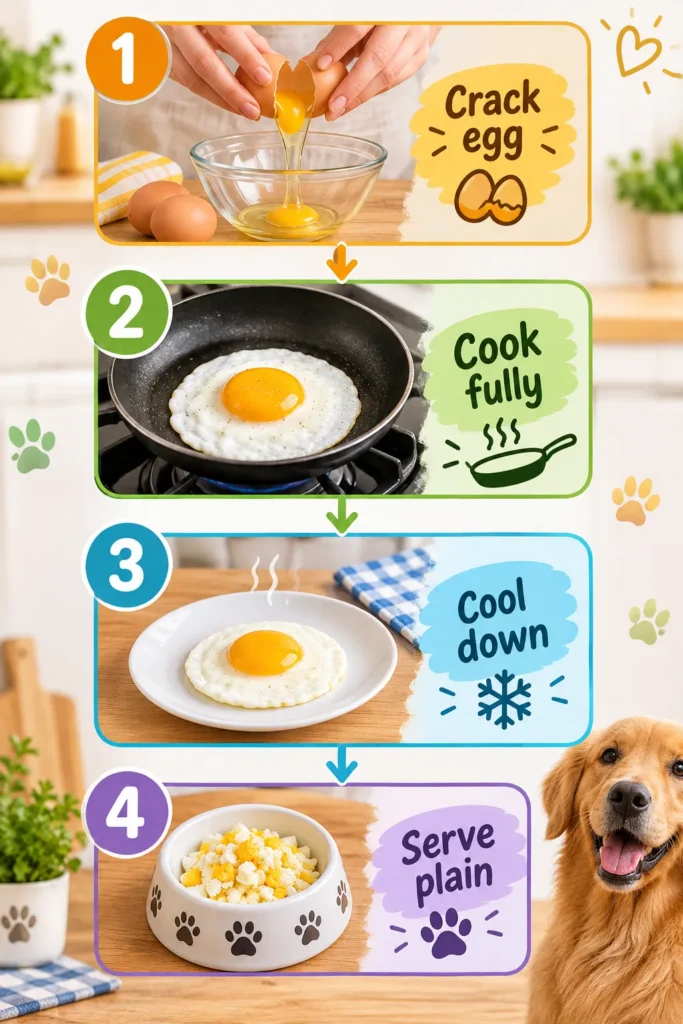
- Boil, scramble, or poach the egg until fully cooked.
- Avoid added ingredients such as butter, excess oil, salt, onion, garlic, and seasoning.
- Allow the egg to cool before serving.
- Cut it into manageable pieces for your dog’s size.
- Start with a small portion to see how your dog tolerates it.
- Serve it alongside regular food rather than using eggs to replace a balanced meal.
Do not feed raw egg mixtures or undercooked eggs as a routine treat. If your dog has a prescribed diet or a history of food sensitivities, check with your veterinarian before adding eggs.
Eggs Compared with Commercial Dog Food
Eggs can supplement a dog’s diet, but they cannot replace a complete and balanced dog food on their own.
| Food | Main role | Important consideration |
|---|---|---|
| Complete commercial dog food | Provides balanced daily nutrition | Choose a formula suitable for your dog’s life stage and needs |
| Plain cooked egg | Occasional protein-rich treat | Adds calories and should be portioned appropriately |
| Raw egg added to food | Extra food with avoidable risks | May introduce bacteria and interfere with biotin absorption |
| Cooked egg added to food | Occasional variety | Keep the amount modest so the overall diet remains balanced |
A nutritionally complete diet is formulated to provide appropriate amounts of protein, fats, vitamins, and minerals. An egg alone does not supply everything a dog needs in the right proportions.
If you are considering a homemade or raw diet, speak with a veterinarian or veterinary nutrition professional before changing your dog’s regular feeding plan.
What If My Dog Ate a Raw Egg Accidentally?
Try not to panic. A healthy adult dog that eats one raw egg may remain completely well, but there is no way to know whether the egg was contaminated.
Here’s what to do:
- Check how much your dog ate. One egg is different from several eggs or a meal containing other potentially unsafe ingredients.
- Monitor your dog. Watch for vomiting, diarrhea, appetite changes, or unusual tiredness over the next few days.
- Clean the area. Wash your hands and clean any surfaces that came into contact with raw egg.
- Contact your veterinarian if symptoms develop. Seek advice sooner if your dog is a puppy, senior, pregnant, immunocompromised, or has an underlying illness.
- Do not induce vomiting or give medication unless your veterinarian instructs you to do so.
If your dog ate raw eggs repeatedly, mention this to your veterinarian, even if your dog seems healthy. Regular raw-egg feeding raises different concerns from a single accidental exposure.
Frequently Asked Questions
Can dogs eat raw eggs safely?
Raw eggs are not recommended because they may carry harmful bacteria, and raw egg whites contain avidin. Fully cooked eggs are the safer choice.
Are raw eggs toxic to dogs?
Raw eggs are not generally classified as a conventional poison, but they can carry foodborne bacteria and may interfere with biotin absorption when fed regularly.
Can puppies eat raw eggs?
Puppies should be given fully cooked eggs rather than raw ones. If offered, eggs should be plain, introduced in a small amount, and treated as an occasional extra.
How many raw eggs can a dog eat per week?
There is no recommended safe weekly allowance for raw eggs. Choose fully cooked eggs instead and adjust the portion to your dog’s size, health, and calorie needs.
Do raw eggs help a dog’s coat?
There is no established coat-health advantage to feeding eggs raw. Cooked eggs provide nutrients that support normal skin and coat health without the same avidin concern.
Can dogs eat raw eggshells?
Eggshells contain calcium, but raw shells may be contaminated and whole pieces can be hazardous. Most dogs on complete food do not need extra calcium. Ask your veterinarian before supplementing with eggshell powder.
Is there a nutritional difference between raw and cooked eggs?
Both contain protein, fats, vitamins, and minerals. Cooking reduces bacterial risk and deactivates avidin, which is why cooked eggs are preferred.
My dog ate a raw egg but seems fine. Should I worry?
Monitor your dog for signs of illness over the following days and maintain good hygiene. Contact your veterinarian if symptoms appear or if your dog is at higher risk of complications.
Conclusion
Raw eggs are not the best choice for dogs. Although an accidental egg does not necessarily cause illness, raw eggs can carry Salmonella and other bacteria, and regular feeding of raw egg whites can interfere with biotin absorption.
Fully cooked, unseasoned eggs offer a safer way to provide extra protein and nutrients. Keep portions appropriate for your dog’s size, use eggs as an occasional treat, and maintain a complete and balanced main diet.
If your dog has already eaten a raw egg, monitor for symptoms, clean any contaminated surfaces, and contact your veterinarian if you notice signs of illness or have concerns about your dog’s health.
Editorial Note
This article provides general pet-feeding information and is not a substitute for personalized veterinary advice. Ask your veterinarian before changing your dog’s diet, especially if your pet is young, elderly, pregnant, immunocompromised, or has a medical condition.