

Quick Answer
Yes, dogs can take Benadryl (diphenhydramine) in most cases, and it’s one of the few human medications vets regularly approve for home use. The catch: the product must be plain diphenhydramine with no other active ingredients, the dose has to match your dog’s weight, and it’s not a substitute for emergency care during a severe allergic reaction [1][8]. Always call your vet before the first dose, especially for puppies, senior dogs, or pets with existing health conditions.
Key Takeaways
- Can dogs take Benadryl? Yes, plain diphenhydramine is generally considered safe for most healthy adult dogs when dosed correctly [1][8].
- The standard dosage is about 1 mg per pound of body weight, given two to three times a day [5][9].
- Only use plain diphenhydramine, skip anything labeled “D,” “Allergy Plus Congestion,” or combined with acetaminophen [4][7].
- Common side effects include drowsiness, dry mouth, and mild stomach upset [1][9].
- Benadryl helps with mild allergic reactions, itching, and motion sickness, but it is not strong enough for anaphylaxis [2][8].
- Puppies under 12 weeks, pregnant dogs, and dogs with glaucoma, heart disease, or seizure disorders need veterinary clearance first [7][9].
- Giving too much can cause agitation, rapid heart rate, tremors, or in severe cases, seizures, contact a vet or pet poison hotline immediately [2].
Table of Contents
Can Dogs Take Benadryl Safely?
Dogs can take Benadryl safely in most situations as long as you use plain diphenhydramine, weigh your dog, and stick to vet-approved amounts. This over-the-counter antihistamine has a long track record of use in veterinary medicine for mild allergic symptoms, and many vets recommend it for car rides, bee stings, or seasonal itching [1][3].
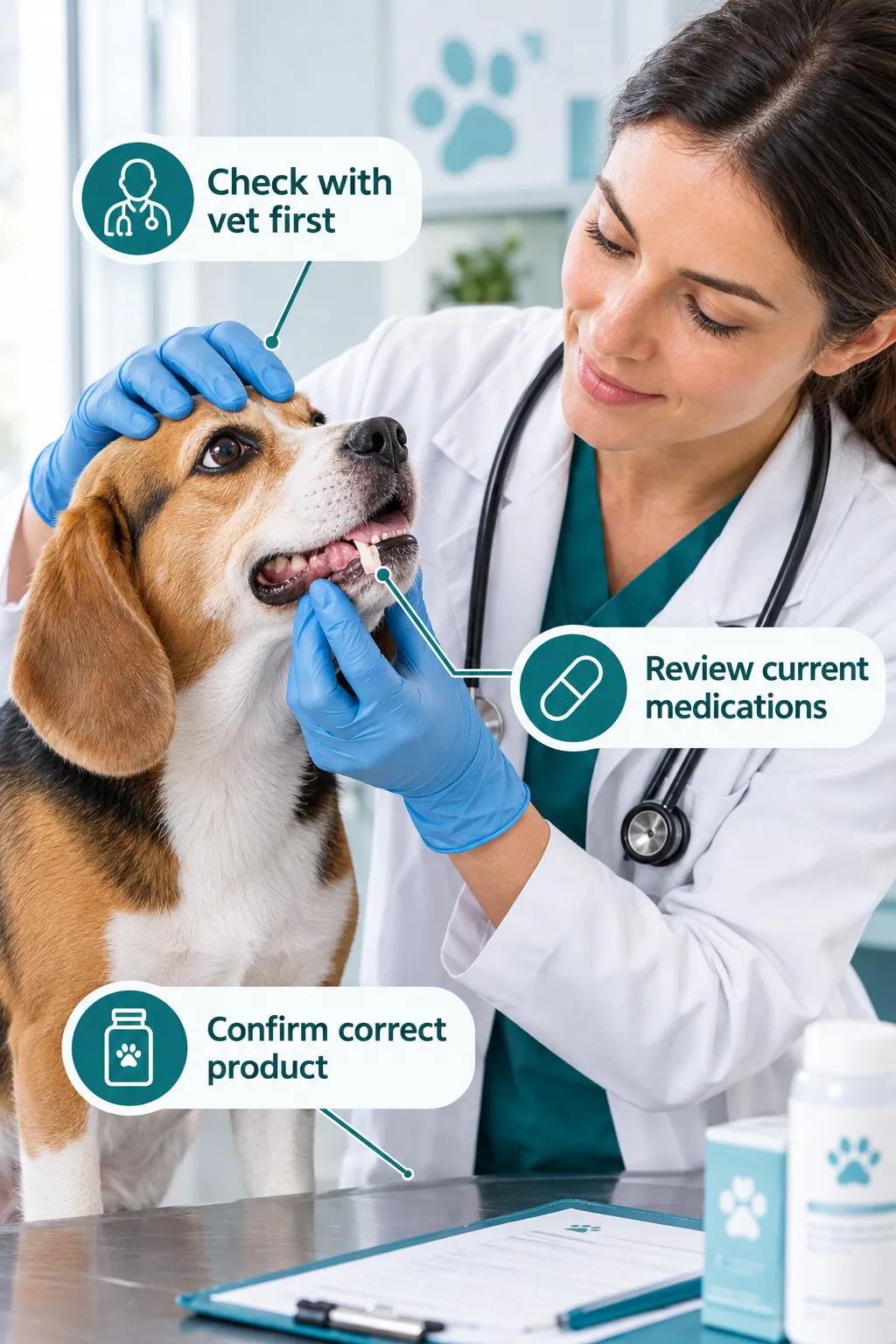
That said, “safe” comes with conditions. A dog with kidney disease, liver problems, glaucoma, or a seizure history may react poorly even to a normal dose [9]. The same goes for dogs already on sedatives, certain heart medications, or MAO inhibitors, since drug interactions can amplify side effects [7].
Decision rule: Give Benadryl at home only if your dog is a healthy adult, you know the correct dose, and the product is plain diphenhydramine. If your dog has a known health condition or you’re unsure of the dose, call your vet first, it takes five minutes and avoids a costly mistake.
Benadryl for Dogs: What Is It Used For?
Benadryl for dogs is mainly used to calm mild allergic reactions, seasonal itching, hives, and motion sickness. Vets also sometimes recommend it as a mild sedative before stressful events like vet visits, grooming, or thunderstorms [1][3].
Common reasons owners reach for it include:
- Seasonal or environmental allergies causing itchy skin, red eyes, or sneezing
- Mild hives or swelling after an insect sting or vaccine reaction
- Motion sickness during car travel
- Mild anxiety or over-excitement in specific situations
Dogs that lick or chew their paws excessively often have an underlying allergy, and Benadryl can take the edge off while you figure out the trigger. If this sounds familiar, our guide on why dogs lick their paws breaks down other common causes worth ruling out. Allergy-driven grass eating is another related behavior, check our piece on why dogs eat grass if your dog grazes more during allergy season.
How Much Benadryl Can You Give a Dog?
The amount of Benadryl you can give a dog depends almost entirely on body weight, not age or breed. The widely used guideline is 1 mg of diphenhydramine per pound of body weight, given two to three times daily [5][9].
For example:
- A 15-pound dog would typically get 15 mg per dose.
- A 40-pound dog would typically get 40 mg per dose.
- A 70-pound dog would typically get 70 mg per dose.
Common mistake: Owners often eyeball the dose using a “kids’ dose” from a chart they saw online without checking their dog’s actual weight on a scale. A 5-pound miscalculation on a small dog can mean giving nearly double the safe amount. Always weigh your dog or use a recent vet-recorded weight before calculating.
Edge case: Dogs with liver or kidney issues may need a lower dose or longer gap between doses, since their bodies clear the drug more slowly [9]. This is a case where a quick vet call genuinely changes the outcome.
Benadryl Dosage for Dogs by Weight
Here’s a quick-reference Benadryl dosage for dogs chart based on the standard 1 mg per pound guideline, assuming standard 25 mg tablets [1][5]:
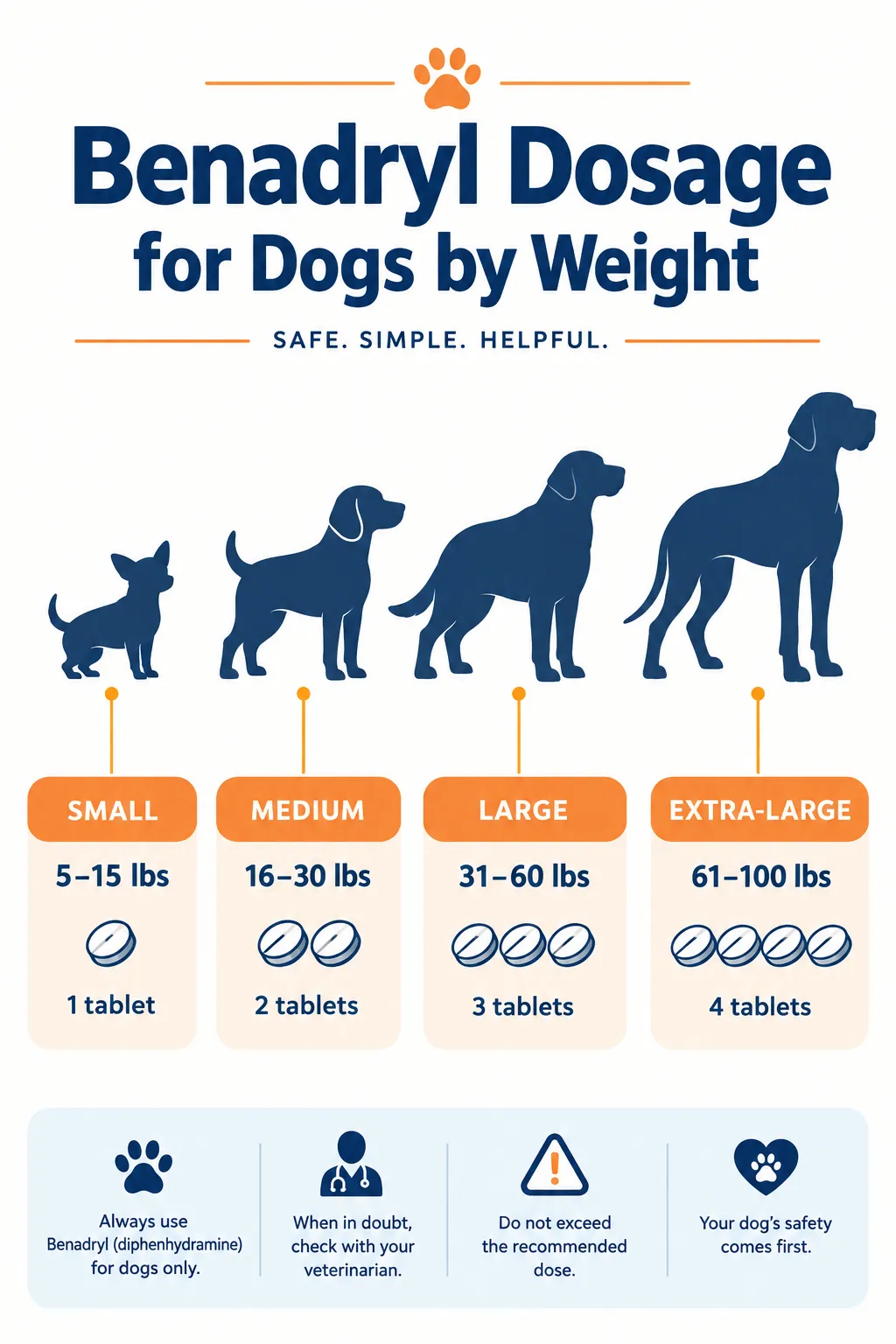
| Dog Weight | Standard Dose (1 mg/lb) | Approx. 25 mg Tablets |
|---|---|---|
| 10 lbs | 10 mg | ~1/2 tablet |
| 20 lbs | 20 mg | ~3/4 tablet |
| 30 lbs | 30 mg | 1 tablet |
| 50 lbs | 50 mg | 2 tablets |
| 70 lbs | 70 mg | 2.5-3 tablets |
| 90 lbs | 90 mg | ~3.5 tablets |
“The right dose is the one your vet confirms for your dog’s exact weight and health history, a chart is a starting point, not a prescription.”
Choose the lower end of the range if your dog is a senior, has never taken Benadryl before, or has any chronic illness. Veterinary-specific formulations like Vetadryl are also available and pre-dosed for dogs, which removes guesswork [4].
Side Effects of Benadryl in Dogs
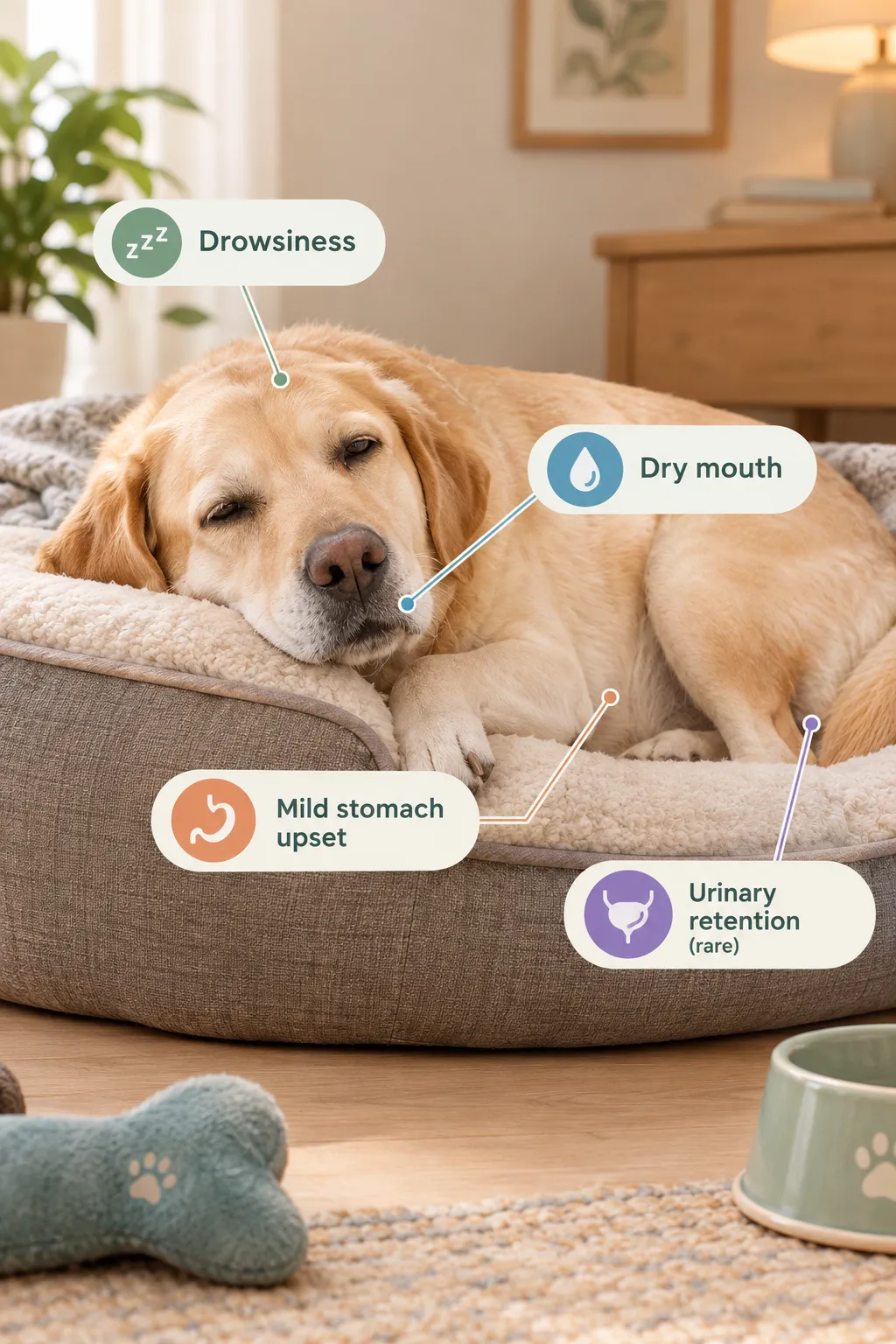
At normal doses, the most common side effect of Benadryl in dogs is drowsiness, followed by dry mouth and mild stomach upset [1][9]. These effects are usually mild and fade within a few hours as the drug wears off.
Typical effects to expect:
- Sleepiness or sluggishness, the most frequent reaction
- Dry mouth, which can make some dogs drink more water than usual
- Mild digestive upset, including reduced appetite or soft stool
- Urinary retention in rare cases, more common in older male dogs
If you notice your dog drinking noticeably more water after starting Benadryl, it’s worth tracking, our guide on why dogs drink so much water covers when increased thirst needs a vet’s attention versus when it’s a normal medication side effect.
Quick example: A dog given 25 mg after a bee sting might seem groggy for 2-4 hours, then return to normal energy by evening. That pattern is expected, not alarming.
How Long Does Benadryl Take to Work in Dogs?
Benadryl typically starts working in dogs within 30 to 60 minutes after oral dosing, with peak effects around 1 to 3 hours later [1][5]. Effects generally last 8 hours, which is why vets recommend dosing two to three times a day for ongoing symptoms.
If you’re giving it before a stressful event, a car trip, grooming appointment, or thunderstorm, plan to dose it about 30-45 minutes beforehand so it has time to take effect [3].
Decision rule: If there’s no noticeable improvement within 2 hours for an allergic reaction, don’t just add another dose and wait. Call your vet, since this can signal the reaction needs stronger treatment.
Is Benadryl Safe for Puppies?
Benadryl can be safe for puppies, but only under veterinary guidance, since puppies are more sensitive to dosing errors and their organs are still developing [7][9]. Most vets prefer to confirm weight and health status before recommending any dose for a puppy under six months old.
Key considerations for puppies:
- Very young puppies (under 12 weeks) are generally not given Benadryl without direct vet instruction
- Dosing still follows the weight-based formula, but errors matter more in small bodies
- Watch closely for unusual lethargy or agitation, which can appear faster in puppies
If your puppy is showing allergy-like symptoms alongside other signs such as lethargy or appetite loss, it’s worth ruling out more serious illness first. Our guide on parvo symptoms in puppies explains red flags that need immediate attention rather than home treatment. Cold-like symptoms can also be confused with allergies, see can puppies catch a human cold for more context.
Benadryl for Dog Anxiety vs Other Options
Benadryl can take the edge off mild dog anxiety because it’s mildly sedating, but it’s not a targeted anxiety medication and often isn’t strong enough for dogs with real noise phobias or separation anxiety [3][8]. For occasional mild nervousness, it may help; for recurring or severe anxiety, newer options tend to work better.
| Option | Best For | Notes |
|---|---|---|
| Benadryl | Mild, occasional nervousness | OTC, mild sedation, variable results [3] |
| Vet-prescribed anxiety meds | Noise phobia, separation anxiety | Targeted, often more reliable, needs prescription |
| Calming aids/pheromones | Everyday mild stress | Non-drug, slower onset, good for ongoing support |
Dogs that howl or vocalize heavily during storms or when left alone often have anxiety that benefits from more than antihistamines, our piece on why dogs howl explains the behavioral side of this, which can help you decide whether medication is even the right tool.
Choose Benadryl if the trigger is occasional and mild. Choose a vet-prescribed option if anxiety is frequent, intense, or disrupting daily life.
Can Benadryl Hurt My Dog? Overdose Risks and Warning Signs
Yes, Benadryl can hurt your dog if given in excessive amounts or combined with the wrong ingredients, and overdose is a real risk owners should take seriously [2]. Giving too much diphenhydramine doesn’t just make a dog sleepier, it can cause a dangerous shift from sedation to agitation, rapid heart rate, and in severe cases, seizures or collapse [2].
Watch for these emergency signs after any dose:
- Excessive panting, agitation, or restlessness instead of calming down
- Rapid or irregular heartbeat
- Dilated pupils or disorientation
- Tremors, seizures, or loss of coordination
What happens if I give my dog too much Benadryl? Overdose symptoms can appear within an hour and may escalate quickly, so this is not a “wait and see” situation, contact your vet or an animal poison control hotline immediately if you suspect an overdose [2].
It’s worth noting that other common human medications carry similar risks for dogs; our article on whether dogs can have Tylenol covers a drug that’s far more dangerous even at small doses, which is a useful comparison for understanding why dosing precision matters.
Severe allergic reactions, a critical limit: If your dog is having trouble breathing, has facial swelling that’s spreading, pale gums, or collapses, Benadryl alone is not enough. This is anaphylaxis territory, and it needs emergency veterinary treatment, not a pill [2][8].
What Type of Benadryl Is Safe for Dogs?
The only type of Benadryl safe for dogs is plain diphenhydramine with no additional active ingredients. Combination products marketed for sinus relief, cold symptoms, or sleep can contain ingredients that are toxic to dogs [4][7].

Check the label for these red flags before giving anything:
- Acetaminophen (often in “Benadryl-D” or multi-symptom formulas), toxic to dogs even in small amounts [4]
- Pseudoephedrine or phenylephrine, can cause dangerous heart rate changes
- Xylitol in liquid or chewable formulas, extremely toxic to dogs, even in tiny amounts
- Alcohol in some liquid formulations
Veterinary-specific products like Vetadryl are formulated specifically for pets and pre-dosed, removing most of this guesswork [4]. If you’re ever unsure, bring the box to your vet clinic or call before giving anything.
Benadryl vs Other Antihistamines for Dogs
Benadryl (diphenhydramine) is the most commonly used antihistamine for dogs, but it’s not the only option, and some newer antihistamines cause less drowsiness [6][10]. Vets sometimes recommend alternatives like cetirizine or loratadine for longer-lasting allergy control with fewer sedative effects.
| Antihistamine | Sedation Level | Dosing Frequency | Notes |
|---|---|---|---|
| Diphenhydramine (Benadryl) | Moderate-high | 2-3x daily | Fast-acting, widely available [1] |
| Cetirizine | Lower | Once daily | Longer-lasting, vet approval needed [6] |
| Loratadine | Lower | Once daily | Some formulations contain decongestants to avoid [6] |
Choose Benadryl if you need something fast-acting for an acute reaction. Choose a longer-acting antihistamine if your dog needs daily allergy management without constant drowsiness, but only after vet confirmation of dose and product [6][10].
When Should I Give My Dog Benadryl, And Can I Give It Every Day?
Give your dog Benadryl when there’s a clear, mild trigger: an insect sting, mild hives, seasonal itching, or an upcoming car ride. Daily use is sometimes appropriate for chronic seasonal allergies, but it should be guided by a vet rather than decided on your own [1][9].
Situations where Benadryl makes sense:
- A one-time reaction to a sting, vaccine, or new food
- Planned travel where motion sickness is expected
- Short-term seasonal allergy flare-ups
Can I give my dog Benadryl every day? Some dogs with chronic environmental allergies do take it daily under veterinary supervision, but long-term daily use should be monitored for effectiveness and side effects, since dogs can build tolerance over weeks [9]. If your dog needs it most days of the week, that’s a good sign it’s time for a vet visit to discuss longer-term allergy management instead of repeated OTC dosing.
Benadryl Dosage Calculator
🐾 Estimate a Starting Dose
Based on the standard 1 mg per pound guideline [5][9]. Always confirm with your vet.
FAQ
Can dogs take Benadryl every day for allergies? Some dogs do take it daily for chronic seasonal allergies, but this should be set up with a vet, since daily use needs monitoring for tolerance and side effects [9].
What’s the maximum safe Benadryl dose for a dog? There’s no universal “max” number, it’s tied to weight at roughly 1 mg per pound per dose, up to 2-3 times a day, confirmed by a vet for your dog’s specific health status [5][9].
Does Benadryl make dogs sleepy? Yes, drowsiness is the most common and expected effect, which is why some owners also use it for mild travel anxiety [1].
Can I give my dog liquid Benadryl? Only if it’s plain diphenhydramine with no xylitol, alcohol, or added decongestants, many liquid formulas contain xylitol, which is toxic to dogs [4][7].
Is children’s Benadryl safe for dogs? Children’s formulations are sometimes used because of lower concentrations, but you still must verify it’s plain diphenhydramine and calculate dose by your dog’s weight, not the child’s dosing chart [7].
What should I do if my dog has a severe allergic reaction? Go straight to a vet or emergency clinic. Benadryl is too mild for anaphylaxis, which can involve breathing trouble or collapse [2][8].
Can Benadryl interact with other medications my dog takes? Yes, it can interact with sedatives and certain heart or seizure medications, so always disclose current medications to your vet before starting it [7].
Conclusion
So, can dogs take Benadryl? In most cases, yes, plain diphenhydramine, dosed by weight at roughly 1 mg per pound, is a reasonably safe option for mild allergic reactions, occasional itching, and motion sickness [1][5]. The real risk isn’t the drug itself; it’s skipping the vet call, using the wrong product, or guessing at the dose.
Before your dog’s next dose: weigh them on an actual scale, double-check the label for acetaminophen or xylitol, and text or call your vet if anything about the situation feels uncertain, especially with puppies, seniors, or dogs with existing health conditions. If symptoms look severe or don’t improve within a couple hours, treat it as an emergency, not a wait-and-see situation.
References
[1] Benadryl For Dogs – https://www.akc.org/expert-advice/health/benadryl-for-dogs/ [2] Benadryl Overdose Dogs – https://www.petmd.com/dog/conditions/poisoning-toxicity/benadryl-overdose-dogs [3] Is Benadryl Safe For Dogs – https://www.fetchpet.com/the-dig/is-benadryl-safe-for-dogs [4] Benadryl Vetadryl Diphenhydramine – https://www.petmd.com/pet-medication/benadryl-vetadryl-diphenhydramine [5] How Much Benadryl Can I Give My Dog 52673 – https://www.drugs.com/medical-answers/how-much-benadryl-can-i-give-my-dog-52673/ [6] Antihistamines Safe Dogs 3562497 – https://www.drugs.com/medical-answers/antihistamines-safe-dogs-3562497/ [7] Are Over The Counter Medications Safe For My Dog – https://vcahospitals.com/know-your-pet/are-over-the-counter-medications-safe-for-my-dog [8] Can I Give My Dog Benadryl – https://www.webmd.com/pets/dogs/can-i-give-my-dog-benadryl [9] Diphenhydramine – https://vcahospitals.com/know-your-pet/diphenhydramine [10] Can You Give Dogs Benadryl – https://www.purina.co.uk/articles/dogs/health/daily-care/can-you-give-dogs-benadryl